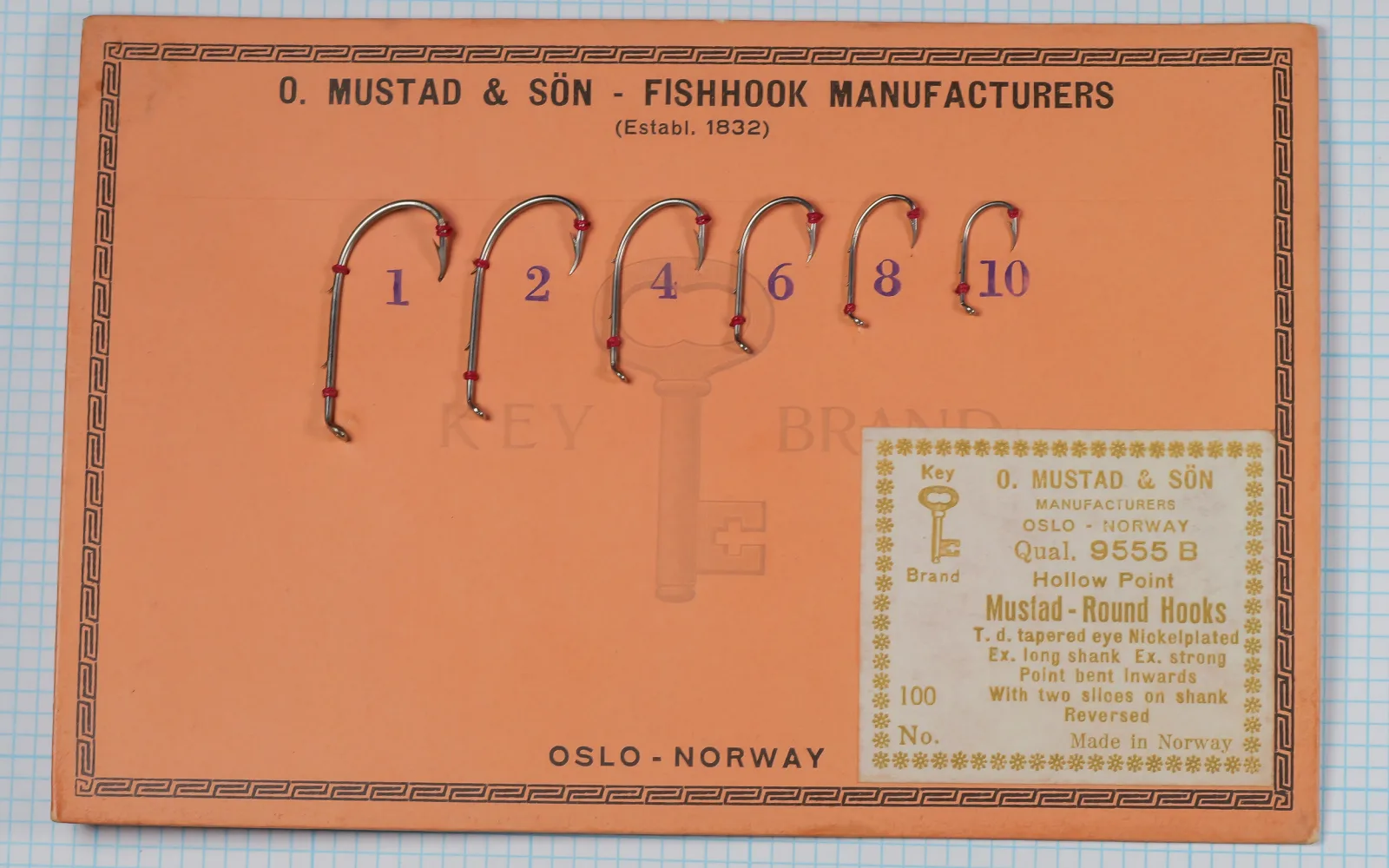
The Mustad 9555 B is a mid-20th-century Norwegian baitholder hook manufactured by O. Mustad & Søn during the peak of their global dominance in the 1940s–1950s. This salesman’s sample card displays six sizes (No. 1 through No. 10) in an exceptionally bright nickelplated finish, a premium corrosion-resistant coating that was favored for saltwater and marine applications before stainless steel became economical.
The defining engineering features of the 9555 B are its extra-long shank, two precisely-cut slices (barbs) along the shank designed to mechanically grip soft baits and prevent them from sliding, and a reversed-offset hollow point bent inward for self-setting hook performance. The tapered eye (gradually reducing in wire diameter) represents a refinement from earlier ball-eye designs, offering reduced weight and cleaner knot seating. The extra-strong wire gauge (heavy gauge) provides structural integrity for large, powerful saltwater species.
This specific specimen is a factory salesman’s sample card—a tool used by traveling Mustad representatives to display product variety to retailers. The orange cardstock with decorative geometric border and offset letterpress labeling are hallmark design elements of 1940s–1950s Mustad export packaging. The preserved nickel finish and complete hook count make this an excellent example of vintage Norwegian hook manufacturing at its industrial peak.
The 9555 B remains highly collectible as a representative artifact of pre-modern baitholder design and a documented example of Mustad’s marketing infrastructure during their ascendancy to 50% global hook market share by the 1950s.
Factory salesman's sample card for Mustad 9555 B Round Hooks, nickelplated finish, displaying all six sizes (No. 1, 2, 4, 6, 8, 10) on orange cardstock with decorative meander border and offset letterpress labeling, circa 1940s–1950s.
Photographic record
2 cataloged imagesSelect any record to load it above.
2 images shown
Mustad 9555 B Sample Card — Complete DisplayFactory salesman's sample card for Mustad 9555 B Round Hooks, nickelplated finish, displaying all six sizes (No. 1, 2, 4, 6, 8, 10) on orange cardstock with decorative meander border and offset letterpress labeling, circa 1940s–1950s.Open originalMustad 9555 B Label DetailClose-up of the offset letterpress label showing the complete eight-line Mustad specification block in gold ink, with Key Brand logo at top left and detailed technical specifications for the 9555 B pattern.Open original
Technical profile
Eye
Tapered Eye, Turned DownTapered eye formed by gradual reduction in wire diameter as it curves back on itself, creating a refined, diminished mass at the hook head. Taper is smooth and uniform. This design reduces overall hook weight and creates a cleaner knot seating surface compared to ball-eye equivalents. Eye opening is moderate, appropriate for direct line knots. P
Wire
Extra-Heavy (2X+), Round, Est. ~0.15"-0.18" (~3.8-4.6 mm)
Shank
Special Long — Baitholder Slices
Bend
Round / Kendal, Wide gap, Offset / kirbedRound bend with reversed offset (point deflected to left when viewed from above). Extra-long shank proportionate to wide gap. Bend is smooth and continuous, characteristic of round/kendal style, engineered for bulky live bait presentations. P
Point
Hollow Point (concave inner face)Two distinct slices (backward-facing barbs) cut into rear shank, visible on specimen hooks, designed to grip soft baits and prevent sliding. P
Finish
Nickelled / Nickel-Plated — Confirmed (stated on packaging)Bright nickel-plated finish with warm silver tone. Specimen hooks show minimal tarnish despite age, indicating excellent plating durability. Polish is uniform across the bend and shank. No evidence of corrosion or underlying rust bloom. Nickel provides high saltwater corrosion resistance and reflective flash—premium finish choice for marine angling of the era. P
Card shows moderate age toning and light edge wear consistent with era and storage. Hooks are bright and corrosion-free with excellent nickel finish retention. All six sample hooks present on card. Label text remains fully legible. No missing hooks or significant packaging damage.
The Hollow Point geometry—a concave, inward-curving taper from tip to barb—delivers extremely rapid penetration with minimal applied pressure, critical for soft-mouthed baits that would tear under aggressive hook-set. The point-bent-inwards (curved in) orientation is nearly snag-proof, deflecting off weeds and debris while allowing the hook to find purchase only when line tension pulls it hard against the corner of the jaw. This minimizes deep hooking and unintended damage to internal structures. The reversed offset (kirbed left) prevents the hook from laying flat in the fish’s mouth, increasing the probability that the point will engage tissue immediately upon contact. The two shank slices function as a mechanical bait-grip system, their backward-facing edges creating friction that holds soft baits (worms, shrimp, fish flesh) in place without requiring excessively tight cinching that would damage delicate materials. The extra-long shank protects the leader from sharp-toothed species and provides mechanical advantage for larger baits. The tapered eye reduces nodal stress concentration compared to heavier ball-eye designs, improving knot reliability under sustained load. The extra-strong (heavy-gauge) wire provides structural rigidity and durability for powerful saltwater species and rocky environments where lighter wire would bend open or snap.
Size & scale lab
Selected size
(unspecified)
Physical specimen
Shank Length
49.5 mm
Gap Width
19 mm
Bend Depth
21.5 mm
Shank-to-Gap Ratio
~2.5-2.9 : 1
Confidence
P
Physical specimen
Grid-derived from photograph (1/10" grid)
Own this hook? Help us measure it.
We don't have measured sizes for this hook yet. Own one? Submit calipered measurements and we'll review and add them. Thank you!
Historical context
mustad
O. Mustad & Søn was founded in 1832 in the small Norwegian village of Gjøvik by Hans Schikkelstad as a general metalworking factory (Brusveen Spiger- og Staltradfabrikk) producing nails, steel wire, and small metal goods. The company was taken over by Schikkelstad’s son-in-law, Ole Hovelsen Mustad, and his son Hans Mustad, who rebranded it as O. Mustad & Søn. The defining moment came in 1877 when engineer Mathias Topp invented the first fully automated hook-making machine—a technological leap that allowed continuous wire feeding, cutting, bending, barbing, and pointing at unprecedented industrial pace. Rather than patent this revolutionary technology (which would have required public disclosure), the Mustad family relied on strict corporate secrecy, non-disclosure agreements, and restricted factory access to protect their competitive advantage against established hook-making centers in Redditch, England, and rival manufacturers in Japan and the United States. By the 1950s, Mustad had captured an estimated 50% of global hook production, operating sales offices and manufacturing facilities across multiple continents. The company’s dominance persisted well into the modern era, making ‘Mustad’ virtually synonymous with the fishing hook itself.
Series History
The 9555 series emerged in the early-to-mid 20th century as Mustad’s answer to the growing demand for specialized live-bait hooks in both freshwater and saltwater markets. The pattern name ‘Round Hooks’ refers to the smooth, continuously curved bend—a geometric departure from more angular patterns like the Limerick or Sproat. The original 9555 featured a standard-length shank; the ‘B’ variant designation indicated a longer shank and specific modifications (slices, reversed offset, inward-bent point) engineered for bulky live bait presentations in saltwater environments. Nickelplated finishes were initially premium offerings, competing with japanned (black) and bronzed options for marine-grade corrosion resistance. Post-war production saw gradual simplification: the shift to bronze finishes (more economical than nickel) and the eventual adoption of stainless steel by modern manufacturers. Despite these cost-reduction measures, the 9555 B’s core geometry—extra-long shank, baitholder slices, hollow inward-bent point, and reversed offset—has remained essentially unchanged through continuous production into the 21st century, testament to the soundness of its original engineering. The 9555 series has spawned numerous variants (9555-BR bronze, 9555-NI modern nickel, 9555-SS stainless steel) and influenced competitors worldwide, including the Eagle Claw 181 and Gamakatsu Baitholder lines.
Era and Packaging Dating
Oslo – Norway address on card (Oslo designation post-Jan 1, 1925, per Christiania–Oslo transition documented in Mustad typology reference). Orange cardstock with offset letterpress typography and Key Brand logo styling are consistent with mid-20th century Mustad design. Absence of barcode (universal product codes not in use until 1970s) supports pre-1960 dating. Card format and decorative geometric border are typical of 1940s–1950s Mustad export packaging. Typography and color palette shift toward marketing modernization suggests post-war production era.
The Bait Grip Revolution
The 9555 B's two shank slices represent an elegant engineering solution to a centuries-old problem: how to prevent live and soft baits from sliding down the hook during casting and fighting. Early hook makers simply roughened the shank surface; by the mid-20th century, Mustad's precision machinery could cut backward-facing barbs with such precision that soft materials like worms, shrimp, and fish flesh would grip the wire without requiring punishing-tight rigging that would damage the bait. This design feature made the 9555 series so successful that modern versions remain in continuous production, making it one of the longest-lived hook patterns in fishing history.
Design lineage and influence
The 9555 B represents Mustad’s refinement of the generic ‘baitholder’ pattern, a category that emerged in the late 19th century as hook makers sought to address the challenge of holding live and soft baits on exposed shank surfaces. Early versions featured crude longitudinal barbs or coarse shank markings. By the 1940s–1950s, Mustad had standardized the design into the 9555 series, adding precision-ground slices and engineering the point geometry (hollow, inward-bent, reversed) to balance delicate bait presentation with secure hook penetration. The tapered eye represents a refinement from earlier ball-eye predecessors, reducing mass and improving knot-holding. The nickel-plated finish was a premium choice during this era, competing with japanned (black) finishes for saltwater duty. Post-war variants (9555-BR bronze, 9555-NI modern nickel) retain the core geometry but shifted toward more economical finishes and manufacturing processes. The 9555 B influenced numerous competitor designs, including the Eagle Claw 181 and modern Gamakatsu equivalents, demonstrating its functional success and enduring appeal.
Best matchRelated by Attribute
Computed automatically from catalog data — updated as new hooks are added.
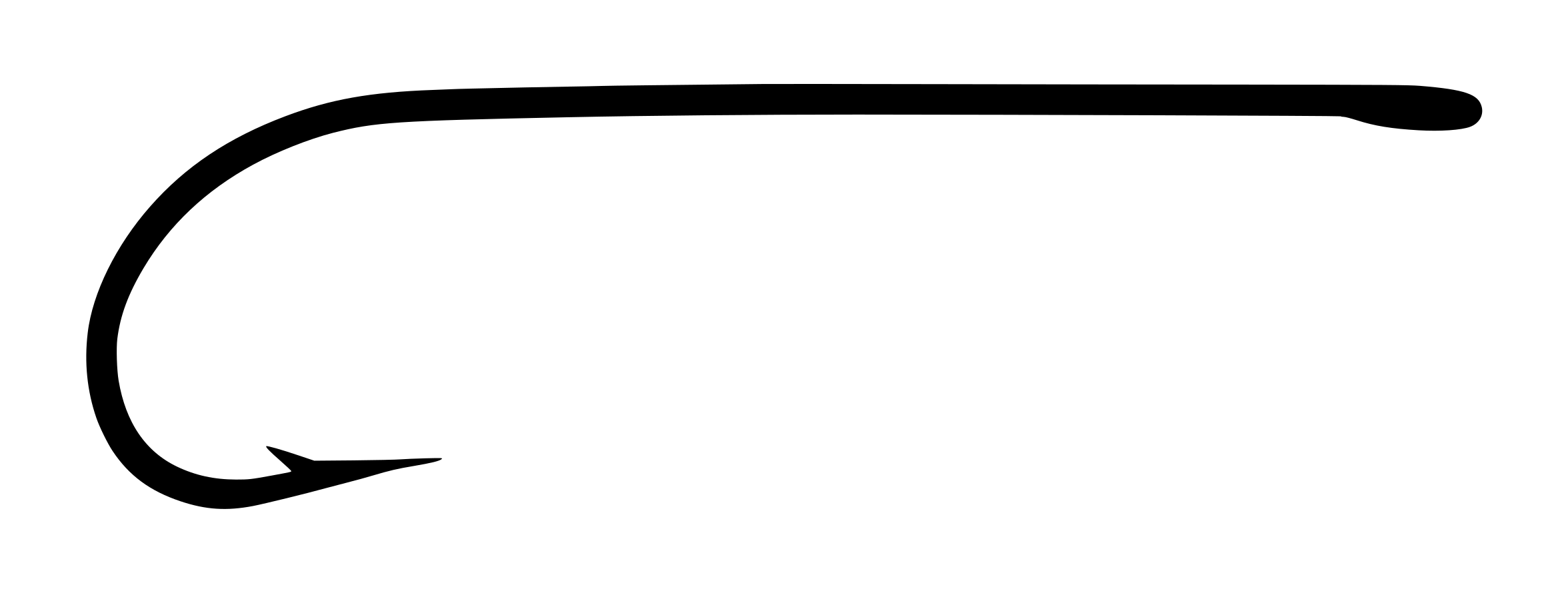
Matches: Bend, Shank, Wire, Eye, Eye Orient. +2 moreDiffers: Gap: Wide vs Standard; Point: Hollow Point vs Superior; Finish: Nickelled vs Bronzed +2 more
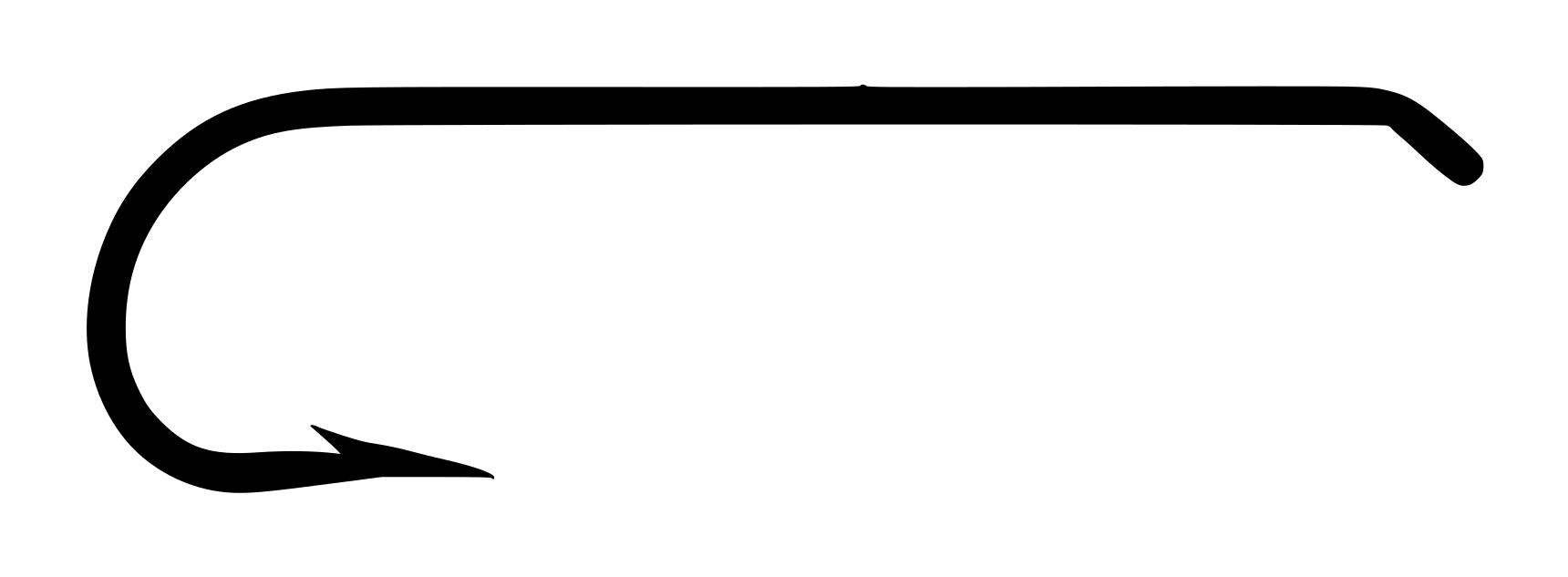
Matches: Shank, Gap, Eye, Point, Offset +1 moreDiffers: Wire: Extra-Heavy (2X+) vs Heavy (1X Heavy); Eye Orient.: Turned Down vs Turned Up; Finish: Nickelled vs Bright / Uncoated Steel +3 more
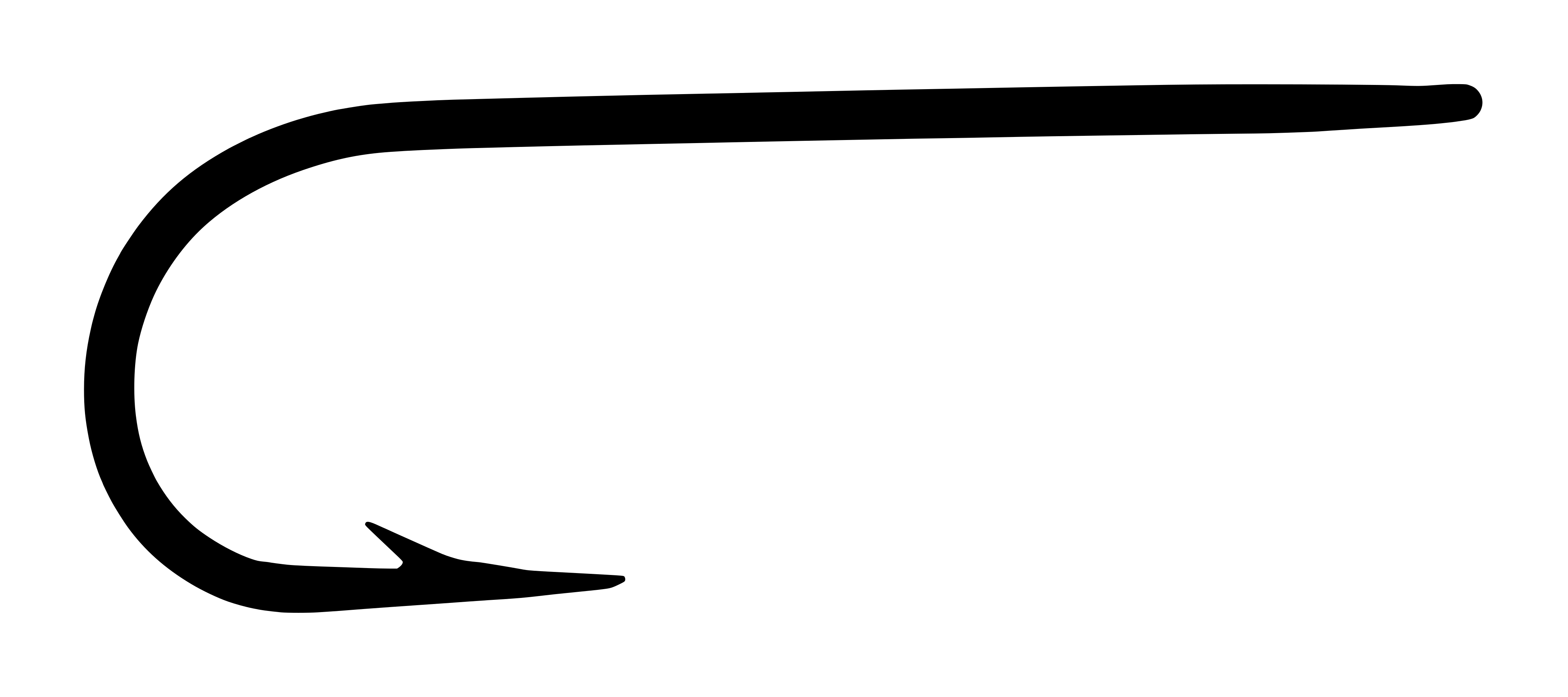
Matches: Bend, Gap, Eye, Eye Orient., Point +2 moreDiffers: Shank: Special Long vs 1X Long; Wire: Extra-Heavy (2X+) vs Heavy (1X Heavy); Finish: Nickelled vs Bronzed +2 more
The Mustad 9555 B is a quintessential baitolder hook engineered for live-bait and cut-bait fishing in saltwater and brackish environments. The extra-long shank protects delicate leader and line from the sharp teeth of pike, barracuda, and large saltwater species. The wide round bend provides excellent gap and gape for bulky live minnows, mackerel strips, and other natural baits. The two shank slices actively grip soft baits, preventing them from sliding toward the bend during cast or fight. The reversed offset and inward-bent point create a rolling hook-set that finds purchase in the hard corner of the fish’s mouth—critical for reliable hook-up on powerful anadromous species like striped bass and tarpon.
Secondary Applications
Occasionally used in fly tying for large baitfish streamers where extreme shank length and a beaked point are desired. Some saltwater fly tyers use this pattern for tarpon, permit, and large saltwater gamefish.
Classic Fly Patterns
Not typically used for traditional fly tying; primarily a bait-fishing hook.
Modern Equivalents
Hook
Match Quality
Notes
Mustad 9555-BR (Bronze)
Excellent
Direct descendant with identical geometry, bend, and shank specifications; only finish differs from vintage nickel version.
Mustad 9555-NI (Nickel)
Excellent
Modern nickel-finish version; maintains 9555 designation and core specifications.
Eagle Claw 181
Very Good
Functionally equivalent baitholder with similar shank slices and wide round bend; slightly lighter wire gauge.
Gamakatsu Baitholder
Very Good
Contemporary Japanese baitholder pattern with round bend and shank modification for bait grip; modern manufacturing standards.
Collector notes
Rated 4.5/10 — Mid-century Mustad sample cards are moderately scarce and actively sought by tackle historians and collectors specializing in factory documentation. Complete specimen cards with all original hooks present command a premium; however, the 9555 B itself remains in continuous modern production, limiting overall rarity. The nickelplated finish and tapered eye are slightly less common than bronze versions, adding modest collector interest.
Reference value
$18 – $45 USD estimate
Packaging condition
Very Good — light wear, fully legibleRecorded specimen
Packaging format
GW-MU-SC-01Catalog code
What makes this hook collectible: Factory salesman’s sample cards represent a unique layer of industrial history. They document Mustad’s direct marketing infrastructure, showcase the breadth of their product line during peak manufacturing years, and preserve original packaging and typography before modern cost-reduction measures took hold. The mid-20th-century Mustad brand was at its apex, with the company controlling approximately 50% of global hook production. A complete, intact sample card with all hooks present is a tangible artifact of this dominance. The 9555 B’s bright nickelplated finish is slightly less common than the bronze variants now standard in modern production, making preserved specimens interesting to preservationists and vintage-gear collectors.
What limits the rating: The 9555 series is not a rare pattern—modern Mustad 9555-BR and 9555-NI hooks remain in continuous production and are readily available at modest cost. This constrains the scarcity premium. Additionally, while sample cards are scarce, they are not exceptionally rare; several examples circulate among serious collectors. The pattern name ‘Round Hooks’ is utilitarian rather than exclusive, and the geometry, while sound, is not as historically unique as specialist patterns like the Dublin or Limerick. Damaged or incomplete sample cards (missing hooks, torn labels) see dramatically reduced demand.
Which variants are most desirable: Complete sample cards (all six sizes present, all hooks on card) in excellent condition with legible labels are the most collectable format. Nickelplated finish is slightly preferred over bronze among collectors seeking original-period specifications. Cards with minimal toning and bright finish preservation command premiums. Loose hooks from the card have substantially lower value unless mounted for display. Cards with handwritten date notations or regional retailer markings add contextual interest for advanced collectors.
Condition factors affecting value: Label legibility is critical—labels with faded or illegible text reduce demand by 30–50%. Missing hooks substantially reduce value (typical reduction: $10–20 per missing hook). Corrosion on nickelplated hooks (rust bloom, white verdigris) indicates poor storage and reduces value. Original cardstock color retention and border integrity matter; heavily faded or bent cards fetch 40–60% of premium-condition prices. Complete original tissue wrapping or envelope, if present, adds 10–20% premium.
Packaging
Salesman's sample card. Orange cardstock with decorative geometric meander border (Greek key pattern) in dark brown ink. Full eight-line Mustad label in gold letterpress on attached cream label featuring Key Brand logo (downward-pointing skeleton key). Card displays six hooks (sizes 1, 2, 4, 6, 8, 10) mounted with small red glass beads as size markers. Label text in gold letterpress reads: O. MUSTAD & SÖN / MANUFACTURERS / OSLO – NORWAY / Qual. 9555 B / Hollow Point / Mustad-Round Hooks / T.d. tapered eye Nickelplated / Ex. long shank Ex. strong / Point bent inwards / With two slices on shank / Reversed / 100 No. / Made in Norway. Dimensions approximately 5.5 × 3.5 inches. Card condition shows age toning and minor edge wear; label remains legible.
Market Value Notes
Low ($18): Good condition – opened card, all six hooks present, moderate label toning, minor edge wear, nickel finish bright but showing light age patina. High ($45): Excellent/Near-mint condition – sealed or near-sealed card, all hooks pristine with mirror-bright nickel, label fully legible with minimal toning, original packaging structure intact. Premium factors: Complete hook count, tapered-eye specification (less common than ball-eye variants), nickelplated finish (preferred over bronze for vintage period), salesman's sample format (factory documentation appeal), label legibility, overall packaging condition. Platforms: eBay (UK and US), specialty tackle auctions, vintage fishing equipment dealers, online hook collector forums. Confidence: E Estimated — based on comparable Mustad mid-century sample card sales and rarity of complete, well-preserved nickelplated specimens; limited direct sales data for this specific model and finish combination; estimate derived from broader Mustad 9555 series market analysis and collector feedback.
Where to Find
eBay UK and US (search 'Mustad 9555 vintage' or 'Mustad sample card'); specialist vintage tackle dealers in coastal regions (UK, Norway, US maritime centers); online vintage fishing equipment forums and Facebook collector groups; occasional appearances at fishing tackle auctions and antique fairs focused on sporting equipment. Salesman's sample cards are rarer than individual retail cards but appear more frequently than specialized limited-production Mustad patterns. Regional availability varies—European collectors have better access to original Mustad inventory.
Collector's Identification Tips
Identify this model by combination of: (1) Qual. 9555 B printed on label; (2) extra-long shank with wide round bend; (3) two slices on shank visible to naked eye; (4) turned-down tapered eye; (5) nickelplated finish (warm silver tone); (6) ‘Point bent inwards’ and ‘Reversed’ notation on label; (7) 100-hook count and Oslo–Norway origin. Modern Mustad 9555-BR (bronze) and 9555-NI (nickel) retain same model nomenclature but lack vintage labeling.
Preservation
Storage and Preservation
Mustad 9555 B nickelplated hooks are remarkably durable if stored properly. Nickel finish is far more resistant to corrosion than japanned or blued finishes, but prolonged humidity exposure can cause surface oxidation and white verdigris bloom, particularly if stored in high-humidity environments.
Recommended storage: Keep the card in a cool, dry location away from direct sunlight. Ideal temperature range is 60–70°F (15–21°C) with relative humidity below 50%. Avoid damp basements, attics, or sea-air environments unless housed in sealed, desiccant-containing storage containers. Never store in plastic bags or non-archival enclosures that trap moisture.
Handling and display: Minimize handling to preserve label printing and card finish. If displaying, mount the card behind UV-protective glass or acrylic in a framed display case. Avoid touching the nickel finish directly with bare hands, as skin oils can initiate corrosion. Wear cotton gloves if handling is necessary.
Cleaning: If surface oxidation appears, gently wipe hooks with a soft, dry cotton cloth. Do not use water, solvents, or abrasive cleaners, which will damage the nickel finish and label printing. If stubborn tarnish develops, a very gentle rubbing with 0000-grade steel wool can restore shine, but this should be a last resort, as it will slightly dull the mirror polish and reduce collectability.
Long-term preservation: The original cardstock and label ink are vulnerable to acid degradation over decades. Consider placing the card in an archival acid-free sleeve or box alongside silica gel desiccant packs. Silica gel should be refreshed or replaced annually in humid climates. Original packaging in excellent condition significantly enhances collectability, so preservation of the card itself is as important as preservation of the hooks.
Primary Source
Label Decryption: The Eight-Line Mustad Typographic System
Source: Mustad Label: A Comprehensive Typology and Decryption of Vintage O. Mustad & Søn Hook Labels (garrenwood.com reference document)
This specimen exemplifies the standardized eight-line Mustad label format documented in the comprehensive Mustad typology reference (garrenwood.com reference document). Each line serves a precise industrial function in communicating hook specifications across linguistic and geographic boundaries.
Line 1–2 (Corporate Identity): ‘O. MUSTAD & SÖN / MANUFACTURERS’ establishes unambiguous brand ownership and manufacturing authority—critical in an era when jobbers and import agents frequently repackaged hooks under secondary brand names.
Line 3 (Geographic Origin & Dating): ‘OSLO – NORWAY’ is the critical dating marker. The city was officially renamed from Christiania to Oslo on January 1, 1925. Any Mustad label bearing ‘Oslo’ designation dates to post-1925; cards reading ‘Christiania’ are definitively pre-1925. This specimen’s Oslo designation, combined with mid-century typography and card design, firmly establishes a 1940s–1950s production window.
Line 4 (Quality/Model Code): ‘Qual. 9555 B’ denotes a specific product tier and baseline model within Mustad’s vast hierarchical numbering system. The ‘B’ suffix indicated a variant with specific modifications (longer shank, slices, reversed offset) relative to the base 9555 pattern.
Line 5 (Point Geometry—Exclusive Use): ‘Hollow Point’ uniquely identifies the penetrative geometry of the hook’s terminal end. Per the Mustad official typology, Line 5 is exclusively reserved for point-style designation and may never specify wire gauge, shank length, or eye type. The concave, inward-curving taper of a hollow point enables rapid penetration with minimal applied force—functionally appropriate for soft-baited presentations where aggressive hook-set would tear friable tissue.
Line 6 (Pattern Name): ‘Mustad-Round Hooks’ identifies the overarching geometric bend style. The smooth, continuously curved round bend (kendal style) is distinct from angular patterns like Limerick or Sproat. Mustad adopted regional hook patterns from around the globe (Cincinnati, Virginia, Sproat, Limerick) and mass-produced them with industrial efficiency, successfully cornering localized markets.
Lines 7–8 (Anatomical Modifications & Finish): ‘T.d. tapered eye Nickelplated / Ex. long shank Ex. strong / Point bent inwards / With two slices on shank / Reversed’ synthesizes all supplementary specifications. T.d. (Turned-Down) tapered eye indicates eye construction with gradual wire taper. ‘Nickelplated’ denotes electroplated nickel finish for superior saltwater corrosion resistance. ‘Ex. long shank’ and ‘Ex. strong’ (extra-strong wire) communicate shank length and wire gauge. ‘Point bent inwards’ describes the inward-curved point geometry. ‘With two slices on shank’ identifies mechanical bait-grip barbs. ‘Reversed’ indicates lateral offset (kirbed) for improved hook-set geometry.
Quantity and Origin: ‘100 No.’ and ‘Made in Norway’ complete the specification—standard box count for wholesale/retail distribution and manufacturing location for customs and tariff purposes.
This label is a masterwork of dense technical communication, encoding over a dozen distinct specifications into a compact, multilingual format that could be understood by wholesalers, retailers, and individual anglers across continents and language barriers—a testament to Mustad’s engineering of both hooks and the industrial language used to describe them.
Additional
The Salesman's Sample Card: Factory Marketing Infrastructure
The 9555 B specimen documented here is a factory salesman’s sample card—a specialized artifact representing Mustad’s direct-to-retailer sales infrastructure during the mid-20th century. Before digital catalogs and internet ordering, Mustad employed traveling representatives who carried sample cards to retailers, wholesalers, and tackle shops to display product variety, quality, and specifications.
Sample cards served multiple functions: (1) product showcase—displaying six sizes on a single card demonstrated the breadth of the 9555 line; (2) quality reference—prospective buyers could inspect actual hooks and finishes rather than relying on printed descriptions; (3) negotiation tool—representatives could discuss pricing, order volumes, and regional variants; (4) inventory management—retailers could order specific sizes and finishes directly from samples.
The orange cardstock, decorative border, and offset letterpress typography are characteristic of Mustad’s mid-century packaging design language. This specific card’s excellent preservation suggests it may have seen limited field use—possibly retained in a retailer’s office or a representative’s sample case for display rather than constant handling.
Sample cards are scarcer than standard retail packaging because fewer were produced (only one per territory, perhaps), and their specialized function meant many were eventually discarded or destroyed through use. This survival represents a direct physical link to Mustad’s sales practices and the pre-digital infrastructure that made them the world’s dominant hook manufacturer by the 1950s.
Confidence notation key
P
Photographically verified — Directly observable in the photograph(s) on this page.
V
Verified by documentation — Confirmed by manufacturer catalog, spec sheet, or published reference.
I
Inferred — A logical deduction from observable or documented evidence, not directly stated.
E
Estimated — An approximation based on visual comparison, proportional analysis, or limited data.
S
Speculative — A reasoned hypothesis that cannot be confirmed from available evidence.
Claims with no notation are confirmed by multiple independent sources. All photographs on garrenwood.com are taken on a measurement grid where each square equals 1/10 inch (0.1″ / 2.54 mm).