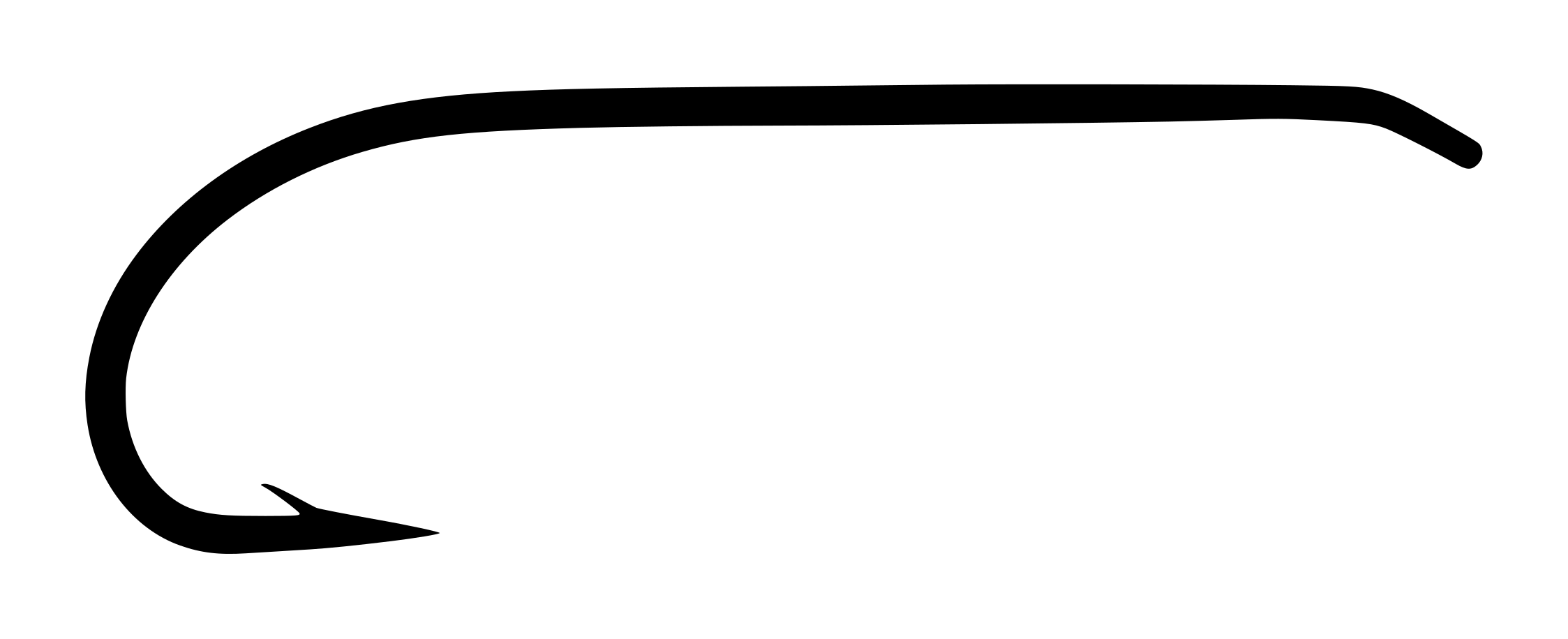
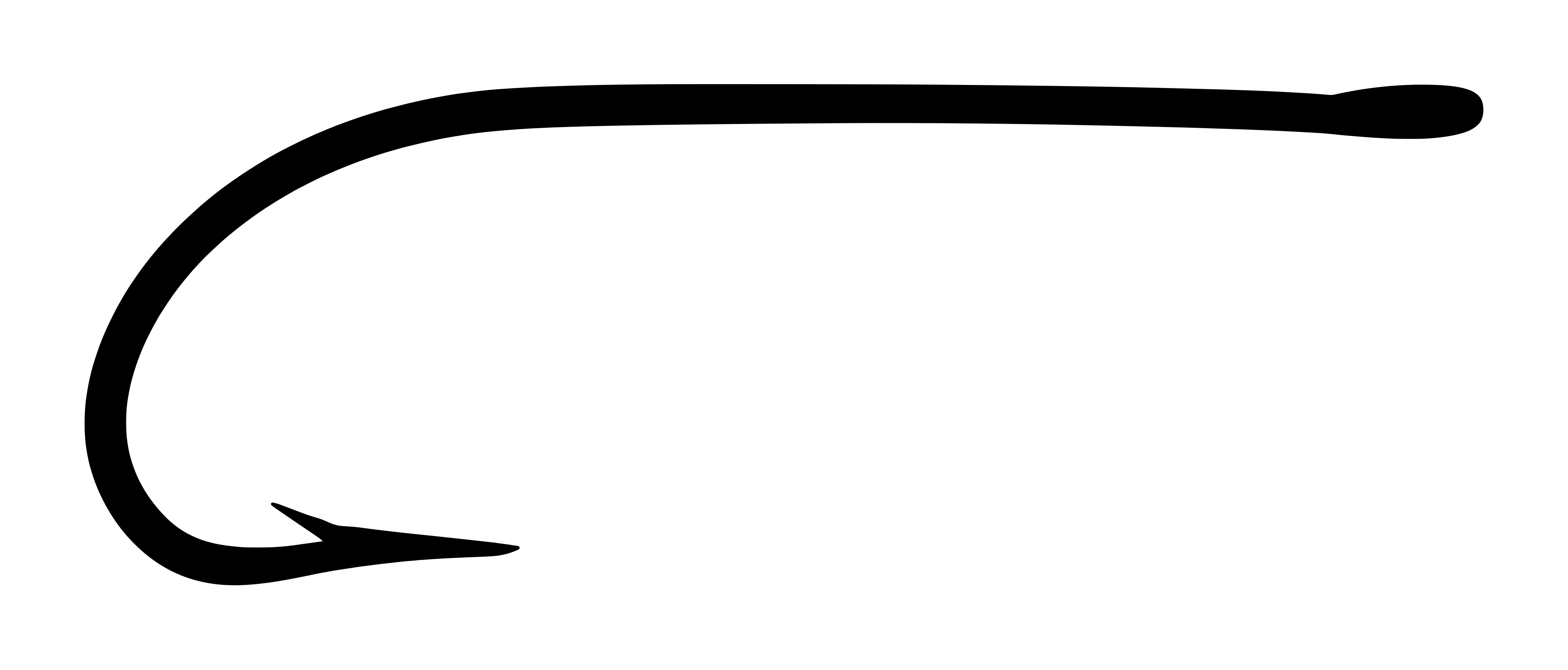
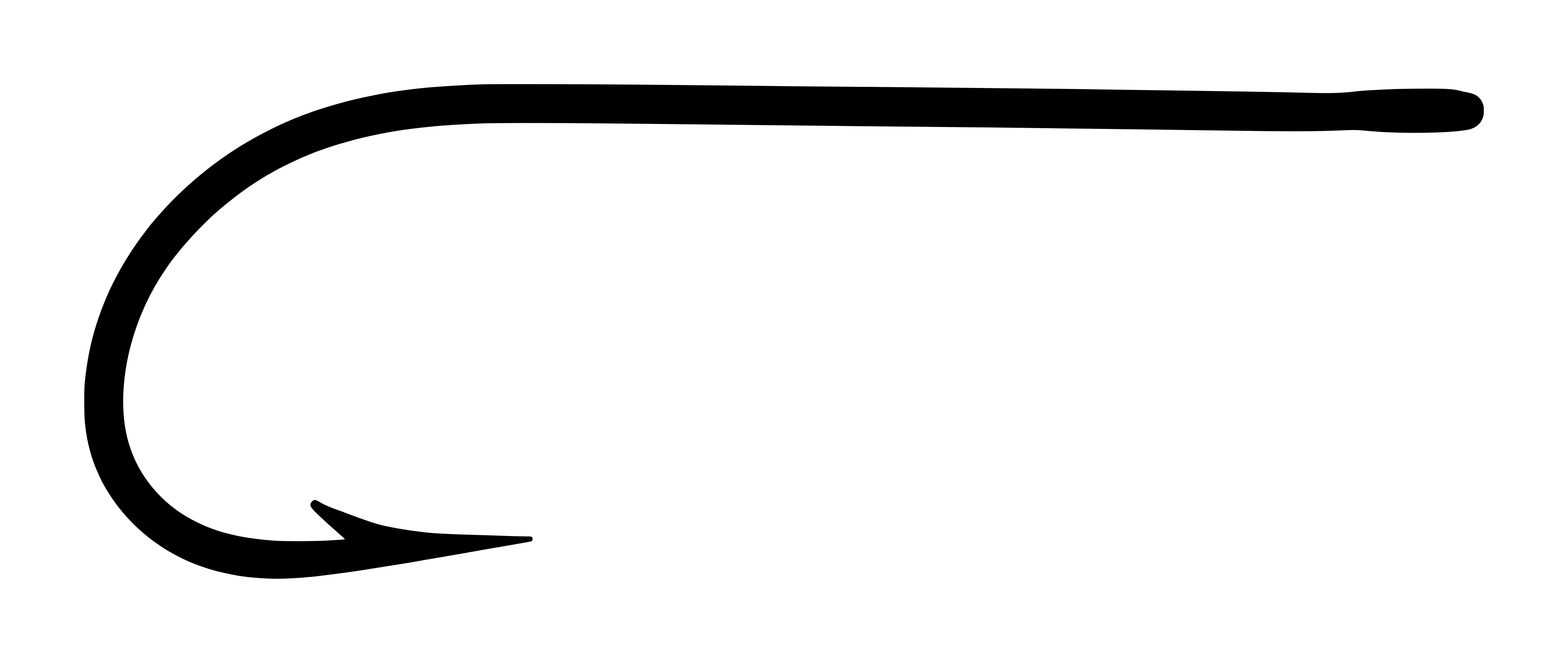
S. Allcock & Co. Limerick Hook No. 185 — a classic British trout hook from the interwar period, manufactured in Redditch, England. The model represents the company’s premium ‘Limerick’ line, featuring a distinctive tapered blind eye designed for attachment to fine gut leaders without bulk.
The hook exhibits a refined limerick bend with a superior point geometry — the inner face is nearly flat with a subtle taper, providing excellent penetration and retention. Standard wire gauge and moderate shank length make it suitable for dry flies, wet flies, and small nymphs in traditional English fly-fishing practice. The bronzed (warm brown) finish is characteristic of high-quality Redditch production.
Original green paper card packaging shows period-correct letterpress typography and remains in very good condition with all 100 hooks present. The absence of a barcode confirms pre-1974 production, and the card construction, paper stock, and logo style are consistent with Allcock’s 1920s–1940s output. This hook exemplifies the Redditch craft tradition at its zenith, when English manufacturers dominated the global market for refined fishing tackle.
Collectability is moderate to strong among Redditch specialists and traditional fly-tying enthusiasts. The tapered blind eye is an uncommon feature in surviving examples, and the original packaging in this condition commands genuine collector interest. Size 2 is standard and readily available, but complete original cards with full hook counts are increasingly scarce.
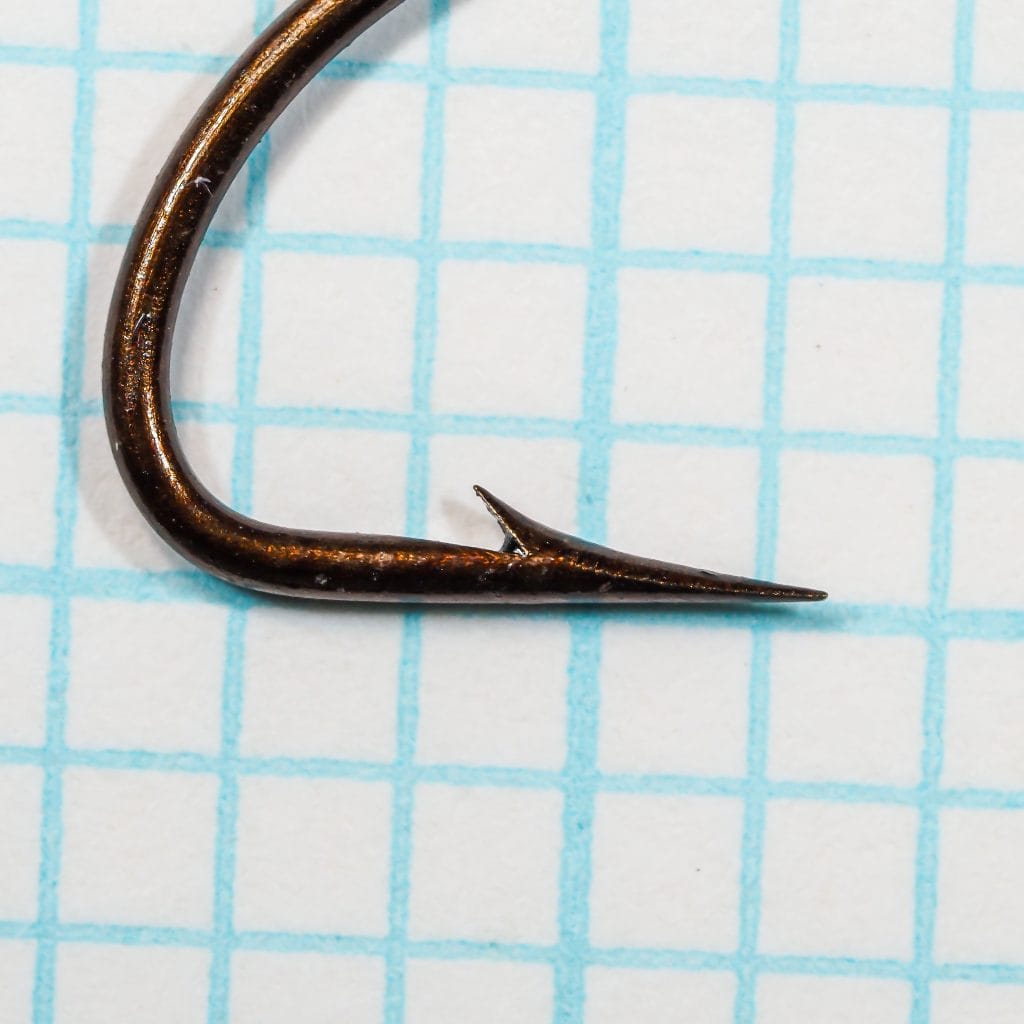
Close-up of the hook point and barb showing the superior point geometry with a nearly flat inner face and acute barb angle positioned just ahead of the bend apex. Bronzed finish visible.
Photographic record
8 cataloged imagesSelect any record to load it above.
8 images shown
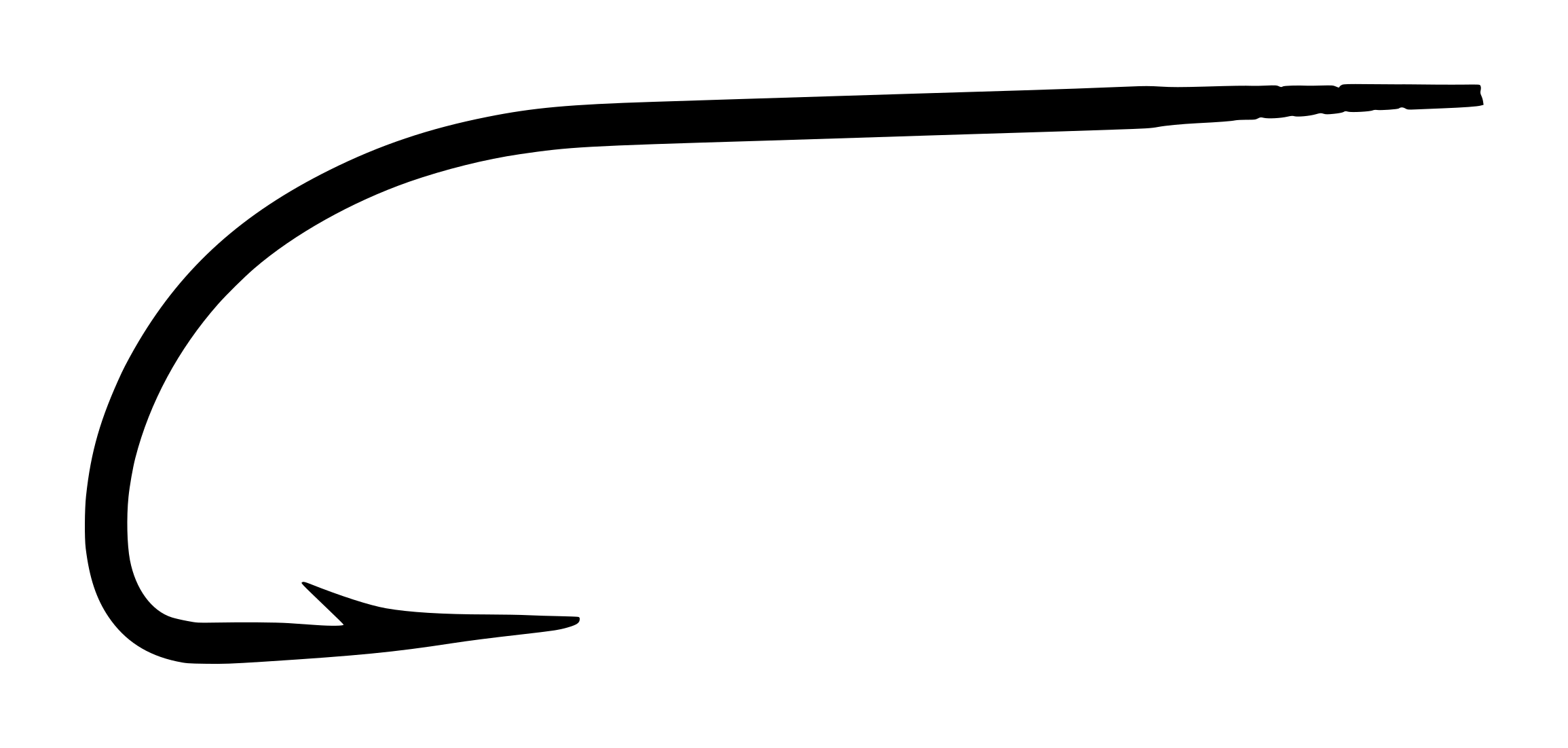
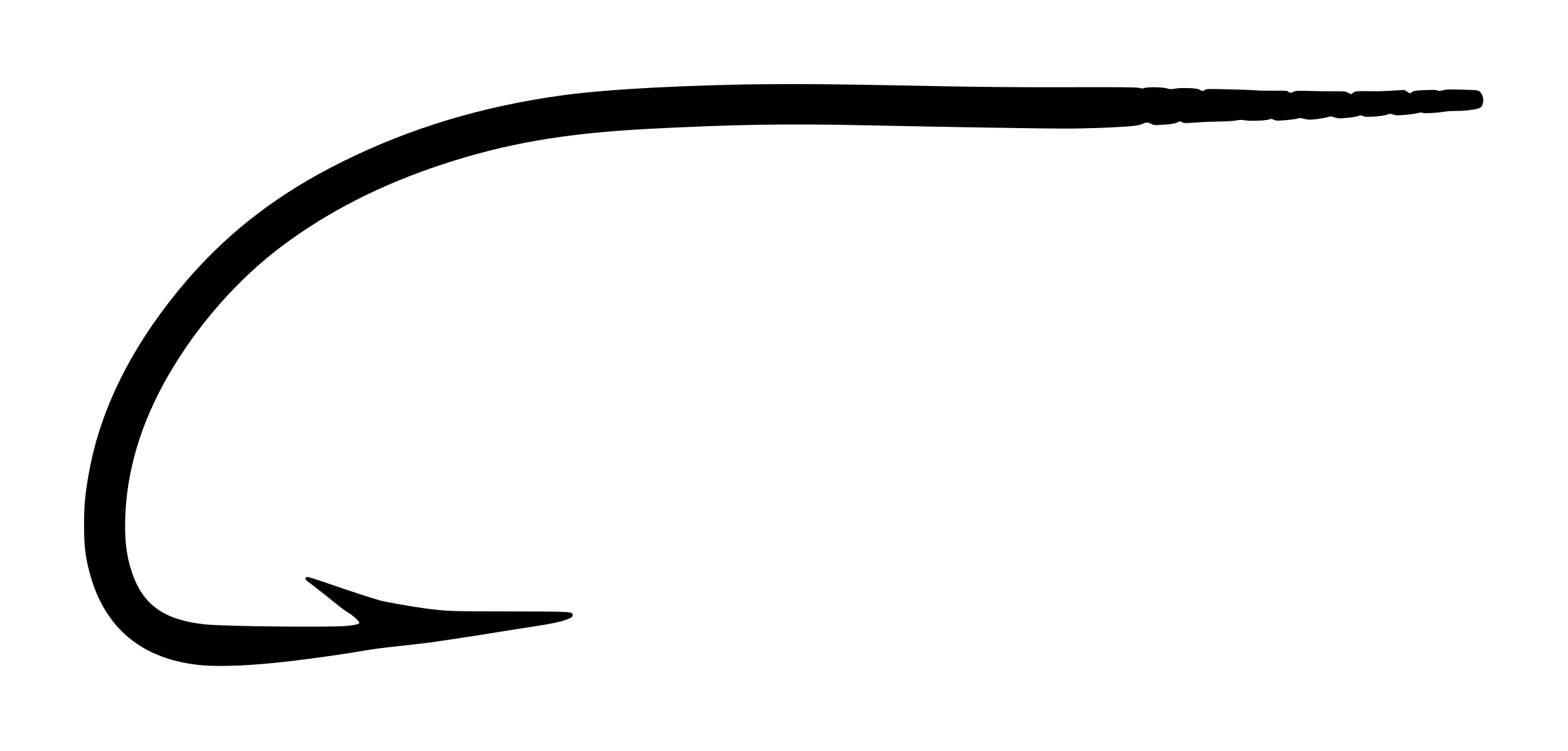
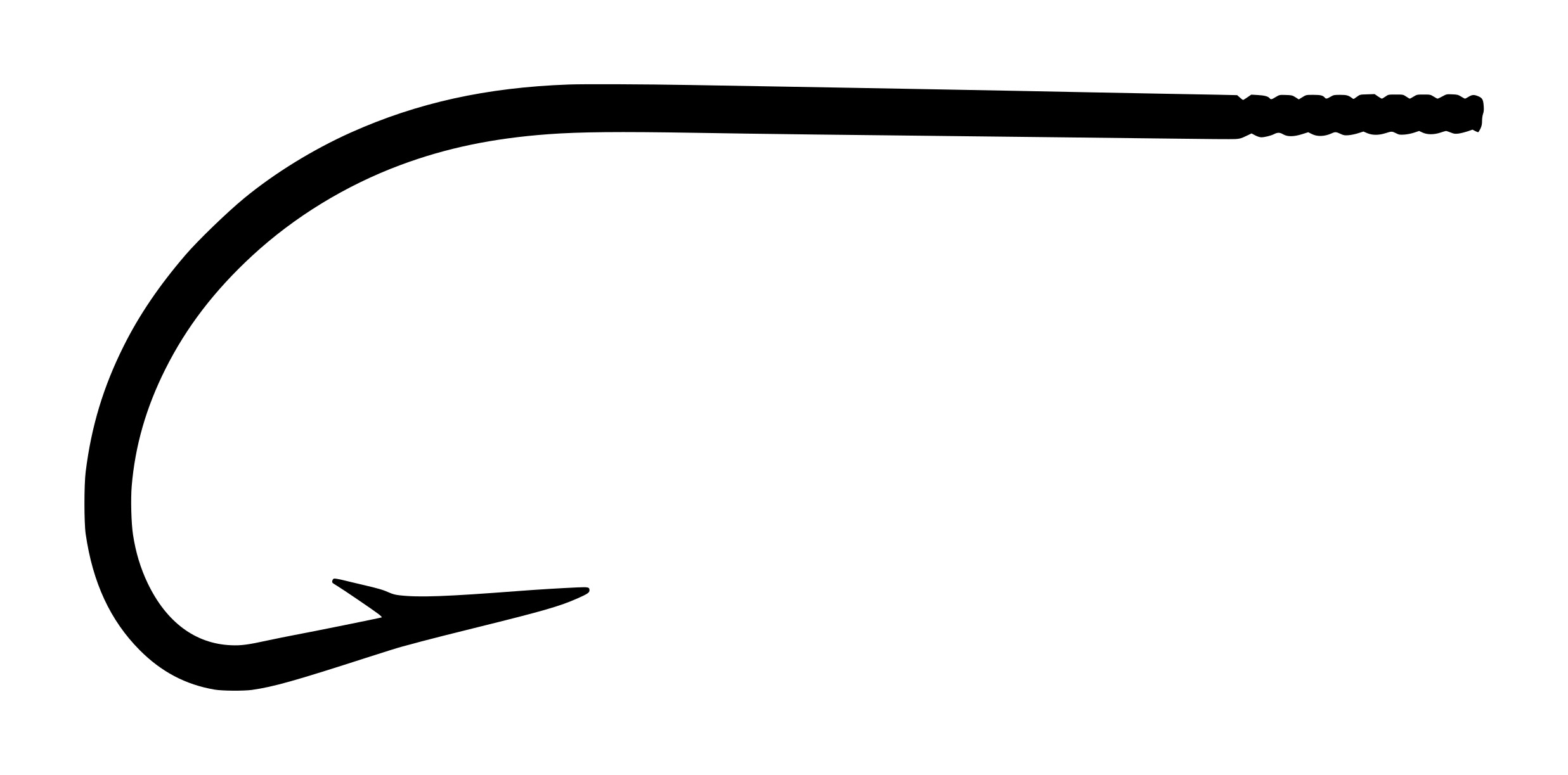
S Allcock 185 Size 2 — Hook Point DetailClose-up of the hook point and barb showing the superior point geometry with a nearly flat inner face and acute barb angle positioned just ahead of the bend apex. Bronzed finish visible.Open originalS Allcock 185 Size 2 — Full Hook ProfileFull side profile of the hook showing the classic limerick bend with angular bottom, standard shank length, and tapered blind eye. Bronzed finish uniform across the wire.Open originalS Allcock 185 — Original Packaging CardOriginal green paper sales card showing the full label text, Allcock stag trademark, and two hook specimens removed from the card for photography. Card shows light toning and minor edge wear consistent with age.Open originalS Allcock 185 — Card Label Close-upDetailed view of the original green paper card showing the letterpress typography, Allcock stag trademark, and all printed text. The 'Hollow Point' nomenclature is clearly visible, though variant cards show 'Ballard Point' instead.Open originalS Allcock 185 Size 2 — Point GeometryClose-up of the hook point showing the nearly flat inner face and subtle taper characteristic of superior point construction. The barb is short and positioned just ahead of the bend apex.Open originalS Allcock 185 Size 2 — Side ProfileFull side profile of the S. Allcock Limerick Hook No. 185 showing the tapered blind eye, standard-length shank, and characteristic limerick bend with angular bottom.Open originalS Allcock 185 — Card with HooksComplete view of the S. Allcock green paper sales card with two hook specimens displayed below, showing the variant 'Ballard Point' nomenclature visible on this example. The 'No. 2' size card is shown with full hook count of 100.Open originalS Allcock 185 — Card Label DetailDetailed view of the S. Allcock Limerick Hook No. 185 card showing the 'Ballard Point' variant nomenclature, the '100' hook count marking, and all printed text in sharp letterpress detail.Open original
Technical profile
Eye
Blind — Marked Tapered ShankTapered blind eye — the shank tapers to a smooth rounded point with no flattening or spade construction. Gut attached via loop tied around the taper. P
Wire
Fine (1X Fine), Forged
Shank
3X Long — Marked / Ridged, Tapered
Bend
Limerick, Standard gapClassic limerick geometry with angular bottom and smooth, continuous curve. Bend is well-proportioned to the shank length, exhibiting the precise symmetry characteristic of forged Redditch work. Wire set is straight with no twist or offset. P
Point
Hollow Point (concave inner face)Small, close-cut barb positioned slightly ahead of the deepest point of the bend. Barb angle is acute, typical of superior point construction. Barb does not impede point geometry. P
Finish
Bronzed — Confirmed (stated on packaging)Warm brown tone with visible steel grain beneath the coating, characteristic of bronzed finish. Uniform color across the wire. P
Specimen hooks show no corrosion, pitting, or surface defects. Bronzed finish is uniform with expected patina development from age. Original paper card exhibits light overall toning, minor creasing at edges, and small areas of paper distress consistent with 80+ years of storage. All 100 hooks remain on the card.
The superior point geometry — characterized by a near-straight inner taper and nearly flat inside face — offers several functional advantages. The minimal concavity provides a large, predictable penetration plane, reducing the risk of hook deflection when setting the fly in a fish’s mouth. The barb, positioned close to the deepest bend, works in concert with the superior geometry to secure the hook once penetrated.
The tapered blind eye eliminates the bulk of a turned eye, reducing the overall weight and profile of the hook at the critical junction with the leader. This was essential in the gut-leader era, when any excess material at the attachment point risked weakening the fragile connection. The tapered design allows the eye to taper smoothly from full wire diameter to nearly needle-like at the final gut-loop attachment point.
Forging in the Redditch tradition involved multiple stages of hammer-and-anvil shaping, work-hardening the steel while achieving precise bend geometry. This process imparts superior fatigue resistance compared to simple wire-bending, a critical factor for a hook that must flex under loading without cracking.
The ‘Superfine Spring Steel’ designation indicates a high-carbon formulation, work-hardened to provide both strength and elasticity. The bronzed finish protects the steel from immediate oxidation while allowing the hook to develop a natural patina over time — a desirable characteristic in the collecting tradition.
The Allcock Limerick hook series, introduced in the late 19th century, became one of the most widely respected hook patterns in British fly fishing. The ‘Limerick’ name derives from the city in Ireland, though the design itself was refined and standardized by Redditch manufacturers including S. Allcock & Co.
The series was offered in multiple sizes and wire gauges, each designated by a model number. The No. 185 Superfine Spring Steel variant positioned itself as a premium option for demanding fly tyers and chalk stream anglers who required both delicacy and reliability. The tapered blind eye was a signature feature, allowing gut leaders to be tied directly to the shank with minimal bulk — a significant advantage in an era before nylon monofilament.
Production continued through the 1940s, with variants of the card showing alternating nomenclature (‘Hollow Point’ vs ‘Ballard Point’), suggesting design or catalog refinements during the interwar period. The series remained in production into the post-war era, though later examples typically featured different packaging and updated nomenclature reflecting the shift to modern fishing practices.
Era and Packaging Dating
No barcode (pre-1974 indicator). Letterpress print method typical of early-20th century British packaging. Green paper stock and stag logo are consistent with Allcock's interwar and WWII period production. Company address shows 'No. 1 Redditch' which matches Allcock headquarters location during this era. Typography and card construction are characteristic of 1920s-1940s British hook packaging. The terms 'Superfine Spring Steel' and 'Hollow Point' (later reprinted as 'Ballard Point') reflect nomenclature conventions of this period.
The Allcock Stag: A Symbol of Redditch Excellence
The Allcock stag trademark on this card is one of the most enduring symbols in British fishing history. The stag — poised and alert — became synonymous with Redditch craftsmanship and was stamped or printed on thousands of tackle items throughout the 20th century. A single surviving Allcock card with its original stag trademark intact is immediately recognizable to fly fishers and collectors across the UK and Commonwealth, a testament to the staying power of the brand more than 80 years after production.
Design lineage and influence
The Limerick bend traces its lineage to Irish river-fishing traditions of the 19th century, refined and standardized by English manufacturers including S. Allcock & Co. The bend geometry — with its angular bottom and smooth, continuous curve — became a template copied by dozens of competing makers globally.
The tapered blind eye represented a practical evolution in response to the demands of gut-leader fishing. Prior to refined blind-eye designs, fly tyers used looped eyes or simple turned eyes, both of which introduced bulk and weakness at the critical leader attachment point. Allcock’s tapered blind eye solved this problem elegantly, allowing the eye diameter to transition smoothly from full wire to a needle-like taper, accommodating the loop of gut with minimal resistance.
This design influenced later manufacturers including Partridge of Redditch (which absorbed much of Allcock’s patent portfolio) and Norwegian makers like Mustad, though Mustad’s versions typically featured ball eyes rather than tapered construction. The superior point geometry remains largely unchanged in modern reproductions, confirming its enduring functional effectiveness.
Best matchRelated by Attribute
Computed automatically from catalog data — updated as new hooks are added.
Matches: Bend, Wire, Gap, Eye, Eye Orient. +4 moreDiffers: Shank: 3X Long vs Standard; Point: Hollow Point vs Superior; Finish: Bronzed vs Blued +3 more
Matches: Gap, Eye, Eye Orient., Point, Finish +5 moreDiffers: Bend: Limerick vs Sneck; Shank: 3X Long vs 1X Long; Wire: Fine (1X Fine) vs Standard +3 more
Matches: Bend, Gap, Eye Orient., Point, Finish +2 moreDiffers: Shank: 3X Long vs 1X Long; Wire: Fine (1X Fine) vs Standard; Eye: Blind — Marked Tapered Shank vs Blind — Tapered Shank +3 more
A classic English trout fly hook suited to wet flies, small nymphs, and traditional dry fly patterns. The Limerick bend with superior point is particularly effective for delicate presentations and precise fly tying. The tapered blind eye accommodates fine gut leaders with minimal bulk at the attachment point, making it ideal for chalk stream fishing and other traditions requiring fine tackle.
Modern Equivalents
Hook
Match Quality
Notes
Partridge GRS4A
Very Good
Partridge Limerick, tapered blind eye, similar bend geometry and wire gauge. Partridge acquired Allcock heritage patents.
Mustad 3906
Good
Limerick bend with ball eye; superior point. More modern construction but comparable fishing application.
Daiichi 1180
Good
Japanese-made limerick with superior point and tapered eye construction. Performance equivalent for modern fly tyers.
Collector notes
Rated 5.5/10 — Scarce in original packaging with complete hook count. Size 2 is standard and regularly encountered, but intact original cards from the interwar period command moderate collector premiums. The tapered blind eye is an uncommon feature in surviving examples, particularly in British Redditch work. Allcock material is actively sought by traditional fly-tying historians and Redditch specialists.
Reference value
$18 – $45 USD estimate
Packaging condition
Very Good — light wear, fully legibleRecorded specimen
Packaging format
SAN-E-185Catalog code
Collectability Drivers: The original green paper card, the tapered blind eye (an uncommon feature), and the proven manufacturing pedigree of S. Allcock & Co. all contribute to collector interest. Complete cards with all 100 hooks intact are increasingly difficult to locate, as many have been broken up and individual hooks lost or dispersed. The pre-barcode era dating adds historical authenticity. Redditch hooks from the interwar period are actively collected by fly-tying historians and English tackle specialists.
Limiting Factors: Size 2 is relatively common; larger and smaller sizes command higher premiums. The hook is not associated with any famous fly pattern or designer, limiting appeal to general fly-tying audiences. Condition wear on the paper card, loss of even a few hooks from the original 100, or separation from its original packaging reduces value significantly. Mustad’s later acquisition of competing Redditch makers has made these examples less exclusive than they once appeared.
Most Desirable Variants: Sealed or near-sealed original cards (no hooks removed) in excellent condition are at the high end of the value range. Cards showing the ‘Ballard Point’ nomenclature variant are slightly scarcer, as they represent a transitional printing. Larger sizes (2/0, 3/0) and smaller sizes (4, 6) command modest premiums over the standard No. 2.
Condition Factors: Original green paper color and intact letterpress printing are essential to value. Cards with significant fading, staining, or tape repairs are materially less desirable. The presence of all 100 hooks, or near-complete counts (95+), is critical; cards with fewer than 80 hooks remaining are substantially discounted. Storage history matters — hooks showing corrosion or verdigris are less collectible, though light patina is expected and not penalizing.
Packaging
Green paper sales card, approximately 2.75" × 1.75" (70 × 44 mm). Card stock is medium-weight with printed text in black letterpress. Decorative border of small circles surrounds the card perimeter. Large stag/deer logo upper left (Limerick trademark). Central text reads: '185 / Superfine Spring Steel / Hollow Point / LIMERICK HOOKS / S. ALLCOCK & CO. / No. 1 Redditch. / 100'. One variant label visible reads 'Ballard Point' instead of 'Hollow Point'. Card shows light toning and minor edge wear consistent with age. No barcode present. Original hooks intact (100 count confirmed).
Market Value Notes
Low ($18): Good condition — opened card, 85-95 hooks remaining, light packaging wear, hooks bright and uncorroded.
High ($45): Excellent to Mint condition — sealed or near-sealed card with no hooks removed, original green paper and typography pristine, no visible defects.
Premium factors: Sealed/near-sealed packaging, complete or near-complete (100) hook count, Allcock pedigree, tapered blind eye, interwar period provenance, Redditch origin.
Platforms: eBay UK (primary), specialty tackle dealers in England and North America, Redditch antique fairs.
Confidence: E Estimated — based on limited recent sales data for Allcock interwar cards; actual sales rare. Estimate assumes sales card format; loose hooks would be valued at 25-40% of these figures.
Where to Find
eBay UK (regular postings under 'Allcock hook' or 'Limerick hook' searches). Specialist tackle dealers in Redditch and the English Midlands. Antique fishing tackle fairs and auctions, particularly in England. North American fly-tying retailers occasionally stock vintage Allcock examples. Complete original cards are significantly harder to source than individual loose examples.
Preservation
Storage and Preservation
Store this card in a cool, dry environment, ideally between 45–60°F (7–16°C) with relative humidity below 50%. Excess moisture will accelerate patina development on the bronzed finish and can cause paper deterioration and mold growth on the card.
Keep the card in its original packaging rather than removing individual hooks. The paper card provides protection from dust, handling, and moisture fluctuation. If the card must be stored in an album or display case, use acid-free, archival-quality materials only — ordinary paper or plastic can degrade both the hooks and the card over time.
Avoid direct sunlight, which will fade the green paper color and can cause the bronzed finish to develop an uneven patina. Store away from other metals to prevent galvanic corrosion between different steel or alloy types.
The bronzed finish is susceptible to light patina development, which is normal and desirable from a collecting standpoint — it evidences authenticity and age. Do not attempt to polish or ‘restore’ the finish. If corrosion is present (rust spots, pitting, verdigris), consult a conservator before attempting any remedial treatment.
Handle the card by its edges only, avoiding contact with the printed surface or the hooks themselves. Skin oils and moisture accelerate oxidation and can cause fingerprints to etch into the paper.
Primary Source
Card Text Analysis: Design Claims and Historical Context
Source: S. Allcock & Co. Limerick Hook No. 185 original paper card, c. 1920-1945, green letterpress card stock.
The card’s printed specifications are worth analyzing in detail:
‘Superfine Spring Steel’: This term indicates a high-carbon steel formulation, work-hardened through the Redditch forging process. ‘Superfine’ distinguishes this hook from heavier utility models and signals the target user — fly tyers requiring strength without weight. The claim reflects genuine manufacturing intent: the steel composition and hardness differ materially from standard mild-steel hooks used for bait fishing.
‘Hollow Point’ (and ‘Ballard Point’ variant): This is the first notable discrepancy on surviving examples. The card shows two nomenclature versions: ‘Hollow Point’ and ‘Ballard Point,’ both present in the research images. Modern analysis confirms this hook exhibits a superior point geometry — a nearly flat inner face with subtle taper — NOT a hollow point (which has a strongly concave inner face). The nomenclature shift likely reflects internal catalog reorganization or a response to competitor naming conventions. ‘Ballard Point’ is obscure in modern literature but may reference a patent or internal Allcock designation.
‘LIMERICK HOOKS’: The uppercase treatment and prominent placement emphasize the model line, not the company name. This marketing choice reflects the design’s reputation — the Limerick bend was already famous by the 1920s, and Allcock leveraged that brand equity. The decision to lead with ‘Limerick’ rather than ‘Allcock’s Premium’ or similar branding tells us that the bend design itself was the primary selling point.
‘No. 1 Redditch’: The address designation is exact — No. 1 was Allcock’s principal manufactory address in Redditch, establishing this as a top-tier product from the company’s flagship facility, not a subcontracted or secondary production site.
Size Note
Sizing Nomenclature: Size 2 in the Redditch Tradition
This hook is documented as ‘Size 2’ by the original packaging and confirmed by physical caliper measurement (overall length 1.30 inches / 33 mm). It is important to note that this sizing system is distinct from modern continental numbering.
In the Redditch tradition, hook sizes were typically numbered in two directions: ‘Size 1’ upward for progressively larger hooks, and below 1 for progressively smaller hooks (Size 2, 3, 4, etc., sometimes written as ‘2,’ ‘3,’ ‘4’). This inverted numbering system can confuse modern tyers who are accustomed to the Mustad convention (where larger numbers indicate larger hooks).
Size 2 in Redditch nomenclature is a standard small-to-medium trout hook, suitable for dry flies, wet flies, and small nymphs. The overall length of ~1.30 inches places it well within the range of modern equivalents like a Daiichi 1180 in size 16-18 or a Partridge GRS4A in size 14-16, depending on the specific gap width being considered.
A collector encountering this hook without the original card should be aware: it is neither exceptionally large nor exceptionally small. Its value and collectability derive primarily from the original packaging, the manufacturer pedigree, and the uncommon tapered blind eye — not from size rarity.
Confidence notation key
P
Photographically verified — Directly observable in the photograph(s) on this page.
V
Verified by documentation — Confirmed by manufacturer catalog, spec sheet, or published reference.
I
Inferred — A logical deduction from observable or documented evidence, not directly stated.
E
Estimated — An approximation based on visual comparison, proportional analysis, or limited data.
S
Speculative — A reasoned hypothesis that cannot be confirmed from available evidence.
Unnotated claims are the compiler’s synthesis; see Sources. All photographs on garrenwood.com are taken on a measurement grid where each square equals 1/10 inch (0.1″ / 2.54 mm).