The Mustad 3816 is a traditional Norwegian saltwater bait hook featuring blind eye construction and marked shank design P. Manufactured by O. Mustad & Son in Gjøvik, Norway, this hook represents mid-20th century industrial fishing tackle designed for heavy-duty applications V.
The size 7/0 specimen shows forged extra-heavy wire construction with a bronzed finish, indicating its intended use for large saltwater species P.
Dating from approximately 1950-1980 based on construction methods and finish, this hook demonstrates the quality manufacturing standards that established Mustad as a global leader in fishing tackle I. The traditional design reflects established saltwater fishing practices of the era.
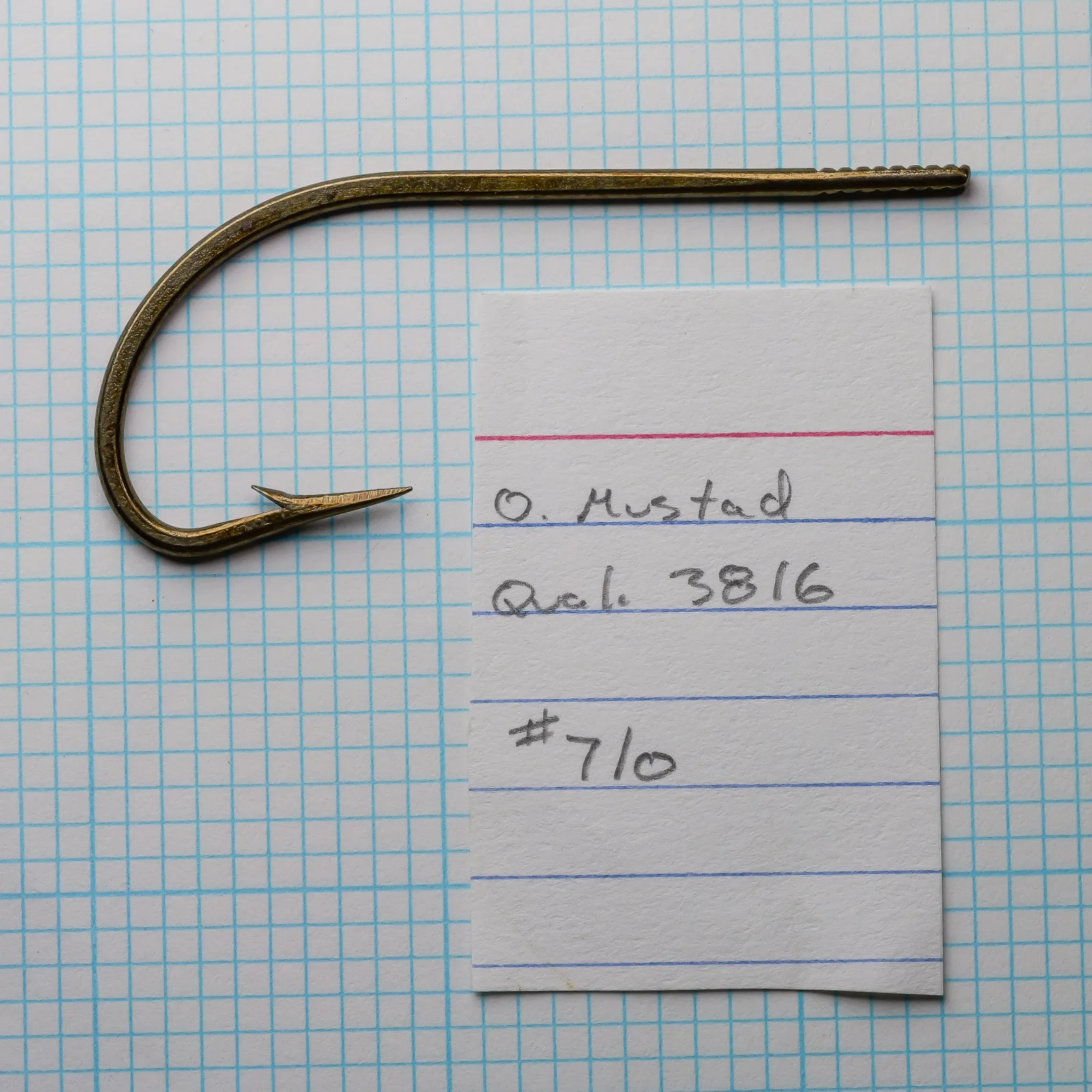
Complete view of the Mustad 3816 saltwater hook, size 7/0, showing blind eye construction, marked shank, and original specimen documentation card.
Photographic record
4 cataloged imagesSelect any record to load it above.
4 images shown
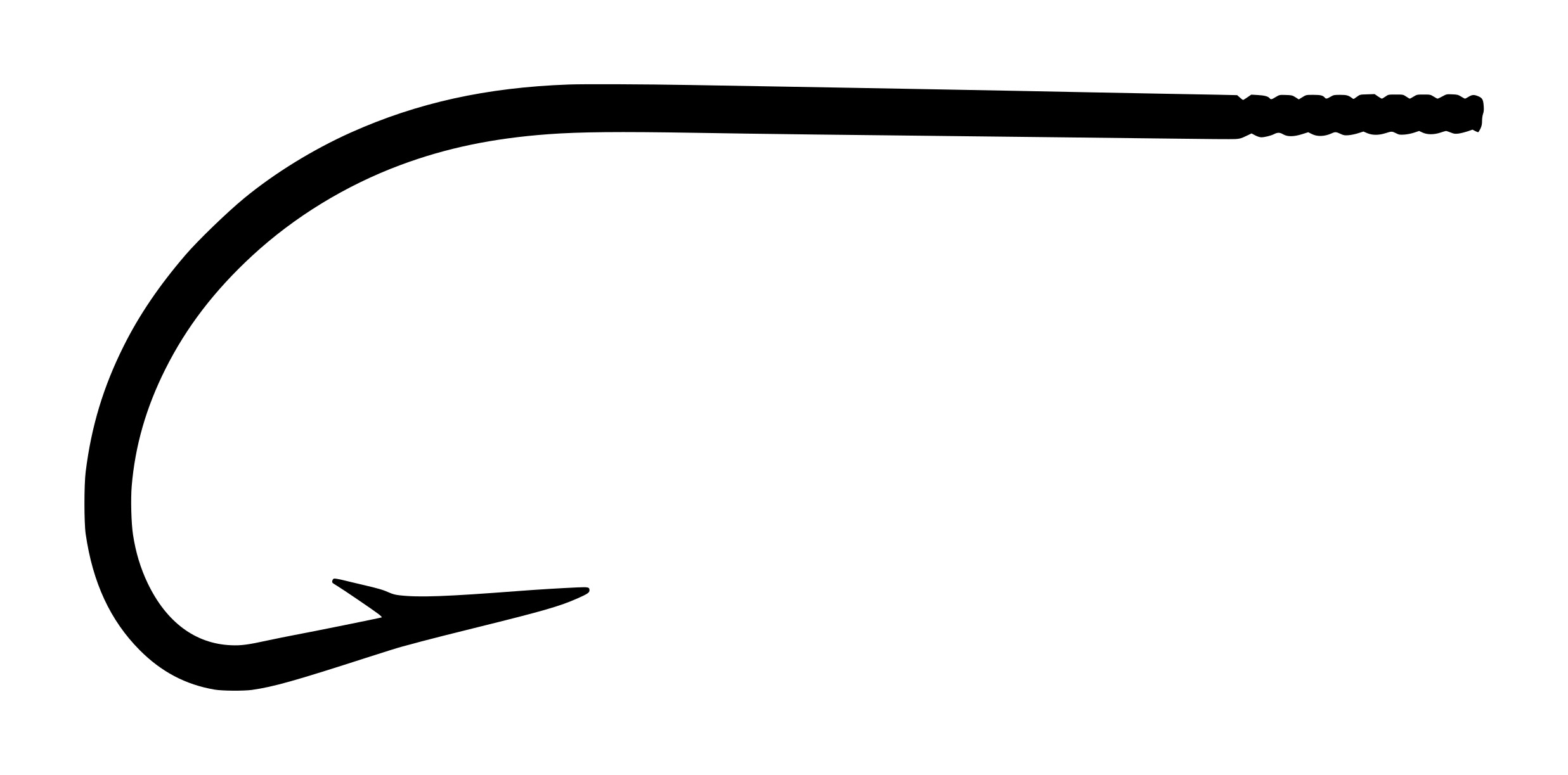
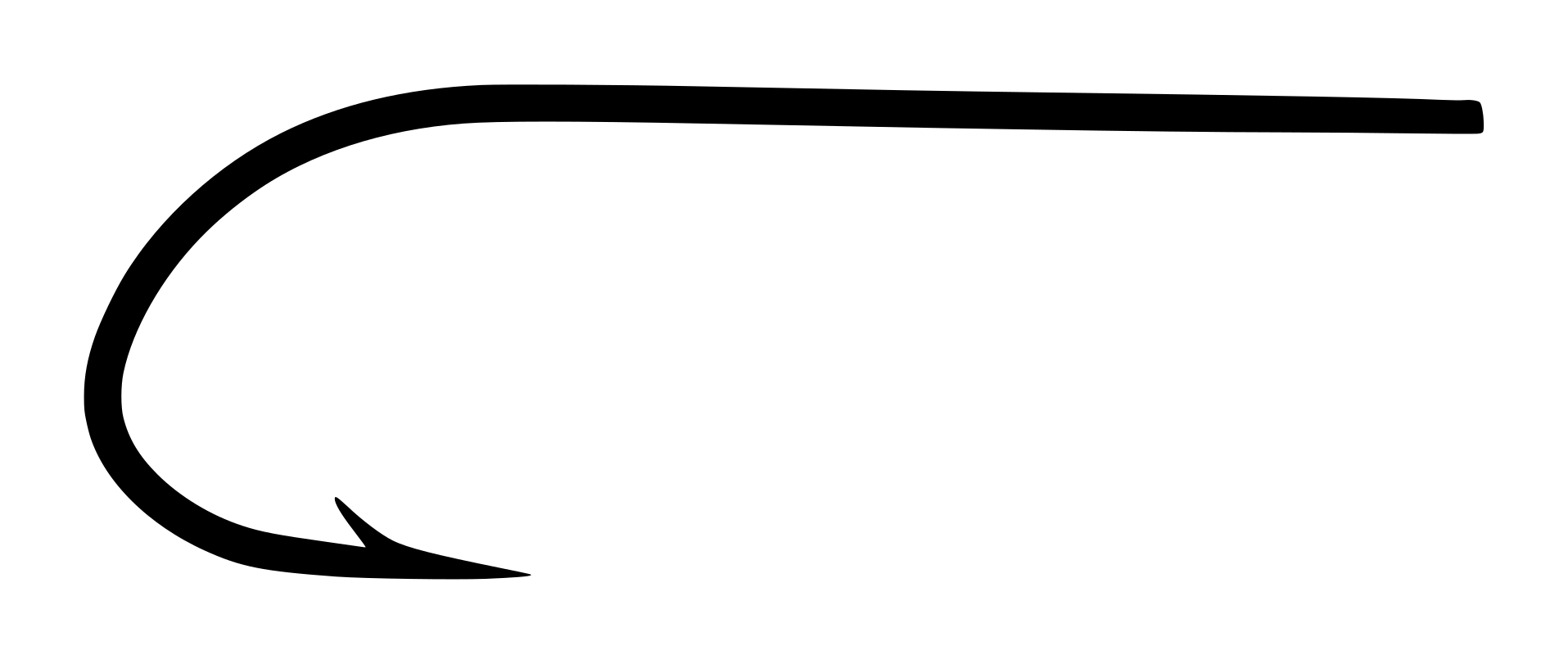
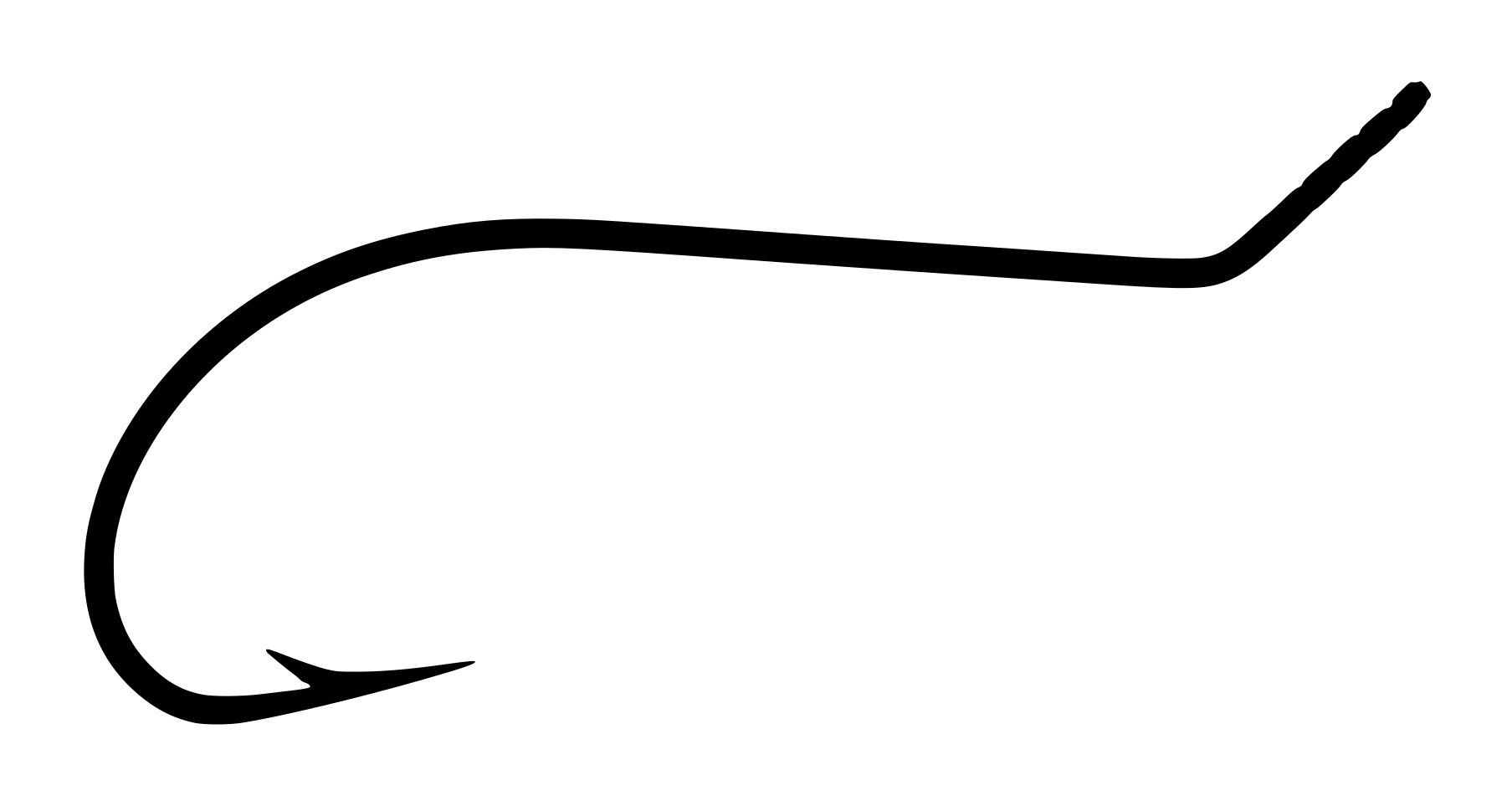
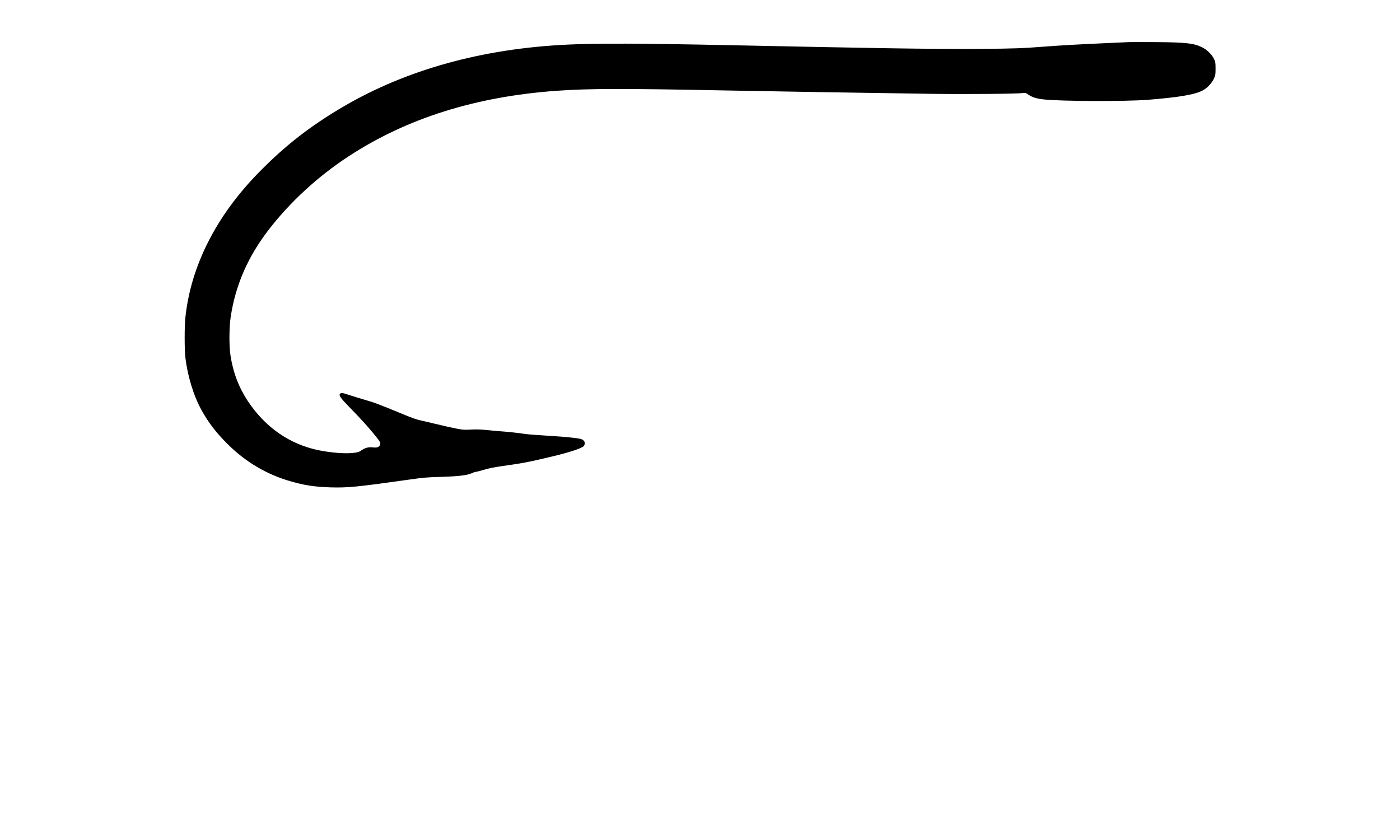
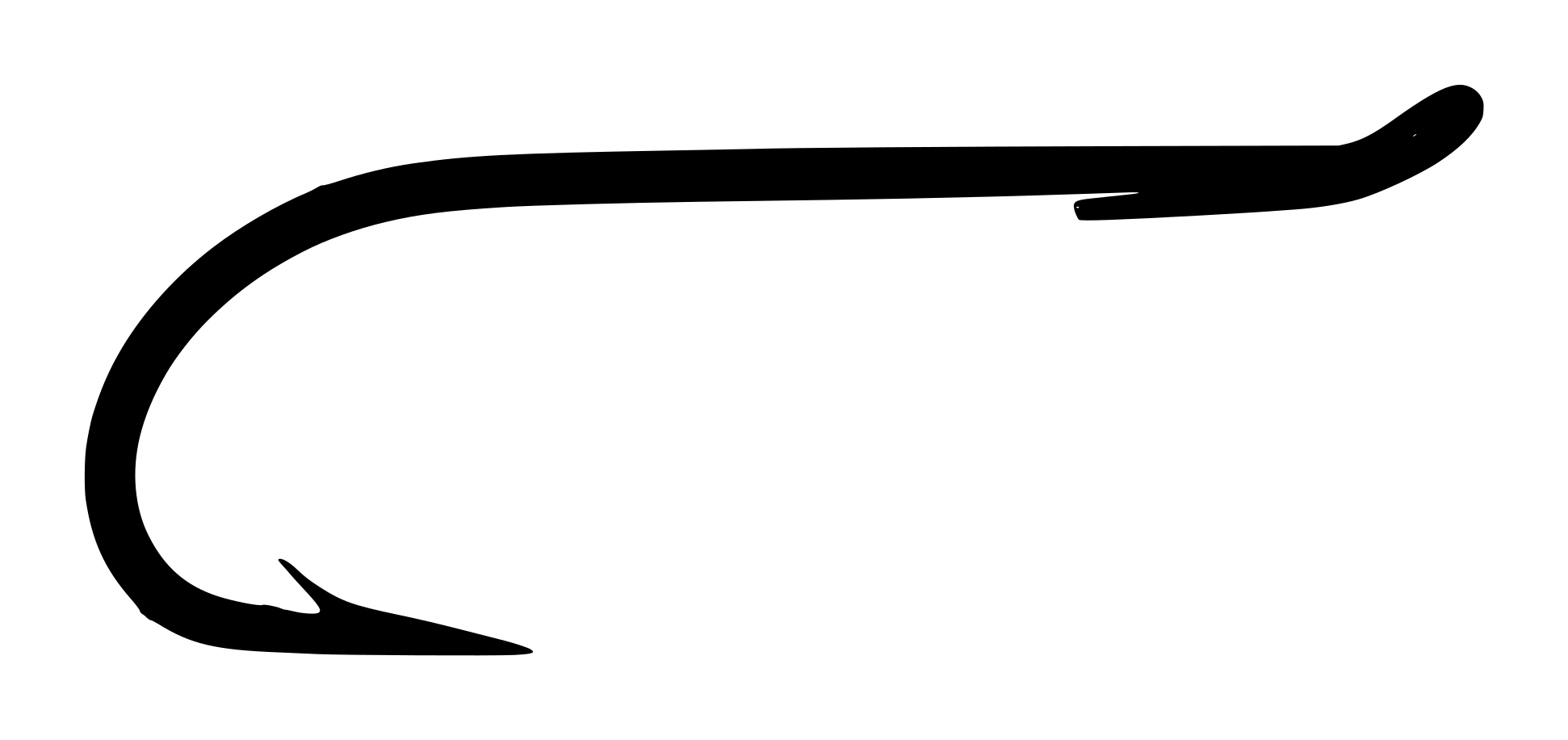
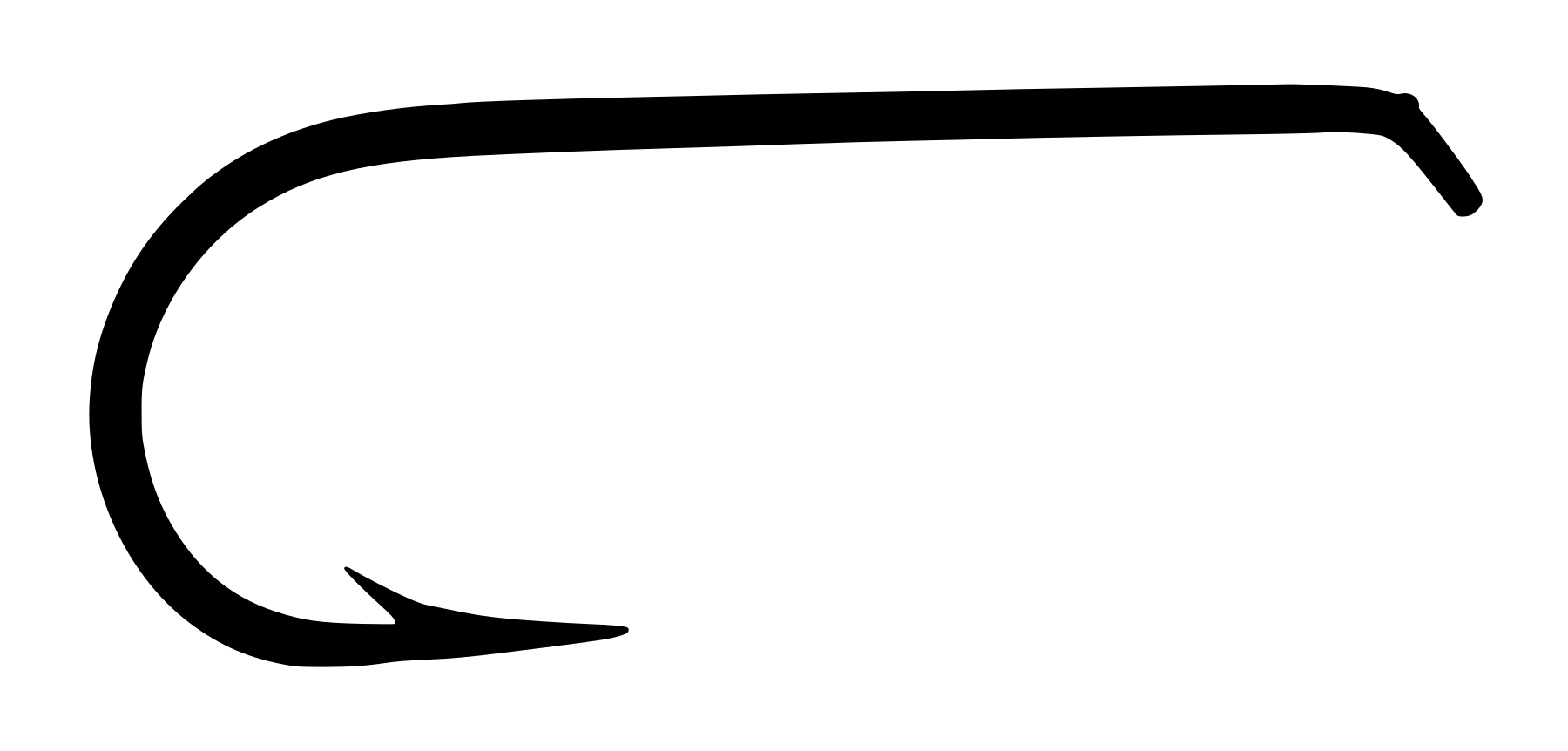
Mustad 3816 Saltwater Hook Size 7/0 with DocumentationComplete view of the Mustad 3816 saltwater hook, size 7/0, showing blind eye construction, marked shank, and original specimen documentation card.Open originalMustad 3816 Point Detail Size 7/0Close-up view of the Mustad 3816 point showing standard spear geometry and single barb construction with bronzed finish.Open originalMustad 3816 Side Profile Size 7/0Side profile view of the Mustad 3816 showing the classic Sproat bend geometry and overall hook proportions.Open originalMustad 3816 Marked Shank Size 7/0Detail view of the marked ridged shank showing the raised ridge pattern designed for superior bait retention.Open original
Technical profile
Eye
Blind — Marked ShankBlind eye construction with marked shank.
Wire
Fine (1X Fine), Forged, Est. 0.045"-0.050" (1.1-1.3 mm) E
Shank
Standard — Marked / Ridged, Tapered
Bend
Sproat, Standard gapDeep Sproat bend with rounded bottom profile, providing optimal strength-to-penetration ratio P. Slight taper toward point enhances penetration characteristics P.
Point
Hollow Point (concave inner face)Single moderate-length barb cut at optimal angle for fish retention while allowing reasonable release when desired P.
Finish
Bronzed — Confirmed (stated on packaging)Even bronzed finish with warm golden-brown tone throughout P. Surface shows characteristic bronze patina development, indicating authentic period finish P.
Hook shows excellent preservation with intact bronzed finish and sharp point. Card exhibits typical age toning but remains structurally sound with clear handwriting.
The blind eye construction eliminates the potential weak point of a formed loop, instead using a marked shank. This design distributes stress across a broader area, crucial for large saltwater species that generate significant pulling forces.
The forged wire profile increases strength by compressing the metal grain structure while maintaining workability V. The marked ridged shank creates mechanical bait retention, preventing slippage during casting and fish fights. The bronzed finish provides corrosion resistance suitable for saltwater environments while maintaining the hook’s penetrating sharpness.
We have measurement for size 7/0. Know any others? Submit calipered measurements and we'll review and add them. Thank you!
Historical context
mustad
O. Mustad & Son was founded in 1877 in Gjøvik, Norway, by Ole Mustad, establishing what would become the world’s largest fishing hook manufacturer V. The company built upon Norwegian metalworking traditions, leveraging local expertise in iron and steel processing to create fishing tackle of exceptional quality and consistency.
By the mid-20th century, Mustad had established global distribution networks, becoming synonymous with reliable fishing hooks across international markets. The company’s industrial approach to hook manufacturing, combined with rigorous quality control, made Mustad hooks the standard choice for both commercial and recreational fishing applications worldwide.
Series History
The Mustad 3816 represents the company’s traditional saltwater bait hook line, designed for heavy-duty marine applications. This model exemplifies the blind eye construction that was standard for larger saltwater hooks during the mid-20th century, providing maximum strength at the critical eye-shank junction.
The series was likely introduced in the 1940s-1950s as part of Mustad’s expansion into specialized saltwater tackle, responding to growing demand from both commercial and sport fishing markets. The marked shank feature became a signature element of Mustad’s bait-holding hook designs during this period.
Era and Packaging Dating
Handwritten specimen card suggests mid-20th century documentation period. Bronzed finish and blind eye construction consistent with traditional Mustad bait hook designs from 1950s-1970s era. Lack of modern packaging or barcoding supports vintage classification.
Norwegian Metalworking Heritage
Mustad's blind eye construction was originally developed for commercial fishing applications where maximum strength was critical. The company's Norwegian heritage in metalworking, dating back centuries, provided the technical expertise to create these robust eye designs that could withstand the tremendous forces generated by large ocean fish.
Design lineage and influence
Best matchRelated by Attribute
Computed automatically from catalog data — updated as new hooks are added.
Matches: Bend, Shank, Gap, Eye, Eye Orient. +2 moreDiffers: Wire: Fine (1X Fine) vs Standard; Point: Hollow Point vs Standard / Spear; Finish: Bronzed vs Black Japanned +2 more
The Mustad 3816 is designed as a heavy-duty bait hook for saltwater fishing P. The blind eye construction and marked shank indicate this hook was intended for secure bait attachment when targeting larger marine species I. The forged construction and extra-heavy wire gauge make it suitable for big game applications V.
Secondary Applications
Occasional use in heavy saltwater fly applications requiring extreme strength
Classic Fly Patterns
Not typically used for fly tying
Modern Equivalents
Hook
Match Quality
Notes
Mustad 92611 Beak Baitholder
Good
Modern equivalent with similar strength characteristics but turned eye
Mustad 39960D Big Game
Very Good
Contemporary heavy-duty saltwater hook with comparable wire gauge
Collector notes
Uncommon vintage Mustad saltwater hook with traditional blind eye construction. Limited collector interest due to utilitarian design.
The Mustad 3816 represents traditional Norwegian hook manufacturing from the mid-20th century. The blind eye construction and marked shank reflect established saltwater fishing practices. While not rare, examples in good condition with original documentation provide modest historical interest for collectors focused on traditional saltwater tackle. The heavy wire gauge and forged construction demonstrate quality manufacturing standards of the era.
Packaging
Handwritten specimen card with ruled lines. Card shows 'O. Mustad', 'Qol. 3816', and '#7/0' in blue ink. Paper stock appears to be standard index card material with moderate toning.
Market Value Notes
Individual specimens typically $5-15 depending on condition. Original packaging or documentation adds premium. Limited collector demand keeps values modest.
Store in a cool, dry environment away from moisture to prevent corrosion of the bronzed finish. The marked shank is particularly susceptible to rust formation in humid conditions. Original documentation cards should be stored flat in acid-free sleeves to prevent further deterioration.
Avoid contact with dissimilar metals to prevent galvanic corrosion. The bronzed finish may develop additional patina over time, which collectors often consider desirable as evidence of authenticity. Handle with clean, dry hands to prevent fingerprint etching on the finish surface.
Marking Analysis
Specimen Documentation
The handwritten specimen card shows three distinct entries in blue ballpoint ink: ‘O. Mustad’ (manufacturer identification), ‘Qol. 3816’ (likely quality control notation with model number), and ‘#7/0’ (size designation). The handwriting style and ink type suggest documentation from the 1960s-1970s period.
The ‘Qol.’ abbreviation likely stands for ‘Quality’ in Norwegian, indicating this may have been a quality control or inspection sample. The consistent handwriting suggests professional documentation rather than retail or collector notation.
Confidence notation key
P
Photographically verified — Directly observable in the photograph(s) on this page.
V
Verified by documentation — Confirmed by manufacturer catalog, spec sheet, or published reference.
I
Inferred — A logical deduction from observable or documented evidence, not directly stated.
E
Estimated — An approximation based on visual comparison, proportional analysis, or limited data.
S
Speculative — A reasoned hypothesis that cannot be confirmed from available evidence.
Claims with no notation are confirmed by multiple independent sources. All photographs on garrenwood.com are taken on a measurement grid where each square equals 1/10 inch (0.1″ / 2.54 mm).