Manufacturer: Horrocks-Ibbotson Co. (Stockport, England), trading under the UTK trademark.
Model & Application: No. 465 Superfine Aberdeen — a fine-wire trout hook optimized for dry-fly and light nymph work. The Aberdeen bend combines a wide, rounded profile with a delicate spear point, making it particularly effective for presentation on slower currents and selective trout.
Defining Features: Ringed eye, fine round wire, standard-length shank, and light bronzed finish. The ‘Superfine’ designation on period packaging denotes wire gauge rather than quality — a marking common to Horrocks output of the interwar and immediate postwar era.
Era & Evidence: Dated c. 1920s-1950s based on the bright green card stock, letterpress printing style, lack of barcode, and ‘Made in Germany’ statement. The UTK diamond trademark and ‘Reg. U.S. Pat. Off.’ indicate established trademark registration and American distribution channels.
Collecting Context: Uncommon outside specialist collections; size 2 is less sought than larger sizes. Original cards command modest premiums over loose hooks, and the German manufacturing origin adds interest within Redditch-tradition historian circles.
Original packaging for Superfine Aberdeen hooks, size 100, ringed and rustproof finish, manufactured by Horrocks-Ibbotson Co. in Germany.
Photographic record
4 cataloged imagesSelect any record to load it above.
4 images shown
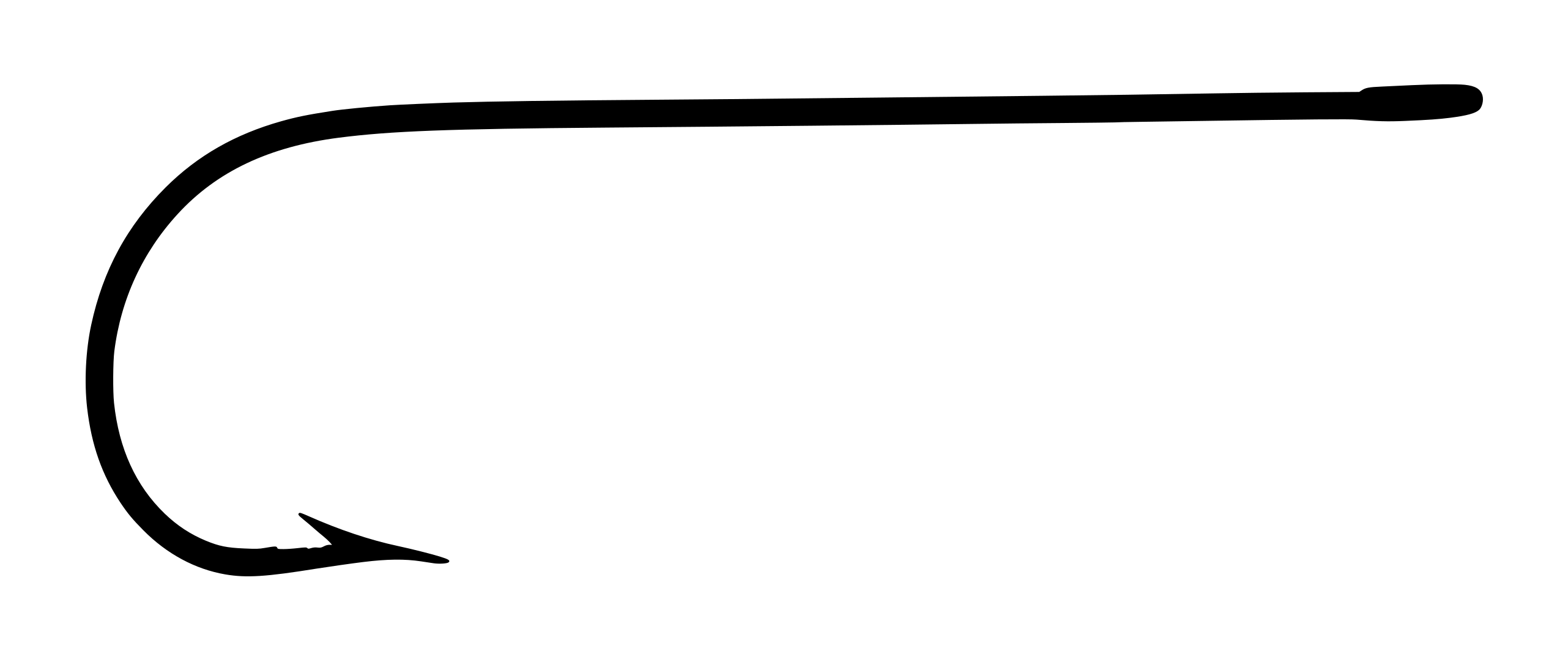
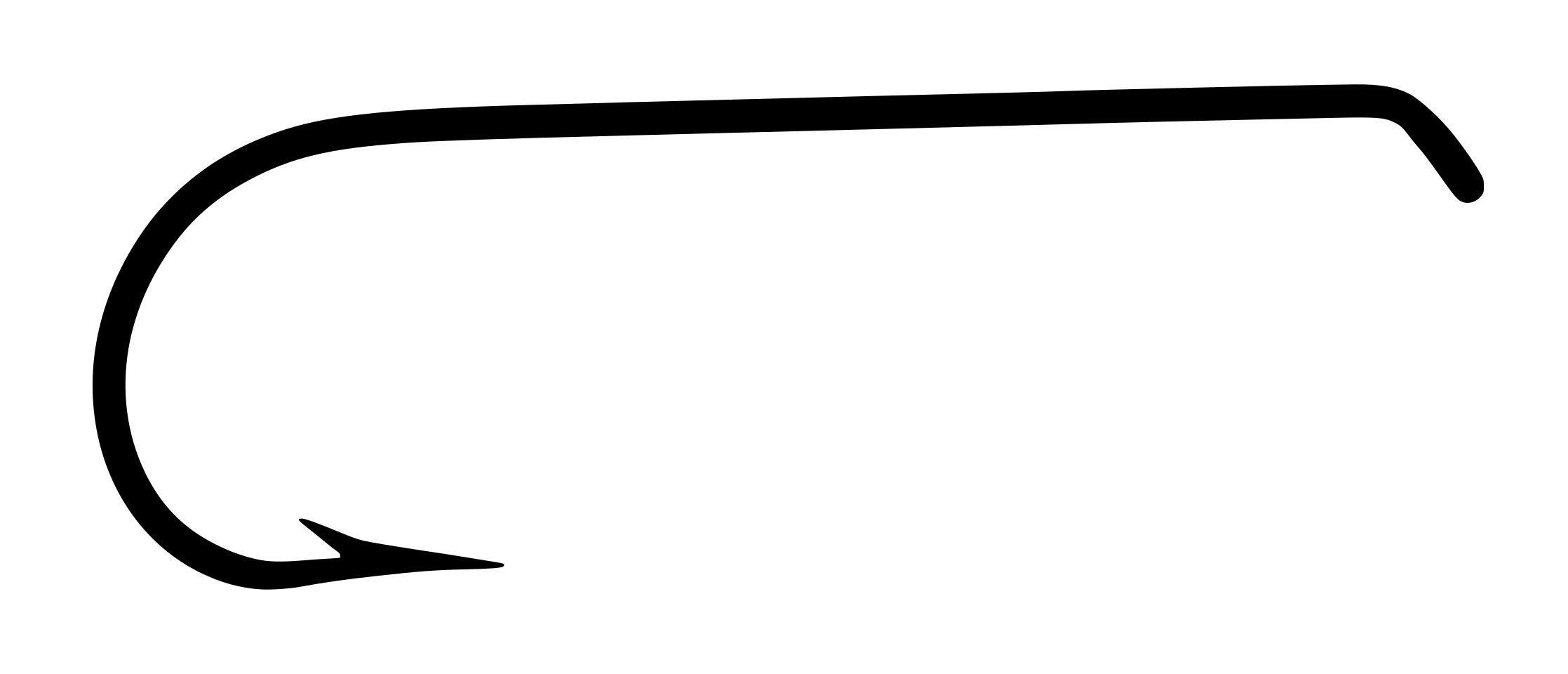
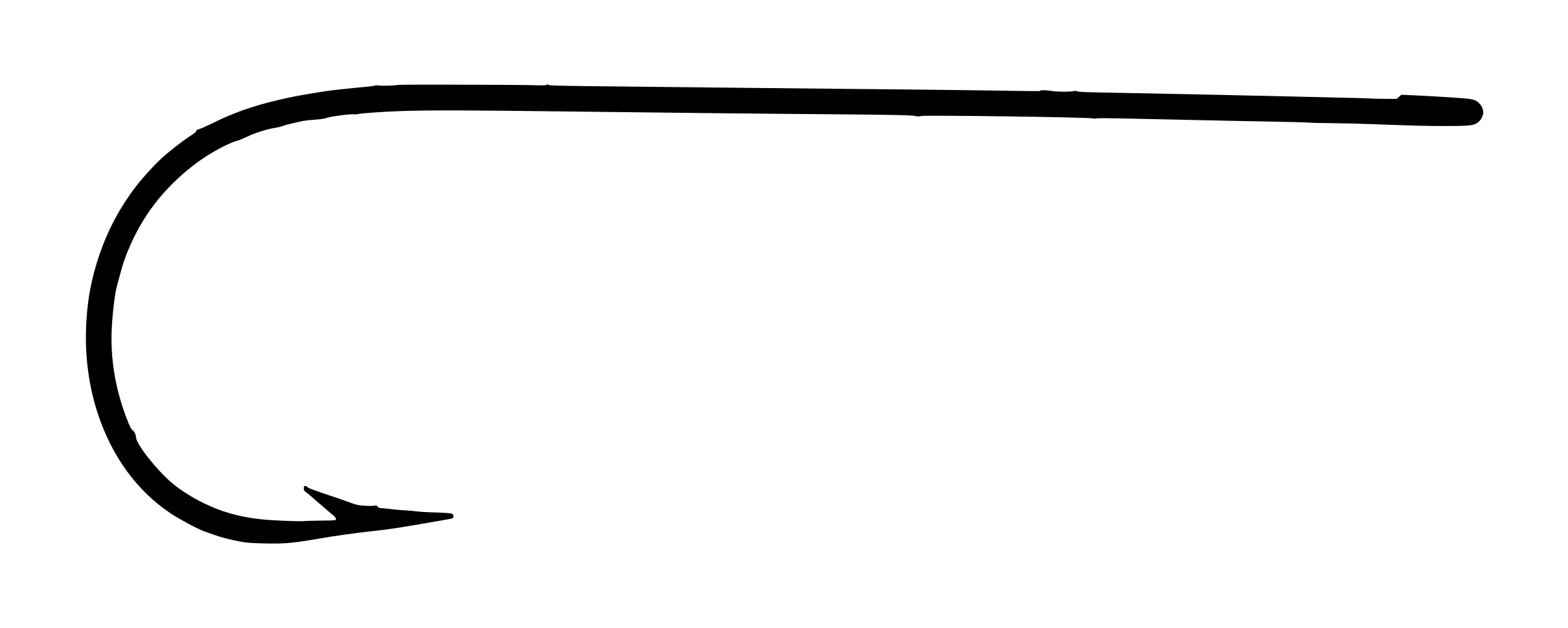
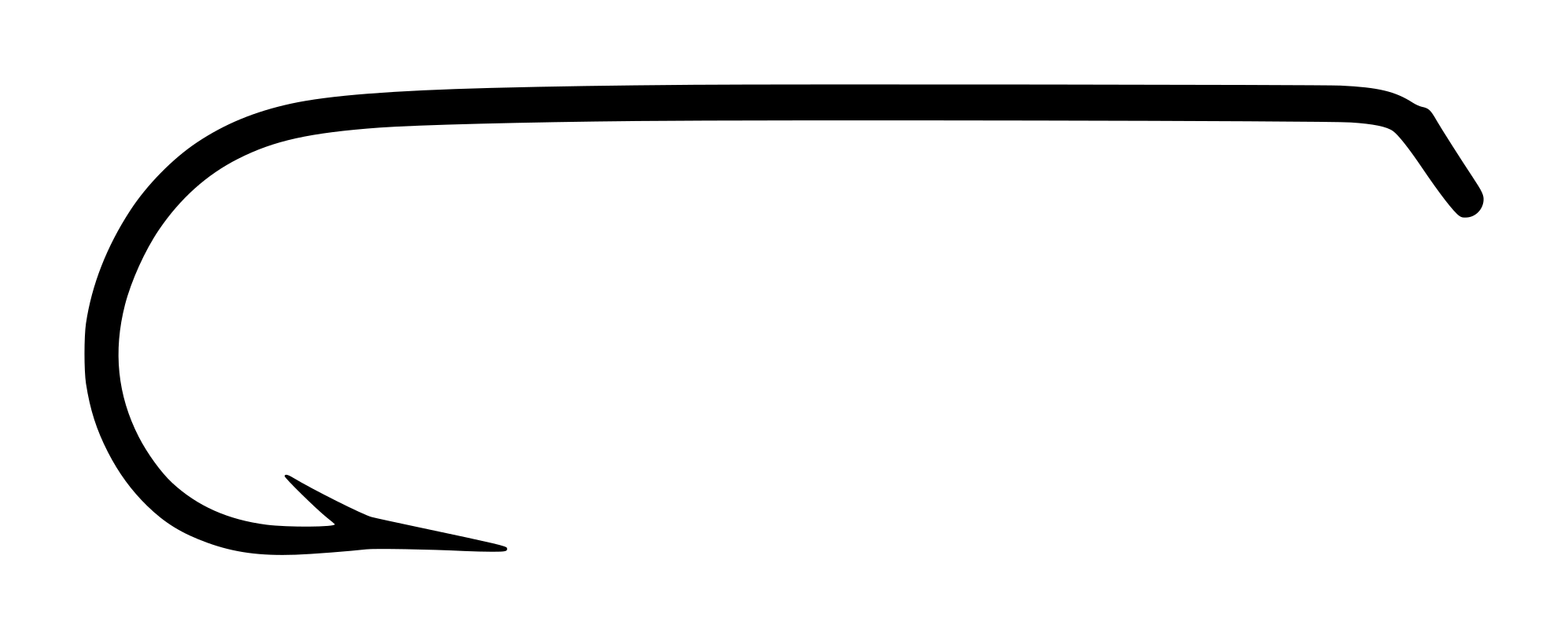
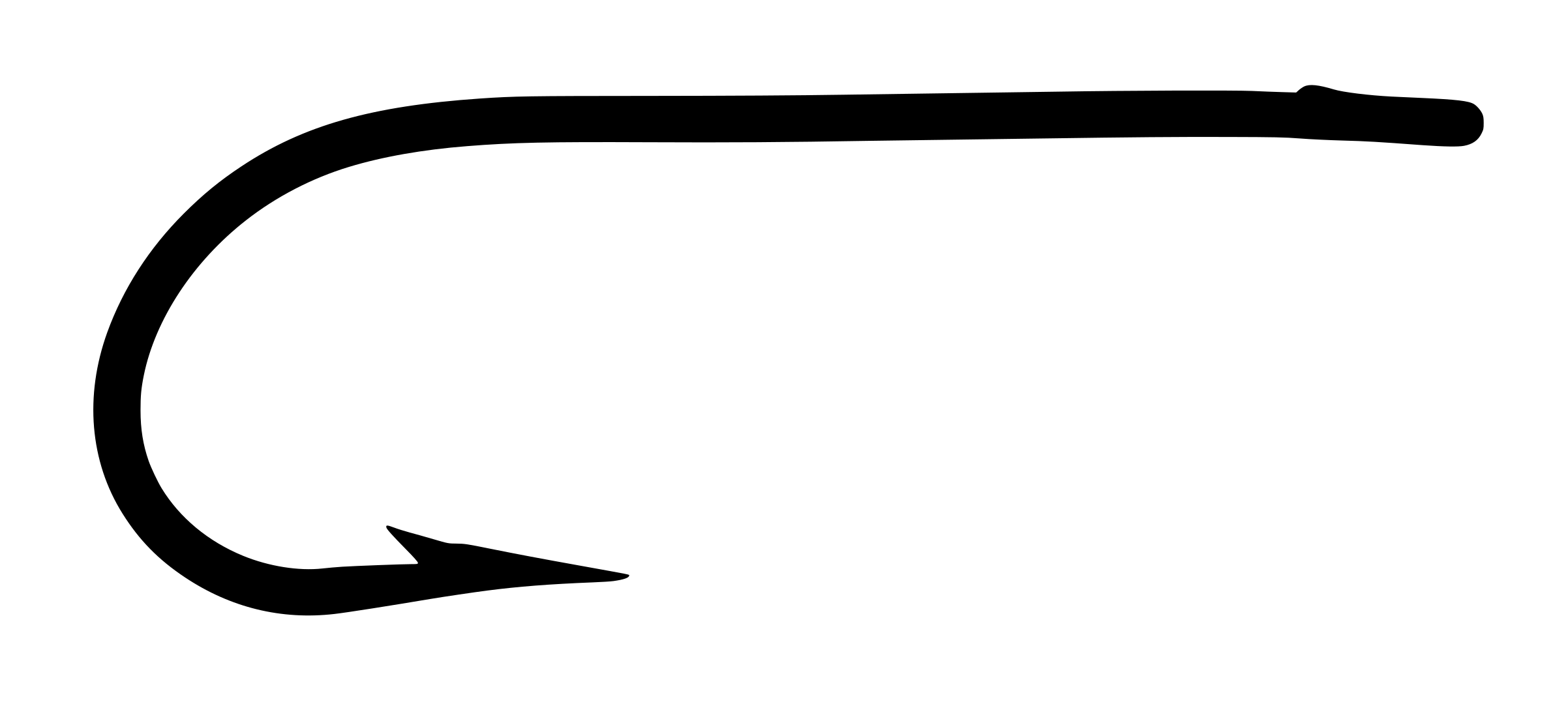
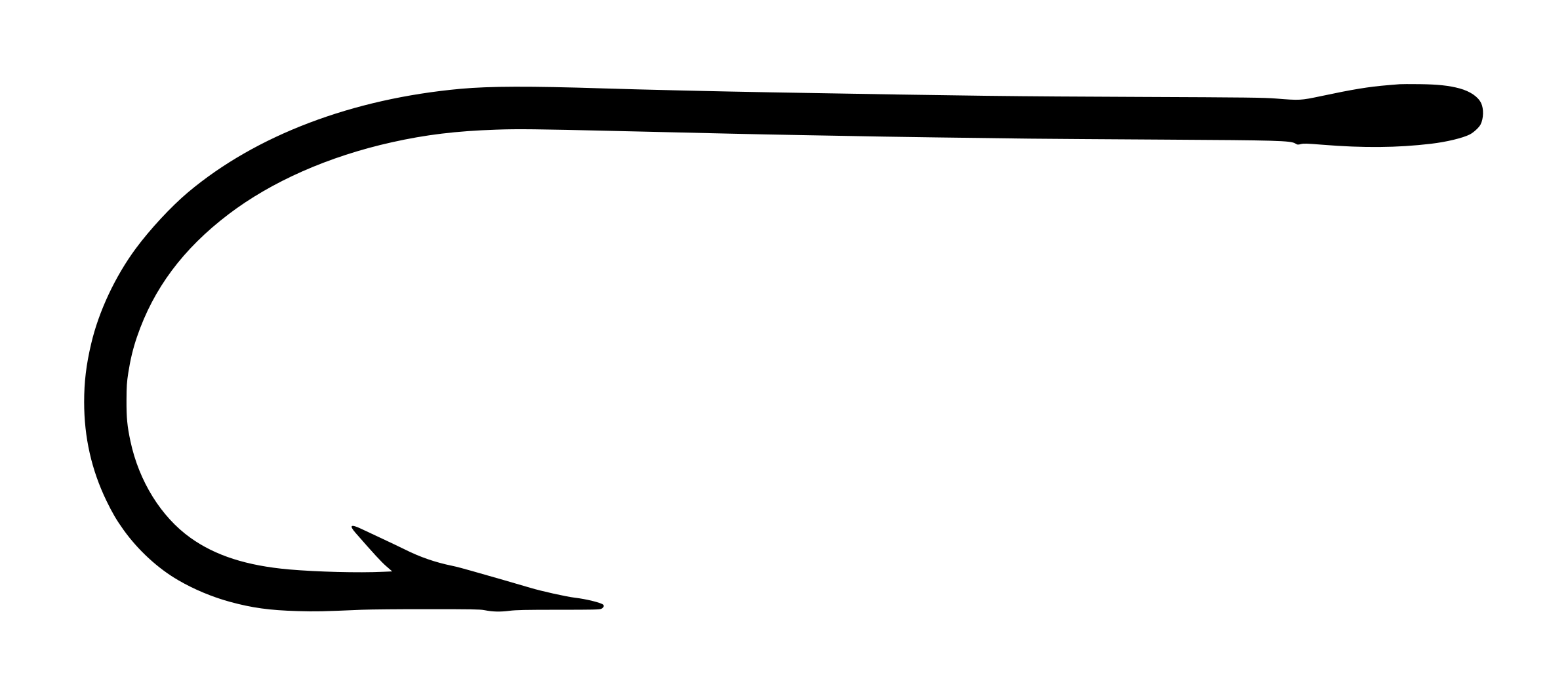
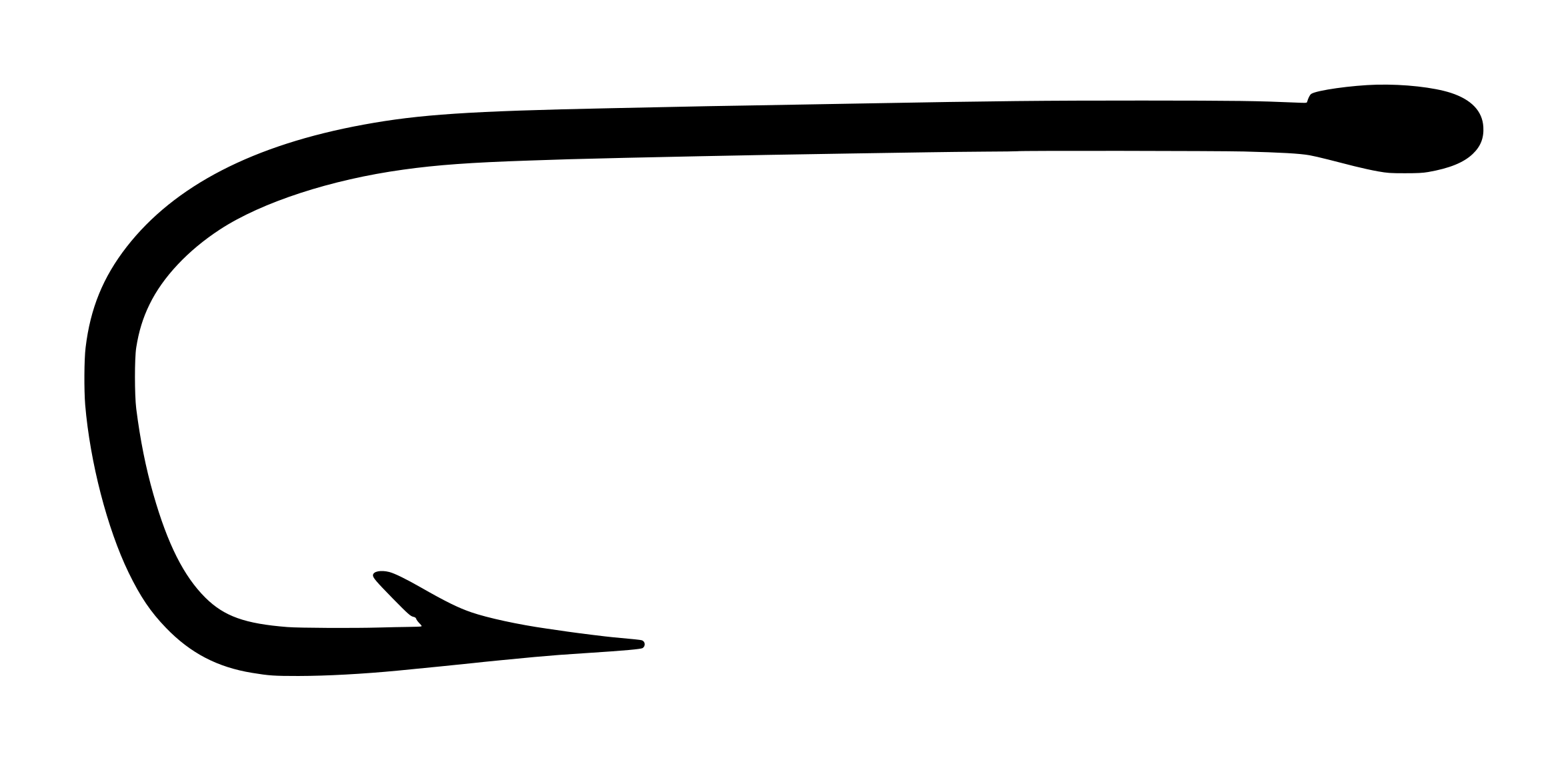
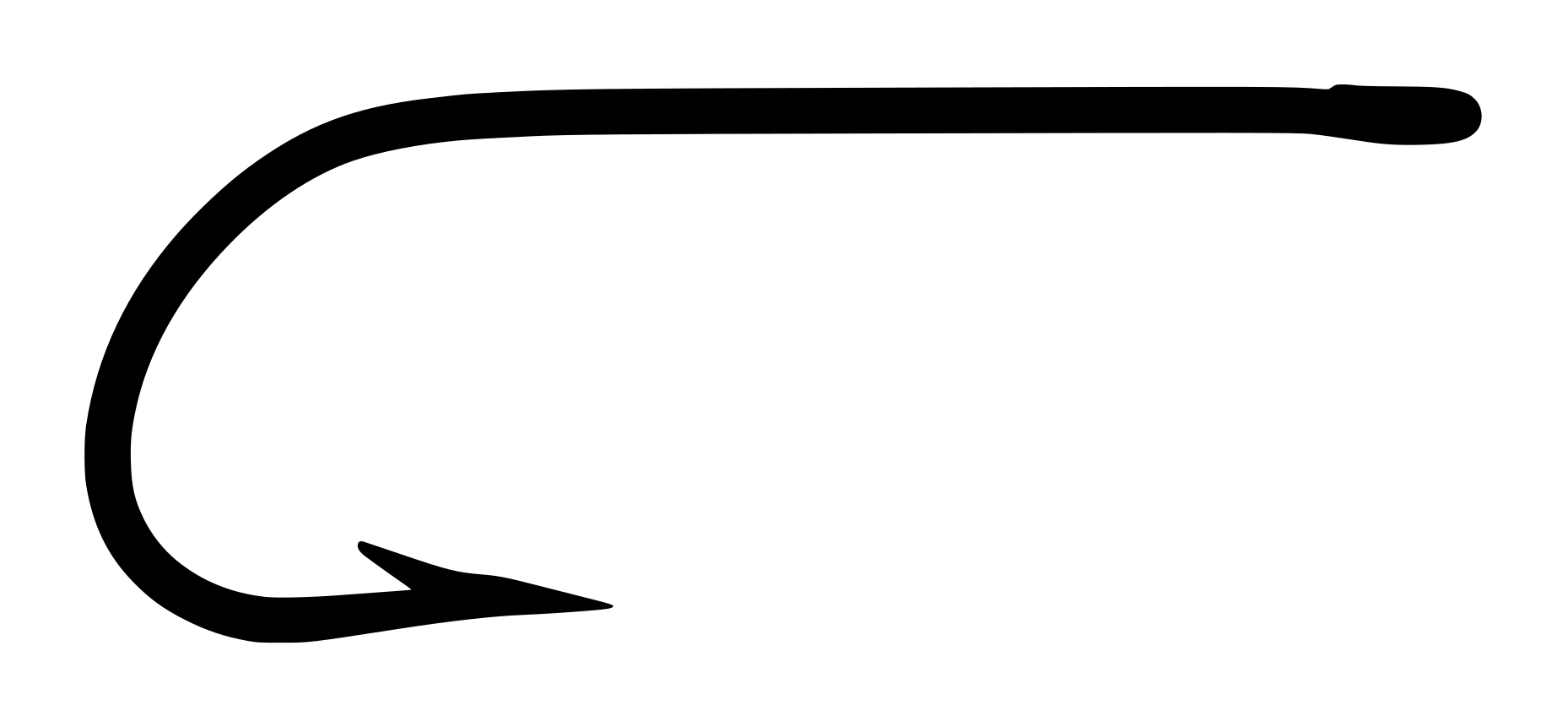
Horrocks-Ibbotson No. 465 package labelOriginal packaging for Superfine Aberdeen hooks, size 100, ringed and rustproof finish, manufactured by Horrocks-Ibbotson Co. in Germany.Open originalNo. 465 Aberdeen hook profile viewSide profile of a No. 465 Aberdeen hook showing the characteristic gentle curve, bronzed finish with patina, and straight eye.Open originalNo. 465 Aberdeen full-length profileFull profile of the No. 465 showing straight shank, rounded bend, and tapered point geometry characteristic of Aberdeen patterns.Open originalNo. 465 Aberdeen hooks pair comparisonPair of No. 465 hooks displaying consistent size and geometry, both bronzed with straight eyes and reversed points.Open original
Ball Eye, Straight / InlineStraight ring eye formed from separate wire loop, not tapered or ball-terminated. Ring is freely moving and open. P
Wire
Fine (1X Fine), Round, Est. ~0.024"-0.028" (~0.61-0.71 mm) E
Shank
Standard — Plain
Bend
Aberdeen, Standard gapClassic Aberdeen geometry — wide, rounded bottom with gentle curve. No offset; point is straight when viewed from above. Bend depth slightly shallower than modern Mustad Aberdeen patterns. E
Point
Standard / SpearShort, close-cut barb positioned immediately behind the point. Barb angle is slightly swept rearward, typical of pre-1950s spear-point construction. P
Finish
Bronzed — Inferred (photographically likely)Warm bronze tone with light surface patina. Finish is uniform across all surfaces; no bright spots or corrosion visible on specimen. Characteristic of quality European bronze plating from interwar period. P
Individual hooks are bright and uncorroded. Card shows overall good condition with light yellowing and minor edge wear; original bright green color remains vibrant in center. No ink fading visible. All 100 hooks present and intact.
The fine-wire construction of the No. 465 reduces mass and wind resistance, allowing for delicate presentation on small streams where fish are selective. The Aberdeen bend — wide and shallow relative to Limerick or Sproat patterns — distributes pressure across the jaw, reducing the risk of hooking damage on small mouths. The standard spear point provides a good balance of penetration and durability; it is less acute than a needle point but sharper than a Dublin-style taper, making it suitable for both dry-fly and nymph applications. The ringed eye, while slightly heavier than a tapered eye, offers superior knot-holding properties and allows for quick tie changes.
The No. 465 Superfine Aberdeen series was part of Horrocks’ postwar reintroduction of light-wire trout patterns. Marketed as ‘Superfine’ to distinguish them from standard-gauge models, these hooks were intended to compete with premium British products from Partridge and Allcock. The series appears to have been produced in a range of sizes (likely 12–4/0) and offered in both ringed and turned-down eye variations. Production likely ceased by the early 1950s as Horrocks-Ibbotson gradually ceded market share to larger manufacturers like Mustad.
Era and Packaging Dating
No barcode present — strong indicator of pre-1974 manufacture. Bright green card stock with thick mineral content is consistent with 1920s-1950s British printed packaging. Letterpress printing style (heavy ink impression, slight irregularity) indicates mechanical typography rather than offset lithography, which became standard after 1960s. 'Made in Germany' attribution reflects interwar trade relationships and postwar Eastern European manufacturing. UTK trademark and 'Reg. U.S. Pat. Off.' indicate American market distribution. Price not visible on card, consistent with period pricing models (price often pencilled or stickered). Overall style and paper quality align with established Horrocks product documentation from museum collections and dealer archives.
The German Trade — Precision Points Across the Atlantic
Horrocks-Ibbotson hooks bearing 'Made in Germany' markings represent a fascinating footnote in pre-WWII international hook trade. Despite the rise of German industrial manufacturing and competitive tariffs, British and American companies continued sourcing specialty products from German factories through the 1930s, valuing their expertise in fine-point grinding and precision wire drawing. This trade largely ceased with the outbreak of WWII, forcing British manufacturers like Horrocks to repatriate production to Redditch or negotiate new partnerships. Surviving cards with German attribution thus document a brief but sophisticated period of cosmopolitan tackle manufacturing — one that modern collectors of both British and German hooks now recognize as historically significant.
Design lineage and influence
The Aberdeen bend has roots in 19th-century Redditch innovation. The pattern combines the spear point (standard across British makes) with a wider, more forgiving bend than the angular Limerick or the deeper Sproat. Horrocks’ adoption of the fine-wire Superfine variant reflects competitive pressure from Partridge of Redditch, whose ultra-fine patterns dominated the premium market by the 1920s. Later American manufacturers, including Mustad, produced direct competitors (e.g., Mustad C37ST), though the Horrocks No. 465 maintained its niche among British anglers who preferred authentic imports.
Best matchRelated by Attribute
Computed automatically from catalog data — updated as new hooks are added.
Matches: Bend, Shank, Gap, Eye, Eye Orient. +5 moreDiffers: Wire: Fine (1X Fine) vs Extra-Fine; Point: Standard / Spear vs Beak / Reversed; Finish: Bronzed vs Blued +2 more
Matches: Bend, Wire, Eye, Eye Orient., Finish +5 moreDiffers: Shank: Standard vs 2X Long; Gap: Standard vs Wide; Point: Standard / Spear vs Hollow Point +2 more
Matches: Bend, Gap, Eye, Finish, Forging +4 moreDiffers: Shank: Standard vs 2X Long; Wire: Fine (1X Fine) vs Extra-Fine; Eye Orient.: Straight / Inline vs Turned Down +3 more
Matches: Bend, Gap, Eye, Eye Orient., Point +5 moreDiffers: Shank: Standard vs 3X Long; Wire: Fine (1X Fine) vs Extra-Fine; Finish: Bronzed vs Blued +2 more
Matches: Bend, Wire, Gap, Eye, Forging +4 moreDiffers: Shank: Standard vs 2X Long; Eye Orient.: Straight / Inline vs Turned Down; Point: Standard / Spear vs Superior +3 more
The No. 465 is optimized for chalk-stream dry-fly fishing in small to medium sizes. It is particularly effective for dun imitations (Ephemeridae and Baetidae) where a light, delicate presentation is critical. The fine wire and Aberdeen bend excel in slow-current pools and spring-fed streams where selective trout demand minimal disturbance and natural silhouette. The hook is equally competent as a light nymph pattern hook, especially for unweighted presentations in pocket water.
Classic Fly Patterns
Greenwell's Glory, March Brown, Blue Dun, Welshman's Button, Iron Blue Dun, Pale Watery
Modern Equivalents
Hook
Match Quality
Notes
Mustad 3906 or 3906B (light wire Aberdeen)
Good
Modern standard Aberdeen in fine wire; similar bend and eye type, though manufacturing tolerances are tighter and finishes differ.
Tiemco 200R or 101
Very Good
Contemporary ringed-eye dry-fly hook; finer wire and more acute point than Horrocks, but functional application is identical.
Partridge SH (standard shank)
Good
Modern British fine-wire hook; narrower bend than Aberdeen profile, but wire gauge and ringed eye are similar.
Collector notes
Rated 4.5/10 (uncommon) — a niche product that was neither mass-produced like standard Mustad Aberdeens nor as prestigious as contemporary Partridge or Allcock patterns. Size 2 is moderately scarce; sizes 8–12 are more common. Original cards in good condition command realistic premiums ($25–35), while individual hooks or poor-condition cards value closer to basic marketplace rates.
Reference value
$12 – $28 USD estimate
Packaging condition
Good — moderate wear, legibleRecorded specimen
Packaging format
GW-H-01Catalog code
What Makes It Collectible: The Horrocks-Ibbotson brand has a small but dedicated collector following among British tackle historians. The No. 465 is part of an identifiable product series with clear period documentation, German manufacturing origin (which fascinates some collectors), and the fine-wire specification appeals to fly-tying traditionalists. The ringed eye is less common than turned-down eye variants, adding slight scarcity value.
Limiting Factors: Horrocks was never a dominant manufacturer in the way that Mustad, Partridge, or Allcock were. Production volumes were modest, and the company faded from prominence after WWII, meaning it lacks the historical brand recognition that drives prices for Redditch specialists’ hooks. Size 2 is at the middle of typical availability; it is neither the tiny sizes (16–20) that collectors prize for scarcity nor the large saltwater sizes that appeal to trophy hunters.
Most Desirable Variants: Sealed or near-sealed cards in original green stock command premium values (high $30s–$40s). Ringed-eye versions are preferred over turned-down eye. The size 2 itself is appropriately popular — not obscure, but uncommon enough in eBay circulation to interest patient collectors. Larger sizes (1/0, 2/0) are genuinely scarce.
Condition Factors: Card condition is paramount. Bright, unfaded green with strong printing commands 50% premium over yellowed or worn cards. Hook count completeness (all 100 present) is expected; missing hooks deduct $5–$8. Corrosion on hooks is virtually never an issue; the few pounds specimens show only cosmetic patina. Original tissue wrapping, if intact, adds $3–$5 to valuation.
Market Value Notes
Low ($12): Good condition — opened card with minor wear, all or near-all hooks present, light yellowing of card stock.
High ($28): Excellent/Mint condition — sealed or near-sealed card, 100% hook count, bright unfaded green, no defects.
Premium factors: Original card condition (bright vs yellowed); hook count completeness; presence of original tissue wrap; ringed-eye variant; scarcity of size 2 in active circulation.
Platforms: eBay UK and US specialty tackle auctions, British tackle fair dealers, Redditch ephemera collectors.
Confidence: E estimated — limited eBay transaction history for this specific model. Estimate anchored on comparable Horrocks-Ibbotson cards (No. 460–470 series) and contemporary British fine-wire hooks from Allcock and Partridge.
Where to Find
eBay UK and US auctions (search: 'Horrocks Aberdeen' or 'UTK trademark hook'). Specialist British tackle dealers, particularly those focused on Redditch or interwar manufacturing. Vintage tackle fairs in northwest England (Manchester area) occasionally feature Horrocks product. Online dealers specializing in German-manufactured hooks may have examples.
Collector's Identification Tips
Identify the Horrocks-Ibbotson No. 465 by the UTK diamond trademark, the ‘Superfine’ and ‘Ringed’ designations on the green card, the ‘Made in Germany’ statement, and the hook count (100). The ringed eye is the primary distinguishing feature; turned-down variants of the same model exist but are less common. Size 2 is at the middle of the typical range; smaller sizes (8–12) are more abundant due to dry-fly popularity, while larger sizes (1/0 and above) are scarcer.
Preservation
Storage and Preservation
Store the original card in a cool, dry environment away from direct sunlight and humidity. The bright green card stock is prone to fading and paper degradation when exposed to UV light or moisture fluctuations. If the card must be removed for inspection, handle it by the edges only to avoid transferring skin oils to the surface.
Individual hooks should remain on the card for display and storage. If removal is necessary for use, inspect them for surface corrosion (usually minor on well-preserved specimens) and clean with a soft cloth if needed. Do not use aggressive chemical cleaners on bronzed finishes — a light mineral oil applied with a cotton swab will restore luster without stripping the patina.
Store cards flat or standing upright in a acid-free archival box. Avoid stacking heavy objects on top of packaged cards. The paper stock on cards of this era is relatively fragile and can develop creases or edge crumpling under pressure. Original tissue wrapping, if present inside the card, should be left undisturbed — it adds significant value to the specimen and is often the only thing protecting the hooks from oxidation.
Primary Source
Packaging Analysis — UTK Trademark and Superfine Designation
Source: Horrocks-Ibbotson No. 465 green card, Superfine Aberdeen Hooks, 100-count
The UTK diamond trademark visible on the card is a key identifier of Horrocks-Ibbotson distribution and manufacturing agreements. The letters likely represent a distributor or co-manufacturer initials; while not definitively decoded in existing literature, the mark appears consistently on Horrocks output from the 1920s–1950s. The phrase ‘Reg. U.S. Pat. Off.’ confirms that the design or manufacturing process held an American patent, indicating active American market presence and competitive positioning.
The ‘Superfine’ designation is technical rather than qualitative. Horrocks used this term to denote fine-wire construction relative to their standard-gauge lines. This was a common marketing practice in the interwar era, when manufacturers distinguished products by wire gauge before offering the range of modern options. The ‘Ringed’ and ‘Rustproof’ labels on the card further clarify the hook type and finish — ‘Rustproof’ being a period euphemism for bronzed or blued corrosion-resistant finishes. ‘Made in Germany’ indicates sourcing from German manufacturers, likely the Solingen or Remscheid regions, both centers of precision metalwork. This reflects the global scale of hook production; British companies often contracted German specialists for fine-point work while handling packaging and distribution themselves.
‘Grade Horrocks-Ibbotson Co.’ and ‘No. 465’ are the formal product designation — the number likely corresponds to an internal catalog system rather than a universal industry standard. No equivalent numbering system from competitors has been found, suggesting proprietary nomenclature within the Horrocks product line.
Marking Analysis
Handwriting and Markings
No visible handwritten markings, prices, or personal annotations are evident on the examined specimen. The card displays only printed text and the UTK trademark, all in mechanical letterpress type. Absence of handwritten pricing or retail codes is consistent with the period — retailer prices were often added via sticker or pencil at the point of sale, and this example does not appear to have been marked in that manner, suggesting it was either stored prior to retail distribution or has been carefully cleaned of such marks.
Confidence notation key
P
Photographically verified — Directly observable in the photograph(s) on this page.
V
Verified by documentation — Confirmed by manufacturer catalog, spec sheet, or published reference.
I
Inferred — A logical deduction from observable or documented evidence, not directly stated.
E
Estimated — An approximation based on visual comparison, proportional analysis, or limited data.
S
Speculative — A reasoned hypothesis that cannot be confirmed from available evidence.
Unnotated claims are the compiler’s synthesis; see Sources. All photographs on garrenwood.com are taken on a measurement grid where each square equals 1/10 inch (0.1″ / 2.54 mm).