
Horrock Ibbotson Co.
- Founded
- 1863
- Documented entries
- 4Catalog records
- Categories
- 5By application
- Era range
- 1920–19504 dated entries
The Horrocks-Ibbotson Company (H-I), based in Utica, New York, was an absolute titan of the American fishing tackle industry from the late 19th century well into the 1970s. Rather than acting strictly as a boutique manufacturer, H-I functioned much like an industrial vacuum—they acquired dozens of smaller tackle, rod, and reel companies to build a massive catalog aimed squarely at the everyday, working-class angler. Because their business model prioritized high-volume distribution and affordability over in-house craftsmanship, they rarely manufactured their own terminal tackle from scratch. Instead, H-I became a masterclass in the art of white-labeling, sourcing components from specialized global manufacturers and packaging them under their own umbrella of recognizable brand names like “Utica,” “Rockson,” and the classic “H-I Brand.”
For the first half of the 20th century, the Norwegian powerhouse was the undisputed king of global hook manufacturing, capable of churning out millions of hooks with incredible consistency. H-I relied heavily on Mustad to supply the raw iron for their vast lineup of loose hooks, snelled hook cards, and the trebles attached to their sprawling lure catalog. It was a symbiotic relationship: Mustad secured a massive, reliable American pipeline, and H-I avoided the staggering overhead of running a domestic hook forge. Additionally, during their earlier years, H-I almost certainly sourced white-labeled hooks from the historic needle and hook guilds in Redditch, England—to supplement their catalog, though Mustad remained the dominant workhorse of their early-to-mid-century supply chain.
The shift to Japanese suppliers perfectly reflects the post-WWII economic trends in the tackle industry. As Japan’s manufacturing sector aggressively rebuilt in the 1950s and 1960s, they began producing high-quality, incredibly cheap terminal tackle. For a budget-conscious distributor like Horrocks-Ibbotson, the math was impossible to ignore. To remain competitive against emerging domestic rivals who were also cutting costs, H-I transitioned a significant portion of their hook contracts to Japanese factories. These Japanese-forged hooks were imported in bulk, often snelled or packaged at the Utica plant, and pushed out to hardware stores and five-and-dimes across America, allowing H-I to maintain their famously low price points.
Ultimately, Horrocks-Ibbotson’s hook distribution strategy was a triumph of logistics over metallurgy. They recognized early on that they didn’t need to reinvent the fish hook to dominate the market; they just needed to be the company putting those hooks onto the shelves of every small-town bait shop in the country. By shrewdly navigating the global supply chain—riding the coattails of Mustad’s early dominance and later pivoting to the economic efficiency of post-war Japan—H-I ensured that millions of Americans had reliable, affordable tackle, securing their legacy as a foundational pillar of 20th-century sport fishing.
Catalog by application
Complete index
4 entries
| Model | Name | Specification | Application | Era | Collectability | |
|---|---|---|---|---|---|---|

|
100 | Kinsey Hook | OtherXF1XSJapanned | Salmon Bait | c. 1920s-1940s | |

|
465 | Superfine Aberdeen | AberdeenFineBronzed | Bait | c. 1920s-1950s | |
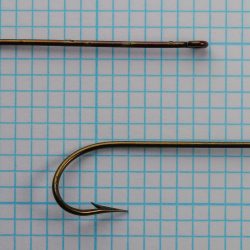
|
552 | Grade 552 Carlisle Fish Hooks | FineXXLBronzed | Bait SW | c. 1920-1945 | |
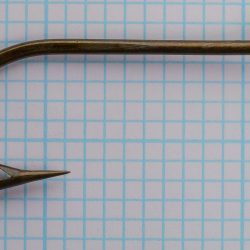
|
No. 169 | No. 169 O'Shaughnessy Bronze Ringed | O'ShaughnessyHeavy1XLBronzed | Salmon Sea trout Bait | c. 1950-1975 |