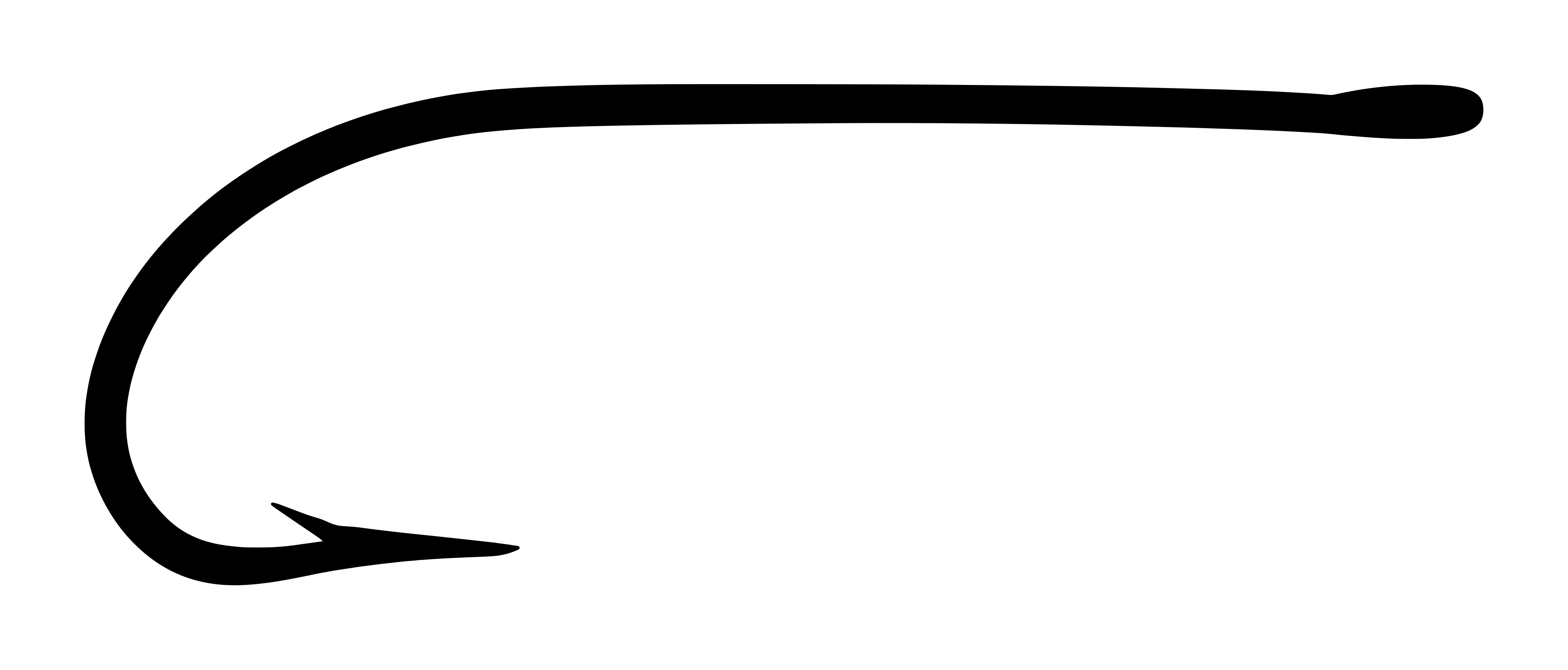
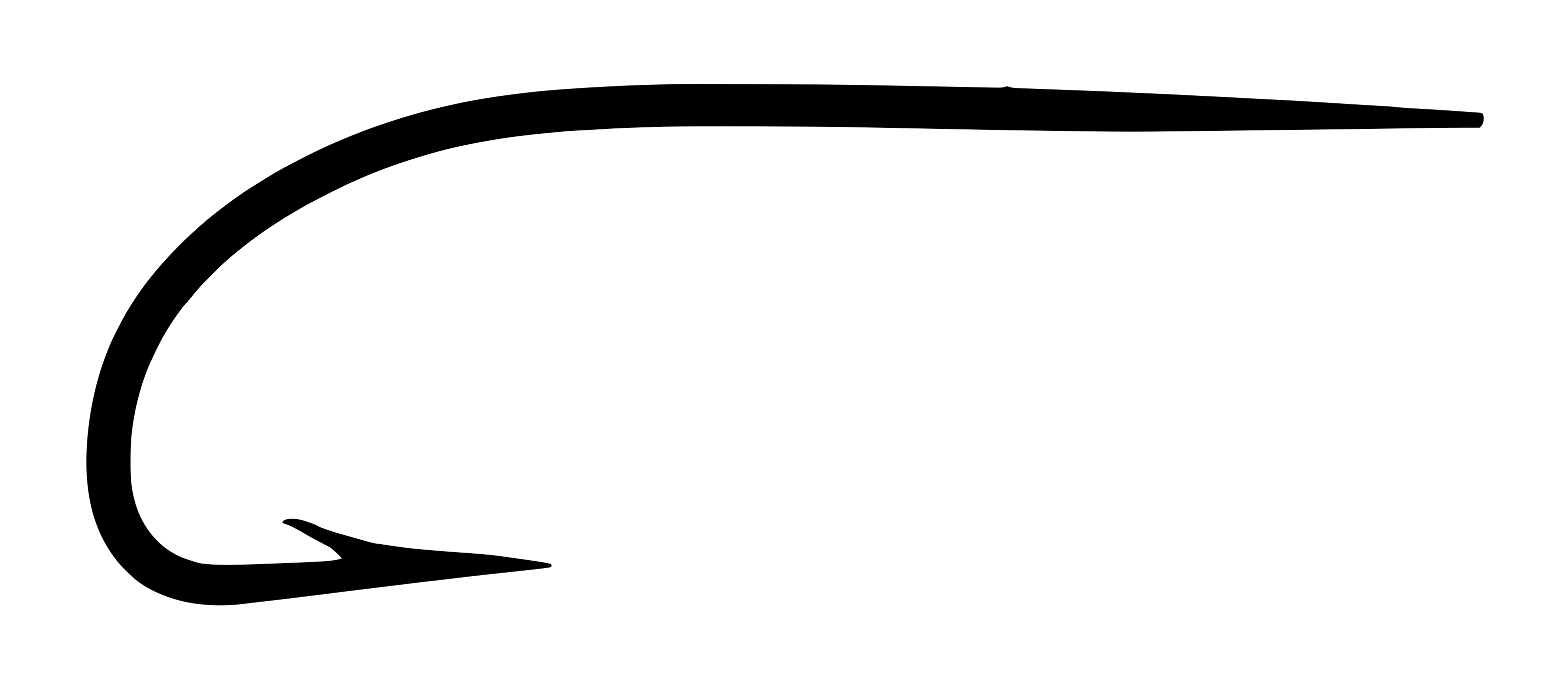
The Mustad 3130 in size 8/0 represents the apex of vintage salmon hook collecting, featuring the now-discontinued blind eye construction essential for authentic Victorian-era salmon fly tying P. This massive hook showcases the classic Japanned black lacquer finish and marked shank design that defined premium salmon hooks of the mid-20th century P.
The Limerick bend profile and Kirbed point offset demonstrate Mustad’s engineering for large river salmon angling, when size 8/0 hooks carried elaborate full dress patterns on Norway’s Tana and Alta rivers I. The blind eye eliminates the metal eye bulk, allowing traditional gut loop attachment for the small, neat heads that marked master-tier craftsmanship V.
With modern manufacturers having abandoned blind eye production entirely, surviving examples in this pristine condition have become essential tools for serious salmon fly collectors and museum-quality reproduction work I. The combination of large size, perfect Japanned finish, and historical significance places this hook among the most sought-after specimens in vintage tackle collecting E.
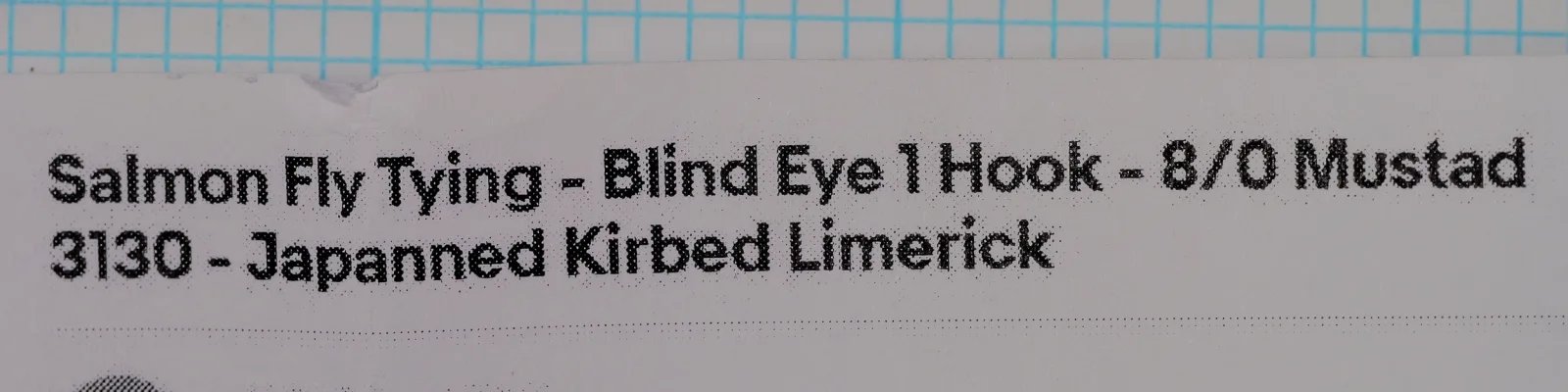
Original packaging label identifying this specimen as a Mustad 3130 blind eye salmon hook in size 8/0 with Japanned Kirbed Limerick construction.
Photographic record
3 cataloged imagesSelect any record to load it above.
3 images shown
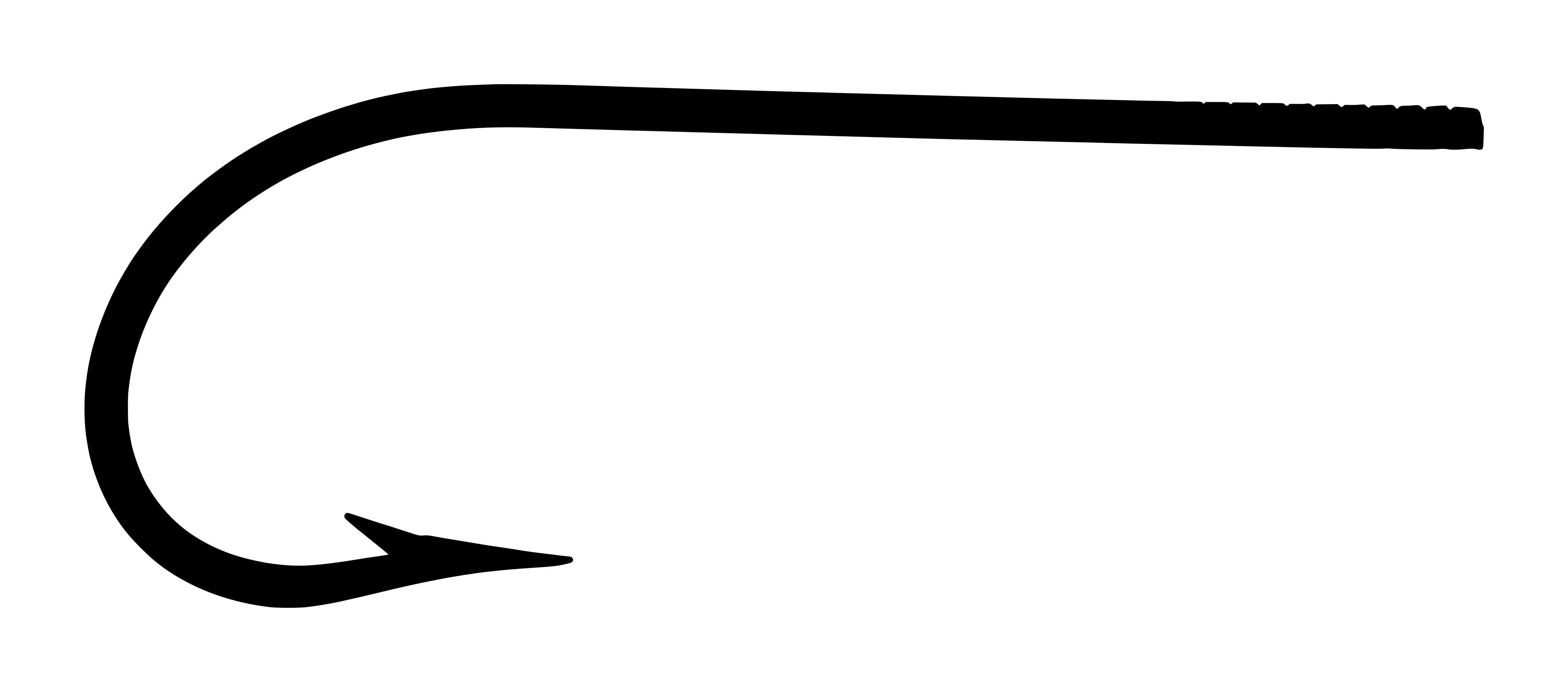
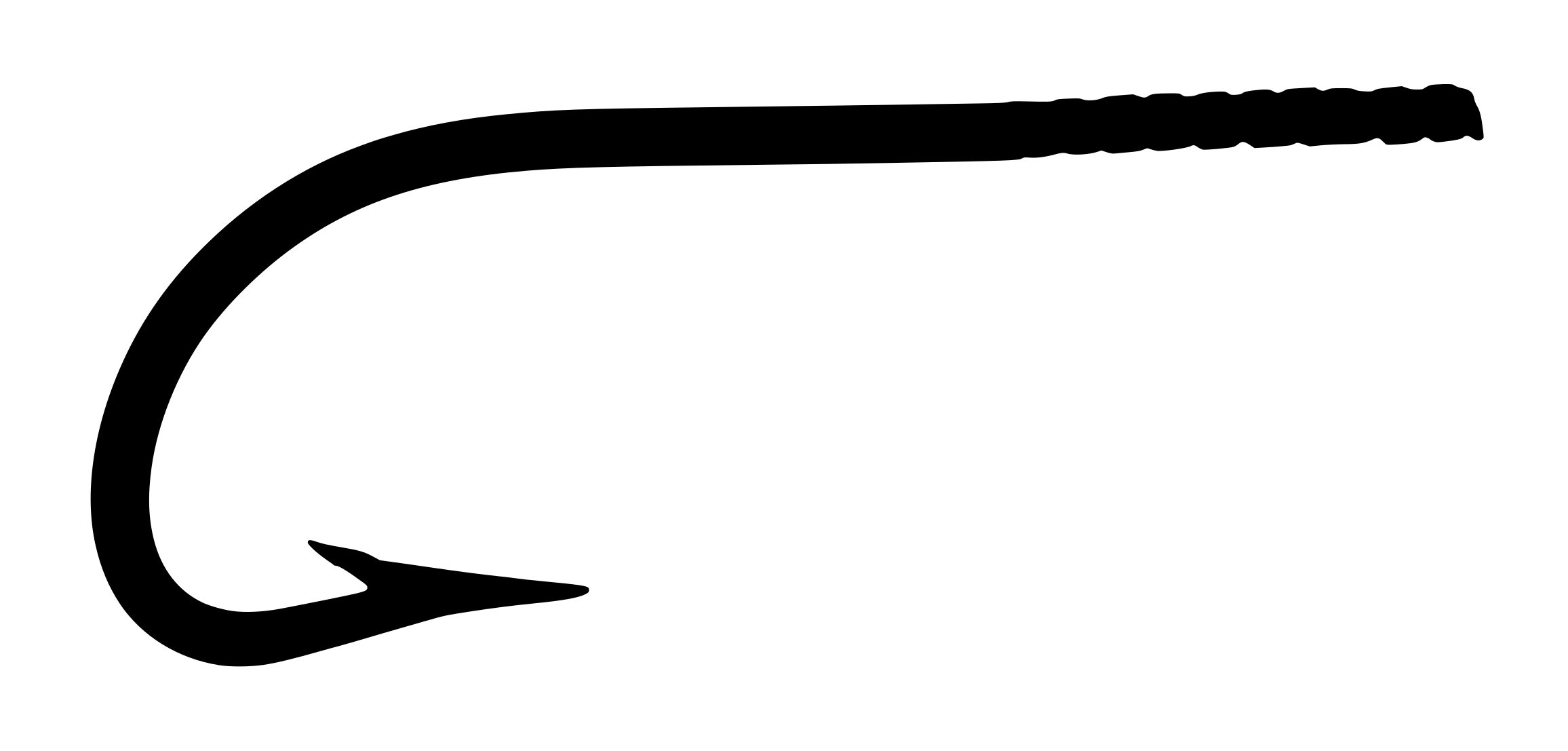
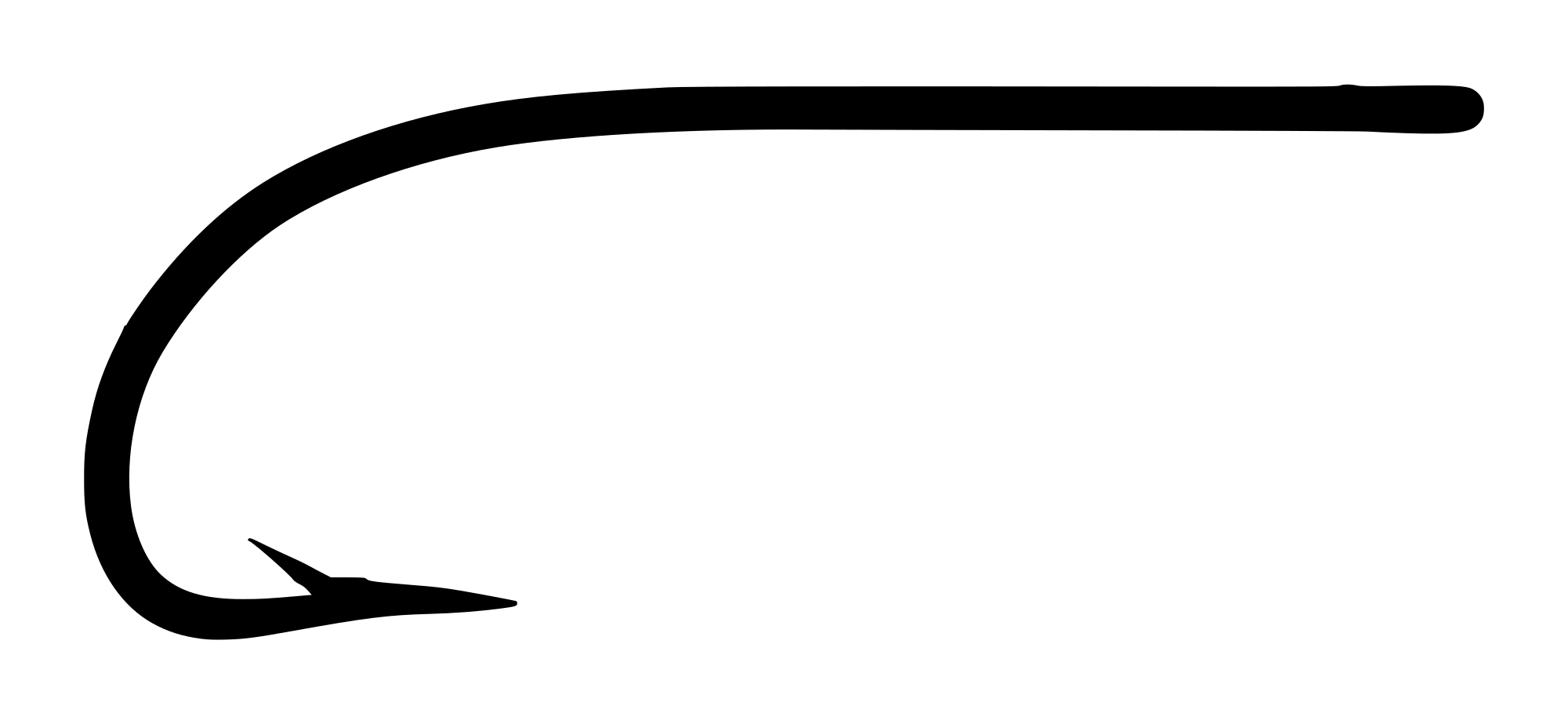
Mustad 3130 Packaging Label Size 8/0Original packaging label identifying this specimen as a Mustad 3130 blind eye salmon hook in size 8/0 with Japanned Kirbed Limerick construction.Open originalMustad 3130 Full Profile Size 8/0 Blind EyeComplete profile view of the Mustad 3130 showing the classic Limerick bend, marked shank, and blind eye construction on 1/10-inch measurement grid.Open originalMustad 3130 Point Detail Size 8/0 Superior PointDetailed view of the Mustad 3130's superior point geometry and barb construction, showing the straight inner taper characteristic of this point style.Open original
Technical profile
Eye
Blind — Marked ShankBlind eye with marked shank.
Wire
Standard, Round
Shank
2X Long — Marked / Ridged
Bend
Limerick, Standard gap, Offset / kirbedClassic Limerick profile with gradual sweep and angular transition at the throat, providing optimal strength distribution for large fish while maintaining the traditional aesthetic demanded by salmon fly patterns P.
Point
Superior (near-straight inner taper)Medium-length barb cut at moderate angle, sized appropriately for secure hold without excessive tissue damage during release P.
Finish
Black Japanned — Confirmed (stated on packaging)Deep lustrous black Japanned finish shows excellent preservation with uniform coverage and high gloss characteristic of quality mid-century production P.
Exceptional preservation with intact Japanned finish showing no corrosion, chipping, or wear. Point remains sharp with original geometry maintained.
The superior point geometry features a near-straight inner taper that maintains strength while providing excellent penetration characteristics for large salmon P. The marked shank ridging creates multiple contact points for thread and material grip, essential when building the complex body construction of full dress salmon flies P. Heavy wire gauge construction handles the stress of large fish while maintaining the fine point needed for traditional salmon fly proportions.
The Japanned finish provides superior corrosion resistance compared to bare steel while maintaining the traditional black aesthetic preferred by Victorian-era salmon anglers. The Kirbed offset enhances hook-up ratios by angling the point slightly away from the shank, compensating for the hook’s deep profile in large salmon mouths.
The Mustad 3130 series was developed as a premium salmon hook line combining traditional Limerick bend geometry with modern industrial manufacturing consistency. Introduced in the early 20th century, the series offered both standard ringed eye versions for general sea fishing and specialized blind eye variants for the high-end salmon fly market.
The blind eye 3130 represented Mustad’s response to British demand for hooks suitable for traditional gut loop attachment, essential for full dress salmon fly construction. Production continued through the 1960s before declining salmon angling interest and manufacturing cost pressures led to discontinuation of the specialized blind eye variants. The standard 3130 continued in production for sea fishing applications, but the salmon-specific versions became collector items as traditional salmon fly tying experienced a revival in the 1980s.
Era and Packaging Dating
Classic Japanned finish and blind eye construction indicate mid-20th century production before modern manufacturing methods. No visible modern packaging or barcode indicators suggest pre-1970s vintage period.
The Norwegian Giants
Size 8/0 salmon hooks were so large they were often called 'Norwegian Giants' by British anglers, as they were primarily used on massive Norwegian rivers like the Alta where early season salmon could exceed 40 pounds. Victorian anglers would tie elaborate full dress flies on these hooks that contained over 20 different exotic feathers and materials, with some patterns taking master tiers over 8 hours to complete. The blind eye construction was essential because even the finest metal eye would appear disproportionately large on the small heads required for these artistic patterns.
Design lineage and influence
The 3130 evolved from traditional Limerick bend hooks produced by Redditch manufacturers like Allcock and Hutchinson throughout the 19th century. Mustad’s industrial adaptation maintained the bend geometry while improving wire consistency and point tempering through mechanized production. The blind eye variant specifically addressed British market demands for hooks suitable for gut loop attachment, competing directly with premium English makers like Edgar Sealey and Partridge.
This design influenced subsequent salmon hook development, with the marked shank feature becoming standard across multiple manufacturers by the 1940s. The 3130’s proportions established size standards that modern salmon hook makers still reference, though none maintain the blind eye construction that made the original series unique.
Best matchRelated by Attribute
Computed automatically from catalog data — updated as new hooks are added.
Matches: Shank, Wire, Gap, Eye, Eye Orient. +4 moreDiffers: Bend: Limerick vs Other; Point: Superior vs Standard / Spear; Offset: Offset / Kirbed vs Straight +4 more
Matches: Bend, Wire, Gap, Eye, Eye Orient. +4 moreDiffers: Shank: 2X Long vs 1X Long; Point: Superior vs Standard / Spear; Offset: Offset / Kirbed vs Straight +3 more
Matches: Wire, Eye, Eye Orient., Point, Forging +4 moreDiffers: Bend: Limerick vs Kirby (offset); Shank: 2X Long vs 1X Long; Finish: Black Japanned vs Bronzed +3 more
Matches: Bend, Gap, Point, Forging, Application +2 moreDiffers: Shank: 2X Long vs Standard; Wire: Standard vs Heavy (1X Heavy); Eye: Blind — Marked Shank vs Other +5 more
The Mustad 3130 in size 8/0 was designed specifically for large traditional salmon flies during the golden age of Atlantic salmon angling P. The blind eye construction allowed tiers to attach twisted silk gut loops, creating the small neat heads essential for full dress patterns like the Jock Scott, Green Highlander, and Durham Ranger V. Size 8/0 was reserved for early season fishing on large Norwegian and Scottish rivers when high, cold water demanded massive, flashy presentations to trigger aggressive salmon I.
Secondary Applications
Modern display tying for framed salmon fly collections, museum reproductions, specialty spey flies for large rivers
Classic Fly Patterns
Jock Scott, Green Highlander, Durham Ranger, Black Doctor, Thunder and Lightning, Popham
Modern Equivalents
Hook
Match Quality
Notes
Partridge CS6 (Adlington)
Very Good
Modern blind eye salmon hook with similar Limerick bend, though lighter wire gauge
Daiichi 2151 Salmon Hook
Moderate
Similar size range and bend profile but with standard ball eye rather than blind construction
Collector notes
Exceptional rarity driven by discontinued blind eye construction and large 8/0 size; limited by single hook specimen without original packaging.
Reference value
$45 – $75 USD estimate
This Mustad 3130 represents the pinnacle of collectible salmon hooks. The blind eye construction, completely discontinued by modern manufacturers, makes these hooks essential for authentic Victorian-era salmon fly reproduction. Size 8/0 examples are exceptionally scarce as fewer large sizes were produced compared to standard 2/0-4/0 offerings. The pristine Japanned finish adds significant value, as most surviving examples show corrosion or flaking.
Limiting factors include the lack of original packaging, which would significantly enhance value for collectors. The single hook format also reduces appeal compared to original cards or boxes. However, for serious salmon fly tiers and collectors of vintage tackle, this remains a museum-quality specimen representing the golden age of salmon angling.
Market Value Notes
Individual hooks in this condition command premium pricing among salmon fly specialists. Complete original packaging could double the value. Size 8/0 examples rarely appear at auction.
Where to Find
Specialized vintage tackle dealers, high-end fly fishing auctions, estate sales from serious salmon anglers, rarely on eBay
Preservation
Storage and Preservation
Store this hook in a low-humidity environment to prevent degradation of the Japanned finish, which can develop surface oxidation if exposed to moisture over time. The original finish is irreplaceable and critical to collector value – any flaking or corrosion significantly reduces worth. Mount on acid-free card stock if displaying, avoiding direct contact with wood or cardboard that may contain lignins.
Handle minimally and by the shank to avoid point damage or finish wear from fingerprints. The superior point geometry is vulnerable to dulling if stored loose with other hooks. Individual protective sleeves or foam slots prevent contact damage while allowing visual inspection. Avoid temperature fluctuations that can cause the Japanned coating to crack or separate from the underlying steel.
Size Note
Giant Size Context
Size 8/0 represents the extreme end of salmon hook sizing, used primarily for early season fishing when rivers ran high and cold, demanding maximum fly visibility and hook strength. Most salmon fly patterns were tied on 2/0 to 4/0 hooks, making 8/0 examples significantly rarer in surviving collections. The physical size – nearly 2.5 inches overall length – required specialized techniques for fly construction, as traditional proportions had to be scaled up while maintaining the delicate aesthetic balance essential to full dress salmon patterns.
Modern salmon anglers rarely encounter hooks this large, as contemporary fishing techniques favor smaller presentations even for large fish. This size disparity makes vintage 8/0 examples particularly valuable to collectors and tiers attempting historically accurate reproductions of Victorian-era salmon angling tackle.
Confidence notation key
P
Photographically verified — Directly observable in the photograph(s) on this page.
V
Verified by documentation — Confirmed by manufacturer catalog, spec sheet, or published reference.
I
Inferred — A logical deduction from observable or documented evidence, not directly stated.
E
Estimated — An approximation based on visual comparison, proportional analysis, or limited data.
S
Speculative — A reasoned hypothesis that cannot be confirmed from available evidence.
Unnotated claims are the compiler’s synthesis; see Sources. All photographs on garrenwood.com are taken on a measurement grid where each square equals 1/10 inch (0.1″ / 2.54 mm).