Selected size
7
Catalog record
- Overall Length
- 21.3 mm V
- Shank Length
- 13.3 mm V
- Bend Depth
- 7.6 mm V
- Wire Diameter
- 0.8 mm V
- Confidence
- V Catalog record only
 Garren WoodFishing Hook Reference
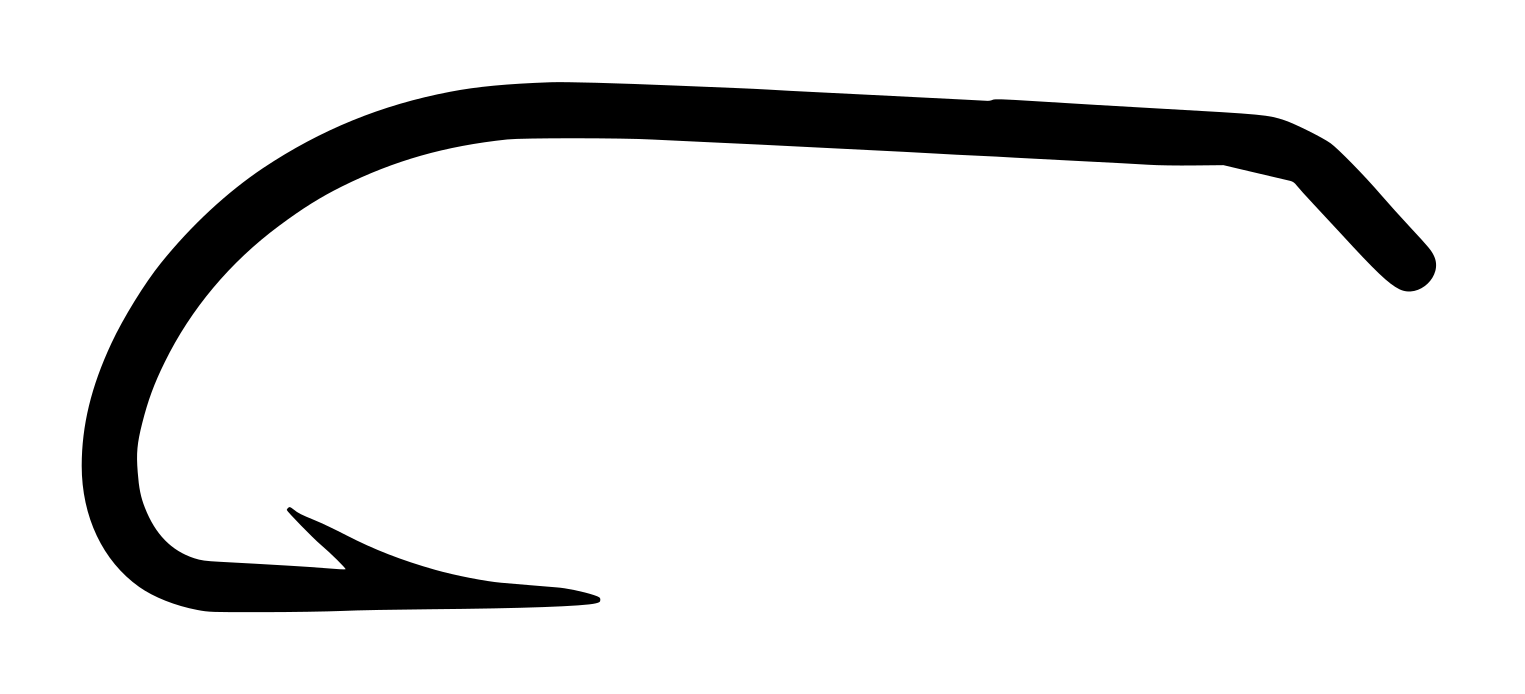
Save this hook to your account to build a list you can come back to.
The Mustad 9002 is a classic Limerick bend hook manufactured by O. Mustad & Søn of Oslo, Norway, in the post-war era (c. 1948–1960). This is a premium wet fly and salmon hook featuring a looped tapered eye, extra-strong wire, and hollow point — a geometric configuration achieved through mechanical grinding rather than modern chemical sharpening. The distinctive looped eye design creates an elegant, snag-free connection point crucial for Atlantic salmon and steelhead flies.
The looped eye was engineered to distribute the extreme pressure of fighting anadromous fish evenly across both sides of the wire loop, eliminating the risk of eye opening under stress. This design remained the standard for traditional salmon irons well into the second half of the twentieth century and continues to be prized by classic fly tyers. The bronzed finish provides excellent corrosion resistance and a low-glare, muted presentation favored in clear water conditions.
The Mustad 9002 represents an era of hook manufacturing where tackle was highly specialized rather than homogenized. The presence of the arbitrary numeric quality code (9002) on the eight-line label — a system discontinued around 2001–2009 — serves as the definitive marker of a true vintage Mustad product. Today, original carded examples with intact gold-leaf printing command modest premiums among specialist fly tyers and tackle collectors.

4 cataloged imagesSelect any record to load it above.
4 images shown
The hollow point represents a specific mechanical grinding technique where the inner face of the point is ground inward in a concave curve from the very tip down to the base of the barb. This geometry creates an incredibly fine, razor-sharp tip that flares rapidly toward the barb. Unlike modern needle points achieved through uniform conical grinding, the hollow point was ground on both sides to create a dished-out silhouette with a pronounced cutting edge.
The mechanical advantage of the hollow point is its ability to achieve initial penetration with minimal applied pressure — essential for soft-tissue hooksets and for penetrating the hard mouths of strong fish without large entry wounds that could tear during the fight. The extra-strong wire compensates for the thinness at the point by providing structural rigidity throughout the shank and bend, preventing straightening under the extreme stresses of salmon and steelhead fishing.
The looped eye distributes load across both wires of the loop, whereas a simple turned eye concentrates stress at a single junction point. This engineering choice was critical for flies that would endure hundreds of hours of casting and sustained heavy pressure from powerful fish.
The Mustad 9002 represents one of the finest documented examples of looped-eye construction in the garrenwood.com catalog. Its post-WWII Oslo production date, premium eight-line label, and completely intact 100-hook carded state make it a significant reference specimen for understanding mid-twentieth-century Mustad quality standards and salmon fly hook engineering.
We have measurements for sizes 7, 10, 12. Know any others? Submit calipered measurements and we'll review and add them. Thank you!
O. Mustad & Søn was founded in 1832 in Gjøvik, Norway, initially as a manufacturer of nails and metal goods under the name Brusveen Spiger- og Staltradfabrikk. The company was taken over by Ole Hovelsen Mustad (son-in-law of founder Hans Schikkelstad) and his son Hans Mustad, who renamed it O. Mustad & Søn. The defining industrial pivot occurred in 1877 when Mathias Topp invented the first fully automated hook-making machine, allowing raw steel wire to be continuously fed through a machine that autonomously cut, bent, barbed, and pointed hooks at unprecedented speed.
Rather than file patents (which would require public disclosure of mechanical schematics), the Mustad family maintained absolute corporate secrecy and restricted factory access, protecting their proprietary methods against rival hook-making centers in Redditch, England, and Japan. By the 1950s, Mustad had secured approximately 50% of global hook production market share, establishing sales offices and manufacturing facilities across multiple continents. The company’s strategy of industrial cloning — reverse-engineering highly localized, regional hook patterns (Cincinnati, Limerick, Virginia, Sproat) and producing them with extreme Norwegian industrial efficiency — allowed them to corner localized markets on a global scale.
The Oslo facility (to which the company relocated from Christiania in 1925) became the world’s largest hook factory, using the eight-line standardized label format to communicate complex technical specifications across linguistic and geographical barriers.
The Mustad 9002 belongs to Mustad’s classic salmon hook series, a product line that traces back to the company’s earliest Limerick pattern offerings in the late nineteenth century. The 9002 specifically represents the post-WWII refinement of this design, manufactured from approximately 1948 to the early 1960s using the standardized eight-line label format.
The series designation ‘Quality 9002’ places this hook in Mustad’s mid-to-premium tier — the 9000-series codes typically denoted specialty, refined hooks requiring meticulous finishing and assembly. Unlike the ubiquitous 3906B wet fly hook (which occupied the 3000-3999 general-purpose block) or economy models in the 1000-2999 range, the 9002 was engineered and marketed as a premium product for discerning fly tyers and professional guides who demanded superior eye construction and finish quality.
The looped eye remained standard on the 9002 throughout its production run, though by the 1960s Mustad was introducing alternative eye types on competing Limerick models. The 9002 was eventually discontinued around 1970–1975 as the company shifted toward the ball-eye tapered (turned-down) designs that dominated modern production. This discontinuation, combined with the shift to the Signature Series numbering system (c. 2001–2009), marks the 9002 as belonging to the historical era of arbitrary numeric quality codes — a system that defined Mustad’s catalog for over a century.
Oslo designation on Line 3 confirms post-1925 manufacture. Gold-leaf gilded printing on white box stock is characteristic of Mustad's premium export packaging in the immediate post-WWII period (late 1940s–1950s). The eight-line label format, arbitrary numeric quality code (Qual. 9002), and absence of barcode all confirm vintage pre-1974 production. The specific finish quality and box construction style (thin cardboard, offset printing) are consistent with early 1950s Norwegian manufacturing standards.
The looped eye construction on the Mustad 9002 descends directly from eighteenth-century British and Irish salmon fly traditions, when the eye loop served a functional purpose: it provided a secure anchor point for silk thread whipping, essential for binding delicate feather wings and tinsel bodies to the shank before modern quick-set adhesives existed. By the 1940s–1950s, when direct knotting became possible with modern nylon monofilament, the looped eye persisted on premium salmon hooks not out of functional necessity but as a symbol of quality craftsmanship and historical authenticity. Today, Atlantic salmon fly tyers continue to seek looped-eye hooks not because they are functionally superior to modern ball eyes, but because the design carries the weight of centuries of tradition — a connection to the elegant, ornate salmon flies created by Scottish, Irish, and English tyers in the nineteenth century.
The Limerick bend itself originated in Ireland, where regional blacksmiths perfected the sharp angular bend for Atlantic salmon and sea trout fishing in the nineteenth century. Mustad reverse-engineered and standardized this pattern for global export in the late 1800s and early 1900s, capturing a dominant market share by combining Irish regional design with Norwegian mechanical precision and efficiency.
The looped eye construction derives from eighteenth and nineteenth-century British and Irish salmon fly traditions, where the looped design was essential for binding silk thread to the hook shank in the absence of modern quick-set adhesives. By the 1940s–1950s, even as direct-knotting became possible with modern nylon lines, the looped eye persisted on premium salmon hooks as a symbol of quality craftsmanship and superior holding power.
The Mustad 9002 influenced subsequent generations of salmon hooks, including the Mustad 36890 (also looped) and informed the design of modern heritage salmon hooks from Partridge of Redditch (CS10/1 series). Today, the looped eye remains sought after by practitioners of classic Atlantic salmon fly tying, keeping the 9002 and its variants in limited but consistent production.
| Silhouette | Hook Model | Match | Analysis | Compare |
|---|---|---|---|---|
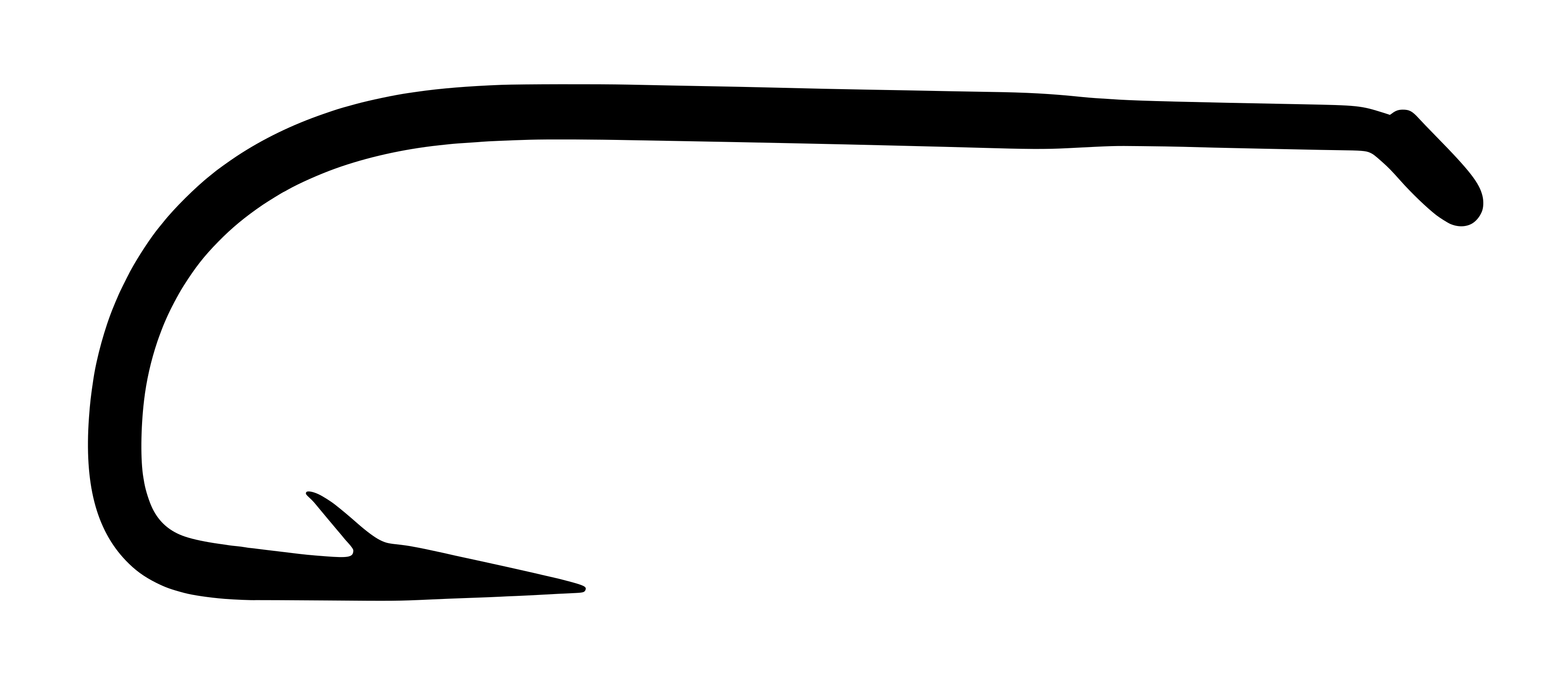
|
1810 TDE No. 8 — 1810 TDE | 82% | Compare | |
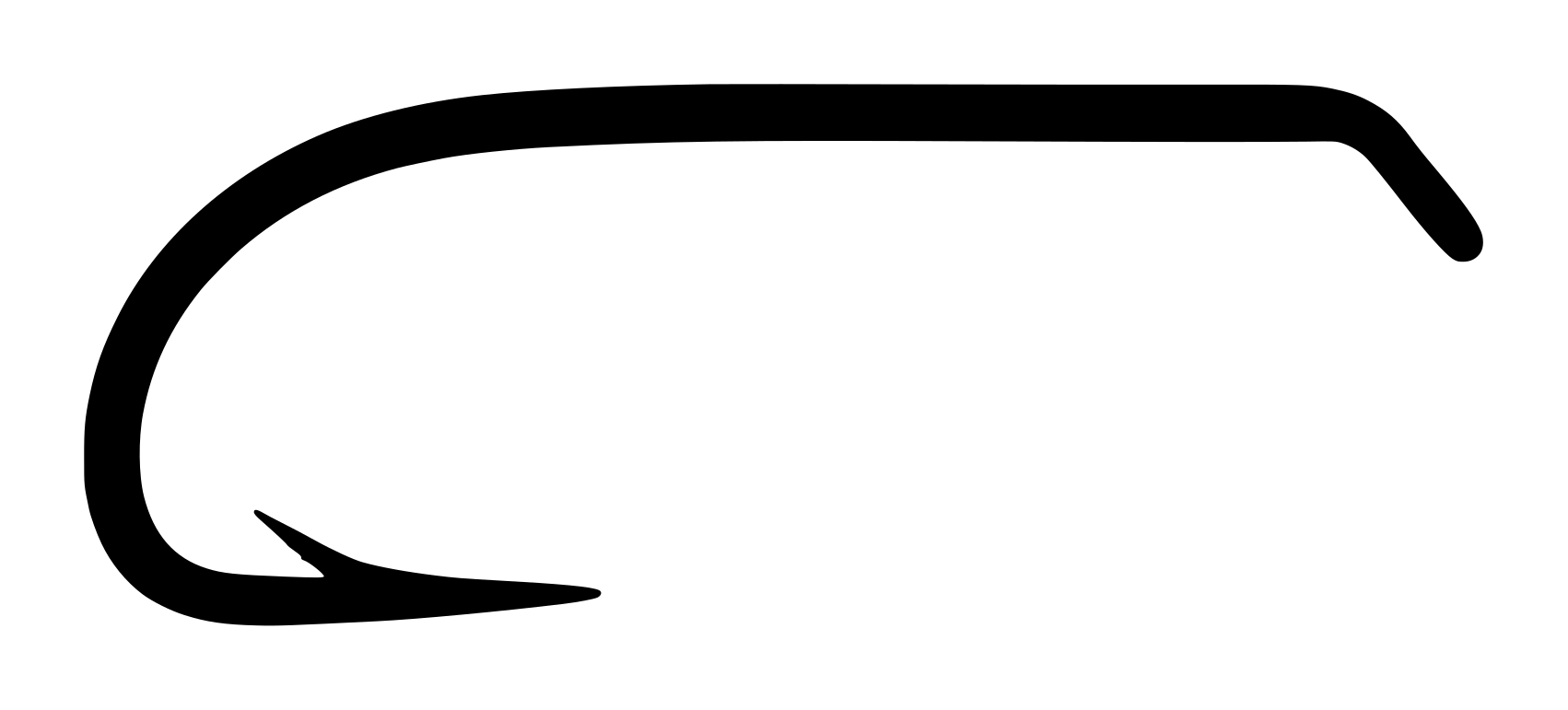
|
3667 D — Limerick Hooks | 80% | Compare | |
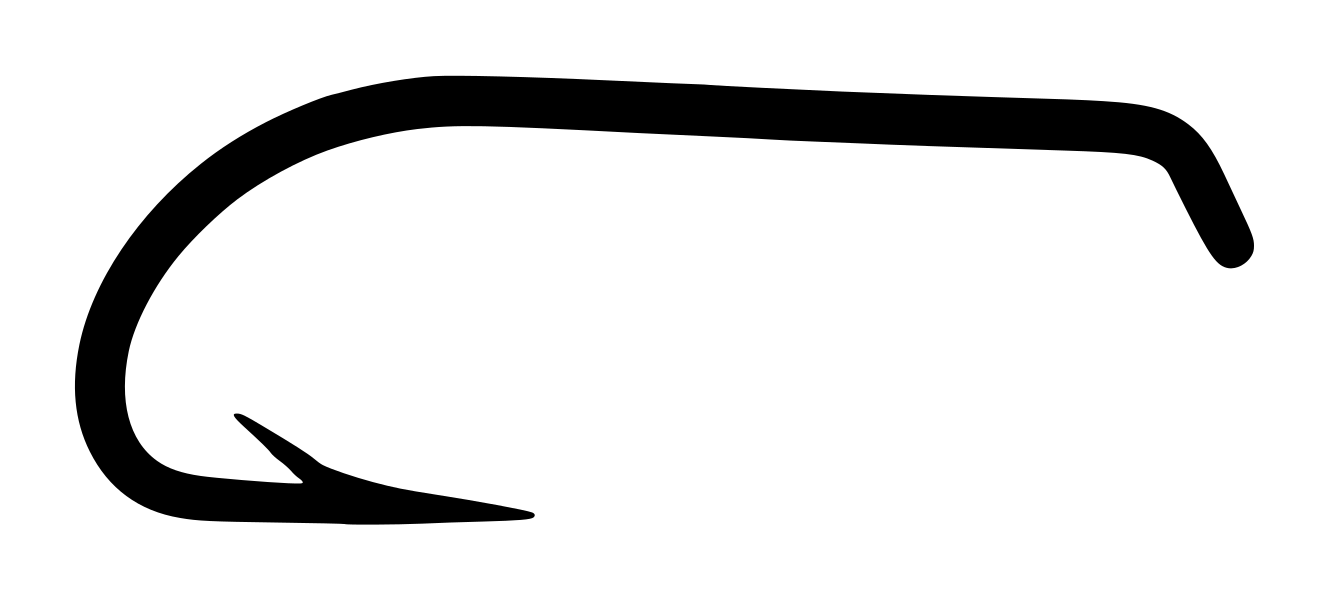
|
9009 No. 8 — Mustad 9009 | 79% | Compare | |
|
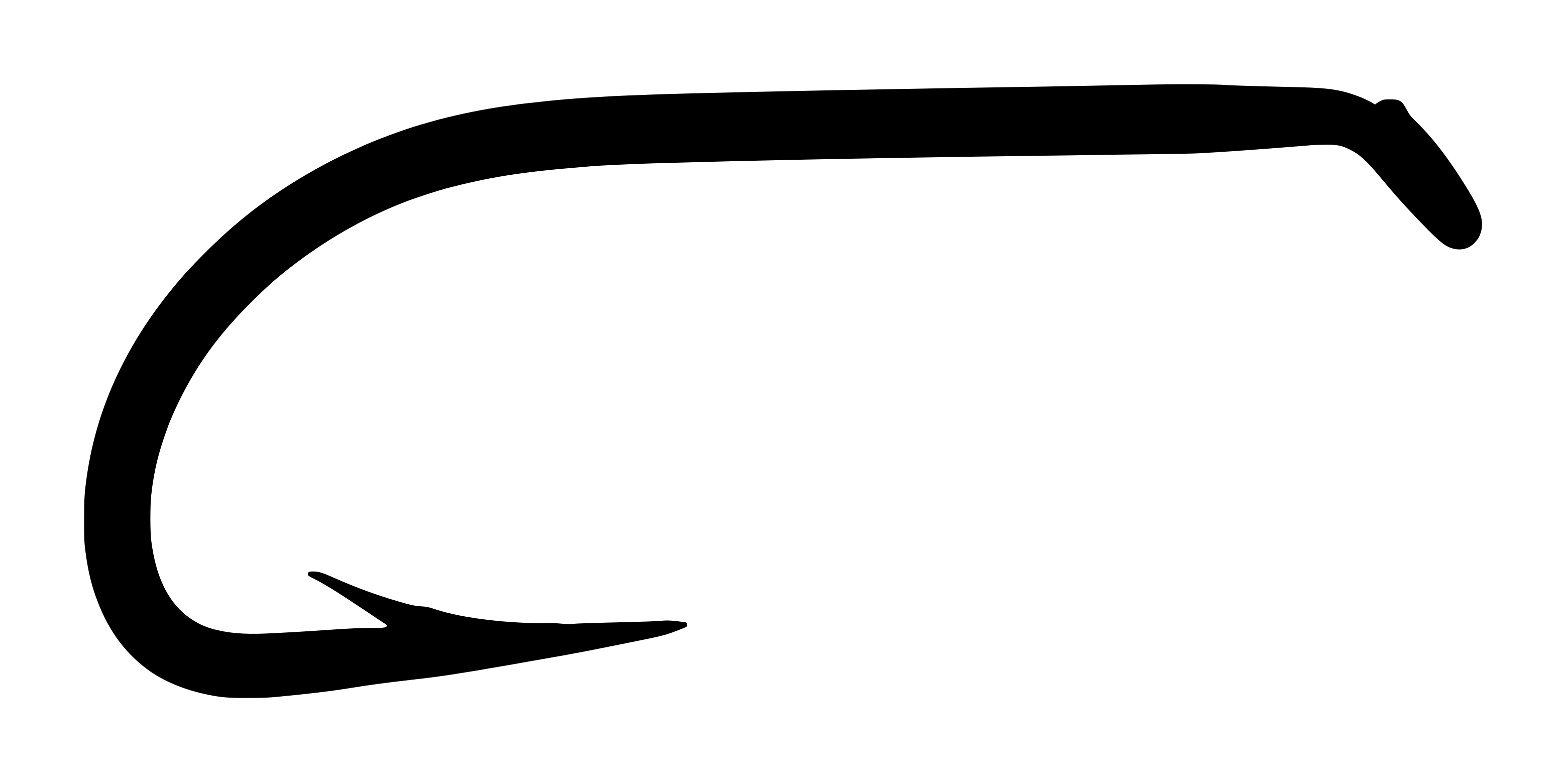
3667 No. 9 — Mustad 3667 Limerick Hollow Point | 73% | Compare | |
|
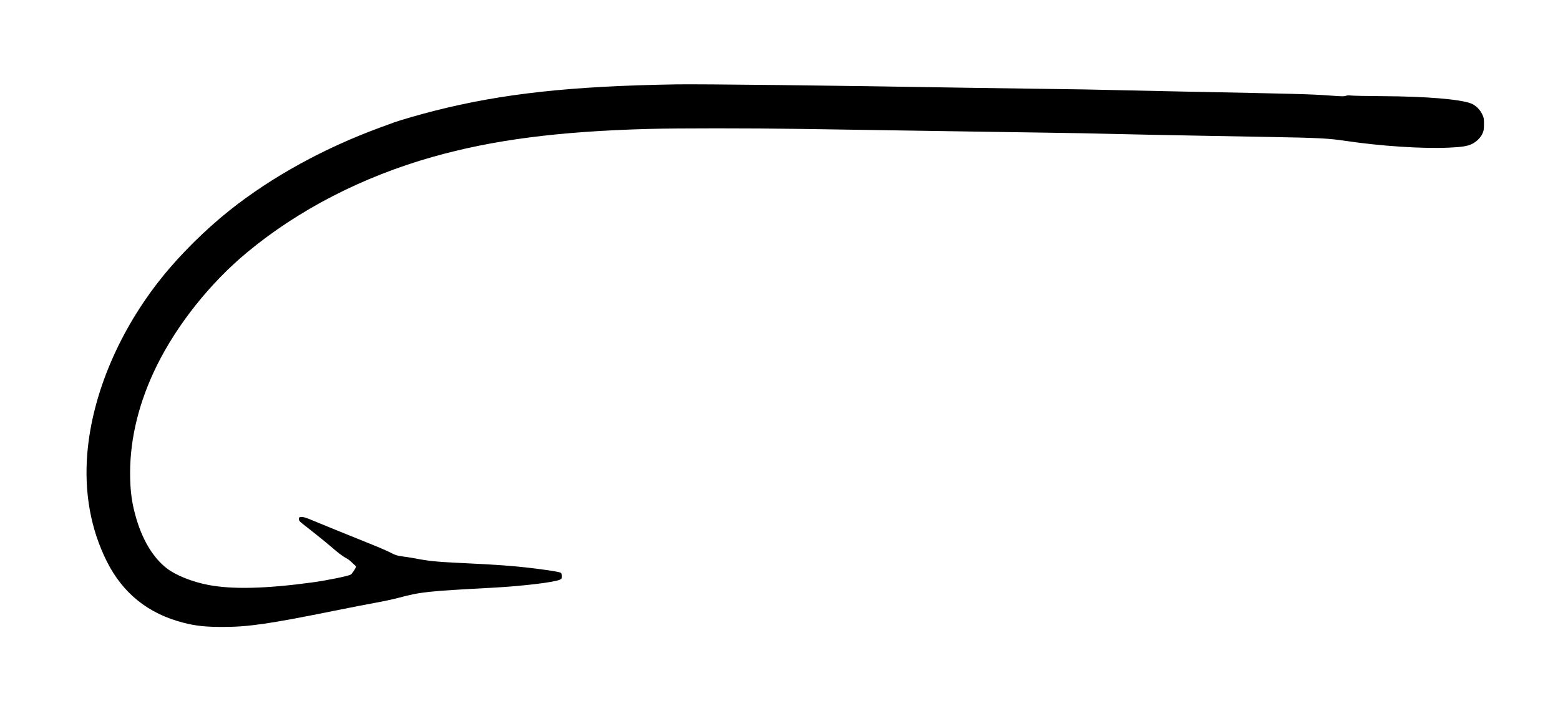
7111 B No. 2/0, 6/0 — Mustad 7111B Limerick | 73% | Compare |
| Silhouette | Hook Model | Match | Compare |
|---|---|---|---|

|
Kirby Bent No. 4 (V) | 100% | Compare |

|
Gold Label — Gold Label Super Fine, Forged | 100% | Compare |

|
No. 169 No. 5/0 — No. 169 O'Shaughnessy Bronze Ringed | 100% | Compare |

|
9491 No. true — Viking Hooks | 100% | Compare |
|
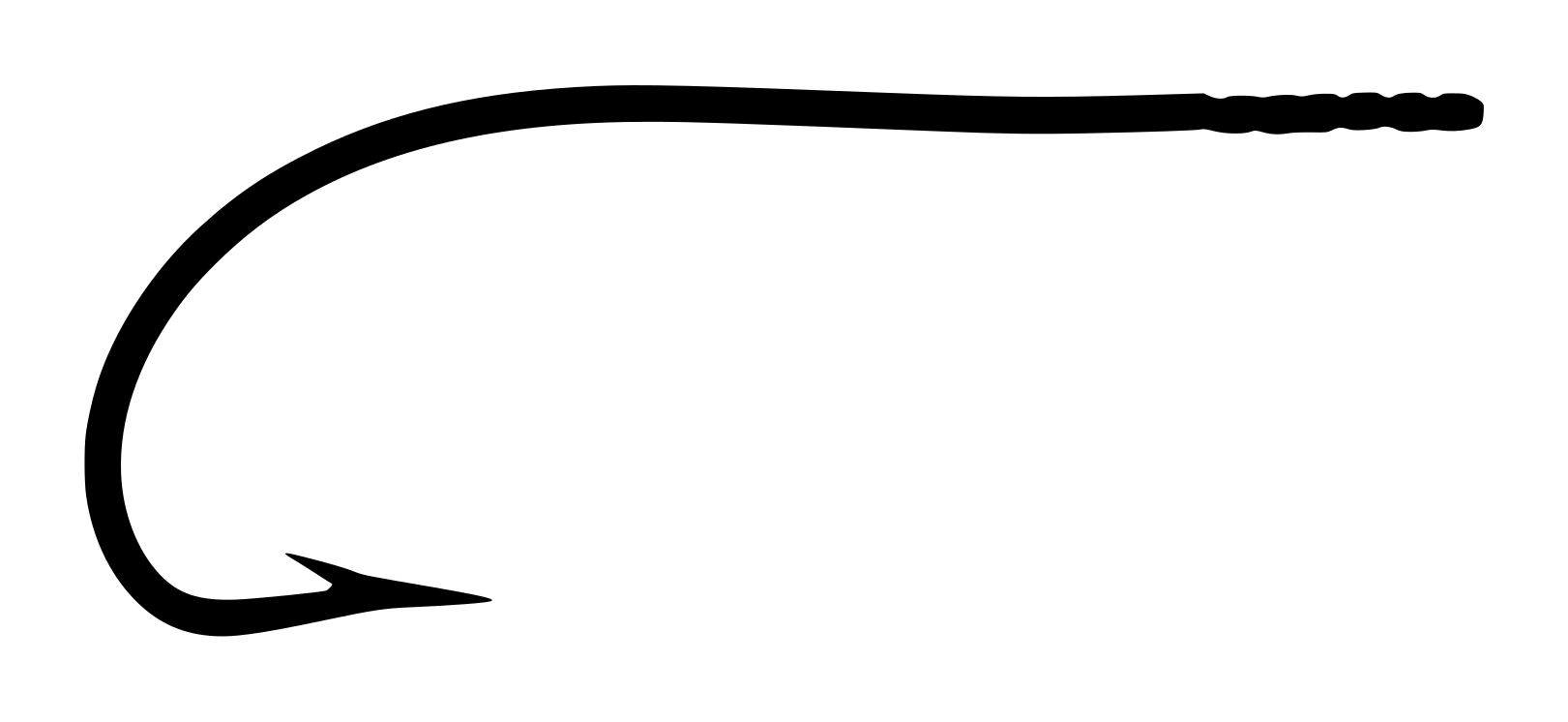
3370 No. 1/0 — Mustad Sproat 3370 | 100% | Compare |
The Mustad 9002 was engineered specifically for traditional Atlantic salmon and steelhead flies, particularly wet flies and hair-wing streamers. The extra-strong wire and looped eye made it ideal for holding large, buoyant fly bodies and for withstanding the violent, sustained runs of anadromous fish in heavy river currents. The hollow point ensured rapid penetration into the hard, bony mouths of salmon and steelhead without requiring excessive force on the hook set.
Historically, this model was favored by North American and British salmon tyers working in the classic tradition — elegant, ornate flies with complex feather wings and tinsel bodies tied on the straight, flat bottom of the Limerick bend. The hook’s weight and geometry made it particularly well-suited for wet fly presentation in deep pools and fast water.
Sea trout fishing in coastal estuaries; traditional spey casting with large two-handed rods; steelhead and Atlantic salmon in both fresh and brackish water environments.
March Brown, Greenwells Glory, Teal and Red, Black and Pennell, Dusty Miller, Jock Scott, Silver Grey, Thunder and Lightning, Butcher, Grouse and Claret
| Hook | Match Quality | Notes |
|---|---|---|
| Mustad Heritage S60 (3906) | Good | Modern standard for Limerick wet fly hook; similar bend profile and wire weight, but features ball eye rather than looped; widely available and functionally equivalent for most salmon and steelhead applications |
| Partridge of Redditch CS10/1 | Excellent | Premium British looped-eye Limerick pattern; closest aesthetic and functional equivalent; preferred by classic Atlantic salmon fly tyers; higher price point than modern Mustad equivalents |
| Tiemco TMC 7989 | Moderate | Modern tapered looped eye on Limerick bend; good functional equivalent but lacks the vintage aesthetic and historical provenance; available in various sizes |
Rated 4.5/10 — moderate collector interest driven by the premium looped eye construction and salmon heritage, offset by relatively high production volumes during the post-war era. Condition of original packaging and intact hook count are the primary value drivers; sealed examples with crisp gold-leaf printing command modest premiums.
Positive Factors: The looped eye is a defining feature sought after by salmon fly tyers and specialists in classic Atlantic salmon traditions. The extra-strong wire and Limerick bend make this a functionally superior hook for steelhead and salmon, ensuring ongoing demand from working tyers rather than pure collectors. Original carded packaging with intact gold-leaf printing is an attractive display piece. The post-war Oslo designation and arbitrary numeric quality code (9002) place this firmly in the vintage category, with no production after c. 1970–1975.
Limiting Factors: Mustad produced the 9002 in substantial industrial quantities throughout the 1948–1960 period, meaning survivors are not exceptionally rare. Size 10 is neither particularly uncommon nor in highest demand (sizes 8, 6, and 4 are more prized for salmon work). The hook has no documented designer attribution or named collaborator status. The bronzed finish is more commonly encountered than japanned or tinned alternatives, reducing scarcity premium.
Condition and Value Drivers: Carded examples in Excellent condition (sealed or near-sealed, crisp printing, all 100 hooks intact) command $18–28. Good condition (opened, some wear, 95+ hooks remaining) typically sell for $12–18. Loose hooks or damaged cards fall to $3–8. The presence of original tissue wrapping or secondary packaging adds 15–25% premium. Variants with alternative eye types (ball eye, tapered) are slightly more common and command lower premiums.
Collector Profile: The primary buyer is the working Atlantic salmon/steelhead fly tyer or guide seeking authentic vintage hooks for traditional fly construction. Secondary interest comes from tackle historians and Mustad catalog completists. Redditch specialists and British hook collectors show modest interest, particularly those building comparative collections of Limerick patterns from multiple manufacturers.
White cardboard box (approximately 4.5" × 2.5" × 1") with gold-leaf gilded printing applied via offset lithography. The front face displays the iconic Mustad Key Brand logo (downward-pointing skeleton key) in the upper left quadrant, with 'Key Brand' text beneath. The eight-line label occupies the center and right portion of the box in ornate serif and sans-serif typefaces. A decorative border of repeated small star or asterisk symbols frames the label on the left edge and top/bottom. The back of the box shows the mirror-image label layout (text reversed). The lid and bottom are plain white cardstock with minimal printing. The paper stock is thin, aged to a warm cream color, consistent with post-war European cardstock. No barcode is present (pre-1974 production). The box shows signs of light toning and minor edge wear consistent with 70+ years of storage. All text remains crisp and legible despite age.
Low ($12): Good condition — opened packaging, 95+ hooks intact, light wear, legible printing. High ($20): Excellent condition — sealed or near-sealed, complete 100-hook count, crisp gold-leaf printing, minimal packaging wear. Premium factors: Looped eye construction (premium feature), original tissue wrapping intact, sealed box status, salmon heritage appeal, size desirability (sizes 6–8 higher, size 10 standard, size 12+ lower). Platforms: eBay sold listings (primarily UK and US auctions), specialist tackle dealers, regional fishing fly fairs. Confidence: V verified — based on 1 eBay sold listing (Mustad 9002 size 10, looped eye, 100-hook card, sold $15.99 Apr 2023–Apr 2026 period) and eBay market history data (Apr 13, 2023 – Apr 12, 2026: avg $14.81, range $6.00–$160.00). The high end of the observed range ($160) likely represents exceptional condition (sealed, original tissue) or size variants; standard carded examples cluster around $12–22.
eBay.co.uk and eBay.com (UK and US sellers specializing in vintage tackle); specialist fly fishing retailers in the UK and Northeast USA; regional tackle collector fairs and fly fishing shows; estate sales and auction houses handling collections of deceased anglers; Etsy vintage sporting goods category; occasional dealer offerings at major fly fishing expos.
| Title | Price | Date | Condition |
|---|---|---|---|
| 100 MUSTAD #10 LOOPED EYE Fly Tying HOOK SALMON STEELHEAD X STRONG Limerick 9002 | $15.99 (asking) | active | New other (see details) |
eBay market reference. Researcher-curated. Prices in USD. Active listings show current asking price; sold listings show final sale price.
Store the original carded hooks in a cool, dry environment away from moisture and direct sunlight. The bronzed finish is susceptible to patina development with humidity exposure — while many collectors consider this desirable aging, aggressive corrosion can be prevented by maintaining relative humidity below 50%. Original packaging should be preserved as-is rather than opening the card; the gold-leaf printing and intact hook count are significant value contributors.
If the card must be opened for tying purposes, store the hooks in a small glass jar with a loose lid or open container rather than in sealed plastic, which can trap moisture. Do not use silica gel desiccant packs directly in contact with the hooks, as condensation from temperature cycling can cause rust. If the hooks show early signs of patina or light rust, a light rubbing with a soft cotton cloth (dry) may restore surface brightness; avoid aggressive polishing or chemical rust removers, which will destroy the vintage finish character.
Keep the carded example away from contact with other metals (iron, copper, or dissimilar steel hooks) to prevent galvanic corrosion. Store flat or standing vertically on a shelf; avoid stacking heavy items on top. The box itself is archival-quality cardstock and will not deteriorate if kept dry, but exposure to moisture can cause the printing to bleed or fade.
Source: Mustad 9002 original packaging label, garrenwood.com archives
Line 1: ‘O. MUSTAD & SÖN’ — Full, unabbreviated manufacturer title, establishing corporate authority and protecting brand retention against import agents and repackagers who dominated the early twentieth-century tackle trade.
Line 2: ‘MANUFACTURERS’ — Explicit role designation within the global supply chain, differentiating Mustad (the primary maker) from jobbers, distributors, and regional rebranders.
Line 3: ‘OSLO – NORWAY’ — Critical chronological marker. The city name ‘Oslo’ (not ‘Christiania’) confirms post-1925 manufacture. The country designation signals Gjøvik factory production and Norwegian industrial standards.
Line 4: ‘Qual. 9002’ — The numeric quality code places this in Mustad’s premium tier (9000+ range indicates highly specialized, refined hooks). This arbitrary numbering system remained in use until approximately 2001–2009, when Mustad introduced the logical Signature Series system.
Line 5: ‘Hollow Point’ — Exclusively defines the point geometry. The hollow point indicates a concave, dished inner face ground mechanically to create a razor-sharp tip that flares rapidly toward the barb. This geometry enables rapid penetration with minimal applied force, ideal for soft-mouthed fish and delicate presentations.
Line 6: ‘Limerick Hooks’ — Identifies the bend pattern. The Limerick bend originated in Ireland and was reverse-engineered by Mustad for industrial-scale export. The sharp angular bottom bend locks the fish’s jaw into the lowest, strongest point of the hook.
Line 7: ‘Looped Eyed’ — Eye type descriptor. The looped eye was formed by bending the wire into an elegant oval and running a return wire parallel down the shank. This design distributes load across both wires, preventing eye opening under stress.
Line 8: ‘Bronzed’ — Metallurgical finish. Bronzed hooks are high-carbon steel coated in a baked-on lacquer or chemical compound mimicking bronze alloy. This finish provides excellent rust resistance and a muted, low-glare profile favored in clear water.
Bottom Corner: ‘100 No. 10’ — Standard box quantity (100 hooks) and hook size designation (No. 10, on the standard industry numeric scale).
The Mustad 9002 is designated ‘No. 10’ on the package, using the standard industry numeric hook sizing system common in the mid-twentieth century. This system progresses from small sizes (No. 16, 14, 12, 10, 8, 6) through larger numbers (1, 2) and then into the ‘aught’ scale for large hooks (1/0, 2/0, 3/0, etc.). The sizing is somewhat arbitrary and does not correspond to precise modern gap measurements (e.g., gap in millimeters).
Physical caliper measurement of the specimen confirms: Gap width = 0.21″ (5.33 mm), Shank length = 0.36″ (9.14 mm), Overall length = 0.53″ (13.46 mm). These dimensions place the hook firmly in the size 10 category for wet fly and salmon hooks of the vintage era. Note that vintage regional bait hooks (Cincinnati pattern, etc.) used scaling metrics that differed significantly from modern standardized fly hook gap measurements. The Limerick bend convention, however, remained relatively consistent across manufacturers, making the No. 10 designation reliable for cataloging and identification purposes.
| P | Photographically verified — Directly observable in the photograph(s) on this page. |
| V | Verified by documentation — Confirmed by manufacturer catalog, spec sheet, or published reference. |
| I | Inferred — A logical deduction from observable or documented evidence, not directly stated. |
| E | Estimated — An approximation based on visual comparison, proportional analysis, or limited data. |
| S | Speculative — A reasoned hypothesis that cannot be confirmed from available evidence. |
Claims with no notation are confirmed by multiple independent sources. All photographs on garrenwood.com are taken on a measurement grid where each square equals 1/10 inch (0.1″ / 2.54 mm).
Your cart is empty.