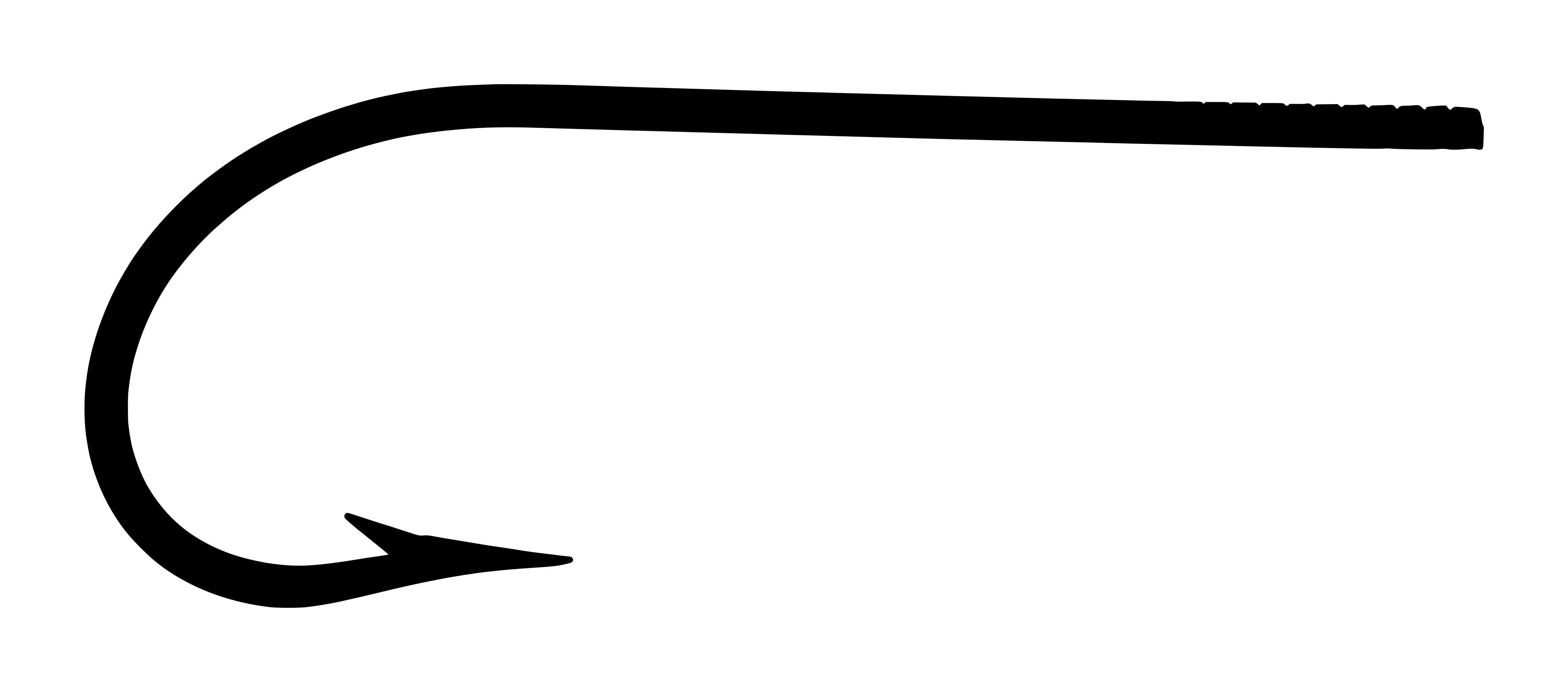
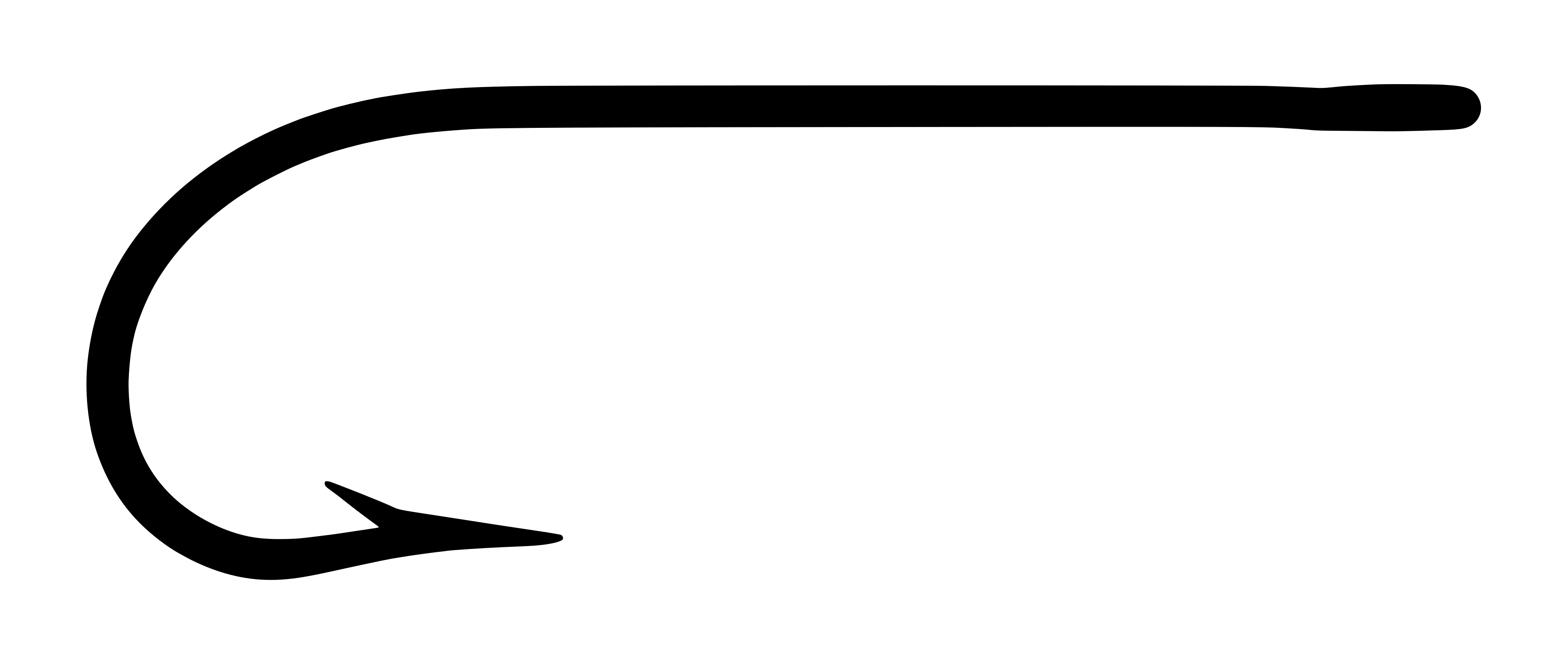
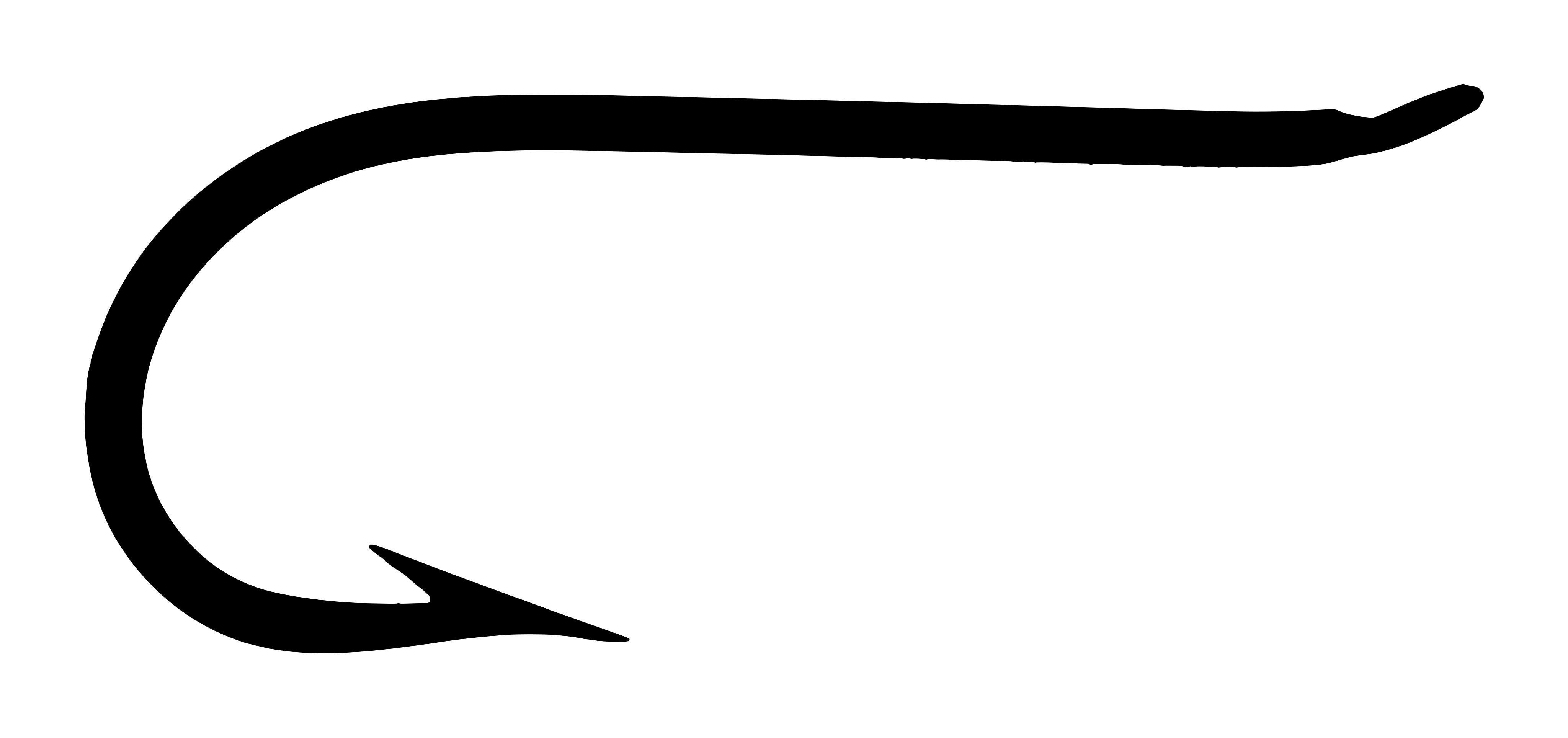
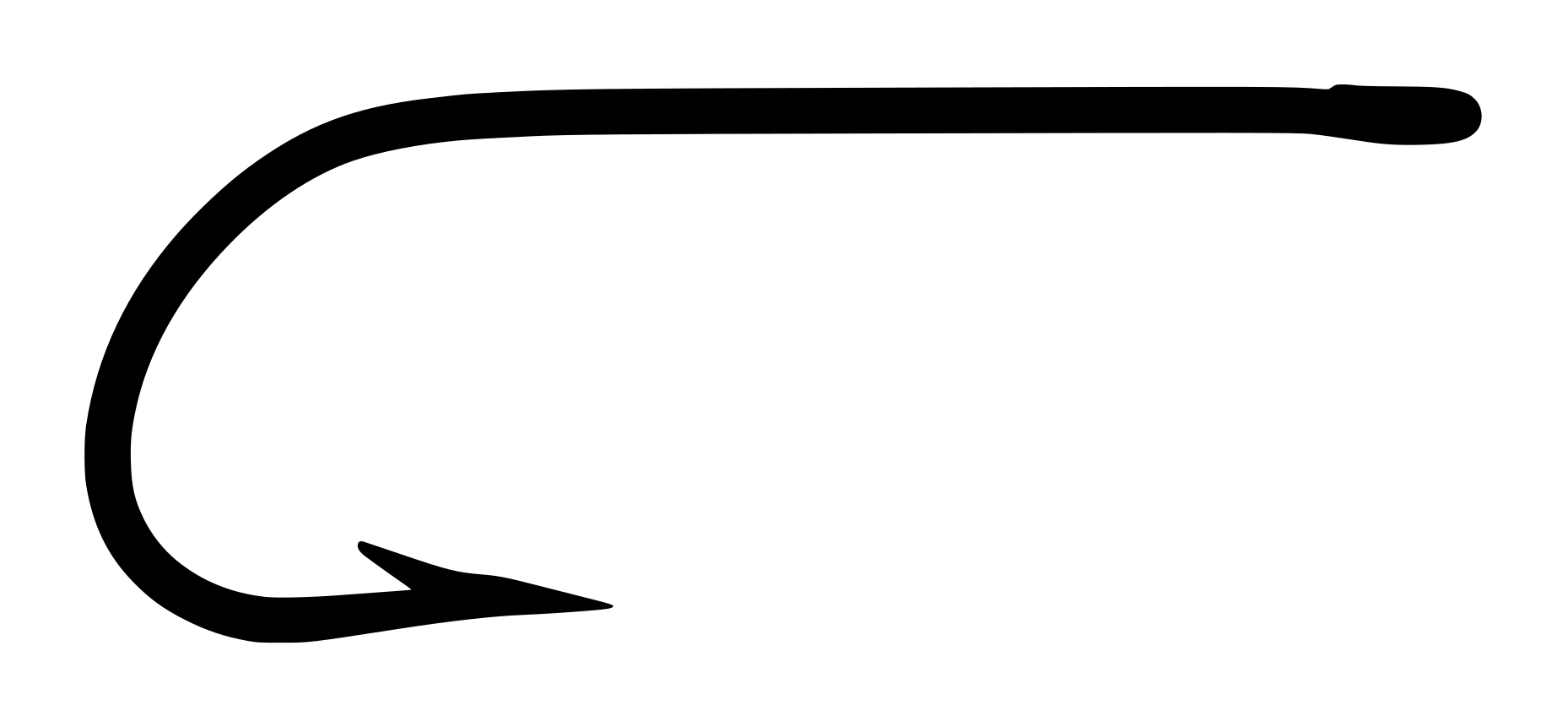
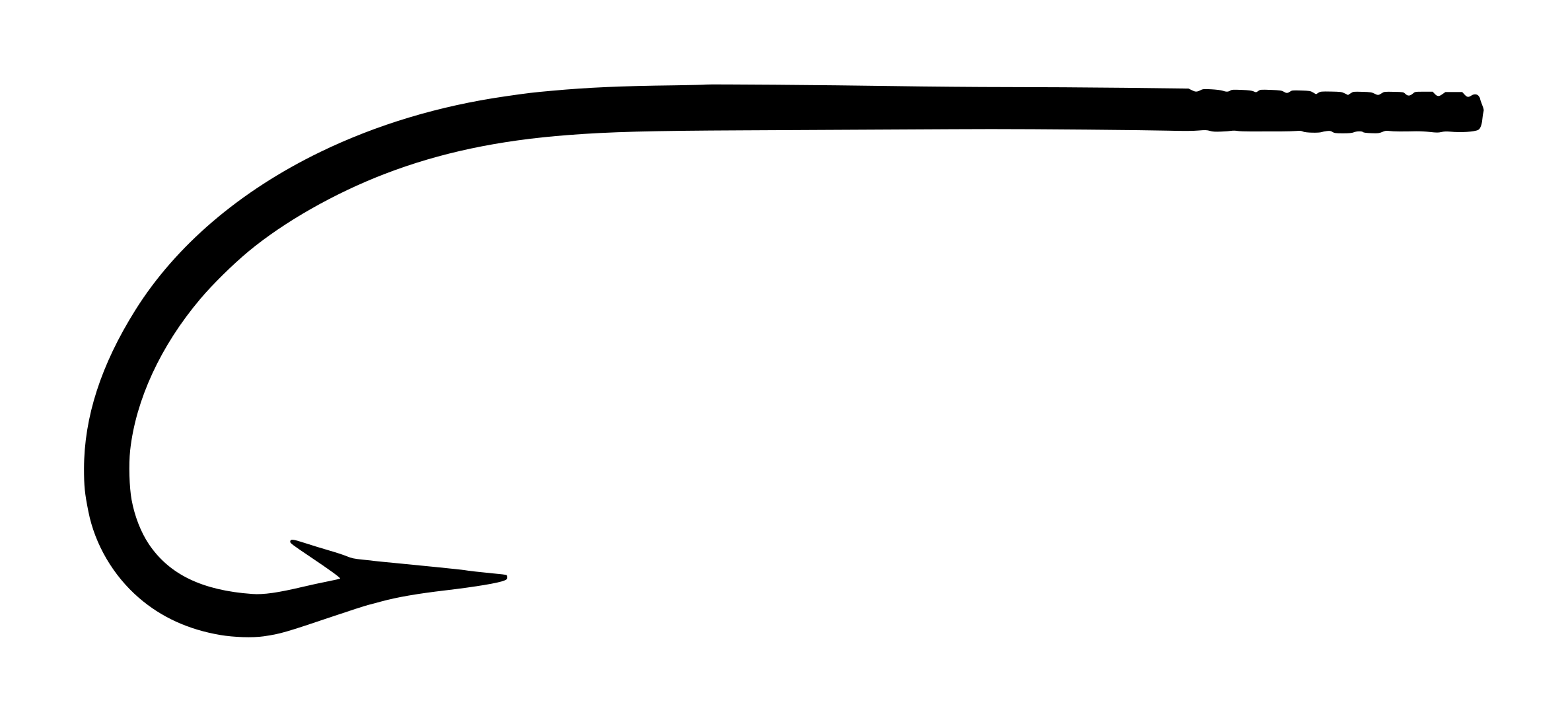
The Superior Kirby Bent, Flatted, No. 4 is a blued, spade-end Kirby bait hook made by the American Fish Hook & Needle Co. of New Haven, Connecticut, the firm founded in 1864 around Dr. Chauncey O. Crosby’s automatic hook-making machine V. The specimen is standard round wire of about 0.030″, 0.916″ overall, with a 1X long shank and a small pressed spade at the end P.
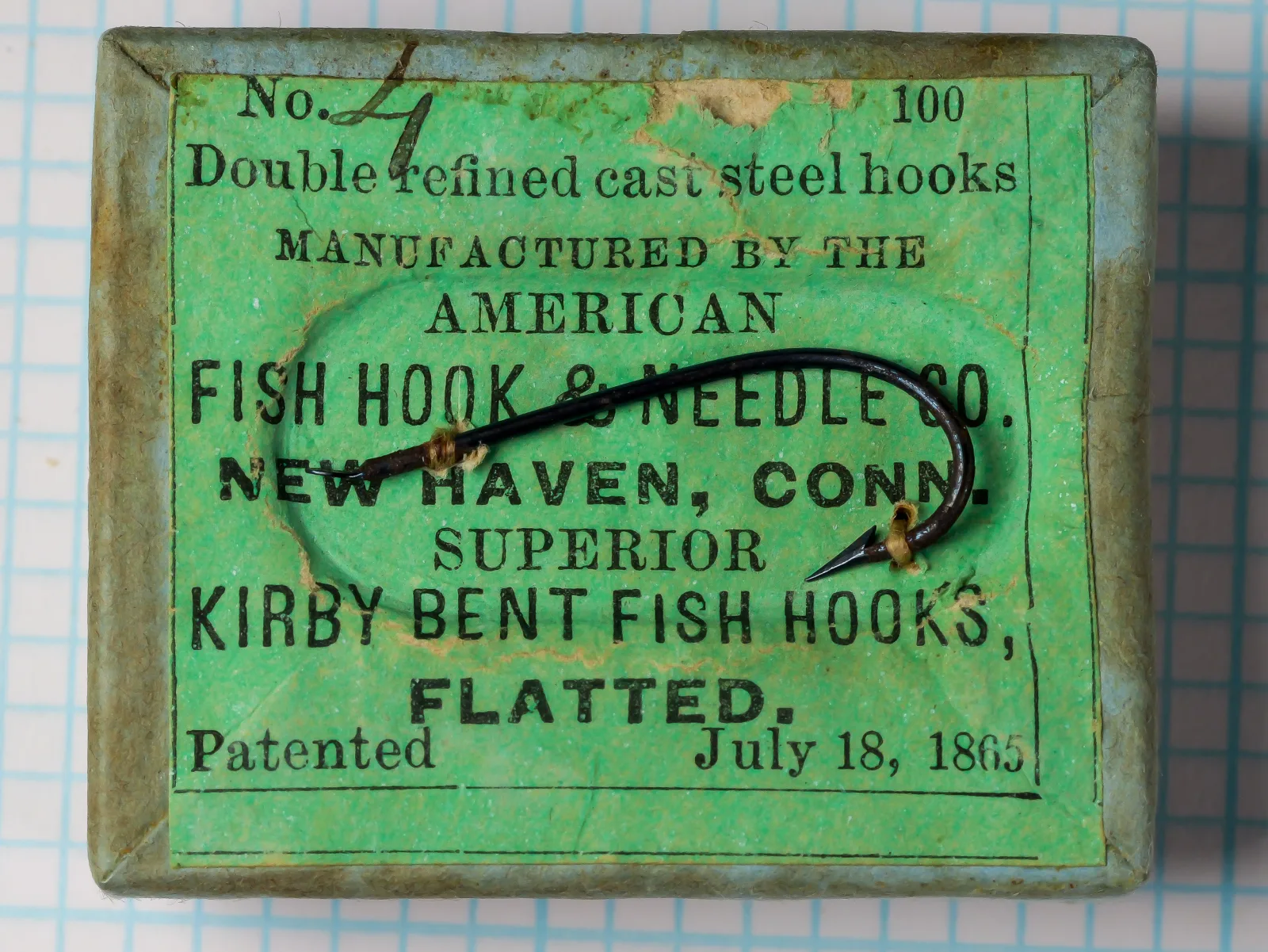
It comes in the company’s paperboard box: blue-grey paper-covered board with a green letterpress label, an indented oval on the lid holding a sample hook sewn in place with thread, a printed count of 100, the size “4” written in by hand, and a yellow paper lining P. The “Patented July 18, 1865” line on the label refers to the box patent, not the hook (V — Ronn Lucas Sr.), so it gives the earliest possible date for the packaging but does not date the hook design.
Collector interest comes from the maker’s place in early machine hook production and from these distinctive hand-assembled boxes. Hooks within the same series, and sometimes within the same box, vary in finish and shape (V — Ronn Lucas Sr.).
Original factory label on japanned tin box, American Fish Hook and Needle Company, Size 4 Superior Kirby Bent Fish Hooks. Label shows patent date July 18, 1865 and New Haven, Connecticut address.
Photographic record
5 cataloged imagesSelect any record to load it above.
5 images shown
American Fish Hook Co. Kirby Bent Box Label Size 4 1865Original factory label on japanned tin box, American Fish Hook and Needle Company, Size 4 Superior Kirby Bent Fish Hooks. Label shows patent date July 18, 1865 and New Haven, Connecticut address.Open originalAmerican Fish Hook Co. Size 4 Flatted Eye DetailClose-up of the flatted blind eye showing spade-like attachment surface typical of heavy utility bait hooks designed for direct line attachment via whipping or knot.Open originalAmerican Fish Hook Co. Size 4 Point DetailSide profile of the hook point showing the superior point geometry with nearly flat inner face, the acute barb angle, and the distinctive lateral Kirby offset deflecting the point away from the shank plane.Open originalAmerican Fish Hook Co. Size 4 Hook ProfileFull profile view of the Superior Kirby Bent Size 4 hook showing the complete geometry including shank, bend curve, point deflection, and gap width in relation to the 1/10-inch measurement grid.Open originalAmerican Fish Hook Co. Size 4 Hooks in Factory BoxInterior of the original japanned tin box showing factory-wrapped bundles of blued cast steel hooks with original yellow tissue paper lining, demonstrating the complete original packaging and hook count.Open original
Technical profile
Eye
Blind — FlattedBlind flatted (spade) end: the shank terminus is pressed into a small, slightly rounded paddle wider than the wire, with a clear shoulder where round wire meets flat P. The spade appears roughly 0.05–0.06″ (1.3–1.5 mm) across E; the earlier figure of 0.12″ × 0.08″ is too large for 0.030″ wire and should be re-measured with calipers. 'FLATTED' on the label names this construction P, and the maker's 1865 machine patent describes forming the head by pressing each blank on an anvil (V — U.S. Patent 46,644). Spade-end hooks were attached by snelling to gut or line I.
Wire
Standard, Round
Shank
1X Long — Plain
Bend
Kirby (offset), Wide gap, Offset / kirbedThe label reads 'SUPERIOR KIRBY BENT FISH HOOKS, FLATTED.' P, and the maker's own 1865 machine patent defines the Kirby bend as one in which the point stands to one side of the line of the back (V — U.S. Patent 46,644). In plan view the bend is broad and rounded, tightening toward the throat, with the point angled slightly up toward the shank P. A lateral offset lies perpendicular to the plane of these photographs, so its presence and degree cannot be assessed from them; confirm with an end-on photograph sighting along the shank before recording an offset angle.
Point
Standard / SpearCut barb on a spear-form point P. The barb tip sits roughly 0.08–0.10″ (2.0–2.5 mm) back from the point E and stands off the point at a fairly low angle, about 25–30° E. The upper faces of the point are ground flat P. Barb size is proportionate to the 0.030″ wire.
Finish
Blued — Confirmed (stated on packaging)Blued P. Macro photographs show a cool blue oxide with the drawn-steel surface texture visible beneath it and no thick lacquer build-up of the kind japanning leaves P. The finish reads blue-black at normal viewing distance and bright blue under macro lighting P. A small reddish spot on the shank indicates minor surface rust P. Both blued and japanned hooks are recorded from this maker's Kirby Bent Flatted boxes, and single boxes have held hooks of differing finish (V — Ronn Lucas Sr.).
The Superior Kirby Bent No. 4 is a round-wire, standard-gauge bait hook. Caliper measurement gives a wire diameter of about 0.030″ (0.76 mm), consistent with the specimen’s recorded weight of 0.11 g (P/I); an earlier figure of 0.048″ in this entry was an error. The finish is blued: a thin oxide that leaves the steel’s drawing marks visible under magnification P.
The label designates a Kirby bend, meaning the point is set to one side of the shank’s plane (V — label; U.S. Patent 46,644). The degree of offset on this specimen cannot be judged from the plan-view photographs and should be confirmed with an end-on view sighting along the shank. The traditional rationale for a kirbed point is improved hooking as the line comes tight; that effect is not measured here S.
The flatted (spade) end is a small paddle pressed into the end of the shank, giving the snelling thread a shoulder to bear against I. The point is spear-form with a cut barb, and its upper faces are ground flat P. The shank is long in proportion to the gap, about 2.4–2.5 : 1 E. The specimen shows one small rust spot on the shank; the bluing is otherwise intact P.
This entry documents a Superior Kirby Bent, Flatted, No. 4 box from the American Fish Hook & Needle Co., New Haven, Conn. The 'Patented July 18, 1865' line on the label refers to the box patent (V — Ronn Lucas Sr.; patent number not yet identified). The company's hook-machine patent is U.S. No. 46,644, dated March 7, 1865, which includes a Kirby-bend former V.
Own this hook? Help us measure it.
We have measurement for size 4. Know any others? Submit calipered measurements and we'll review and add them. Thank you!
“Superior Kirby Bent Fish Hooks, Flatted” is the product description printed on the box label: a Kirby-bend hook with a flatted (spade) end, sold 100 to the box, with the size written in by hand P. No model or pattern number appears on the label P.
The Kirby bend was an established English pattern long before 1865 (see Design Lineage). What was new was the method of production: Crosby’s March 7, 1865 machine patent provides a Kirby former that twists the bend so the point stands to one side of the shank’s plane (V — U.S. Patent 46,644). The “Patented July 18, 1865” line on the label does not refer to the hook or the bend; collectors who have handled many of these boxes identify it as the patent date of the box itself (V — Ronn Lucas Sr.; patent number not yet identified).
The meaning of “Superior” on this label is not documented. On Mustad labels the site reads “Superior” as a point designation; whether the same applies to this 1860s American label is unconfirmed, and it should not be treated as a defined quality tier S. “Double refined cast steel” refers to crucible (cast) steel, the standard premium hook steel of the period; the hooks were formed from drawn wire, not cast I.
“Flatted” identifies the blind flatted (spade) end, which the Crosby machine formed automatically by pressing the head of each blank on an anvil (V — U.S. Patent 46,644). Spade-end hooks were snelled—whipped to gut or line—rather than tied through an eye I. Hooks from these boxes are not uniform: both blued and japanned examples of the Kirby Bent Flatted are recorded, and single boxes have been found holding hooks of differing finish and even shape (V — Ronn Lucas Sr.). Production dates for this line, and any continuation under Enterprise Manufacturing, are not documented in the sources reviewed.
Era and Packaging Dating
The label's 'Patented July 18, 1865' line gives the earliest possible date for this box V; per Ronn Lucas Sr., that date refers to the box patent, not the hooks. The New Haven, Conn. address and the full 'American Fish Hook & Needle Co.' name are consistent with the company's New Haven period P, but the sources reviewed do not document when the name or address changed, so they set no end date. The hand-assembled paperboard box with an indented lid and sewn-on sample hook, the hand-written size, and the blind flatted construction are consistent with early production I. The end of the range is an estimate pending a documented chronology of the firm's box styles and addresses; Larson, The History of the Fish Hook in America, ch. 10, is the best available source E.
The Patent on the Box
The 'Patented July 18, 1865' on this label is easy to read as a patent for the hook, but collectors who have handled many of these boxes identify it as a patent for the box itself (V — Ronn Lucas Sr.). The patent that mattered for the hooks came four months earlier: on March 7, 1865, New Haven dentist Dr. Chauncey O. Crosby received U.S. Patent No. 46,644 for a machine that cut, headed, barbed, pointed, ground and bent hooks in one sequence, including a spiral-grooved former made specifically for the Kirby bend V. By 1867 Crosby's company was reported by Scientific American to be making some 180 million hooks a year (V — as cited by Ronn Lucas Sr.).
Design lineage and influence
The Kirby bend is traditionally attributed to Charles Kirby, a seventeenth-century London hook maker, and by the nineteenth century it was a standard English pattern: a round bend with the point set to one side of the shank (kirbed) I. The American Fish Hook & Needle Co. did not originate or patent the bend; Crosby’s 1865 machine patent covers a machine able to form it automatically, alongside the in-line Limerick (V — U.S. Patent 46,644).
The Superior Kirby Bent was sold into an American market long supplied by Redditch makers such as S. Allcock & Co. I. The hooks were formed from drawn crucible-steel wire and finished blued or japanned (P for this specimen; V for the range — Ronn Lucas Sr.).
The Kirby bend remains in production. Mustad’s current 3136 Classic Kirby has a kirbed point on a 1X long shank of standard-strength round wire, but with a ringed eye rather than a spade end (V — Mustad product listing). A later spade-end Kirby is documented on this site as the Mustad 1505 “Mustad-Best Kirby Hooks,” c. 1930–1960.
Best matchRelated by Attribute
Computed automatically from catalog data — updated as new hooks are added.
Matches: Bend, Eye, Eye Orient., Point, Finish +4 moreDiffers: Shank: 1X Long vs Standard; Wire: Standard vs Heavy (1X Heavy); Gap: Wide vs Standard +3 more
Matches: Bend, Shank, Eye Orient., Forging, Offset +2 moreDiffers: Wire: Standard vs Fine (1X Fine); Gap: Wide vs Standard; Eye: Blind — Flatted vs Blind — Marked Shank +3 more
The Superior Kirby Bent No. 4 is a general-purpose bait hook, sized for panfish, perch, bass, trout and similar freshwater species I. As a spade-end hook it was meant to be snelled to gut or line rather than tied through an eye I. The Kirby bend sets the point to one side of the shank (V — label), a feature traditionally credited with better hooking on the strike S.
Secondary Applications
Small saltwater bait fishing for flounder and similar bottom species is plausible at this size, since the Kirby was a common sea-bait pattern I. No period documentation of specific uses for this model has been located.
Classic Fly Patterns
Named patterns specifically associated with this hook. Leave blank if none formally documented. Do not speculate — only include patterns with a confirmed association.
Modern Equivalents
Hook
Match Quality
Notes
Mustad 3136 Kirby Bent
Good
Current Mustad Classic Kirby with a kirbed point, 1X long shank and standard-strength round wire: close in bend and proportions (V — Mustad product listing). Differs in having a ringed eye rather than a spade end, and modern bronze, black nickel or Duratin finishes rather than bluing. Suggest match_quality: moderate.
Collector notes
Rated 6.0/10 — Scarce. An early product of the American Fish Hook & Needle Co., the New Haven firm credited with the first automatic hook-making machines V. The distinctive hand-assembled boxes, with a sample hook sewn into an indented lid, are the main draw; full boxes with the sample intact are harder to find than loose hooks E. Value depends heavily on box condition and count.
Reference value
$45 – $120 USD estimate
Packaging condition
Good — moderate wear, legibleRecorded specimen
Packaging format
GW-AFH-01Catalog code
Positive Collectability Factors: The maker is historically important as the firm built around Dr. Chauncey O. Crosby’s automatic hook machine, patented March 7, 1865 V. The paperboard boxes, with an indented lid, a sample hook sewn in place and hand-written sizes, are distinctive and appealing P. The blued finish on this specimen is well preserved P. Collectors of early American tackle and American hook history are the main market E.
Limiting Factors: Documentation of the company’s product line is thin, so identification depends on the box label I. The hooks are small, standard bait hooks, and loose examples are hard to attribute without packaging I. Label paper is fragile and prone to tears and losses, especially around the indented oval P.
Most Desirable Variants: Complete boxes of 100 with the sewn sample hook still attached and a clean label are the most desirable E. Both blued and japanned examples of this line exist (V — Ronn Lucas Sr.); no evidence has been found that either finish commands a consistent premium.
Condition Factors: Label completeness and legibility, presence of the sewn sample, box integrity and hook count are the main value drivers E. Rust spotting on the hooks and staining of the yellow lining reduce value E.
Packaging
Two-piece paperboard box (lid and tray) covered in pale blue-grey paper, with a green paper label printed in black letterpress on the lid P. The lid carries an indented oval into which a sample hook is sewn with thread at the shank and at the bend P. Label text: 'No. [4 — hand-written in ink] 100 / Double refined cast steel hooks / MANUFACTURED BY THE AMERICAN FISH HOOK & NEEDLE CO. / NEW HAVEN, CONN. / SUPERIOR KIRBY BENT FISH HOOKS, FLATTED. / Patented July 18, 1865' P. The tray is lined with yellow paper; the hooks lie loose inside P. Collectors who have handled many of these boxes describe them as hand-made, no two quite alike (I — Ronn Lucas Sr.). The label shows paper loss at upper center, a tear around the indented oval, and soiling; box edges show wear and browning P.
Market Value Notes
Low ($45): opened box, incomplete count, label worn or with losses, light rust on hooks. High ($120): complete or near-complete count of 100, sewn sample hook intact, clean legible label, bright hooks. Platforms: eBay, Worthpoint sold records, specialist tackle dealers and auctions. Confidence: E — no sales records for this specific model have been compiled; replace with eBay sold data when available.
Where to Find
eBay US auctions (search 'American Fish Hook Kirby' or 'vintage cast steel bait hook'); specialized fishhook dealer networks; regional Connecticut antique tackle dealers; tackle auctions and collectibles fairs in New England, particularly Massachusetts and Connecticut where American hook manufacturing history resonates with collectors. Original boxes seldom appear; seek listings with clear photos showing packaging. Dealer networks focused on American industrial history and vintage hardware may carry loose specimens.
Collector's Identification Tips
Look for a small paperboard box covered in blue-grey paper with a green letterpress label, an indented oval in the lid with a sample hook sewn in, a printed count of 100 and a hand-written size after “No.” (P for this specimen). The label credits the American Fish Hook & Needle Co., New Haven, Conn., and carries “Patented July 18, 1865” in the lower right; that date refers to the box, not the hook (V — Ronn Lucas Sr.). Hooks are spade-end (“Flatted”), and Kirby-bent examples occur in both blued and japanned finish, sometimes mixed within one box (V — Ronn Lucas Sr.). Because these boxes were hand-assembled, small differences in construction between boxes are normal and are not by themselves a sign of reproduction I.
Primary Source
Original Packaging Claims and Patent Documentation
Source: Original factory label, American Fish Hook and Needle Company, New Haven, Connecticut, patent date July 18, 1865.
The label text provides critical historical evidence: ‘No. 4 — Double refined cast steel hooks — MANUFACTURED BY THE AMERICAN FISH HOOK & NEEDLE CO. — NEW HAVEN, CONN. — SUPERIOR KIRBY BENT FISH HOOKS, FLATTED. Patented July 18, 1865.’
The phrase ‘Double refined cast steel’ is significant. This terminology refers to crucible steel produced by the Huntsman process, in which blister steel was melted in ceramic crucibles and cast into ingots—a ‘double’ refining process compared to single-stage blister production. Crucible steel was substantially more expensive but allowed finer wire gauges without sacrificing tensile strength. The marketing claim implicitly positioned this product as premium—comparable to the finest English imports—and justified a price premium over common hardware wire hooks.
The patent date (July 18, 1865) is printed directly on the label, a remarkable marketing choice that emphasized the company’s technological achievement. This dating allows precise establishment of the earliest production date and confirms that the Kirby offset mechanization was a proprietary American innovation, not a copy of English hand-forged designs.
The designation ‘FLATTED’ explicitly identifies the eye construction as blind-flatted rather than ringed, indicating this model’s intended use for commercial and heavy bait fishing applications where attachment to lines or leaders required a flat surface for whipping, rather than passage through a ringed eye.
The use of the full corporate name ‘AMERICAN FISH HOOK & NEEDLE CO.’ on this label (rather than simplified later variants that dropped the ‘Needle’ reference) is diagnostic of production prior to the needle division’s abandonment, establishing a terminus ante quem of circa 1865–1867. Later production from the same company often omitted the ‘Needle’ reference entirely as the division became obsolete in company identity.
Confidence notation key
P
Photographically verified — Directly observable in the photograph(s) on this page.
V
Verified by documentation — Confirmed by manufacturer catalog, spec sheet, or published reference.
I
Inferred — A logical deduction from observable or documented evidence, not directly stated.
E
Estimated — An approximation based on visual comparison, proportional analysis, or limited data.
S
Speculative — A reasoned hypothesis that cannot be confirmed from available evidence.
Unnotated claims are the compiler’s synthesis; see Sources. All photographs on garrenwood.com are taken on a measurement grid where each square equals 1/10 inch (0.1″ / 2.54 mm).