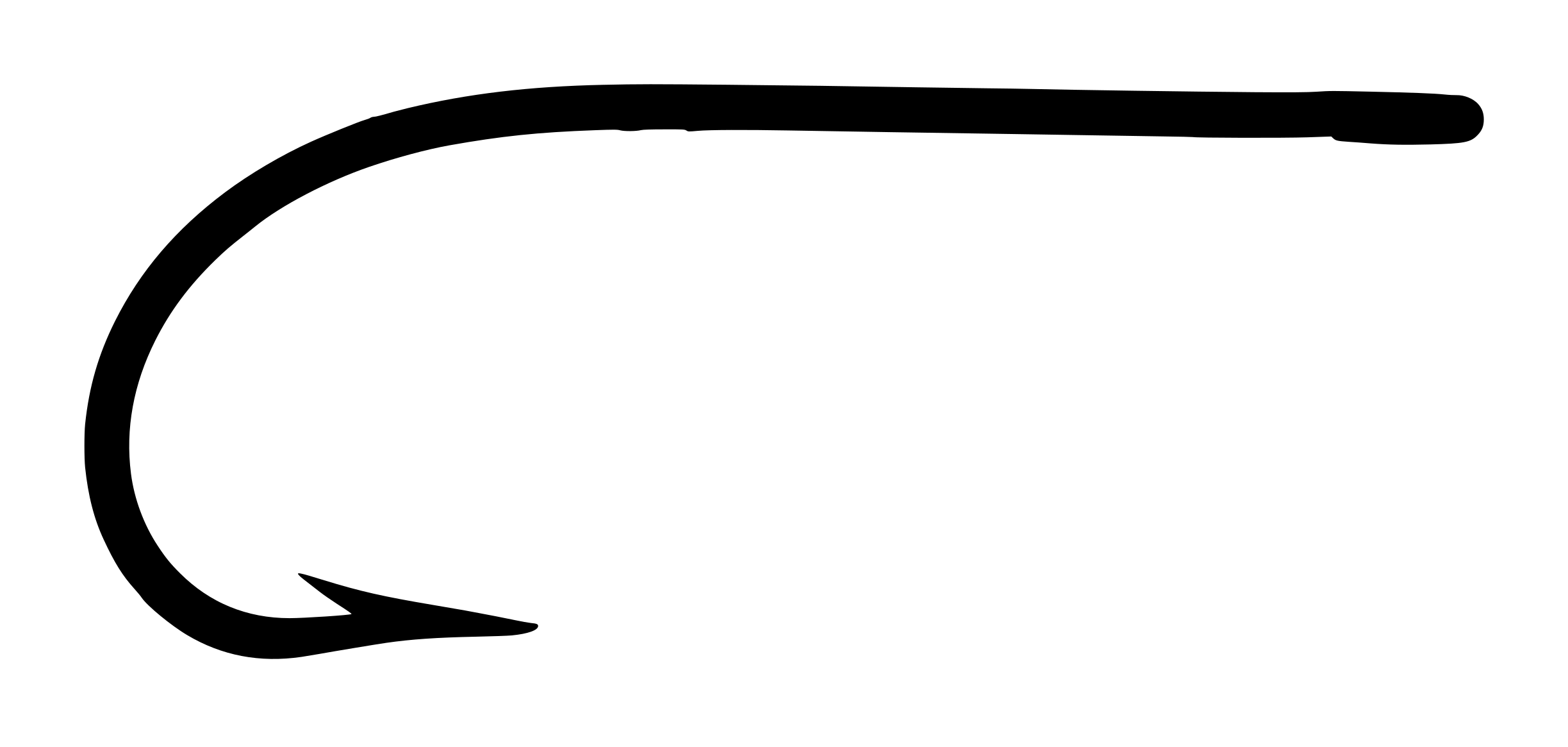
Selected size
1/0
Catalog record
- Overall Length
- 37 mm V
- Shank Length
- 21.2 mm V
- Bend Depth
- 12.4 mm V
- Wire Diameter
- 1.1 mm V
- Confidence
- V Catalog record only
 Garren WoodFishing Hook Reference
The Mustad 3365 is a mid-century general-purpose wet-fly and streamer hook manufactured by O. Mustad & Søn in Gjøvik, Norway. Size 3 is an archaic intermediate size (between modern 2 and 4) that documents pre-1980s hook sizing conventions. The straight ringed eye and sproat bend were signature features of mid-century Mustad production, offering excellent holding power and reduced eye stress compared to modern tapered-eye designs.
This specimen is from a 100-hook export package labeled with bilingual English/French text and the ‘Key Brand’ trademark, indicating production during the 1960s–1975 era when Mustad extensively exported to North American markets. The japanned black finish and standard-gauge round wire are well-suited to classic wet-fly work and live-bait fishing applications.
Collecting significance: The size 3 designation and ringed-eye construction make this model historically interesting to collectors of vintage hooks and fly-tying historians. Original packaging significantly enhances value. The 3365 was a workhorse model produced in high volume, so individual rarity is modest, but the documentation of an obsolete sizing standard and the distinctive export label appeal to specialists in mid-century fishing tackle.

4 cataloged imagesSelect any record to load it above.
4 images shown
Straight Ringed Eye | Sproat Bend | Long Shank | Standard Wire | Superior Point | Japanned Black
The superior hook point (near-straight inner taper with nearly flat inside face) is characteristic of mechanically ground Mustad points from this era. Unlike modern chemically sharpened points, the superior point achieves its bite through precise geometry rather than microscopic edge treatment. The slight flatness of the inner face paradoxically improves hook-setting penetration by providing a wider, stronger contact area that resists deformation under load.
The straight ringed eye was a premium feature in mid-century fly hooks. The separate loose ring distributes stress away from the hook shank, reducing the risk of eye cracking under high-pressure hook-sets. This construction method required additional manufacturing steps (forming the eye ring and attaching it to the shank), making ringed-eye hooks more costly to produce than tapered or ball-eye variants.
The sproat bend’s gentle round profile evolved from the Aberdeen design but with slightly sharper bend radius, offering a balance between Aberdeen’s wide round and the more aggressive Limerick hook. The japanned finish adds a thin, protective enamel layer that enhances corrosion resistance in freshwater but requires periodic renewal if heavily used.
Physical measurement with calipers
We have measurements for sizes 1/0, 2, 6, 8, 12. Know any others? Submit calipered measurements and we'll review and add them. Thank you!
O. Mustad & Søn was founded in Gjøvik, Norway, in 1832 by Ole Vig Mustad, originally as a nail and wire manufacturer. The company transitioned into fishing hooks in the late 19th century and rapidly dominated global hook production by the 1920s. By the mid-20th century, Mustad operated one of the largest integrated hook manufacturing plants in the world, with production facilities in Gjøvik, Norway, and distribution networks across North America, Europe, and beyond.
The ‘Key Brand’ trademark (featuring the interlocked key symbol visible on this packaging) was Mustad’s original mark and represented their heritage in metalworking. During the 1960s–1970s, when this specimen was produced, Mustad exported extensively to North American markets, and bilingual English/French packaging indicates targeting of both US and Canadian retailers.
The Mustad 3365 belongs to the company’s broad Sproat family, which traces its lineage to the Aberdeen design but with a refined, slightly sharper round bend. The 3365 was the standard-length sproat model; the 3366 offered a longer shank for streamer work, and the 3367 provided an extra-long variant for bigger flies. These models were workhorse designs throughout the mid-to-late 20th century and remain in production in modified forms today.
The Superior product line name visible on the packaging refers to Mustad’s mid-century branding strategy and does not denote a specific point geometry. The Superior line encompassed a range of general-purpose hooks suitable for both dry and wet fly work, as well as bait fishing.
The 3365 in size 3 is an artifact of pre-1980s sizing conventions. Modern Mustad sizing has largely abandoned intermediate sizes in favor of the simplified No. 2, No. 4, No. 6 sequence, making vintage size 3 examples historically interesting anomalies.
No barcode present on packaging (pre-1974 indicator). Bilingual Norway/Norvège text suggests export packaging for North American or European markets. Blue label with distinctive Mustad 'M' logo (two fish hooks) and Key Brand trademark is consistent with 1960s–1970s Mustad export stock. Offset printing method and cardboard construction typical of mid-century Mustad packaging. Lack of modern UPC coding and postal code format all support 1960–1975 range.
Size No. 3 hooks are virtually extinct in modern fly shops, having disappeared from standard sizing charts sometime in the 1980s. In the mid-20th century, hook sizes were far more granular, and a No. 3 occupied a comfortable middle ground for anglers who found a No. 2 too large but a No. 4 too cramped. The gradual consolidation of hook sizing—partly driven by standardization within modern manufacturing and partly by commercial pressure to simplify inventory—rendered intermediate sizes obsolete. Vintage specimens like this Mustad 3365 in size 3 are now valued precisely because they offer that lost 'Goldilocks' option to fly tiers seeking a precise in-between proportion.
The sproat bend evolved from the Aberdeen design in the late 19th century, refined by English hook makers and later standardized by Norwegian manufacturers including Mustad. The 3365 sits within Mustad’s broad line of general-purpose sproat hooks, positioned between lighter standard-shank models and heavier long-shank streamer designs. The ringed eye construction represents an alternative to the tapered eye found on many post-1970s Mustad production hooks, reflecting mid-century preferences for separated ring attachments.
Direct predecessors include the Mustad 3366 (standard shank variant) and Mustad 3367 (extra-long shank variant). Modern equivalents include the Tiemco 300 (6XL streamer) and Daiichi 2220 (4XL nymph/streamer), though these use tapered or ball eyes rather than ringed construction.
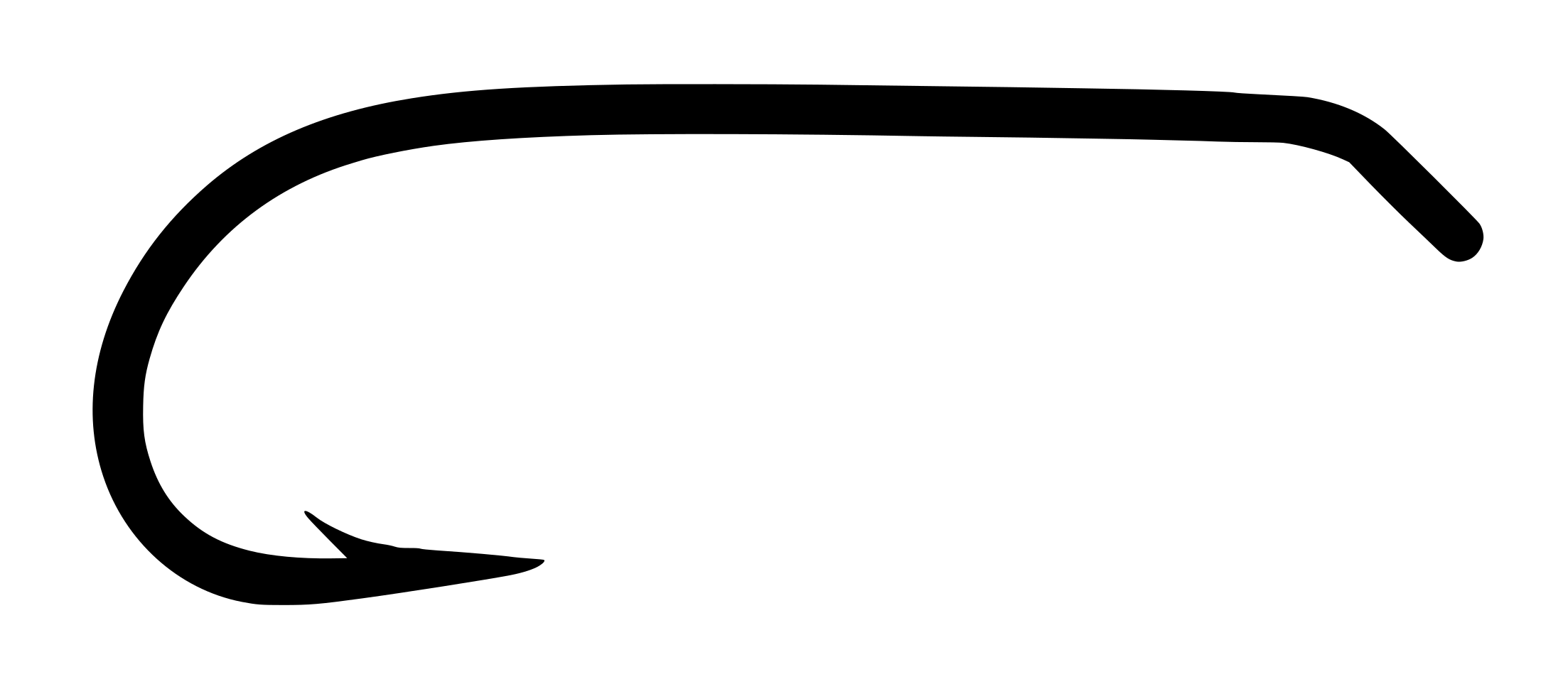
| Silhouette | Hook Model | Match | Analysis | Compare |
|---|---|---|---|---|
|
4011-E No. 10 — Mustad 4011-E | 87% | Compare | |
| 4555B No. 24 — Cinning Bass Gut Hook | 87% | Compare | ||

|
80 No. 2 — Eagle Claw | 82% | Compare | |
| 3891 No. 1 — Mustad 3891 Sproat | 77% | Compare | ||
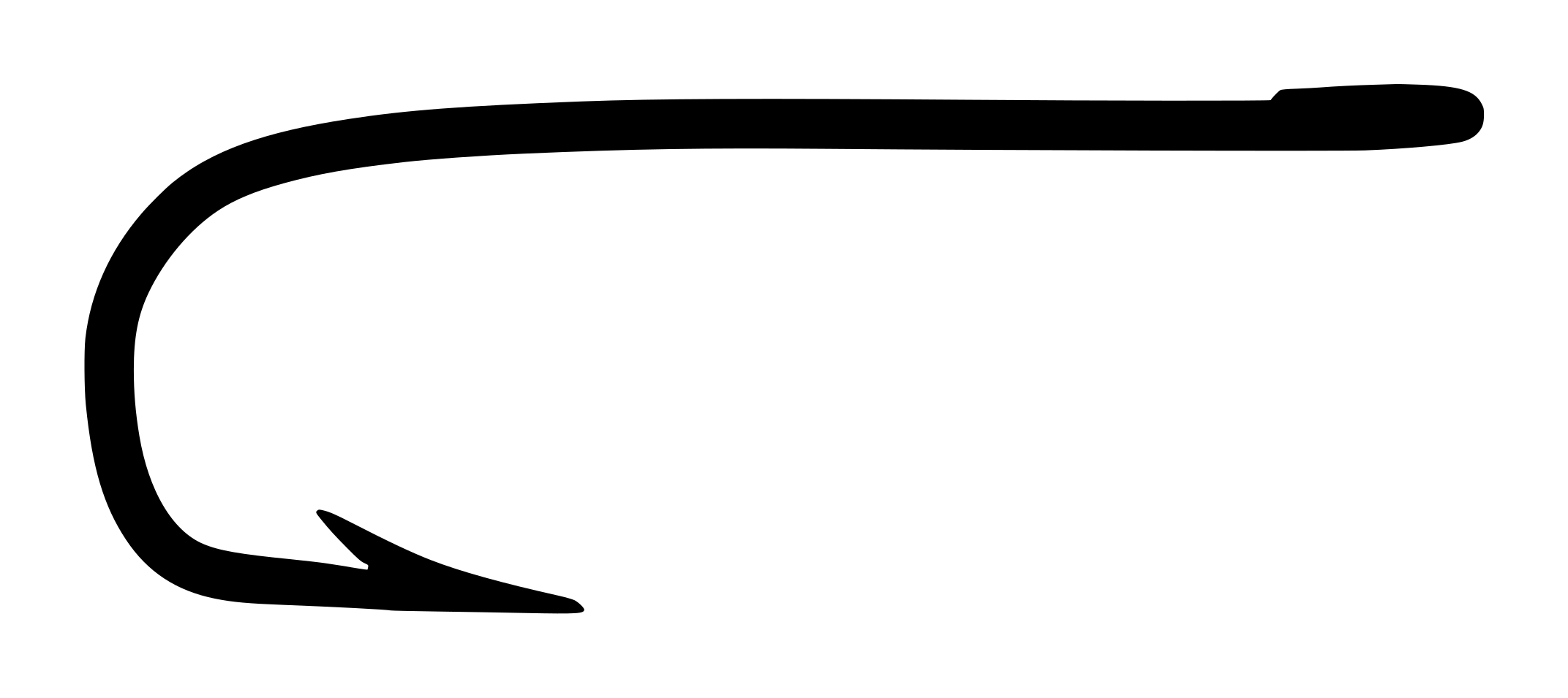
|
5621-Br No. 4 — Pflueger Sneck | 77% | Compare |
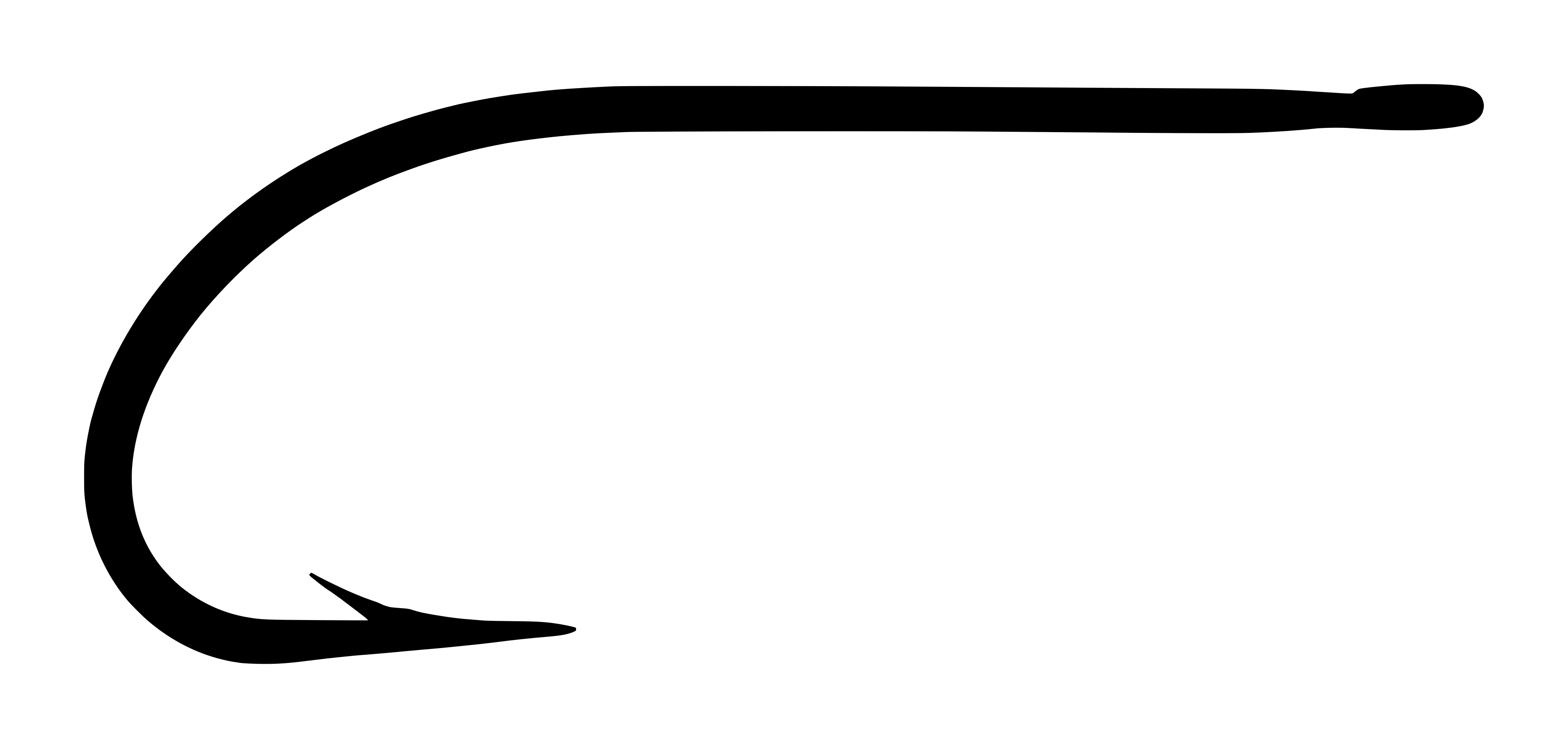
| Silhouette | Hook Model | Match | Compare |
|---|---|---|---|
|
3813 No. 6/0 (V) — Mustad 3813 O'Shaughnessy | 100% | Compare |

|
36890 No. 3/0 — Mustad-Limerick | 99% | Compare |

|
3828 No. 3/0 — Quality 3828 | 99% | Compare |
|
5515 No. 8/0 — Pflueger #5515 O'Shaughnessy Dublin Needle Eyed | 99% | Compare |

|
Kirby Bent No. 4 (V) | 98% | Compare |
The Mustad 3365 was designed as a general-purpose wet fly and streamer hook with secondary application to live-bait fishing. The long shank accommodates substantial fly dressing for streamers and bucktails, while the straight ringed eye provides secure line attachment without the risk of fraying that can occur with tapered or ball eyes under heavy use. The japanned black finish was historically favored for wet-fly work, as it blends with the water and reduces light reflection that might spook fish.
The sproat bend’s rounded profile offers excellent holding power and reduced barb stress on soft-mouth species like trout and salmon. The standard-gauge wire is suitable for both dry and wet work, making the 3365 a versatile choice for classic wet-fly anglers.
Live minnow and nightcrawler bait fishing; trolling with small plugs or spoons.
Black Ghost, Mickey Finn, Woolly Bugger, Muddler Minnow, Matuka, Zonker
| Hook | Match Quality | Notes |
|---|---|---|
| Tiemco 300 | Good | 6XL streamer hook with sproat-style bend; tapered eye instead of ringed; modern chemically sharpened point |
| Daiichi 2220 | Good | 4XL nymph/streamer design with sproat profile; tapered eye; modern materials and sharpening |
| Mustad 3366 (modern production) | Moderate | Direct modern successor, same model number but updated eye and finish; no longer offered in size 3 |
Modest collector interest driven by vintage Mustad export packaging and ringed-eye construction, which is less common than modern tapered or ball-eye variants. Intermediate size (No. 3) adds historical curiosity as a 'Goldilocks' size no longer produced. Limiting factors: condition of specimen (hooks show minor surface toning), no designer attribution, and common model across production run.
Positive factors: Vintage bilingual export packaging with distinctive Key Brand trademark; straight ringed eye construction is less common in modern production; size No. 3 is an archaic intermediate size that collectors find historically interesting; mid-century Mustad manufacturing from the period when Mustad dominated global hook production.
Limiting factors: 3365 was a workhorse model produced in large quantities; multiple hooks in package reduces individual rarity; no specific designer or named collaborator; finish on specimen shows light surface toning consistent with age but no exceptional patina; packaging in good but not mint condition.
White cardboard box with blue/white label. Label features Mustad 'M' logo (two fish hooks) and 'Key Brand' trademark. Text printed in black on white background reads: QUAL. 3365 3 | PCS./PCES. 100 | Black. Norway/Norvège bilingual text. Gold foil tape visible on box edge. Offset printing. No barcode present. Est. 1960s–1970s production.
Vintage unopened or minimally used packages command premium pricing (18–28 USD). Loose hooks or used stock fetch lower range (12–15 USD). Value driven by packaging condition, bilingual export label rarity, and vintage appeal rather than model rarity. eBay, Etsy specialist dealers, and tackle fairs are primary markets.
eBay vintage fishing tackle auctions, Etsy specialty tackle dealers, regional fishing tackle shows, estate sales collections.
Model Code: The label clearly reads ‘QUAL. 3365’ in the left column. Do not confuse with similar Mustad sproat variants (3366, 3367).
Size Identification: Look for the ‘3’ following the model code on the label (3365 3). This is an intermediate size, rarely encountered in modern packages.
Packaging Format: Distinctive blue label with white background, bilingual Norway/Norvège text, and the interlocked ‘Key Brand’ trademark logo are definitive markers of 1960s–1970s Mustad export stock.
Eye Type: Straight ringed eye (separate loose ring attached to shank) — visually distinct from the tapered or ball eyes found on most modern hooks and many later Mustad production variants.
Point Geometry: Superior point (near-straight inner taper, nearly flat inside face) — distinguished from the more concave hollow point by the relative flatness of the inner face under magnification.
Finish Tone: Deep black japanned enamel with possible light surface oxidation consistent with age. If extremely shiny or mirror-polished, the hook may be a newer reproduction or re-japanned specimen.
Store vintage Mustad hooks in a cool, dry environment away from moisture and humidity. The japanned black enamel finish is susceptible to surface oxidation and salt creep if exposed to damp conditions. Original packaging should be retained, as it adds significant collectible value and provides protection. If the box is damaged, store hooks on acid-free card stock rather than loose in containers.
Inspect periodically for signs of rust or corrosion. If light surface oxidation appears, gently clean with a soft brass brush and light machine oil (such as 3-in-1 or sewing machine oil). Do not use abrasive cleaners or steel wool, as these will remove the japanned finish. For long-term storage, consider placing silica gel packets in the storage container to maintain low humidity.
If hooks are to be used rather than displayed, soak in fresh water and dry thoroughly after use to remove any salt or sediment. The straight ringed eye is robust but should not be forced open or closed; if line attachment requires enlargement of the ring, seek a professional tackle repair service rather than attempting DIY modification.
Modern fly fishers rarely encounter size 3 hooks because this intermediate size disappeared from standard hook manufacturers’ catalogs by the 1980s. In the mid-20th century—when this Mustad 3365 was produced—hook sizing was far more granular, and size 3 occupied a logical position between the larger size 2 and smaller size 4.
The modern convention of skipping from size 2 directly to size 4 is a commercial simplification introduced when manufacturers rationalized their product lines to reduce inventory complexity and production costs. Size 3 represents a genuine historical artifact of an earlier sizing paradigm. For contemporary fly tiers seeking a specific intermediate size, this Mustad 3365 offers an authentic period alternative that modern catalogs no longer provide.
Collectors and historical fly tiers particularly value size 3 specimens because they document a defunct sizing standard and offer proportions unavailable in current production.
Source: Packaging label, Mustad 3365 original box
The label text contains several data points valuable for dating and identifying the package:
QUAL. 3365 3: This is the quality designation and model code. ‘QUAL.’ (quality) was Mustad’s labeling convention for their catalog models. The code 3365 uniquely identifies the sproat bend design; the trailing ‘3’ specifies size.
PCS./PCES. 100: The dual abbreviation (English and French) indicates this was export packaging. ‘PCS.’ is English abbreviation for pieces; ‘PCES.’ is French. This bilingual format is typical of Mustad packaging bound for North American markets (US and Canada both required English/French labeling by law by the 1970s).
Black: Finish specification. Japanned hooks were specified as ‘Black’ on labels of this era.
NORWAY / NORVÈGE: Country of origin, bilingual. This text format is consistent with 1960s–1970s export labeling. Later Mustad packaging simplified this to unilingual ‘MADE IN NORWAY.’
KEY BRAND trademark: The interlocked key logo and ‘KEY BRAND’ text document Mustad’s original trademark, derived from the company’s earliest business as a nail and wire manufacturer. The continued use of this symbol on 1960s–1970s packaging reflects corporate heritage preservation.
| P | Photographically verified — Directly observable in the photograph(s) on this page. |
| V | Verified by documentation — Confirmed by manufacturer catalog, spec sheet, or published reference. |
| I | Inferred — A logical deduction from observable or documented evidence, not directly stated. |
| E | Estimated — An approximation based on visual comparison, proportional analysis, or limited data. |
| S | Speculative — A reasoned hypothesis that cannot be confirmed from available evidence. |
Claims with no notation are confirmed by multiple independent sources. All photographs on garrenwood.com are taken on a measurement grid where each square equals 1/10 inch (0.1″ / 2.54 mm).
Your cart is empty.