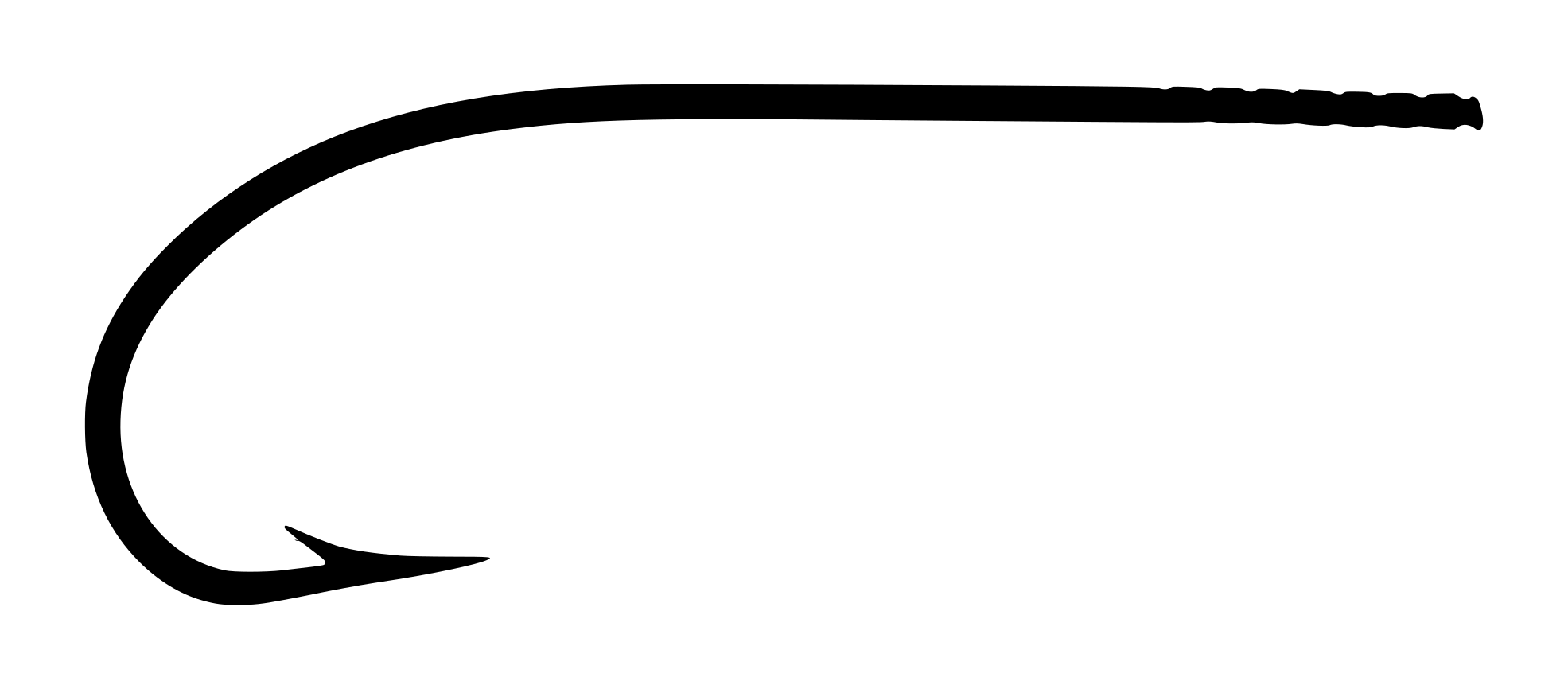
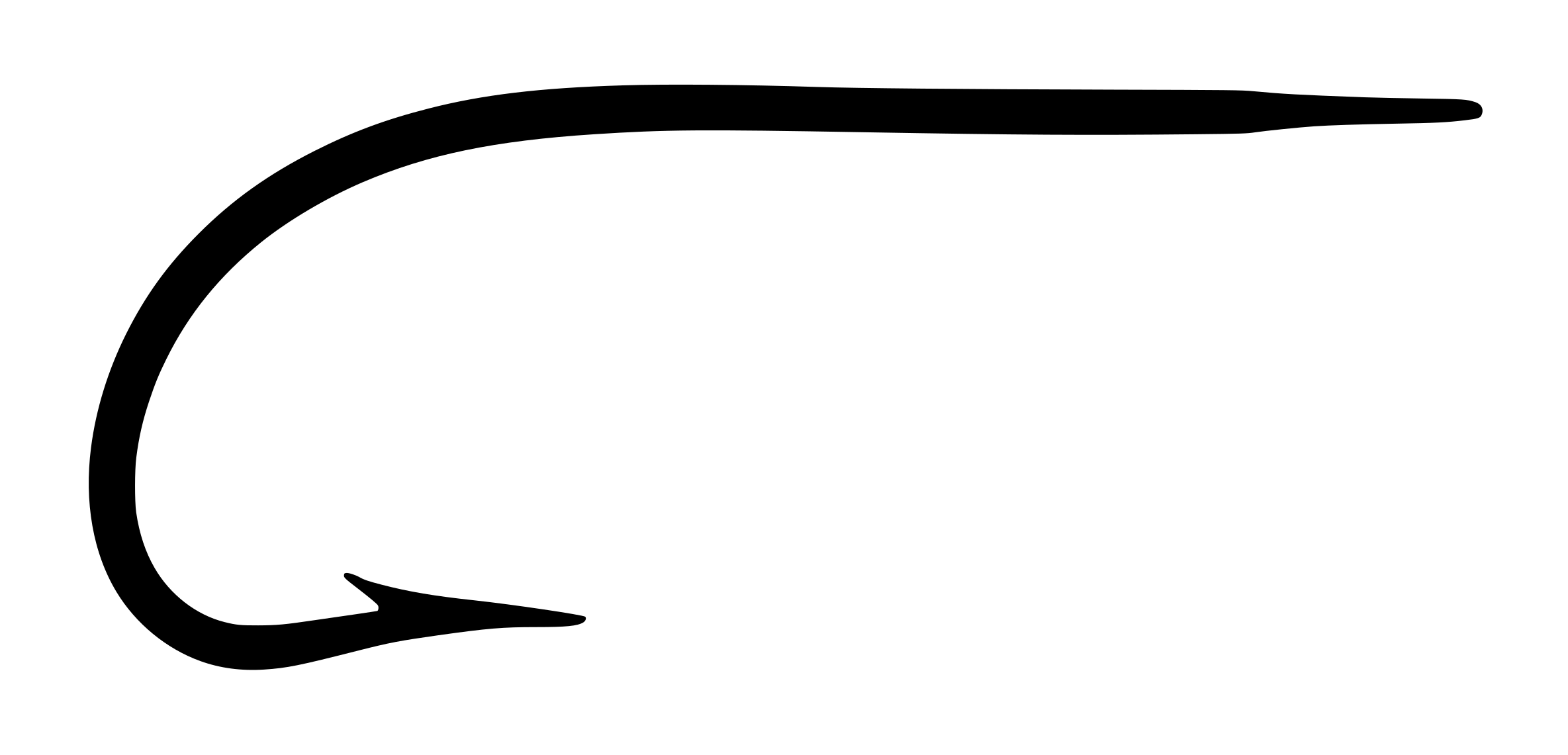
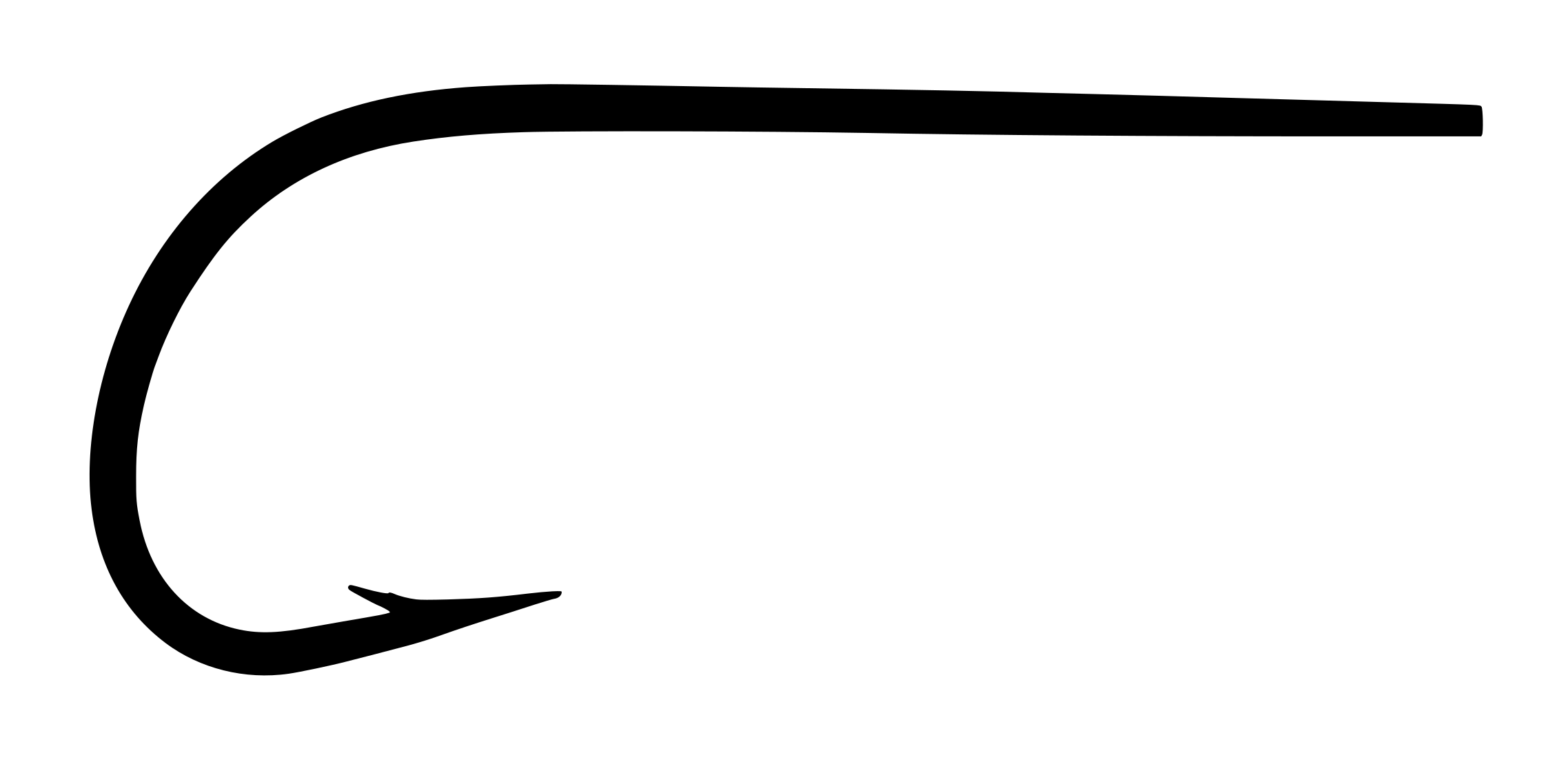
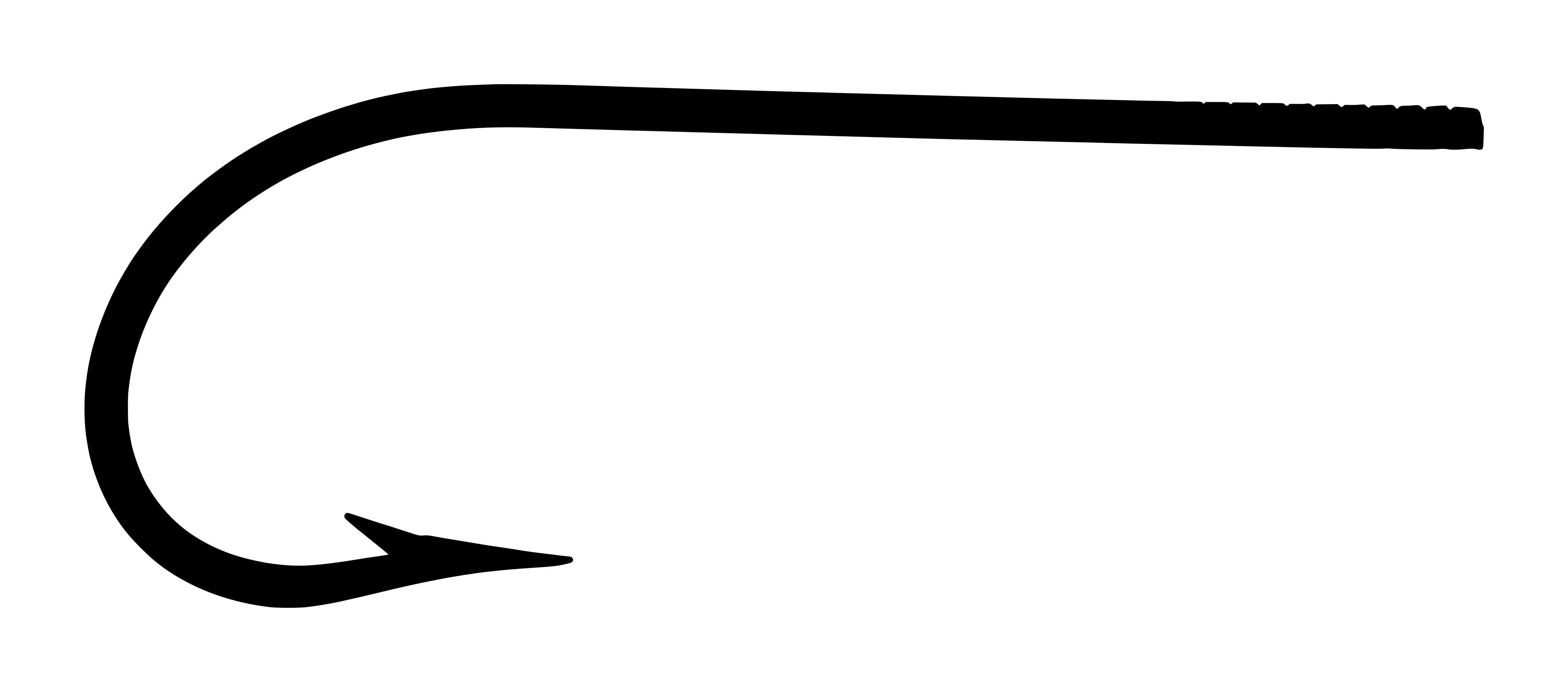
The Wm. Bartleet & Sons M-64 is a traditional English-made fishing hook pattern originating from the famed Redditch hook-making industry, a region long regarded as the historic center of British needle and fish hook manufacturing. Produced by William Bartleet & Sons during the late 19th and early 20th centuries, the M-64 reflects the refined craftsmanship and hand-finished quality associated with classic Redditch hooks. Designed primarily for traditional wet flies, bait fishing, and general angling applications, the hook combines elegant proportions, fine wire construction, and reliable tempering that made English hooks highly respected among anglers of the era.
What makes the M-64 especially notable is its connection to the golden age of British hook production, when firms such as Wm. Bartleet & Sons helped establish Redditch as the global center of fish hook manufacturing. Bartleet hooks were known for their carefully forged bends, consistent finishes, and practical fishing performance at a time when many hooks were still partially hand crafted. The M-series patterns represented specialized variations intended to suit different regional angling traditions and fly-dressing styles, offering anglers a level of precision and consistency that helped standardize hook design across Britain and beyond.
Today, the Wm. Bartleet & Sons M-64 remains of interest to collectors, historians, and traditional fly tiers because it embodies the transition between fully hand-forged hooks and modern industrial production. Surviving examples are often found in original paper packets or dealer cards and are appreciated both as functional vintage tackle and as artifacts from the historic Redditch tackle trade. Within classic hook references, the M-64 serves as an example of the understated but influential English hook patterns that shaped early fly fishing and tackle development throughout the Victorian and Edwardian periods.
Original packaging for the Wm. Bartleet & Sons M64 Sproat Hook, Size 6, showing the period letterpress label with ornamental decorative border and maker's information. The pink-red label is typical of 1880s-1890s commercial label design.
Photographic record
7 cataloged imagesSelect any record to load it above.
7 images shown
Wm. Bartleet Sons M64 Sproat Original Box Label Size 6Original packaging for the Wm. Bartleet & Sons M64 Sproat Hook, Size 6, showing the period letterpress label with ornamental decorative border and maker's information. The pink-red label is typical of 1880s-1890s commercial label design.Open originalWm. Bartleet Sons M64 Sproat Box Reverse LabelReverse side of the original box showing the label layout and ornamental border pattern. The label is wrapped around the box to identify contents from multiple angles.Open originalWm. Bartleet Sons M64 Sproat Hook Point Detail Side ProfileClose-up side profile of the hook showing the tapering blind eye, the depth of the Sproat bend, and the superior point geometry. The warm bronzed finish and steel grain texture are visible under direct light.Open originalWm. Bartleet Sons M64 Sproat Point Geometry ComparisonTwo hook examples photographed side-by-side to compare point consistency. Both show the superior point style with near-straight inner face and smooth tapered geometry.Open originalWm. Bartleet Sons M64 Sproat Full Set Size 6Full card of six M64 Sproat hooks arranged vertically on measurement grid, demonstrating size consistency and the tapered blind eye construction across the set.Open originalWm. Bartleet Sons M64 Sproat Shank and Eye ProfileSide-by-side profile showing the taper from shank to blind eye. The eye construction — a smooth tapered transition with no sharp edges or spade flattening — is characteristic of the tapered blind eye design for gut cast attachment.Open originalWm. Bartleet Sons M64 Sproat Bend Profile ComparisonTwo hooks photographed in profile to compare bend geometry and gape consistency. Both show the characteristic rounded-bottom Sproat profile with standard gape for size 6.Open original
Technical profile
No. 6 Wm. Bartleet & Sons M64 Sproat, tapered blind eye, forged heavy wire, bronzed, c. 1880-1902
Eye
Blind — Tapered ShankTapered blind eye — the shank tapers to a smooth rounded point with no flattening or spade construction. Gut loop attached via knot around the taper. P Confirmed by physical examination.
Wire
Standard, Forged
Shank
1X Long — Tapered
Bend
Sproat, Standard gapRounded bottom profile, characteristic deep bend with wide gape. Appears forged and heavily set. P Photographically confirmed.
Point
Hollow Point (concave inner face)Close-cut barb, standard placement and angle for the period. P Visible in detail photographs.
Finish
Bronzed — Inferred (photographically likely)Warm brown tone under light with visible steel grain texture characteristic of bronzed finish. Not the cool silver-grey of nickelled or the opaque black of japanned. P Photographically verified.
All six hooks present in the specimen images show no corrosion, no pitting, and a uniform bronzed finish. Original label and wrapper intact with light age toning. Box construction and kraft paper are complete and stable.
The forged construction begins with drawn wire that is bent cold or warm, then shaped in a drop forge to achieve the characteristic rounded bottom and set width of the Sproat profile. Forging compresses the wire grain, increasing fatigue resistance and setting the final geometry precisely. The barb is cut close to the shank and angled slightly back, reducing material stress. The tapered blind eye is formed by tapering the shank end smoothly — no cutting or flattening — and the fishing line or gut cast is tied directly around this taper using a loop knot. This method eliminates a weak point: the junction between eye and shank. For heavy salmon work, this construction proved superior to simple open-eye designs. The bronzed finish provides rust resistance while maintaining the warm tone that traditional tyers preferred.
The M64 model code designation appears to be specific to Bartleet’s internal product numbering system during the 1880s-1900s period. The Sproat bend design itself has earlier origins in hook manufacturing, but Bartleet’s interpretation of the Sproat — particularly the forged construction and tapered blind-eye variant — became distinctive enough to warrant its own catalog designation. This hook represents Bartleet’s peak salmon hook production: forged, heavily set, and designed for the most demanding conditions. Following Milward’s acquisition in 1902, Bartleet hooks were initially continued under the Bartleet brand name but were gradually integrated into Milward’s larger product line, with Bartleet branding eventually discontinued in favor of the Milward house mark.
Era and Packaging Dating
Wrapper label in period serif letterpress type. Ornamental decorative border printed in pink/red with black ink — characteristic of 1880s-1890s commercial label design. No barcode present (pre-1974 indicator). No postal code, only 'Redditch' on label. Box construction consistent with pre-1900 manufacture: hand-glued kraft paper, no plastic. Wm. Bartleet & Sons was acquired by Henry Milward in 1902 and operations consolidated, making original Bartleet packaging rarest before 1902. Label text 'S.P. Sproat Hook' indicates the specific model series. This is Bartleet-branded output from the peak of independent operation, 1880-1902.
The Archer of Arrow Valley
Robert Smith Bartleet, the manufacturer of this hook, was so passionate about medieval history that he personally excavated the ruins of nearby Bordesley Abbey in 1863 and commissioned illustrated manuscripts documenting its pre-dissolution glory. The Bartleet factory overlooked these ruins in Arrow Valley, and the company's 'Archer' trademark cleverly referenced both medieval archery tradition and the River Arrow location. Bartleet saw his needle and hook empire as a modern parallel to the wealth and craftsmanship of medieval monasteries — a distinctly Victorian romantic vision that shaped how the company branded itself for international exhibitions.
Design lineage and influence
The Sproat bend predates Bartleet but is often attributed to Scottish evolution in the mid-19th century. Bartleet’s contribution was the refinement to a heavy-forged version and the retention of the tapered blind-eye construction favored by traditional Scottish and English river fishers. The M64 Sproat sits at the intersection of two design traditions: the classic Redditch heavy iron school (represented by Milward and Partridge) and the slightly lighter, more graceful curve of Scottish wet-fly patterns. Later manufacturers, including Partridge of Redditch under Milward ownership, continued producing Sproat variants but with looped eyes, reflecting the shift toward more modern attachment methods.
Best matchRelated by Attribute
Computed automatically from catalog data — updated as new hooks are added.
Matches: Bend, Wire, Gap, Eye, Eye Orient. +5 moreDiffers: Shank: 1X Long vs Standard; Finish: Bronzed vs Black Japanned; Forging: Forged vs Round +3 more
Matches: Bend, Wire, Gap, Eye, Eye Orient. +4 moreDiffers: Shank: 1X Long vs Standard; Finish: Bronzed vs Black Japanned; Forging: Forged vs Round +2 more
Matches: Bend, Shank, Gap, Eye Orient., Point +2 moreDiffers: Wire: Standard vs Fine (1X Fine); Eye: Blind — Tapered Shank vs Blind — Marked Shank; Forging: Forged vs Round +6 more
Matches: Bend, Shank, Gap, Eye Orient., Point +4 moreDiffers: Wire: Standard vs Fine (1X Fine); Eye: Blind — Tapered Shank vs Blind — Marked Shank; Forging: Forged vs Round +3 more
The M64 Sproat was designed as a premium single-hook pattern for fully-dressed Atlantic salmon and sea trout wet flies. The Sproat bend — with its rounded bottom, moderate gape, and slight dropped point — provides excellent balance for flies ranging from size 6 (small streamers, high-water patterns) to larger sizes (traditional full dressing). The tapered blind eye was the standard attachment method for gut casts and enabled the dressing to sit smoothly without a protruding metal loop. The forged construction ensures strength for fighting large migratory fish in fast current.
Classic salmon fly patterns tied on Bartleet M64: Jock Scott, Silver Doctor, Dusty Miller, Butcher, Toppy, and regional Scottish patterns. Size 6 was favored for spring and summer conditions on spate rivers.
Jock Scott, Silver Doctor, Dusty Miller, Butcher, Toppy, Thunder and Lightning, Wilkinson, Logie, Gordon
Modern Equivalents
Hook
Match Quality
Notes
Partridge of Redditch CS10/1 Bartleet Traditional (Dublin bend dropped-point variant)
Very Good
Modern reproduction of the historic Bartleet bend concept using contemporary materials and looped-up eye. Same forged construction philosophy; different eye type reflects modern tying methods.
Direct modern equivalent retaining the tapered blind eye construction. Honors the classical design with contemporary tempering and sharpness standards. Available in sizes 5/0 through 8.
Tiemco TMC 7999 Sproat (looped eye, forged, standard wire)
Good
Modern Japanese Sproat-bend hook with similar bend profile and forged construction, but lighter wire and looped eye. Suitable for size equivalency in contemporary fly patterns.
Collector notes
Rated 5.5/10 — Sproat bends from independent Bartleet are scarcely encountered; size 6 in this era is less common than larger sizes. Strong collector demand from salmon fly historians and Redditch specialists. Original label and tapered blind eye construction add significant appeal. Complete box with all 10 hooks in excellent condition is the limiting factor; individual cards are more common.
Reference value
$18 – $48 USD estimate
Packaging condition
Excellent — minimal wearRecorded specimen
Packaging format
BT-E-01Catalog code
The Wm. Bartleet & Sons M64 Sproat represents a peak period of British salmon hook craftsmanship, manufactured during the company’s independent years (1880-1902) before acquisition by Milward. Redditch specialists actively seek original Bartleet packaging and blind-eye models, particularly for fully-dressed salmon fly tying. Size 6 is less abundant than larger sizes like 3/0 or 2/0.
Primary collectability drivers: (1) Tapered blind eye construction (no metal loop) — highly prized for traditional tying; (2) Forged Sproat bend with excellent flow and gape geometry; (3) Original period packaging with letterpress labeling; (4) Bronzed finish showing authentic period patina; (5) Pre-1902 Bartleet branding before Milward consolidation.
Limiting factors: Size 6 is less commonly sought than larger salmon sizes. Individual hook loss or missing tissue wrap reduces value. Later Milward-branded Sproats are more common and command lower prices. Specimen condition is critical — unopened cards with original tissue premium at high end; opened cards with missing hooks drop significantly.
Condition premiums: Sealed packaging with all 10 hooks pristine commands $40-70. Opened card, all hooks intact, light wear: $20-35. Missing 1-2 hooks or moderate packaging wear: $12-20. Significantly damaged or loose hooks: $5-12. Single hook specimen: $2-5.
Market Value Notes
Low ($18): Opened card, all or nearly all hooks present, packaging shows light toning and wear, hooks bright with no corrosion.
High ($48): Sealed or near-sealed card, complete count of 10 hooks, packaging bright and crisp, original tissue intact, minimal defects.
Premium factors: Tapered blind eye construction; original Bartleet branding pre-1902; complete box format rather than card; sealed/near-sealed condition; authenticity of period letterpress label.
Platforms: eBay UK and EU specialist dealers; vintage tackle fairs in England; Redditch specialist auctions; international fly tying forums.
Confidence: E Estimated — based on general Redditch hook market data and comparable Sproat offerings. Limited direct sales history for this specific model in recent years. Recommend market monitoring to refine estimates.
Where to Find
Redditch specialist dealers on eBay UK; European vintage tackle fairs; UK-based fly dressing societies; John James/ENTACO estate sales (post-Milward consolidation). Rarely appears on eBay US. Most common on specialist forums and dealer networks focused on Atlantic salmon and sea trout tying.
Preservation
Storage and Preservation
Store in a cool, dry environment away from moisture and fluctuating humidity. The bronzed finish will develop a natural dark patina over time, which collectors often find desirable. Keep the hooks in their original packaging whenever possible — the label and wrapper are integral to the historical and monetary value. If the card or box must be opened, do so carefully to preserve any original tissue or paper envelope. Store hooks upright in the box rather than loose, and avoid contact with other metals to prevent galvanic corrosion. Periodically inspect for any surface rust, which is unlikely given the bronze coating but can develop if humidity spikes. Do not attempt to clean or polish the finish — this will remove authenticity and value. Original patina is a feature, not a flaw.
Marking Analysis
Maker's Marks and Annotations
The specimen shows a handwritten ‘6’ on the front label, indicating the size. This may be a hand-marking by the packer or a stock-keeping notation. The letter form is consistent with late-19th-century handwriting but was likely added during the final packing phase rather than being an original label design element. The packaging text is entirely printed by letterpress, showing the ornamental decorative border and ‘S.P. SPROAT HOOK’ designation clearly. No maker’s initials, date stamps, or batch codes are visible on the packaging or hooks themselves.
Size Note
Size Classification: No. 6 in the British Salmon System
The No. 6 size on this hook is part of the British salmon hook numbering system, where larger numbers indicate smaller hooks (opposite to the O-ring or international ice-fishing convention). Size 6 is considered a small-to-medium salmon hook, suitable for spring and summer conditions on spate rivers, high-water situations, and size-conscious dressing. The confirmed gap width of 0.28″ and overall length of ~0.87″ place this precisely in the No. 6 range for a Sproat bend hook of the Bartleet heavy-wire specification. This sizing remained consistent across Redditch manufacturers and was never changed during Bartleet’s operation or after Milward consolidation.
Additional
Packaging Label Text and Design Analysis
The label reads: ‘Wm. BARTLEET & SON / REDDITCH / S.P. SPROAT HOOK / M64. No. 6’. The print is serif body type in the heavy-stroke style typical of 1880s-1890s commercial ephemera, printed by letterpress. The ornamental border consists of a fine decorative pattern in warm pink-red with black ink, characteristic of high-quality Victorian-era label design. The abbreviation ‘S.P.’ likely stands for ‘Sproat Pattern,’ a standard abbreviation used by British hook makers to indicate the bend style. The model code ‘M64’ appears to be an internal Bartleet catalog reference, possibly standing for ‘Model 64’ or indicating a specific production run or tooling designation. The absence of any trademark symbols, patent dates, or registered mark (®) suggests this label predates the formal trademark legislation of the early 1900s. The label design is professionally executed, indicating a company of significant size and resources — consistent with Bartleet’s status as one of Redditch’s premier hook manufacturers during this period.
Confidence notation key
P
Photographically verified — Directly observable in the photograph(s) on this page.
V
Verified by documentation — Confirmed by manufacturer catalog, spec sheet, or published reference.
I
Inferred — A logical deduction from observable or documented evidence, not directly stated.
E
Estimated — An approximation based on visual comparison, proportional analysis, or limited data.
S
Speculative — A reasoned hypothesis that cannot be confirmed from available evidence.
Unnotated claims are the compiler’s synthesis; see Sources. All photographs on garrenwood.com are taken on a measurement grid where each square equals 1/10 inch (0.1″ / 2.54 mm).