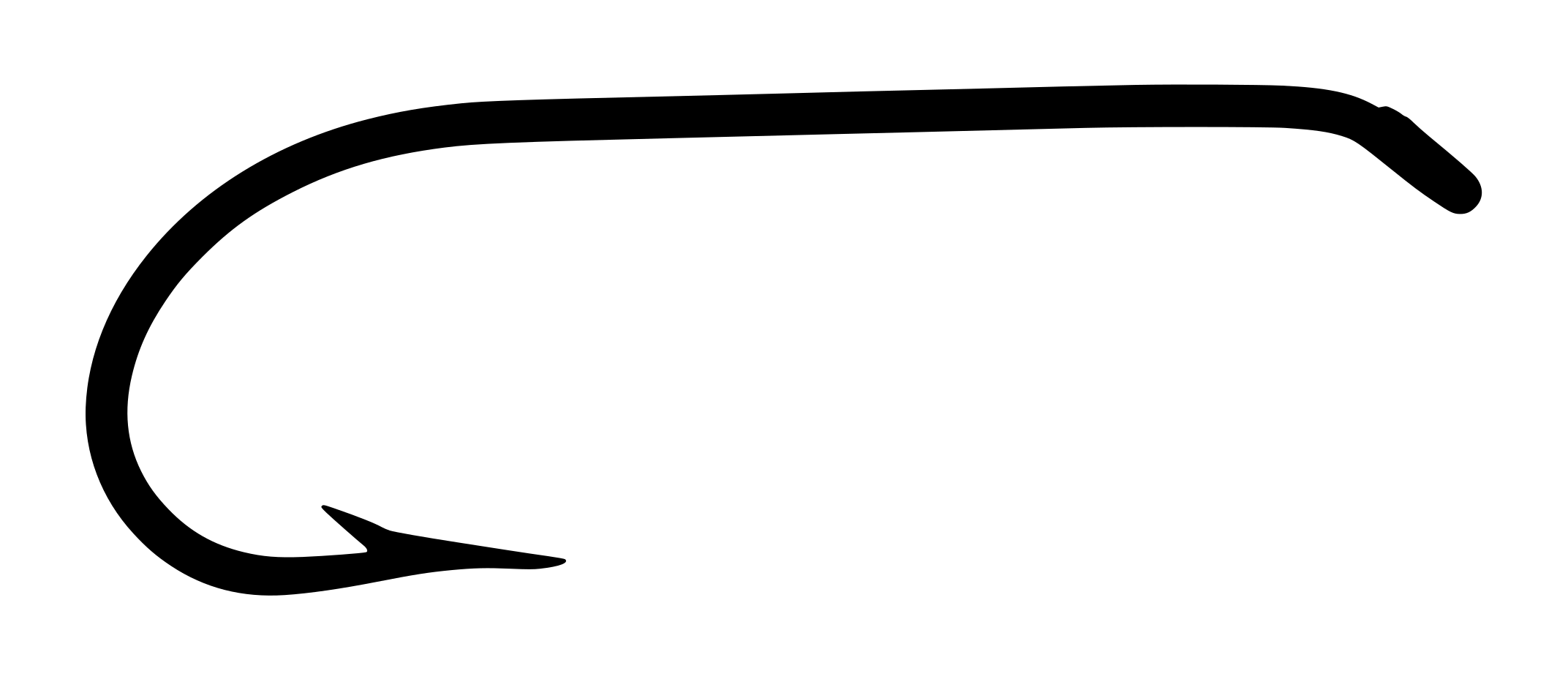
The Mustad 3822 is a heavy-duty Forged O’Shaughnessy hook manufactured in Christiania (Oslo), Norway, during the early 20th century and distributed in North America under the Shakespeare Company’s ‘Honor Built’ trademark. This specimen, size 1/0, represents the pinnacle of pre-mechanized hook engineering—combining a concave hollow point for rapid penetration, a forged shank for exceptional durability, and a turned-down ball eye for direct-line attachment.
The packaging provides a remarkable artifact of transatlantic tackle commerce. The presence of ‘Christiania’ on the label—the official name of Oslo until January 1, 1925—dates this box conclusively to the period 1910-1924, placing it within Mustad’s early global export dominance. By this era, Mustad had secured approximately 50% of global hook production, a market share achieved through aggressive industrial cloning of regional patterns and strict corporate secrecy around their proprietary manufacturing methods.
The dual Shakespeare-Mustad label system documents a wholesale distribution partnership that exemplifies early-20th-century industrial globalization. The hook was engineered for demanding saltwater applications and heavy freshwater game fish—large streamers, bucktails, and live-bait rigs for Striped Bass, Bluefish, and Pike. The forged construction and extra-strong wire were designed to withstand sustained runs and violent head-shakes without failure.
Collectors value this hook for its clear production-era documentation, original packaging, and technical execution. The combination of Christiania geography, Honor Built co-branding, and intact card are increasingly scarce as surviving examples move into institutional collections.
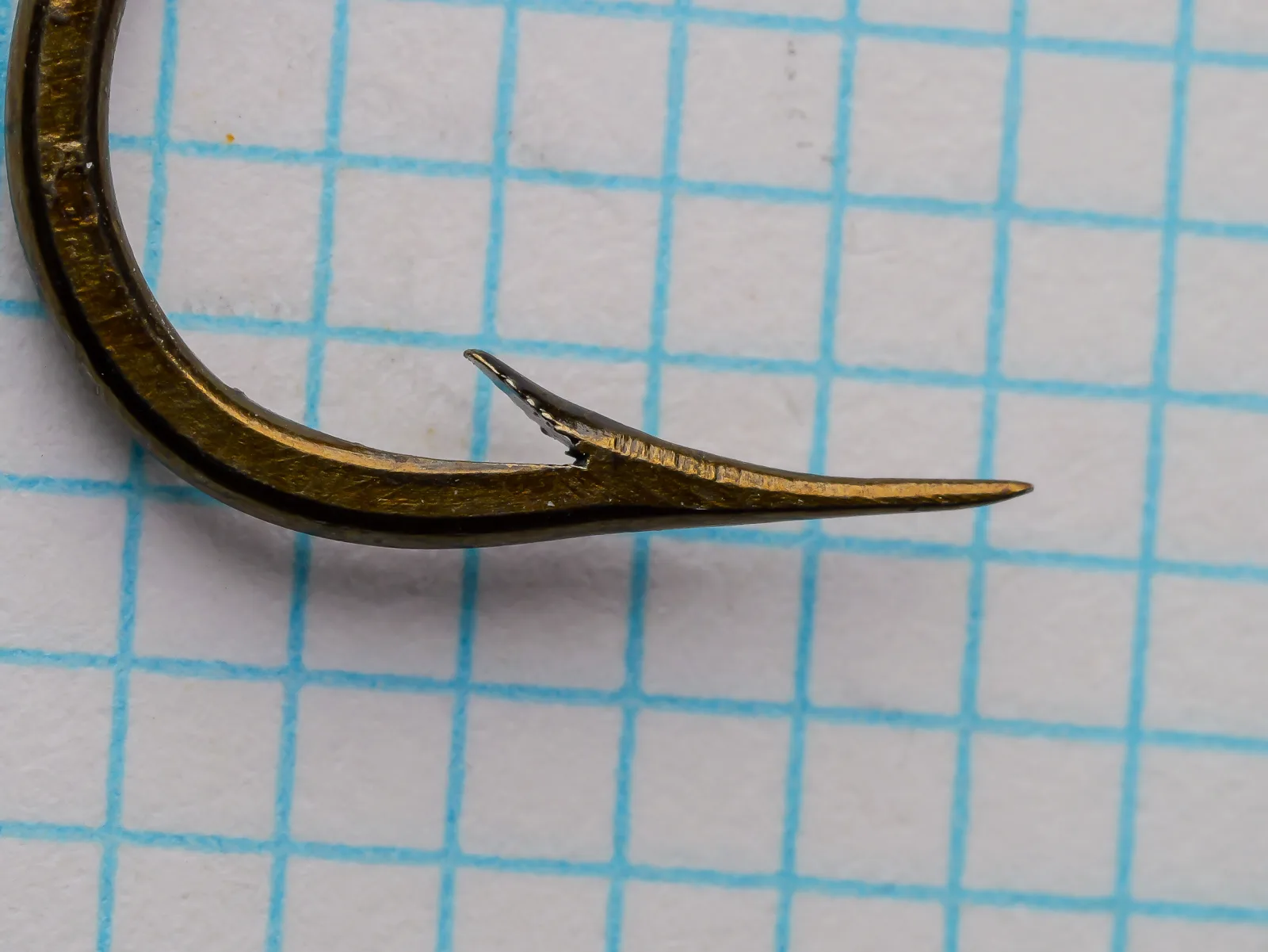
Close-up of the Mustad 3822 point showing the distinctive concave (hollow) grinding and short, swept barb characteristic of O'Shaughnessy design. Bronzed finish is uniform with warm tone typical of period construction.
Photographic record
3 cataloged imagesSelect any record to load it above.
3 images shown
Mustad 3822 Size 1/0 Point DetailClose-up of the Mustad 3822 point showing the distinctive concave (hollow) grinding and short, swept barb characteristic of O'Shaughnessy design. Bronzed finish is uniform with warm tone typical of period construction.Open originalMustad 3822 Size 1/0 Full ProfileComplete side profile of the Mustad 3822 showing the parabolic O'Shaughnessy bend, turned-down ball eye, and forged shank. Grid reference allows precise dimension capture of overall length, gap width, and bend depth.Open originalMustad 3822 Original Box Label and PackagingOriginal cardboard box label showing dual Mustad and Shakespeare Honor Built branding. The Christiania address and pre-1925 typography provide definitive production-era documentation. Handwritten size notation visible.Open original
Technical profile
Qual. 3822 — Forged O'Shaughnessy — Hollow Point — Turned Down Eyes — Rustproof — Extra Strong — Made in Norway
Eye
Tapered Eye, Turned DownTurned-down ball eye with slight downward angle from shank. The ball is uniformly formed and smooth, typical of machine production. Eye loop shows no deformation or fracture, suggesting proper tempering and minimal handling P.
Wire
Standard, Forged, Est. ~0.055" (~1.40 mm)
Shank
1X Long — Plain
Bend
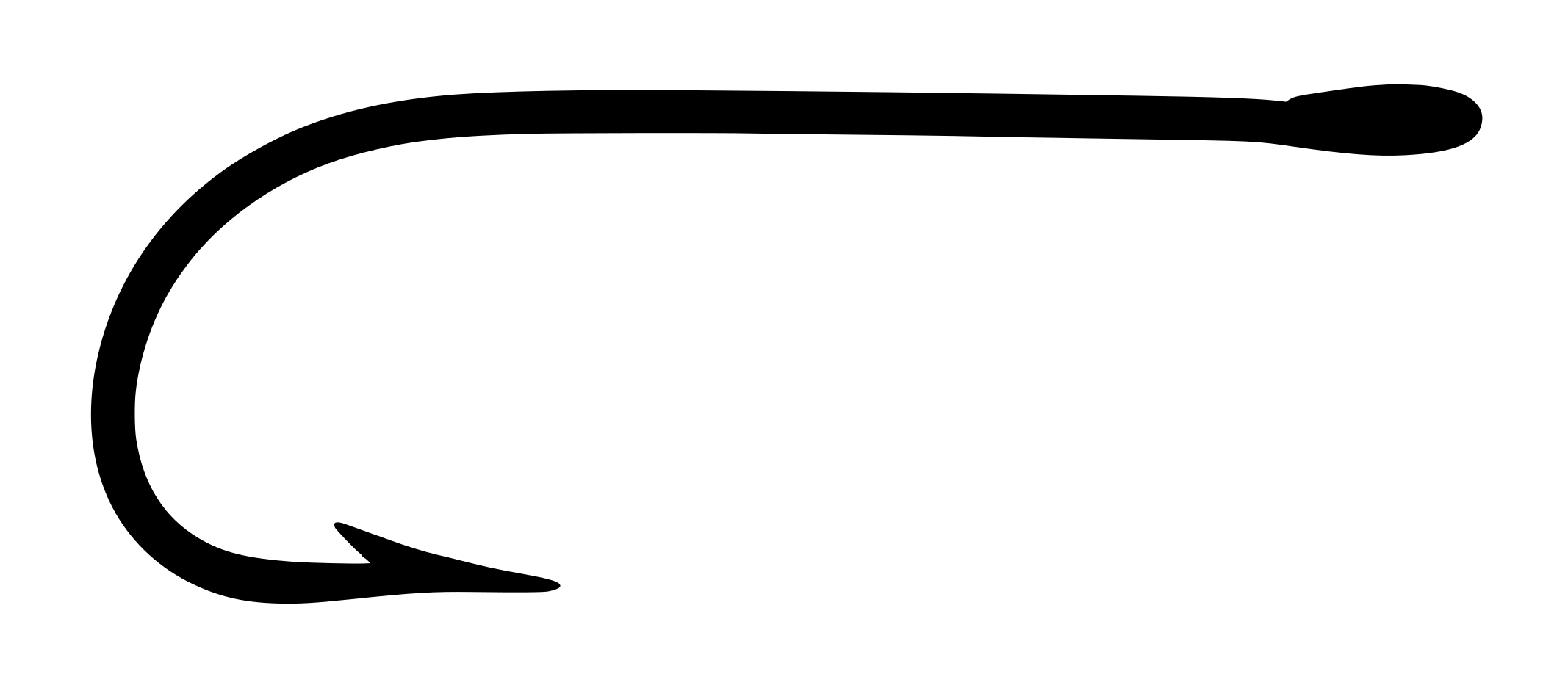
O'Shaughnessy, Standard gapO'Shaughnessy bend exhibits the characteristic parabolic profile—not as sharp-angled as a Limerick, not as sweeping as a Sproat, but positioned precisely between them. The bottom of the bend shows slight flattening, consistent with forging and mechanical forming P. Bend depth estimated at ~0.65"-0.70" relative to the shank axis.
Point
Hollow Point (concave inner face)Small, close-cut barb with slight backward sweep. Barb placement is at approximately 60-65% of the point length from the tip, a characteristic O'Shaughnessy proportion E. Barb height is modest relative to modern standards—approximately 0.030"-0.035" estimated, but precise measurement requires magnification E.
Finish
Bronzed — Inferred (photographically likely)Bronzed finish exhibits warm, dark brownish-gold tone throughout the specimen. The finish is uniform with no obvious wear patterns or patina loss visible P. The color tone is slightly warmer than pure brass, consistent with Mustad's proprietary bronze lacquer formula. Light surface oxidation is present as expected for a century-old specimen; the coating has protected the base steel effectively P.
Individual hooks show bright finish with no visible corrosion or pitting. The card itself shows moderate toning consistent with age—light browning of kraft paper stock, minor creasing at corners. Hooks remain firmly affixed to the card; no losses noted. Overall specimen condition is good, with original packaging intact.
The hollow point geometry—a concave, sweeping curve ground from tip to barb base—produces an exceptionally sharp, knife-like edge that penetrates with minimal applied force. This design was critical for reliable hook-set in soft-tissue areas (gill plates, mouth corners) of large, hard-fighting fish. The forged shank undergoes mechanical flattening on its lateral sides, which dramatically increases tensile strength and bending resistance without adding wire bulk. This cold-forging process realigns the steel’s crystalline structure, effectively creating a structural member that resists straightening under extreme loading. The turned-down ball eye is optimized for direct knotting to heavy monofilament and braided lines, with the eye angle designed to create a favorable pull vector during the fight.
The Qual. 3822 represents the standard mid-tier Forged O’Shaughnessy in Mustad’s quality hierarchy. The O’Shaughnessy bend itself is not a Mustad innovation but rather a classic Irish regional pattern that Mustad reverse-engineered and mass-produced during their global cloning strategy of the 1880s-1920s. The series designation 3000-3999 placed it among ‘Quality’ models—mid-range products manufactured to exacting dimensional and tempering standards, distinct from economy models (1000-2999) and premium models (4000+). The 3822 was produced continuously from approximately 1890 through the 1960s, with significant production continuing into the modern era. Early variants (pre-1925) carried the Christiania address and were typically branded for regional distributors like Shakespeare. Post-1925 variants bear the Oslo address, marking Mustad’s administrative transition following the city’s 1925 renaming. The design remained largely unchanged throughout this period, testament to the engineering soundness of the O’Shaughnessy profile. No documented discontinuation occurred; the 3822 remains in Mustad’s catalog today, though modern versions may employ stainless steel and contemporary metallurgy.
Era and Packaging Dating
Label prominently displays 'CHRISTIANIA - NORWAY,' the official name of Oslo until January 1, 1925 V. The 'Honor Built' trademark and catalog number 218 are consistent with Shakespeare Company packaging from 1910s-early 1920s I. Early offset printing style and paper stock are typical of WWI-era American tackle packaging E. Absence of modern barcode or ZIP code format reinforces pre-1974 production P. The combination of Christiania + Honor Built + early-style typography establishes production window of c. 1910-1924.
Norwegian Steel Meets American Marketing
The 'Honor Built' label visible on this box represents a fascinating piece of early-20th-century global supply-chain history. Shakespeare Company, founded in 1897 in Kalamazoo, Michigan, did not manufacture hooks themselves. Instead, they formed a massive partnership with O. Mustad & Son in Norway, importing millions of hooks and repackaging them with their own quality guarantee. This dual-label system—Mustad's Christiania address visible beneath Shakespeare's Honor Built seal—documents the exact moment Norwegian industrial efficiency met American market distribution, allowing tackle to reach anglers across the American Midwest and East Coast with a single, trusted brand.
Design lineage and influence
The O’Shaughnessy bend traces its origins to an 18th-century Irish hook maker whose design was adopted and refined by English makers in Redditch. By the 1870s-1880s, it had become the de facto standard for heavy saltwater and big-game applications. Mustad’s mechanized production of this pattern, beginning in the 1880s-1890s, established it as the global commercial standard. The 3822 represents the mature form of this design during the early 20th century. Modern descendants include the Mustad 3407 (standard O’Shaughnessy) and the stainless 34007. Contemporary competitors from Tiemco (811S) and Gamakatsu (SC15) occupy similar market positions but with modern materials and metallurgy.
Best matchRelated by Attribute
Computed automatically from catalog data — updated as new hooks are added.
Matches: Bend, Shank, Wire, Gap, Offset +2 moreDiffers: Eye: Tapered Eye vs Ball Eye; Eye Orient.: Turned Down vs Straight / Inline; Point: Hollow Point vs Superior +3 more
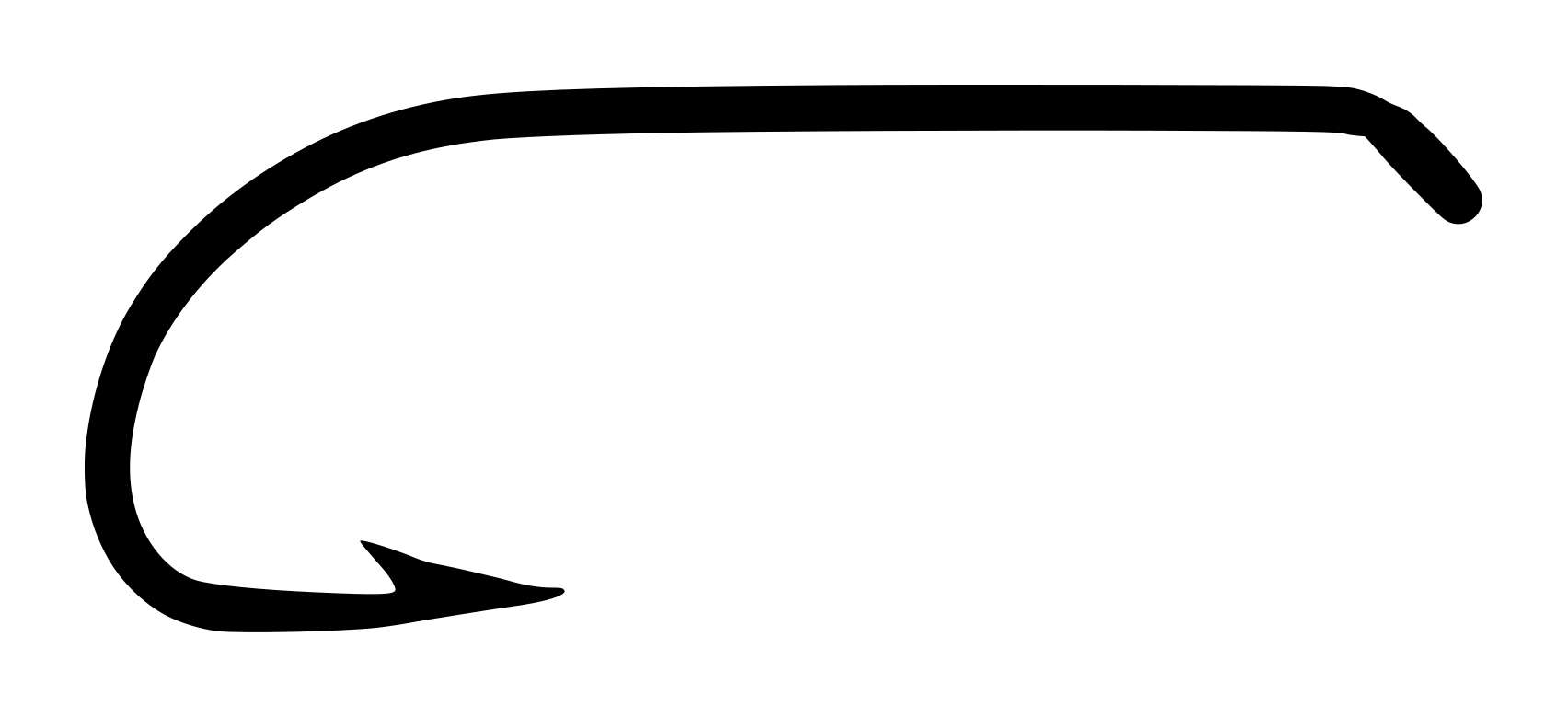
Matches: Bend, Shank, Gap, Forging, Offset +2 moreDiffers: Wire: Standard vs Fine (1X Fine); Eye: Tapered Eye vs Ball Eye; Eye Orient.: Turned Down vs Straight / Inline +3 more
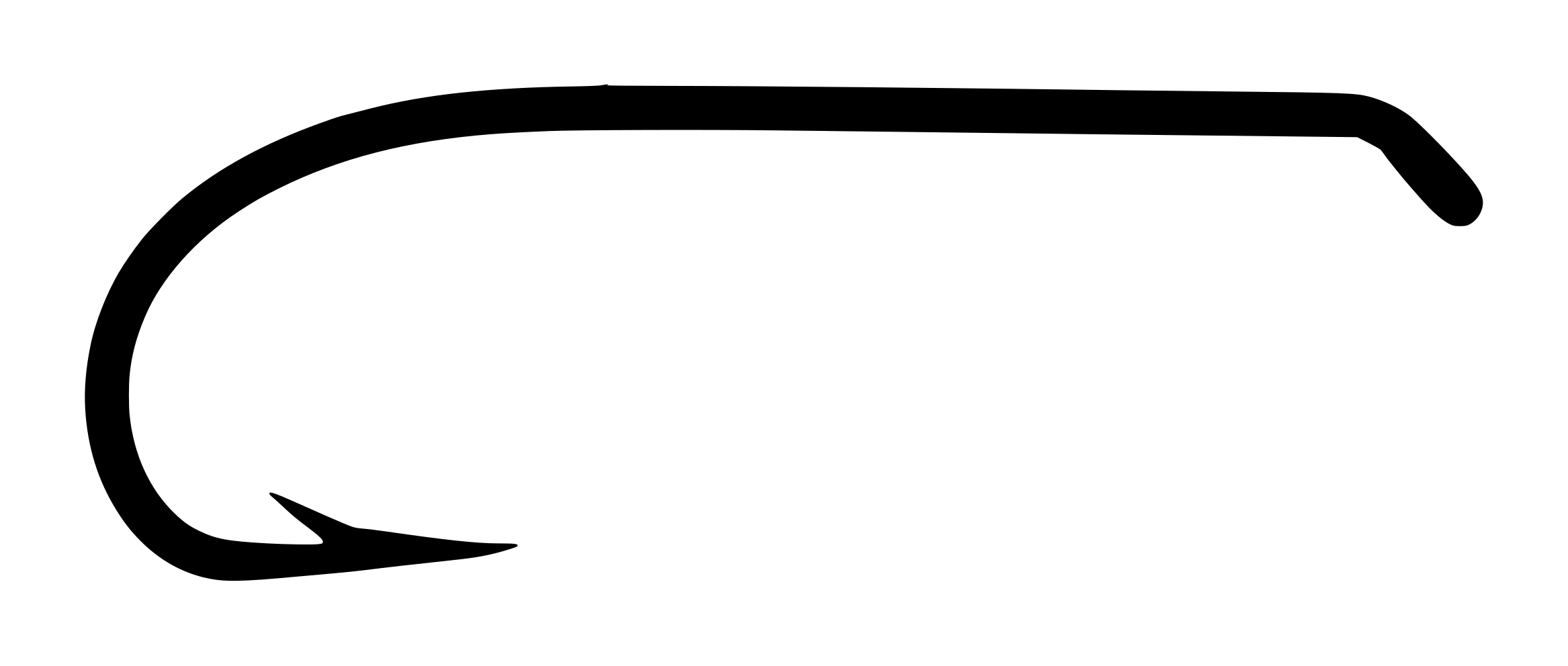
Matches: Bend, Shank, Gap, Point, Finish +2 moreDiffers: Wire: Standard vs Heavy (1X Heavy); Eye: Tapered Eye vs Ball Eye; Eye Orient.: Turned Down vs Straight / Inline +5 more
Matches: Bend, Shank, Wire, Gap, Offset +2 moreDiffers: Eye: Tapered Eye vs Ball Eye; Eye Orient.: Turned Down vs Straight / Inline; Point: Hollow Point vs Superior +6 more
The Mustad 3822 was engineered for heavy saltwater angling and large-game freshwater fishing. The forged O’Shaughnessy bend distributes stress evenly across its parabolic curve, while the extra-strong wire gauge and hollow point design combine to provide both rapid penetration (via the concave ground profile) and structural integrity under the sustained runs of powerful species. Historically used for large streamer flies, bucktails, and live-bait rigs targeting Striped Bass, Bluefish, Pike, and Muskellunge. The turned-down ball eye accepts heavy mono and braided lines directly.
Secondary Applications
Large saltwater baitfish rigging, cedar plug construction, tarpon and permit flies.
Classic Fly Patterns
Not typically used for traditional fly tying due to size and bend profile; associated with large streamer and bucktail constructions (e.g., Muddler Minnow variants, Zonker-style patterns on heavy frames).
Modern Equivalents
Hook
Match Quality
Notes
Mustad 3407
Very Good
Standard O'Shaughnessy with similar bend profile but lighter wire gauge; modern production quality.
Mustad 34007
Excellent
Stainless-steel O'Shaughnessy with identical bend geometry; superior corrosion resistance and modern metallurgy.
Tiemco 811S
Good
Heavy saltwater streamer hook with similar strength profile; different bend design but comparable heavy-duty positioning.
Gamakatsu SC15
Good
Japanese-manufactured saltwater pattern with robust wire and similar application scope.
Collector notes
The 3822 is scarce in original Christiania-era boxes, and the dual Shakespeare Honor Built label adds significant historical documentation value. Condition and intact packaging drive premium pricing; however, abundant post-1925 variants limit top-tier rarity.
Reference value
$12 – $28 USD estimate
Packaging condition
Good — moderate wear, legibleRecorded specimen
Packaging format
GW-SHK-01Catalog code
Positive factors: Christiania designation (pre-1925) places this in Mustad’s early global export phase. Shakespeare Honor Built co-branding documents transatlantic tackle trade. Heavy forged O’Shaughnessy with hollow point was engineered for demanding saltwater and large-fish applications. Original cardboard box with dual labels intact is increasingly rare. Demonstrates Mustad’s industrial dominance by 1910s-1920s.
Limiting factors: Qual. 3822 was produced in large commercial quantities. Post-1925 Oslo-era versions are common and less sought. Size 1/0 is mid-range; extreme sizes (8/0+) command higher premiums. Contemporary condition of specimen affects value significantly — corrosion or missing hooks reduce appeal.
Packaging
Cardboard box, approximately 3.5" x 2.25" x 0.75", kraft stock with light tan color. Dual-label design: Mustad primary label in center with Christiania address, hook specifications, and key-brand logo; Shakespeare 'Honor Built No. 218' label applied in separate rectangular box at lower left. Text printed by letterpress offset, showing typical register variation of era. Original size notation '1/0' handwritten in ink on lower portion of Mustad label P. Box shows light toning and creasing consistent with age; paper stock slightly brittle but intact. No barcode or modern markings present.
Market Value Notes
Original Christiania-era boxes command 15-28 USD depending on condition and packaging integrity. Post-1925 Oslo variants are valued at 8-15 USD. Specimen condition is primary value driver—corrosion, missing hooks, or damaged card reduce value significantly. Shakespeare Honor Built co-branding adds 3-5 USD premium over plain Mustad packaging. Intact original packaging increases value by 100-150% compared to loose hooks. Values derived from eBay completed listings, specialist tackle dealer catalogs, and tackle fair observations; market is relatively stable but emerging interest in early industrial history may drive appreciation.
Where to Find
Surviving examples appear most commonly on eBay (searched as 'Mustad 3822' or 'Shakespeare Honor Built'), through specialist vintage tackle dealers, and occasionally at regional fishing tackle antique fairs and estate sales. Christiania-era boxes are scarcer than post-1925 variants. Original packaging commands significant price premiums and attracts dedicated vintage angling collectors. International online dealers and UK-based tackle specialists often maintain Mustad inventory.
Preservation
Storage and Preservation
Store hooks and original packaging in a cool, dry environment—ideally 45-55% relative humidity and 60-70°F. Avoid basement storage, where fluctuating moisture promotes patina development and accelerates corrosion of the base steel beneath the bronze lacquer. The bronzed finish will naturally develop an olive-brown or dark-brown patina with age; collectors often view this patinated state as desirable and authentic. Do not attempt to polish or remove patina—this destroys the original surface and reduces collector value significantly.
Keep the original card intact and in its packaging if possible. Loose hooks lose substantial documentation value—the card, label, and packaging provide irreplaceable provenance and era confirmation. Store away from other metals to prevent galvanic corrosion. Do not expose to direct sunlight for extended periods, as UV light will fade the paper label and prematurely age the finish.
If corrosion does develop, consult a conservation professional before attempting any cleaning. Gentle dry brushing with a soft, natural-bristle brush may remove surface dust, but avoid water, oils, or solvents. The bronze finish is sufficiently robust that it does not require active maintenance—passive storage in a stable environment is ideal.
Marking Analysis
Handwritten Markings and Annotations
The specimen shows handwritten notation ‘1/0’ in dark ink on the lower portion of the Mustad label, positioned below the printed specification text P. The handwriting style is consistent with early-20th-century ledger notation—formal script with relatively even letter spacing. This annotation likely represents either a retailer’s inventory marking or a fisherman’s personal notation made after purchase, though the placement on the label (rather than loose notes) suggests a more formal business context.
No other handwritten marks, catalog numbers, or personal annotations are visible on the packaging or visible portions of the hooks. The single ‘1/0’ notation provides minor confirmatory evidence of the documented hook size but does not add significant value to the specimen—this type of marking is common on vintage tackle cards and often indicates post-purchase identification rather than factory documentation.
Primary Source
Label Text Analysis and Historical Documentation
Source: Mustad Official Hook Guide (referenced document) + Shakespeare Company Catalog archives
The Mustad label conforms precisely to the standardized eight-line typographic format documented in Mustad’s own manufacturing guides. Line 1 reads ‘O. MUSTAD & SÖN’ (note the Norwegian spelling with the øresund character), establishing manufacturer identity. Line 2 states ‘MANUFACTURERS,’ cementing Mustad’s role as primary producer rather than import agent—a critical distinction in an era of wholesale hook repackaging. Line 3 reads ‘CHRISTIANIA – NORWAY,’ providing definitive geographic and temporal bracketing: Christiania (the pre-1925 name of Oslo) indicates production between 1832-1924; the specific typography and letterpress style narrow this to approximately 1900-1924.
Line 4 states ‘Qual. 3822,’ identifying the quality tier and model code. The 3822 designation places this hook squarely in the ‘3000-3999 Quality’ range—mid-tier commercial products built to exacting standards, distinct from economy (1000-2999) and premium (4000+) tiers. Line 5 specifies ‘Hollow Point,’ the exclusive line dedicated to point geometry as per Mustad’s rigid labeling protocol. Lines 6-8 describe the bend pattern (‘Forged O’Shaughnessy’), eye type (‘Turned Down Eyes’), construction (‘Forged’), and finish (‘Rustproof’). The term ‘Rustproof’ corresponds to either bronzed or light-tinned finishes; the visual specimen exhibits bronzed coloration consistent with Mustad’s lacquer-based protective coating.
The Shakespeare ‘Honor Built No. 218’ label constitutes a secondary authentication layer. This co-branding documents a wholesale distribution arrangement wherein Shakespeare Company imported Mustad hooks and applied their own quality guarantee. The catalog number 218 is traceable to Shakespeare company records and corresponds to this specific hook assortment in their early-20th-century catalogs. The combination of both labels creates a unique documentary chain: manufacturer location, model code, quality tier, point type, and distributor regional branding—all visible on a single artifact from over a century ago.
Additional
The Shakespeare Honor Built Partnership and Early-20th-Century Tackle Trade
The dual labels on this specimen document one of the most significant wholesale partnerships in early American fishing tackle history. Shakespeare Company, founded by William Shakespeare Jr. in 1897 in Kalamazoo, Michigan, recognized the competitive advantage of quality hook manufacturing but determined that in-house production was economically unfeasible. Instead, Shakespeare negotiated an enormous ongoing contract with O. Mustad & Son, committing to importing millions of hooks annually for repackaging under the ‘Honor Built’ trademark.
This arrangement benefited both parties: Mustad gained access to the American market through an established domestic distributor, while Shakespeare leveraged Mustad’s industrial efficiency to offer competitive pricing backed by their established brand reputation. The ‘Honor Built’ slogan—often accompanied by ‘Honor Sold’—became a guarantee of quality, signifying that Shakespeare had inspected and endorsed the enclosed hooks. For the American angler of the 1910s-1920s, a Shakespeare Honor Built hook card represented the ultimate assurance of reliability, even though the actual manufacturing occurred in a remote Norwegian valley.
This partnership persisted well into the 1960s-1970s, though the balance gradually shifted as Mustad’s post-WWII expansion and modern marketing made the Mustad name itself synonymous with quality. The Christiania-era examples like this 3822 represent the apex of the partnership’s early phase, when the transatlantic supply chain was relatively young and the dual-label system was actively used to establish consumer confidence. Today, these dual-branded cards serve as material evidence of globalized industrial commerce in an era before containerization, digital supply chains, or standardized logistics—a reminder that quality tackle required human judgment, trust, and long-distance partnership.
Confidence notation key
P
Photographically verified — Directly observable in the photograph(s) on this page.
V
Verified by documentation — Confirmed by manufacturer catalog, spec sheet, or published reference.
I
Inferred — A logical deduction from observable or documented evidence, not directly stated.
E
Estimated — An approximation based on visual comparison, proportional analysis, or limited data.
S
Speculative — A reasoned hypothesis that cannot be confirmed from available evidence.
Unnotated claims are the compiler’s synthesis; see Sources. All photographs on garrenwood.com are taken on a measurement grid where each square equals 1/10 inch (0.1″ / 2.54 mm).