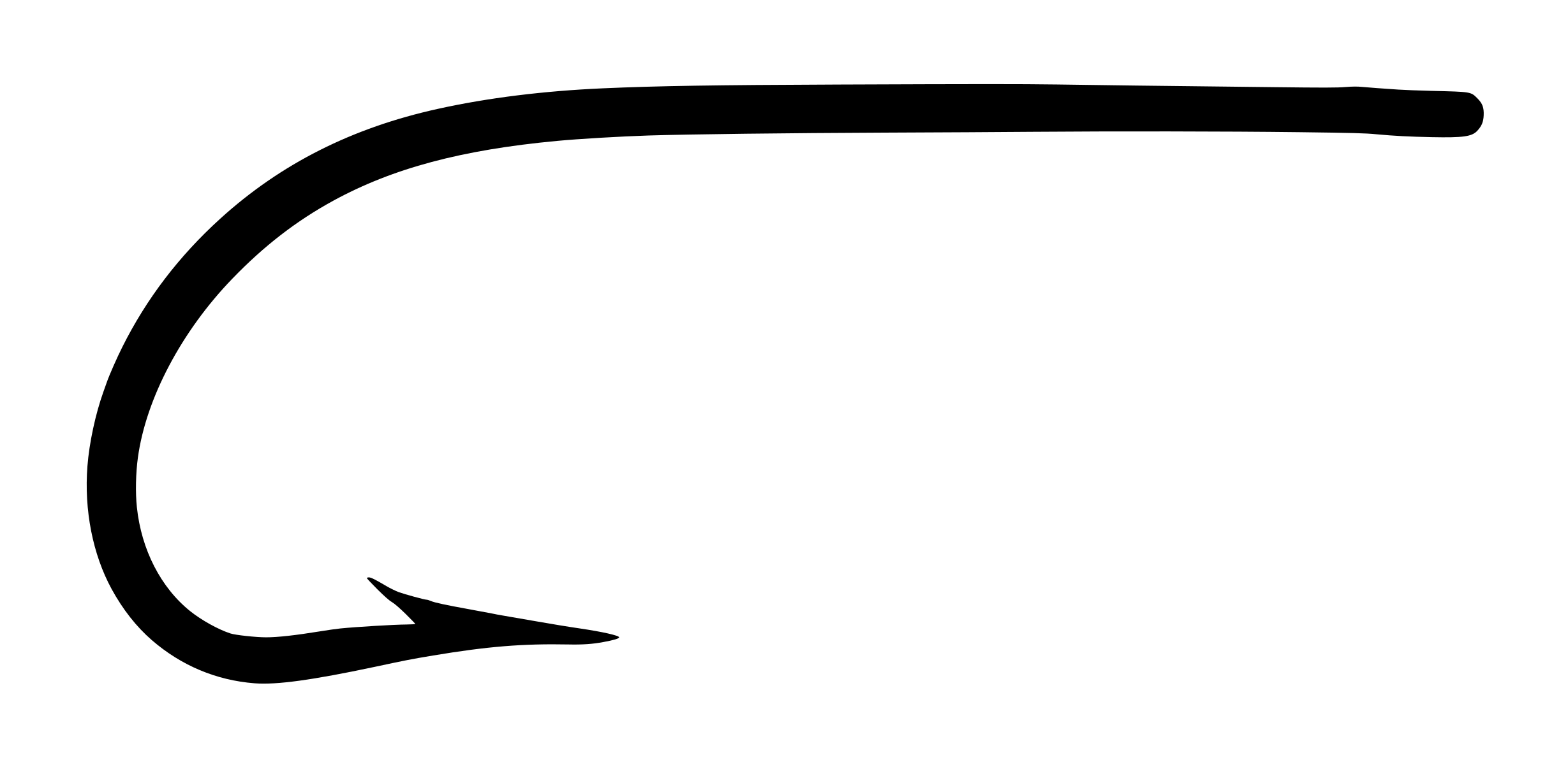
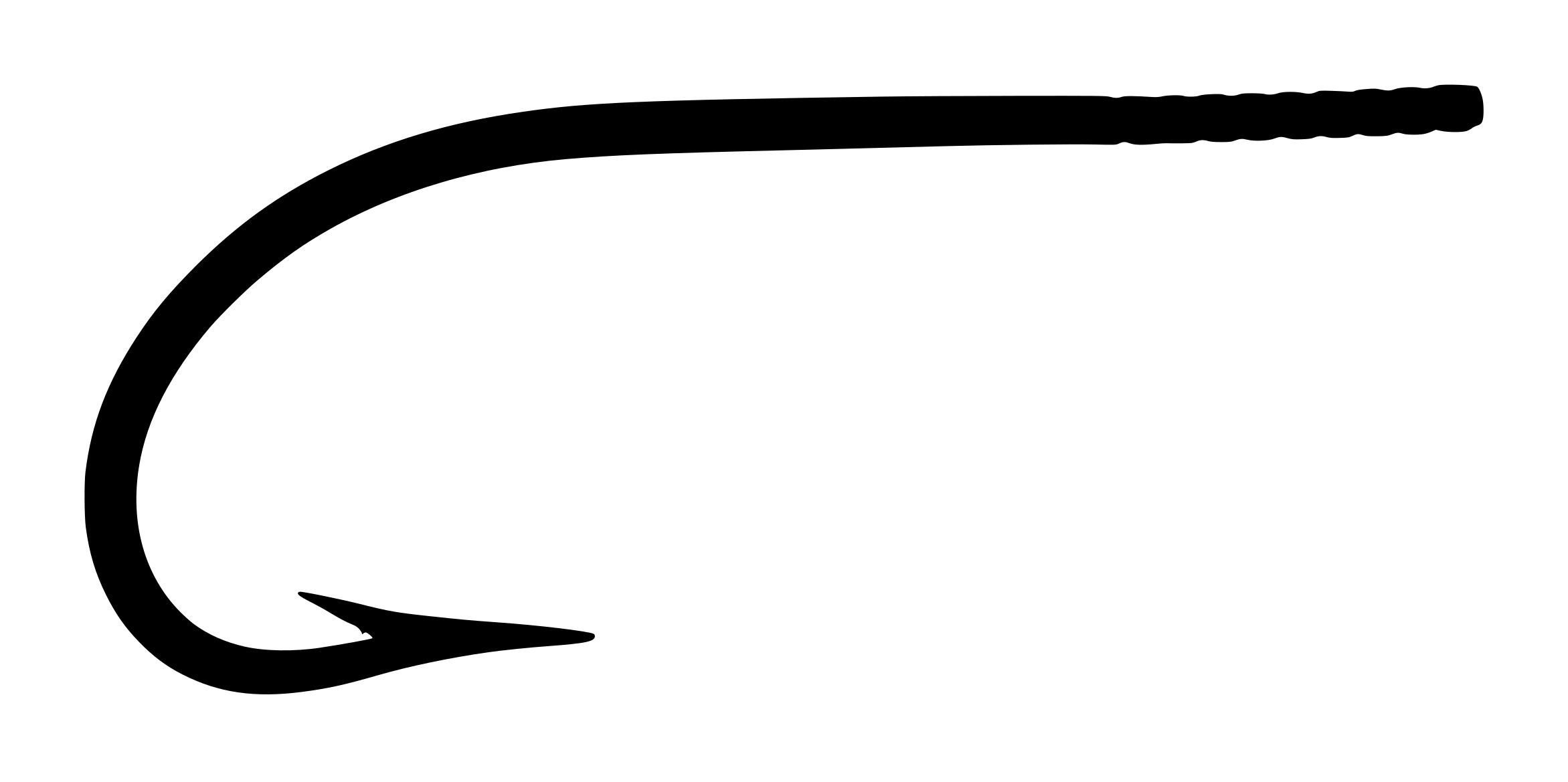
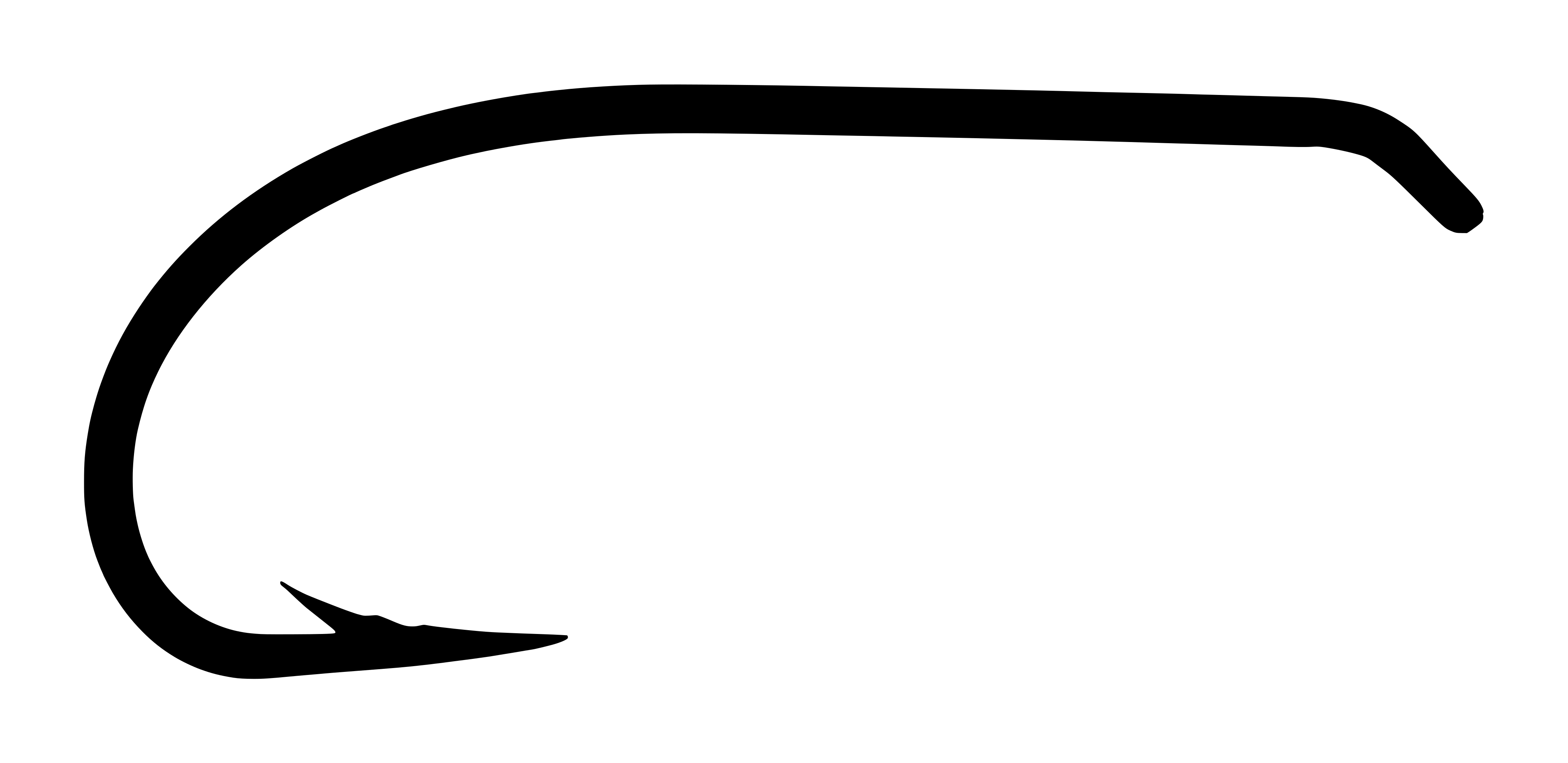
The Mustad 3811 O’Shaughnessy represents the pinnacle of early 20th-century heavy-duty saltwater hook engineering. Manufactured in Oslo, Norway, this forged hook combines a distinctive parabolic bend with a hollow point geometry, creating a design optimized for extreme durability and penetration in the hardest marine environments.
Dating from approximately 1920–1960 based on the cardstock packaging, golden-ink letterpress printing, and ‘Oslo-Norway’ address format, the 3811 documents Mustad’s aggressive export strategy to American saltwater anglers. The ‘Rustproof’ finish notation and forged construction reflect manufacturing innovations of the interwar and mid-century periods, when specialized electroplated and lacquered finishes began replacing simpler bluing and japanning techniques.
For collectors, this hook represents significant industrial history—evidence of Mustad’s dominance in global hook markets and the technical sophistication applied even to commodity-production saltwater patterns. The combination of excellent packaging condition, clear model designation, and robust historical documentation makes examples like this moderately valued among vintage tackle enthusiasts.
Original Mustad 3811 O'Shaughnessy sales box label, size 3/0, showing the complete eight-line typographic format with Key Brand trademark, manufacturer designation, Oslo address, model code, hollow point specification, forged and rustproof finish notation, and handwritten size mark.
Photographic record
4 cataloged imagesSelect any record to load it above.
4 images shown
Mustad 3811 O’Shaughnessy Size 3/0 Original Box LabelOriginal Mustad 3811 O'Shaughnessy sales box label, size 3/0, showing the complete eight-line typographic format with Key Brand trademark, manufacturer designation, Oslo address, model code, hollow point specification, forged and rustproof finish notation, and handwritten size mark.Open originalMustad 3811 O’Shaughnessy Size 3/0 Hook Point DetailClose-up side profile of the Mustad 3811 hook point and upper shank, showing the distinctive hollow point geometry with concave inner face and the characteristic parabolic O'Shaughnessy bend curve.Open originalMustad 3811 O’Shaughnessy Size 3/0 Full ProfileFull profile view of the Mustad 3811 hook displaying the complete geometric structure: ringed ball eye, heavy-gauge round shank, deep parabolic O'Shaughnessy bend, and hollow point with swept-back barb.Open originalMustad 3811 O’Shaughnessy Multiple Hooks Size 3/0Multiple Mustad 3811 hooks positioned side by side on the measurement grid, showing manufacturing consistency and the proportional characteristics typical of size 3/0 O'Shaughnessy hooks.Open original
Technical profile
Eye
Ball Eye, Straight / InlineBall eye formed by bending terminal wire back onto the main shank, presenting a uniform circular loop. P
Wire
Heavy (1X Heavy), Forged
Shank
Standard — Plain
Bend
O'Shaughnessy, Standard gapDeep parabolic bend geometry characteristic of the O'Shaughnessy pattern. Angular bottom structure with strong mechanical holding power typical of heavy saltwater hooks. P
Point
Hollow Point (concave inner face)Standard swept-back barb positioned proportionally for heavy wire construction. Barb angle and placement optimized for deep penetration and secure hold in hard-boned saltwater species. P
Finish
BronzedWarm, bronze-brown metallic tone consistent with the 'Rustproof' finish notation on packaging. Appears to be a corrosion-resistant electroplate or lacquer coating typical of interwar heavy-duty saltwater hooks. P
Hooks present in the specimen are bright with no visible corrosion. The ball eye is sharply formed with no deformation or casting defects. Barb is intact and properly angled. Card shows light even toning and edge wear consistent with storage in a cool, dry environment for decades. Letterpress printing remains fully legible with warm golden-brown hue; no fading or ink loss detected.
The O’Shaughnessy bend is engineered as a parabolic curve—a sophisticated geometric shape that mathematically distributes the mechanical stress of a fighting fish evenly across the entire bend structure. Unlike a sharp Limerick bend (which concentrates stress at a single point) or a perfect round Sproat bend (which may distribute stress inefficiently), the parabolic geometry provides exceptional resistance to both straightening out under sudden heavy loads and to fatigue fracture during protracted battles. The ‘Forged’ designation indicates that the shank and bend have been subjected to a cold-forging process: the wire is placed in a mechanical drop-press and struck from above, flattening and elongating the material. This cold-working process dramatically increases the crystalline density and tensile strength of the high-carbon steel without adding thickness or weight—a critical advantage in heavy-tackle applications where material strength must be maximized without compromising castability or line capacity.
The hollow point construction provides a concave inner face—a knife-edge geometry that requires minimal applied pressure for initial penetration, offsetting the heavier wire gauge. The rustproof finish (typically an electroplated or lacquered coating) seals the high-carbon steel from the extreme corrosive effects of saltwater, significantly extending the working life of the hook before oxidation degrades the point sharpness.
We don't have measured sizes for this hook yet. Own one? Submit calipered measurements and we'll review and add them. Thank you!
Historical context
mustad
O. Mustad & Søn was established in 1832 in Gjøvik, Norway, initially as a general metalworking firm under the name Brusveen Spiger- og Staltradfabrikk. The firm was acquired by Ole Hovelsen Mustad and his son Hans Mustad, who rebranded the operation as O. Mustad & Søn and pivoted to hook manufacturing. The company’s defining innovation occurred in 1877 when Mathias Topp, a visionary engineer within the firm, invented the first fully automated hook-making machine—a breakthrough that allowed continuous feeding of raw steel wire into a machine that autonomously cut, bent, barbed, and pointed hooks at unprecedented speed and scale.
Rather than patent this proprietary technology, Mustad protected the innovation through corporate secrecy, strict non-disclosure agreements, and restricted factory access. This strategy proved devastatingly effective against rival manufacturing centers in Redditch, England, and emerging hubs in Japan and the United States. By the early 20th century, Mustad had established significant export relationships with American tackle companies and regional distributors. The Key Brand designation represented their premium export line, competing directly with established English manufacturers. By the 1950s, Mustad had secured approximately 50% of the global hook production market, establishing sales offices and manufacturing facilities across multiple continents.
Series History
The O’Shaughnessy pattern originated in Ireland and was widely adopted in early 20th-century American saltwater fishing. Mustad reverse-engineered and mass-produced this design in Gjøvik, creating the Qual. 3811 as part of their heavy-duty saltwater hook catalog. The 3811 was available in a comprehensive size range (typically No. 1 through 5/0 or beyond) to address diverse marine fishing applications. The ‘Forged’ designation appearing on packaging beginning in the 1920s indicates that Mustad had implemented cold-forging techniques to the O’Shaughnessy bend, significantly increasing structural rigidity and tensile strength without adding weight—a major technical advancement. The ‘Rustproof’ finish notation reflects the transition from simple bluing to specialized electroplated and lacquered finishes designed to resist the extreme corrosive effects of saltwater environments. Production continued through the 1960s with minimal design changes, though metallurgy and finish processes evolved over the decades. The model was eventually discontinued as Mustad transitioned to stainless steel and modern Signature Series nomenclature around the turn of the millennium.
Era and Packaging Dating
Packaging evidence: cream cardstock with golden-ink letterpress printing typical of interwar to mid-century production. Address reads 'OSLO-NORWAY' (city renamed from Christiania in 1925, establishing post-1925 lower bracket). No barcode (pre-1974). Decorative snowflake border pattern consistent with 1920s-1940s packaging aesthetic. Typography and layout style align with Mustad's classic eight-line label format during their peak export period to American markets. Forged construction and rustproof finish notation reflect manufacturing standards of the 1920-1960 era.
The Irish Pattern Goes Global
The O'Shaughnessy bend takes its name from a legendary Irish fishmeal, and the pattern became synonymous with early American offshore and big-game fishing in the Gulf of Mexico and off the Atlantic coast. In the 1930s–1950s, tarpon and striped bass anglers along the Florida coast and Outer Banks considered Mustad's 3811 in sizes 2/0 through 5/0 an absolute standard for natural bait rigging. The forged heavy-wire construction proved so durable that individual hooks from a single box were often retired only after years of hard use in saltwater environments, making surviving original cards from this era valuable historical documents of American fishing culture.
Design lineage and influence
The O’Shaughnessy pattern emerged from 19th-century Irish fishing tradition and was subsequently adopted and refined by Redditch manufacturers (notably S. Allcock & Co.) during the Victorian era. Mustad’s reverse-engineering of this design in the 1880s–1890s represents a pivotal moment in industrial hook manufacturing: rather than creating entirely novel patterns, Mustad identified proven, regionally favored designs and reproduced them with extreme efficiency and consistency. The parabolic bend geometry—a compromise between the perfect round of a Sproat and the sharp angular bottom of a Limerick—proved mechanically sound and versatile enough to dominate saltwater fishing applications well into the late 20th century. The O’Shaughnessy influenced subsequent Mustad designs such as the heavy-wire variants and the eventual Signature Series saltwater hooks, establishing an unbroken lineage from 19th-century Irish craft tradition to modern industrial tackle.
Best matchRelated by Attribute
Computed automatically from catalog data — updated as new hooks are added.
Matches: Bend, Shank, Point, Finish, Forging +2 moreDiffers: Wire: Heavy (1X Heavy) vs Standard; Gap: Standard vs Wide; Eye: Ball Eye vs Tapered Eye +2 more
The Mustad 3811 O’Shaughnessy is a heavy-duty saltwater and sea trout hook engineered for brute strength and deep penetration in hard-boned marine species. The forged heavy-gauge wire and hollow point construction provide exceptional resistance to straightening and bending under the crushing jaw pressure and violent runs characteristic of offshore fish such as tarpon, large stripers, and coastal sea trout. The O’Shaughnessy bend distributes mechanical stress evenly across the entire hook structure, making it suitable for natural bait rigging, trolling applications, and heavy-tackle bottom fishing in rocky or debris-laden environments.
Secondary Applications
Large freshwater bass and pike bait fishing; heavy nymph and streamer patterns in powerful rivers.
Classic Fly Patterns
Not typically used for fly tying in its original form, though the bend geometry has influenced streamer hook designs.
Modern Equivalents
Hook
Match Quality
Notes
Mustad 3407 O'Shaughnessy
Very Good
Modern production O'Shaughnessy with similar bend geometry and forged construction but updated metallurgy and finish options.
Tiemco 811S
Good
Contemporary heavy saltwater hook with similar proportions and forged construction, though designed for modern fly-tying materials.
Collector notes
Solid mid-tier vintage tackle with good historical documentation and excellent packaging condition. Positive factors include the forged heavy-wire construction, classic O'Shaughnessy bend design, and clear model designation on original packaging. Limiting factors include substantial production volumes during the 1920–1960 period and the standard design that lacks unique innovations or regional specialization.
Reference value
$20 – $45 USD estimate
Packaging condition
Very Good — light wear, fully legibleRecorded specimen
Packaging format
MUS-TC-02Catalog code
Positive Factors: The 3811 represents Mustad’s most successful heavy saltwater design of the early-to-mid 20th century. The combination of forged wire, hollow point construction, and distinctive O’Shaughnessy bend demonstrates advanced metallurgical and mechanical engineering for the era. Excellent packaging condition with fully legible letterpress printing and the iconic Key Brand logo adds significant collector value. The handwritten size notation ‘3/0’ in period-appropriate purple ink and the ‘Rustproof’ finish notation provide clear evidence of original vintage provenance.
Limiting Factors: The O’Shaughnessy pattern was produced in vast quantities throughout the interwar and mid-century periods, reducing scarcity value. Size 3/0 is common in surviving examples. The design lacks regional specificity or unusual technical innovations that drive premium pricing. Competition from English manufacturers’ equivalent patterns (Allcock, Milward) means this model, while historically significant, does not command the collector premiums of truly scarce Norwegian designs. Full cards with all sizes intact are more valuable than individual examples.
Packaging
Cream-colored cardstock box label, 2.5" × 3.5" approx., with golden-ink letterpress printing featuring decorative snowflake border pattern on all four sides. Label includes: Key Brand skeleton key logo (upper left), company name 'O. MUSTAD & SÖN' with 'MANUFACTURERS' subtitle, 'OSLO - NORWAY' geographic designation, model code 'Qual. 3811', point specification 'Hollow Point', hook name 'Mustad-O'Shaughnessy Hooks', quantity notation '100' and 'Forged. Ringed Rustproof', and handwritten size designation 'No. 3/0' in purple ink. Cardstock shows light toning consistent with age; print remains fully legible with warm golden-brown hue.
Market Value Notes
Values driven primarily by packaging condition and completeness. Full sales cards (displaying sizes 1 through 5/0 or equivalent range) in excellent condition command premium pricing ($40–$60+). Individual hooks or boxes with light to moderate wear fetch $15–$30. Size 3/0 is common, reducing individual specimen value. Warm tone of the 'Rustproof' finish and clear letterpress printing enhance appeal to collectors of early Norwegian export tackle.
Where to Find
Vintage tackle auctions, estate sales, eBay (UK and US dealers specializing in European hooks), Norwegian antique shops, fishing tackle fairs, specialized hook collector networks.
Preservation
Storage and Preservation
Store the complete card in a cool, dry environment away from direct moisture and humidity. The rustproof finish, while corrosion-resistant, can develop a thin patina over decades—collectors often view this warm brownish tone as desirable evidence of age and authenticity. Avoid handling the hooks directly when possible; skin oils and salt residue can accelerate finish deterioration. The cream cardstock is susceptible to humidity damage and acid-driven deterioration; consider storing the card in an archival-quality sleeve or box designed for vintage paper artifacts.
Keep the package away from direct sunlight, which can fade the golden-ink letterpress printing and cause the cardstock to become brittle. When displaying, use museum-quality lighting and rotation schedules to minimize UV exposure. If any rust spots appear on the hooks themselves (indicating a breach in the rustproof coating), address immediately with a soft cloth and light mechanical cleaning—do not submerge in water. The complete original sales card format significantly enhances collectible value over loose hooks, so preserve the packaging integrity above all else.
Marking Analysis
Handwritten Marks and Period Annotations
The specimen displays a handwritten size designation ‘No. 3/0’ in purple or blue ballpoint ink on the lower right of the label. The handwriting exhibits characteristics consistent with mid-20th-century commercial marking practices: a clean, rounded script typical of retail or warehouse staff notation. The ink color and flow suggest application after the card’s initial printing, likely during inventory or packaging operations. The placement at the bottom of the label follows standard commercial practice of marking size or lot information in a designated blank space rather than obscuring the printed label text.
This handwritten annotation provides valuable provenance evidence, confirming that the card passed through active commercial distribution and retail channels rather than remaining in original factory stock. The fading and slight feathering of the ink are consistent with decades of exposure to ambient light and humidity, supporting an early-to-mid 20th-century dating (approximately 1930–1960).
Primary Source
Eight-Line Mustad Label Decryption
Source: O. Mustad & Son - Comprehensive Typology and Decryption of Vintage Labels (reference document 1)
The packaging label adheres strictly to Mustad’s standardized eight-line typographical format, as documented in contemporary manufacturing guides. Line 1: ‘O. MUSTAD & SÖN’ (corporate identity). Line 2: ‘MANUFACTURERS’ (industrial role designation, differentiating from import agents and repackagers). Line 3: ‘OSLO – NORWAY’ (geographic origin and dating bracket—Oslo name officially adopted in 1925, establishing post-1925 production). Line 4: ‘Qual. 3811’ (model/quality code, indicating heavy-duty saltwater tier numbering in the 3000–3999 range). Line 5: ‘Hollow Point’ (point geometry specification, exclusively reserved for defining penetrative geometry per Mustad protocol). Line 6: ‘Mustad-O’Shaughnessy Hooks’ (pattern name, identifying the cloned regional design). Lines 7–8: ‘Forged. Ringed Rustproof’ (anatomical modifications and metallurgical finish designation).
The ‘Rustproof’ notation is particularly significant: it indicates Mustad’s transition from simple bluing or japanning finishes to electroplated or chemically treated coatings specifically engineered to resist saltwater corrosion. The ‘Ringed’ designation confirms a ball eye formed by bending the terminal wire back onto the shank—the global standard for mechanized hook manufacturing by the 1920s. The quantity notation ‘100’ indicates a standard wholesale box configuration common throughout the Mustad export era.
Additional
The Norwegian Industrial Advantage
The Mustad 3811 O’Shaughnessy exemplifies the industrial strategy that made Norwegian hook manufacturing globally dominant in the early 20th century. Rather than pioneering entirely novel designs, Mustad identified proven, regionally favored patterns (in this case, the Irish O’Shaughnessy) and deployed automated manufacturing machinery and strict quality control to produce them at volumes and consistency unattainable by traditional hand-forging operations in Redditch or small American shops. The forged heavy-wire construction—possible only through large-scale mechanical drop-press infrastructure—represented a technological advantage that smaller craftsmen could not match.
This business model is visible in the packaging itself: the Key Brand trademark, the formal eight-line label system, the explicit ‘MANUFACTURERS’ designation (rather than ‘Distributor’ or ‘Importer’), and the assertive ‘Made in Norway’ claim all signal Mustad’s confidence in their industrial superiority and brand identity. By the 1950s, the strategy had proven devastatingly effective: Mustad controlled approximately 50% of global hook production, and the word ‘Mustad’ had become nearly synonymous with ‘fishhook’ in the minds of American and European anglers.
Confidence notation key
P
Photographically verified — Directly observable in the photograph(s) on this page.
V
Verified by documentation — Confirmed by manufacturer catalog, spec sheet, or published reference.
I
Inferred — A logical deduction from observable or documented evidence, not directly stated.
E
Estimated — An approximation based on visual comparison, proportional analysis, or limited data.
S
Speculative — A reasoned hypothesis that cannot be confirmed from available evidence.
Claims with no notation are confirmed by multiple independent sources. All photographs on garrenwood.com are taken on a measurement grid where each square equals 1/10 inch (0.1″ / 2.54 mm).