Wm. Bartleet & Sons History
1. The Beginning (1750)
The company was established in 1750 in Redditch, Worcestershire, a town that would become the global capital of needle and fish hook manufacturing. Initially, the Bartleet family, like many in the region, focused on needle making. As the techniques for making needles (tempering steel wire) were nearly identical to making fish hooks, they naturally expanded into fishing tackle.
2. The Golden Age (1800s)
Under the leadership of William Bartleet (the founder) and later his grandson Robert Smith Bartleet (who ran the firm in the mid-to-late 19th century), the company grew into an industrial powerhouse.
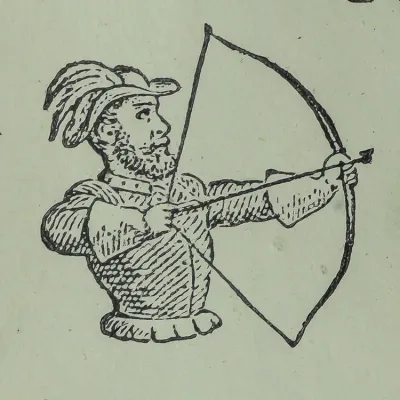
- The Archer Brand: They were famous for their trademark “Archer” logo (referencing the “Arrow Valley” where their factory was located).
- Global Dominance: By the Victorian era, they were exporting millions of hooks worldwide. They were known for high-quality “Japanned” (black enameled) hooks and exhibited proudly at World Fairs, winning medals in Paris (1878) and London (1883).
- The Factory: Their main headquarters was the Abbey Mills in Redditch, a massive Victorian factory complex.
3. The Merger and Decline of Independence (1902–1930s)
The end of Wm. Bartleet & Sons as a strictly independent family-run entity began at the turn of the 20th century due to intense competition and the need for industrial consolidation.
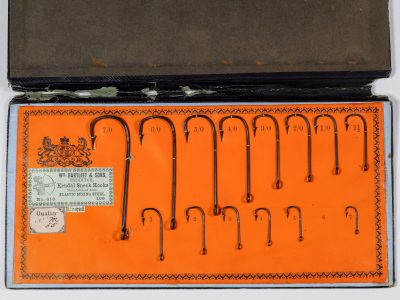
- 1902: The business was acquired by Henry Milward & Sons, another giant of the Redditch hook industry. However, the “Bartleet” name was so respected that Milward continued to produce hooks under the Bartleet brand (like your box) for decades.
- 1906: The company was formally incorporated as a Limited company.
- 1932: A massive merger occurred, forming Amalgamated Needles & Fish Hooks Limited. This conglomerate brought together Milward, Bartleet, and others into a single entity (later known as Entaco).
4. The End of the Line
- Post-WWII: While the Bartleet brand name survived on packaging into the mid-20th century, the distinct identity of the firm faded as production was centralized.
- 1970s: The historic Abbey Mills factory on Prospect Hill, where the hooks were made, was demolished to make way for office buildings.
- Today: The company no longer exists, but the town of Redditch maintains the Forge Mill Needle Museum, which preserves the history of these manufacturers.