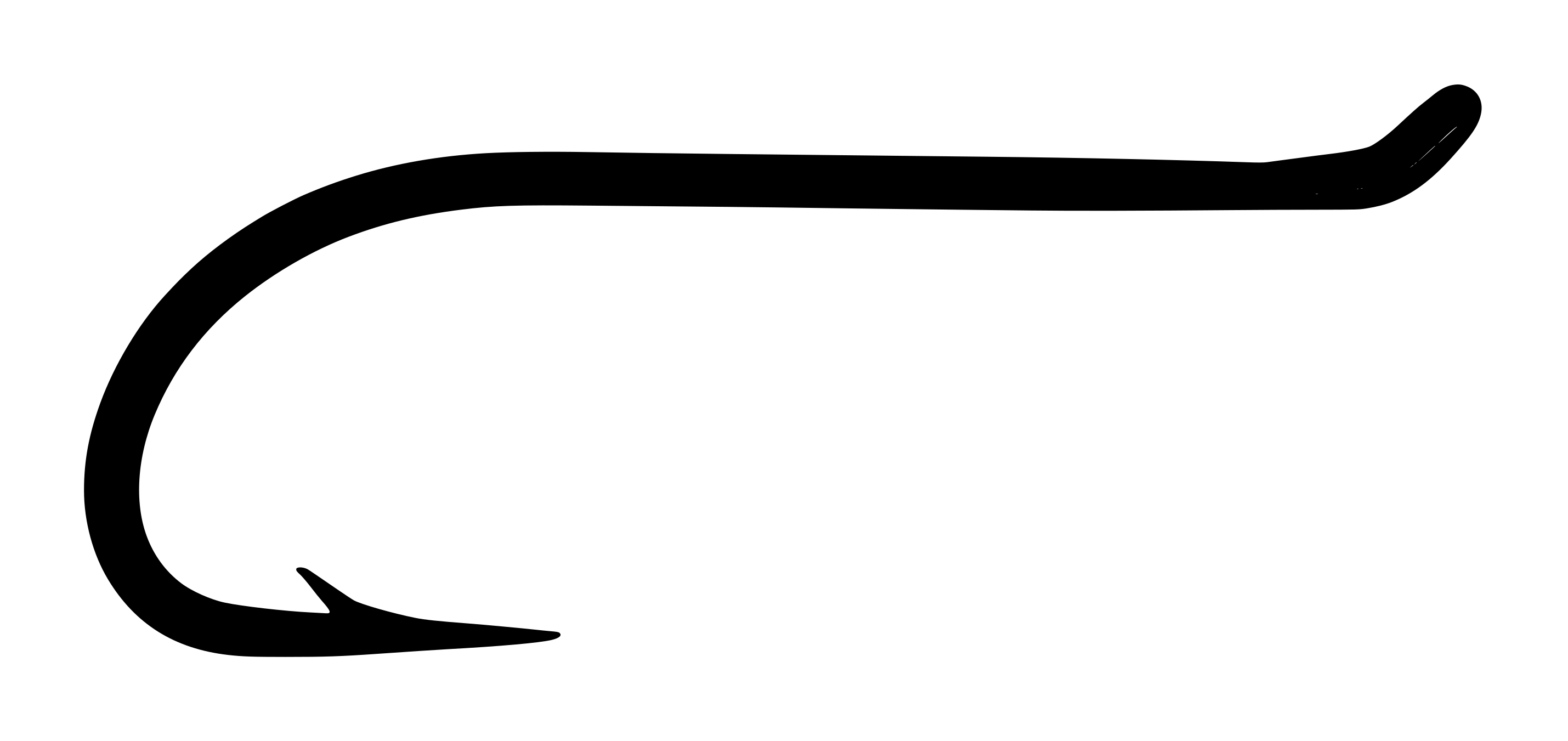
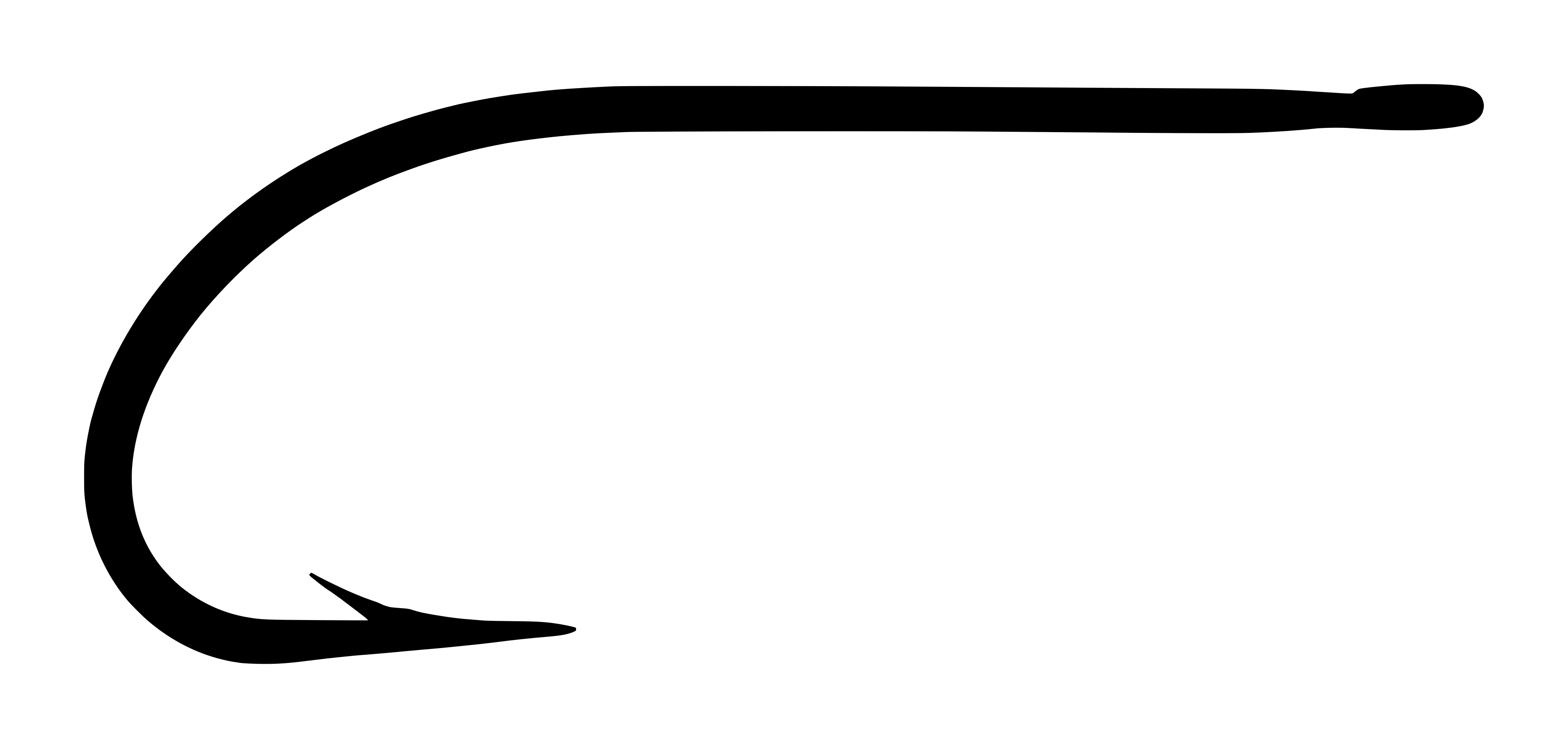
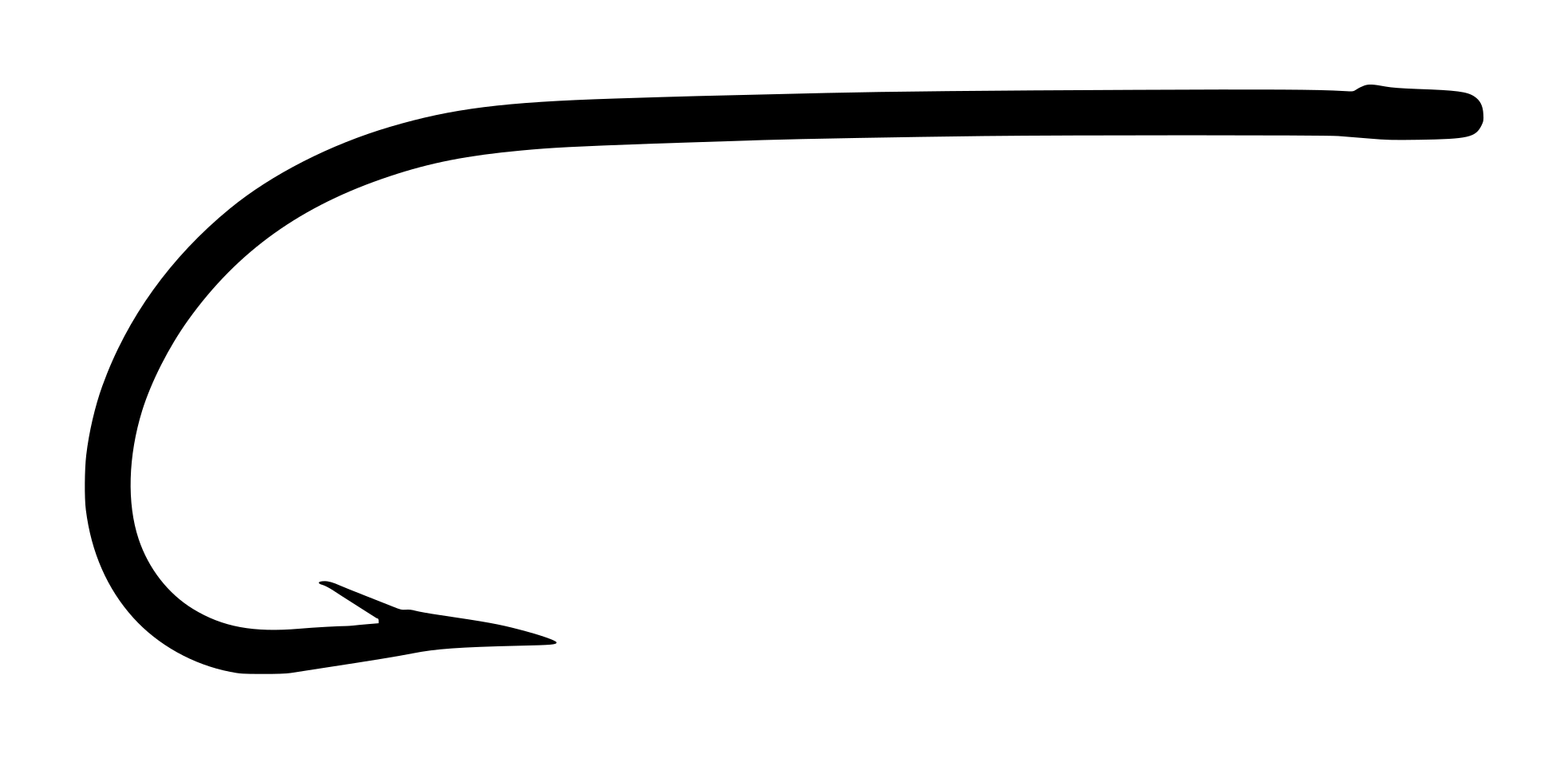
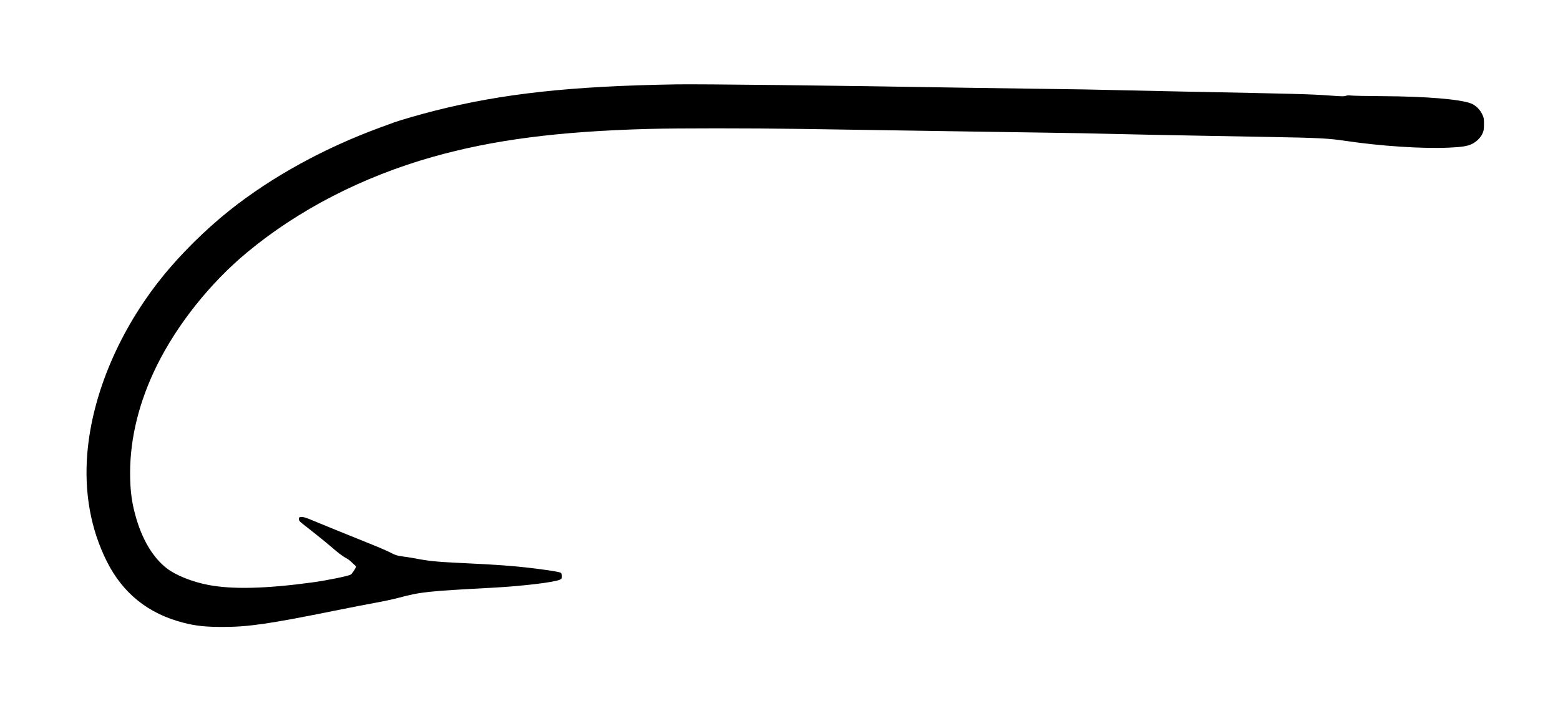
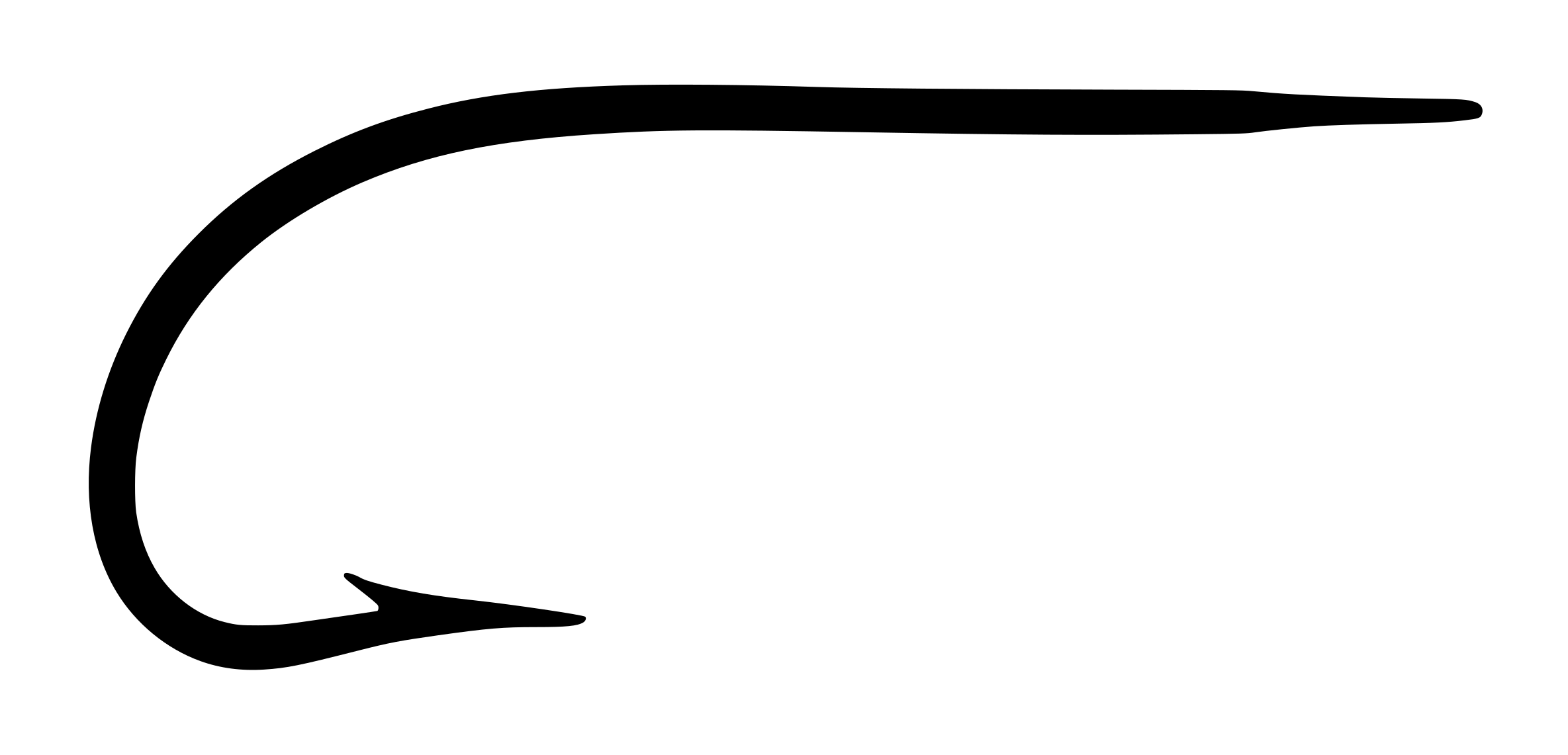
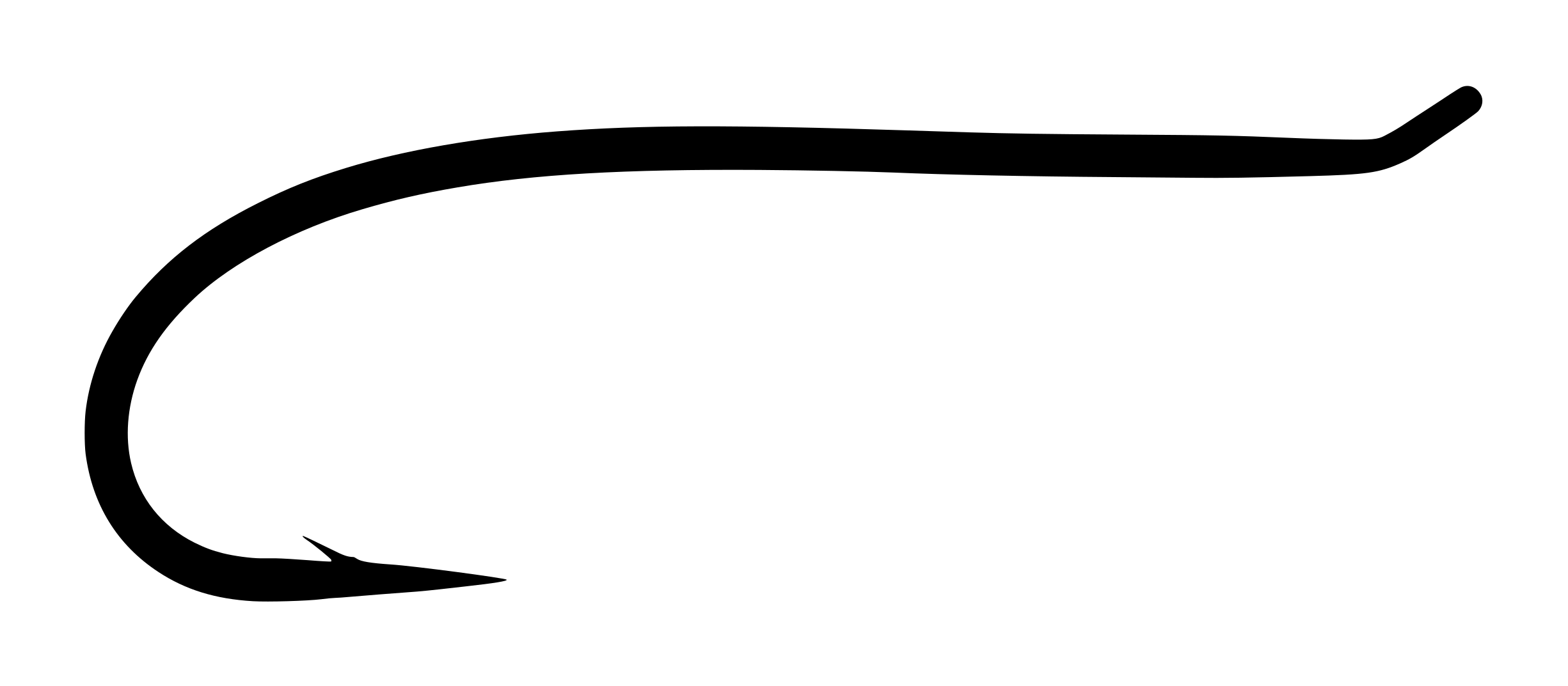
Mustad 36890, a Limerick-bend salmon hook manufactured in Norway circa 1950–1970, pairs a turned-up looped eye with heavy oval wire and a Dublin point for use in traditional Atlantic salmon patterns. The oval wire profile (only on older hooks) provides beam strength resistant to straightening under large fish, while the angular Limerick bend geometry and slightly outward-angled point ensure secure jaw hold and reliable tissue penetration despite the bulk of the wire and full dressing. The japanned finish meets the period standard for salmon irons. This hook represents the mid-century preference for strength and classical proportion in salmon fly design, when oval wire construction was the choice of experienced tyers building for high water and large fish.
Close-up of the Dublin point showing the characteristic outward angle and medium-length barb typical of salmon fly hooks.
Photographic record
28 cataloged imagesSelect any record to load it above.
8 images shown
Mustad 36890 Point Detail Size 3/0Close-up of the Dublin point showing the characteristic outward angle and medium-length barb typical of salmon fly hooks.Open originalMustad 36890 Size Comparison HooksTwo Mustad 36890 hooks showing the size variation within the series, demonstrating the proportional scaling of the Limerick bend.Open originalMustad 36890 Full Profile Size 3/0Complete side profile showing the distinctive Limerick bend geometry and turned-up looped eye construction.Open originalMustad 36890 Point and Bend DetailDetail view of the point and bend junction showing the oval wire cross-section and precise Dublin point geometry.Open originalMustad 36890 Measurement ReferenceTwo hooks positioned on measurement grid for accurate size documentation and comparison.Open originalMustad 36890 Original PackagingOriginal Mustad packaging showing the eight-line label format with Key Brand logo and complete specifications.Open originalMustad 36890 Dublin Point GeometryExtreme close-up showing the precise Dublin point angle and barb relationship characteristic of salmon fly hooks.Open originalMustad 36890 Complete ProfileFull-length profile view showing all design elements from eye to point including the characteristic Limerick bend.Open originalMustad-36890-Hooks-Size-3-0Mustad-36890-Hooks-Size-3-0Open originalMustad-36890-Box-Size-5-0Mustad-36890-Box-Size-5-0Open originalMustad-36890-Hook-Size-2Mustad-36890-Hook-Size-2Open originalMustad-36890-Hook-Point-Size-1Mustad-36890-Hook-Point-Size-1Open originalMustad-36890-Hook-Point-Size-1-0Mustad-36890-Hook-Point-Size-1-0Open originalMustad-36890-Hook-Point-Size-2Mustad-36890-Hook-Point-Size-2Open originalMustad-36890-Hook-Point-Size-2-0Mustad-36890-Hook-Point-Size-2-0Open originalMustad-36890-Hook-Size-1Mustad-36890-Hook-Size-1Open originalMustad-36890-Hook-Size-1-0Mustad-36890-Hook-Size-1-0Open originalMustad-36890-Hook-Size-2-0Mustad-36890-Hook-Size-2-0Open originalMustad-36890-Hook-Size-4-0Mustad-36890-Hook-Size-4-0Open originalMustad-36890-Hook-Size-5-0Mustad-36890-Hook-Size-5-0Open originalMusad-36890-Box-and-Label-Size-4Musad-36890-Box-and-Label-Size-4Open originalMusad-36890-Hook-Point-Size-4Musad-36890-Hook-Point-Size-4Open originalMusad-36890-Hook-Size-4Musad-36890-Hook-Size-4Open originalMustad-36890-Box-and-Label-Size-2Mustad-36890-Box-and-Label-Size-2Open originalMustad-36890-Box-Size-1Mustad-36890-Box-Size-1Open originalMustad-36890-Box-Size-1-0Mustad-36890-Box-Size-1-0Open originalMustad-36890-Box-Size-2-0Mustad-36890-Box-Size-2-0Open originalMustad-36890-Box-Size-4-0Mustad-36890-Box-Size-4-0Open original
Technical profile
Turned up Looped | Limerick | Standard | Standard Wire | Other Point | Japanned
Eye
Looped Eye, Turned UpTurned-up looped oval eye with wire return running parallel to shank for approximately 0.25 inches, providing exceptional strength distribution P
Wire
Standard, Forged, Est. 0.040"-0.050" (1.0-1.3 mm)
Shank
Standard — Plain
Bend
Limerick, Narrow gapClassic Limerick geometry with sharp angular transition at bottom of bend, deeper than standard modern interpretations P
Point
OtherDublin point with distinct outward angle, medium taper length typical of salmon fly specifications P
Finish
Black Japanned — Confirmed (stated on packaging)Deep black japanned finish with slight sheen, uniform coverage with minimal wear on specimen P
Hook shows excellent condition with intact finish, minimal handling wear, packaging shows age toning but remains structurally sound
The oval wire profile increases the hook’s beam strength significantly compared to round wire of equivalent weight, making it highly resistant to straightening under the stress of large salmon. The Dublin point angles slightly outward from the shank axis, ensuring the point engages tissue immediately upon strike even with the bulk of heavy wire and full dressing materials. The Limerick bend’s angular bottom section locks the fish’s jaw securely while providing the classic silhouette essential to traditional salmon fly proportions.
We have measurements for sizes 6/0, 3/0, 4, 8, 1/0, 2, 4/0, 5/0. Know any others? Submit calipered measurements and we'll review and add them. Thank you!
Historical context
mustad
O. Mustad & Søn traces its origins to 1832 when Hans Schikkelstad established a nail and wire factory at Brusveen near Gjøvik, Norway. Ole Hovelsen Mustad entered the business in 1843 and gradually assumed ownership, later expanding the company into one of the world’s largest hook manufacturers. A major milestone came in 1877 when Mathias Topp developed Mustad’s automated hook-making machine, allowing large-scale, consistent production while maintaining strict industrial secrecy.
Series History
The 36890 was part of Mustad’s premium salmon hook series, introduced in the early 20th century to meet the demands of Atlantic salmon fly fishing. This series featured oval wire construction, a costly manufacturing process that Mustad employed for their highest-grade salmon irons. The series was discontinued in the 1970s as modern production methods favored round wire construction for cost efficiency.
Era and Packaging Dating
Label shows 'Oslo - Norway' indicating post-1925 manufacture when city name changed from Christiania. Eight-line typographical format, Key Brand logo, and paper label construction are characteristic of mid-20th century Mustad export packaging.
The Premium of Oval Wire
The 36890 used Mustad's oval wire construction, a feature commonly associated with premium salmon hooks because it provided additional stiffness while maintaining a traditional profile. Although oval wire required additional manufacturing operations compared to round wire, published production data quantifying the added manufacturing time are not known.
Design lineage and influence
The Limerick bend originated in Ireland and became the standard for salmon flies throughout the British Isles. Mustad’s 36890 represents their interpretation of this traditional Irish pattern, enhanced with Norwegian industrial precision and oval wire technology. This hook influenced later salmon hook designs, though few manufacturers maintained the expensive oval wire construction after the 1970s.
Best matchRelated by Attribute
Computed automatically from catalog data — updated as new hooks are added.
Matches: Bend, Shank, Eye, Eye Orient., Finish +3 moreDiffers: Wire: Standard vs Heavy (1X Heavy); Gap: Narrow vs Standard; Point: Other vs Standard / Spear +2 more
Matches: Bend, Shank, Eye, Eye Orient., Finish +3 moreDiffers: Wire: Standard vs Fine (1X Fine); Gap: Narrow vs Standard; Point: Other vs Hollow Point +2 more
Matches: Bend, Gap, Eye, Eye Orient., Finish +4 moreDiffers: Shank: Standard vs 2X Long; Wire: Standard vs Fine (1X Fine); Point: Other vs Hollow Point +1 more
Designed specifically for classic Atlantic salmon flies, particularly fully-dressed feather wing patterns such as Jock Scott, Silver Doctor, and Green Highlander. The 3/0 size accommodates high water conditions and large salmon. The Limerick bend provides the traditional profile expected in salmon fly construction, with the angular bottom section creating an ideal foundation for complex wing materials.
Secondary Applications
Large trout streamers, steelhead flies, sea trout patterns
Classic Fly Patterns
Jock Scott, Silver Doctor, Green Highlander, Durham Ranger, Thunder and Lightning
Modern Equivalents
Hook
Match Quality
Notes
Partridge CS10/1 Bartleet Supreme
Good
Similar Limerick bend and strength, but round wire construction
Daiichi 2051 Alec Jackson Spey
Moderate
Comparable strength and salmon application, different bend geometry
Scarce vintage salmon fly hook with premium oval wire construction and traditional japanned finish.
Reference value
$25 – $45 USD estimate
Packaging condition
Good — moderate wear, legibleRecorded specimen
Packaging format
MUS-8L-01Catalog code
Positive factors include the premium oval wire construction which was expensive to manufacture, the traditional black japanned finish favored for Atlantic salmon flies, and the Limerick bend heritage from Irish hook-making traditions. The pre-1970 vintage packaging with eight-line format adds historical value. Limiting factors include moderate production quantities and specialization for salmon fly tying which restricts the collector base compared to general-purpose hooks.
Packaging
White cardboard box with printed paper label. Eight-line format with Key Brand logo. Brown printing on cream paper. Shows model Qual. 36890, Dublin Point, Mustad-Limerick Hooks, T. up looped oval eye, Black Oval wire, Made in Norway. Size 3/0 handwritten in blue ink.
Market Value Notes
Premium for intact packaging and oval wire construction. Single hooks without packaging typically $2-5 each.
Store in cool, dry conditions to preserve the japanned finish, which can develop surface corrosion if exposed to moisture. The original packaging significantly enhances collector value and should be preserved whenever possible. Avoid handling the hooks directly; oils from skin can affect the finish over time. If displaying, use museum-quality cases with desiccant packets to control humidity. The oval wire construction makes these hooks particularly susceptible to stress fractures if dropped, so handle with care.
Marking Analysis
Size Notation Analysis
The size ‘3/0’ is handwritten in blue ballpoint pen on both the box label and the specimen cards, indicating retail or dealer inventory marking rather than factory notation. The handwriting style and ink type suggest marking occurred in the 1960s-1970s period, consistent with the packaging era. This practice was common among specialty tackle dealers who would mark sizes clearly for customer identification.
Primary Source
Label Text Analysis
Source: Original Mustad box label, c. 1950-1970
The label text ‘T. up looped oval eye’ and ‘Black Oval wire’ explicitly confirms both the eye construction and the premium oval wire specification. The phrase ‘Made in Norway’ appears at the bottom, emphasizing the Norwegian industrial heritage. The Quality designation ‘36890’ places this hook in Mustad’s premium tier above standard production models, indicating the specialized nature and higher manufacturing standards applied to salmon hooks.
Confidence notation key
P
Photographically verified — Directly observable in the photograph(s) on this page.
V
Verified by documentation — Confirmed by manufacturer catalog, spec sheet, or published reference.
I
Inferred — A logical deduction from observable or documented evidence, not directly stated.
E
Estimated — An approximation based on visual comparison, proportional analysis, or limited data.
S
Speculative — A reasoned hypothesis that cannot be confirmed from available evidence.
Claims with no notation are confirmed by multiple independent sources. All photographs on garrenwood.com are taken on a measurement grid where each square equals 1/10 inch (0.1″ / 2.54 mm).