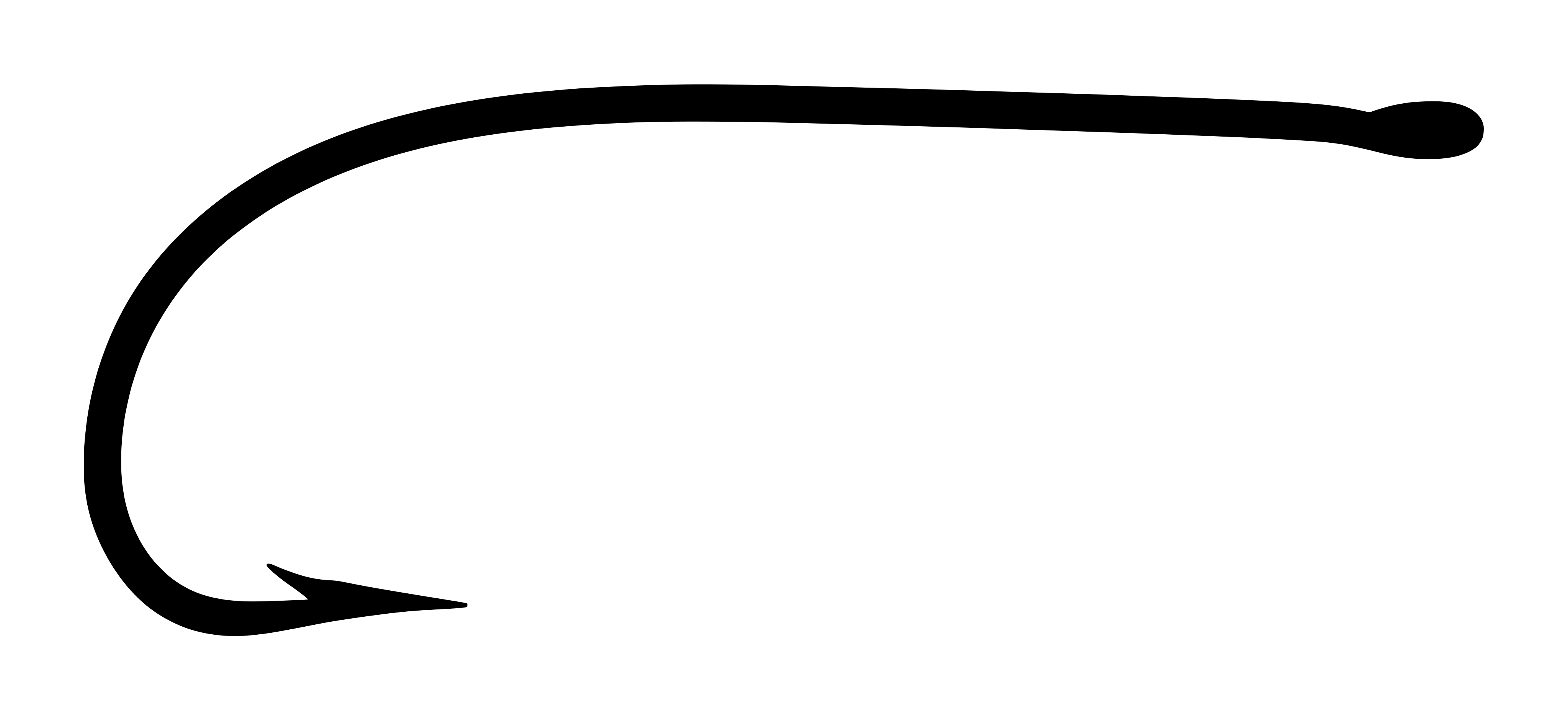
The Milward Iron Arm Spear Pointed Limerick Hook (size 2/0) is a 1937-dated example of premium English wet fly and salmon hooking from Redditch’s golden age. Manufactured by H. Milward & Sons under their ‘Iron Arm’ product line, this hook exemplifies the heavy-wire, hollow-point construction favored by British fly tyers of the interwar period.
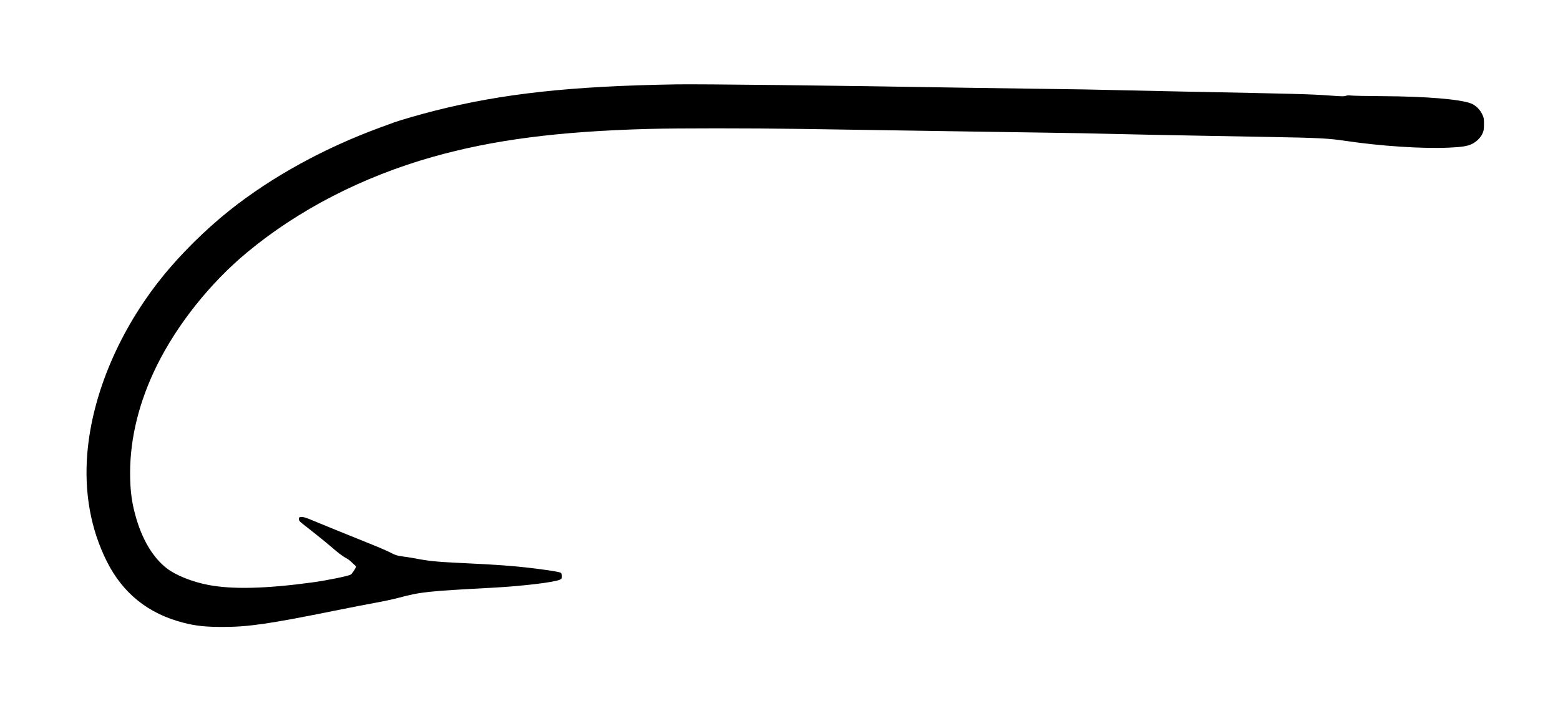
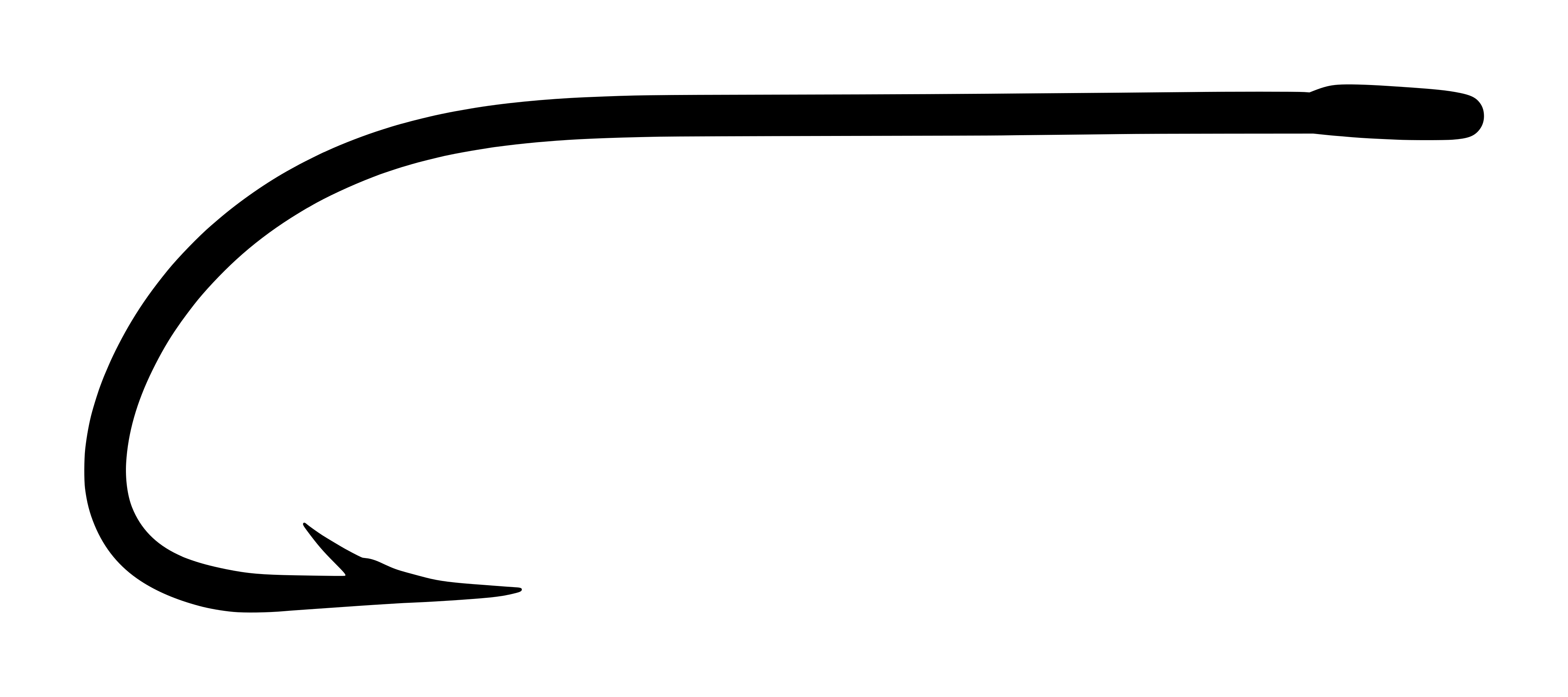
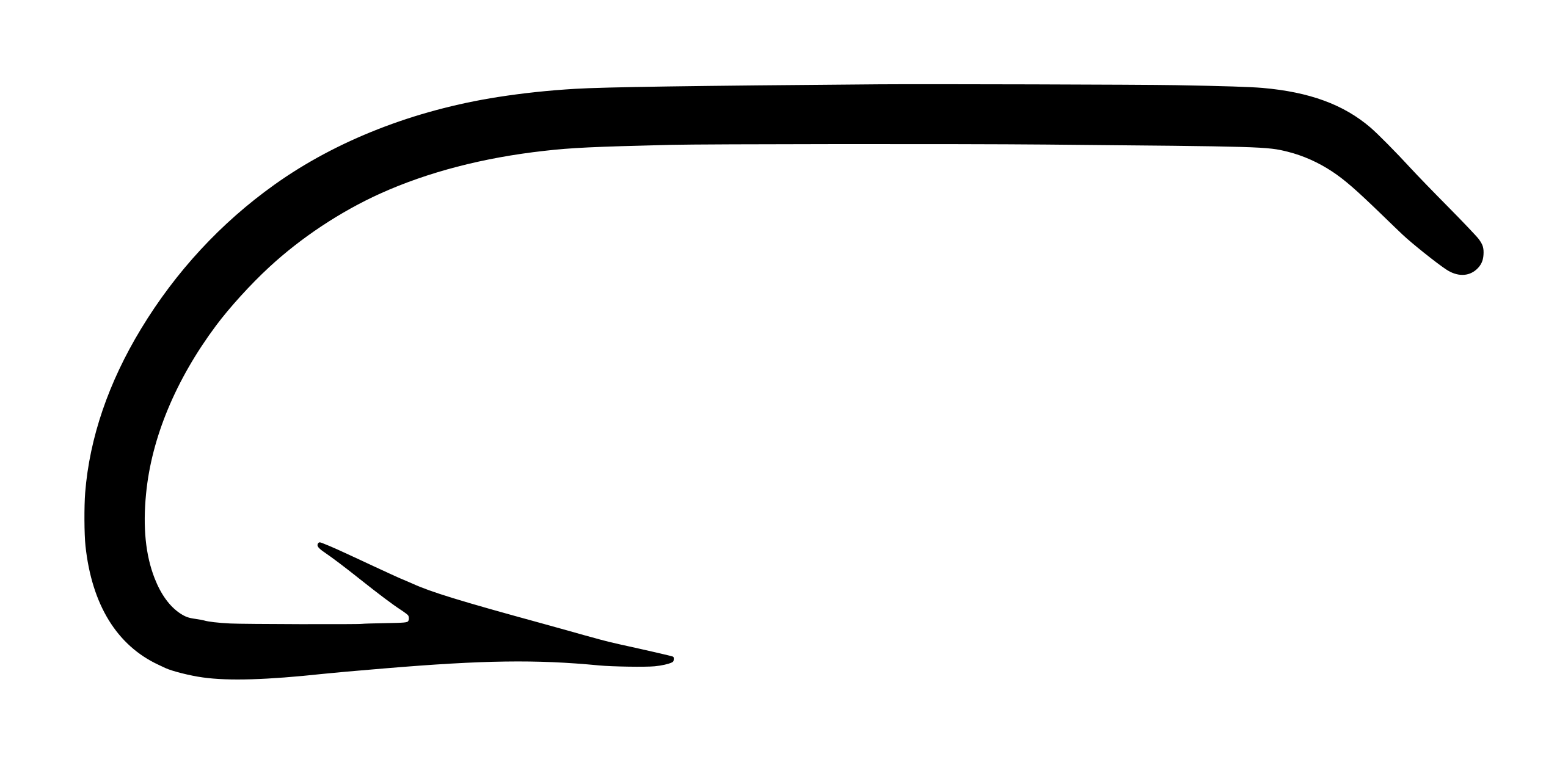
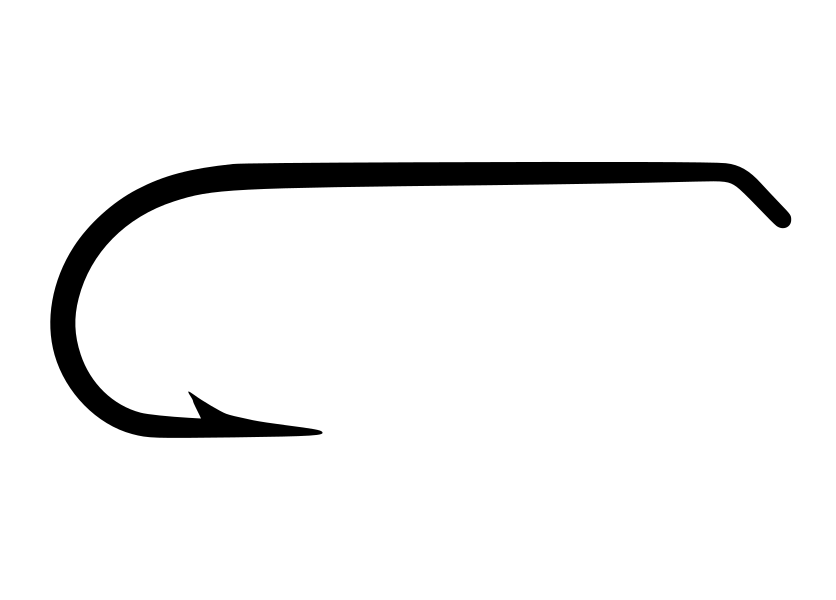
The defining features are the distinctive Limerick bend (angular, nearly rectangular profile), heavy round wire, blued finish, and loose ringed eye—typical of English salmon hooks from this era. The hollow point (concave inner face) provided a knife-edge for solid penetration in the tissues of active salmon and sea trout, while the relatively tight gap (0.46 inches / 11.7 mm) accommodates smaller fly bodies on a size 2/0 frame.
The original packaging—a cream cardboard box with yellow printed label dated ‘1937’—is a critical era marker. The ‘Reg. U.S. Pat Off.’ notation and letterpress printing on quality card stock confirm late-1930s Milward production. This is a specimen-quality reference example for collectors interested in pre-war English hook manufacturing, Redditch craft-era design, and the Iron Arm brand heritage.
Cream cardboard box with printed yellow label featuring the distinctive Iron Arm spear trademark, dated 1937. The label clearly identifies the hook as a Spear Pointed Limerick, ringed eye, 'Quality' designation, and Redditch, England manufacture.
Photographic record
7 cataloged imagesSelect any record to load it above.
7 images shown
Milward Iron Arm 1937 Original Box Label Size 2-0Cream cardboard box with printed yellow label featuring the distinctive Iron Arm spear trademark, dated 1937. The label clearly identifies the hook as a Spear Pointed Limerick, ringed eye, 'Quality' designation, and Redditch, England manufacture.Open originalMilward Iron Arm Size 2-0 Limerick Hook ProfileProfile view of a single hook from the box showing the characteristic Limerick bend profile, heavy round wire, blued finish, and straight ringed eye. Photographed on 1/10-inch measurement grid for scale reference.Open originalMilward Iron Arm Size 2-0 Hook Point DetailClose-up detail of the hook point showing the distinctive hollow point geometry (concave inner face) and barb placement. The knife-edge point profile is characteristic of premium salmon and sea trout hooks of the 1937 era.Open originalMilward Iron Arm Size 2-0 Hooks Pair ViewTwo individual hooks from the same box displayed on the measurement grid, demonstrating the consistency of bend geometry and hook proportions across the manufactured batch. Both show blued finish and ringed eyes in good condition.Open originalMilward Iron Arm 1937 Box Label Size 4-0 (100 Hooks)Box label from a size 4/0 variant of the Iron Arm Spear Pointed Limerick, dated 1937. The label shows '100 No. 4/O' and the same yellow background and trademark spear design, providing evidence of the broader Iron Arm product range.Open originalMilward Iron Arm Size 4-0 Hook Point DetailClose-up of the size 4/0 hook point showing the same hollow point construction and barb geometry as the 2/0 version. The larger size demonstrates the consistency of manufacturing and point profile across the Iron Arm line.Open originalMilward Iron Arm Size 4-0 Hook ProfileProfile view of the size 4/0 hook on the measurement grid, showing the characteristic Limerick bend, heavy round wire, blued finish, and straight ringed eye. The larger size is suitable for salmon and large wet fly patterns.Open original
Technical profile
Size 2/0, Heavy Wire, Superior Point, Limerick Bend, Straight Ring Eye
Eye
Ball Eye, Straight / InlineLoose ringed eye (straight_ring): a separate ring of wire looped around the shank, allowing independent movement. The ring is well-formed and sits securely on the shank. This design was standard for English salmon and sea trout hooks of the 1930s and allowed fly patterns to be varied or tandem flies to be attached without disturbing the main hook eye P.
Wire
Standard, Round, Est. ~0.065" (~1.65 mm)
Shank
Standard — Plain
Bend
Limerick, Standard gapClassic Limerick profile: nearly rectangular in outline with an angular, almost sharp transition at the bend apex. The bend is neither deeply rounded (as in Sproat) nor reversed (as in Beak). Wire set is straight and symmetrical. Bend depth measures approximately 0.70 inches (17.8 mm), typical for size 2/0 Limerick geometry E.
Point
Hollow Point (concave inner face)Barb placement and geometry: short, close-cut barb set approximately 0.12 inches (3.0 mm) behind the point. Barb angle is approximately 45 degrees from the shank axis, creating a secure hold without excessive material removal. Barb height approximately 0.04 inches (1.0 mm)—modest by modern standards but adequate for the soft-mouthed salmon and sea trout this hook was designed to catch E.
Finish
Black Japanned — Confirmed (stated on packaging)Specimen hooks are bright with no visible corrosion, patina, or wear on the hook points or edges. Original packaging (box and label) shows light toning and age patina on the card stock, consistent with nearly 90 years of storage. Label printing remains crisp and legible. One corner of the box shows minor crushing, but structural integrity is excellent. No hooks are missing from the box.
The hollow point construction—a concave inner face forming an inwardly curved geometry—creates a knife-edge effect at the point. This design provides superior penetration characteristics for soft-tissued fish (salmon, sea trout) by minimizing the material mass at the point, concentrating force along a very thin cutting edge. The hollow point requires precise grinding during manufacture and represents a higher-cost production than standard spear points.
The heavy round wire gauge (approximately 0.065 inches / 1.65 mm diameter) provides substantial strength and is characteristic of salmon hooks. This gauge resists bending under the powerful runs of larger fish and accommodates heavier fly bodies (dubbing, wing materials, tinsel) without distortion. The round profile (as opposed to forged/flattened) maintains consistent cross-sectional area along the bend, distributing stress evenly.
The Limerick bend geometry—with its angular profile and tight gap—concentrates the bending moment on a smaller area than a rounded bend like Sproat. This makes the Limerick stiffer relative to its wire gauge and less prone to opening under pressure from a fighting salmon. The ringed eye allows the hook to pivot independently from the fly line or tandem hook attachment, reducing torque on the eye itself during combat.
We don't have measured sizes for this hook yet. Own one? Submit calipered measurements and we'll review and add them. Thank you!
Historical context
milward
H. Milward & Sons was one of Redditch’s pre-eminent hook manufacturers from the mid-19th century onward. The Milward family entered the hook trade circa 1830 and established themselves as quality producers of both eyed and blind-eye hooks. By the early 1900s, Milward operated from substantial manufacturing facilities in Redditch and maintained a reputation for precision engineering and innovative designs.
The ‘Iron Arm’ brand emerged in the Milward product line during the 1920s-1930s as a premium quality designation. Milward hooks were exported globally and competed directly with Allcock, Partridge, and other Redditch makers. The company maintained detailed catalogs and produced distinctive packaging with illustrated trademarks—the spear motif on the Iron Arm line being a recognizable brand identity.
Milward’s manufacturing expertise spanned from fine trout hooks (sizes 16-24) to heavy salmon patterns, making them one of the few Redditch makers to maintain a truly comprehensive hook range. The blued finish and precise forging techniques were hallmarks of Milward quality. The company continued operations through the mid-20th century before being acquired by or consolidated with larger manufacturers.
Series History
The Iron Arm Spear Pointed Limerick represents a specific product line within Milward’s catalog rather than a historically established series like the Limerick bend itself. The ‘Iron Arm’ branding denoted a premium quality tier within Milward’s offerings, distinguished by superior materials, finish quality, and packaging presentation.
The Limerick bend is one of the oldest and most enduring hook profiles in fly-fishing history, with origins in Irish fly-tying traditions of the 19th century. Milward’s Iron Arm Spear Pointed Limerick was their interpretation of this classic bend, manufactured in their standard heavy-wire specification and finished in their signature blued coating.
This particular size 2/0 with ringed eye was designed for wet flies and small salmon patterns in British river systems (primarily chalk streams and Scottish rivers). Milward produced this pattern across a range of sizes, though size 2/0 was a popular choice for spring salmon fishing and large wet flies. The model appears to have been discontinued by the 1950s as fishing styles evolved toward lighter wire and smaller sizes.
The Iron Arm Trademark and Redditch Branding
The 'Iron Arm' trademark spear motif appears on Milward packaging from the 1920s-1940s and was meant to evoke both the strength of the hook material and the confidence of a salmon fisher. The stylized spear illustration became a recognized brand symbol among British fly tyers and appeared across Milward's product range—from small trout hooks to massive salmon patterns. The Iron Arm brand faded after World War II as fishing styles shifted toward lighter tackle and American imports became more common in the UK market. Today, the Iron Arm label is instantly recognizable to Redditch hook historians and collectors of British fly-fishing memorabilia.
Design lineage and influence
The Limerick bend traces its origins to Irish fly-tying traditions of the 19th century, where it emerged as a refinement of earlier round-bend designs. The Limerick’s nearly rectangular profile offered advantages for wet flies—a stiffer structure and tighter gap than round bends, making it ideal for salmon and sea trout patterns in fast water.
Redditch manufacturers (Allcock, Partridge, Milward, and others) all produced Limerick-pattern hooks from the late 1800s onward, making it one of the most ubiquitous British bend patterns. Milward’s Iron Arm Spear Pointed Limerick competed directly with Allcock’s Limerick offerings and Partridge craft-made versions. The hollow point became the standard point style for Limerick patterns in the premium range, as it provided superior penetration for the powerful jaws of migratory fish.
The ringed eye design—common on English salmon hooks of the 1930s—allowed tandem fly rigs and fly-line adjustments that were standard practice in British salmon fishing. As nylon monofilament became standard in the post-1950s era, fixed-eye hooks began to displace ringed eyes, and the Iron Arm line was discontinued. Modern Limerick hooks from Partridge and Daiichi still use the classic bend profile, though ringed eyes are now rare and valued by traditionalists.
Best matchRelated by Attribute
Computed automatically from catalog data — updated as new hooks are added.
Matches: Bend, Shank, Gap, Eye, Finish +3 moreDiffers: Wire: Standard vs Heavy (1X Heavy); Eye Orient.: Straight / Inline vs Turned Down; Point: Hollow Point vs Superior +1 more
Matches: Bend, Shank, Wire, Forging, Shank Feat. +1 moreDiffers: Gap: Standard vs Narrow; Eye: Ball Eye vs Tapered Eye; Eye Orient.: Straight / Inline vs Turned Down +3 more
The Iron Arm Spear Pointed Limerick was designed as a general-purpose wet fly and salmon hook. The Limerick bend—characterized by its angular, near-rectangular profile and relatively tight gap—made it suitable for both trout wet flies and small salmon patterns. The heavy round wire and hollow point provided reliable hook-up for active fish in flowing water. The ringed eye (loose ring) was a standard feature of English salmon and trout hooks of the 1930s, allowing the fly line or leader to slide through for tandem fly setups or to adjust the hook’s angle in the water.
Classic Fly Patterns
Classic wet fly patterns including March Brown, Greenwells Glory, and other traditional river patterns suited to Limerick bend geometry
Modern Equivalents
Hook
Match Quality
Notes
Partridge Limerick
Excellent
Modern Partridge Limerick (e.g., CS22/3) matches the bend profile exactly. Slightly lighter wire gauge in modern versions; same point style and ringed eye available on some models.
Daiichi 1130 Limerick
Very Good
Modern Daiichi 1130 offers Limerick bend and hollow point in standard and heavy wire. Fixed eye rather than ringed, but functionally equivalent for most wet fly tying.
Tiemco TMC 7989 Limerick
Good
TMC 7989 provides Limerick bend geometry in modern high-carbon steel. Lighter wire than 1937 Milward; down-eye configuration rather than ringed.
Collector notes
Rated 4.5/10 — Milward hooks from the 1930s with original dated packaging are uncommon rather than common, though not scarce. The Iron Arm brand recognition adds modest collector appeal, but the standard Limerick bend and size 2/0 are neither rare nor in high demand. Collector interest is strongest among Redditch specialists and users of traditional wet flies; condition and packaging integrity are significant value drivers.
Reference value
$8 – $22 USD estimate
Packaging condition
Good — moderate wear, legibleRecorded specimen
Packaging format
GW-M-1937-01Catalog code
Positive factors: Original 1937-dated packaging is the primary collectible asset—documented year, printed label with trademark imagery, and Redditch manufacture all add to appeal. The Iron Arm branding carries recognition among British hook collectors. Blued finish is desirable and resistant to patina. Heavy wire and hollow point represent quality manufacturing. Specimen hooks show excellent preservation with no corrosion.
Limiting factors: Milward manufactured at industrial scale, so production volumes were substantial—no extreme scarcity. The standard Limerick bend and size 2/0 are common sizes in hook collecting (unlike rare sizes 6/0+ or tiny #22). Ringed eyes are common on 1930s hooks and do not add premium value. The specific model was not a named iconic pattern (unlike, for example, a famous fly designer’s signature pattern).
Size and finish variants: Size 2/0 is moderately collectible. Larger sizes (3/0, 4/0) command slightly higher prices due to salmon-fishing appeal. Smaller sizes (1/0, 1) are less sought. The blued finish is more desirable than japanned or tinned alternatives. Complete original boxes (as opposed to loose hooks or opened cards) command a premium of 30-50%.
Condition factors: Original box with intact label and all hooks present can sell at the high end of the range. Opened boxes with missing hooks drop to the low end. Label condition and legibility matter significantly—faded or water-damaged labels reduce value by 20-30%. The specimen documented here (complete, intact packaging, crisp label) represents the high-end condition tier.
Packaging
Cream-colored cardboard box with fitted yellow/gold printed label applied to face. Label features black serif lettering and a hand-drawn illustration of a spear (the Iron Arm trademark image). Text reads: 'Spear Pointed Limerick Hooks / Made in England / The Iron Arm / No. 2/O Ringed / Quality 1937'. Top notation: 'Reg. U.S. Pat Off.' (U.S. Patent Office registration). Letterpress printing on quality card stock. Box dimensions approximately 4.0 x 2.25 x 0.5 inches (10.2 x 5.7 x 1.3 cm). '100' hooks noted on separate 4/0 variant box.
Market Value Notes
Low ($8): Good condition — opened box, most hooks present (90%+), minor label wear<br />
High ($22): Excellent condition — intact sealed or near-sealed box, all hooks present, label crisp and legible<br />
Premium factors: Original 1937 box with printed label, Iron Arm branding, Redditch manufacture, heavy wire/hollow point, complete hook count<br />
Platforms: eBay UK, specialized vintage tackle dealers, British tackle fairs and auctions<br />
Confidence: E estimated — based on comparable Milward 1930s boxes with documented sales; limited specific sales data for this exact model. Redditch pre-war hooks typically command $8-30 depending on rarity and condition.
Where to Find
eBay UK (search: Milward Iron Arm hooks 1937, Milward Limerick ringed); British vintage tackle dealers specializing in Redditch hooks; tackle auctions and fairs in the English Midlands; specialized fly-fishing collectible forums and Facebook groups devoted to vintage hook collecting.
Collector's Identification Tips
Authentic Milward ‘Iron Arm’ hooks display consistent letterpress quality on the characteristic yellow labels P. Wire finish should be deep black, and the superior point geometry should show the distinctive near-straight inner taper from barb to tip P. Reproduction labels typically lack the fine typography and proper paper stock of original Milward packaging.
Preservation
Storage and Preservation
Store the complete hook box in a cool, dry environment away from direct moisture and humidity. The blued finish, while durable, can develop patina and surface oxidation if exposed to damp conditions. Original packaging adds significant value and should be retained rather than discarding the box and storing hooks loose.
Keep the hook box away from other metals to prevent galvanic corrosion (particularly important if stored near steel or copper items). The ringed eye design is prone to rust if the ring itself contacts moisture. Acid-free archival tissue can be placed inside the box to absorb any ambient moisture.
Do not attempt to clean or restore the black finish; patina development is natural and acceptable to collectors. If the label shows signs of foxing or toning, this is expected age-appropriate condition and should not be altered. The specimen’s value lies in its historical integrity, not in appearing ‘new.’
Display the box in a glass-fronted cabinet or shelf where it is visible but protected from dust and UV exposure (which can fade the yellow label over time). Insurance documentation with photographs is recommended for collections of significant value.
Primary Source
Packaging Inscription and Manufacturer Claims
Source: Milward Iron Arm product label, 1937, photographed from original packaging
The label text ‘Spear Pointed Limerick Hooks / Made in England / The Iron Arm / No. 2/O Ringed / Quality 1937’ provides multiple pieces of documented information. The ‘Reg. U.S. Pat Off.’ notation indicates that Milward had secured U.S. patent protection for this design or manufacturing process, suggesting export sales to the American market.
The designation ‘Spear Pointed’ refers to the point style (the concave hollow point geometry). The ‘Ringed’ notation indicates the loose ring eye construction. The word ‘Quality’ is a brand or quality tier indicator (common on British hooks) and should not be confused with subjective quality assessment—all Milward hooks carried ‘Quality’ designations on their boxes.
The typography (serif typeface, letterpress printing) is consistent with British trade printing of the 1930s and rules out later reproductions. The cream card stock and yellow label construction are period-appropriate and consistent with other dated Milward boxes from the same era.
Marking Analysis
Handwritten Marks and Annotations
No handwritten annotations, marks, or price notations are visible on the label or box of this specimen. The box does not show evidence of retail price tags, pencil notations, or collector additions. This clean condition suggests careful handling and storage in a private collection rather than commercial retail or intensive use.
Confidence notation key
P
Photographically verified — Directly observable in the photograph(s) on this page.
V
Verified by documentation — Confirmed by manufacturer catalog, spec sheet, or published reference.
I
Inferred — A logical deduction from observable or documented evidence, not directly stated.
E
Estimated — An approximation based on visual comparison, proportional analysis, or limited data.
S
Speculative — A reasoned hypothesis that cannot be confirmed from available evidence.
Claims with no notation are confirmed by multiple independent sources. All photographs on garrenwood.com are taken on a measurement grid where each square equals 1/10 inch (0.1″ / 2.54 mm).