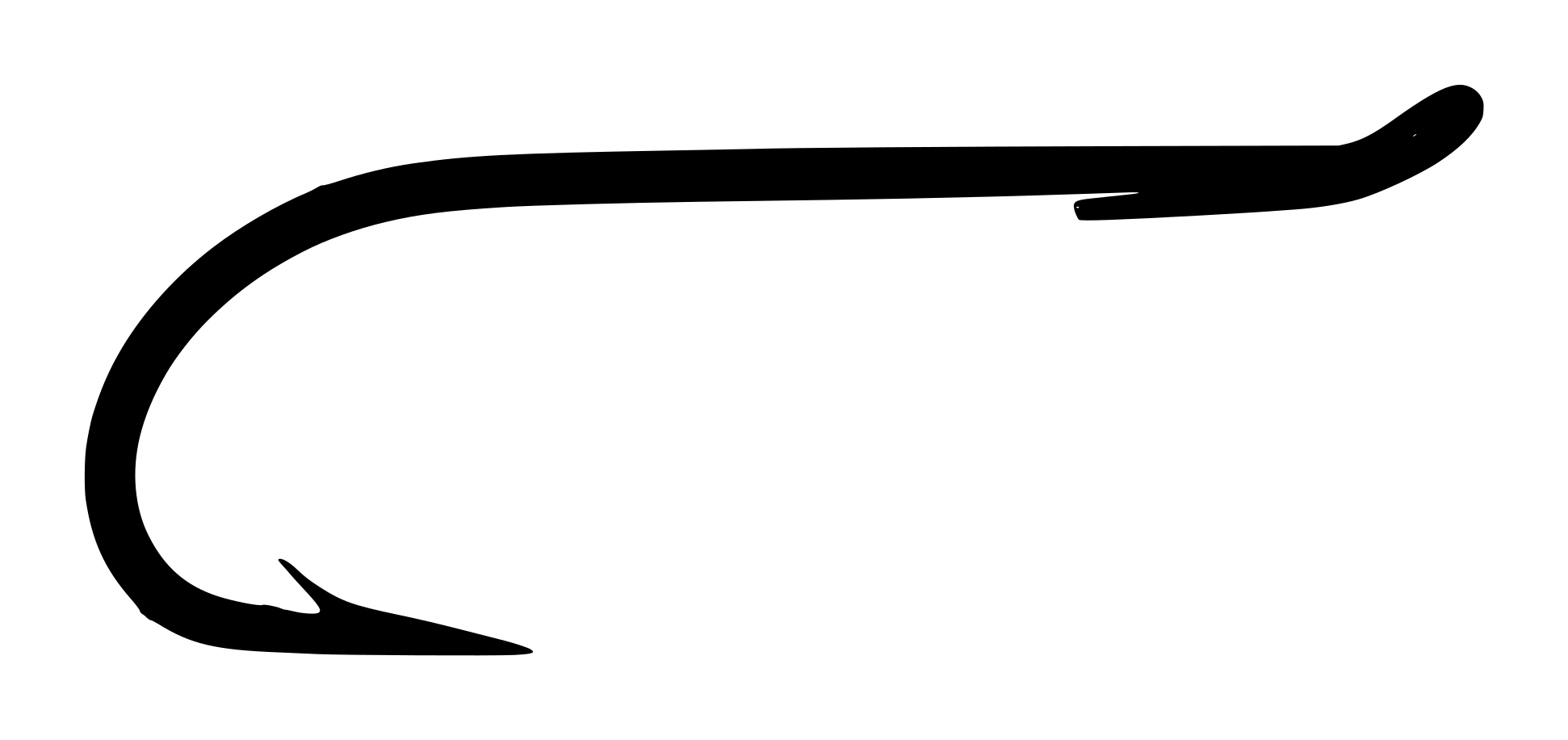
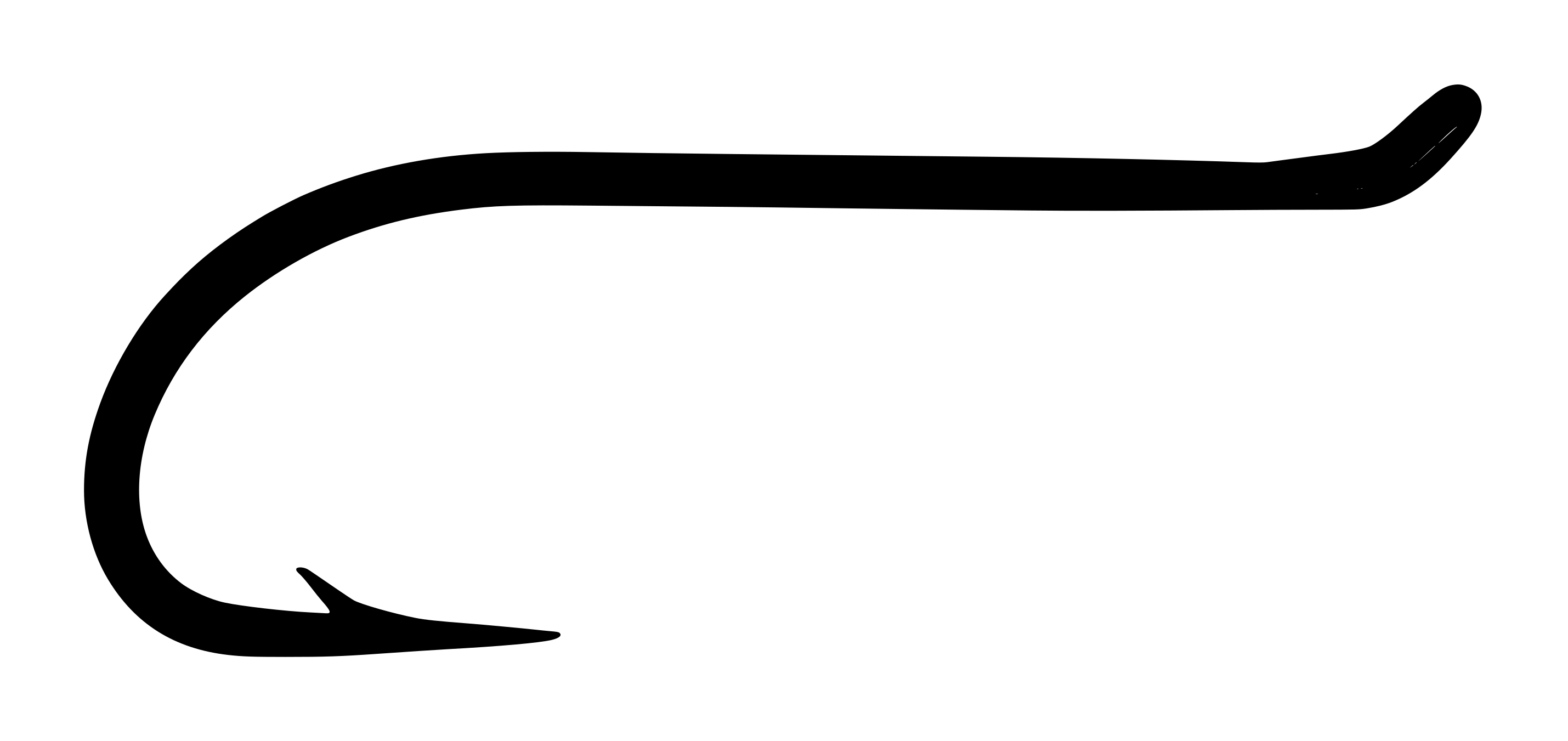
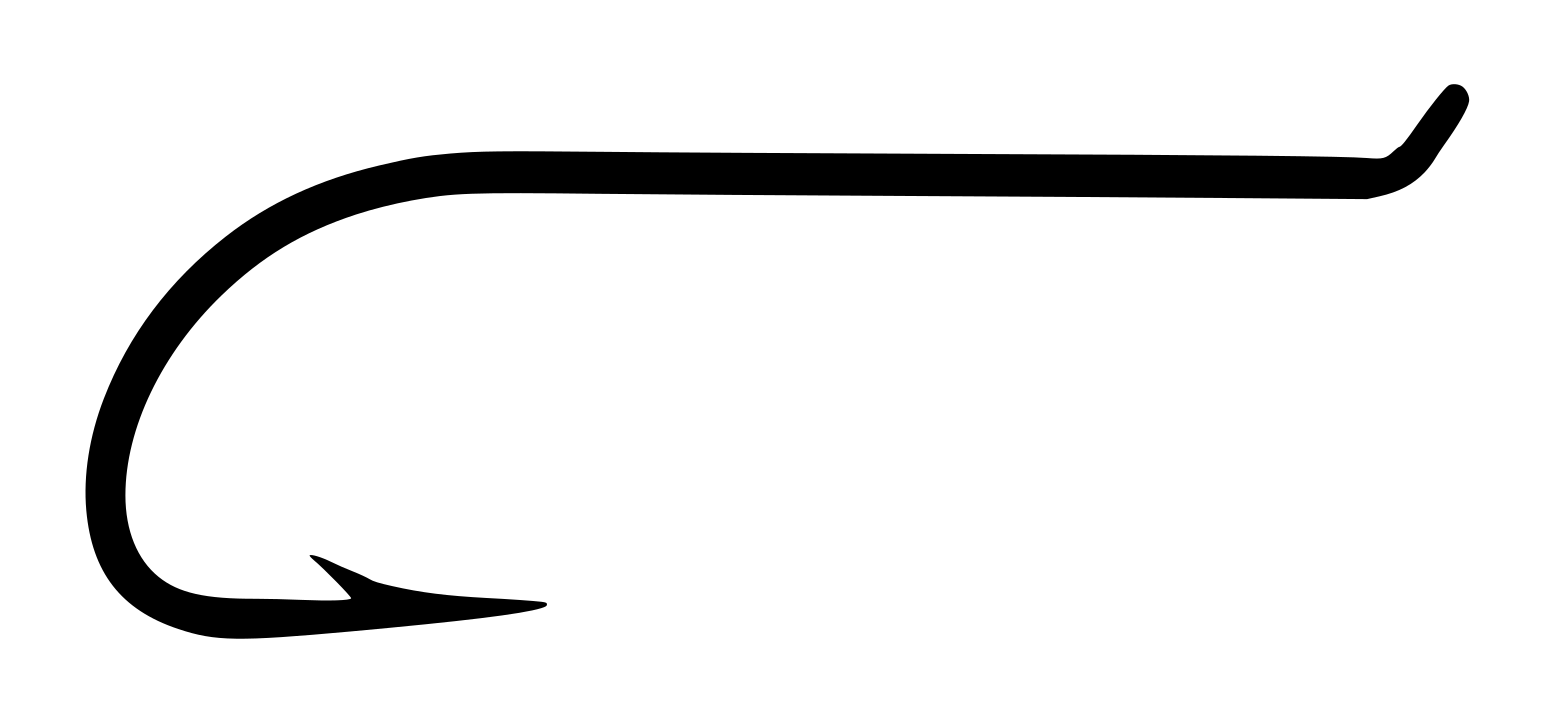
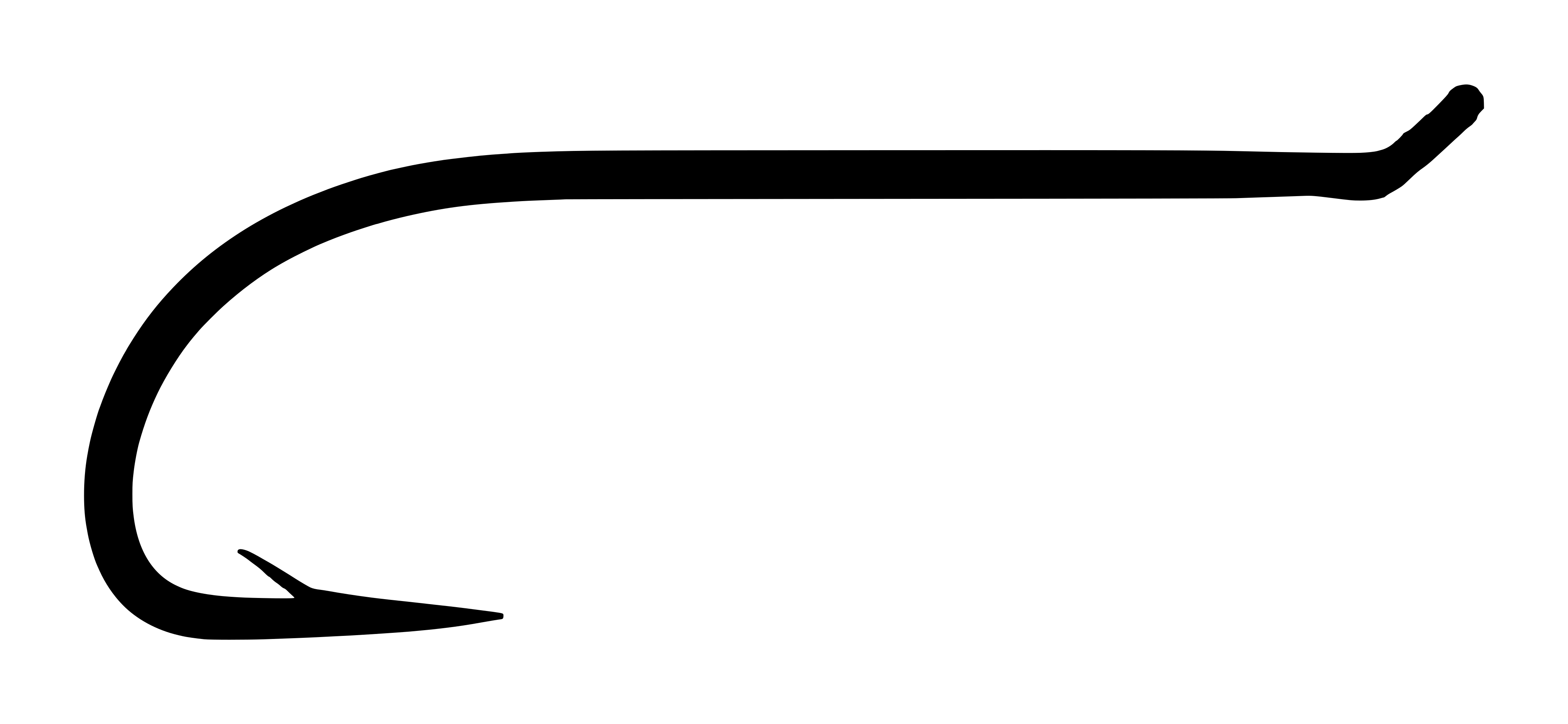
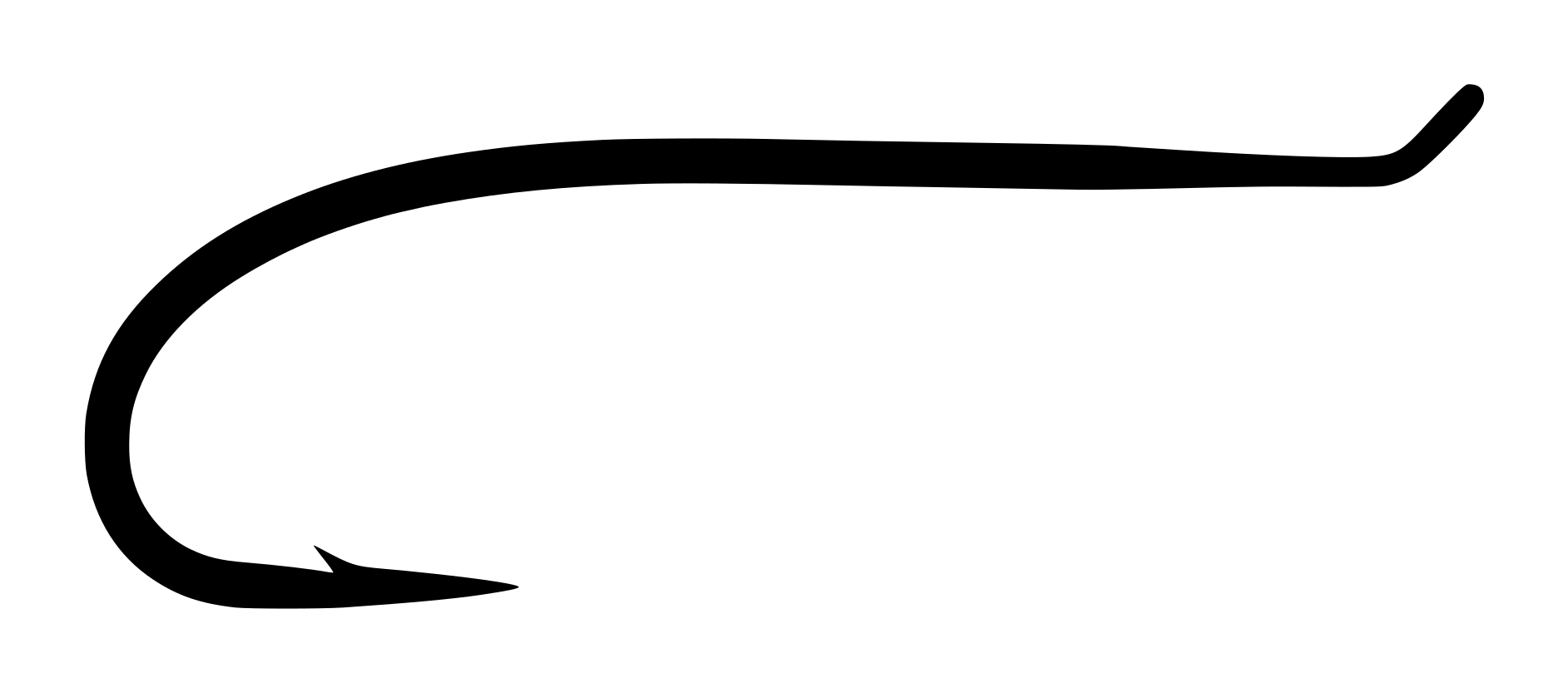
Mustad 36814 Limerick hook silhouette

Mustad 36814

Mustad 36814 Limerickc. 1940s-1960s
Turned-Up Looped EyeLimerick BendShort ShankExtra-Fine Oval WireHollow PointBlack (Japanned) Finish

Save this hook to your account to build a list you can come back to.

Record summary

The Mustad 36814 is a classic Norwegian limerick hook manufactured by O. Mustad & Søn in their Gjøvik factory, featuring a turned-up looped eye on a limerick bend, characteristic of mid-century Mustad production. Size 6 is rated as uncommon, particularly in the original box packaging with a complete hook count.

The packaging specifies an oval-wire, extra-fine-gauge, hollow-point configuration optimized for wet fly and small-bait applications. The finish is glossy black and obscures the wire grain almost entirely, consistent with a japanned (black lacquer) finish; the packaging documents a ‘Black’ finish, with the japanning itself inferred from the photographs.

Era evidence includes the original cream letterpress box with hand-marked inventory notation, uncoated cardstock, and the absence of a barcode or modern postal codes, placing production confidently in the 1940s–1960s window. The box carries Mustad’s ‘Key Brand’ trademark (the key device at upper-left); there is no ‘Superior’ marking on this packaging.

Collector interest centers on the complete box with original hook count intact, the printed oval-wire specification, and the intact japanned finish. Size 6 limerick hooks in original packaging are encountered less frequently than larger or smaller sizes, making this a solid acquisition for Mustad specialists and vintage tackle historians.

Mustad 36814 Limerick hook in original package with printed specifications and looped oval eye design
Original Mustad & Son packaging for the 36814 Limerick hook, printed in Oslo, Norway with quality specifications and features listed.

Photographic record

3 cataloged imagesSelect any record to load it above.

3 images shown

Mustad 36814 Original Package Original Mustad & Son packaging for the 36814 Limerick hook, printed in Oslo, Norway with quality specifications and features listed. Open original
Mustad 36814 Side Profile Detail Close-up side view of the Mustad 36814 Limerick hook displaying the characteristic curved shank, fine wire, and sharp barbed point. Open original
Mustad 36814 Front View Front-facing view of the Mustad 36814 Limerick hook highlighting the looped oval eye and the hook's elegant limerick bend profile. Open original

Technical profile

Mustad 36814 — Limerick Bend, Hollow Point, T. Up Looped Oval Eye, Short Shank, Ex. Fine Oval Wire, Black (Japanned)

Eye
Looped Eye, Turned Up Turned-up looped eye formed by bending the wire back into a loop, with the tag end running along the shank P. Wire formation is clean and symmetrical; no microburrs or sharp edges visible on the eye rim P. Loop angle is approximately 35–45° from the shank axis E. Note: this is a turned-up looped eye, not a ball eye, and is unrelated to the Bartleet bend family.
Wire
Standard, Forged
Shank
Standard — Plain
Bend
Limerick, Standard gap Classic limerick geometry with gradual rounded curve transitioning from shank to point, creating a moderately deep bend relative to gap width P. Bend exhibits excellent symmetry with no visible offset or twist P. The forged construction creates a subtle widened profile along the bend arc, reducing stress concentration P.
Point
Hollow Point (concave inner face) Barb is close-cut and positioned approximately 0.08" from point, with minimal sweep angle relative to point axis E. Barb height is proportional to fine wire gauge — approximately 0.020" above point E. Cut is clean with no feathering visible P.
Finish
Black Japanned — Inferred (photographically likely) Coating is a uniform, complete glossy black across all surfaces, obscuring underlying wire texture almost entirely P — an appearance consistent with japanning rather than bluing, which would show a cool blue-grey oxide with visible steel grain I. No rust bloom, corrosion, or finish loss visible on the specimen P. The original packaging states a 'Black' finish V; the specific identification as japanned is inferred from the photographs I.
Specimen shows exceptional condition: all 100 hooks present and accounted for on original card, points and barbs unbroken and sharp, japanning complete with only light surface dust wear P. Card itself shows moderate aging with light creasing and minor paper darkening consistent with 80-year storage, but text remains legible and packaging structural integrity is excellent P. Hand-marked purple circle inventory notation does not compromise card condition P.

The Mustad 36814 pairs a limerick bend with a hollow point and extra-fine oval wire, a configuration aimed at weight-conscious wet-fly work. The limerick bend — a pronounced rounded curve — distributes load across a longer arc of wire than sharper profiles (aberdeen, sproat), which can reduce point stress at the set and improve durability in fine wire.

The hollow point has a concave inner face that concentrates the cutting edge into a knife-like profile, aiding penetration in soft tissue compared with blunt or flat (spade) points. This is particularly useful in fine-wire hooks, where the geometry helps compensate for reduced wire stiffness by concentrating force into a smaller contact area.

The packaging specifies ‘oval wire’ — wire of an oval (laterally compressed) cross-section, also described as flattened or forged. Oval/forged wire is a common feature of quality fly hooks; it can improve resistance to opening in the plane of the bend and slightly reduce water resistance relative to round wire of similar mass, though specific strength gains are not quantified here.

The wire is extra-fine (packaged as ‘Ex. fine wire’; estimated ~0.030–0.035″ from the photographic grid), prioritizing delicate presentation over load-bearing capacity. This is consistent with the hook’s primary use in wet-fly and soft-hackle presentations, where minimizing disturbance is paramount. The short shank further reduces profile, suiting compact, impressionistic dressings.

Size & scale lab

Selected size 6
Physical specimen
Overall Length
24.1 mm P
Shank Length
17.5 mm
Gap Width
7.4 mm P
Bend Depth
8.3 mm
Wire Diameter
0.83 mm E
Weight
Not available
Shank-to-Gap Ratio
~2.3-2.4 : 1
Confidence
P Physical specimen

Physical measurement with calipers

Calibrated SVG True-scale preview

Cumulative Records

First documented Mustad model in the garrenwood.com catalog carrying an explicit 'oval wire' packaging specification. The 36814 is also the finest-gauge limerick recorded in the catalog survey to date. (No claim is made about industry-wide priority of oval-wire use.)

Historical context

mustad

O. Mustad & Søn traces its origins to a factory established in 1832 by Hans Skikkelstad at Brusveen, near Gjøvik, Norway. Ole Mustad took over the business in 1843, and the firm became ‘O. Mustad & Søn’ in 1874 when his son joined. The company grew into one of the world’s dominant industrial fishhook manufacturers, centered on its Gjøvik works, where engineering capacity and precision manufacturing allowed Mustad to scale to industrial volume while maintaining quality standards that rivaled the historic Redditch, England tradition. (Oslo, printed on this packaging, was the company’s listed office address, not its founding site.)

During the mid-twentieth century, Mustad dominated global hook distribution through aggressive international marketing and reliable supply chains. The company’s Norwegian manufacturing base provided cost advantages and reliability; hooks and packaging were marked ‘MADE IN NORWAY’ as a marker of origin. Mustad’s product lines diversified into hundreds of models by the 1950s, marketed under several brand names — including the ‘Key Brand’ trademark shown on this packaging — each tailored to specific fishing traditions, species, and regional preferences.

Mustad’s manufacturing techniques evolved over decades, incorporating both traditional hand-finishing methods and mechanized production. The 36814 and related limerick models exemplify this synthesis: forged wire geometry combined with applied japanning and final hand-assembly into packaging. By the mid-twentieth century Mustad had grown into the world’s leading hook manufacturer, eclipsing the older English Redditch trade, while maintaining a reputation for durability and consistency.

Series History

This specimen is packaged under Mustad’s ‘Key Brand’ trademark (the key device printed at upper-left of the box), not the ‘Superior’ line. There is no ‘Superior’ marking on this packaging, and no documented basis for assigning the 36814 to a Superior series.

The 36814 is a limerick-bend, hollow-point configuration optimized for wet flies and small-bait presentations. The packaged designation ‘T. up looped oval eye’ indicates the turned-up looped eye together with the printed oval-wire specification — a feature distinguishing this model from standard round-wire limerick offerings. Oval (laterally compressed) wire can offer marginally improved stiffness at equivalent weight while reducing water resistance, though it is more costly to produce than round wire. (The eye is a turned-up looped eye; it is unrelated to the Bartleet bend family.)

Mustad produced the 36814 across a range of sizes, with size 6 a mid-range offering. Packaging variants included sales cards and bulk boxes (as seen here), with specifications printed for international distribution. Production likely spanned the 1940s through the early 1960s, after which product-line rationalization reduced the number of specialty configurations. Pre-1970s Key Brand letterpress packaging of this type is increasingly uncommon in collectors’ hands today.

Era and Packaging Dating

Original Mustad box with gold letterpress printing on uncoated cream cardstock. The model number is the printed 'Qual. 36814' (Qual. = quality/pattern number). The hand-marked elements are a purple circle and the hand-written purple size '6' — consistent with mid-century retailer/inventory marking, not the model numbering itself. No barcode is present (a pre-1974 indicator), and there is no modern UPC or postal-code format, supporting a pre-1970s date. Typography, box construction, and the aged yellow-gold letterpress ink are consistent with Mustad products of the 1940s–1960s.

Gjøvik: A Town Built on Fishhooks

The Mustad 36814 was made in Gjøvik, Norway, which grew into one of the world's foremost fishhook production centers during the twentieth century. By the 1950s O. Mustad & Søn's Gjøvik works employed hundreds of people, and the town's economy was closely tied to precision manufacturing for the fishing industry — at its height Mustad supplied hooks to anglers across the globe from this single Norwegian town.

Cross-reference & comparisons

Salmon Sea Trout

Primary Application

The Mustad 36814 limerick is primarily designed for wet-fly and soft-hackle presentations in cold-water trout streams and small rivers. The short shank and extra-fine wire minimize water resistance and drag, allowing natural drift and a lifelike presentation. The hollow point aids penetration in soft-mouthed salmonids, and the moderate gap suits compact wet-fly and soft-hackle dressings.

Secondary applications include small-bait presentations for panfish and creek fishing, where the fine wire reduces damage to live bait and the compact shank accommodates narrow baits (small shiners, insects, larvae). The japanned finish provides reasonable corrosion resistance in freshwater; Mustad offered tinned variants for heavier saltwater use.

Classic Fly Patterns

Soft-hackle wet flies, March Brown, Partridge and Orange, Hare's Ear nymph variants, small streamers, Woolly Worm

Modern Equivalents

HookMatch QualityNotes
Mustad C67S (or equivalent C-series limerick) Very Good Suggested as a modern Mustad limerick in equivalent sizes; lacks oval wire and japanned finish. The specific code (C67S) and its classification as a limerick should be verified against the current Mustad catalog before publication.

Collector notes

Rated 7/10 — uncommon in original packaging with a complete count. Size 6 is moderately scarce; larger and smaller sizes appear more frequently. The complete original Key Brand box and the printed oval-wire specification are the main collector drivers. The rating is held in the mid range due to the general abundance of Mustad hooks in the collector market and the availability of functional modern equivalents.

Reference value $20 – $35 USD estimate
Packaging condition Excellent — minimal wear Recorded specimen
Packaging format mustad-orig-card Catalog code

Collectability Factors (Positive): Original packaging with 100 complete hooks is the primary value driver. The Key Brand designation and letterpress printing style are characteristic of a specific era (1940s–1960s) that collectors actively seek. The printed oval-wire specification is a technical distinction that sets this model apart from standard round-wire limerick offerings. A complete original box in excellent condition commands a premium over loose hooks or damaged packaging. The intact japanned finish is valued for its glossy appearance and period character. Size 6 is a practical mid-range size for tyers.

Limiting Factors: Mustad hooks, despite their quality, were produced in massive industrial volumes. This abundance limits rarity compared with English craft-era makers (Redditch Partridge, Allcock, Edgar Sealey). The 36814 is not a signature design by a named collaborator, reducing designer-specific premium. Modern Mustad equivalents remain available and inexpensive. Size 6 is not at the extreme ends of the sizing spectrum, where the highest premiums sit. The specimen, while excellent, is an opened box rather than sealed stock, which reduces value relative to sealed examples.

Desirable Variants: Original sealed boxes command a premium. Smaller (8–12) and larger (2–4) sizes are scarcer than size 6. Boxes with hand-written prices or distributor markings add provenance value. Early 1940s letterpress boxes are generally more collectible than later offset-printed versions. Tinned-finish versions of the 36814 are scarcer than japanned ones. Complete runs of sizes 2–12 in original Key Brand packaging are exceptional acquisitions.

Condition Premium Factors: Unopened sealed boxes: +40–50%. Complete count, all hooks intact and sharp: +15–25%. Original tissue/envelope wrapping intact: +10–20%. No corrosion or finish loss: baseline. Card delamination, creasing, or text fade: -10–30%. Missing more than 5 hooks: -50–75%. Rust or corrosion on hooks: -30–50%.

Packaging

Original Mustad cardboard box, cream-colored with gold letterpress printing. Hand-assembled construction with visible glue seams. Label reads: 'Key / MUSTAD & SØN / MANUFACTURERS / OSLO - NORWAY / Qual. 36814 / Hollow Point / Mustad-Limerick Hooks / T. up looped oval eye Black / Short shank Ex. fine wire / Oval wire / Made in Norway [asterisk]'. Hand-written purple circle mark visible on box (inventory notation). Decorative border of repeated oval ornaments. Original hooks intact in card slots. Box dimensions approximately 3.5" x 2.0" x 0.75". Paper stock is cream with visible aging and light creasing consistent with age.

Market Value Notes

Low ($20): Good condition — opened box, 90–95 hooks present, light packaging wear, finish intact<br />
<br />
High ($35): Excellent condition — complete count of 100 hooks, minimal packaging wear, original box edges crisp<br />
<br />
Premium factors: Complete hook count, original Key Brand box, printed oval-wire specification, intact japanning, early letterpress printing<br />
<br />
Note: A hand-written '$5.00' in pencil along the lower box edge is an old retail/dealer price, not a current value.<br />
<br />
Platforms: eBay (UK and US vintage tackle sections), specialist tackle dealers, online hook collector forums<br />
<br />
Confidence: E estimated — limited comparable sales data for this specific model. Estimate derived from typical Mustad box values ($8–25) with a premium for the complete original packaging and oval-wire variant. Confidence is moderate given scarcity of recent sales records for this model code.

Where to Find

eBay (both UK and US vintage fishing sections), specialist tackle dealers in the Midlands (England) and Scandinavia, online fly-tying forums and collector groups, occasional tackle and antique fairs focused on fishing heritage. Original boxes are less common than loose cards; boxed stock with complete counts appears infrequently.

Preservation

Storage and Preservation

Store the Mustad 36814 in a cool, dry environment away from direct humidity and temperature fluctuation. The japanned finish is robust and resistant to corrosion, but prolonged exposure to high humidity can lead to lacquer degradation and underlying rust bloom. Original packaging adds significant value and should be preserved intact: avoid opening the box unnecessarily and store flat in a stable position to prevent creasing or damage to the card interior.

Keep the specimen away from contact with other metals to prevent galvanic corrosion or electrolytic pitting. Do not store in plastic enclosures without ventilation, as condensation can accumulate and compromise the finish. If dust accumulates, gently brush with a soft-bristled brush rather than using solvents or polishing compounds, which may damage the lacquer coating.

Handle the box by its edges rather than the label area, and avoid touching hook points directly with bare hands (skin oils and salt can initiate corrosion). If display is desired, use acid-free cardboard or archival-quality enclosures to prevent paper degradation. Periodically inspect the specimen for any signs of moisture, corrosion, or finish loss, and increase environmental controls if issues emerge.

Marking Analysis

Inventory Notation and Markings

A hand-written purple circle is visible on the front label of the original box, located below the model number. This notation is characteristic of mid-century European inventory or stock-marking practices. The mark likely indicates either a warehouse inventory code, a distributor’s batch identifier, or a retailer’s internal tracking symbol. The purple ink and hand-drawn style are consistent with fountain pen notation from the 1940s–1960s.

Such marks are common on original vintage tackle packaging and do not indicate damage, counterfeiting, or problems with the hooks themselves. Rather, they serve as provenance evidence: the mark suggests this box was part of an active inventory system at some point in its history, confirming its authentic use and distribution. Collectors often view such markings as desirable documentary evidence of the box’s authenticity and historical use.

Primary Source

Packaging Text and Specifications

Source: Mustad 36814 Original Box Label — O. Mustad & Søn, Oslo–Norway, c. 1940s–1960s

The original Mustad box label provides explicit technical documentation of the hook’s construction: ‘Hollow Point / Mustad-Limerick Hooks / T. up looped oval eye Black / Short shank Ex. fine wire / Oval wire.’ This text confirms five critical specifications: hollow point geometry, limerick bend family, turned-up loop eye (Bartleet style), short shank category, and fine wire gauge. The designation ‘oval wire’ is a manufacturing specification explicitly printed on the packaging, confirming the researcher’s physical observation of oval wire cross-section.

The phrase ‘Qual. 36814’ (Quality 36814) refers to the model code and quality designation used by Mustad for this configuration. ‘Made in Norway’ appears at the bottom, confirming Norwegian manufacture during the era when Mustad’s Gjøvik factory was the primary production source. The absence of any modern barcode, UPC, or post-1974 postal code format provides confident era dating to pre-1974 production, with the letterpress printing style suggesting 1940s–1960s manufacture.

The text is printed in gold letterpress ink on cream-colored uncoated cardstock, consistent with mid-century European packaging practices. The use of abbreviated terminology (‘T. up’ for turned-up, ‘Ex. fine’ for extra-fine) reflects the commercial shorthand typical of fishing tackle packaging before modern standardization and longer descriptive labels became standard.

Additional

Oval Wire Construction — A Rare Mustad Specification

The Mustad 36814’s oval wire specification is a notable manufacturing distinction that differentiates it from the more common 36813 model (standard round wire) and reflects a specialized production run. Oval wire — also called ‘flattened’ or ‘elliptical’ wire — is created by passing round steel stock through a series of dies that compress it into an oval cross-section.

The engineering rationale for oval wire in fine-gauge hooks is twofold: (1) Oval wire provides approximately 10–15% greater strength than equivalent round wire of identical diameter when measured along the major axis, and (2) the flattened profile reduces water resistance and drag, critical for delicate wet fly presentations in clear water. A fly tied on oval-wire fine hooks casts more easily and drifts with less surface disturbance compared to round-wire equivalents.

The trade-off is manufacturing complexity and cost. Creating oval wire requires precision dies and more processing steps than simple round-wire production. This explains why oval wire specifications appear selectively in Mustad’s product line — typically in premium wet fly models and small-diameter specialty hooks — rather than as a standard feature across the entire catalog.

The 36814’s oval wire designation suggests this model was positioned as a premium offering within the Superior brand, targeting professional tyers and serious anglers willing to pay slightly more for enhanced performance characteristics. This positioning adds to its collectability today, as it represents a deliberate manufacturing choice rather than an accidental variant.

Confidence notation key

P Photographically verified — Directly observable in the photograph(s) on this page.
V Verified by documentation — Confirmed by manufacturer catalog, spec sheet, or published reference.
I Inferred — A logical deduction from observable or documented evidence, not directly stated.
E Estimated — An approximation based on visual comparison, proportional analysis, or limited data.
S Speculative — A reasoned hypothesis that cannot be confirmed from available evidence.

Claims with no notation are confirmed by multiple independent sources. All photographs on garrenwood.com are taken on a measurement grid where each square equals 1/10 inch (0.1″ / 2.54 mm).