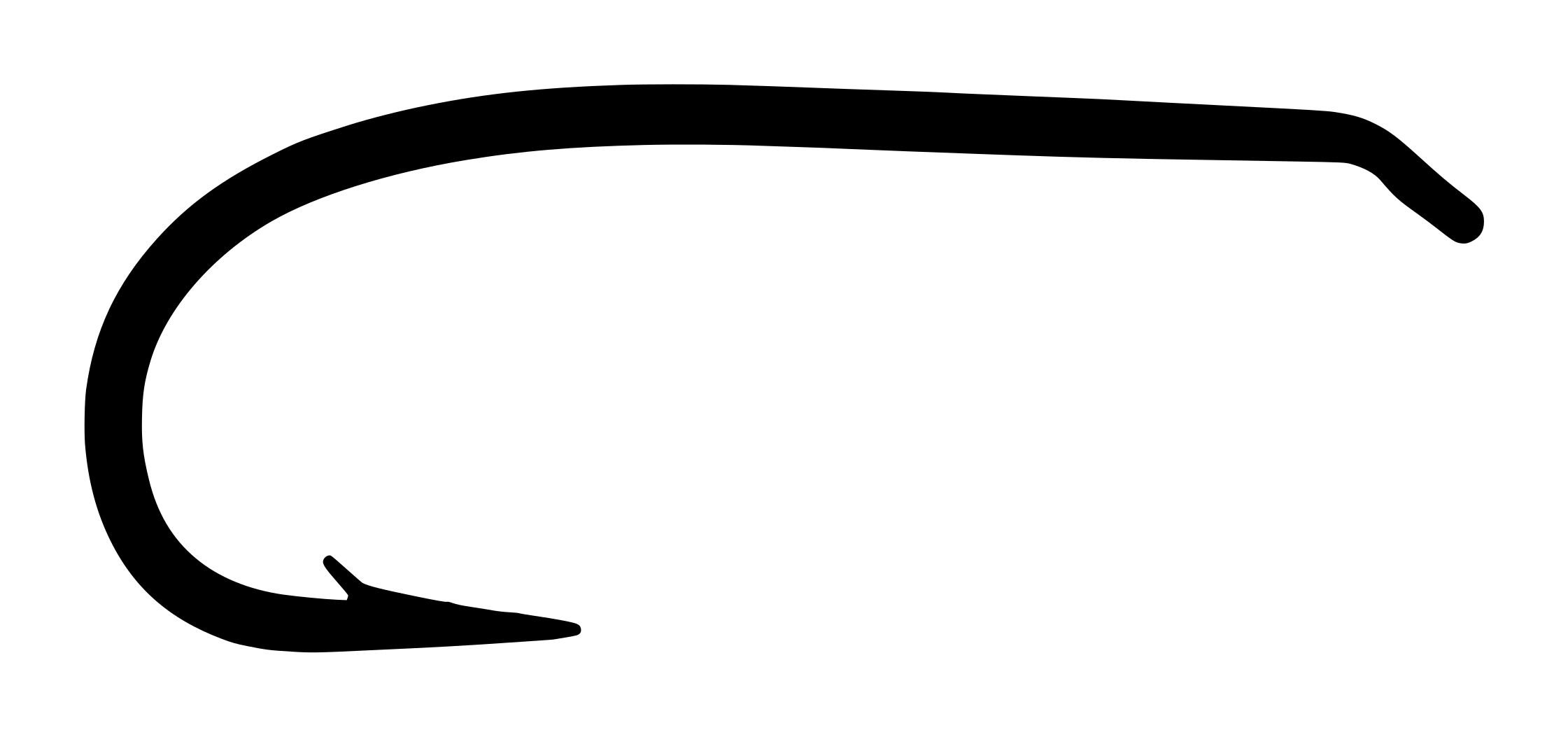
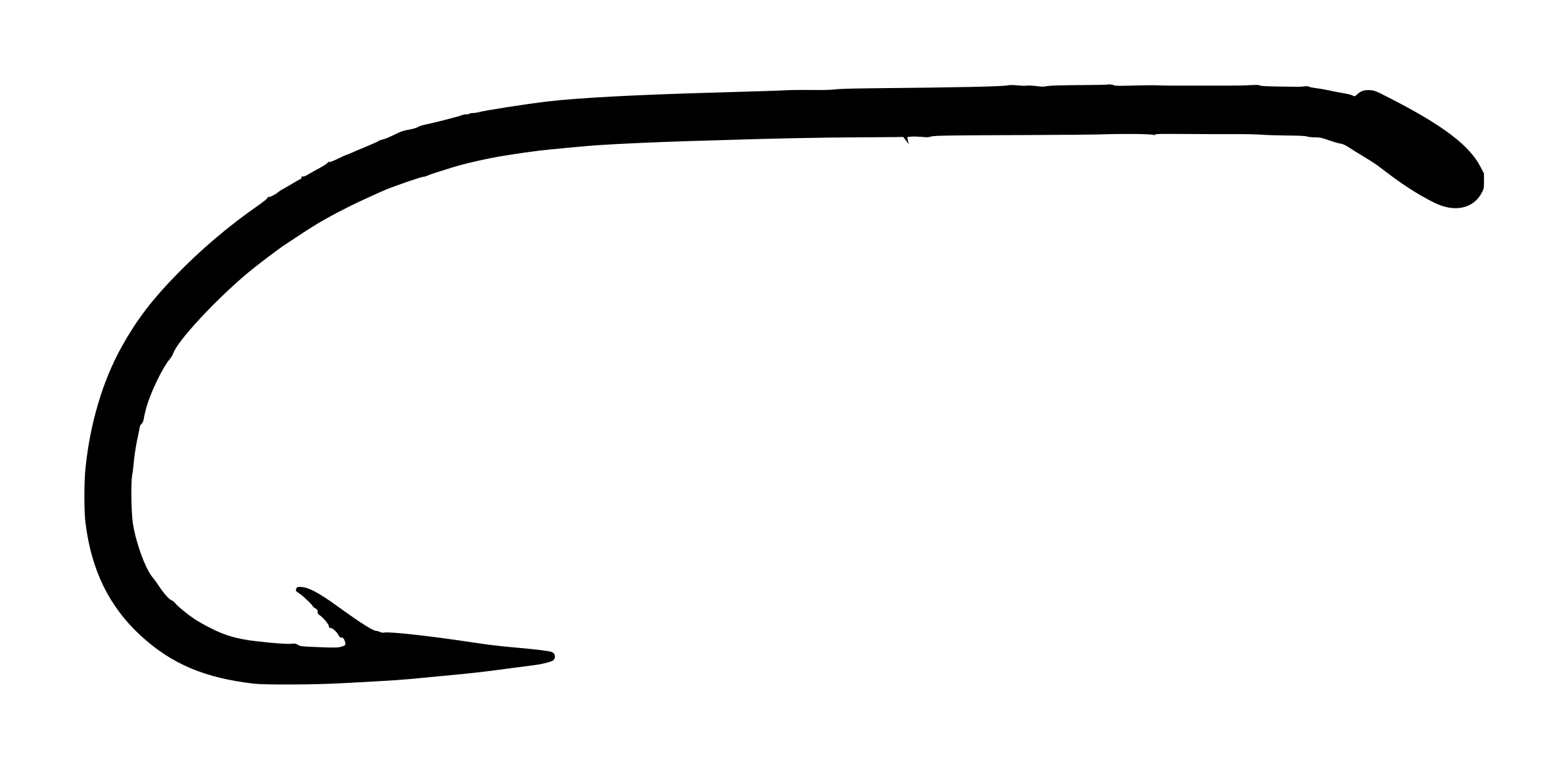
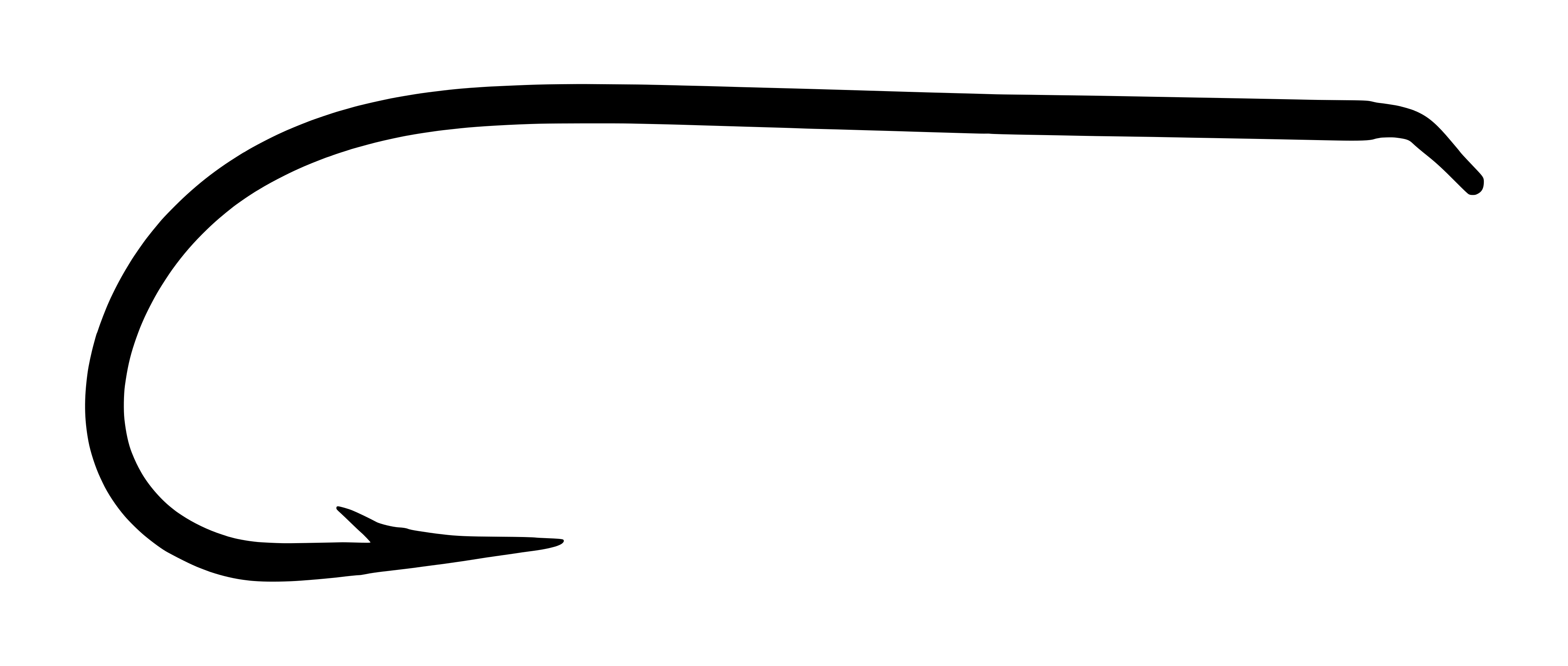
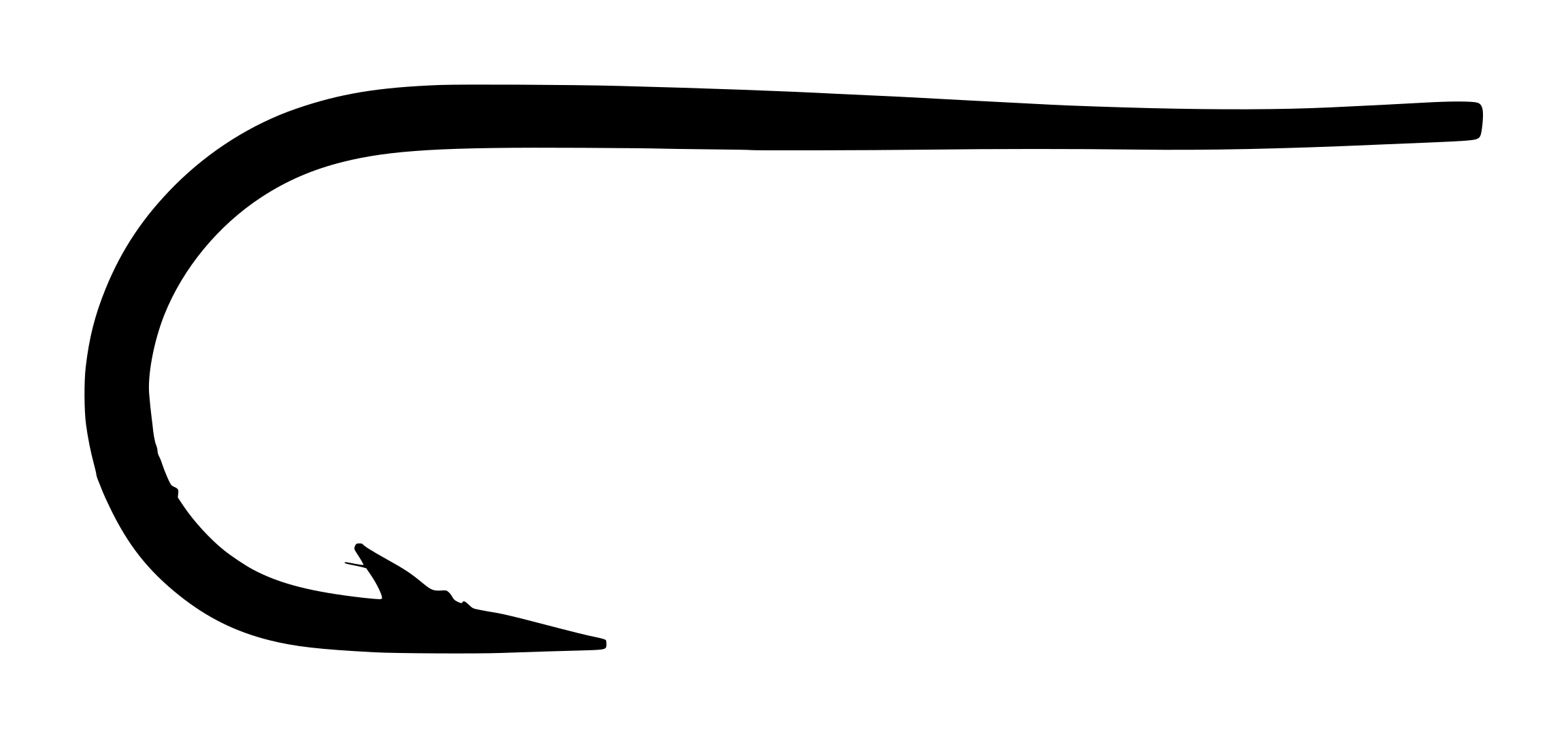
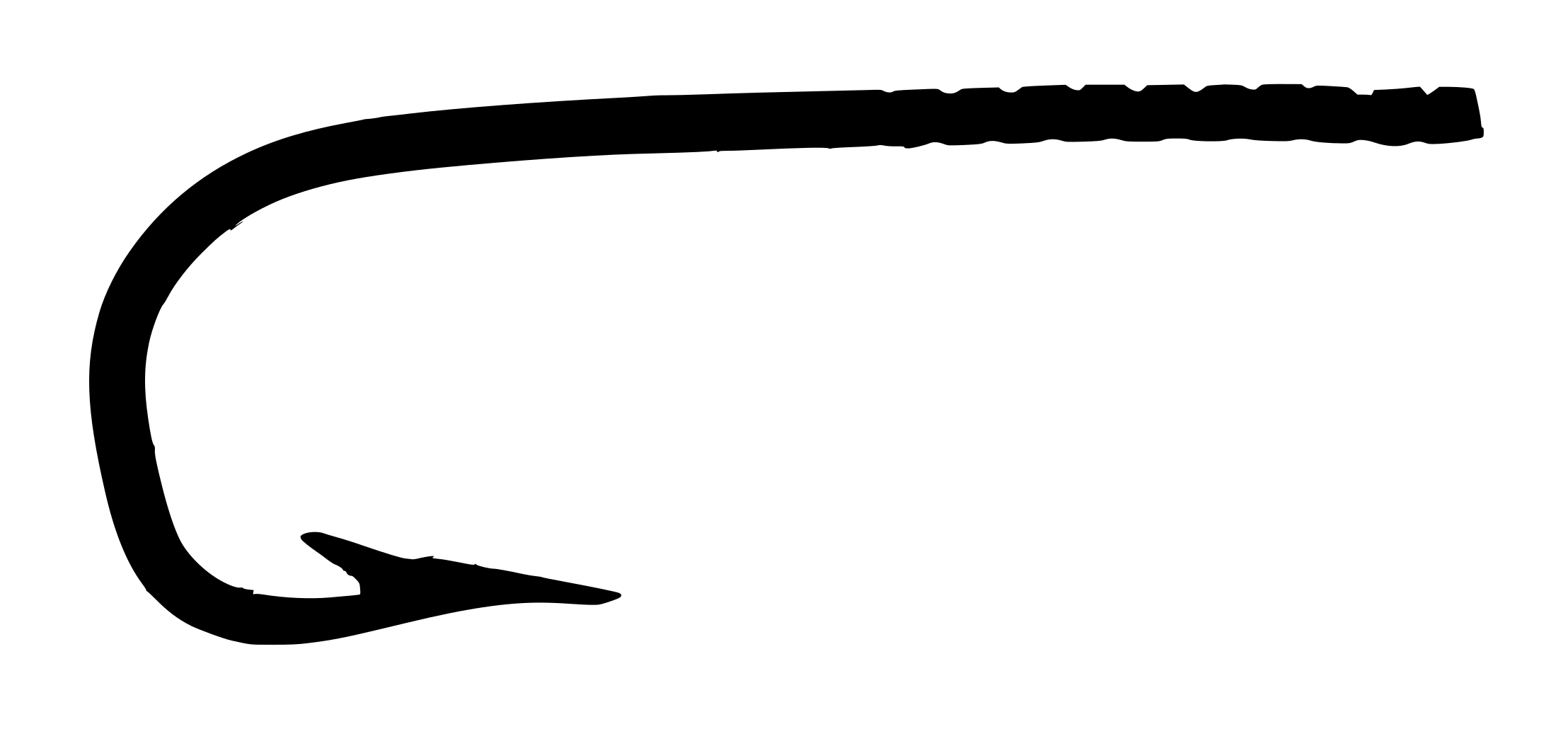
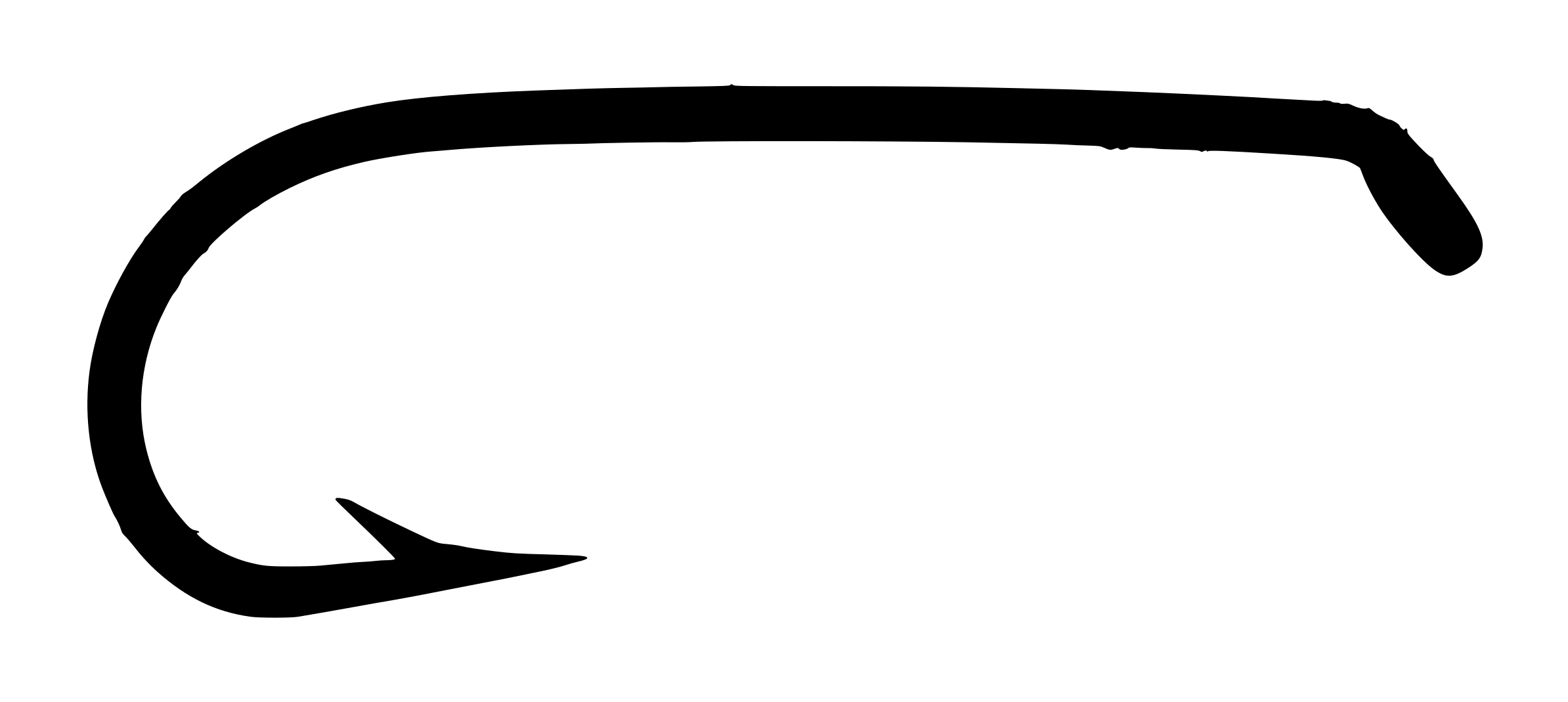
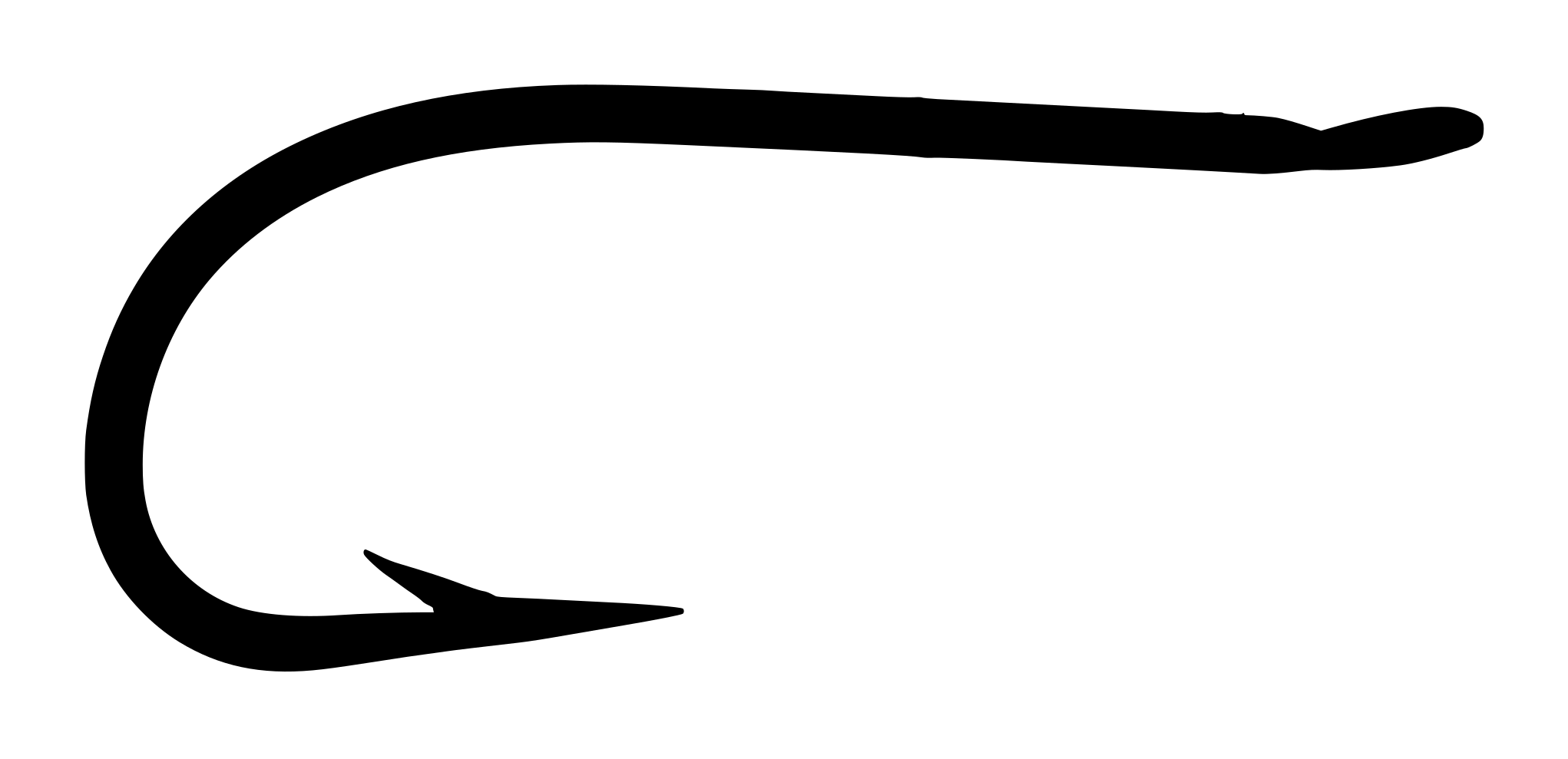
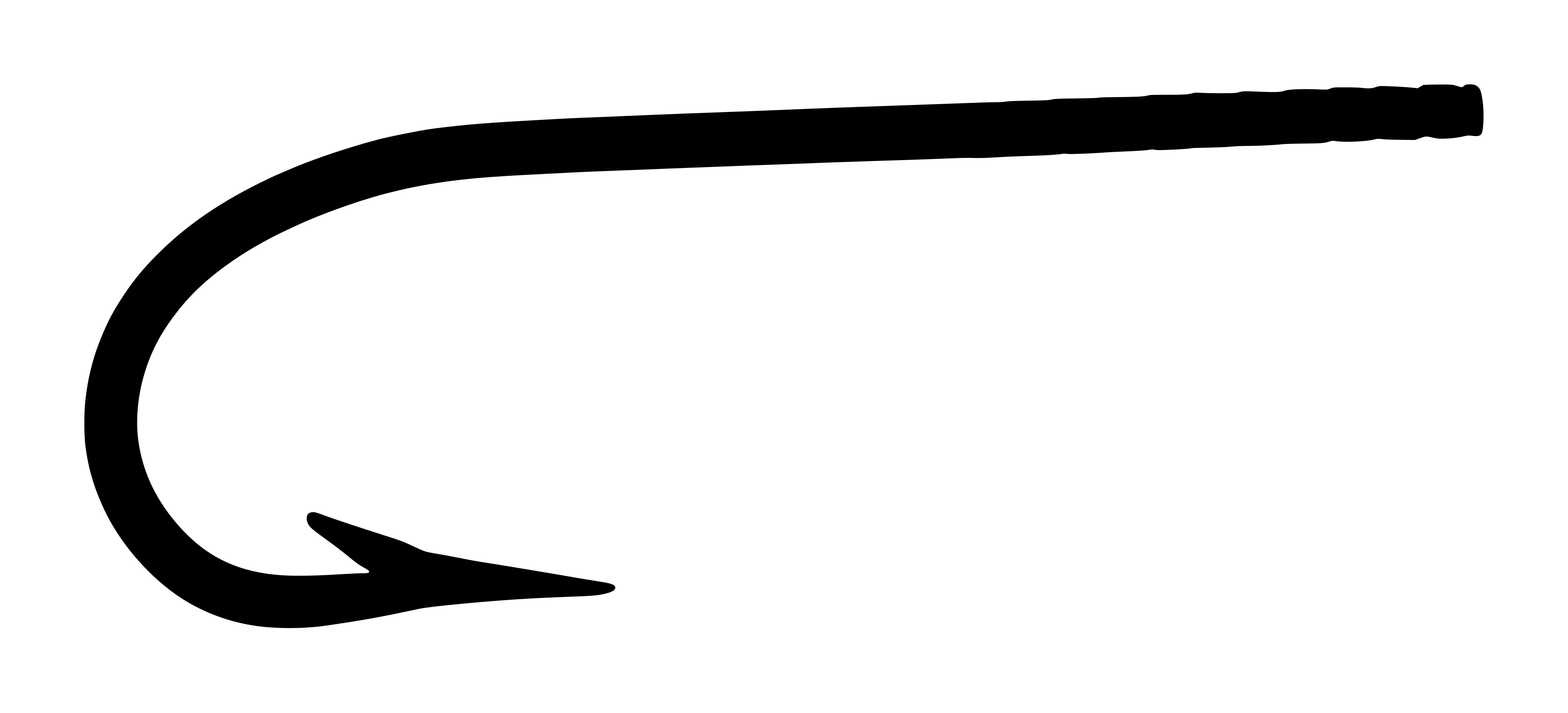
The Best Hollow Point (model 6812) is a size 1 salmon or sea trout hook manufactured by S. Allcock & Co., Ltd. of Redditch, England. The hook features a tapered, turned-down eye, a Sproat bend profile, and a hollow point geometry — all characteristics typical of British Redditch fine-fish hooks of the mid-20th century.
The defining feature is the “Slightly Reverse” offset specified on the package, indicating a small rightward point deflection designed to improve hook penetration in difficult-mouthed fish. The bronzed finish was applied by Allcock at manufacture, providing corrosion resistance suitable for freshwater game fish.
Dating evidence places this card in the 1945-1955 era: absence of barcode, letterpress printing quality, cream-toned paper stock, and the style of the royal stag trademark are all consistent with immediate post-war British production. This is a working fisherman’s hook rather than a specialty pattern, typical of the bulk production that sustained Redditch makers throughout the mid-20th century.
The hook is modestly collectible as an example of Allcock’s core product line and as documentation of the “Slightly Reverse” offset specification that Allcock marketed as a distinct feature. Complete cards in good condition with 100 hooks intact command modest premium value among collectors of British tackle and Redditch craftsmanship.
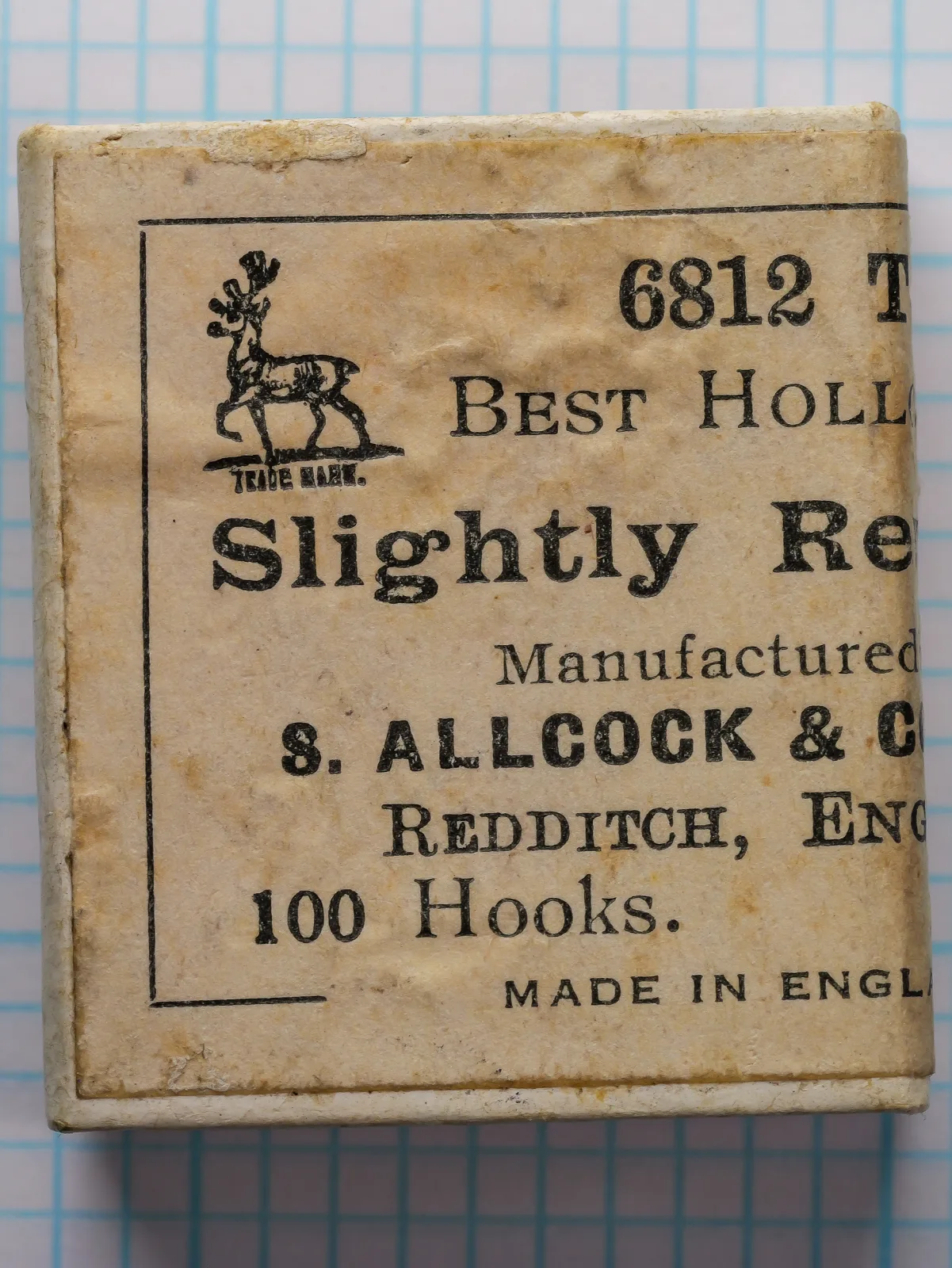
Front face of the Allcock Best Hollow Point (6812) sales card showing the royal stag trademark, model code, hook name, and "Slightly Reverse" specification, printed in letterpress on cream cardboard.
Photographic record
3 cataloged imagesSelect any record to load it above.
3 images shown
Allcock Best Hollow Point 6812 Sales Card FrontFront face of the Allcock Best Hollow Point (6812) sales card showing the royal stag trademark, model code, hook name, and "Slightly Reverse" specification, printed in letterpress on cream cardboard.Open originalAllcock Best Hollow Point 6812 Manufacturer DetailClose detail of the Allcock sales card showing manufacturer attribution "S. ALLCOCK & CO., LTD., REDDITCH, ENGLAND," confirming Redditch origin and maker identity.Open originalAllcock Best Hollow Point Size 1 Hook ProfileSide profile of a size 1 hook from the Allcock Best Hollow Point card, photographed on 0.1-inch measurement grid. Shows the Sproat bend geometry, hollow point profile, and bronzed finish coloration.Open original
Technical profile
Eye
Tapered Eye, Turned DownThe eye is tapered, progressively smaller from the shank junction to the eye opening P. The taper is smooth and even, indicating wire-drawing and final forming rather than a heavy casting or brazed construction. The turned-down orientation means the eye plane is angled downward relative to the shank, typical of wet-fly and salmon hook design where a low eye keeps the fly profile tight. No aberrations or irregularities visible in eye formation.
Wire
Standard, Round
Shank
Standard — Plain
Bend
Sproat, Standard gapThe Sproat bend exhibits the characteristic rounded-bottom geometry, with no angular deflection or asymmetry P. The bend depth is moderate relative to shank length, consistent with standard Sproat proportions. The offset specified as "Slightly Reverse" on the package is subtle but visible — the point is deflected approximately 5-10 degrees to the right (viewed eye-down-shank) P. This is not aggressive enough to call a full Beak or Kirbed profile, but distinguishes this model from straight-point alternatives.
Point
Hollow Point (concave inner face)Barb is short, close-cut, and positioned immediately behind the point P. The barb is not swept or angled but sits perpendicular to the shank, typical of fine-fish hooks where barb prominence is minimized to reduce fly profile and tissue damage.
Finish
Bronzed — Confirmed (stated on packaging)The bronzed finish displays a warm, amber-brown tone across the wire surface P, consistent with Allcock's stated bronzed specification V. The finish is relatively uniform, without heavy patina or age darkening beyond what mid-century hooks typically show. Steel grain is visible through the coating in places, particularly where light reflects sharply, indicating a thin to moderate coating depth. The warm color tone distinctly differs from a cooler nickelled or blued finish, confirming bronzed as the accurate finish classification.
The hollow point geometry features a strongly concave inner face, creating an inward curve from the barb seat to the tip. This geometry serves multiple functions: (1) the inward curve creates a knife-edge effect that aids penetration into hard mouths; (2) the concave form allows the point to fold inward slightly under stress, providing some give before bending; (3) the hollow shape reduces material mass at the point, allowing the wire stock to be lighter while maintaining point sharpness.
The Sproat bend is a rounded-bottom profile, symmetrical in the vertical plane. The bend does not feature the pronounced angular geometry of a Limerick or the narrow, deep curve of a Beak. The Sproat provides a balance suitable for soft-hackle wet flies and small salmon patterns.
The tapered, turned-down eye reduces eye mass and allows the hook to sit cleanly on a leader without material bunching at the knot. The taper — progressively smaller from shank to eye — requires precise forging and finishing, indicating quality control in manufacture.
This pattern was made in sizes 1 (V). We have measurement for size 1. Know the others? Submit calipered measurements and we'll review and add them. Thank you!
Historical context
allcock
S. Allcock & Co., Ltd. was one of the major hook manufacturers of Redditch, England. The firm was well-established by the late 19th century and operated continuously through the 20th century until absorbed into the larger Mustad organization. Allcock was known for conservative, well-made hooks in traditional British styles.
The Redditch hook trade was centered in a tight geographical area, with dozens of small makers and finishers competing on quality and specialty designs. Allcock occupied a middle position: larger than craft makers like Edgar Sealey or Partridge, but smaller than the Norwegian industrial giant Mustad. The firm maintained catalog depth and produced hooks in multiple finishes and bend profiles.
The royal stag trademark became Allcock’s house mark and appears on packaging from the early 20th century onward. The brand name “Best Hollow Point” reflects Victorian-era hook nomenclature, retained because these proven designs remained in production across decades.
Series History
The “Best Hollow Point” designation appears to be a standing product line rather than a series with dated editions or production changes. Allcock used descriptive names for hook types — “Best,” “Standard,” “Inferior” — to denote finish quality and material grade rather than distinct manufacturing eras. The hollow point geometry remained standard for this model across its documented production life.
The “Slightly Reverse” offset specification marks this model as distinct within Allcock’s catalog from straight-point hollow hooks. Packaging evidence suggests this variant was cataloged and produced in quantity, indicating sufficient market demand to warrant separate model coding (6812) and marketing emphasis.
The 100-hook card quantity is characteristic of mid-20th-century retail packaging. Earlier and later production may have used different card counts, but documentation for those variants is not presently available.
Era and Packaging Dating
No barcode visible on packaging — strong indicator of pre-1974 manufacture. Letterpress print quality and stock color consistent with 1940s-1950s British hook card production. Cream-toned paper and spot wear suggest age within mid-century range. Packaging format (simple chipboard card with royal stag mark) is characteristic of Allcock post-war production. Royal stag logo style and typography consistent with Allcock branding from 1940s onward. No evidence of plastic packaging or modern printing — supports mid-20th-century date. Conservative estimate: c. 1945-1955.
The Redditch Mark of Quality
S. Allcock & Co. operated in Redditch during an era when the town was known worldwide as the epicenter of hook manufacturing — so dominant that Redditch hooks were often simply called "English hooks" by exporters. The royal stag trademark that appears on this card was Allcock's corporate symbol for over a century, signifying quality rooted in British sporting tradition. Interestingly, Allcock's marketing of the "Slightly Reverse" offset as a distinct feature highlights how even minor geometrical variations were promoted as innovations to fishing-tackle dealers and anglers. In practice, the offset made little measurable difference to modern anglers, but the specificity of Allcock's claim — "Slightly Reverse" rather than fully Kirbed — suggests the firm was calibrating market positioning with precision, offering anglers the confidence of scientific naming for what was ultimately a refined traditional hook.
Design lineage and influence
The Sproat bend and hollow point are not Allcock innovations but rather the product of long-established British hook design tradition. The Sproat profile originated in the 19th century and became a standard bend family maintained by most Redditch makers. The hollow point — with its strongly concave inner face — represents a refinement of point geometry developed across multiple generations of English hookmakers.
The “Slightly Reverse” offset is an Allcock-specific marketing angle. The claim of improved penetration through point offset had precursors in other manufacturers’ marketing (e.g., Mustad’s Beak and O’Shaughnessy profiles), but Allcock appears to have codified a mild reverse offset as a discrete specification.
This hook likely influenced or was influenced by contemporary sea trout and salmon patterns from other Redditch makers, though direct genealogy is difficult to establish without access to detailed Allcock pattern catalogs.
Best matchRelated by Attribute
Computed automatically from catalog data — updated as new hooks are added.
This hook was designed for wet fly and salmon fishing, typical of British rivers and streams. The size 1 accommodates patterns tied from medium-weight fur and feather on a shank suited to both small wet flies and mid-sized salmon flies. The Sproat bend provides a balance between hook strength and fly profile.
The “Slightly Reverse” offset — point deflected rightward — was a marketed feature of Allcock hooks. The theory held that the offset improved hook set by presenting a more favorable angle to the fish’s mouth corner. The hollow point geometry facilitated easy penetration and a secure hold once set.
In historical practice, hooks of this specification were used for traditional wet-fly fishing on English and Scottish rivers during the mid-20th century, particularly for grayling, brown trout, and sea trout.
Secondary Applications
Light saltwater or brackish-water work; estuary fishing for sea trout.
Collector notes
Rated 4.5/10 — Allcock hooks are commonly found, and size 1 in a standard bronze finish is not exceptionally rare. However, the "Slightly Reverse" offset specification and the documented model code (6812) give this variant modest collector appeal beyond generic Allcock cards. Complete 100-hook cards in good condition command a real but modest premium; individual hooks have minimal value outside the carded context. Collector demand is moderate among Redditch specialists and British tackle historians.
Reference value
$8 – $22 USD estimate
Packaging condition
Fair — significant wear, partially legibleRecorded specimen
Packaging format
ACO-C-001Catalog code
Positive factors: Allcock is a recognized maker with a loyal collector base, particularly among British tackle historians. The “Slightly Reverse” offset specification is explicitly marketed on the package, making this a documented variant rather than a generic hollow point. The royal stag trademark and Redditch attribution appeal to collectors interested in the Redditch tradition. Complete original packaging in good condition adds real value. No barcode indicates pre-1974 manufacture, increasing historical interest.
Limiting factors: Allcock hooks were produced in large quantities, and sales cards survive in reasonable numbers in the vintage market. Size 1 is not especially scarce — larger salmon sizes (1/0, 2/0) and smaller trout sizes (6, 8) are more commonly sought. The bronzed finish is standard and does not command a premium over other contemporary finishes. The hook is a working design, not a named pattern or a limited-edition run. Condition is the primary value driver — opened cards with missing hooks decline rapidly in value.
Desirable variants: Complete sealed or near-sealed cards command the highest premiums. Cards in excellent condition with all 100 hooks intact and original tissue are valued by serious collectors. Alternative finishes (japanned or nickelled versions, if produced) would be more scarce. Larger salmon sizes (1/0, 2/0) in this line would be more collectible than size 1.
Condition factors: An opened card with 90+ hooks intact and clean packaging rates as “good” condition and commands modest premium ($8-15 on eBay). A sealed or near-sealed card in excellent packaging condition rates “excellent” and commands higher premium ($18-28). Missing hooks or worn packaging reduce value significantly. The rarity of the card format and condition matter more than the hook specification itself.
Packaging
Chipboard sales card, 2.75" × 2.25" (approximately). Cream paper stock, printed letterpress. Front face states model code 6812, hook name "Best Hollow Point", size designation, and "Slightly Reverse" offset specification. Manufacturer name "S. ALLCOCK & CO., LTD." and location "REDDITCH, ENGLAND" printed below product name. Quantity "100 Hooks" and "MADE IN ENGLAND" printed at base. Royal stag trademark in upper left corner. Text partially obscured on left edge of front card, consistent with card hinging or packaging fold. Back face blank or printed with texture. No barcode visible — pre-1974 manufacture P. Packaging toning and paper condition consistent with 1940s-1950s production era.
Market Value Notes
Low ($8): Good condition — opened card, 90+ hooks present, light to moderate packaging wear, readable printing.<br />
High ($22): Excellent condition — near-sealed card or complete with minimal packaging wear, all 100 hooks intact, original tissue present if any.<br />
Premium factors: Complete 100-hook count, sealed or nearly sealed packaging, excellent card printing clarity, presence of original tissue or envelope, minimal spot or corrosion on hooks.<br />
Platforms: eBay UK, eBay US (US listings rarer), specialist British tackle dealers, UK fishing-tackle fairs.<br />
Confidence: E estimated — limited specific sale data for this exact model. Value derived from observed price ranges for comparable Allcock 100-hook cards of similar era and condition. Actual sales may vary by 20-30% depending on region and buyer base.
Where to Find
eBay UK (most common venue, typically $8-20 for opened cards, $20-30 for sealed examples). eBay US (rarer listing frequency). Specialist British fishing-tackle dealers in the UK. Regional UK fishing-tackle fairs and swap meets. Auctions focused on vintage sporting goods (less common). Allcock cards appear regularly in bulk vintage hook lots, where individual cards may be undervalued at $1-4 when mixed with other makers.
Collector's Identification Tips
Allcock packaging can be identified by the distinctive royal stag trademark in the upper left corner of the card front. The model code appears in the upper right (here “6812”). Manufacturer attribution “S. ALLCOCK & CO., LTD.” and location “REDDITCH, ENGLAND” are printed on the lower portion. The absence of a barcode dates the card definitively to pre-1974. Letterpress print quality and cream paper stock are period-consistent with 1940s-1950s production. Complete 100-hook cards are more common than broken cards, but size 1 is less frequently stocked in vintage lots compared to larger or smaller common sizes.
Preservation
Storage and Preservation
Store the card in a cool, dry environment, ideally away from direct sunlight which can fade the printed text and alter the bronzed finish tone. Humidity is the primary threat — bronzed finishes develop patina and surface corrosion readily in damp conditions. Original cardboard packaging provides reasonable protection if stored flat on a shelf or in a box. Avoid stacking heavy objects on top of the card.
If hooks are loose or have fallen from the card, return them to the original card slots whenever possible. The card itself is the primary value asset, and hooks in original context command a significant premium over loose specimens. Do not attempt to clean the bronzed finish aggressively — a soft brush to remove dust is sufficient. Surface patina is often considered desirable by collectors and may increase perceived authenticity and age value.
Keep the card away from other metal objects to prevent galvanic interaction. Store separately from modern steel or stainless steel hooks, which can accelerate corrosion on vintage bronzed finishes. Handle the card by its edges to avoid fingerprint oils on the printed surface. Archival tissue or acid-free paper may be placed between cards if storing multiple hooks in proximity.
Primary Source
Packaging Text and Offset Specification
Source: Text transcribed from S. Allcock & Co., Ltd. packaging for model 6812, c. 1945-1955
The package explicitly states ‘Slightly Reverse’ as the offset specification, a marketing claim that deserves analysis. In hook geometry, ‘reverse’ offset (also called ‘reversed’) describes a point deflection to the right when viewed from the eye looking down the shank. ‘Slightly’ indicates a mild angle — approximately 5-10 degrees rather than a pronounced Beak profile (often 20-30 degrees). This precision in naming suggests Allcock was marketing a graduated spectrum of offsets rather than binary choices, positioning this model as a middle ground between straight-point designs and fully-keeled hooks.
The term ‘Best Hollow Point’ is a product name, not a grade descriptor in the modern sense. ‘Best’ was Allcock’s convention for a standard-quality hook with bronzed finish; other grades (‘Standard,’ ‘Inferior’) reflected material and finish quality, not hole-making performance. The ‘Hollow Point’ designation is the functional specification — the concave inner-face geometry that distinguishes this from ‘Superior Point’ (near-straight) and other point forms.
The printed specification ‘100 Hooks’ was the standard sales unit for British fly-fishing hooks of this era. This quantity provided sufficient stock for a season of fishing or tying, and packaging in 100-hook lots was universal across Redditch makers during the mid-20th century.
Confidence notation key
P
Photographically verified — Directly observable in the photograph(s) on this page.
V
Verified by documentation — Confirmed by manufacturer catalog, spec sheet, or published reference.
I
Inferred — A logical deduction from observable or documented evidence, not directly stated.
E
Estimated — An approximation based on visual comparison, proportional analysis, or limited data.
S
Speculative — A reasoned hypothesis that cannot be confirmed from available evidence.
Claims with no notation are confirmed by multiple independent sources. All photographs on garrenwood.com are taken on a measurement grid where each square equals 1/10 inch (0.1″ / 2.54 mm).