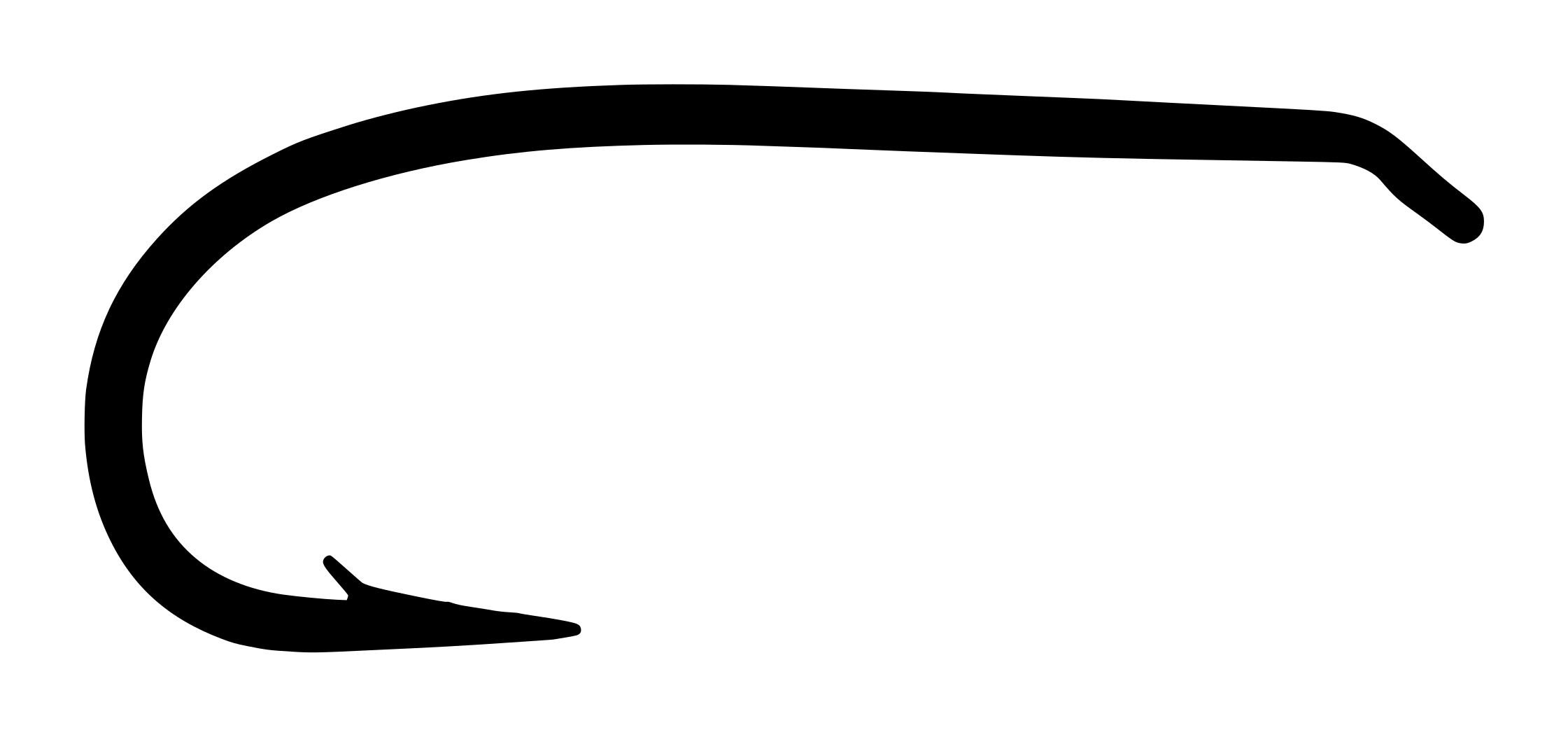
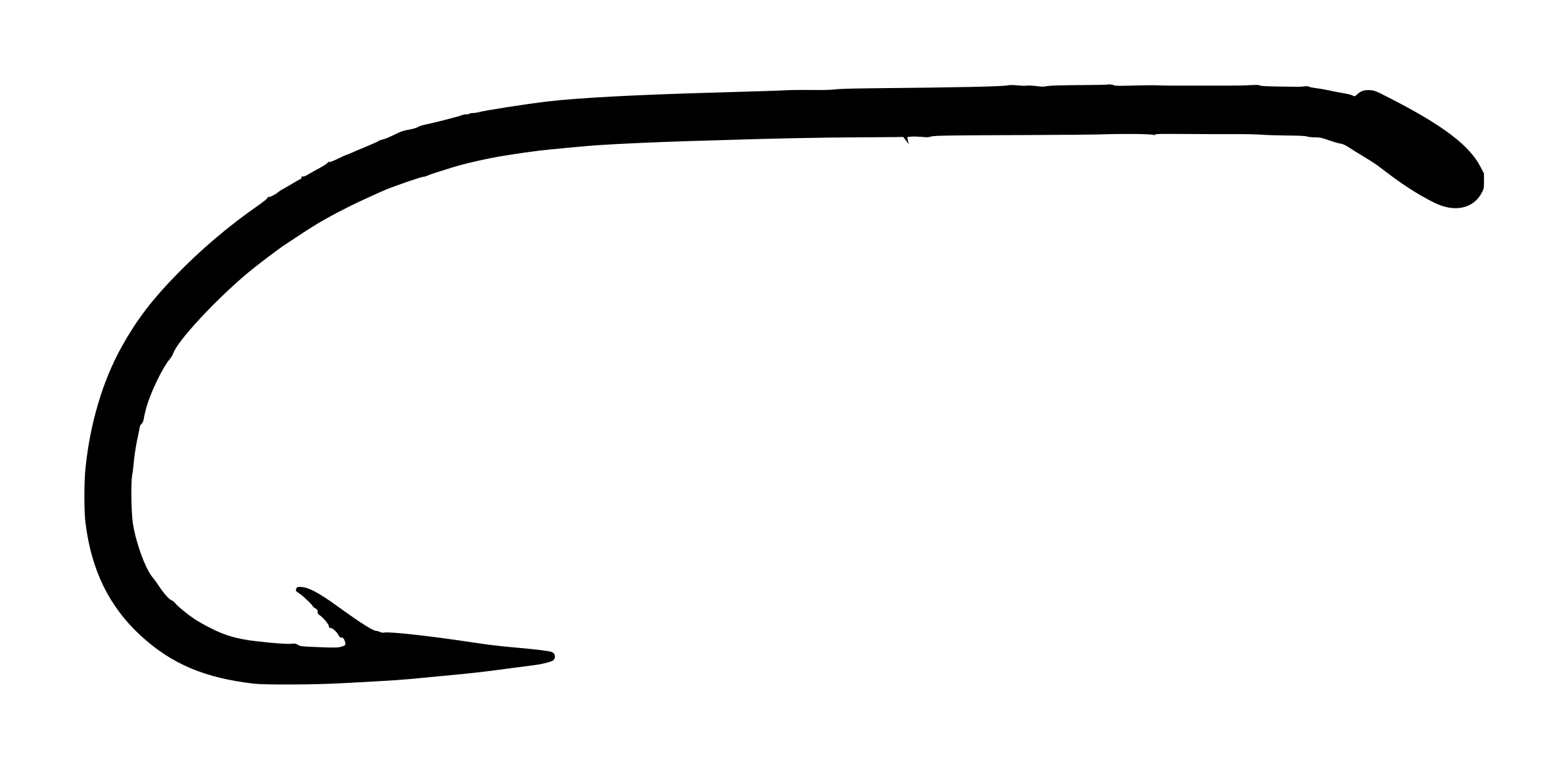
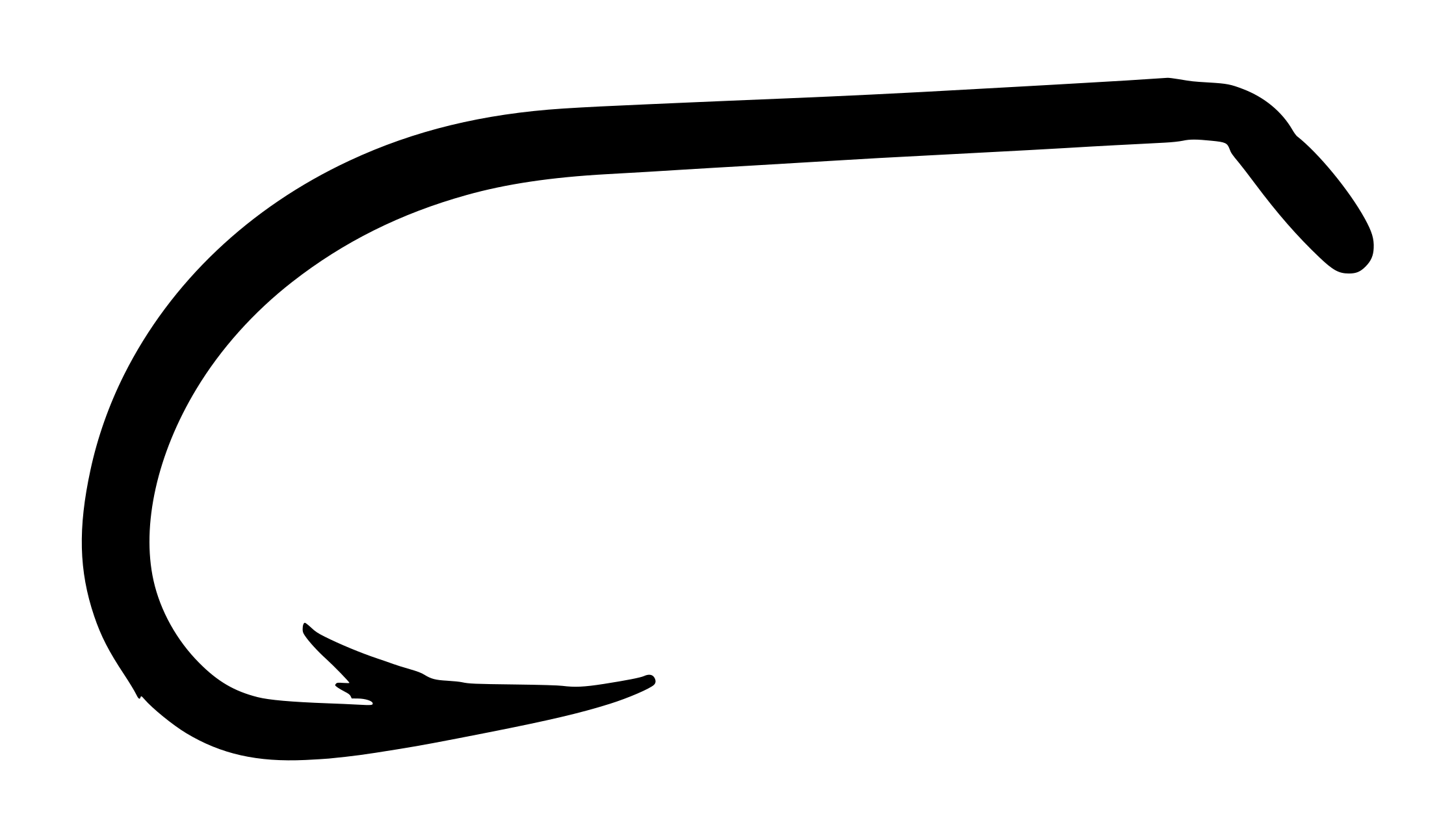
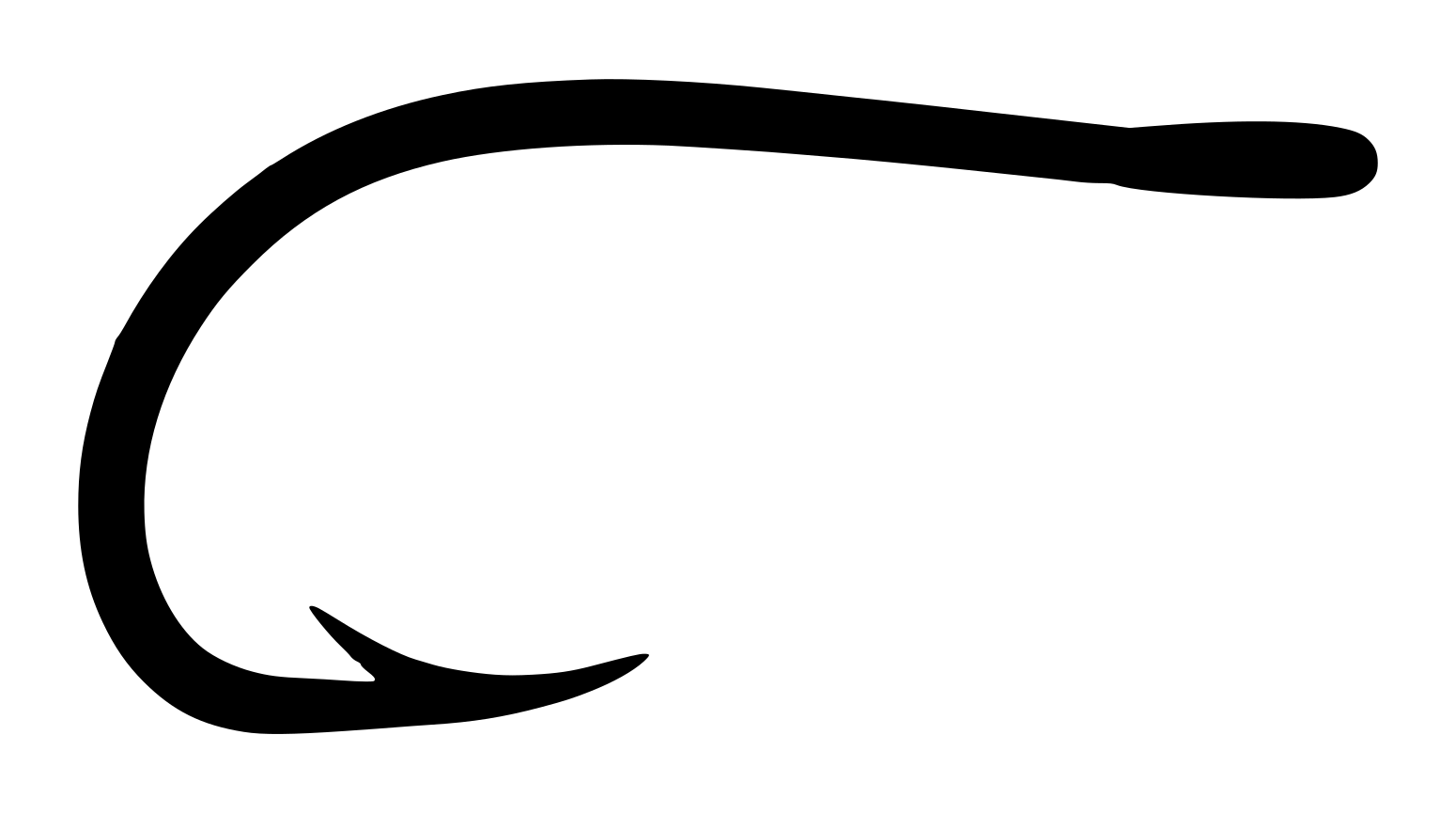
The Edgar Sealey S 4310 LS is a forged, reversed-bend wet-fly hook with a turned-down ball eye, made in Redditch, England, and sold under Sealey’s registered ‘Octopus’ trade mark. The specimen documented here is a size 7 from an original 100-count box.
‘Forged Reversed Down Eyes’ on the label parses, in Redditch terminology, as forged wire + reversed (laterally offset) bend + down-turned eye I. The offset is the distinguishing feature; the eye itself is of conventional down-turned form P. Sealey’s c. 1950 sample book lists ‘Forgé Renversé’ (forged reversed) as a standard product category, so the configuration was a regular line rather than a one-off design I.
‘Octopus’ is Sealey’s house trade mark: the label roundel shows an octopus above a shield lettered ‘OCTOPUS’, encircled by the words ‘REGISTERED TRADE MARK’ P. It is unrelated to the modern bait ‘octopus hook’ style. The ‘LS’ suffix is a Sealey catalog designation whose meaning is undocumented; it should not be expanded to ‘Long Shank’, as the specimen’s proportions are close to standard length E. The company’s operating dates (c. 1930 to its 1960 acquisition by Dunlop) and the packaging style support an era of approximately 1930–1960 I.
Original Edgar Sealey packaging showing the distinctive bright green label with black checkered border, displaying 'Forged Reversed Down Eyes' and 'Octopus' registration notation. Size 7, circa 1930–1960.
Photographic record
5 cataloged imagesSelect any record to load it above.
5 images shown
Edgar Sealey S 4310 LS Octopus Hook Box and Label Size 7Original Edgar Sealey packaging showing the distinctive bright green label with black checkered border, displaying 'Forged Reversed Down Eyes' and 'Octopus' registration notation. Size 7, circa 1930–1960.Open originalEdgar Sealey S 4310 LS Octopus Size 7 Profile ViewComplete side profile of the Edgar Sealey S 4310 LS Octopus hook, size 7, showing the characteristic reversed down-turned eye, Sproat bend, long shank, and bronzed finish. Photographed on 1/10-inch measurement grid.Open originalEdgar Sealey S 4310 LS Octopus Size 7 Point DetailClose-up photograph of the hook point and barb showing the hollow point inner taper, short cleanly-cut barb, forged wire compression, and bronzed finish tone. Size 7 on measurement grid for scale.Open originalEdgar Sealey S 4310 LS Octopus box labelOriginal packaging for Edgar Sealey & Sons S 4310 LS Octopus hooks. Green label identifies the model as forged reversed down-eye pattern, 100-hook box.Open originalEdgar Sealey S 4310 LS Octopus hook profileS 4310 LS Octopus hook showing sproat bend, bronzed finish, and reversed down-eye configuration. Point offset to the right.Open original
Technical profile
Forged Reversed Down Eyes
Eye
Ball Eye, Turned DownTurned-down ball eye of conventional form for the period P. Ball is cleanly formed with consistent diameter P. Note: the label text 'Forged Reversed Down Eyes' refers to a forged wire hook with a reversed (laterally offset) bend and down-turned eye — 'reversed' in Redditch terminology modifies the bend, not the eye angle I. Sealey's c. 1950 sample book lists 'Forgé Renversé' (forged reversed) as a standard product category I.
Wire
Standard, Round, Est. ~0.013"-0.018" (~0.33-0.46 mm) E — shank reads ~0.012-0.014"; forged bend reads wider in profile (~0.016-0.018") due to lateral flattening
Shank
Standard — Plain
Bend
Sproat, Wide gapNot a constant-radius round bend P. Profile shows a long, gradual curve leaving the shank, a near-straight back and a tighter turn at the bottom into a slightly upswept point P. Sproat is retained provisionally I; the tight lower turn shares features with the limerick, and the classification should be confirmed against Sealey's Sproat and Pennell's Limerick sample cards. Reversed (laterally offset) bend per the label 'Forged Reversed' I; the size 1/0 profile image on this page records the point offset to the right (P for that specimen). Offset direction of the size 7 has not been photographed.
Point
Hollow Point (concave inner face)Barb is long — roughly one-third of the point length — deeply cut and standing well proud of the point, with a slight burr at the cut P. It sits on the inner face of the point just beyond the turn of the bend P.
Finish
Bronzed — Confirmed (stated on packaging)Warm brown bronze tone throughout the specimen, with brassy highlights where the finish is worn at the point P. Mottled darker spotting along the bend P. Tone is consistent with bronzed English hooks of the period I. Finish is photographically identified — the packaging label does not specify finish.
Hook is sound, with no bending or point damage P. Bronzed finish shows mottled dark spotting along the bend and slight wear at the point and barb; a small reddish-brown spot near the barb root may be light oxidation P. Packaging shows toning, edge wear, a torn label edge on the right side and a later clear-tape repair across the right end of the box P.
Forged wire construction laterally compresses and work-hardens the metal at the bend, increasing strength at the bend-to-point transition I. Forging does not reduce hook mass, but it allows a given strength target to be met with finer wire than an equivalent unforged hook would require.
The reversed (offset) point is a traditional British sea-trout and wet-fly feature. Offsetting the point laterally from the shank plane is intended to increase hooking purchase by directing the point away from the line of pull when a fish takes S. The turned-down ball eye is a conventional wet-fly eye treatment of the period.
The hollow point has a concave inner face, reducing the cross-section at the tip to aid initial penetration I. Hollow point is distinct from a laterally-flattened knife-edge point — the two are sometimes conflated in modern literature but refer to different geometries.
‘Octopus’ was Edgar Sealey’s house brand and registered trade mark rather than a series tied to the S 4310 number: the octopus-and-shield roundel lettered ‘REGISTERED TRADE MARK’ appears on this label P, and the firm’s c. 1950 sample book is titled ‘Octopus Brand’ I. The label also calls this hook ‘Sealey’s Modéle “OCTOPUS”‘, and the same sample book includes a separate card headed ‘Octopus’, so the name may also have denoted a specific pattern within the brand; how the S 4310 LS relates to that card is not yet documented S.
The ‘LS’ suffix matches an ‘L.S.’ category among the sample book’s cards I. Its meaning is not recorded in available references and should not be read as ‘Long Shank’ without catalog confirmation; the size 7 specimen’s shank is close to standard proportion E.
‘Reversed’ on the label refers to a laterally offset bend, not to the eye I. Forged reversed hooks were a regular Sealey category (‘Forgé Renversé’, with a ‘Forgé Renversé Sliced’ variant) rather than a feature unique to this model I. Production dates for the S 4310 LS within the firm’s c. 1930–1960 independent period are not documented.
Era and Packaging Dating
Edgar Sealey & Sons dates from c. 1930 and is recorded in Kelly's Directory of 1932 I; the company came under Dunlop Sports ownership in 1960 I, bracketing 'EDGAR SEALEY & SONS, LTD.' labelling. Green label with black block border and octopus trade mark roundel P. No barcode present P; absence of a barcode is weak evidence on its own but is consistent with pre-1970s production I. 'REDDITCH, ENG.' abbreviated location marking is consistent with mid-20th century Redditch labelling I. Paperboard box stock and construction are consistent with mid-20th century English manufacture E. Printing method has not been determined from the photographs. Combined evidence supports an era range of approximately 1930–1960 E.
The Octopus Trade Mark
'Octopus' was Edgar Sealey's house trade mark: the label roundel shows an octopus above a shield lettered 'OCTOPUS', encircled by the words 'REGISTERED TRADE MARK' P, and the firm's c. 1950 sample book was issued as 'Octopus Brand' I. Why the firm chose the name is not documented S; a suggested link to multi-fly droppered sea-trout casts has no supporting evidence. The '(Reg.)' after 'OCTOPUS' on this label most likely refers to that registered trade mark — distinct from a patent I. The name has nothing to do with the modern 'octopus hook', a short-shank bait hook of entirely different configuration.
Design lineage and influence
The S 4310 LS belongs to the broad Redditch tradition of forged, offset-bend hooks. Lateral offset — ‘kirbed’ to one side or ‘reversed’ to the other — was a standard option across English makers’ catalogs, and forging (flattening the sides of the bend) was a common way to stiffen the bend without heavier wire I.
The bend family of this model is not yet confirmed. The size 7 profile is clearly not a constant-radius round bend P; it has a long, gradual curve leaving the shank and a tighter turn at the bottom into a slightly upswept point. That profile is compatible with a sproat bend but shares features with the limerick I. Sealey’s c. 1950 sample book carried both Sproat and Pennell’s Limerick cards, making it the most direct reference for settling the classification.
Other Redditch makers such as S. Allcock & Co. listed reversed and kirbed options for comparable wet-fly and bait hooks I. No documented evidence currently links the S 4310 LS to specific later designs, and the date at which Sealey discontinued it is not recorded.
Best matchRelated by Attribute
Computed automatically from catalog data — updated as new hooks are added.
A forged wet-fly hook suited to traditional sea-trout and larger trout wet flies. The reversed (laterally offset) bend was intended to improve hooking S, and the forged wire adds stiffness for sea trout and larger freshwater fish I. The shank is close to standard wet-fly length E.
Secondary Applications
Sea trout in estuaries and river mouths; larger brown trout in deep pools; small saltwater species in coastal applications where fly presentation is critical
Standard wet fly hook: sproat bend, down eye, standard wire, standard length, bronze. Closest in proportion to the S 4310 LS; not offset. Forging is stated by some retailers but not consistently in Daiichi specifications.
Tiemco TMC 5263
Moderate
Down-eye streamer/nymph hook; 3X long and heavier wire than the S 4310 LS; not offset. A match only where a much longer shank is acceptable.
Collector notes
Rated 6.0/10 — Scarce E. Forged reversed down-eye hooks were a standard Edgar Sealey category, but boxed examples of this specific code appear infrequently. The Octopus trade mark packaging and clear printed specification appeal to collectors of Redditch wet-fly hooks. Complete original packaging in good condition significantly increases value.
Reference value
$22 – $48 USD estimate
Packaging condition
Good — moderate wear, legibleRecorded specimen
Packaging format
GW-E-SL-01Catalog code
Positive factors: The Octopus trade mark roundel and clear ‘Forged Reversed Down Eyes’ specification make the box readily identifiable, and intact original packaging with a legible label adds value. The forged, reversed-bend configuration is a documented Sealey product category and appeals to collectors of Redditch wet-fly hooks. Edgar Sealey hooks have a following among British tackle collectors and fly-tying historians.
Limiting factors: The box shows edge wear, toning, a torn label edge and a later clear-tape repair, which limit top-tier value. Forged reversed hooks were a standard Sealey line rather than a rarity in themselves. Size 7 is a middle utility size that does not command the premium of very small or very large sizes, and a single-size box has less appeal to completists.
Desirability factors: Original packaging with a complete hook count commands a premium; sealed or near-sealed boxes are exceptional. Hooks with intact, even bronzing and no corrosion are preferred over specimens with spotting or finish loss.
Packaging
Paperboard box covered in tan paper, with an applied paper label; a yellow paper inner wrapper is visible at the left end P. Label is green with a black block border. Printed in black: 'Sole Makers: EDGAR SEALEY, & SONS, LTD., REDDITCH, ENG. / S 4310 LS / Forged Reversed Down Eyes / Sealey's Modéle "OCTOPUS" (Reg.) / 100 / No', with a circular trade mark: an octopus above a shield bearing an 'OCTOPUS' scroll and an interlaced monogram, encircled by 'REGISTERED TRADE MARK' P. A faint handwritten mark after 'No' appears to be the size E. The right portion of the label has a torn edge, and clear adhesive tape — a later repair — wraps the right end of the box P. Box shows toning and edge wear P.
Market Value Notes
Low ($22): Good condition — opened packaging, complete or near-complete hook count, moderate label wear, bright hooks
High ($48): Excellent condition — original box intact, sealed or minimal opening, all 100 hooks present or documented, label clear and legible
Premium factors: Intact original cardboard box (not just label); sealed or nearly sealed packaging; complete hook count; label clarity and color vibrancy; bright uncorroded hooks
Platforms: eBay UK and US; specialist tackle dealers; Redditch hook collector forums; occasional appearance in timed internet auctions
Confidence: E estimated — based on comparable Edgar Sealey forged and specialized models; limited specific sold-listing data for this exact code; range reflects uncertainty in current collector demand for mid-20th century Octopus series
Where to Find
Primarily eBay UK, where English vintage tackle has strongest collector base. Occasional appearance on eBay US. Specialist dealers in British fishing tackle may stock Edgar Sealey hooks, though this specific Octopus model is not consistently available. Redditch hook collector forums and UK tackle fairs occasionally feature Edgar Sealey material.
Collector's Identification Tips
Edgar Sealey boxes of this period can be identified by the green label with black block border, the full name ‘EDGAR SEALEY & SONS, LTD.’ with ‘REDDITCH, ENG.’, the octopus-and-shield roundel lettered ‘REGISTERED TRADE MARK’, and an ‘S’-prefixed model code. Forged wire shows flattened sides at the bend, visible when the hook is rotated under light. The bronzed finish reads as a warm brown rather than bright brass. To confirm the reversed configuration, view the hook from above: the point should sit offset to one side of the shank plane. Reversed (offset) bends were offered by many Redditch makers, so the offset alone does not identify a Sealey hook; loose hooks are difficult to attribute without original packaging.
Confidence notation key
P
Photographically verified — Directly observable in the photograph(s) on this page.
V
Verified by documentation — Confirmed by manufacturer catalog, spec sheet, or published reference.
I
Inferred — A logical deduction from observable or documented evidence, not directly stated.
E
Estimated — An approximation based on visual comparison, proportional analysis, or limited data.
S
Speculative — A reasoned hypothesis that cannot be confirmed from available evidence.
Unnotated claims are the compiler’s synthesis; see Sources. All photographs on garrenwood.com are taken on a measurement grid where each square equals 1/10 inch (0.1″ / 2.54 mm).