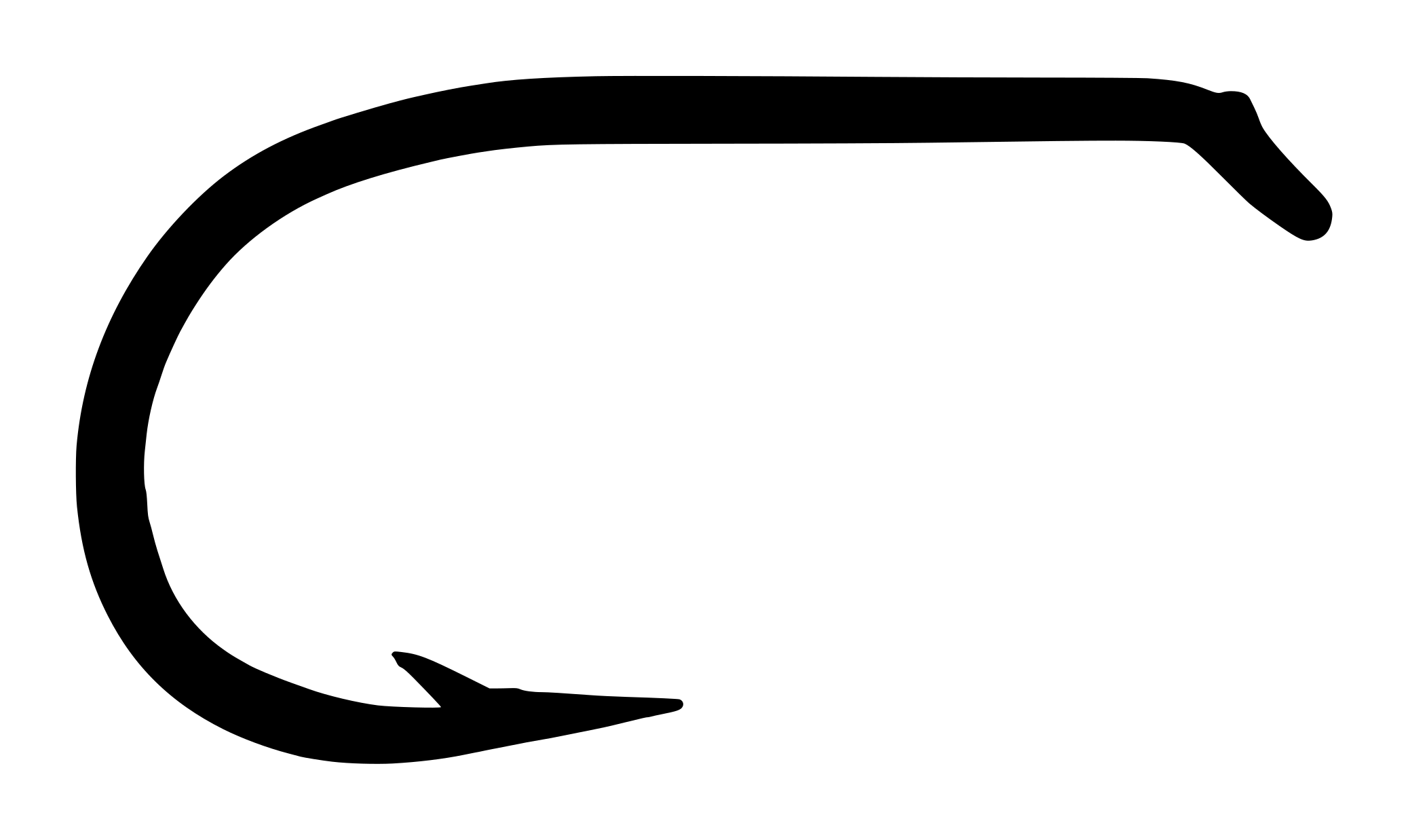
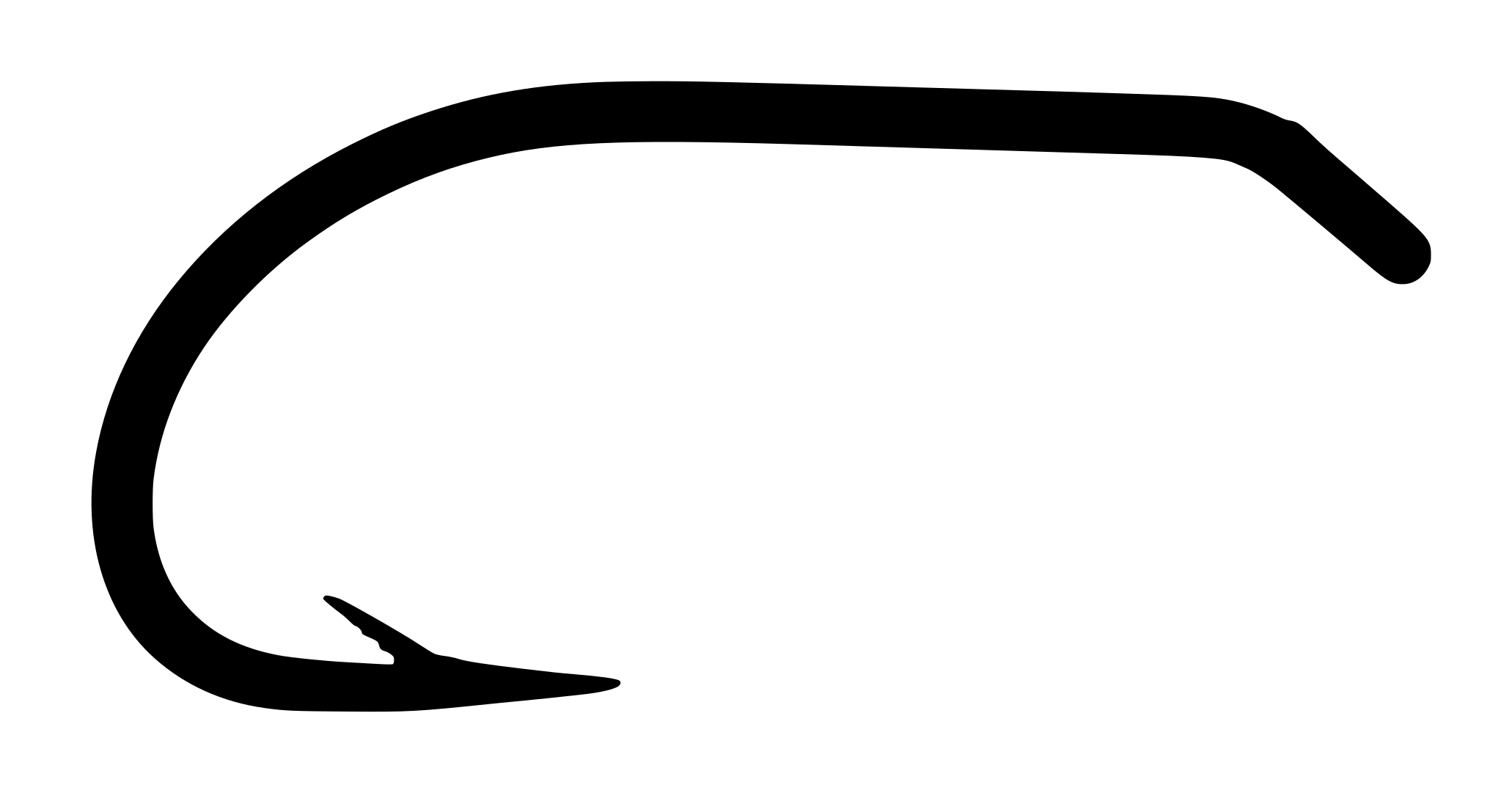
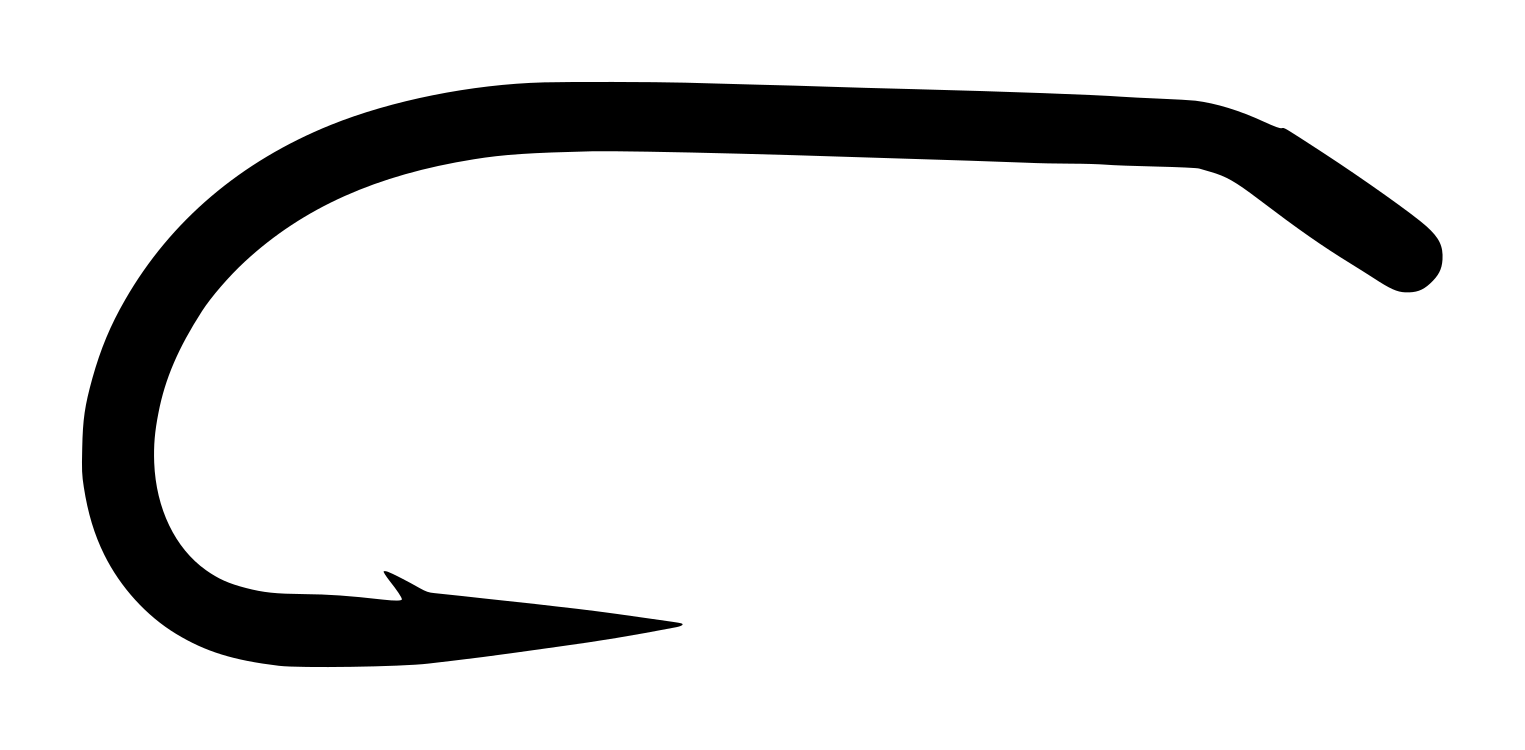
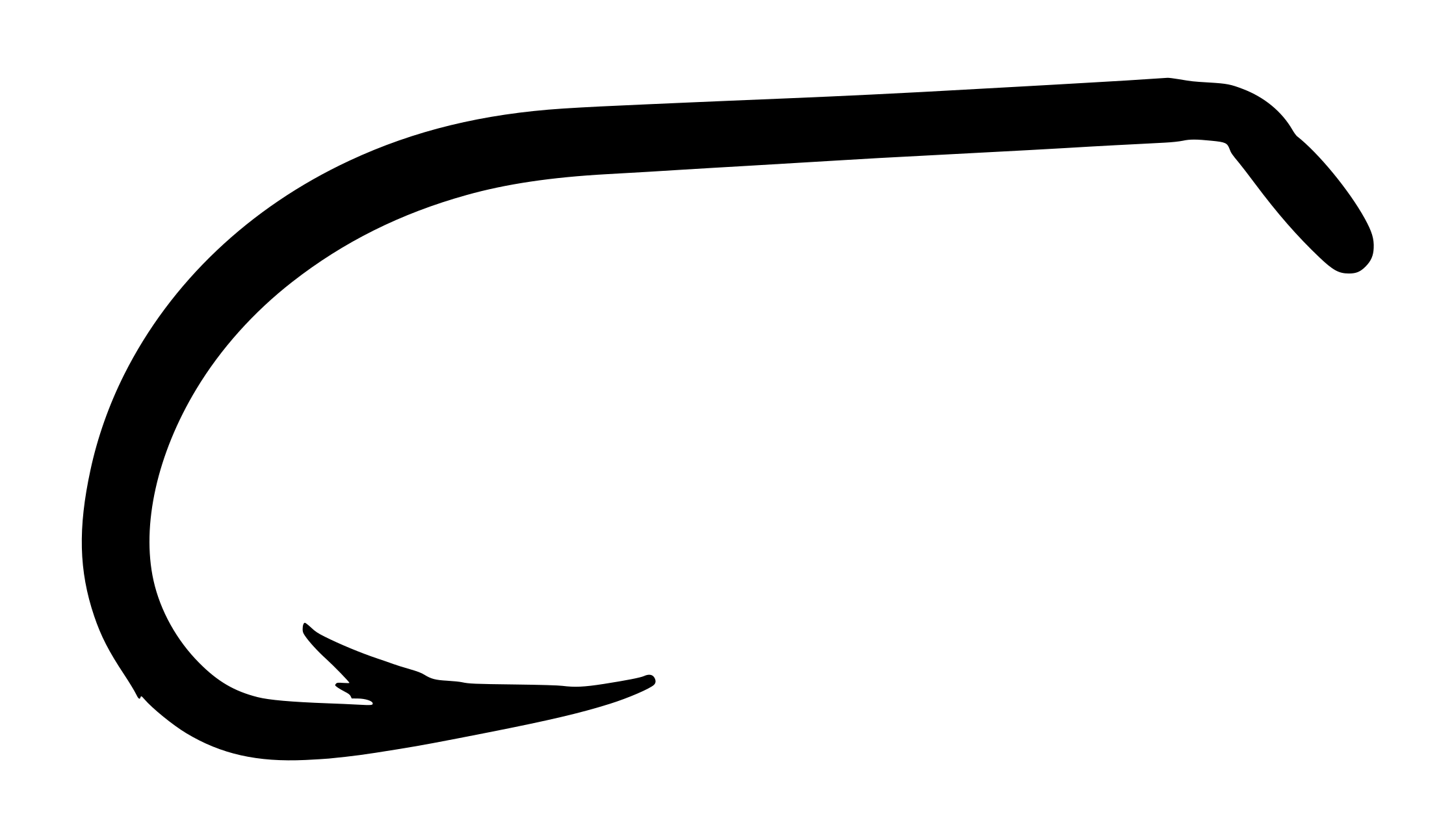
Partridge G3A, a bronzed wet fly hook with looped up-eye and sproat bend, standard wire gauge and shank length. The smooth, continuously curved sproat bend distributes load evenly across the hook during fish-playing, while the up-turned gut loop accommodates fine tippet materials without fouling the fly body. Redditch hand-forging methods produce consistent temper and finish in this general-purpose wet fly platform, which has served British fly tyers since the 1920s for traditional soft-hackle patterns and weighted nymphs.
Two Partridge G3A Sproat wet-fly hooks on measurement grid, showing the characteristic smooth sproat bend, looped up-eye, and bronzed finish typical of Redditch-era production. Side profile view demonstrates the consistent geometry and moderate wire gauge.
Photographic record
2 cataloged imagesSelect any record to load it above.
2 images shown
Partridge G3A Sproat Wet Fly Hooks Size 12/16 Side ProfileTwo Partridge G3A Sproat wet-fly hooks on measurement grid, showing the characteristic smooth sproat bend, looped up-eye, and bronzed finish typical of Redditch-era production. Side profile view demonstrates the consistent geometry and moderate wire gauge.Open originalPartridge G3A Original Card Packaging FrontFront face of the original Partridge G3A Sproat Wet Fly card packaging showing the bright green header with 'Partridge of Redditch' branding, 'Finest Hand Made British Hooks' tagline, model code G3A, handwritten size notation '2/16', and 'QTY 25' quantity marking. Plastic window shows the hooks in profile against the measurement grid.Open original
Technical profile
Eye
Tapered Eye, Turned DownLooped up-eye with moderate diameter. The eye loop is clean and smoothly formed, characteristic of hand-forging standards at Redditch. P The eye shows good roundness and consistent gauge relative to the shank, with no visible flattening or deformation. The eye is positioned directly above the shank entry point, standard for wet-fly and nymph patterns.
Wire
Standard, Forged, Est. ~0.045"-0.055" (~1.14-1.40 mm) E
Shank
Short (1X–2X Short) — Plain
Bend
Sproat, Wide gapClassic sproat bend with smooth, well-defined bottom curve typical of Redditch forging. The bend is symmetrical and exhibits the characteristic Redditch bend geometry — neither heavily swept nor severely angular. Wire set is clean, with no offset or asymmetry. P The specimen shows an evenly proportioned sproat arc, confirming the bend family designation and standard Redditch manufacturing technique.
Point
Standard / SpearShort, close-cut barb positioned immediately behind the point. P The barb is moderate in sweep and length, typical of standard Redditch forged hooks. No double barb or microbarb features visible.
Finish
Bronzed — Confirmed (stated on packaging)Warm bronzed finish, typical of Redditch-era Partridge production. P The specimen exhibits a medium reddish-brown tone characteristic of traditional bronze japanning or bronzing process. The finish shows light patina consistent with age and storage in a paper packet — slight dulling of the surface but no significant corrosion or flaking. The finish color is warm and uniform across both specimen hooks shown, indicating consistent manufacturing control.
Both hooks shown are in excellent condition — bright, with no visible corrosion, pitting, or damage. The card packaging shows light creasing and minor edge wear consistent with age and storage, but the printed surface remains legible and the colors vivid. No missing hooks. The blue handwritten size notation (2/16) on the card is clear.
The sproat bend is a smooth, continuously curved bottom with no angular facets or points of stress concentration. This geometry distributes load evenly across the bend during hook-set and fish playing, making it reliable for soft materials (fur, hair, feather) and traditional gut-loop presentations. The standard wire weight (0.045″–0.055″ estimated) provides sufficient strength for small- to medium-sized trout and sea trout without excessive mass that would impede the fly’s drift or sink rate. The looped up-eye is sized to accept fine tipping and leader material without restriction, and the upward orientation keeps the eye clear of tying materials that might foul during cast or presentation. Redditch hand-forging produces a consistent temper and finish, with no visible stress marks or latent defects that would appear in lower-quality production. The bronze finish provides corrosion resistance adequate for freshwater use and adds a subtle visual character valued by traditionalists. The G3A’s moderate gap width and standard shank make it a general-purpose wet-fly platform, suitable for both weighted and unweighted patterns, and compatible with traditional dubbing, silk wrapping, and feather-hackle materials.
Packaging states 'Partridge of Redditch' with 'Finest Hand Made British Hooks' and 'High Carbon Sheffield Steel' — consistent with Redditch-era production (pre-1996). The card design with green header band, two-tone printed layout, and handwritten size notation (2/16 in blue pen) is characteristic of mid-to-late Redditch era (1950s–1980s). No barcode visible on packaging, supporting pre-1974 manufacture. The printing method appears to be letterpress with hand-stamped size codes, typical of Redditch production through the 1970s–1980s. No country-of-origin marking visible in photographed area (though this does not exclude post-1974 UK production). The overall aesthetic and paper stock are consistent with Bramley-era Partridge branding (1970–1996). Specimen likely dates to c. 1960s–1980s based on packaging typography and manufacturing method. Modern eBay sold listings for G3A show current production is ongoing; this specimen appears to be vintage Redditch issue, distinguishing it from contemporary Chinese-made G3A.
The Sproat Legacy
The sproat bend name derives from a Redditch hook maker named Sproat, whose design became so influential that it was adopted into the British Standards Institution categorization of hook bends. By the mid-20th century, 'sproat' was generic — nearly every major British hook maker offered a sproat-bend wet fly. Partridge's G3A was the gold standard for traditional English wet-fly dressing, and guides on Scottish rivers in the 1960s–1980s would specify 'Partridge G3A size 14' when recommending soft-hackle patterns to visiting anglers, a reputation it maintains among traditionalists today.
Design lineage and influence
The sproat bend originates in 19th-century British hook tradition, refined by multiple Redditch makers including S. Allcock and others. The G3A designation first appears in Partridge catalogs during the Redditch-era production (pre-1996), though the underlying bend geometry is pre-Partridge in lineage. It represents the application of a proven wet-fly bend family to Partridge’s post-1933 corporate product coding system. The G3A sits alongside related wet-fly hooks (G3A/L Wet Heavy Supreme, G3AY Sproat Nymph) as part of the broader G-series sproat family. Partridge’s version was used by British salmon and trout anglers throughout the mid-20th century and remains largely unchanged in geometry, reflecting the design stability of the sproat bend. Modern equivalent is the Daiichi 1180 Sproat, which replicates the bend geometry with contemporary manufacturing; however, collectors and traditional wet-fly practitioners favor original Redditch-made G3A hooks for their hand-forged character and historic provenance.
Best matchRelated by Attribute
Computed automatically from catalog data — updated as new hooks are added.
Matches: Bend, Shank, Gap, Eye Orient., Point +3 moreDiffers: Wire: Standard vs Heavy (1X Heavy); Eye: Tapered Eye vs Ball Eye; Forging: Forged vs Round +4 more
Matches: Bend, Wire, Eye, Eye Orient., Finish +4 moreDiffers: Shank: Short (1X–2X Short) vs Standard; Gap: Wide vs Standard; Point: Standard / Spear vs Needle +3 more
Matches: Bend, Gap, Eye Orient., Point, Finish +5 moreDiffers: Shank: Short (1X–2X Short) vs Standard; Wire: Standard vs Extra-Heavy (2X+); Eye: Tapered Eye vs Ball Eye +2 more
The G3A is a classic English wet-fly hook designed for traditional soft-hackle and spider-pattern wet flies, particularly brown trout, sea trout, and Atlantic salmon presentation on small streams and rivers. The sproat bend provides excellent hook-up geometry for wet-fly work, with the looped up-eye accommodating a range of tying materials. The standard wire weight and moderate gap make it suitable for both traditional dubbed bodies and modern nymph patterns. Historically used throughout the 20th century in English and Scottish wet-fly tradition, the G3A remains a specialist tool for anglers fishing subsurface patterns with fine leaders and traditional presentations.
Secondary Applications
Small streamer work, early-season nymphing, soft-hackle emerger patterns
Classic Fly Patterns
Partridge and Orange, Partridge and Brown, Soft-hackle wet flies, English wet-fly dressings, North Country patterns, spider patterns, Hare's Ear nymphs
Modern Equivalents
Hook
Match Quality
Notes
Daiichi 1180 Sproat
Very Good
Contemporary sproat-bend wet-fly hook with nearly identical geometry to G3A; modern Japanese manufacture with consistent quality
Partridge G3A (modern production)
Excellent
Direct modern equivalent — same model code, currently manufactured in China by Mustad; geometry differs slightly from vintage Redditch examples per collector documentation (shank length and bend curvature variations)
Allcock 049 Sproat
Good
Historic British competitor sproat-bend hook, similar wet-fly application
Mustad 3906B
Moderate
Standard sproat-pattern wet-fly hook; industrial manufacture, less refined than Redditch tradition but functionally compatible
Green entries are full records; amber entries are spec records.
Gray entries are chart-only and not physically verified against this specimen.
Collector notes
Rated 4.5/10 — Partridge G3A hooks are regularly encountered in the modern market (current production ongoing), but vintage Redditch-era examples with original bronze finish and hand-marked sizing are scarce and sought by specialists. Larger (sizes 6–10) and smaller (sizes 14–18) variants are less commonly encountered than middle sizes. Original packaging in excellent condition adds meaningful collector premium. Demand is focused on wet-fly traditionalists and Redditch-era hook historians rather than mainstream fly tyers.
Reference value
$6 – $14 USD estimate
Packaging condition
Very Good — light wear, fully legibleRecorded specimen
Packaging format
GB-PRD-002Catalog code
Positive factors: The G3A is a foundational wet-fly and soft-hackle hook with a loyal specialist following among traditional English fly tyers. Redditch-era examples (pre-1996) command respect for manufacturing heritage and hand-forging quality. The sproat bend is geometrically sound and remains a standard choice for wet-fly work. Bronze finish with original packaging appeals to collectors of period British manufacturing. The G3A has continuous production history spanning a century, making older examples valuable as historical reference specimens.
Limiting factors: The G3A is not scarce in the absolute sense — Partridge continues to produce it, and eBay listings are regular. Collector demand is specialist rather than mass-market; wet-fly traditionalists form the core audience, not general fly tyers who may favor modern nymph hooks. Many vintage cards have been opened and partially used, reducing the pool of mint examples. Intermediate sizes (12–14) are more common than extremes (6–10 or 16–18). Chinese-made modern production (post-2008) is far cheaper and abundant, which depresses pricing for vintage examples that lack dramatic rarity or packaging distinction.
Most desirable variants: Original Redditch cards with hand-marked sizes, particularly in larger sizes (6/0–10) or notably small sizes (16–18). Complete cards with all 25 hooks intact. Bronze finish (rather than modern Black Nickel variants). Sealed or near-sealed cards with original tissue wrapping. Cards bearing Partridge letterhead or pre-1970 address formatting.
Condition factors affecting value: Original packaging condition is the primary value driver — a complete, sealed vintage card may sell for 2–3× the price of an opened card with hooks missing. Finish condition (bright bronze vs heavily oxidized) affects desirability. Hooks should show no corrosion, pitting, or breakage. Packaging legibility is important; faded or water-damaged cards are significantly less collectible.
Packaging
Sales card format, approximately 3.5" × 2.25" (89 × 57 mm). Bright green header band with 'Partridge of Redditch' in large serif lettering. Below, in a white field with black border: 'Finest Hand Made British Hooks' tagline and a stylized fish hook icon. Model code 'G3A' appears twice (top header and lower-left field). Size marked 'SIZE' field with handwritten '2/16' in blue ballpoint pen (indicating size 2 and 16 — likely size 16 with quantity 2, or alternatively a variant code). 'QTY 25' marked in right field (quantity of 25 hooks per card). Text below the main graphic reads 'DE SPROAT FORGED WET FLY HOOKS' and 'HIGH CARBON SHEFFIELD STEEL'. No barcode visible. Card stock is slightly off-white/cream colored, consistent with mid-20th-century paper stock. Print method is offset litho (not letterpress), with hand-stamped size notation applied post-printing. The plastic window (clear acetate or cellophane) shows the two specimen hooks in profile against the grid background. Overall condition: very good with light handling wear and minor crease on edges.
Market Value Notes
Low ($6): Good condition, opened card, 20–24 hooks present, light wear, vintage Redditch production.
High ($14): Excellent condition, sealed or near-sealed card, all 25 hooks, minimal packaging wear, Redditch-era example.
Premium factors: Original packaging in unopened condition, Redditch-era manufacture (pre-1996), complete hook count, hand-marked sizing notation, bronze finish uniformity, collectible sizes (extremes: 6–10 or 16–18).
Platforms: eBay sold listings (various G3A variants), specialist UK tackle dealers, fly-tying forums and private sales.
Confidence: V verified — Based on eBay sold data (Apr 20, 2023 – Apr 19, 2026), avg $10.67, range $3.59–$37.75. Five individual eBay sold listings for G3A variants range $5.79–$18.24. Vintage Redditch examples with original packaging typically fall in the $8–$16 range; modern Chinese-made G3A cards typically $4–$8. High-end outliers ($25+) reflect rare sizes, exceptional packaging, or bundled lots.
Where to Find
eBay (searches: 'Partridge G3A' or 'Partridge Sproat Wet Fly'); UK specialist tackle dealers (Sprite Fishing, 54deanstreet.com, flyhooks.org); fly-tying forums (Classic Fly Rod Forum, Spey Pages); estate sales and vintage fishing tackle dealers in England, particularly in the Midlands and southwest. Redditch-era examples less frequently available than modern production; expect to search actively for specific sizes and sealed cards.
eBay market reference. Researcher-curated. Prices in USD. Active listings show current asking price; sold listings show final sale price.
Preservation
Storage and Preservation
Store the G3A in its original card packaging in a cool, dry location away from direct sunlight and humidity. The bronze finish will develop a warm patina over time with exposure to moisture — collectors often consider this desirable, but if you prefer to retain the bright finish, maintain storage in low-humidity conditions (below 50% RH). Keep the card flat in a book or archival box to prevent warping. Avoid stacking or bending the card, which can crack the printed surface and loosen hooks from their seat. If the card is sealed in original plastic, do not remove the wrapper unless you intend to use the hooks — the seal provides modest protection against oxidation and dust. Inspect annually for signs of rust or corrosion on the hooks themselves; if surface corrosion appears, brush gently with a soft, dry brass brush and immediately store in a sealed container with a silica-gel desiccant packet. Do not use metal storage boxes (steel or iron) directly; use a plastic or paper envelope as a barrier to prevent galvanic corrosion. Avoid contact with other metals, particularly copper or aluminum, which can induce electrochemical pitting on the bronze surface. Original packaging is a major component of value — preserve it intact, even if some hooks are removed for use.
Marking Analysis
Handwritten Notation and Packaging Marks
The card displays a handwritten size notation in blue ballpoint pen: ‘2/16’ in the Size field. This notation is typical of Partridge packaging from the 1960s–1980s, when pack size and hook size were sometimes marked by hand rather than pre-printed. The notation ‘2/16’ most likely indicates ‘size 16 hooks, quantity 2’ — a common format for Partridge wet-fly cards, though alternative interpretations (variant code or hook length/weight indicator) are possible. The handwriting is clean and deliberate, consistent with in-house stamping or labeling by Partridge staff rather than retailer markup. The use of blue ballpoint pen rather than black ink or stamps suggests this card was labeled during the packaging process, not during inventory or retail handling. The presence of hand-marked sizing is a strong authenticity marker — modern counterfeits typically use pre-printed sizing, whereas mid-20th-century Partridge often applied variable sizing by hand to accommodate run-to-order packaging. This hand notation increases the specimen’s collectibility as an authentic period artifact.
Primary Source
Packaging Text and Manufacturing Claims
Source: Partridge of Redditch G3A packaging card, c. 1960s–1980s
The card headline states ‘Finest Hand Made British Hooks’ — a claim consistently used by Partridge and other Redditch makers to differentiate from industrial mass-production. The statement is technically accurate: Redditch-era Partridge hooks were hand-forged (individual blanks forged by hand using power or manual trip hammers, then finished by hand) rather than stamped or cold-formed. ‘Hand made’ in the Redditch tradition referred to the skilled craft of forging, not individual bench work. The material specification ‘High Carbon Sheffield Steel’ is accurate — Sheffield was (and remains) a premier source of tool and fishing-hook steel in England, and high-carbon steel is appropriate for hook applications requiring hardenability and corrosion resistance. The term ‘high carbon’ typically indicates 0.60–0.80% carbon content, suitable for forging and tempering. No other engineering specifications appear on the card (breaking strength, wire diameter, etc.), which is consistent with mid-20th-century hook packaging — detailed specs were not market-standard at the time. The overall claim structure (‘finest hand made’ + ‘British’ + ‘Sheffield steel’) is a classic Redditch marketing formula used to justify premium pricing relative to industrial competitors, and it accurately reflects the manufacturing reality of Redditch production.
Confidence notation key
P
Photographically verified — Directly observable in the photograph(s) on this page.
V
Verified by documentation — Confirmed by manufacturer catalog, spec sheet, or published reference.
I
Inferred — A logical deduction from observable or documented evidence, not directly stated.
E
Estimated — An approximation based on visual comparison, proportional analysis, or limited data.
S
Speculative — A reasoned hypothesis that cannot be confirmed from available evidence.
Unnotated claims are the compiler’s synthesis; see Sources. All photographs on garrenwood.com are taken on a measurement grid where each square equals 1/10 inch (0.1″ / 2.54 mm).