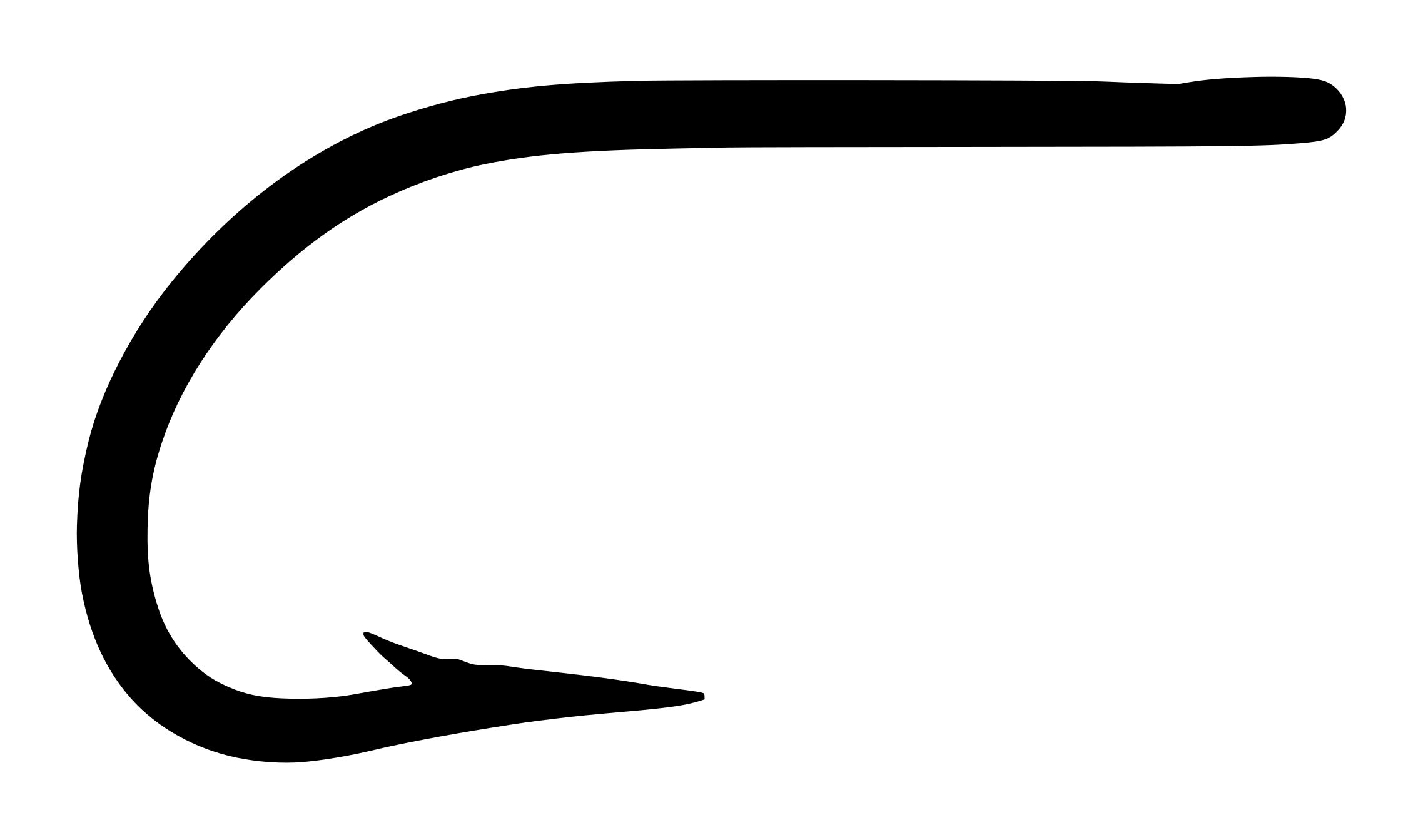
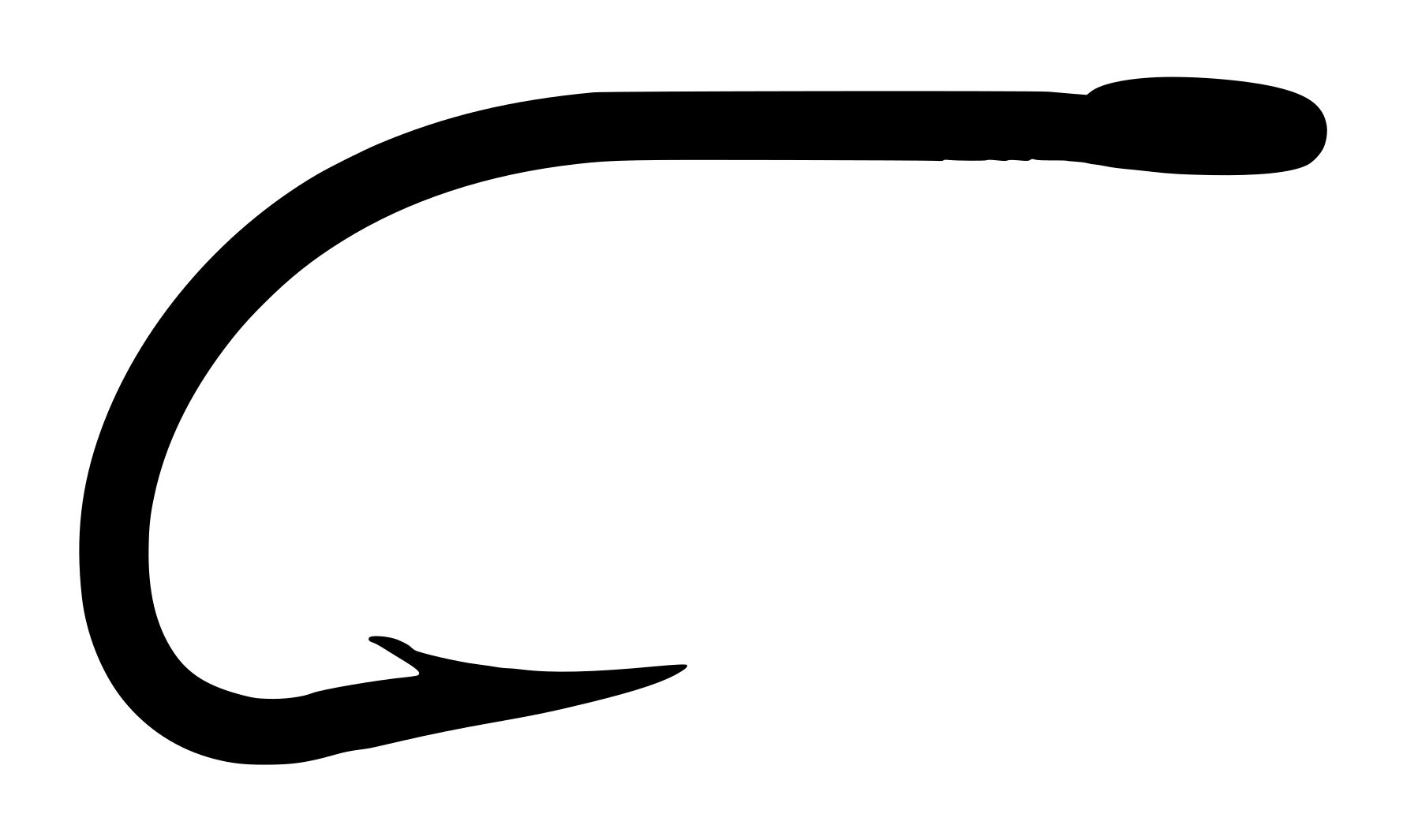
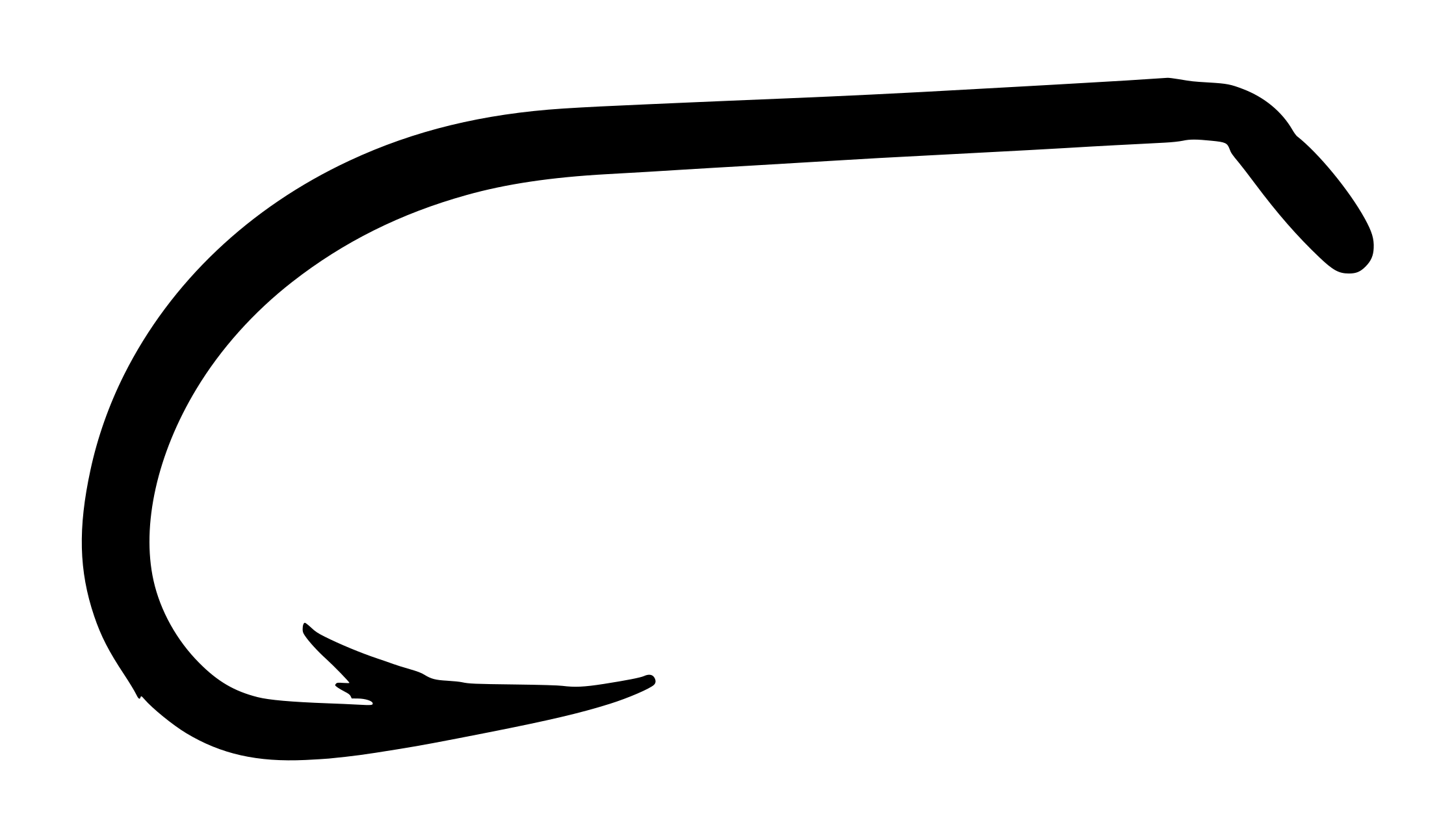
The Bergman Red Label Short Shank is a forged wet-fly and nymph hook manufactured by Ray Bergman’s tackle company in Nyack, New York, bearing English production marks. This size 10 specimen measures approximately 0.43″ overall with a 0.33″ shank, compact proportions suited to tapered gut leaders typical of early-to-mid 20th century fly fishing.
Defining features include a tapered turned-down eye, sproat bend, standard wire gauge, and bronzed finish. The label explicitly specifies ‘Forged Regular Wire’ and ‘Tapered T.D. Eye’—documentation of manufacturing specifications rarely stated so directly on period packaging. The production detail ‘MADE IN ENGLAND’ reveals outsourced British manufacture, consistent with substantial American tackle companies sourcing hooks from Redditch-area suppliers during this era.
Packaging evidence—lack of barcode, letterpress-style print, wood-grain box wrapper, and absence of ZIP codes—places manufacture in the 1930s-1950s window. Ray Bergman’s period of maximum visibility as author and tackle authority aligns precisely with this timeframe, adding historical credibility to the attribution.
Collector interest centers on the direct Ray Bergman association, the specificity of manufacturing documentation on the label, and the rarity of complete original boxes from this maker. Red Label examples are infrequently encountered on the secondary market.
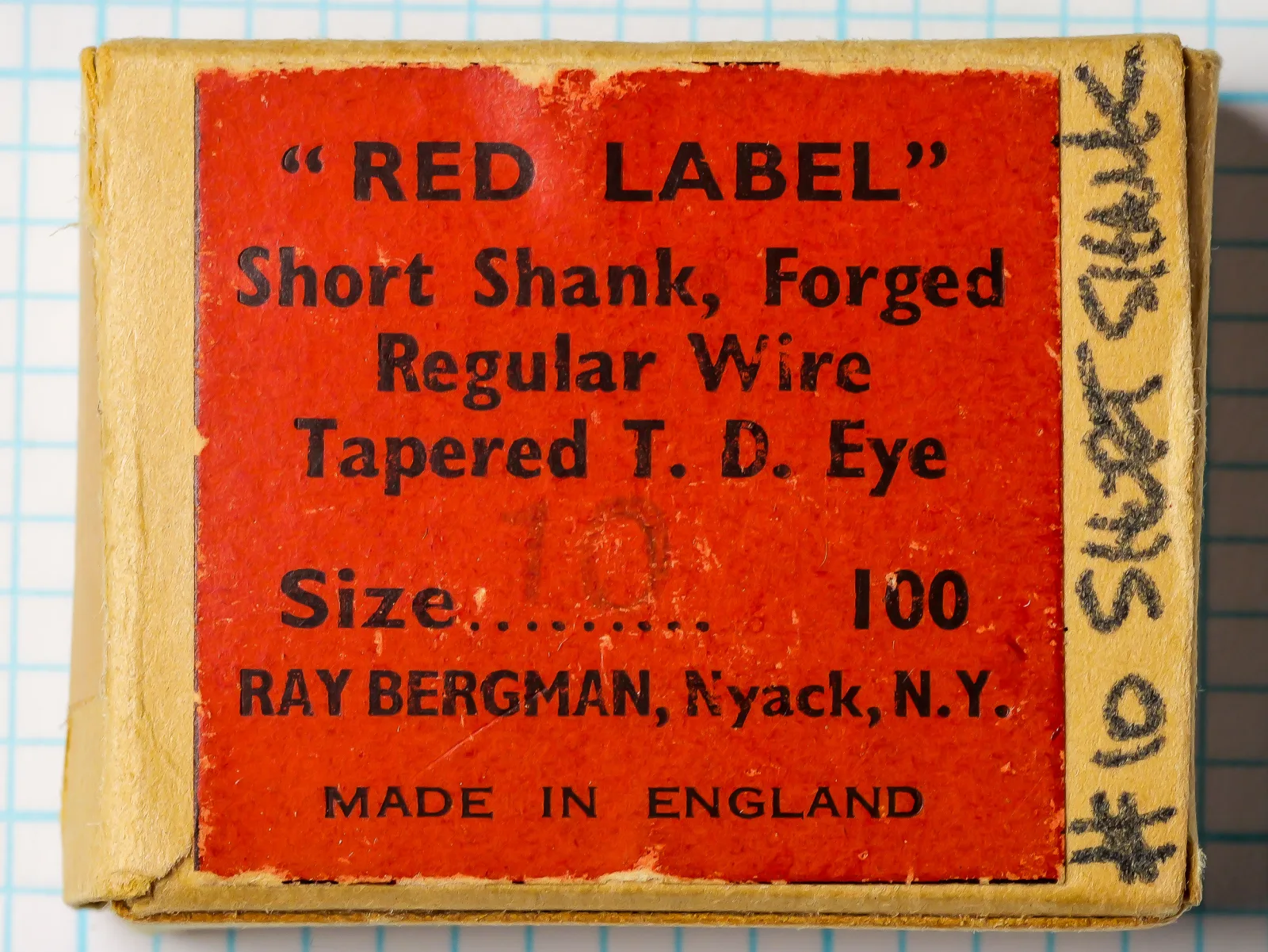
Front label panel of the Bergman Red Label Short Shank box, showing specification details (Forged Regular Wire, Tapered T.D. Eye, Size 10, 100 count) and manufacturer attribution (Ray Bergman, Nyack, N.Y., Made in England).
Photographic record
2 cataloged imagesSelect any record to load it above.
2 images shown
Bergman Red Label Short Shank Box LabelFront label panel of the Bergman Red Label Short Shank box, showing specification details (Forged Regular Wire, Tapered T.D. Eye, Size 10, 100 count) and manufacturer attribution (Ray Bergman, Nyack, N.Y., Made in England).Open originalBergman Red Label Size 10 Hook Side ProfileSide profile of a size 10 specimen hook on 0.1-inch measurement grid, showing the short shank, sproat bend geometry, tapered turned-down eye, and bronzed finish throughout.Open original
Technical profile
TDE | Sproat | Short | Spear Point | Bronzed
Eye
Tapered Eye, Turned DownTapered eye, turned down, approximately 0.08"-0.10" diameter, suited to tapered gut leader tippets. Taper angle sharp; eye forms clean cone rather than abrupt transition. Construction is wrought (hand-finished tapered eye rather than ball-formed). Wire junction at eye clean, no visible solder or braze marks. P
Wire
Standard, Forged
Shank
Short (1X–2X Short) — Plain
Bend
Sproat, Standard gapSproat bend: rounded bottom characteristic of sproat family. Bend depth moderate relative to shank length, consistent with short-shank classification. No offset; point remains in line with shank. Wire set clean through the forged bend. P
Point
Standard / SpearStandard barb, short and close-cut, positioned immediately behind the point. Barb placement and angle typical of Redditch-era sproat patterns. P
Finish
Bronzed — Confirmed (stated on packaging)Bronzed finish confirmed on packaging label ('MADE IN ENGLAND' production). Photograph shows warm brown-amber tone consistent with period bronzing. Steel grain texture visible beneath thin finish coating, typical of bronzed rather than japanned or blued. Finish shows light patina development consistent with age; no active corrosion visible on specimen. P
Specimen hooks bright with no corrosion or patina beyond the intentional bronzed finish. Hooks appear unused or minimally fished. Box wrapper shows minor edge wear and light toning; label intact with no tears or chips. Wood-grain finish slightly dulled from age but structural integrity sound.
Forged construction was the standard manufacturing method for fly hooks during this era. The process involved stamping hook blanks from wire stock in progressive dies, then heat-treating to harden the steel. Forging allowed manufacturers to produce consistent hook geometry at scale while maintaining wire strength—an advantage over softer wire bent by hand.
The sproat bend’s rounded bottom, characteristic of this family, distributes stress evenly during the hook-setting strike and reduces stress concentration at the bend point. Short-shank geometry was preferred for small wet flies and nymphs where excess shank material added unwanted weight and bulk. The tapered turned-down eye served two practical functions: it accommodated the conical taper of tapered gut leaders common to the era, and the turned-down angle positioned the tippet above the hook body rather than in line with it, reducing wind resistance and improving presentation.
Regular (standard) wire gauge balanced durability against delicacy. Heavier wire would have been unnecessary for small trout; lighter wire would have compromised durability with small baits and for handling larger fish. The tapered eye, sproat bend, and short shank together formed a cohesive design optimized for leader attachment and presentation efficiency under the tackle constraints of the 1930s-1950s.
Size & scale lab
Known manufactured size range:
Sizes 10-14 inferred from packaging; size 10 documented. I
This pattern was made in sizes Sizes 10-14 inferred from packaging; size 10 documented. (I). We have measurement for size 10. Know the others? Submit calipered measurements and we'll review and add them. Thank you!
Ray Bergman Inc., based in Nyack, New York, was a tackle retail and wholesale business founded to distribute fishing equipment under Bergman’s personal endorsement. Rather than manufacturing hooks, the company sourced hooks from established British producers—predominantly from Redditch, England—and rebranded them under house labels including Red Label, Blue Label, and plain Bergman marks.
Bergman’s business model leveraged his substantial editorial authority. As a prolific fly-fishing author and magazine contributor throughout the 1920s-1950s, his personal testimony carried weight with serious anglers. By attaching his name to curated hook products, he created a perceived link between his published expertise and the equipment he sold. The business operated primarily through direct mail and tackle dealer networks, with a strong presence in the Northeast.
The company’s outsourcing of hook production to British suppliers reflects the industrial reality of the era: American tackle retailers could not economically produce their own hooks at commercial scale. Redditch suppliers like Allcock, Partridge, and others regularly produced hooks on contract for American branders, a practice that obscured original manufacturing while allowing American companies to maintain house brands.
Ray Bergman Inc. ceased active operations around 1956, coinciding with Ray Bergman’s death. No successor company maintained the Bergman trademark for hooks, making Red Label products finite in supply and historically bounded.
Series History
The Red Label series represents Ray Bergman’s primary house brand for fly hooks, marketed as a comprehensive range of wet-fly, nymph, and dry-fly patterns in standard sizes (6-16). The series name derives from the distinctive red label panel affixed to the cardboard boxes, a visual branding choice that made Bergman products recognizable on tackle shop shelves.
Documentation indicates Red Label hooks were offered in multiple configurations: Short Shank for wet flies and small nymphs; Standard Shank for general patterns; and variants with different eye types (tapered, ball, looped). The series appears to have been continuous from approximately the early 1930s through Ray Bergman’s death in 1956, with no clear evidence of major redesigns or format changes documented in surviving packaging.
No explicit discontinuation date appears in trade literature; the series likely ended when Bergman’s business wound down. Red Label boxes are scarce today, and individual hooks from broken cards are occasionally encountered in vintage collections, but complete original packaging is uncommon. The series represents a specific chapter in American tackle retail history—the era when author-entrepreneurs could successfully brand and distribute hooks through editorial credibility.
Named Collaborator
Ray Bergman (1887-1956) was an influential American fly-fishing author, tackle designer, and promoter whose name became synonymous with quality fly-fishing instruction and equipment during the mid-20th century. He authored Trout (1938), Just Fishing (1932), and numerous magazine articles that shaped American fly-fishing practice from the 1920s onward.
Bergman operated a tackle business headquartered in Nyack, New York, where he curated and branded hook products under the Red Label and other house marks. His commercial venture leveraged his editorial authority to sell fishing equipment directly to anglers who trusted his recommendations. Bergman hooks represent a hybrid category: sourced hooks bearing a known author-designer’s endorsement and product curation rather than original design. The Red Label mark indicates Bergman’s commercial preference for specific hook geometries—in this case, short-shank forged sproat patterns suited to his preferred fly-tying methods.
Bergman’s death in 1956 marked the end of active Red Label production, making surviving examples historically significant as artifacts of American fly-fishing’s golden age and the period when editorial authority and tackle commerce became intertwined.
Era and Packaging Dating
No barcode present (barcodes mandatory from 1974 onward), indicating pre-1974 manufacture. Letterpress-style printing on red label and wood-grain wrapper box construction consistent with 1930s-1950s American tackle packaging. Phone listing "Nyack, N.Y." (no ZIP code, state abbreviation style) typical of pre-ZIP Code era (pre-1963). Ray Bergman's prominence as fly-fishing author and tackle promoter peaks 1930s-1950s. Red label design and forged regular-wire construction indicate early commercial production. Overall evidence points to 1930s-1950s window, likely mid-range of this span.
Ray Bergman's Editorial Authority as Sales Tool
Ray Bergman was not a hook manufacturer, but his prominence as a fly-fishing author and magazine contributor gave him substantial credibility with American anglers. By the 1930s, Bergman leveraged this editorial authority to create a retail tackle business, sourcing hooks from Redditch suppliers and rebranding them under Red Label and other house marks. His bestselling book Trout (1938) became a standard fly-fishing text, and his magazine articles appeared regularly in major outdoor publications. Anglers who trusted Bergman's fly-fishing advice naturally trusted the hooks bearing his name—a marketing strategy that would be difficult to execute today, when editorial and commercial interests are more clearly separated. Bergman's model demonstrates how editorial authority translated directly into commercial enterprise during the golden age of American fly fishing.
Design lineage and influence
The short-shank sproat bent to a tapered eye represents a convergent design solution, refined across multiple British and American manufacturers during the 1920s-1950s. Redditch makers including Allcock, Partridge, and others offered nearly identical configurations under different model codes and names—a reflection of the era’s standardized engineering and the interchangeability of hooks across branders.
The tapered eye itself derives from 19th-century British fly-hook tradition, where tapered spade-ends and drawn-tapered eyes were the norm. By the early 20th century, ball eyes and looped eyes became more common for general purposes, but tapered eyes remained standard for premium fly lines and fine tippet work, particularly in Britain and among American fly-fishing traditionalists influenced by British methods.
Ray Bergman’s selection of the short-shank tapered-eye sproat as a flagship Red Label pattern reflects his conservative aesthetic: he championed proven, time-tested designs over novelty. The pattern has no significant downstream legacy beyond the Bergman brand itself; by the 1960s, changing preferences for larger hooks and heavier leaders rendered the short tapered-eye configuration obsolete in American fly fishing, though it remained standard in British chalk-stream fishing.
Best matchRelated by Attribute
Computed automatically from catalog data — updated as new hooks are added.
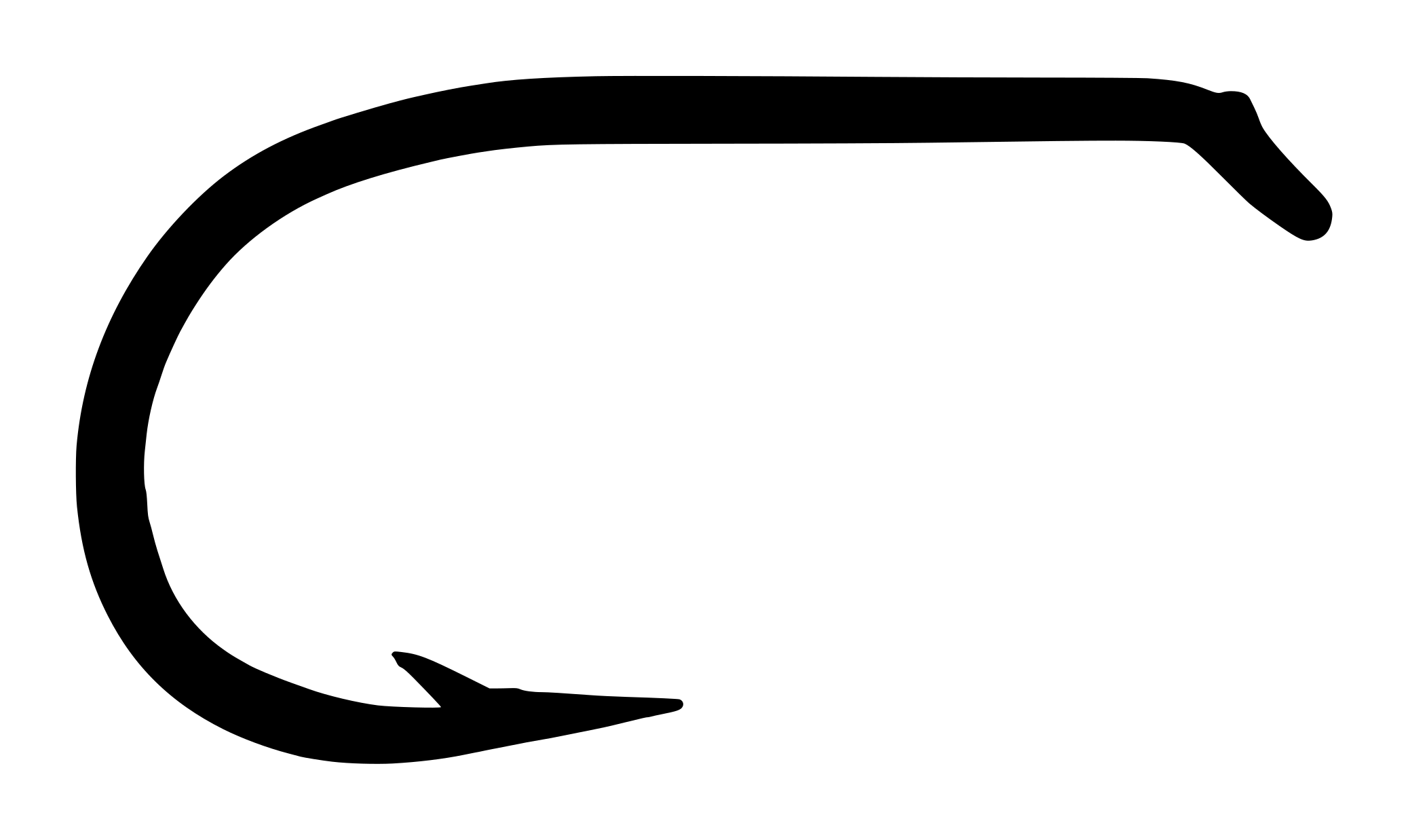
Matches: Bend, Wire, Gap, Point, Finish +3 moreDiffers: Shank: Short (1X–2X Short) vs Standard; Eye: Tapered Eye vs Ball Eye; Eye Orient.: Turned Down vs Straight / Inline +1 more
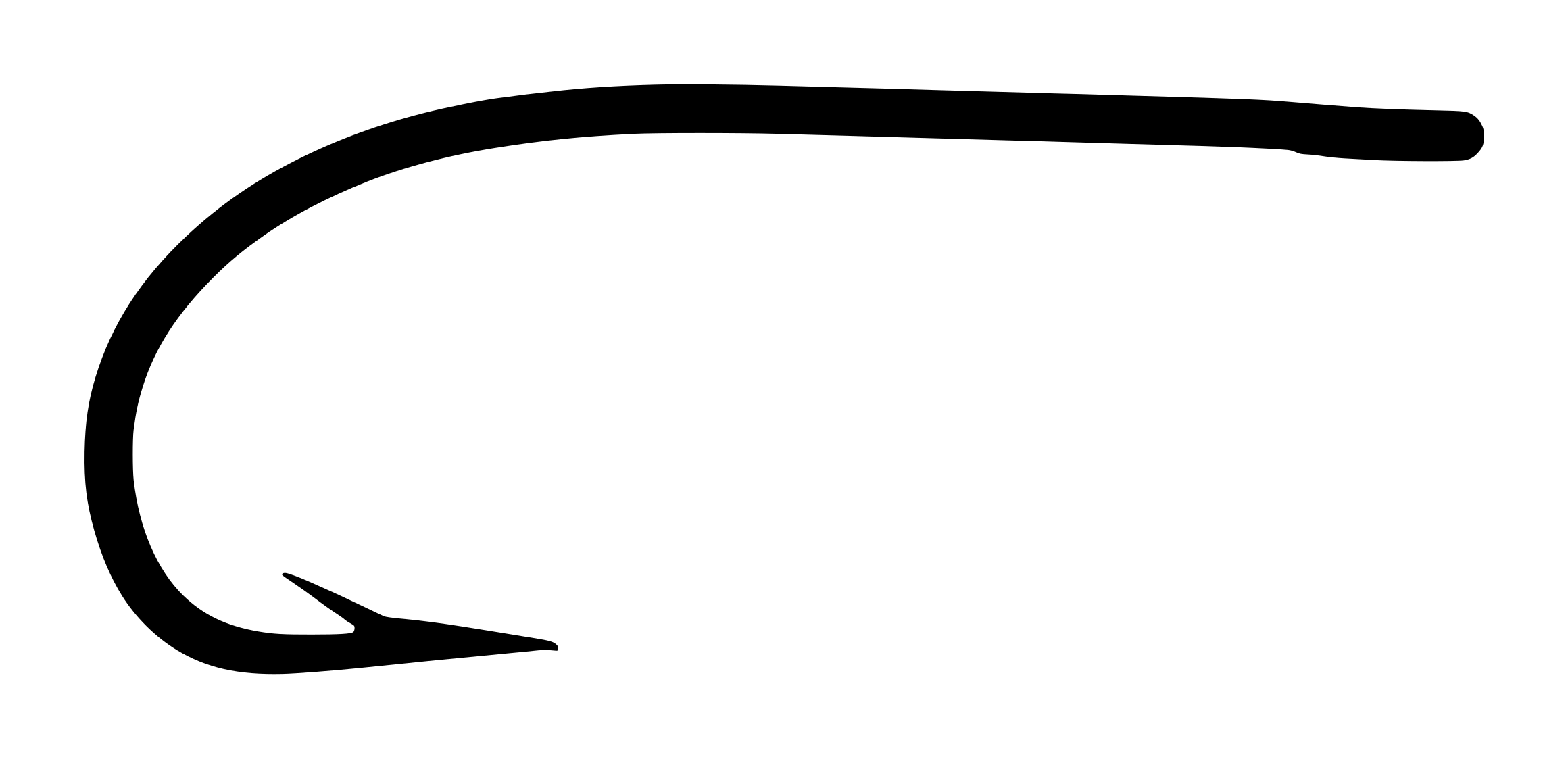
Matches: Bend, Wire, Gap, Eye, Eye Orient. +4 moreDiffers: Shank: Short (1X–2X Short) vs Standard; Point: Standard / Spear vs Superior; Forging: Forged vs Round +1 more
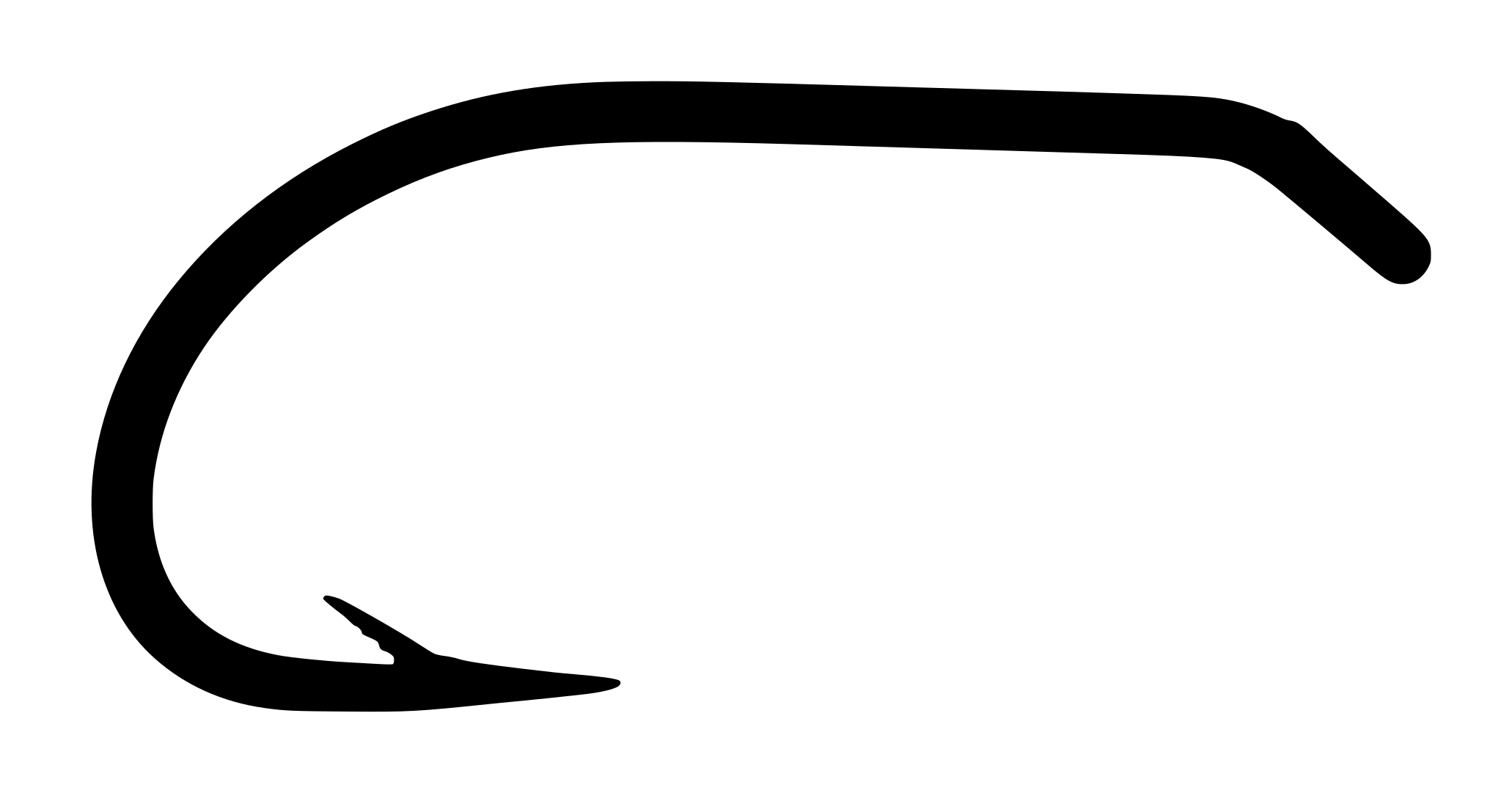
Matches: Bend, Shank, Eye Orient., Point, Finish +3 moreDiffers: Wire: Standard vs Heavy (1X Heavy); Gap: Standard vs Wide; Eye: Tapered Eye vs Ball Eye +2 more
Matches: Bend, Wire, Gap, Eye, Eye Orient. +4 moreDiffers: Shank: Short (1X–2X Short) vs Standard; Point: Standard / Spear vs Needle; Forging: Forged vs Round
Forged short-shank hook intended for wet flies, nymphs, and small baits. Tapered eye suited to fine leader tippets typical of early-to-mid 20th century fly fishing. Regular wire gauge and compact shank made this suitable for attaching to tapered gut leaders without adding bulk at the eye.
Collector notes
Rated 4.5/10 — uncommon in the secondary market but not rare. Collector demand is moderate, concentrated among Ray Bergman historians and vintage American tackle specialists. Complete original packaging commands a meaningful premium. Limiting factors include the niche appeal of pre-war American branding and the relative obscurity of Bergman's business model compared to major manufacturers like Mustad.
Reference value
$8 – $28 USD estimate
Packaging condition
Good — moderate wear, legibleRecorded specimen
Packaging format
GW-RED-01Catalog code
Positive factors: Ray Bergman’s historical prominence as a fly-fishing author lends credibility and collector appeal. Complete original boxes are genuinely scarce—most surviving examples are loose hooks or broken cards. The explicit manufacturing documentation on the label (“Forged Regular Wire,” “Tapered T.D. Eye”) is unusual and appeals to tackle historians interested in period specifications. The “MADE IN ENGLAND” attribution reveals the outsourcing practices of American tackle retailers and provides research value. The product is a bounded artifact: Bergman ceased operations around 1956, placing a natural cap on production numbers.
Limiting factors: Ray Bergman’s name recognition is significantly lower today than among fly-fishing scholars and historians. The brand never reached the distribution volume or market penetration of Mustad, Partridge, or other mainstream manufacturers, limiting the general collector base. Small hook sizes (10-14 range) have smaller demand pools than medium or large hooks. The tagline “MADE IN ENGLAND” may confuse some collectors into assuming British manufacture; educated collectors recognize this as American branding of British-sourced hooks, but the ambiguity may suppress demand among casual buyers.
Most desirable variants: Complete original boxes in excellent or mint condition. Smaller sizes (14-16) from the Red Label series, as these are less frequently encountered than sizes 10-12. Any complete original cards or sleeves with tissue wrapping intact. Matched sets (multiple size variations in original box) are particularly sought.
Condition factors: Packaging condition is critical. A complete original box in excellent condition can command 3-4x the value of the same hooks in a damaged or reglued box. Original tissue paper or wrapping significantly increases value. All hooks present on the card is necessary for the high-end valuation. Individual loose hooks carry minimal premium over the spot value of forged wet-fly hooks from generic sources.
Packaging
Cardboard box with wood-grain finish wrapper. Bright red label panel affixed to front, printed in black letterpress-style type. Label text reads: "RED LABEL" / "Short Shank, Forged" / "Regular Wire" / "Tapered T.D. Eye" / "Size.........100" / "RAYBERGMAN, Nyack, N.Y." / "MADE IN ENGLAND". Interior wrapping appears to be period kraft paper. No barcode visible. Box dimensions approximately 3.5" x 2.25" x 0.75". Minor wear to label; box structure intact.
Market Value Notes
Low ($8): Good condition, complete card with most or all hooks present, light wear to packaging. High ($28): Excellent or mint condition, complete original box with wrapper and tissue, all 100 hooks present. Premium factors: Original box wrapper (vs. loose card), Ray Bergman name recognition, size scarcity (14-16 preferred over 10-12), complete hook count, minimal aging/patina on finish. Platforms: eBay (primarily UK and US sellers), occasional vintage tackle dealer, specialist auctions. Confidence: E estimated from comparable American vintage tackle brands (1930s-1950s era, 100-hook boxes, author-branded). Limited transaction data; estimate reflects rarity of complete boxes and collector demand for Bergman.
Where to Find
eBay (searched keywords: "Bergman Red Label," "Ray Bergman hooks," "vintage fly hooks Nyack"). Vintage tackle dealers specializing in American brands (search "vintage tackle dealer" + "Bergman" or "Ray Bergman"). Tackle shows and antique sporting fairs in the Northeast (particularly New York and New England regions). Estate sales and auctions in areas where Bergman's influence was strong (Upstate New York, Upper Midwest). Specialized online forums devoted to vintage American fly-fishing tackle and fly-tying equipment.
Collector's Identification Tips
Identify Bergman Red Label hooks by the distinctive red label panel affixed to the cardboard box wrapper. The label explicitly states “RED LABEL” in the upper portion and typically includes “Short Shank, Forged” or “Standard Shank” specification. The manufacturer attribution “RAYBERGMAN, Nyack, N.Y.” appears in the lower portion. Complete boxes are far more identifiable than loose hooks; individual specimens bear no Bergman marking and must be identified by size, geometry, and the package they came from. Look for the absence of modern barcodes and ZIP codes on the label—clear indicators of pre-1970 manufacture. The wood-grain finish wrapper is characteristic and rarely seen on other American tackle brands. Size variations (10-16 documented) help narrow down production periods; smaller sizes like 16 appear less frequently than larger sizes.
Preservation
Storage and Preservation
Store the original box in a cool, dry environment away from direct sunlight and humidity. The bronzed finish will develop a darker patina over time with humidity exposure—this is normal aging and is generally considered desirable by collectors. Avoid storing in damp basements or attics where the cardboard wrapper may absorb moisture and weaken.
Keep the box closed and intact rather than opening it to remove individual hooks. The original packaging contributes substantially to the value and historical significance of the piece; handling the hooks is unnecessary unless the specimen is intended for active use, which is not recommended for a vintage example.
Do not attempt to clean or refinish the bronzed hooks. Any abrasive cleaning will damage the finish and remove historical character. If light surface oxidation develops, it can be gently wiped with a soft, dry cloth, but aggressive polishing should be avoided.
Store away from ferrous metals and salts to prevent galvanic corrosion. The original wood-grain wrapper box is archival-quality paper stock and should remain undisturbed. If the wrapper shows loosening or edge wear, do not attempt to repair it with modern adhesives—consult a paper conservator if structural repair becomes necessary.
Primary Source
Packaging Label Text Analysis
Source: Red Label box label, Bergman packaging, c. 1930s-1950s
The red label panel on this box provides explicit manufacturing and specification documentation: ‘SHORT SHANK, FORGED’ / ‘REGULAR WIRE’ / ‘TAPERED T.D. EYE’. This level of technical specificity is remarkably rare on period packaging, which typically relied on brand name and size alone. The label demonstrates that Bergman (or his suppliers) understood and valued precise terminology for hook geometry.
‘MADE IN ENGLAND’ clearly indicates outsourced British manufacture—likely from a Redditch supplier. The absence of a specific British maker’s name (common on Allcock or Partridge packaging) confirms that Bergman purchased hooks on contract and rebranded them with his label. This practice was standard among American tackle retailers unable to justify the capital investment in hook-forging equipment.
The label exhibits letterpress-style printing (raised type creating embossed effect on the paper), indicating pre-offset print technology. The absence of any barcode, QR code, or modern SKU system dates the box to the pre-1974 era. The lack of a ZIP code in the Nyack address (‘N.Y.’ without numerical code) further confirms manufacture before the 1963 implementation of the ZIP Code system.
The quantity ‘100’ hooks per box was standard for period fly-hook packaging. Large box counts were economical for manufacturers and appealed to serious fly tyers who tied dozens of patterns regularly. Modern packaging typically reduces quantities to 25-50 per package, reflecting changed consumer behavior and retail economics.
Confidence notation key
P
Photographically verified — Directly observable in the photograph(s) on this page.
V
Verified by documentation — Confirmed by manufacturer catalog, spec sheet, or published reference.
I
Inferred — A logical deduction from observable or documented evidence, not directly stated.
E
Estimated — An approximation based on visual comparison, proportional analysis, or limited data.
S
Speculative — A reasoned hypothesis that cannot be confirmed from available evidence.
Claims with no notation are confirmed by multiple independent sources. All photographs on garrenwood.com are taken on a measurement grid where each square equals 1/10 inch (0.1″ / 2.54 mm).