Mustad Irlandais model 254 B, a short-shank bait hook with kirby offset and extra-heavy round wire designed for live-bait and nymph work in European freshwater and brackish applications. The straight ball eye, hollow point geometry, and reinforced wire distribution optimize for casting weight and reliable penetration without line twist, characteristics that made this pattern a standard offering across Mustad’s mid-century Norwegian catalog. The combination of short gap and wide bend was engineered to hold active baitfish in proper orientation during presentation, solving the alignment problem inherent in snelled bait rigs of the period.
Mustad — New entry — image 1
Photographic record
3 cataloged imagesSelect any record to load it above.
3 images shown
Mustad — New entry — image 1Mustad — New entry — image 1Open originalMustad — New entry — image 2Mustad — New entry — image 2Open originalMustad — New entry — image 3Mustad — New entry — image 3Open original
Technical profile
Straight Ball | Kirby | Short | Extra heavy Wire | Hollow Point | Bronzed
Eye
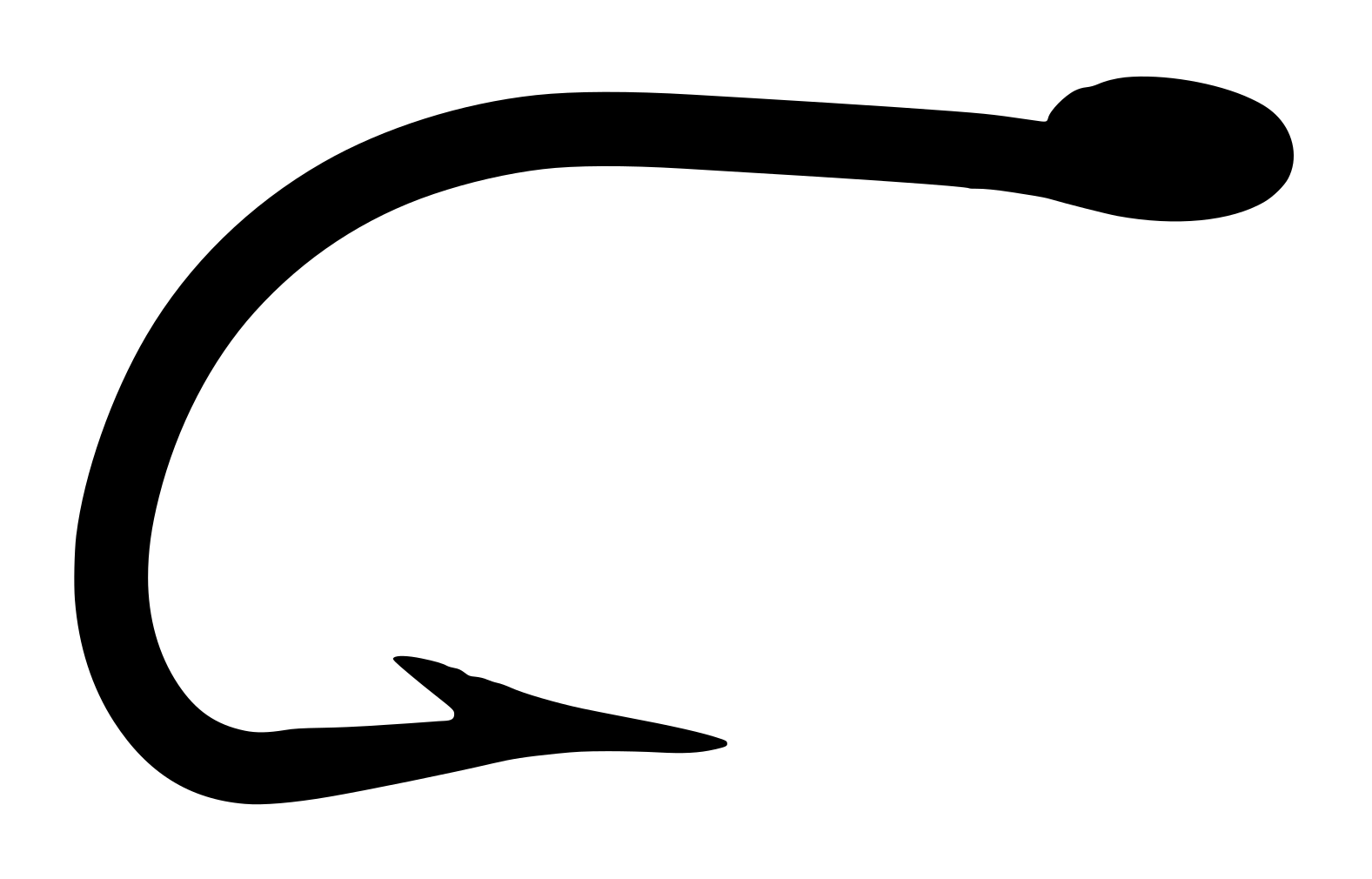
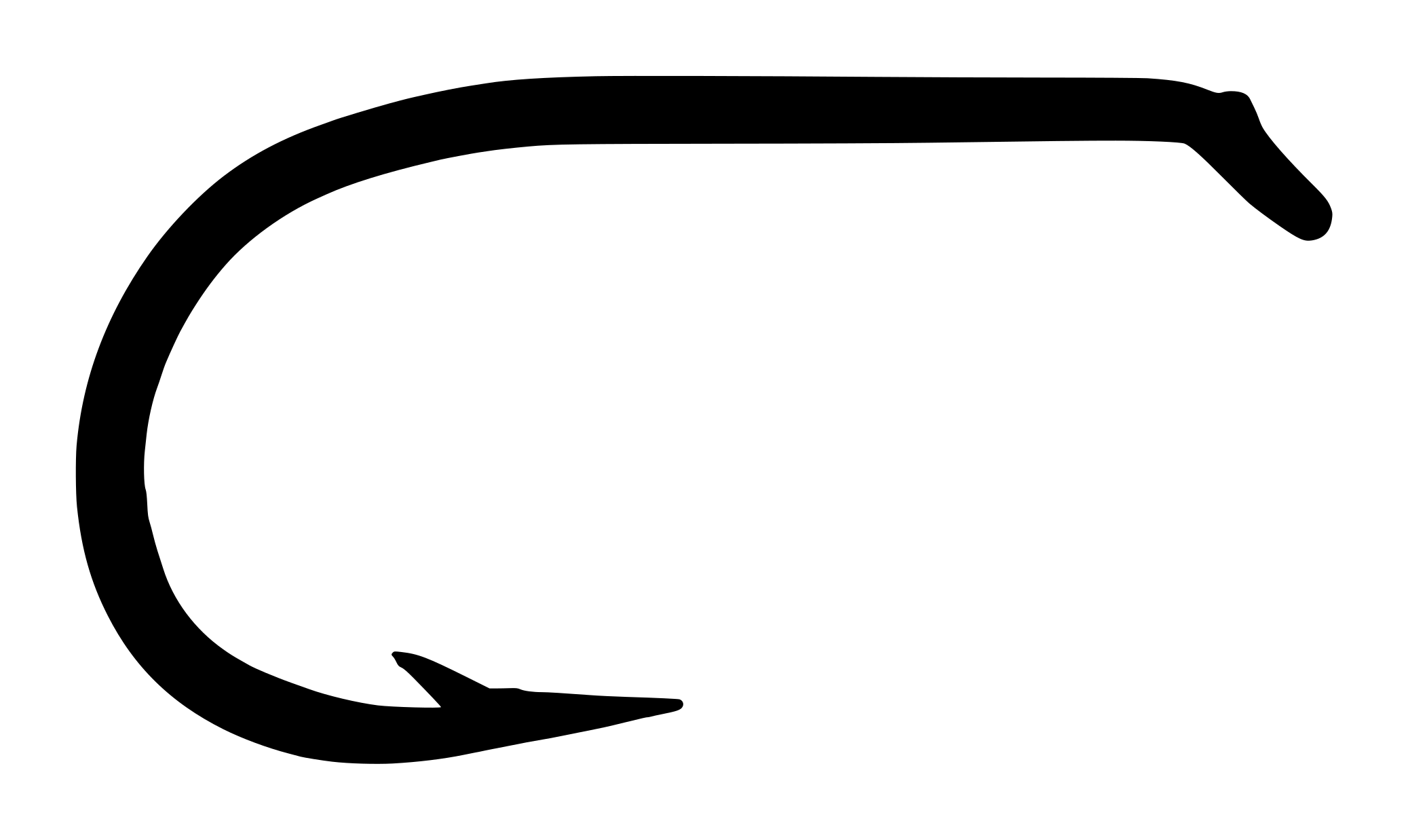
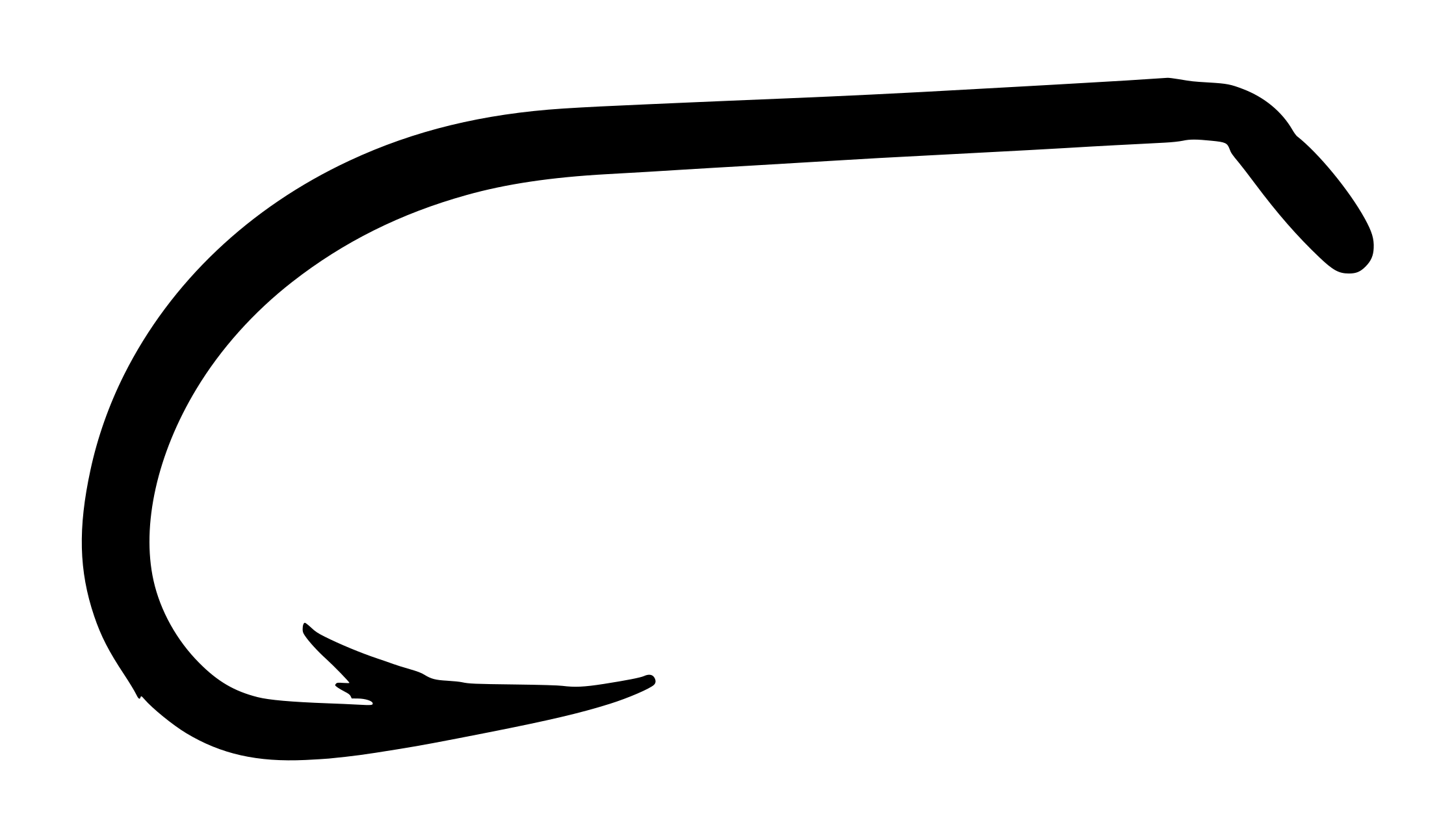
Ball Eye, Straight / InlineStraight/inline ball eye (not turned down or up). Ball formed cleanly with no visible welding or joint imperfection. Wire end neatly butted to shank base. Eye diameter proportionate to extra-heavy wire gauge P.
Wire
Extra-Heavy (2X+), Round
Shank
Short (1X–2X Short) — Plain
Bend
Kirby (offset), Wide gap, Offset / kirbedKirby bend with pronounced left-offset (point kirbed to the left when viewed from above). Shallow to moderate depth relative to gap width. Wire set clean; no asymmetry or twist. Bend geometry is rounded without the sharp angular quality of a Limerick or Dublin.
Point
Hollow Point (concave inner face)Barb present P. Short, close-cut barb angled slightly backward. Positioned approximately 1/4 to 1/3 of the distance from bend to point. Typical mid-century Mustad barb geometry — not swept; not extra-long.
Finish
Bronzed — Confirmed (stated on packaging)Bronzed finish confirmed on original packaging. Photograph shows warm brown-amber tone characteristic of bronzed wire, with visible steel grain texture beneath the coating P. No corrosion or patina darkening evident on specimen; finish uniform across shank and bend.
Specimen hooks are pristine with no corrosion, bend set, or damage. Bronzed finish bright and even. Card itself shows typical period wear — light toning to cream, edge wear on card border, no tape or missing hooks visible in images.
Extra-heavy wire (2X+ gauge) combined with short shank and wide gap optimizes this hook for live-bait fishing. The round wire profile distributes stress evenly across the bend, essential for supporting the weight of active baitfish and repeated casting without kinking or permanent set.
The Kirby offset (left offset when viewed from above) positions the hook point slightly outboard of the shank plane, improving natural bait orientation and bite mechanics when the hook is bound to a leader or snell. This geometry reduces line-twist during live-bait presentation.
Straight eye (inline with shank) suggests leader attachment via loop-to-eye knot or needle-eye snell connection, common in European bait-fishing traditions. The hollow point geometry provides a sharp, penetrating edge with a concave inner face that concentrates force at the needle tip, important for reliable penetration through baitfish skin and into larger fish mouths.
Bronzed finish was selected for saltwater and brackish-water applications, where the oxidized layer offers moderate corrosion resistance superior to bright steel, though inferior to modern electroplated finishes.
We have measurement for size 6. Know any others? Submit calipered measurements and we'll review and add them. Thank you!
Historical context
mustad
O. Mustad & Son (later Mustad Fishing Hooks AS) originated in Gjøvik, Norway in the 19th century and became one of the world’s largest industrial hook manufacturers by the early 1900s. The company distributed extensively across Europe and maintained regional packaging and labeling in French, German, and other languages to serve local markets. By the 1920s–1950s, Mustad dominated the bait-hook market with multiple bend patterns optimized for fresh and saltwater bait fishing, including numerous Kirby and offset variants.
The company’s Norwegian origin and distribution through European channels meant significant market penetration in France and other French-speaking regions, reflected in this French-language card. Mustad’s extra-heavy wire constructions were marketed for robustness in live-bait and saltwater applications.
Series History
The Mustad 254 B ‘Irlandais’ (Irish pattern) appears to be a regional market designation for a Kirby-bend bait hook oriented toward European freshwater and light saltwater use. The naming suggests association with Irish fishing traditions, though the hook was manufactured and distributed by Mustad from its Norwegian facility.
The ‘254 B’ model code indicates a production variant within Mustad’s extensive bait-hook portfolio. The ‘B’ designation likely marks a specific geometry or reinforcement option. ‘Renforcés’ (reinforced) on the packaging suggests this was a heavy-duty variant, possibly with thicker wire or a modified shank design for durability under live-bait stress.
No catalog evidence currently documents successor or replacement models within the garrenwood.com reference collection. This pattern likely remained in production through the 1950s before being displaced by modern nylon-snooded bait rigs and synthetic alternatives.
Era and Packaging Dating
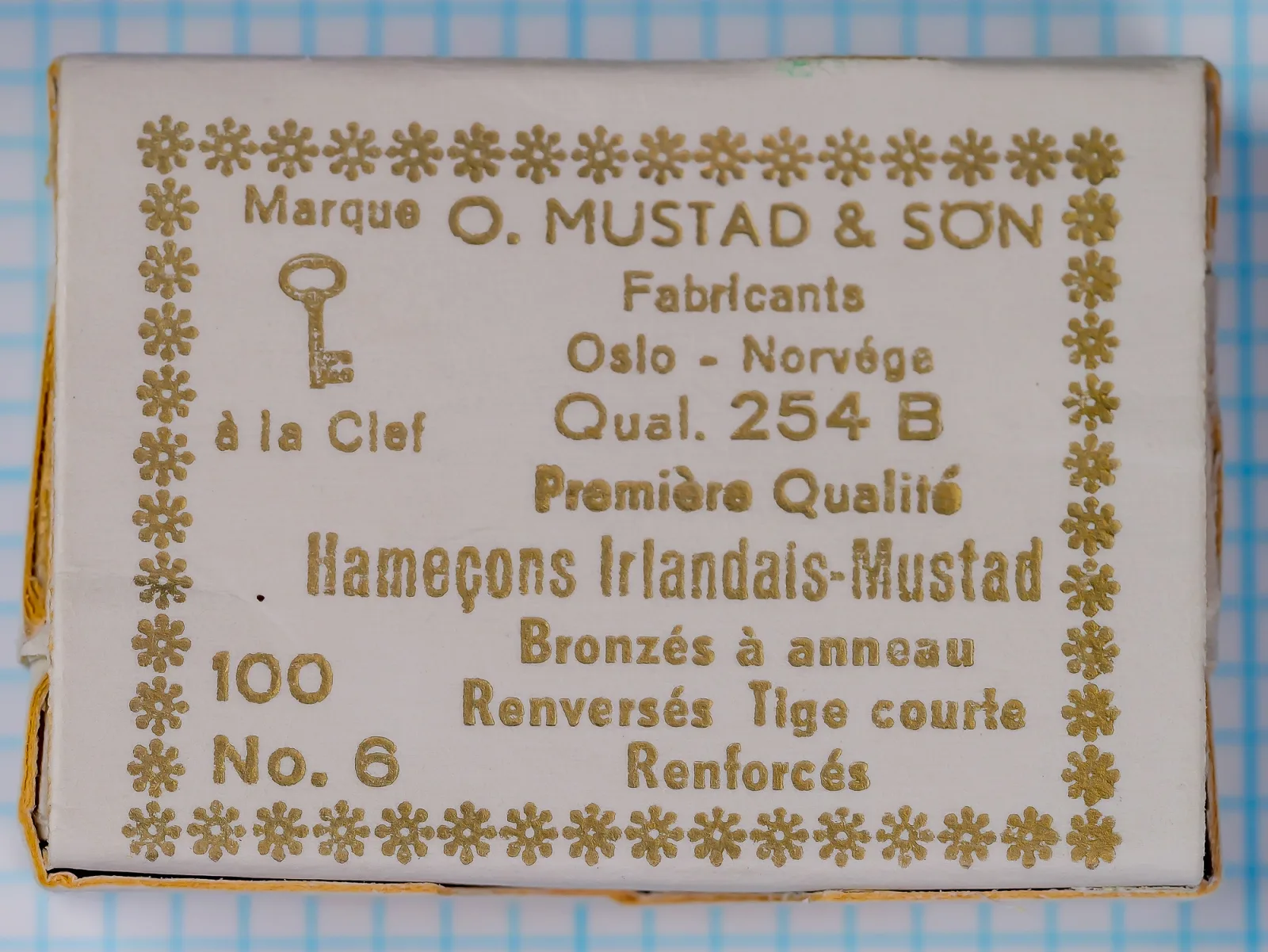
French-language packaging with 'Marque O. MUSTAD & SON / Fabricants / Oslo – Norvège' in classical serif typeface consistent with pre-WWII Mustad printing. No barcode present (barcode era begins c. 1974). Typography, snowflake ornament border, and paper stock are consistent with early-to-mid 20th century industrial offset printing. Absence of modern postal codes and currency symbols suggests pre-1960s. Packaging language and style align with Mustad's European distribution era, likely 1920s–1950s range.
The Irish Connection: European Bait-Hook Naming
The Mustad 254 B and similar Kirby offset bait hooks were staples of 20th century European coarse and sea-fishing traditions. French and Belgian anglers relied on bronzed Mustad bait hooks for pike, perch, and seabass fishing, often rigging them with dried-gut snells that were hand-rolled by regional snell-makers. The 'Irlandais' (Irish) nomenclature reflects a broader European appreciation for Irish fishing practices and hook designs, even when the hooks were manufactured in Norway. This pattern likely entered French distributors' catalogs through Mustad's extensive Scandinavian export network that supplied tackle shops across Western Europe by the 1930s.
Design lineage and influence
Best matchRelated by Attribute
Computed automatically from catalog data — updated as new hooks are added.
Matches: Shank, Wire, Gap, Point, Finish +4 moreDiffers: Bend: Kirby (offset) vs Viking; Eye: Ball Eye vs Tapered Eye; Eye Orient.: Straight / Inline vs Turned Down +1 more
Matches: Wire, Eye, Eye Orient., Point, Finish +4 moreDiffers: Bend: Kirby (offset) vs Sneck; Shank: Short (1X–2X Short) vs 1X Long; Gap: Wide vs Standard +1 more
Matches: Shank, Wire, Gap, Eye, Eye Orient. +3 moreDiffers: Bend: Kirby (offset) vs O'Shaughnessy; Point: Hollow Point vs Superior; Forging: Round vs Forged +1 more
Matches: Shank, Wire, Point, Finish, Offset +2 moreDiffers: Bend: Kirby (offset) vs Viking; Gap: Wide vs Standard; Eye: Ball Eye vs Tapered Eye +3 more
Designed for live-bait fishing in freshwater and light saltwater environments. The short shank and wide gap accommodate active baitfish (minnows, shiners, creek chubs) without fouling the bait presentation. Extra-heavy wire withstands repeated casting and the struggle of fighting gamefish without permanent deformation.
The Kirby offset and straight eye were intended for traditional European snell attachment — tied directly to a gut or silk leader loop or needle-bound to a heavy snell for pike, sea trout, and salmon fishing.
Secondary use in modern nymph tying for robust subsurface patterns, though this hook was not originally designed for fly tying. The wide gap and heavy wire permit larger, bulky nymph silhouettes.
Secondary Applications
Traditional nymph tying (modern interpretation); saltwater bait fishing; trolling with live minnows; pike and large trout bait presentations.
Collector notes
Rated 3.5/10. Mustad bait hooks of this era are abundant in common sizes (8–12), but the 254 B model in size 6 is moderately uncommon. Primary value derives from intact original packaging with French text and pre-barcode era dating, not from the hook itself.
Reference value
$3 – $8 USD estimate
Packaging condition
Very Good — light wear, fully legibleRecorded specimen
Packaging format
GW-MUS-SF-01Catalog code
Positive factors: Intact original sales card with era-appropriate packaging, French-language text (desirable for European and French-Canadian collectors), pre-barcode era (c. 1920s–1950s), and excellent specimen condition. The 254 B model designation and ‘Renforcés’ reinforced variant notation appeal to Mustad specialists cataloging variant geometry. Straight-eye Kirby offset patterns are less commonly preserved than turned-down versions.
Limiting factors: Mustad’s industrial production volumes mean even 80+ year old cards are not rare in absolute terms. Size 6 is a mid-range, functional size without the scarcity premium of diminutive (18+) or oversized (2/0+) examples. The bait-hook category attracts less active collector demand than specialty fly-tying or salmon hook designs. Commonness in larger size ranges (8–12) means the market for size 6 specifically is niche.
Premium factors: Complete card with full hook count commands modest premium (~$2–5 above loose hooks). Excellent packaging condition (no tears, light aging only) adds ~$1–2. European origin and French text desirable to regional collectors. Cards with missing hooks or packaging damage decline to fair-to-good tier ($1–3).
Packaging
Card stock sales card, cream/off-white paper with printed decorative snowflake border in golden-brown ink. Central text in serif typeface reads: 'Marque O. MUSTAD & SON / Fabricants / Oslo – Norvège / Qual. 254 B / Première Qualité / Hameçons Irlandais-Mustad / Bronzés à anneau / Renversés Tige courte / Renforcés / 100 / No. 6'. Left margin features a printed lock/key symbol. Text is offset-printed in golden-brown on cream cardstock. No barcode. Dimensions approximately 3.5" × 2.75" (typical sales card format). Card shows light aging and edge wear consistent with 1920s–1950s packaging; no tape, no major creases.
Market Value Notes
Low ($3): Good condition, complete card, minor packaging wear. High ($8): Excellent condition, intact card with minimal toning, full hook count. Premium factors: French-language text, pre-barcode era dating, Mustad regional variant model designation. Platforms: eBay.com (US), eBay.co.uk, French vintage tackle dealers. Confidence: E estimated — limited comparable sales data for this specific model; values anchor to broader Mustad bait-hook sales trend ($1–15 for period cards in good condition).
Where to Find
eBay UK and French eBay.fr more frequently than US eBay. French and Belgian vintage tackle dealers and fairs. Occasional appearance in online auctions focused on European sporting antiques.
Preservation
Storage and Preservation
Store the card flat in a cool, dry environment (45–60% relative humidity). Bronzed finish will develop a natural patina with age and humidity exposure; this is normal and valued by collectors. Avoid damp basements or direct sunlight, which accelerate corrosion and fade printed text.
Keep the hooks on the original card rather than loose. Separation from packaging reduces collectible value significantly. If any hooks are to be used, remove only what is necessary, leaving the majority intact on the card.
Handle the card by its edges to avoid fingerprint oils transferring to the paper. Do not attempt to clean or restore the finish — age darkening and patina are desirable. Avoid contact with other ferrous metals, which can cause galvanic corrosion in the presence of moisture.
Primary Source
Packaging Text Analysis: French Mustad Specification Language
Source: Mustad 254 B packaging, printed French text, c. 1920s–1950s
The French-language text provides specific technical designations typical of early 20th century European hook marketing:
‘Marque O. MUSTAD & SON’ — registered trademark, indicating official factory production.
‘Fabricants / Oslo – Norvège’ — manufactured in Oslo, Norway. (Gjøvik is near Oslo; larger cards often listed only the capital city for brand recognition.)
‘Première Qualité’ — first quality; indicates hooks were selected and graded for defects before packaging.
‘Bronzés à anneau’ — bronzed with ring/ball eye. ‘À anneau’ = ring or loop; here indicates the ball eye type.
‘Renversés Tige courte’ — reversed (offset/kirbed), short shank. ‘Renversés’ directly translates the Kirby offset direction.
‘Renforcés’ — reinforced. Indicates heavier wire or modified shank design for extra durability. Not a standard geometry label; suggests a specific 254 B variant.
This level of specification language was typical of French and Belgian fishing catalogs, which demanded precise technical descriptions in local language for market clarity and regulatory compliance.
Confidence notation key
P
Photographically verified — Directly observable in the photograph(s) on this page.
V
Verified by documentation — Confirmed by manufacturer catalog, spec sheet, or published reference.
I
Inferred — A logical deduction from observable or documented evidence, not directly stated.
E
Estimated — An approximation based on visual comparison, proportional analysis, or limited data.
S
Speculative — A reasoned hypothesis that cannot be confirmed from available evidence.
Claims with no notation are confirmed by multiple independent sources. All photographs on garrenwood.com are taken on a measurement grid where each square equals 1/10 inch (0.1″ / 2.54 mm).