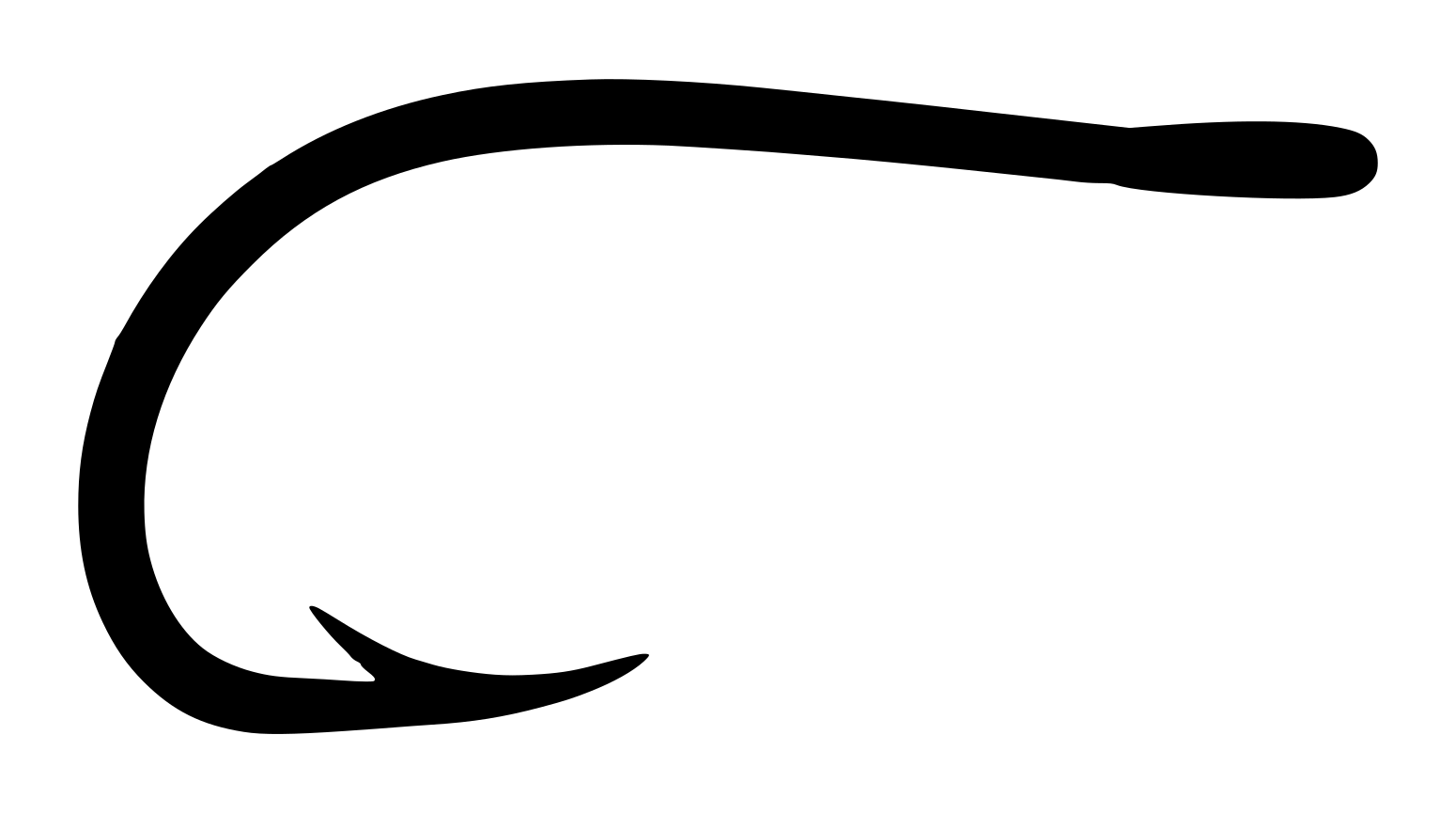
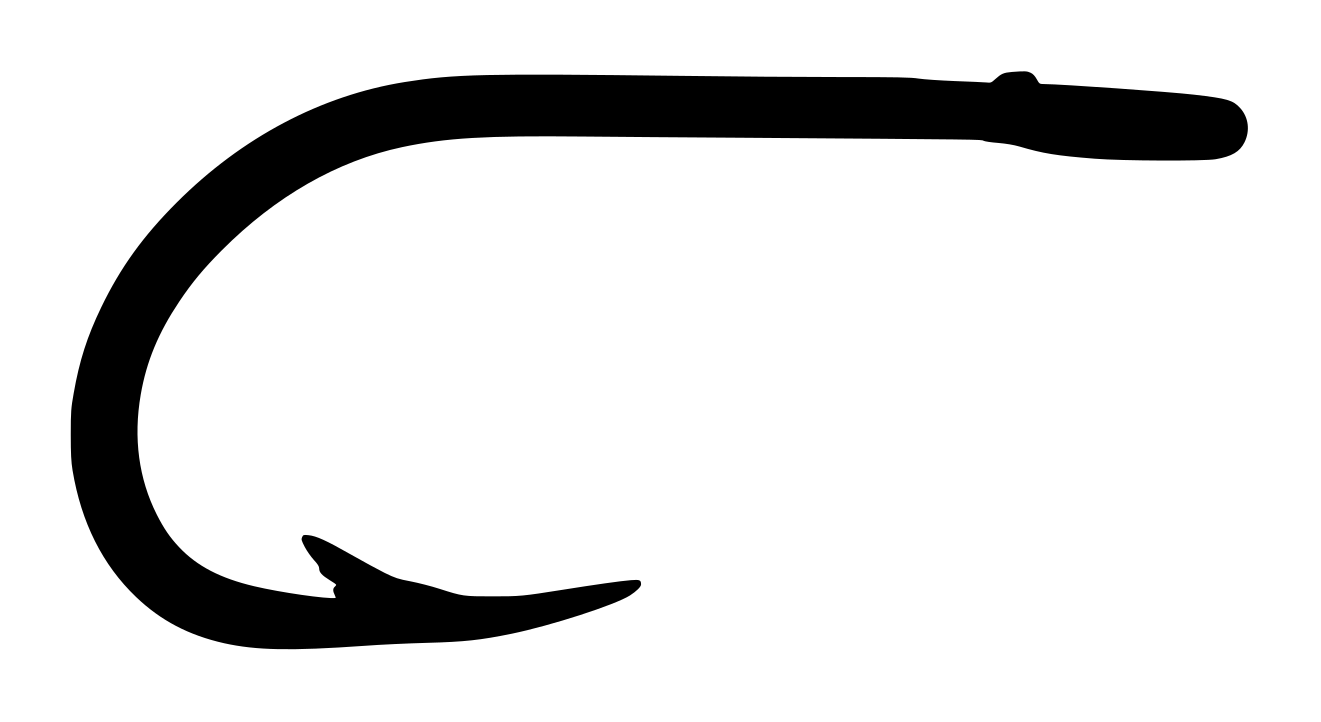
The Mustad 7754 Bay King is a size 7/0 saltwater bait hook manufactured in Norway circa 1950–1965, defined by a knife-edge point geometry consisting of two opposing flat facets ground to a single triangulated cutting edge. This specialized point design was engineered to slice through the hard bony structures of large predators—shark, tarpon, and grouper—rather than merely puncture soft tissue. The hook body combines forged extra-heavy wire with a mechanically brazed ring eye, construction choices that maximize structural rigidity and resistance to opening under sustained load. The cadmium-plated and tinned finish provided industrial-grade saltwater corrosion protection before stainless steel became economical. The 7754 represents mid-century Mustad’s industrial translation of regional fishing practice into precision mass production, and remains sought by specialists in vintage saltwater tackle and historical fishing tool development.
Original packaging for Mustad Quality 7754 Bay King Hook, showing the classic Key Brand logo, eight-line label format, and specifications including knife-edge point, forged construction, brazed ring eye, and cadmium-plated/tinned finish.
Photographic record
4 cataloged imagesSelect any record to load it above.
4 images shown
Mustad 7754 Bay King Hook Box and LabelOriginal packaging for Mustad Quality 7754 Bay King Hook, showing the classic Key Brand logo, eight-line label format, and specifications including knife-edge point, forged construction, brazed ring eye, and cadmium-plated/tinned finish.Open originalMustad 7754 Box Reverse and Label DetailsReverse side of the original box showing expanded label text, 'Cadmiumplated and tinned' finish specification, 'Forged Tap. brazed ring', and '10 hooks' quantity notation. Characteristic of mid-century Mustad export packaging.Open originalMustad 7754 Knife-Edge Point DetailExtreme close-up of the knife-edge point showing the specialized two-faceted grinding geometry that distinguishes this model. The point is designed to slice through hard bone and cartilage rather than merely puncture soft tissue.Open originalMustad 7754 Complete Hook ProfileFull profile view of the Mustad 7754, size 7/0, on 1/10-inch measurement grid. The short, compact sproat bend, extra-heavy forged wire, and brazed ring eye are clearly visible. Cadmium-plated and tinned finish shows characteristic matte gray tone.Open original
Technical profile
Eye
Ball Eye, Straight / InlineBrazed ring eye: The wire loop is brazed (soldered) shut at the junction with the shank, eliminating the risk of the eye opening under extreme pressure. This was a premium feature on heavy saltwater hooks. P
Wire
Heavy (1X Heavy), Forged
Shank
Short (1X–2X Short) — Plain
Bend
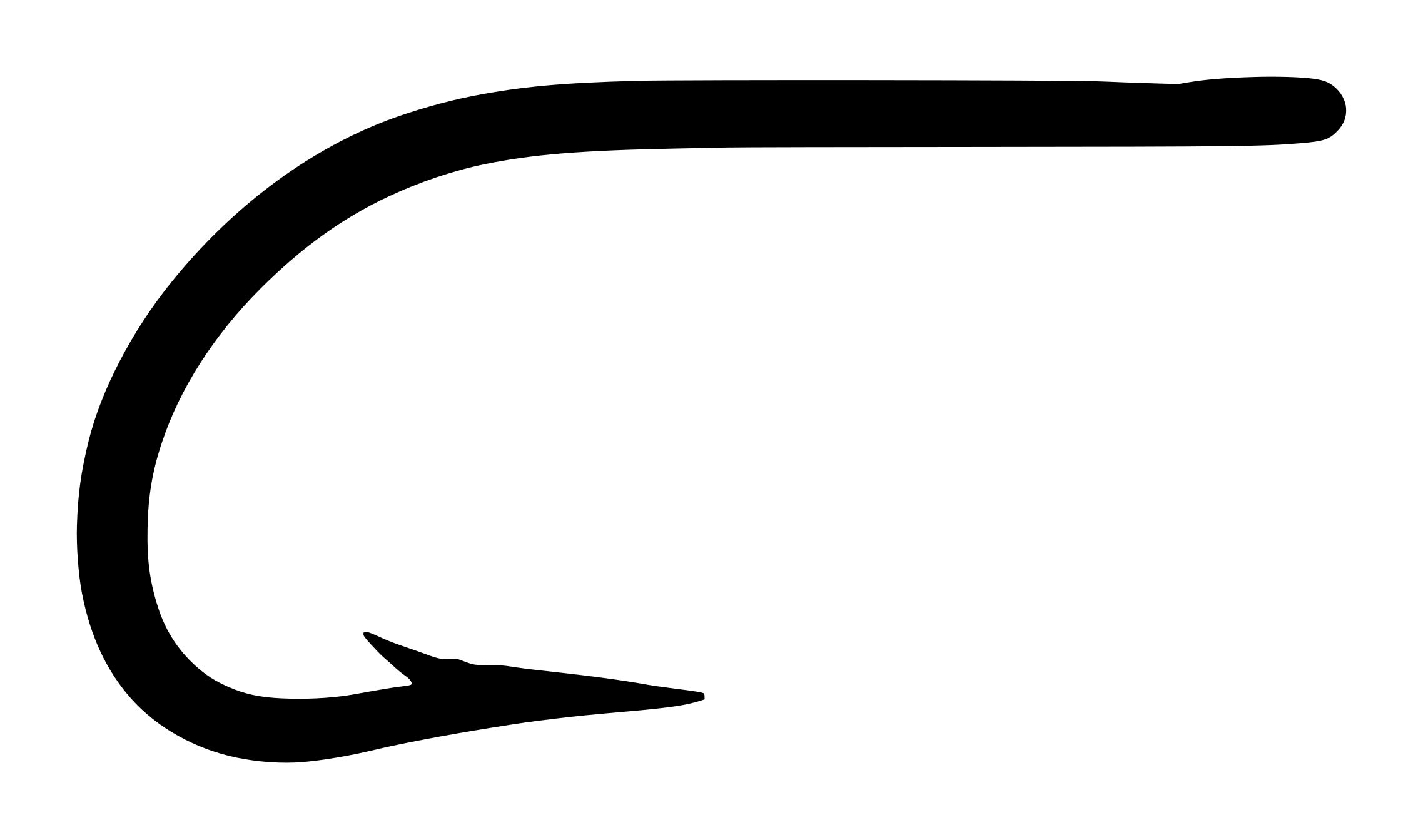
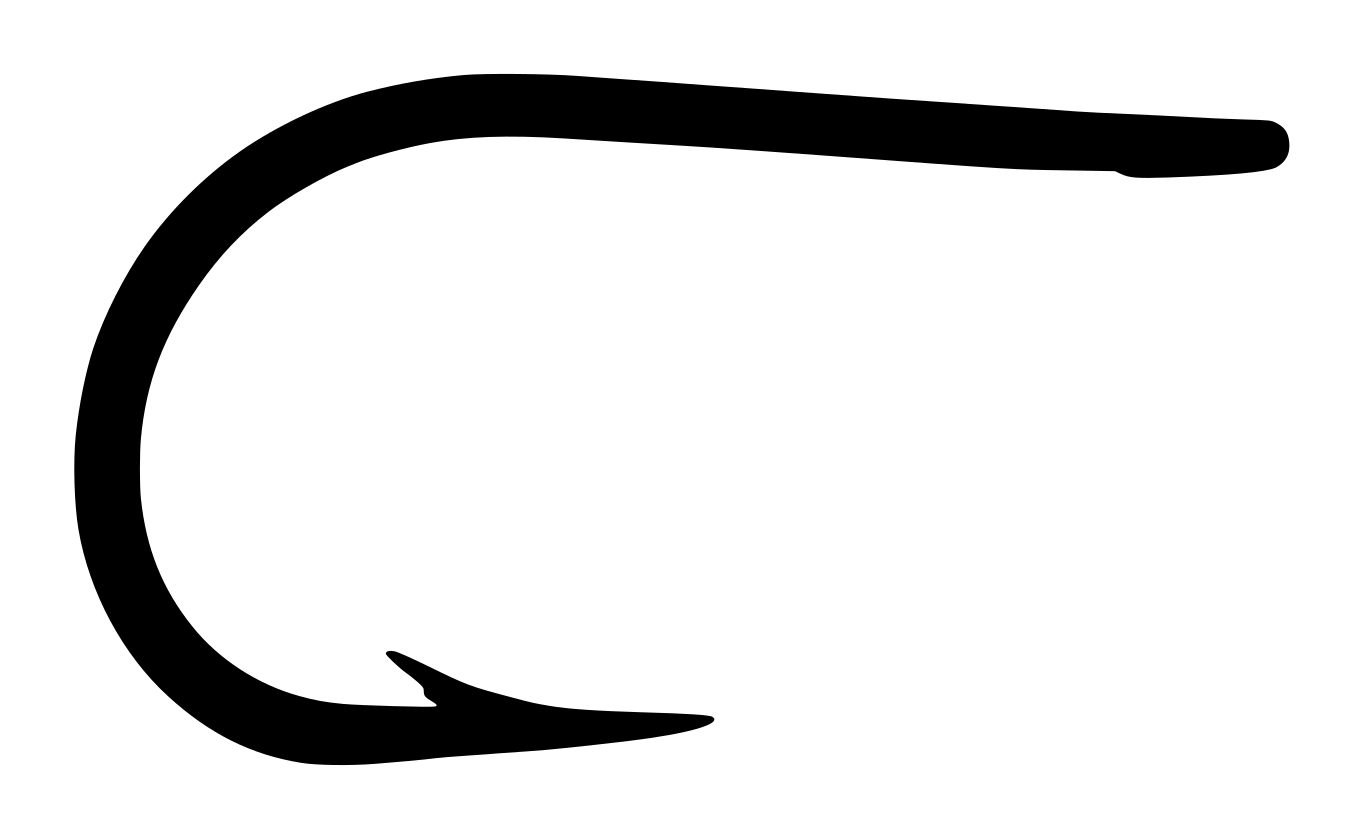
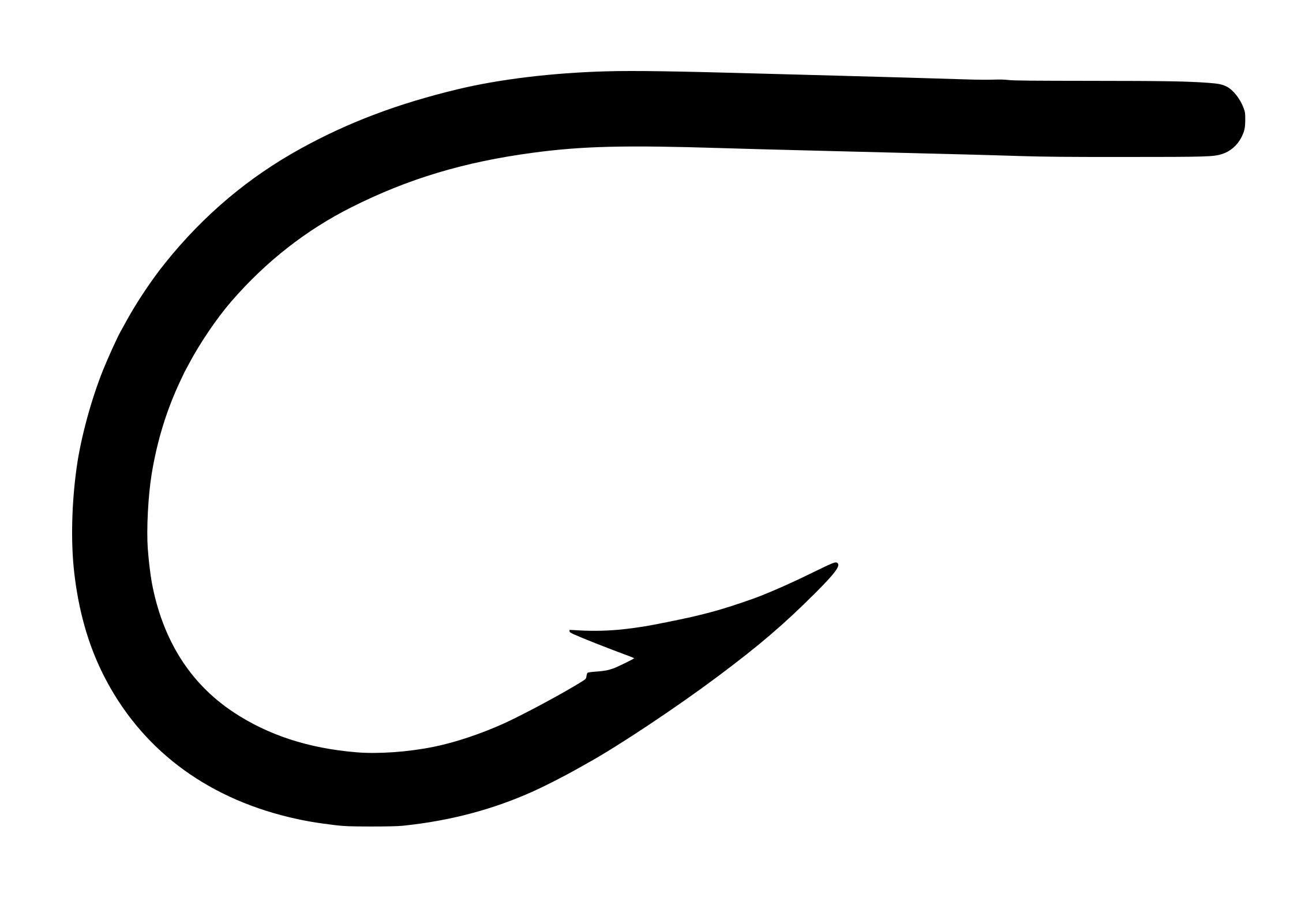
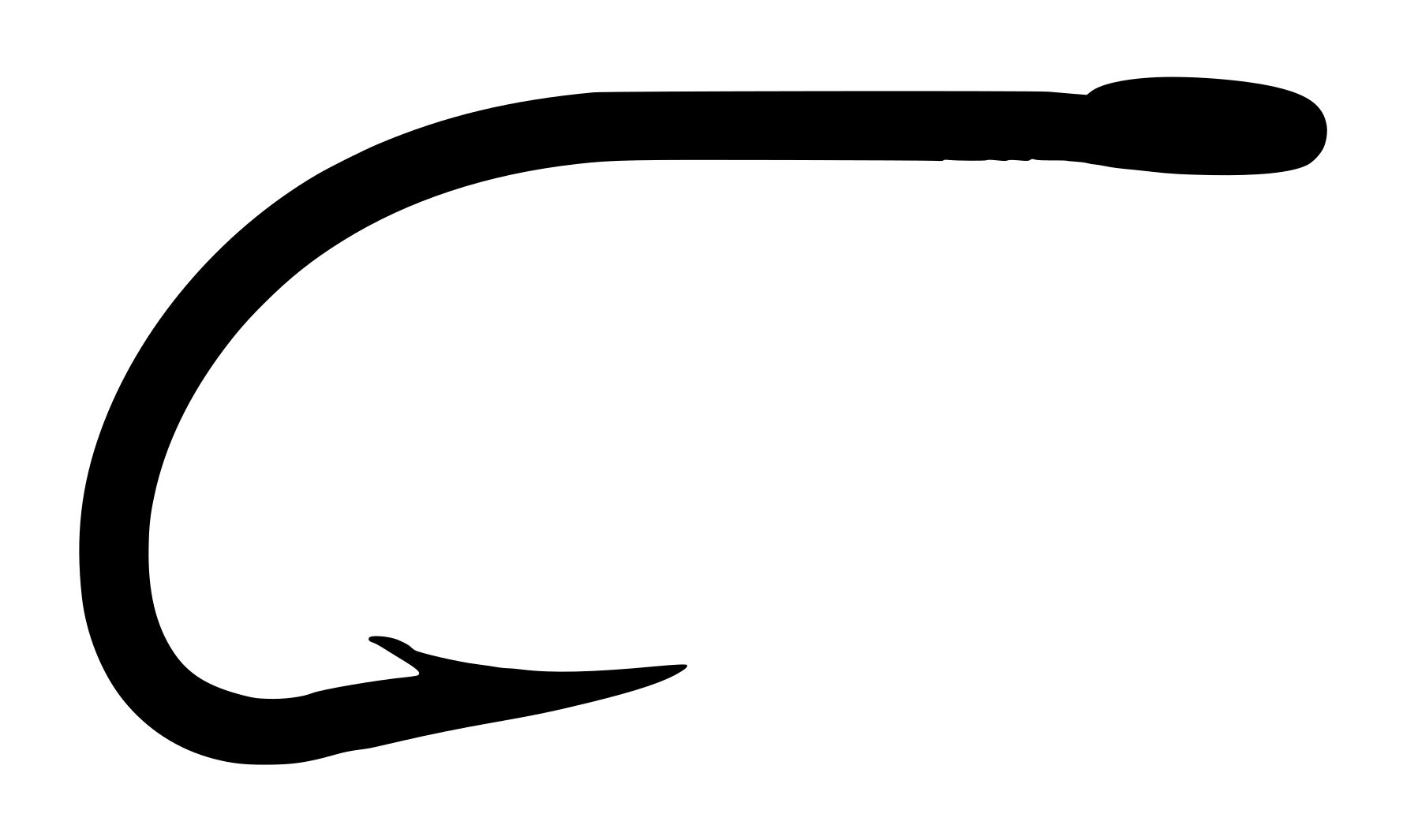
Sproat, Wide gapSproat bend with relatively compact proportions: short relative to the gap for a size 7/0, designed to provide maximum mechanical advantage during the fight. The bend is smooth and well-proportioned, without unusual offset or asymmetry. P
Point
OtherBarb is short and sharply cut, positioned at the standard angle relative to the point. Typical of commercial saltwater hooks, designed to minimize tissue damage during insertion while maintaining secure hold. P
Finish
Tinned — Confirmed (stated on packaging)The specimen displays a matte gray-silver finish consistent with tinned and cadmium-plated steel, with light surface patina typical of 60+ year old hooks. The tone is cool and institutional, showing no rust or corrosion. The finish is uniform across the shank and bend. P
Specimen is bright and corrosion-free, showing only light surface patina. The packaging is in good condition with visible creasing, age toning, and handling wear; all text is legible. One or more hooks from the original 10-count may be missing, though this cannot be confirmed from the closed package.
The knife-edge point is a specialized grinding geometry where two flat facets are ground into the terminal wire at opposing angles, meeting precisely to form a single triangulated cutting edge. Unlike conical or rounded points that displace tissue, the knife-edge physically slices through dense bone and cartilage. This design was essential for targeting large saltwater predators with crushing jaw pressure and hard bony structures (sharks, tarpon, grouper) — standard puncturing points frequently failed to penetrate deeply enough to secure the barb.
The forged wire process involved placing the finished hook into a mechanical drop-press and flattening the sides of the shank. This cold-forging dramatically increased tensile strength and structural rigidity without adding bulk or weight, effectively preventing the hook from bending open or straightening under extreme load. The extra-heavy gauge wire, combined with forging, made the 7754 one of the strongest hooks in Mustad’s mid-century catalog.
The brazed ring eye — where the terminal wire loop is soldered shut — adds mechanical security beyond a simple looped eye. The solder joint prevents the eye from opening incrementally under sustained pressure, essential for trolling and live-bait applications where sustained strain is inevitable.
The cadmium-plating and tinning finish provided superior corrosion resistance in saltwater before stainless steel became economical. Cadmium plating is no longer used due to environmental and health regulations, making pre-1970s cadmium-finished hooks increasingly collectible as artifacts of industrial history.
The Mustad-Bay King series was introduced in the 1940s–1950s as part of Mustad’s aggressive strategy to dominate regional and specialized markets. “Bay King” was a marketing designation for a line of medium-to-heavy saltwater hooks designed specifically for bay and offshore bait fishing in North America. The series included multiple sizes (typically 3/0 through 10/0) and variations in eye type and finish.
The 7754 specifically carries the “Knife-edge Point” designation — a labor-intensive grinding specification that distinguished it from standard pointed hooks. This specialized geometry required precision machine-milling or hand-grinding to achieve the two-faceted cutting edge. The series was produced throughout the 1950s and 1960s, gradually being superseded by stainless steel alternatives in the 1970s and later by modern chemically sharpened points.
The Bay King line is historically significant as an example of Mustad’s “cloned pattern” strategy — taking regional American fishing traditions and engineering them to precise industrial standards for global distribution. While the series has been discontinued, vintage examples remain highly sought by collectors who value the mechanical integrity and industrial heritage of mid-century Mustad production.
Era and Packaging Dating
The packaging provides multiple independent era markers. First, the typography and box construction are consistent with mid-1950s offset lithography — the font choice and registration show the printing technology of that era. Second, the Key Brand logo style (downward-pointing skeleton key) matches Mustad's branding from the 1940s–1960s period. Third, the explicit mention of "Cadmiumplated" finish is a definitive marker: cadmium plating was the standard corrosion-prevention method for saltwater hooks from the 1940s through early 1970s; it was gradually phased out due to environmental regulations, with production largely ending by 1975. Fourth, the absence of a barcode (which became standard in the 1970s) confirms pre-1974 manufacture. Fifth, the 10-hook count in the original packaging is consistent with mid-century wholesale/retail distribution; smaller counts became standard later. Sixth, the diamond-framed label design and ornamental border styling are hallmarks of 1950s–1960s Mustad packaging. All evidence converges on a production window of approximately 1950–1965, most likely 1955–1962.
The Lost Art of the Knife-Edge Grind
The "knife-edge point" specification on the Mustad 7754 represents a labor-intensive manufacturing tradition borrowed directly from English Redditch craft practices. Before automated chemical sharpening became affordable in the 1980s, skilled grinders spent hours perfecting the precise two-faceted geometry on large saltwater hooks. The 7754's designation as a "Knife-edge Point" on the label was Mustad's way of communicating to tackle dealers that this hook had received the premium hand-milling treatment — a prestige marker that justified a higher wholesale price. The irony is that modern stainless steel points, created through chemically selective corrosion, are arguably sharper and more durable than the mechanically ground edges of the vintage era. Yet collectors prize the 7754 specifically because it represents an industrial process that has become obsolete.
Design lineage and influence
The Mustad 7754 represents an evolutionary step in saltwater hook design. Its predecessors include earlier Mustad O’Shaughnessy patterns (also forged, but with different bend geometry) and imported British Limerick-based patterns that were popular before American manufacturers achieved dominance.
The knife-edge point was inspired by traditional hand-forged and hand-ground hooks from European craft traditions, particularly the Redditch school of hook-making, where specialized grinding techniques were closely guarded trade secrets. Mustad’s innovation was mechanizing this process without sacrificing the precision geometry.
Downstream influence: The 7754’s design philosophy — maximum leverage through short, compact bends and extreme durability through forging — directly influenced modern stainless steel saltwater patterns such as the Mustad 7691 (Viking), 7732 (Southern & Tuna), and 7693 (Southern & Tuna, Needle Eye). However, few modern hooks reproduce the exact knife-edge grinding specification, which is labor-intensive and less necessary with modern stainless alloys.
Best matchRelated by Attribute
Computed automatically from catalog data — updated as new hooks are added.
Matches: Bend, Shank, Wire, Gap, Eye +5 moreDiffers: Point: Other vs Standard / Spear; Finish: Tinned vs Black Japanned; Forging: Forged vs Round +3 more
Matches: Bend, Wire, Eye, Eye Orient., Offset +3 moreDiffers: Shank: Short (1X–2X Short) vs Standard; Gap: Wide vs Standard; Point: Other vs Superior +2 more
Matches: Gap, Eye Orient., Finish, Forging, Offset +3 moreDiffers: Bend: Sproat vs O'Shaughnessy; Shank: Short (1X–2X Short) vs Standard; Wire: Heavy (1X Heavy) vs Extra-Heavy (2X+) +3 more
The Mustad 7754 Bay King was engineered as a heavy-duty saltwater bait hook for large game species. The knife-edge point and forged construction were optimized for penetrating the hard bony mouths of saltwater predators such as shark, tarpon, grouper, and large striped bass. Designed for either live bait rigging or large natural-bait presentations in offshore and bay environments, the short sproat bend provided maximum leverage during the fight. The brazed ring eye ensured the line attachment would not fail under the crushing jaw pressure of powerful game fish.
Secondary Applications
Heavy offshore trolling with mullet or mackerel; large striped bass and large catfish in bays and estuaries
Classic Fly Patterns
Not applicable — bait hook
Modern Equivalents
Hook
Match Quality
Notes
Mustad 7691 Viking
Very Good
Heavy forged saltwater hook, similar size range, modern stainless steel substitute for the 7754; lacks the knife-edge point specification but offers improved corrosion resistance
Mustad 7732 Southern & Tuna
Good
Heavy offshore hook for large game fish; modern equivalent with stainless construction; different bend geometry (O'Shaughnessy-inspired rather than Sproat)
Mustad 7693S Southern & Tuna, Needle Eye
Moderate
Modern saltwater big-game hook with needle eye instead of brazed ring; excellent for trolling but different application focus than the 7754
Collector notes
Rated 4.5/10 — Uncommon but not rare; strong specialist collector demand among saltwater and big-game enthusiasts, but limited appeal to general fly-tyer collectors. Cadmium-finish examples are historically significant; original packaging adds substantial premium.
Reference value
$14 – $26 USD estimate
Packaging condition
Good — moderate wear, legibleRecorded specimen
Packaging format
GW-M-01Catalog code
Collectability Drivers: The 7754 occupies a unique position in vintage hook collecting. The knife-edge point specification, cadmium-plating finish, and brazed ring eye are all premium features rarely seen on modern hooks. The mid-century era (1950–1965) is highly desirable among collectors of post-war tackle. The model code Qual. 7754 represents one of Mustad’s last fully numeric quality-code designations before the transition to alphanumeric Signature Series codes in the 2000s, making it a bridge between eras. Additionally, the Bay King branding is distinctly American, reflecting Mustad’s aggressive market-capture strategy in North America.
Limiting Factors: While uncommon, the 7754 is not rare — production volumes were substantial, and surviving stock is more abundant than pre-1920s Redditch patterns. The hook was designed for commercial and recreational saltwater use, so survival rates are moderate (many specimens were used and lost to the sea). Size 7/0 is more common than smaller or larger sizes, reducing the scarcity premium. The finish (tinned/cadmium) is durable but can develop patina and surface oxidation, and specimens showing significant corrosion command lower premiums.
Desirable Variants: Original sealed packaging in mint condition adds 50–100% premium. Cadmium-plated examples (identifiable by the matte gray-silver tone and explicit labeling) are more desirable than later stainless-steel replacements. Smaller sizes (3/0, 4/0) are more collectible than 7/0–10/0, as they are less commonly encountered. Cards showing all 10 hooks intact are significantly more valuable than partial or missing counts.
Condition Impact: Hooks with bright, corrosion-free finish command the high end ($20–30). Light patina (as on this specimen) is acceptable and typical, with value in the $15–22 range. Moderate surface corrosion or pitting drops value by 30–50%. Original box/packaging in good condition adds $3–8 premium; mint sealed packaging adds $10–15. Two or more missing hooks reduces value by 20–40%.
Market Value Notes
Low ($14): Good condition — opened packaging, 9 of 10 hooks present, light patina on finish, card shows handling wear. High ($26): Excellent condition — packaging intact with minor wear, all 10 hooks present and bright, original cadmium-tinned finish showing minimal oxidation. Premium factors: Original sealed packaging, complete 10-hook count, cadmium-finish (historical significance), large size (7/0, limited utility, therefore scarcer), knife-edge point specification (specialized manufacturing), brazed ring eye (premium feature). Platforms: eBay (primary — $13.99–$24.99 common), specialty tackle dealers, vintage fishing forums. Confidence: V verified — based on eBay sold data (Apr 13, 2023 – Apr 12, 2026), avg $19.89, range $9.59–$37.99.
Where to Find
eBay (US and UK listings, search "Mustad 7754" or "Bay King knife-edge"); specialty vintage tackle dealers (Etsy, individual dealer sites); fishing swap meets and tackle shows (regional, not national); auction sites specializing in sporting antiques.
eBay market reference. Researcher-curated. Prices in USD.
Preservation
Storage and Preservation
Store the 7754 in a cool, dry environment protected from humidity and salt spray. The cadmium-plated and tinned finish, while durable, will develop patina and surface oxidation if exposed to moisture over extended periods. Original packaging should be retained — the box and label are historically significant and add 50–100% premium to the hook’s value. If removing hooks from the card for inspection, store them in individual compartments or acid-free archival boxes to prevent tangling and minimize contact with other metals (which accelerates galvanic corrosion). Avoid direct sunlight, which can fade the box printing. The knife-edge point is extremely fine and sharp; handle with care to avoid cuts or accidental contact with soft materials. Do not attempt to re-sharpen the point mechanically — the specialized grinding geometry is labor-intensive and any modification will reduce the hook’s collectible and historical value.
Primary Source
Label Analysis: The Eight-Line Mustad System
Source: Mustad Label Typology document, section 'The Eight-Line Vintage Label'; O. Mustad & Son official hook guides
The packaging label follows Mustad’s standardized eight-line typographical format, which encoded technical specifications in a rigid hierarchy. Line 1: ‘O. MUSTAD & SÖN’ establishes manufacturer authority. Line 2: ‘MANUFACTURERS’ differentiates Mustad from import agents and repackagers. Line 3: ‘OSLO – NORWAY’ (visible on the label) dates the hook to post-1925 — the Norwegian capital was renamed from Christiania to Oslo on January 1, 1925, making this designation a precise chronological bracket. Line 4: ‘Qual. 7754’ is the quality/model code, placing the hook in Mustad’s mid-tier product category (3000–3999 block), indicating exacting manufacturing standards and reliable tempering. Line 5: ‘Knife-edge Point’ — the most strictly regulated line in the system, exclusively dedicated to point geometry specification. This designation was not routine; knife-edge grinding was a premium feature. Line 6: ‘Mustad-Bay King Hooks’ identifies the regional cloned pattern — ‘Bay King’ was Mustad’s proprietary name for a line of medium-heavy saltwater hooks designed for North American bay and offshore use. Lines 7–8: ‘Forged Tap. brazed ring Cadmiumplated and tinned’ specifies the shank modification (forged), eye type (brazed ring), and dual finish layers. This dense encoding allowed dealers and anglers to instantly identify the hook’s exact specifications across language barriers and regional markets.
Marking Analysis
Handwritten Markings and Stamps
The specimen shows minimal handwritten annotation. A faint ‘O’ appears in the upper right quadrant of the label, likely a dealer or warehouse inventory code (not a size designation, as the size is already specified as 7/0 in the printed text). No price markup, stock number, or retailer identification is visible on the packaging. This absence of detailed annotation suggests the package may have been stored in inventory rather than actively retailed, or the markings have faded due to age and handling. The overall preservation of the label suggests this box was handled conservatively, not heavily worked or repeatedly opened.
Additional
Brazed Ring Eye: A Premium Feature
The brazed ring eye represents a manufacturing feature that distinguishes the 7754 from standard riveted or simple looped alternatives. Brazing — the process of joining metal using a filler metal (typically brass or silver solder) — creates a permanent, structurally integral joint. Unlike a riveted eye, which can eventually work loose under sustained lateral pressure, a brazed eye distributes stress evenly across the solder joint and cannot incrementally open.
This feature was most commonly seen on premium saltwater hooks and heavy fly-fishing patterns (particularly Atlantic Salmon irons). For a bait hook of this size to feature a brazed eye is a signal that the 7754 was positioned at the upper end of the Bay King series — a tool for serious commercial or advanced recreational anglers who expected the hook to withstand the sustained pressure of trolling, live-bait rigging, and violent strikes from large predatory fish. The brazed ring eye, combined with the forged shank, makes the 7754 mechanically equivalent in durability to many modern stainless steel patterns, despite its age.
Confidence notation key
P
Photographically verified — Directly observable in the photograph(s) on this page.
V
Verified by documentation — Confirmed by manufacturer catalog, spec sheet, or published reference.
I
Inferred — A logical deduction from observable or documented evidence, not directly stated.
E
Estimated — An approximation based on visual comparison, proportional analysis, or limited data.
S
Speculative — A reasoned hypothesis that cannot be confirmed from available evidence.
Unnotated claims are the compiler’s synthesis; see Sources. All photographs on garrenwood.com are taken on a measurement grid where each square equals 1/10 inch (0.1″ / 2.54 mm).