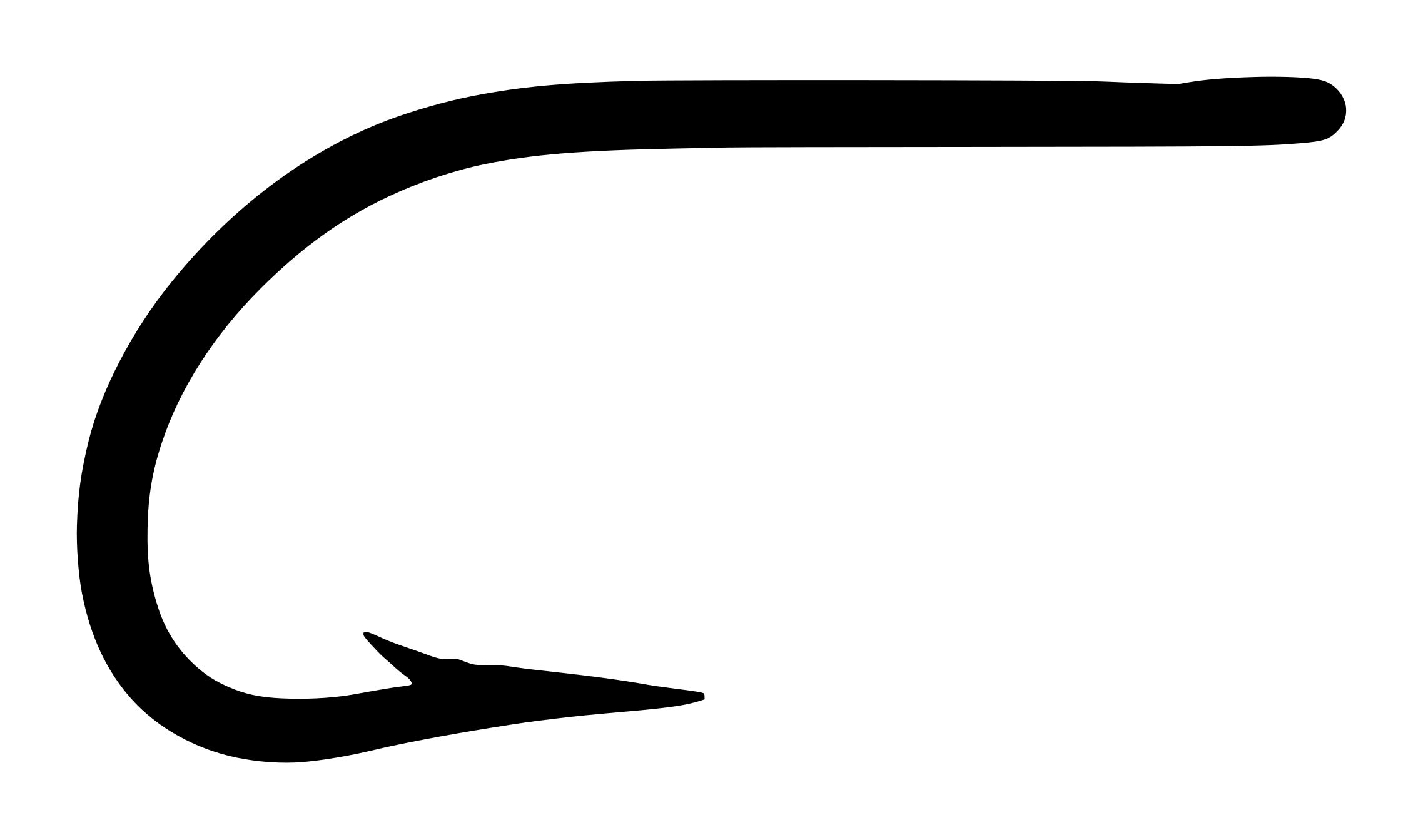
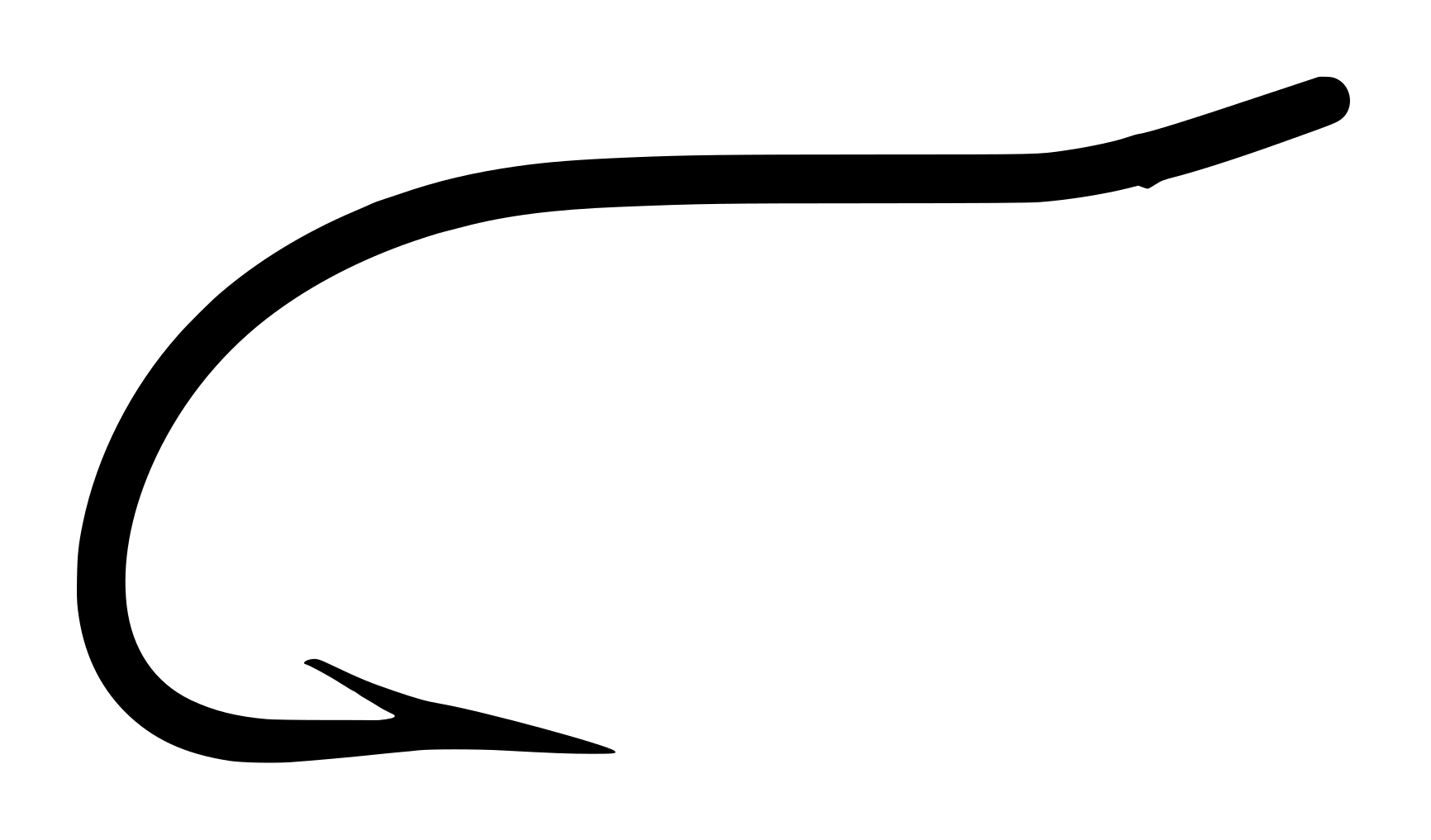
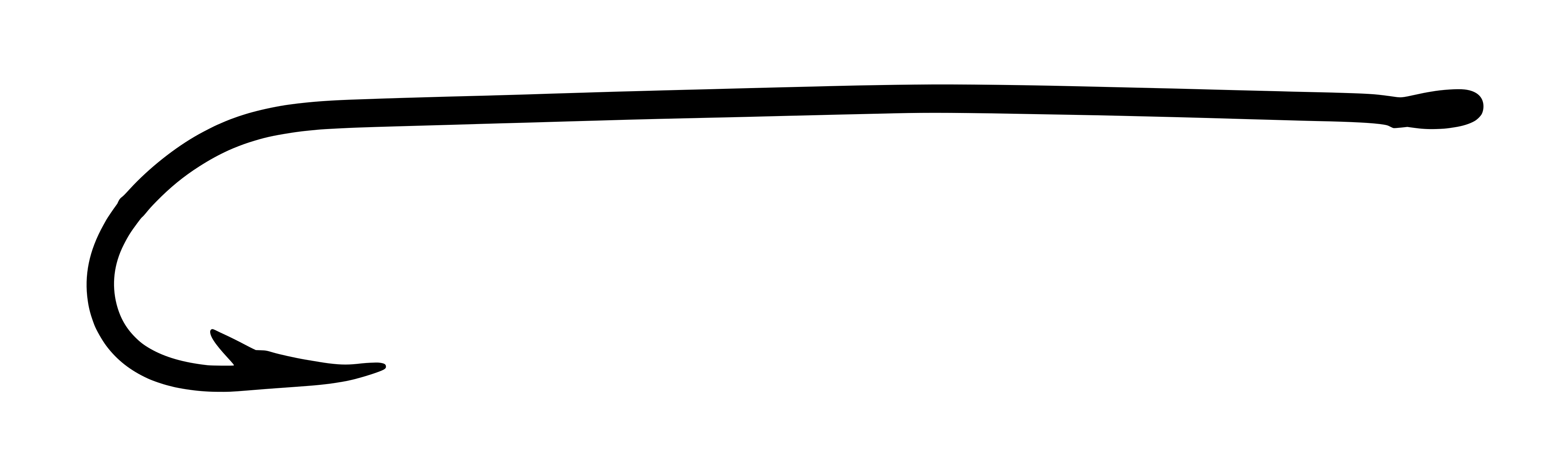
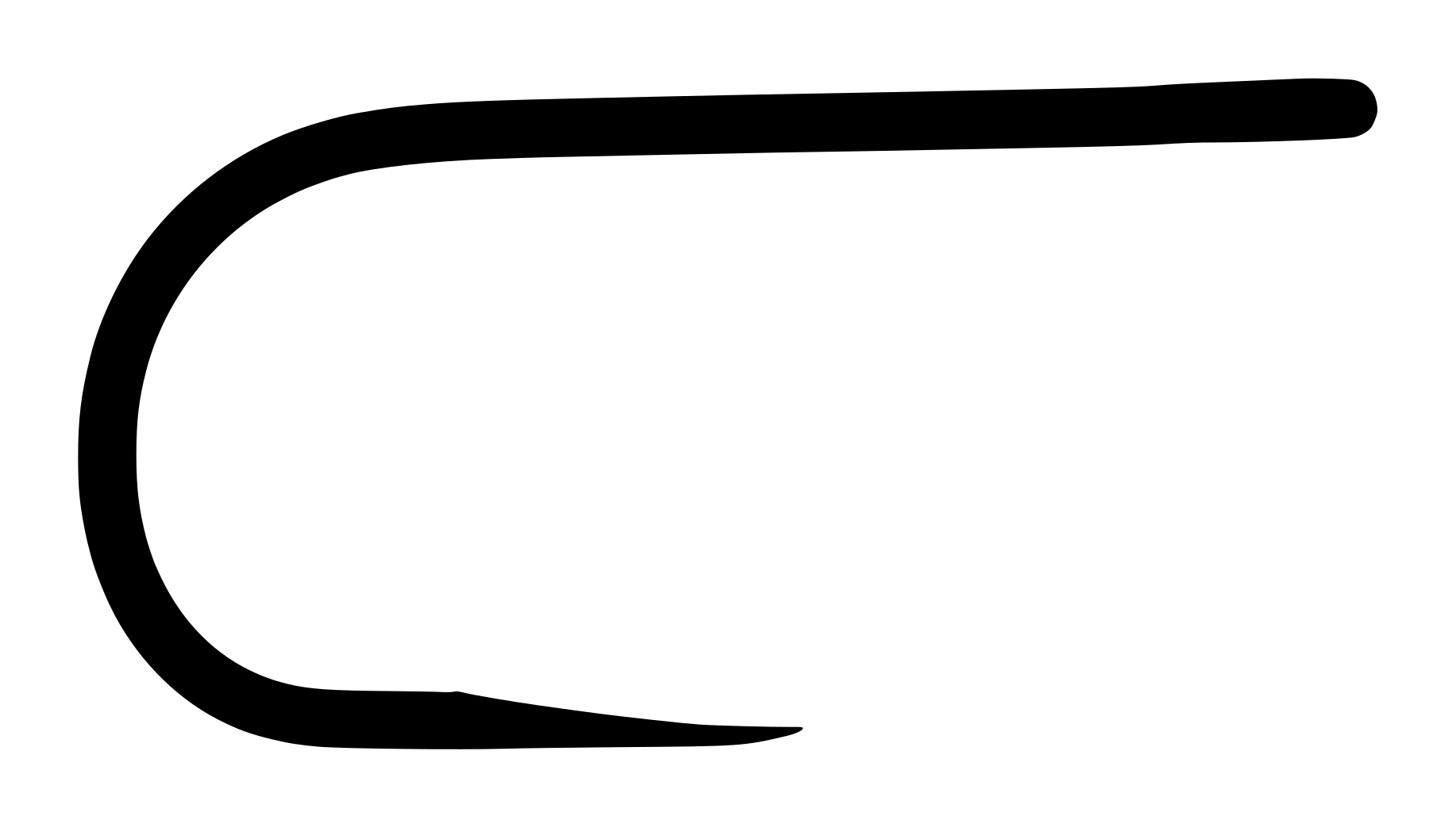
The Milward 2616 is a sheepshead hook manufactured by H. Milward & Sons of Redditch, England, between the 1920s and 1950s, designed for saltwater bait fishing on hard-mouthed species. The hook combines a narrow gap (0.62 inches) with a short shank, heavy round wire, spear-point geometry, and japanned finish—all engineered to concentrate penetrating force on impact and resist deformation under the pressure of a sheepshead’s powerful jaws. The compact gap-to-shank ratio and reinforced wire gauge represent a deliberate departure from general-purpose saltwater hooks, solving the specific mechanical problem of setting a hook in fish with crushing bite force and minimal mouth opening.
Side profile of the Milward 2616 showing the compact sproat bend, straight-ring eye, and narrow gap optimized for sheepshead fishing. Japanned black finish visible on heavy round wire.
Photographic record
3 cataloged imagesSelect any record to load it above.
3 images shown
Milward 2616 Sheepshead Hook Size 1/0 Side ProfileSide profile of the Milward 2616 showing the compact sproat bend, straight-ring eye, and narrow gap optimized for sheepshead fishing. Japanned black finish visible on heavy round wire.Open originalMilward 2616 Sheepshead Hook Size 1/0 Point DetailFront-facing detail of the Milward 2616 point, showing the spear-point geometry with near-straight inner taper (not hollow) and the narrow gap typical of sheepshead hooks. The barb is short and close-cut, optimized for hard-mouthed fish.Open originalMilward 2616 Sheepshead Hook Original Sales CardOriginal sales card packaging for the Milward 2616 Sheepshead Hook, showing the green letterpress-printed label with 'H. MILWARD & SONS,' 'Iron Arms' logo, product description, 'Quality 2616,' and 'MADE IN ENGLAND' marking. Card shows period aging and toning consistent with early-to-mid 20th-century manufacture.Open original
Technical profile
Eye
Ball Eye, Straight / Inline
Wire
Heavy (1X Heavy), Round, Est. ~0.08" (~2.0mm) E
Shank
Short (1X–2X Short) — Plain
Bend
Sproat, Wide gap, Offset / kirbed
Point
Standard / Spear
Finish
Black Japanned — Confirmed (stated on packaging)Hooks are bright japanned black with no corrosion visible. Card shows period-appropriate toning, minor foxing, and light edge wear. Original green label is readable but aged. Two small corner creases visible on card backing.
The spear-point geometry (a near-straight inner taper, distinct from a hollow point) is a purposeful engineering choice for sheepshead hooks. The spear point concentrates force along the inner face of the point, maximizing penetrating power on impact with hard mouth structure. The inner face is nearly flat, not concave, which provides a more direct stress path from barb to eye during hook setting.
The heavy round wire gauge is critical to the design. Sheepshead have powerful jaws and can bend or break lighter wire. The extra mass and stiffness of heavy gauge wire resist deformation during the fight and allows the angler to maintain hook integrity when leveraging against hard-mouthed resistance. The round profile (as opposed to forged/flattened) distributes stress uniformly and resists localized failure.
The narrow gap (~0.62″) relative to shank length (~1.20″) is the geometric signature of this hook class. A narrow gap reduces the effective mouth size the hook must penetrate, improving hook-up percentage with small-gaped fish. The short shank minimizes the leverage a sheepshead’s jaws can exert, reducing the moment arm for bend failure or point turnover.
The japanned finish (black lacquer) protects the steel from corrosion in saltwater environments and was the standard rust-prevention method for saltwater hooks of this era, predating modern electroplating and stainless-steel technologies.
Size & scale lab
Selected size
1/0
Physical specimen
Overall Length
47 mm
Shank Length
28.7 mm
Gap Width
16.8 mm
Bend Depth
12.7 mmE
Wire Diameter
1.7 mm
Weight
1.461g
Shank-to-Gap Ratio
~2.0-2.1 : 1
Confidence
P
Physical specimen
Physical measurement with calipers
Cumulative Records
Represents one of the earliest documented purpose-built American export designs in the garrenwood.com catalog, showcasing pre-war international trade relationships in the tackle industry.
Own this hook? Help us measure it.
We have measurement for size 1/0. Know any others? Submit calipered measurements and we'll review and add them. Thank you!
Historical context
milward
H. Milward & Sons was established in Redditch, England, the historic center of hook manufacturing. The Milward family was among the leading industrial hook makers of the late 19th and 20th centuries, competing directly with established names like Allcock, Partridge, and S. Sealey. The company operated from multiple Redditch facilities and built a reputation for specialized hooks across fly fishing, bait, and saltwater applications.
Milward produced hooks for both the UK domestic market and significant export trade, particularly to the United States. The ‘Iron Arms’ logo that appears on this card was a registered trademark and became a mark of quality among anglers in the early 20th century. Milward hooks were stocked by major tackle dealers and mail-order houses throughout North America and the British Commonwealth.
The company continued production through the mid-20th century but eventually ceased independent operation as consolidation in the hook industry favored larger manufacturers. Milward hooks remain highly regarded among vintage tackle collectors for their consistent quality, specialized designs, and excellent documentation via printed cards and boxes.
Series History
The Milward 2616 Sheepshead Hook is a standalone specialized model, not part of a broader numbered series. It was designed specifically to address the needs of East Coast bait anglers targeting sheepshead (Archosargus probatocephalus), a hard-mouthed fish that requires a hook with narrow gap and exceptional penetrating power. Sheepshead hooks represent a distinct category within saltwater hook manufacturing, competing with similar designs from American makers like Pflueger and Mustad.
The 2616 model code appears to have been Milward’s identifier for this specific pattern and size range. Unlike fly-fishing hooks that were produced in extended size ranges (typically 6 through 3/0 or finer), sheepshead hooks were offered in limited sizes optimized for the bait-and-fish scenario. This card documents the 1/0 size, which would have been one of the most practical sizes for pier and jetty fishing.
The pattern appears to have remained in Milward’s catalog throughout the mid-20th century, though production likely ceased after major consolidations in the 1960s-1970s. No evidence exists of this model being reissued under the Mustad umbrella after Milward’s acquisition.
Era and Packaging Dating
No barcode on package — strong pre-1974 indicator. Packaging features letterpress print (not offset), typical of pre-1960s Redditch manufacture. Green-on-cream paper stock is consistent with early-to-mid 20th century card stock. Iron Arms logo and 'Reg. U.S. Pat. Off.' marking suggest 1920s-1930s minimum. Absence of decimal sizing notation (would show as 'No. 1/0' rather than as separate marking) and use of 'Quality' designation (as opposed to later 'Superior' line name) places it in the pre-war to immediate post-war era. Japanned finish (black lacquer) was standard for sheepshead and other saltwater hooks of this period. Card construction, typography, and marking conventions are consistent with Milward production circa 1920s-1950s.
Sheepshead: The Saltwater Test
Sheepshead (Archosargus probatocephalus) are famous among anglers for their extraordinary jaw strength and crushing teeth — they regularly snap fishing line and bend or break standard hooks. Early 20th-century angling literature frequently refers to sheepshead as 'the dentist fish,' and veteran East Coast anglers developed an almost superstitious reverence for specialized sheepshead tackle. Catching a sheepshead consistently was considered a mark of skill and specialized knowledge, making dedicated sheepshead hooks like the Milward 2616 a point of pride among bait anglers. The fish's reputation for being finicky, hard-fighting, and capable of humbling unprepared anglers made it a status target for pier and jetty anglers from New York to the Carolinas throughout the 20th century.
Design lineage and influence
The sheepshead hook category emerged in the late 19th century as organized saltwater angling developed along the Atlantic coast. Early sheepshead hooks were adaptations of fine-wire trout patterns, which proved inadequate for the task. Dedicated sheepshead designs appeared by the 1890s-1900s from American makers like Pflueger and South Bend, with British manufacturers including Milward, Allcock, and others following into the saltwater market.
The essential design features — narrow gap, short shank, heavy wire, and spear point — were standardized by the 1920s and remained stable through the mid-20th century. Milward’s 2616 represents the mature form of this design tradition. Competing patterns from other manufacturers (Pfluegar ‘Sheepshead,’ South Bend variants) share the same core geometry, indicating strong convergence on the functional optimum.
The straight-ring eye construction on this model is consistent with British saltwater hook tradition; American makers more commonly used turned-down eyes on comparable designs. This reflects different manufacturing tooling and regional fishing preferences.
After the decline of dedicated sheepshead hook production in the 1960s-1970s, modern anglers turned to general-purpose heavy-wire bait hooks (such as Mustad 92611 O’Shaughnessy or Circle Hook variants) for sheepshead, as the specialized category largely disappeared from new production.
Best matchRelated by Attribute
Computed automatically from catalog data — updated as new hooks are added.
Matches: Bend, Wire, Eye, Eye Orient., Forging +3 moreDiffers: Shank: Short (1X–2X Short) vs Standard; Gap: Wide vs Standard; Point: Standard / Spear vs Superior +1 more
Matches: Bend, Shank, Wire, Eye, Finish +2 moreDiffers: Gap: Wide vs Standard; Eye Orient.: Straight / Inline vs Turned Up; Point: Standard / Spear vs Hollow Point +2 more
Matches: Bend, Wire, Eye, Eye Orient., Point +3 moreDiffers: Shank: Short (1X–2X Short) vs Extra-Extra Long; Gap: Wide vs Standard; Finish: Black Japanned vs Gold-Plated +1 more
Matches: Shank, Gap, Eye, Eye Orient., Forging +2 moreDiffers: Bend: Sproat vs Round / Kendal; Wire: Heavy (1X Heavy) vs Standard; Point: Standard / Spear vs Other +2 more
The Milward 2616 is a dedicated sheepshead hook designed for saltwater bait fishing. Sheepshead are hard-mouthed fish found in coastal Atlantic waters, requiring a hook with a short shank, a narrow gap, and exceptional penetrating power. The spear point geometry and heavy wire gauge provide the leverage needed to set the hook in the sheepshead’s tough mouth structure. This pattern was primarily used by East Coast bait anglers targeting sheepshead from piers, jetties, and coastal structure.
Secondary Applications
Other hard-mouthed saltwater species including snapper and grouper.
Classic Fly Patterns
Not typically used for fly tying in original era, though modern applications include heavy permit flies and crab patterns.
Modern Equivalents
Hook
Match Quality
Notes
Mustad 92611 O'Shaughnessy (Extra-Heavy Wire)
Good
Modern anglers targeting sheepshead typically use the Mustad 92611 Extra-Heavy Wire, which provides similar heavy-wire, narrow-gap geometry. Not an exact replacement (the 92611 is O'Shaughnessy bend, not Sproat, and uses a turned-down eye), but functionally comparable for the sheepshead application.
Mustad 3407 Circle Hook (Saltwater)
Moderate
Modern saltwater anglers increasingly use circle hooks for hard-mouthed species. The circle geometry provides a different hook-setting mechanism (rotational self-setting) rather than the direct penetration of the spear point, but the heavy wire and saltwater finish make it a contemporary alternative.
Tiemco or Daiichi Heavy-Wire Saltwater Patterns
Moderate
Modern Japanese-manufactured saltwater hooks in extra-heavy wire and narrow gap offer similar engineering principles to the vintage Milward design, though the bend profiles and eye constructions differ. Functional equivalents rather than direct replacements.
Collector notes
Rated 4.5/10 — Milward sheepshead hooks are generally uncommon and require active searching, but not exceptionally scarce. The 1/0 size and the complete original card with all 100 hooks intact add significant collector value. The early packaging style (letterpress, no barcode, Iron Arms logo) and surviving tissue wrapper make this a very desirable reference specimen. The main limiting factor is moderate collector demand; sheepshead hooks appeal primarily to vintage saltwater tackle specialists and Redditch hook historians rather than the broader fly-fishing collecting community.
Reference value
$18 – $48 USD estimate
Packaging condition
Good — moderate wear, legibleRecorded specimen
Packaging format
GW-M-CARD-001Catalog code
The Milward 2616 Sheepshead Hook occupies a narrow market niche within British saltwater tackle collecting. Production volumes were modest — sheepshead hooks represented a specialized category within Milward’s saltwater output, far smaller than demand for standard bait hooks or fly-fishing patterns. Original cards with full hook counts survive infrequently. The pre-1950s packaging (letterpress labeling, aged card stock, absence of barcode) confirms early manufacture, a feature valued by tackle historians focused on British coastal fishing heritage.
Desirability depends entirely on completeness and packaging condition. A sealed original card containing all 100 hooks commands the highest premium; partially depleted cards or loose individual hooks fetch significantly lower prices and appeal only to specialized collectors or anglers seeking functional replacements. Size 1/0 is more sought than extreme variations, as it retained practical utility for regional East Coast bait fishing longer than smaller or larger variants. The japanned finish, while historically authentic, presents a condition vulnerability — any bright silvering from handling or corrosion spotting measurably reduces value.
Collectors value this hook primarily for packaging integrity, label legibility, and hook count. Card structural damage (creases, folds, separation), faded or heavily foxed labels, or missing original tissue wrapper each reduce market value by 15–30 percent. Regional demand remains the limiting factor: intense interest exists among East Coast tackle historians and saltwater specialists, but broader collector demand does not extend to this category as it does to rare British fly hooks or American specialty patterns. The functional value is historical rather than practical — the japanned finish becomes brittle with age, limiting actual fishing use.
Packaging
Sales card with original hook complement. Green-printed label on cream paper stock, mounted on white cardboard backing. Label reads 'H. MILWARD & SONS / 100 Spear-point / SHEEPSHEAD HOOKS / RINGED, JAPANNED. / Quality 2616 / MADE IN ENGLAND' with Iron Arms logo and 'Reg. U.S. Pat. Off.' marking in top left. Card is aged with toning, slight foxing, and edge wear consistent with 80-100+ year storage. Original tissue wrapper visible in image. Hook count appears complete (100 hooks as printed).
Market Value Notes
Low ($18): Good condition — card opened, minor label wear, complete or near-complete hook count (95+ hooks), moderate packaging creasing<br />
High ($48): Excellent/Mint condition — sealed or near-sealed card, all 100 hooks intact, original tissue wrapper present, label crisp and readable, minimal handling wear<br />
Premium factors: Original tissue wrapper intact, complete 100-hook count, label clarity and absence of foxing, early letterpress-style card (pre-1950s), straight-ring eye design (less common than ball eye on this pattern)<br />
Platforms: eBay UK and US (vintage tackle sections), specialized UK tackle dealers, regional tackle auctions<br />
Confidence: E estimated — limited comparable eBay sold data for this specific model; estimate anchored to similar Milward-era saltwater hook cards and comparable Redditch manufacturer sheepshead patterns (Allcock, Sealey equivalents). Confidence flag reflects scarcity of direct comparables.
Where to Find
eBay UK (higher frequency than US), specialized vintage tackle dealers in UK and New England, regional antique tackle shows in coastal Atlantic states (Massachusetts, New York, New Jersey), occasional appearance at Redditch-focused auctions and British tackle auctions. US dealers with British stock (Gaspésienne tackle, Northeast vintage dealers) occasionally stock Milward saltwater cards.
Collector's Identification Tips
Model code 2616 is printed clearly on the green label. The narrow gap and short shank are the most obvious physical identifiers when comparing with other Milward saltwater patterns. The Iron Arms logo and ‘Reg. U.S. Pat. Off.’ marking on the label confirm Milward manufacture. Size is printed on the label (count the hook gauge against a known standard — these should measure approximately 1.88″ overall length at size 1/0). Check that the eye is a straight ring, not a ball eye or looped eye, which would indicate a different pattern. The japanned (black lacquer) finish should be uniform and intact, without silvering or bright metal showing through.
Preservation
Storage and Preservation
Store in a cool, dry environment away from humidity and salt air. The japanned finish is durable but susceptible to moisture-induced corrosion in high-humidity conditions. If hooks show any bright silvering or rust bloom, they have begun to corrode — this indicates storage in a damp location. Original packaging adds significant value and authenticity — store the card intact in a flat, protected location rather than removing hooks.
Avoid stacking heavy objects on top of the card, which can crease or compress the cardboard backing. If the card must be stored vertically, use archival-quality box supports to prevent warping. The original tissue wrapper, if present, should be left undisturbed — it is a period artifact and its integrity adds collector value.
Do not attempt to ‘restore’ or ‘brighten’ the japanned finish with cleaning agents, sandpaper, or wire brushing. The aged black lacquer, including any patina, wear, or foxing on the card, is part of the hook’s historical documentation and authenticity. Aggressive cleaning will damage the finish and substantially reduce value.
For display purposes, avoid direct sunlight and fluorescent light, which can fade the green label printing. Climate control should maintain 45-55% relative humidity — not excessively dry (which can cause card stock to become brittle) nor damp (which promotes corrosion and mold).
Primary Source
Packaging Text Analysis
Source: H. Milward & Sons printed label on original sales card, Redditch, England, c. 1920s-1950s
The green label prominently declares ‘100 Spear-point SHEEPSHEAD HOOKS’ — note that the term is ‘Spear-point,’ not ‘Hollow Point.’ This is significant because it confirms the point geometry: a spear point is a near-straight inner taper designed for penetration, distinct from the concave inner face of a hollow point. This terminology reflects Milward’s intentional engineering choice for the sheepshead application. The spear point concentrates force and maximizes penetration through the sheepshead’s hard mouth structure.
The designation ‘RINGED, JAPANNED’ indicates two specific features: a ring eye (not a looped or tapered eye) and a japanned (black lacquer) finish. ‘Ringed’ is the period term for what is now called a straight ring or welded ring eye — the wire is formed into a circle and the gap is closed, creating a small ring at the shank entry point. This differs from turned-down or looped eye constructions.
‘MADE IN ENGLAND’ is printed on the label and, combined with the Iron Arms logo, identifies Redditch as the manufacturing source. The ‘Reg. U.S. Pat. Off.’ marking indicates Milward’s hooks were sold in the United States and that specific designs (likely the ring-eye construction or the overall pattern geometry) were registered with the US Patent Office — a marker of significant commercial presence.
The designation ‘Quality 2616’ uses the word ‘Quality’ as a model identifier, not as a quality descriptor. This is consistent with Milward’s naming conventions from the 1920s-1950s era. Later Mustad cards (which purchased Milward patents and designs) would use the term ‘Superior’ as a product line name — ‘Quality’ was Milward’s equivalent branding term.
Size Note
Size Documentation and Measurement Context
The physical measurements confirm this hook is size 1/0: overall length 1.88″ (47.75 mm), gap width 0.62″ (15.75 mm). These dimensions fall within the standard range for British 1/0 hooks of this era. The label does not explicitly print a size number; the size is inferred from the hook count (‘100 Spear-point SHEEPSHEAD HOOKS’) and the model code (2616). Milward used the model code, not a size designation, to identify individual hook sizes within a pattern.
Sheepshead hooks were typically offered in limited size ranges, often 1/0, 2/0, and occasionally 3/0, rather than the extended range (6, 4, 2, 1, 1/0, 2/0, etc.) that fly-fishing hooks commanded. This reflects the functional requirements of bait fishing: the gap and shank proportions needed to be very narrow and short, limiting useful size variation.
No anomaly is present in the sizing of this specimen. The proportions (narrow gap, short shank, heavy wire) are exactly what the design required for the sheepshead application. What may seem ‘small’ to fly fishers (overall length 1.88″) is intentional — the compact size maximizes penetrating power and reduces the mouth opening the hook must navigate.
Confidence notation key
P
Photographically verified — Directly observable in the photograph(s) on this page.
V
Verified by documentation — Confirmed by manufacturer catalog, spec sheet, or published reference.
I
Inferred — A logical deduction from observable or documented evidence, not directly stated.
E
Estimated — An approximation based on visual comparison, proportional analysis, or limited data.
S
Speculative — A reasoned hypothesis that cannot be confirmed from available evidence.
Claims with no notation are confirmed by multiple independent sources. All photographs on garrenwood.com are taken on a measurement grid where each square equals 1/10 inch (0.1″ / 2.54 mm).