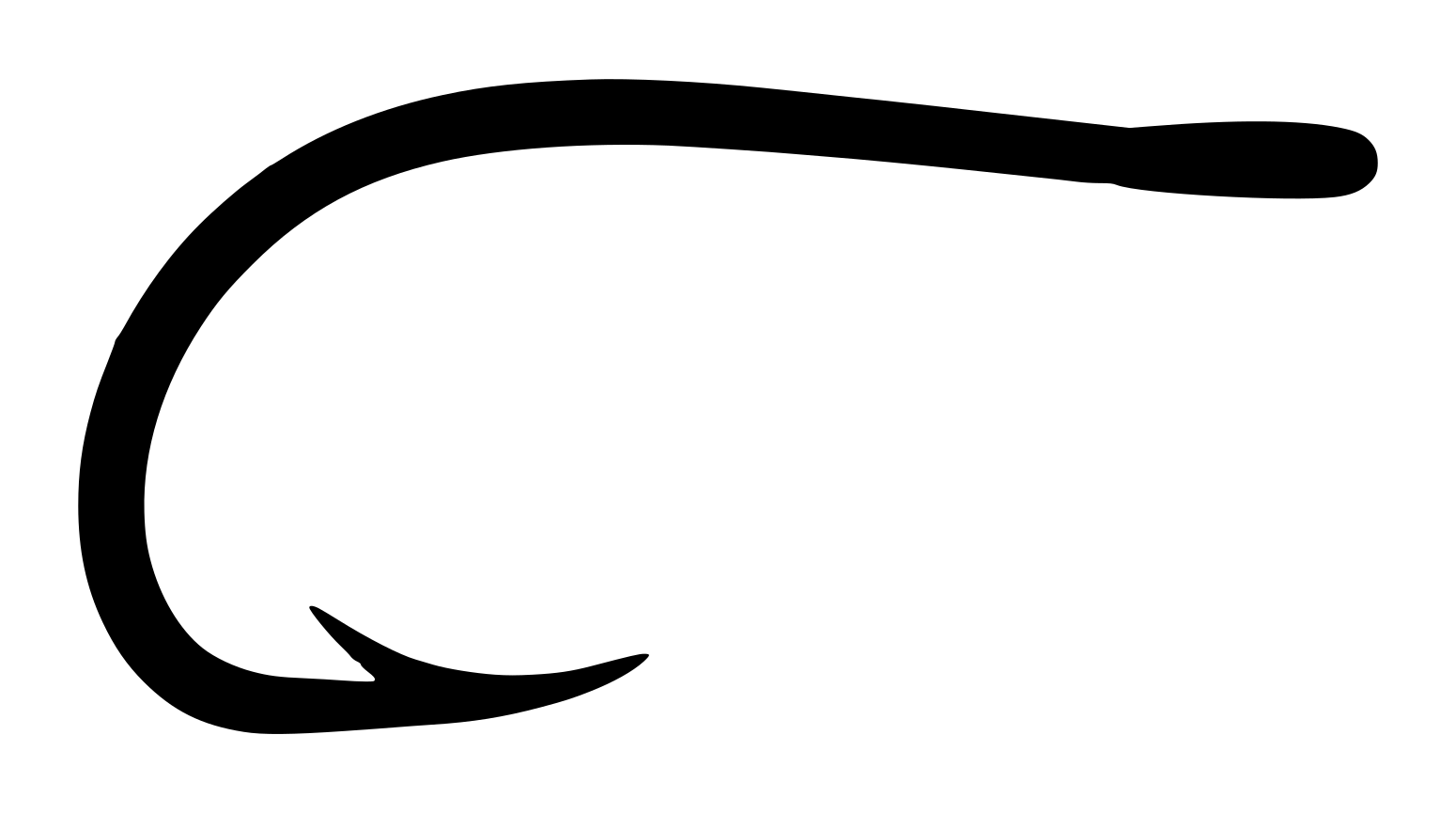
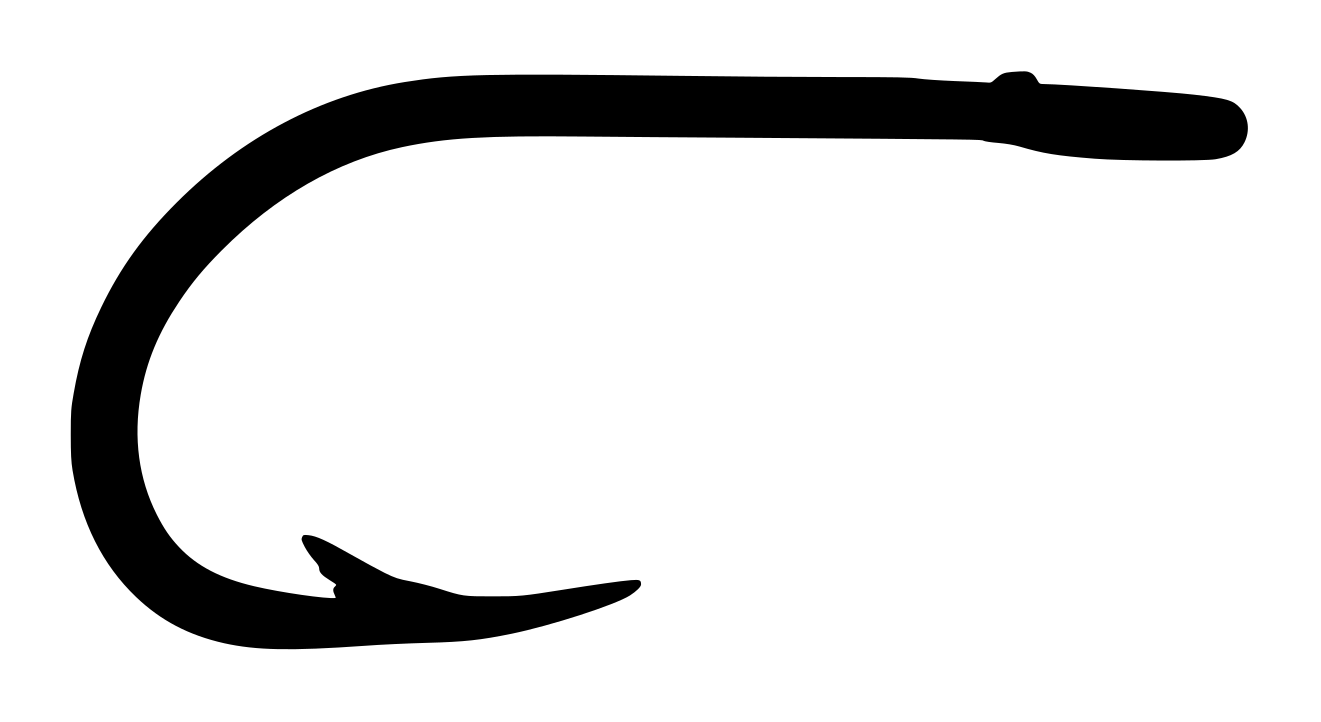
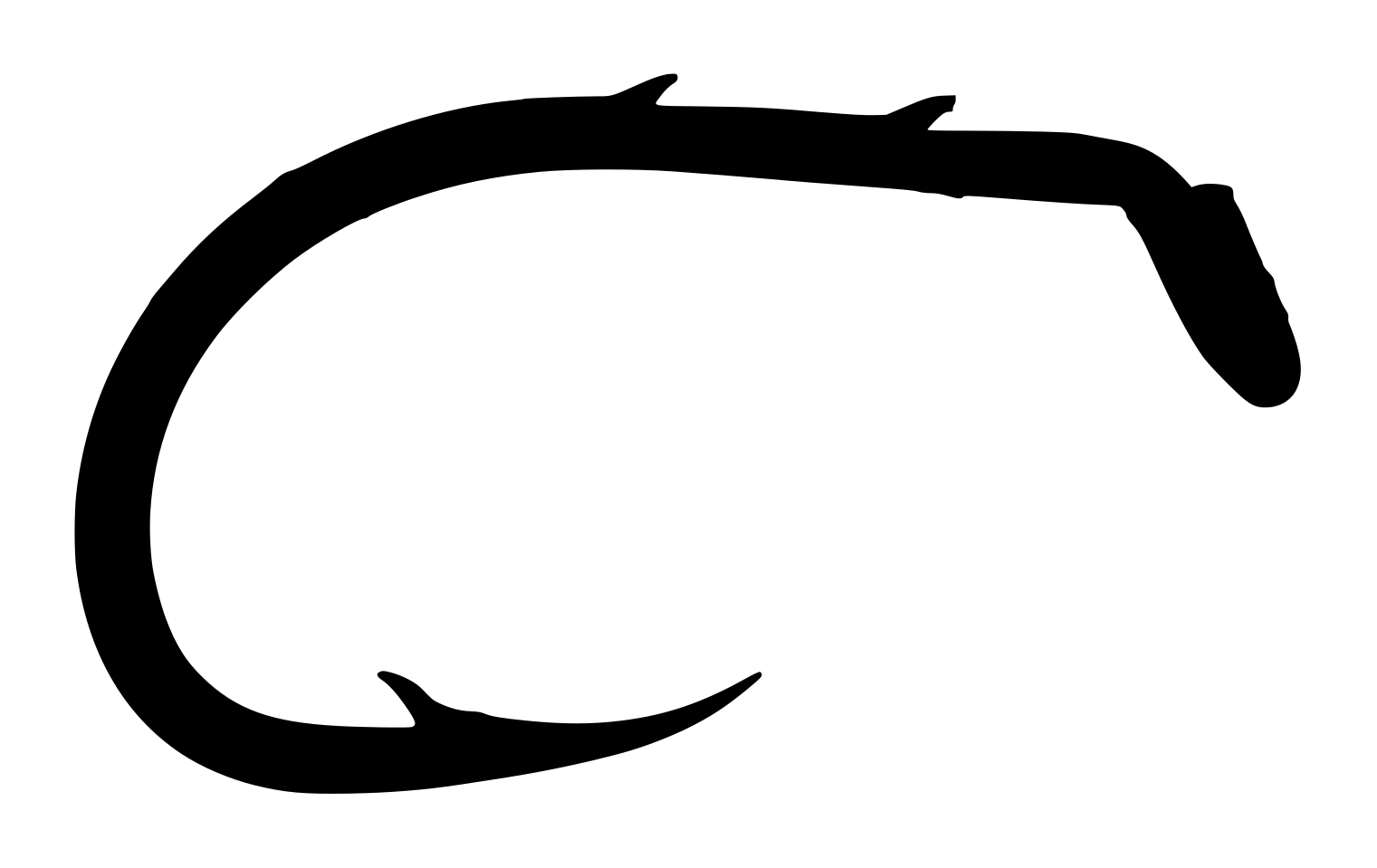
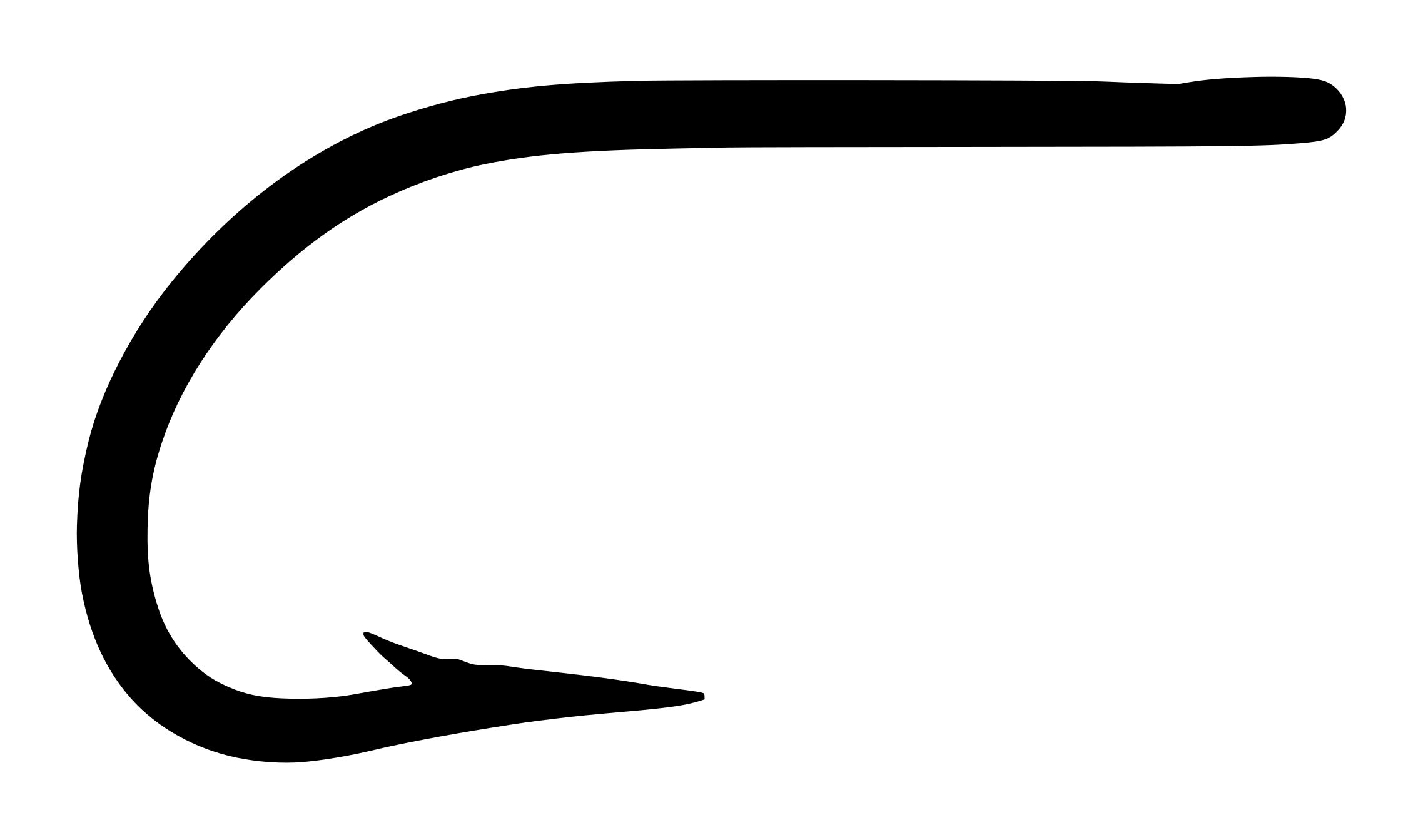
The Mustad 9567 Beak Hook is a bait hook manufactured by O. Mustad & Son of Oslo, Norway. This is a heavy-wire, single-bend specimen with a distinctive reversed-offset (beak) geometry, a straight inline ball eye, and forged wire construction. The bend is named for the characteristic hooked point that extends outward and downward at an angle, creating a pronounced upward curve in the shank. Size 10 specimen measured here shows ~0.470″ overall length and a wide gap of ~0.192″ P.
The model code 9567 appears in Mustad catalogs from the mid-twentieth century. The box specifies Oslo as the manufacturing location and carries the date line “ESTABL. 1832,” a reference to O. Mustad & Son’s founding year. The absence of a barcode and the letterpress printing style of the label are consistent with production in the 1950s to early 1960s.
Beak hooks were primarily used by bait anglers targeting saltwater species and pike in freshwater. The reversed-offset geometry and heavy wire were designed to penetrate the tough jaws of large fish. The inline eye allowed both direct-tie and loop-eye attachment configurations. Mustad produced the 9567 in sizes ranging from 4/0 to at least 10, though size availability varied by market and decade.
The Mustad 9567 remains moderately collectible among bait-fishing enthusiasts and hook historians. Original manufacturer boxes are scarcer than individual cards, and complete examples with all hooks intact command a collector premium. The specimen examined here retains original packaging in good condition, with legible label printing.
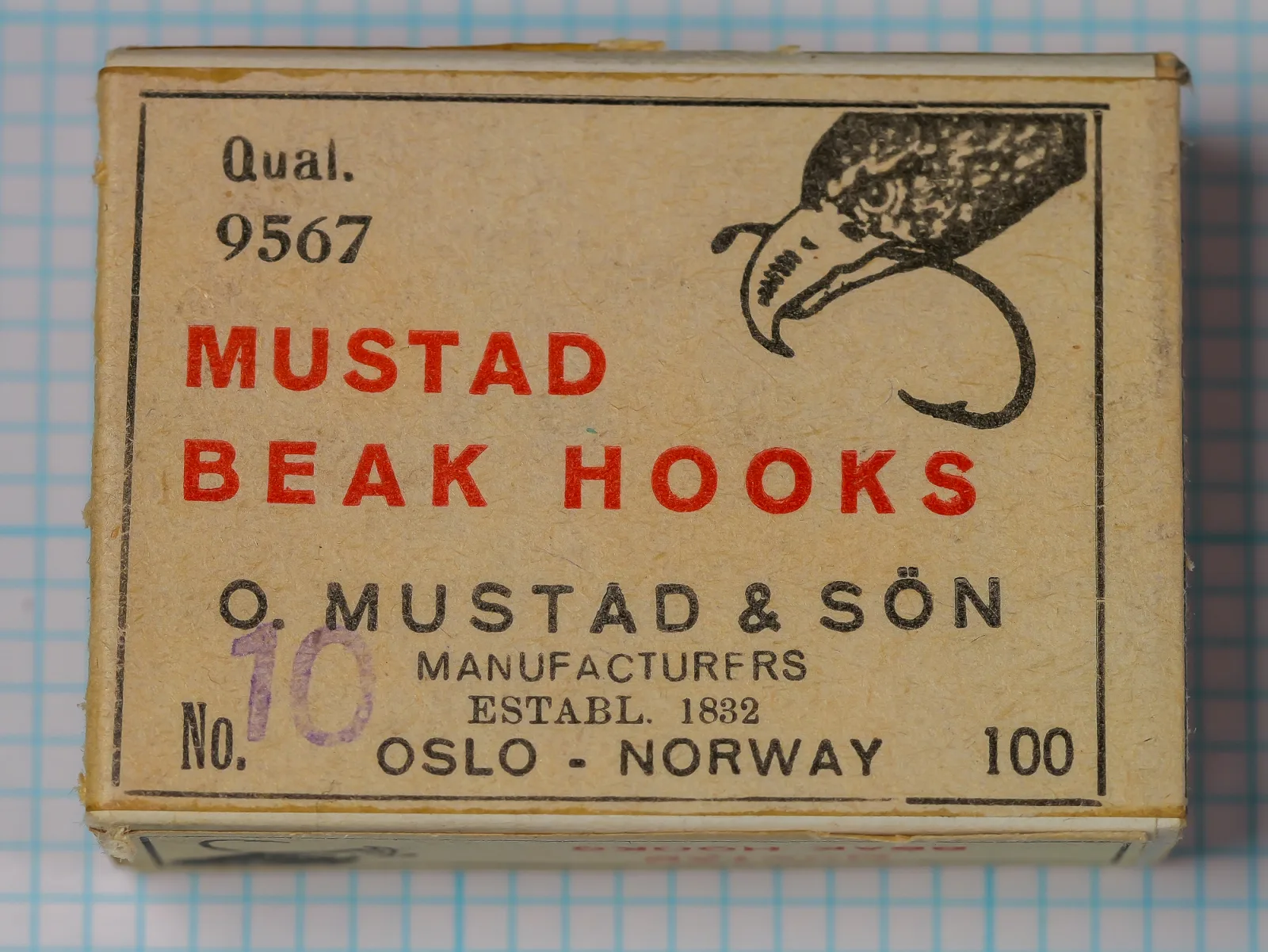
Front label of the original Mustad 9567 Beak Hook manufacturer box, printed in black and red offset letterpress on kraft cardboard. Label shows model code, product name, manufacturer attribution, establishment date, and engraved hook illustration.
Photographic record
3 cataloged imagesSelect any record to load it above.
3 images shown
Mustad 9567 Beak Hook Box LabelFront label of the original Mustad 9567 Beak Hook manufacturer box, printed in black and red offset letterpress on kraft cardboard. Label shows model code, product name, manufacturer attribution, establishment date, and engraved hook illustration.Open originalMustad 9567 Size 10 — Profile ViewProfile (side) view of a size 10 specimen showing the distinctive beak bend — an upward arc in the shank with a sharp reversed offset point. The heavy forged wire and pronounced curve are characteristic of Mustad's mid-century saltwater bait-hook design.Open originalMustad 9567 Size 10 — Plan ViewPlan (top-down) view of the size 10 specimen on measurement grid, showing shank length, straight inline ball eye, and wide gap. The kirbed (left-offset) orientation of the point is visible from this angle.Open original
Technical profile
Straight / Inline Ball Eye | Beak / Reversed Point | Standard | Heavy (1X Heavy) Wire | Beak Point | Bronzed
Eye
Ball Eye, Straight / InlineBall eye is well-formed and uniform in diameter, with clean wire butt. The eye is slightly oversized relative to the shank diameter, typical of Mustad's late 1950s–early 1960s production. No taper or reduction toward the shank is present — the eye maintains full wire gauge. The eye sits inline with the shank (straight orientation), allowing both direct tie-on and snelled leader attachment. P
Wire
Heavy (1X Heavy), Forged
Shank
Standard — Plain
Bend
Beak / Reversed Point, Wide gap, Offset / kirbedThe bend presents a pronounced upward arc in the shank with a sharp reverse offset of the point to the right (kirbed geometry). The taper from barb to tip is gradual and sweeping, creating a typical beak profile. Wire shows forging flat marks visible on the bend under magnification, consistent with mid-century Mustad manufacturing. The bend depth is substantial relative to the gap — the curve is not a simple round, but has angular character at the transition points. P
Point
Beak / Reversed (incurving)Barb is present, short, and closely cut. Positioned immediately behind the point at a shallow angle. Barb appears to be ~0.5 mm in height, integral to the wire with no separate barbing notch visible. P
Finish
Bronzed — Confirmed (stated on packaging)Warm brown bronzed finish confirmed by packaging label. Specimen displays rich brown tone with visible steel grain texture beneath the coating, indicating a thin applied finish rather than rust patina. The tone is consistent across the visible surfaces, with slight wear on the point and barb where handling has exposed underlying steel. No corrosion or active rust visible. The finish is characteristic of mid-century Mustad bronzing — warm brown rather than cool blue or silver. P
Specimen box shows typical age-related wear consistent with 60+ years of storage. Box lid displays light overall toning and creasing from handling and storage pressure. Label printing remains legible in black and red, though color tone has mellowed slightly. No water stains, insect damage, or significant structural compromise. Corners show minor blunting and edge crush from shelf storage. Hooks inside are intact and show the warm bronzed finish throughout; no visible corrosion or rust bloom on the specimen examined. Light contact wear on hook points and barbs consistent with manufacturing and handling, not fishing use.
The beak offset is a geometric solution to the hook-set problem in saltwater fishing. By angling the point outward and downward (reversed geometry), the hook angle changes relative to the fish’s jaw plane at the moment of strike, reducing the likelihood of the point riding over or deflecting off the hard tissue of the mouth roof or gill plate. The heavy 1X wire resists bending under the lateral pressure of large fish, maintaining point geometry and gap integrity. Forged wire — wire flattened during manufacture and then reformed to round section — gains strength through work-hardening while reducing material cost. The straight eye allows the hook shank to sit inline with the leader without forcing an angular stress concentration where eye and shank meet. This geometry is distinct from turned-eye designs favored in fly fishing, where precise angle and aerodynamic form are priorities.
This pattern was made in sizes 4/0 to 10 (I). We have measurement for size 10. Know the others? Submit calipered measurements and we'll review and add them. Thank you!
The Mustad Beak Hook series encompasses a range of sizes and finishes designed for saltwater and pike fishing. The beak geometry itself—a reversed offset with sweeping point—has origins in Scandinavian and British bait-fishing traditions dating to the nineteenth century. Mustad standardized the design and assigned it a model code (9567) as part of their catalog expansion in the early-to-mid twentieth century. The series was produced in bronzed, tinned, and nickelled finishes, with sizes ranging from 4/0 (large saltwater) down to 10 (smaller pike and estuarine work). The 9567 designation appears in Mustad catalogs from at least the 1950s through the early 1980s, though production volumes and size availability shifted over time. The model was eventually superseded by modern chemically-sharpened hook designs in the 1990s, as fly tying and light-tackle fishing became the dominant segments of the sport-fishing market. The 9567 remains in Mustad’s catalog as a heritage reference, though quantities produced are now minimal.
Era and Packaging Dating
Box shows no barcode or EAN code, indicating pre-1974 manufacture (barcodes became standard on Mustad boxes in the mid-1970s). Label printing is offset letterpress in black and red on natural kraft stock, consistent with 1950s–early 1960s printing technology. The typeface and label layout match Mustad's documented design standards from that era. The foundation date "ESTABL. 1832" is present, a reference continued on Mustad boxes through the 1960s but often omitted in later redesigns. The overall box construction — single-wall kraft, simple label application, no inner protective packaging visible — reflects mid-century cost-reduction practices. No postal code format visible. The warm bronzed finish and forged wire profile align with Mustad's documented specification standards for hooks in the 1950s–early 1960s. Collectively, these markers point to a production window of approximately 1955–1965, most likely 1958–1963.
Design lineage and influence
Best matchRelated by Attribute
Computed automatically from catalog data — updated as new hooks are added.
Matches: Bend, Gap, Eye, Point, Forging +4 moreDiffers: Shank: Standard vs Short (1X–2X Short); Wire: Heavy (1X Heavy) vs Fine (1X Fine); Eye Orient.: Straight / Inline vs Turned Up +4 more
Matches: Bend, Gap, Point, Finish, Offset +2 moreDiffers: Shank: Standard vs Short (1X–2X Short); Wire: Heavy (1X Heavy) vs Standard; Eye: Ball Eye vs Tapered Eye +5 more
Matches: Bend, Shank, Eye, Eye Orient., Point +4 moreDiffers: Wire: Heavy (1X Heavy) vs Extra-Heavy (2X+); Gap: Wide vs Standard; Finish: Bronzed vs Gold-Plated +3 more
Matches: Bend, Wire, Gap, Finish, Forging +3 moreDiffers: Shank: Standard vs Short (1X–2X Short); Eye: Ball Eye vs Tapered Eye; Eye Orient.: Straight / Inline vs Turned Down +5 more
Matches: Bend, Point, Finish, Forging, Offset +1 moreDiffers: Shank: Standard vs Short (1X–2X Short); Wire: Heavy (1X Heavy) vs Extra-Heavy (2X+); Gap: Wide vs Standard +4 more
The Mustad 9567 was a working hook for bait fishing in saltwater and pike contexts. The heavy wire and pronounced reversed offset were engineered to penetrate the tough, bony jaws of large fish and withstand the violent head-shakes and gill-flaring of hooked saltwater species. The wide gap accommodated thick baits — mullet, mackerel, herring — common in coastal fishing. The straight inline eye permitted both direct tie-on and loop-eye configurations, offering anglers flexibility in rigging. In freshwater, the 9567 found use among pike anglers employing live bait and dead-bait tactics, where the offset geometry aided rapid hook penetration on take.
Collector notes
Rated 4.0/10. The Mustad 9567 Beak Hook in original manufacturer box is uncommon but not scarce. Mustad's industrial production volumes were enormous, and many examples survive. However, complete original boxes in good condition are significantly rarer than individual sales cards or loose hook lots. Collector demand is moderate — the model appeals to bait-fishing historians and Scandinavian tackle specialists, but not to the fly-tying community. Size 10 is relatively common; larger sizes (4/0–6/0) command slight premiums.
Reference value
$5 – $15 USD estimate
Packaging condition
Good — moderate wear, legibleRecorded specimen
Packaging format
mustad-box-01Catalog code
Positive Factors: Original manufacturer box (not a card) adds significant premium over loose hooks or individual cards. Bronzed finish and heavy wire are desirable to collectors seeking functional mid-century bait tackle. The inline straight eye and large sizes (4/0–6/0) appeal to pike and saltwater enthusiasts. Complete hook count (100 hooks) is a strong value driver. Mustad branding and the establishment date “1832” resonate with Nordic tackle collectors.
Limiting Factors: Mustad’s enormous production volumes mean individual models are common and copies are readily available on secondary markets. The 9567 lacks the craft-heritage appeal of Redditch makers (Allcock, Partridge) or the specialized demand of fly-fishing hooks. Size 10 is less desirable than large saltwater or pike sizes. The box shows age-toning and creasing, reducing it from mint to good condition. A missing or incomplete hook count would substantially reduce value. Boxes with torn, stained, or illegible labels command 30–50% discounts.
Most Desirable Variants: Unopened boxes command 15–25% premiums. Larger sizes (4/0–6/0) are more sought than size 10. Tinned or nickelled finishes are less common than bronzed and may attract 10–20% premium from collectors seeking finish variety. Boxes with handwritten lot numbers or price marks from defunct tackle shops add anecdotal value.
Condition Impact: Box condition is the primary driver of value. A mint unopened box with perfect label printing may reach $15. A box in good condition with legible label and nearly complete hook count typically achieves $15–25. Boxes with significant label damage, missing more than 10 hooks, or structural damage fall to $5–12. Loose hook lots or incomplete boxes command $2–5 per 10 hooks.
Packaging
Rigid manufacturer box, kraft cardboard stock with printed label. Dimensions approximately 4.5" x 3" x 1.25". Label printed in offset letterpress in black and red ink on natural kraft. Shows model code "Qual. 9567," product name "MUSTAD BEAK HOOKS" in large red letters, manufacturer name and location "O. MUSTAD & SON MANUFACTURERS ESTABL. 1832 OSLO - NORWAY," and hook count "100" in black. A small engraved illustration of a beak hook appears at upper right of label. No barcode present. Box lid shows light age-toning and creasing consistent with 60+ year storage; label edges slightly yellowed. Original box architecture intact with no structural damage. Interior wrapping and hook condition to be assessed from specimen examination.
Market Value Notes
Low ($5): Good condition — original manufacturer box with legible label printing, 90+ hooks present, light age-toning and creasing acceptable, minor corner wear.nHigh ($15): Excellent condition — box structurally sound with crisp label printing, full or near-full hook count (95–100), minimal creasing or staining, hooks show no corrosion.nPremium factors: Original manufacturer box (vs. card) commands 2–4x the loose-hook value. Complete or near-complete hook count critical. Unopened boxes add 15–25% premium. Size 4/0–6/0 add 10–15% over size 10. Bronzed finish is standard; tinned adds minimal premium in this model.nPlatforms: eBay.com (US and UK auctions), Danish and Norwegian tackle dealers, specialty bait-fishing forums and auctions.nConfidence: E Estimated. Limited direct sold-listing data for this specific model. Estimate anchored to broader Mustad bait-hook comparable sales (9572 Limerick, 9175 OShaughnessy in similar era and condition) and manufacturer-box premiums observed on similar vintage tackle. Recommend flagging for update if auction results become available.
Where to Find
eBay.com (both US and UK auctions, periodically). Norwegian and Danish tackle dealers specializing in vintage Scandinavian fishing tackle. Antique sporting-goods auctions in Northern Europe. Estate sales in coastal regions with historical fishing traditions. Collector trading groups focused on bait-fishing tackle and Mustad memorabilia.
Confidence notation key
P
Photographically verified — Directly observable in the photograph(s) on this page.
V
Verified by documentation — Confirmed by manufacturer catalog, spec sheet, or published reference.
I
Inferred — A logical deduction from observable or documented evidence, not directly stated.
E
Estimated — An approximation based on visual comparison, proportional analysis, or limited data.
S
Speculative — A reasoned hypothesis that cannot be confirmed from available evidence.
Unnotated claims are the compiler’s synthesis; see Sources. All photographs on garrenwood.com are taken on a measurement grid where each square equals 1/10 inch (0.1″ / 2.54 mm).