The Yellow Label H.P. Sproat represents Ray Bergman’s entry into the mid-market American fly hook trade during the 1950s-early 1960s. Bergman, a prominent outdoor writer and tackle designer, positioned this series as a reliable, affordable alternative to premium English imports while maintaining traditional Redditch craftsmanship.
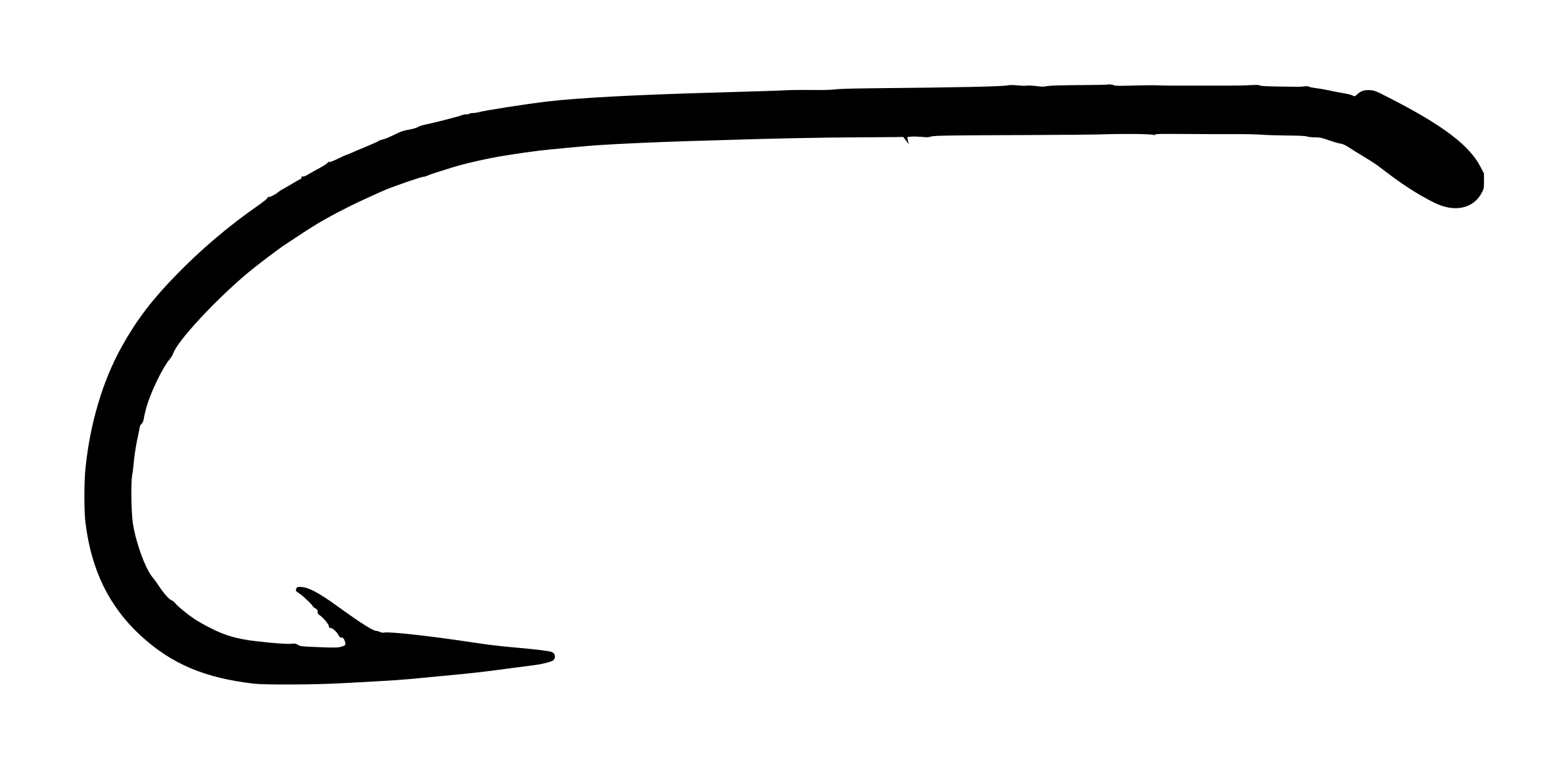
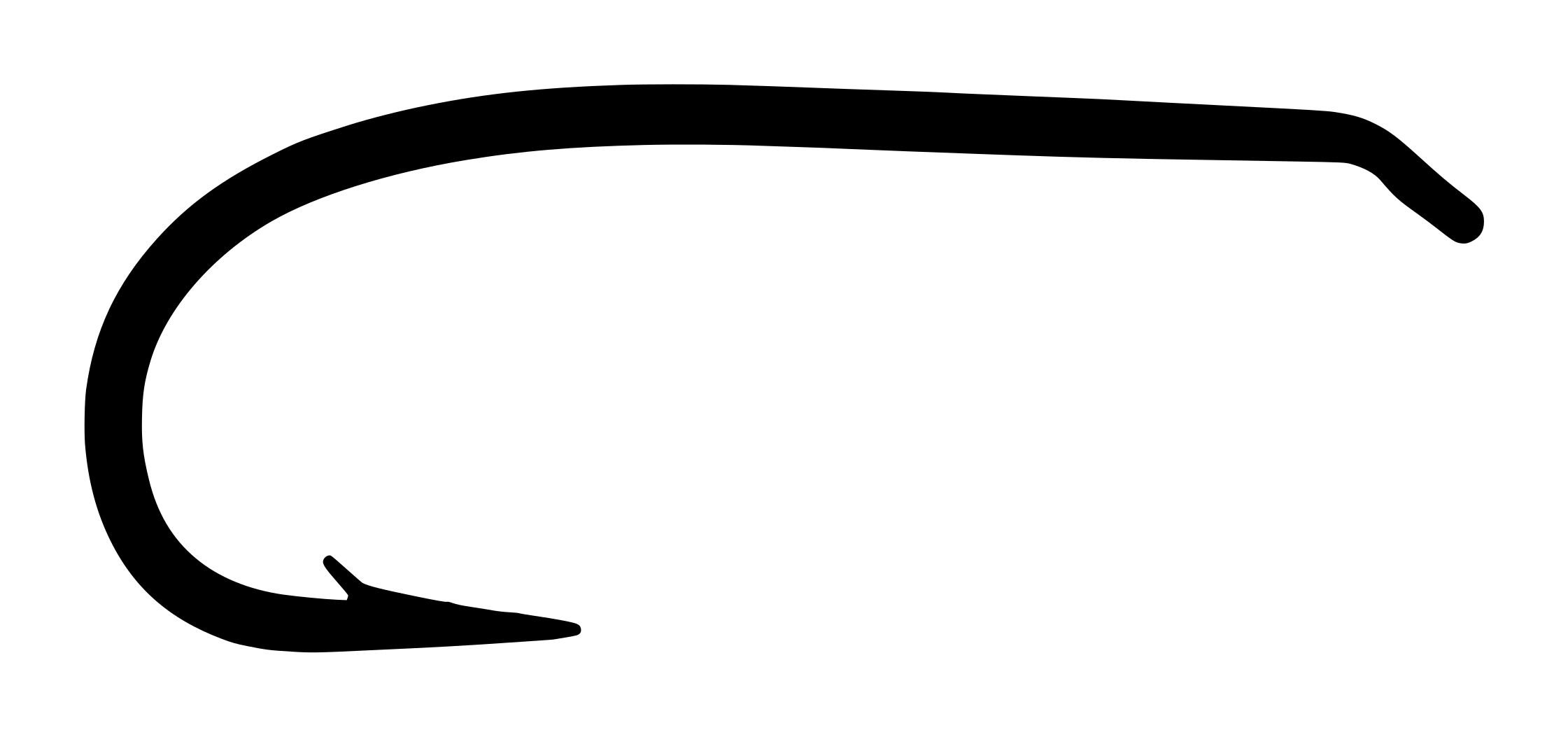
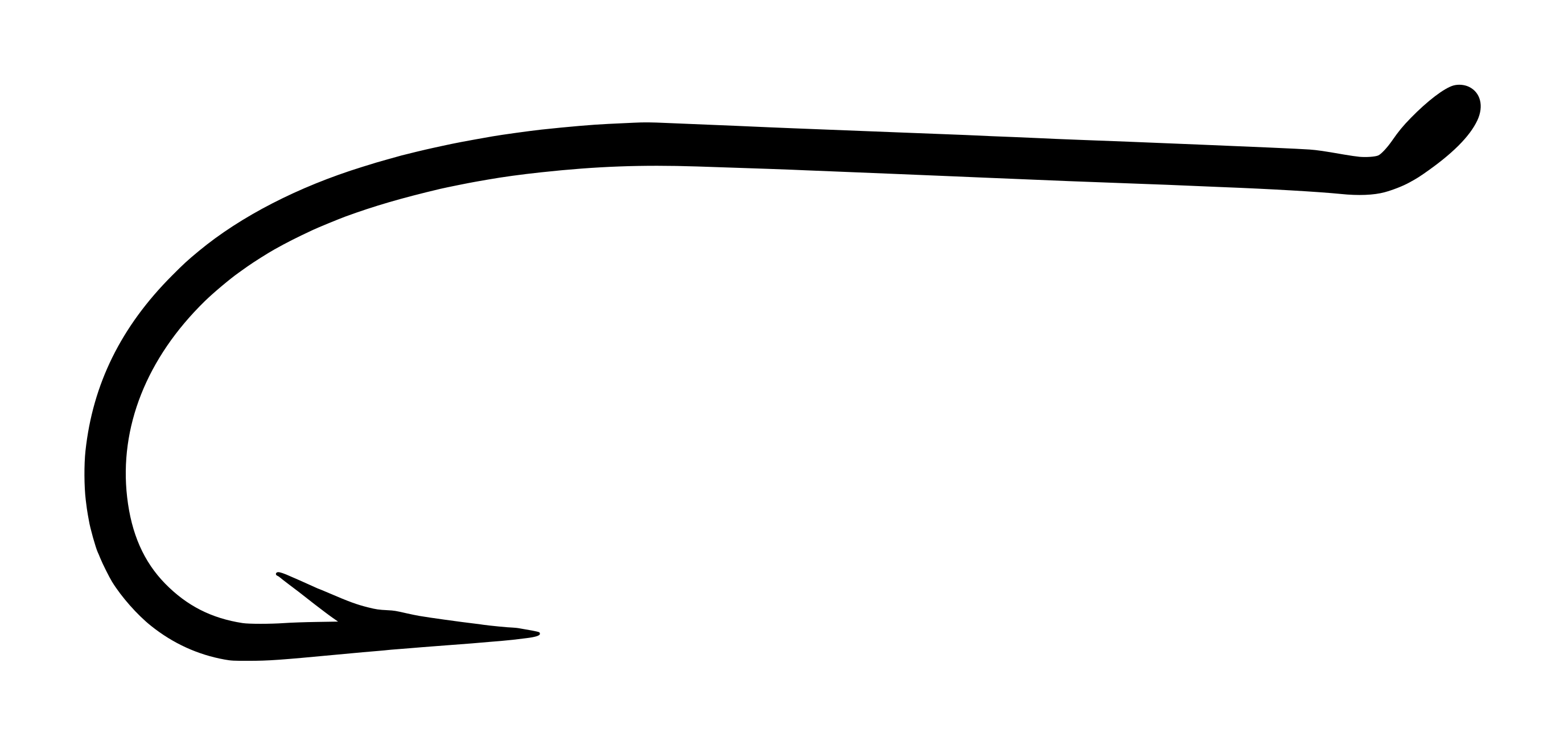
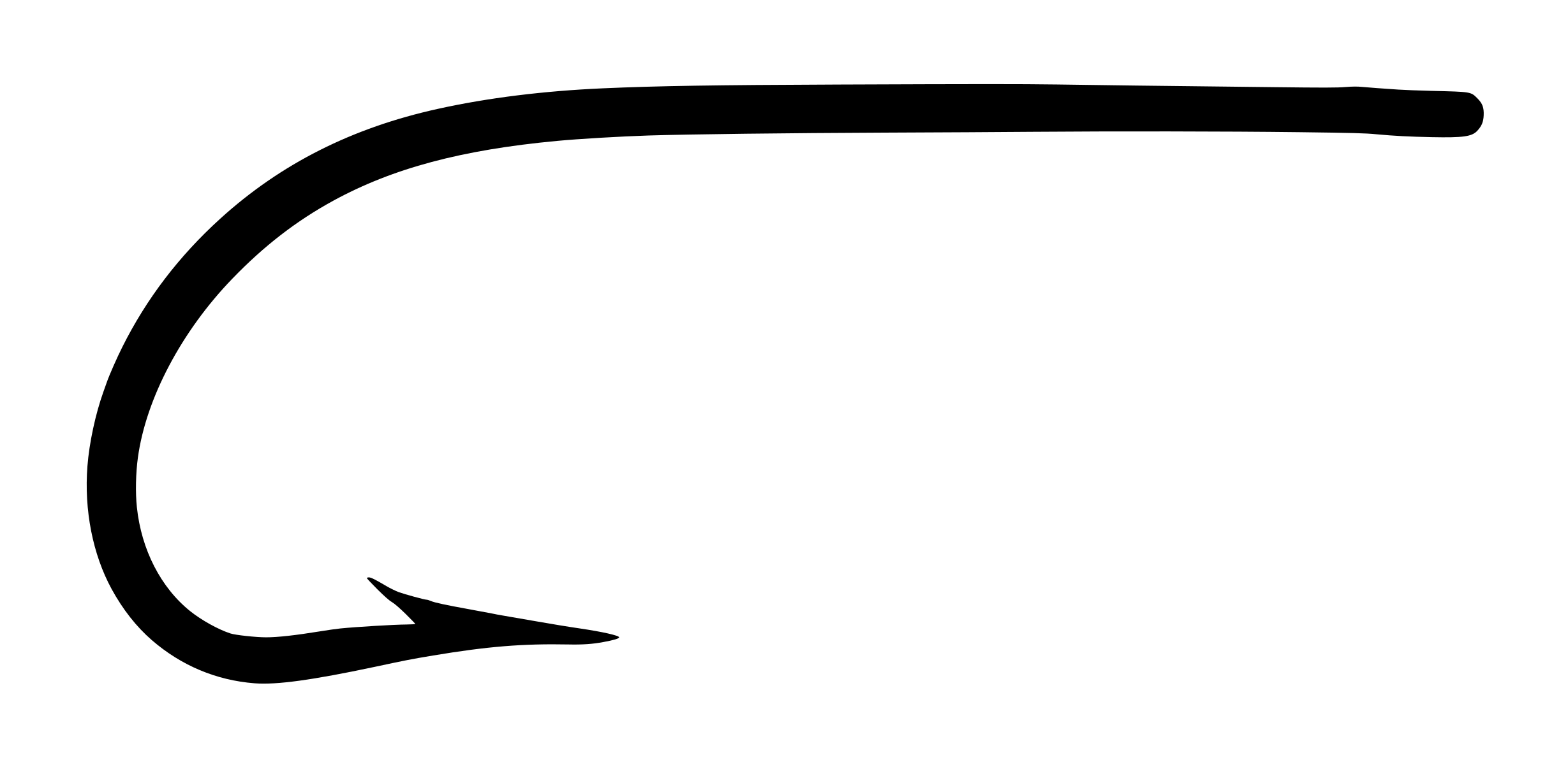
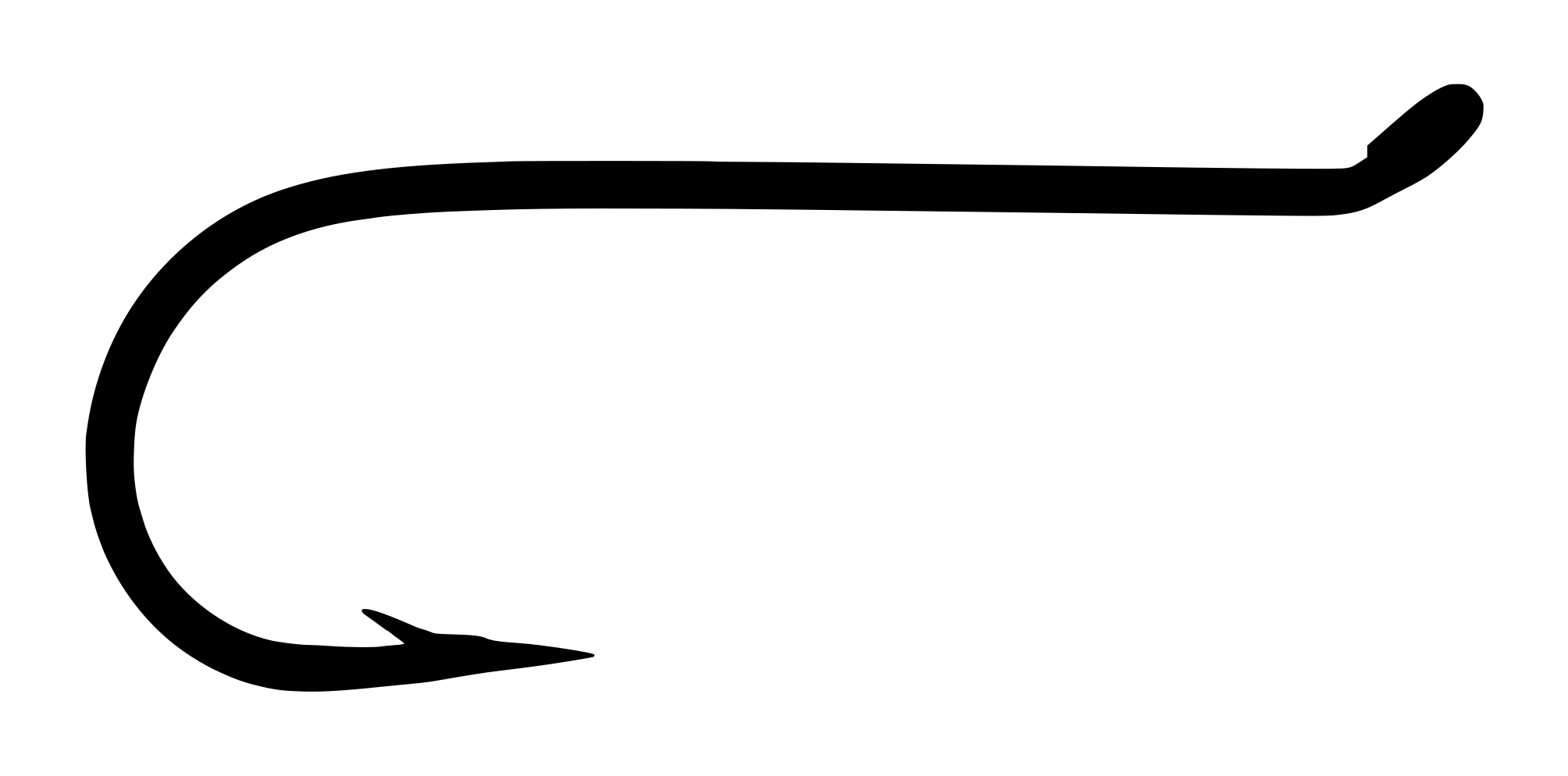
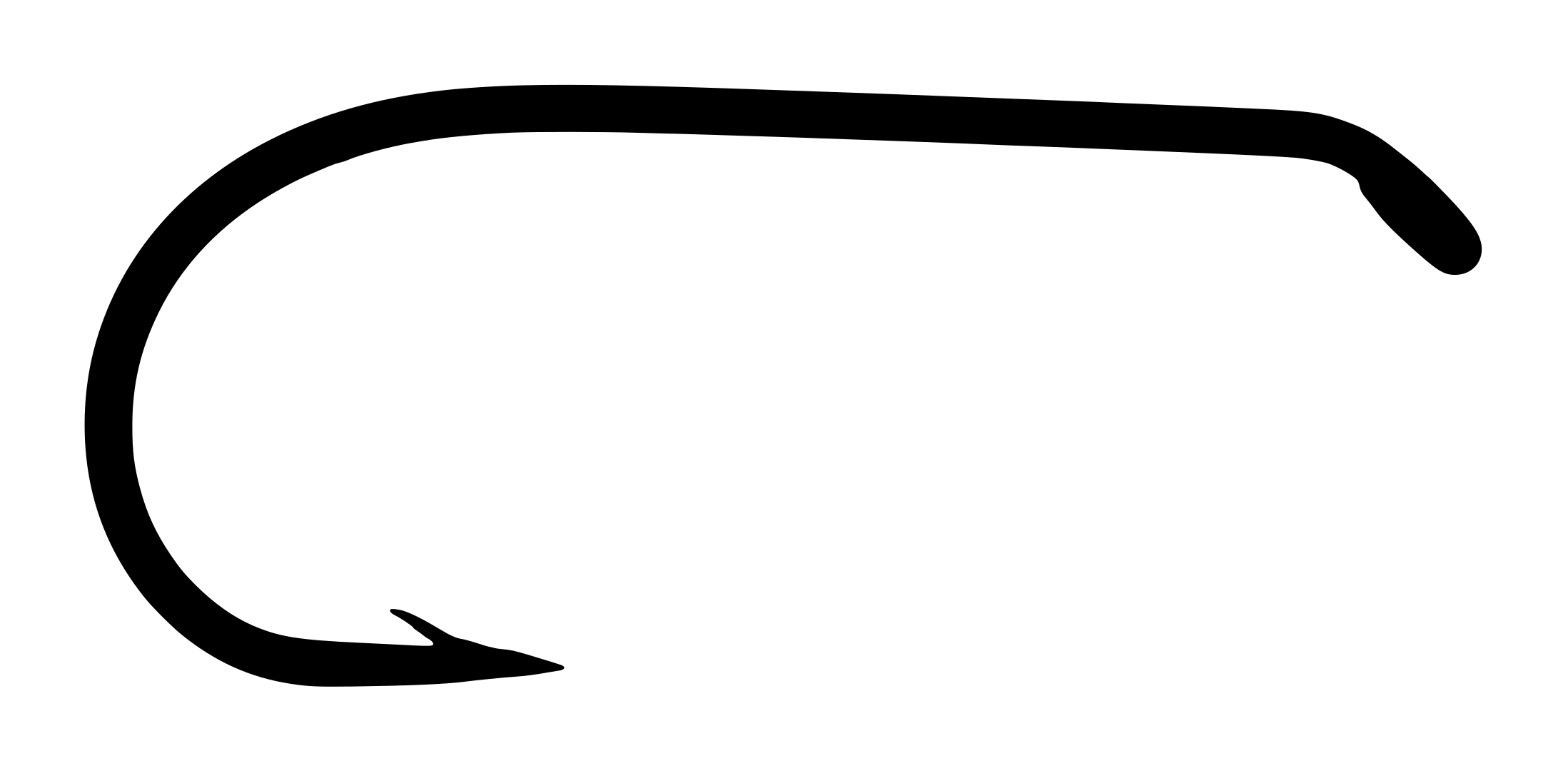
This size 6 specimen features a turned-down tapered eye, 2x stout wire, hollow point, and classic sproat bend — a versatile platform for both dry and wet fly work. The bronzed finish and careful proportions reflect the quality standards of post-war English manufacturing, likely produced under contract at one of the Redditch workshops.
The hook is significant as documentation of American tackle distribution and the transitional period when Redditch hooks dominated the U.S. market before Japanese and Norwegian manufacturers expanded their presence. The original kraft box with yellow label represents a common but increasingly scarce example of mid-century American tackle packaging.
2 cataloged imagesSelect any record to load it above.
2 images shown
Bergman-Yellow-Label-HP-Sproat-Box-and-Label-Size-6Bergman-Yellow-Label-HP-Sproat-Box-and-Label-Size-6Open originalBergman-Yellow-Label-HP-Sproat-Hook-Size-6Bergman-Yellow-Label-HP-Sproat-Hook-Size-6Open original
Technical profile
H.P. Sproat, T.D. Eye, 2x Stout Wire, Ball Eyed, Bronzed
Eye
Tapered Eye, Turned DownTapered blind eye with ball eyelet. Taper is evident in the transition from the main shank wire to the eye loop. The tapered construction is characteristic of English manufacture from this era. P
Wire
Standard, Round
Shank
Standard — Plain
Bend
Sproat, Wide gapClassic sproat bend with smooth, symmetrical curve. Bend displays even radius throughout, typical of quality English forging. No wire offset or kirb present. P
Point
Hollow Point (concave inner face)Short, close-cut barb positioned slightly forward of the bend apex. Barb angle is perpendicular to wire axis. P
Finish
Bronzed — Confirmed (stated on packaging)Warm brown bronzed finish confirmed by researcher physical examination and stated on original packaging. Finish shows minor patina consistent with age and storage. Steel grain texture visible through coating in oblique light, typical of traditional bronzing technique. V
Specimen hooks display bright bronzed finish with no corrosion or pitting. Original kraft box shows moderate toning and edge wear consistent with 60+ years storage. Yellow label is fully legible with minor color fading. All visible text is clear and intact.
The hollow point specification is significant for fly tying and fishing function. A hollow point features a concave inner face that curves inward, creating a very sharp edge geometry with minimal material loss during the point formation. This contrasts with a superior point, which maintains a nearly flat, sloped inner face.
The functional advantage of the hollow point is penetration: the knife-edge geometry cuts rather than crushes the fish’s jaw, enabling faster hook sets with lighter strike force. This was particularly valued in the 1950s-60s when lighter tippets and finer wire were becoming standard practice in American trout fishing.
The 2x heavy wire (approximately 0.024″-0.027″) provides durability for larger patterns and fighting fish without adding bulk to the appearance — a design compromise between the spindly fine-wire dry-fly hooks then used for #18-20 midges and the heavy saltwater hooks. This wire gauge was standard for general-purpose #4-#8 trout hooks across most manufacturers.
The sproat bend itself is a rounded-bottom curve with no angular features. Unlike the more aggressive oshaughnessy or the delicate limerick, the sproat offers balance: sufficient gape for secure hooking, yet sufficient depth for smooth, forgiving penetration on rising fish.
Ray Bergman (1891-1957) was an outdoor writer, photographer, and editor rather than a manufacturer. His involvement with hooks was strictly as a brand name and designer consultant. Bergman rose to prominence through his prolific contributions to Field & Stream magazine, beginning in the 1920s, and his landmark book ‘Just Fishing’ (1932), which synthesized British dry-fly technique with American fishing practice.
Bergman’s relationship with manufacturers was characteristic of the mid-century tackle trade: he lent his name and endorsement to quality products, effectively creating a private-label brand that capitalized on his reputation as a fishing authority. This was far more common than direct manufacturing involvement by named designers; most ‘branded’ hooks were outsourced to established makers.
For the Yellow Label series, Bergman’s role was likely limited to specifications (choice of bend, wire gauge, point geometry) and approval of samples. The actual manufacture was contracted to one or more Redditch workshops — most likely Edgar Sealey, S. Allcock, or Partridge of Redditch, the primary suppliers of bulk commercial hooks to American distributors during the 1950s.
Bergman died in 1957, and his hook line did not survive him; the Yellow Label brand appears to have been discontinued within a few years of his death. His legacy in fly-fishing literature remains substantial, but his tackle-branding venture was a minor, transitory enterprise in the broader context of his career.
Series History
The ‘Yellow Label’ series was Ray Bergman’s primary commercial hook offering, introduced in the late 1940s or early 1950s as his reputation as a fly-fishing authority was at its peak. The line consisted of standard wet and dry fly patterns in common sizes (typically #2 to #16), all manufactured under contract at Redditch workshops.
The series was not a specialized collection — it was intended as a general-purpose, mid-market alternative to premium British imports and an undercut to Mustad’s pricing. The yellow label was a marketing identifier, chosen for visibility in tackle shop displays, not for any technical significance.
Variants within the Yellow Label line included different bend families (sproat, limerick, beak) and eye types (ball eye, tapered eye), though the sproat appears to have been the flagship offering based on surviving examples. Wire gauge options (standard, 2x heavy) were also offered across the range.
Production continued throughout the 1950s and into the early 1960s, with the line gradually losing market share as Japanese and Norwegian hooks improved in quality and price. The line was discontinued by the mid-1960s, likely following Bergman’s death and the shift in Field & Stream’s tackle editorial direction under new leadership.
No documented catalog or pricing information for the Yellow Label series has been located by garrenwood.com researchers; the surviving packaging represents the primary historical evidence of the line’s existence and specifications. This lack of documentation is typical for private-label American hook lines that served the mail-order and tackle-shop trade rather than the prestige catalog market.
Era and Packaging Dating
No barcode present on box or label (pre-1974 indicator). Manufacturer Ray Bergman, Nyack, N.Y. address format and style consistent with 1950s-early 1960s. Offset letterpress printing on kraft box and yellow label typical of mid-century American tackle packaging. Yellow label color and sans-serif typography align with 1950s design conventions. Specific address 'Nyack, N.Y.' confirms pre-ZIP code era (pre-1963, strengthening c.1950-1960 attribution). Overall box construction, paper stock quality, and printing technique all point to post-WWII but pre-1970 production.
Bergman's Mid-Century Compromise: English Quality at American Prices
Ray Bergman's Yellow Label hooks represent a fascinating moment in American fly-fishing: the late 1950s, when English Redditch hooks still dominated the U.S. market despite postwar competition from Scandinavian makers. Bergman, as Field & Stream's authority on fly technique, effectively endorsed these hooks simply by lending his name, creating a quasi-private-label product that satisfied cost-conscious fly fishers who wanted the cachet of English make without paying premium prices. The fact that these hooks rarely appear in tackle collections today — despite having been mass-produced — suggests that, unlike branded hooks, they were literally fished to destruction, which ironically makes surviving examples in original packaging increasingly collectible.
Design lineage and influence
The sproat bend traces to mid-19th-century English innovation, becoming standardized at Redditch. The basic geometry has remained virtually unchanged for 150+ years, testament to its functional soundness. By the 1950s, the sproat was considered the default ‘general purpose’ bend across competing manufacturers — Mustad, Partridge, Allcock, and independent makers all offered sproat variants.
Ray Bergman’s adoption of the sproat reflected his editorial philosophy: favor proven, traditional patterns over novelties. His contemporaries at Field & Stream were experimenting with Japanese hooks and newer Scandinavian designs, but Bergman remained committed to English manufacture, seeing it as synonymous with quality.
The hollow point specification likely reflects Bergman’s fishing experience and advice columns; contemporary fly-fishing literature (particularly British texts) emphasized that the hollow point offered superior penetration on rising fish — the intended use case for this hook.
In terms of downstream influence, the Yellow Label series was effectively obsolete by the early 1970s, overtaken by Mustad’s vertical integration and the arrival of Japanese hooks at competitive prices. Unlike Partridge or Allcock, which maintained brand prestige through the 1970s-80s, Bergman’s name lost marketing traction after his death in 1957, and the line was quietly discontinued. Modern sproats from Mustad and Tiemco are the direct functional descendants.
Best matchRelated by Attribute
Computed automatically from catalog data — updated as new hooks are added.
Matches: Bend, Shank, Eye, Point, Finish +3 moreDiffers: Wire: Standard vs Fine (1X Fine); Gap: Wide vs Standard; Eye Orient.: Turned Down vs Turned Up +1 more
Matches: Bend, Eye, Eye Orient., Point, Finish +3 moreDiffers: Shank: Standard vs 1X Long; Wire: Standard vs Fine (1X Fine); Gap: Wide vs Standard +1 more
Designed as a general-purpose trout hook suitable for both dry and wet fly work. The 2x stout wire and sproat bend provide robust durability for larger patterns and active fish. Ray Bergman’s Yellow Label series was positioned as a reliable, mid-range hook for American fly fishers, particularly those targeting stream trout.
Secondary Applications
Light streamers, soft-hackle wet flies, mayfly and caddis imitations.
Classic Fly Patterns
Adams, Elk Hair Caddis, Stimulator, various mayfly patterns
Modern Equivalents
Hook
Match Quality
Notes
Mustad 3906B (Sproat, 2x heavy, eye variations)
Excellent
Identical bend geometry and wire gauge; modern bronzed sproat in same functionality class.
Tiemco 2488 (Sprout, standard wire, 2x length variants available)
Very Good
Modern equivalent with similar sproat mechanics; finer wire on base model, but 2x versions available. Eye style differs slightly.
Partridge GRS12ST (Sproat wet fly, 2x heavy options)
Good
Premium English sproat alternative; wire gauge comparable but modern production tolerances differ slightly.
Collector notes
Rated 4.5/10 — Moderately uncommon. Size 6 is readily available, but the original kraft box packaging with complete, unbroken card adds measurable collector premium. Ray Bergman branding attracts modest specialist interest. Limited by abundance of similar English sproat hooks from the same era and production volume of Redditch workshops.
Reference value
$8 – $22 USD estimate
Packaging condition
Very Good — light wear, fully legibleRecorded specimen
Packaging format
GW-BOX-01Catalog code
What Makes This Collectible: Ray Bergman’s name recognition as a legendary fly-fishing writer attracts specialist collectors. The original kraft box with yellow label and intact card represent scarce surviving packaging from the 1950s-early 1960s American tackle market. The hooks themselves are functional and usable, giving the specimen dual value as both a reference piece and a viable fishing tool. The period aligns with strong collector interest in mid-century American fly-fishing history.
Limiting Factors: The hook’s mechanics are entirely standard — no unique geometry, no patent claims, no specialist appeal beyond the Bergman branding. Size 6 is neither rare nor unusual within the range. The series was mass-produced, meaning intact examples are less scarce than premium Redditch craft patterns or specialty designs. Most collectors of this era focus on named manufacturers (Partridge, Allcock, Mustad) rather than branded private-label lines. The lack of any historical documentation (catalogs, advertisements, secondary sources) means the hook must be identified and contextualized by researchers from surviving specimens alone.
Most Desirable Variants: Complete, sealed original boxes with full hook count (100) are infinitely more desirable than opened cards. Smaller sizes (#10-16) or larger sizes (#2-4) are marginally more sought than #6 due to rarity. Unopened tissue wrap inside the box would indicate minimal handling and significantly increase value. Original boxes with bright, unfaded yellow labels are preferred; faded or torn labels reduce collector premium by 20-30%.
Condition Factors Affecting Value: Packaging condition is the primary driver of value — the cards are typically common if loose from the box, valued mainly for the functional hooks. A clean, bright yellow label can add 50-100% to the value of loose hooks. Hooks showing any corrosion or discoloration are significantly less desirable (20-30% premium loss). Complete hook count is essential to value — missing hooks reduce the card value to approximately 60-70% of complete-count pricing. Corner damage or crushing of the kraft box, though cosmetic, reduces value for collectors who value display appeal.
Packaging
Kraft cardboard hinged box with glued-in yellow label. Exterior: natural kraft stock, unlined. Label (front panel): Bright yellow/gold with black sans-serif letterpress text reading '"YELLOW LABEL" H.P. Sproat, T.D. Eye 2x Stout Wire Ball Eyed Size.....6.....100 RAY BERGMAN, Nyack, N.Y. MADE IN ENGLAND'. Dimensions approximately 3" × 4" × 1" (estimated from grid image). Paper stock is medium-weight kraft, typical of 1950s-60s American packaging. Printing method: letterpress, indicating offset-free production (no halftone dots visible). No barcode or modern identifier. Interior: hooks mounted on kraft card in rows, with natural paper wrapper. No printed interior labels or instructions visible. Box closure: simple hinged lid with no latch — typical of mid-century hook boxes. Edge wear and corner crushing consistent with 60+ years retail handling and storage.
Market Value Notes
Low ($8): Good condition — opened box, label legible but faded, 90-95% hook count intact, minor edge wear. High ($22): Excellent condition — box nearly new appearance, label bright, 100% hook count, minimal wear. Premium factors: Complete original packaging (kraft box + yellow label), Ray Bergman branding, mid-century era, intact card. Platforms: eBay (UK and US), specialist vintage tackle dealers, occasional estate sales. Confidence: E estimated — limited comparable sales data for Ray Bergman Yellow Label cards; estimate derived from typical Redditch-made American-market hook pricing and Bergman brand recognition. Most similar Redditch-made sproat cards in size 6 sell $5-18 depending on condition and packaging format.
Where to Find
eBay (both UK and US auctions periodically offer this model). Specialist vintage tackle dealers who focus on American fly-fishing history. Occasional appearances at regional estate sales in northeastern U.S. (Bergman's Nyack base increases likelihood in NY/NJ market). Vintage tackle swap meets and collector shows. Rarely seen in antique shops outside major fishing regions.
Preservation
Storage and Preservation
Store this specimen in a cool, dry environment (50-60% relative humidity ideal). The bronzed finish is stable but will develop a darker patina with high humidity exposure — this is natural aging rather than corrosion, and many collectors consider warm patina desirable.
Keep the original kraft box intact; do not remove hooks from the card unless they are to be used. Original packaging dramatically increases collectibility and value. Store the box upright or flat, never bent or compressed. Avoid stacking other boxes on top.
Protect from direct sunlight, which can fade the yellow label and accelerate finish aging. Store away from other metals (iron, steel fixtures) that could cause galvanic corrosion if moisture is present. Do not expose to any cleaning agents or solvents — the bronzed finish should never be polished or artificially brightened.
If the box becomes damp, allow it to air-dry slowly in a well-ventilated space. Do not use heat or direct airflow. Acid-free storage tissue or archival kraft paper can be placed inside the box if additional protection is desired.
Primary Source
Ray Bergman Branding and Manufacturing Claims
Source: Ray Bergman Yellow Label H.P. Sproat box label, c. 1950-1965
The yellow label explicitly credits ‘RAY BERGMAN, Nyack, N.Y.’ and states ‘MADE IN ENGLAND.’ This reflects the mid-century American tackle market structure: Bergman, a prominent outdoor writer and editor of Field & Stream, marketed hooks under his name as a personal brand, but outsourced manufacture to established Redditch makers. The phrase ‘MADE IN ENGLAND’ is legally required under U.S. tariff law (Tariff Act of 1930) for imported goods, confirming English production origin.
The ‘H.P. Sproat’ designation indicates ‘Hollow Point’ — a specific point geometry distinct from the standard sproat of the era. This precision in nomenclature suggests professional-grade production rather than commodity hooks. The ‘2x Stout Wire’ claim is Mustad-derived terminology, indicating the hook was positioned to compete with or complement Mustad’s sizing standards.
‘Ball Eyed’ clarifies the eye type as a turned-down tapered ball eye — important for fly tiers of the period who needed to distinguish from straight-eye or looped variants. The quantity (‘100’) confirms this is a bulk card, not a small package.
The absence of any patent claims or design numbers suggests this was a standard, proven pattern rather than a novel design. The simplicity of the label text and letterpress printing indicates this was a working commercial product, not a premium or specialty item.
Additional
Ray Bergman and American Fly-Fishing Literature
Ray Bergman (1891-1957) was a legendary outdoor writer, photographer, and editor of Field & Stream magazine’s fly-fishing department for several decades. His book ‘Just Fishing’ (1932) became a foundational text on American fly technique. Bergman was instrumental in popularizing European fly-fishing practices to American anglers and served as a bridge between British traditions and American innovation.
Bergman’s approach to hook design reflected his emphasis on practical quality — functional, reliable patterns without unnecessary embellishment. His Yellow Label series was priced as a mid-market offering, explicitly targeting amateur trout fishers who wanted Redditch quality without premium pricing. The line was distributed through American tackle shops and mail-order suppliers during the 1950s-early 1960s, a period when English imports still dominated American fly shops.
Though Bergman ceased being actively involved with tackle design in the mid-1950s (focusing increasingly on writing), his name retained enough brand cachet that manufacturers continued to market hooks under his label. This practice was common in the era — designer names were effectively licenses for quality positioning, even after the namesake’s direct involvement ended.
Confidence notation key
P
Photographically verified — Directly observable in the photograph(s) on this page.
V
Verified by documentation — Confirmed by manufacturer catalog, spec sheet, or published reference.
I
Inferred — A logical deduction from observable or documented evidence, not directly stated.
E
Estimated — An approximation based on visual comparison, proportional analysis, or limited data.
S
Speculative — A reasoned hypothesis that cannot be confirmed from available evidence.
Claims with no notation are confirmed by multiple independent sources. All photographs on garrenwood.com are taken on a measurement grid where each square equals 1/10 inch (0.1″ / 2.54 mm).