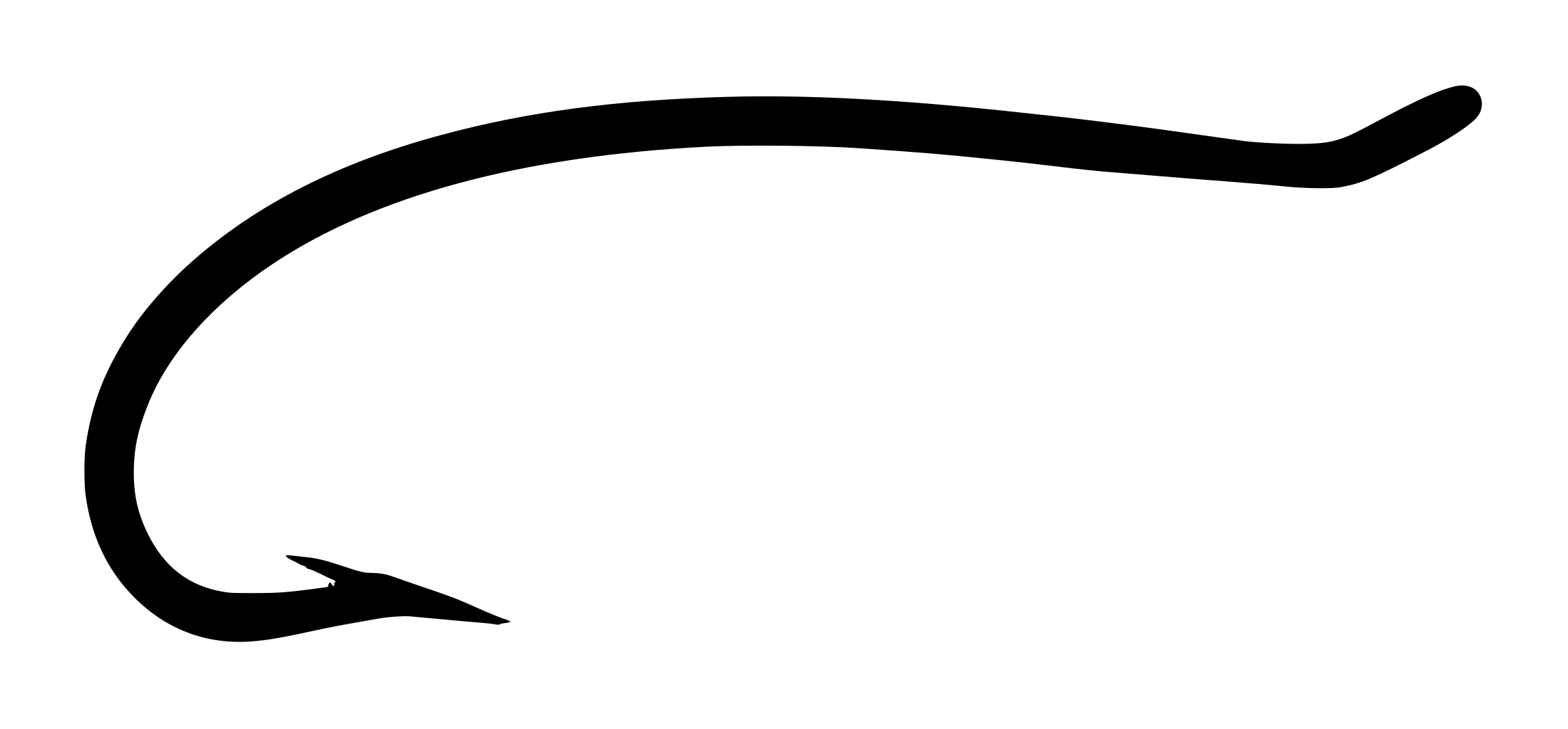
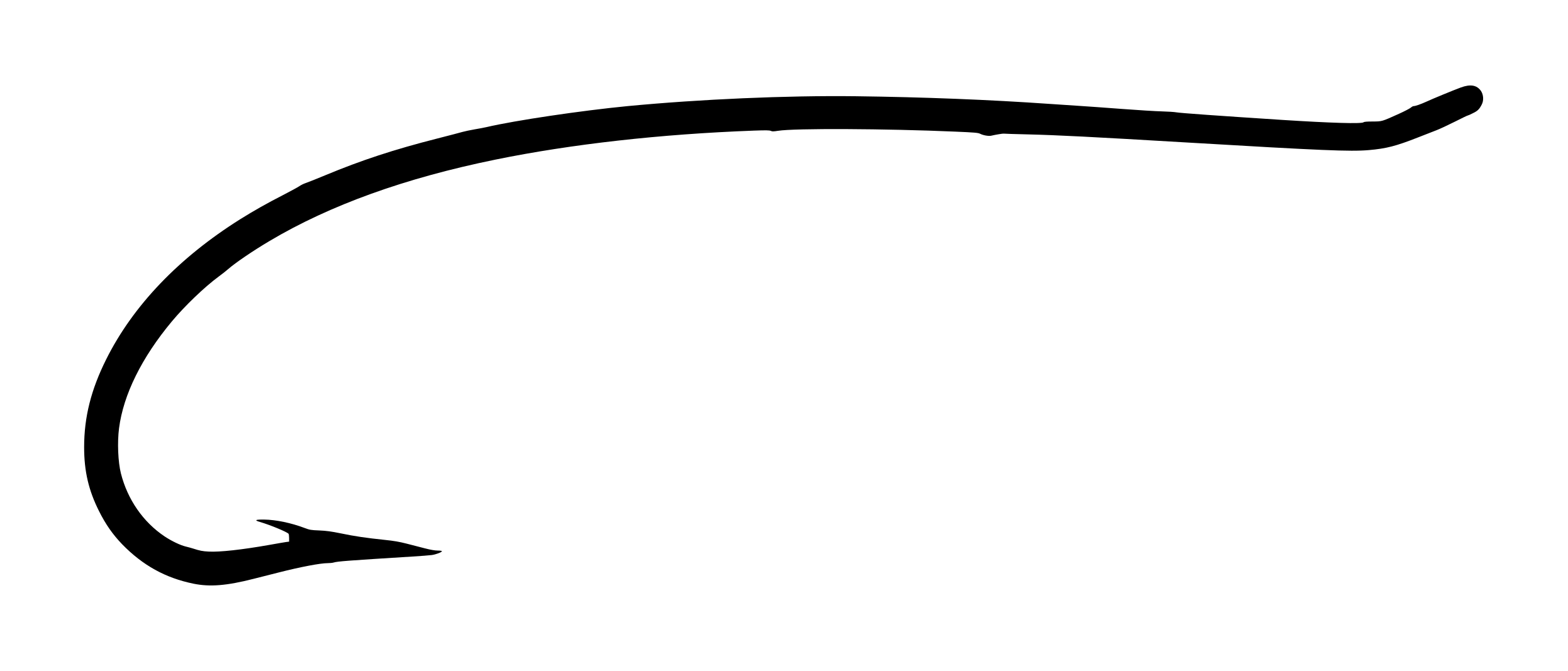
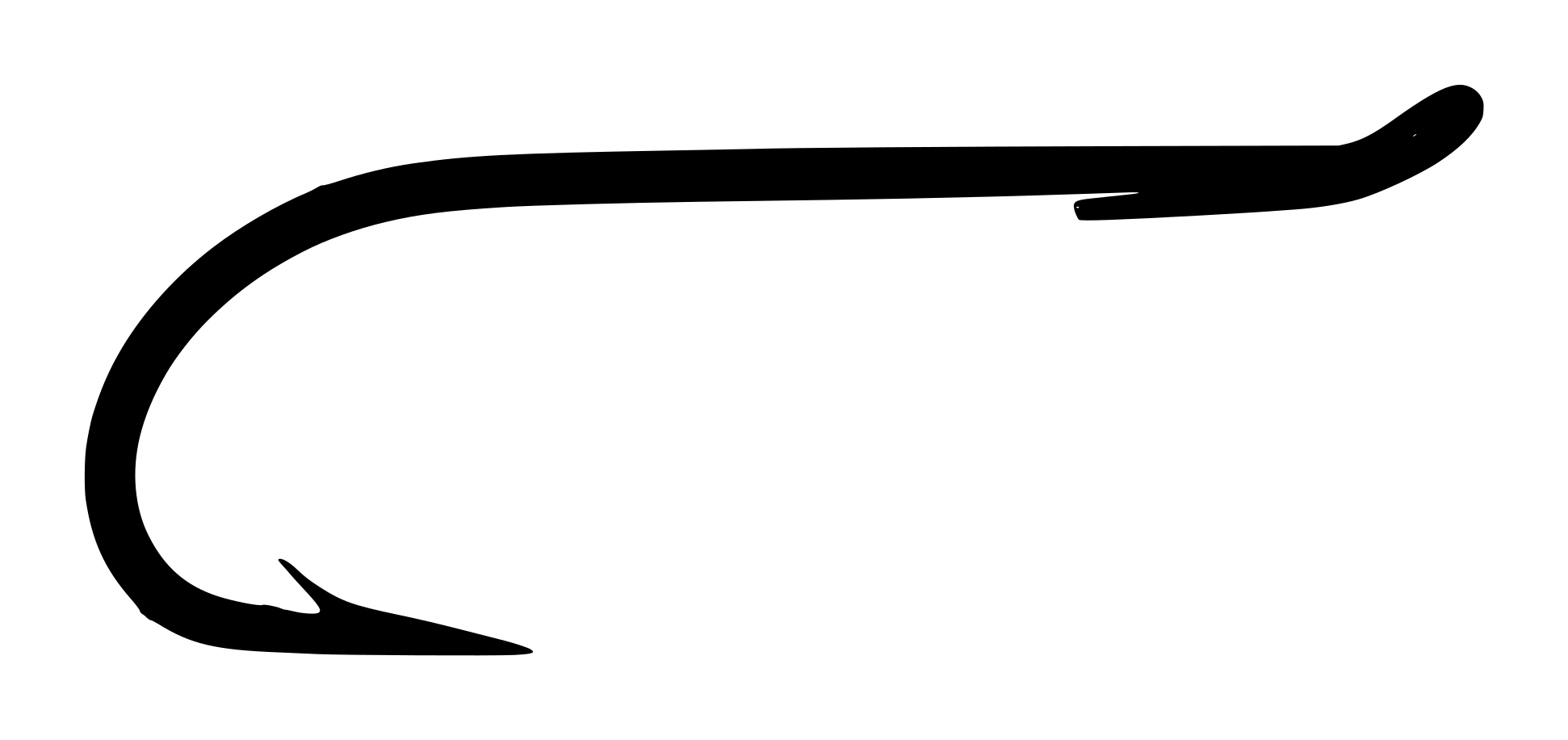
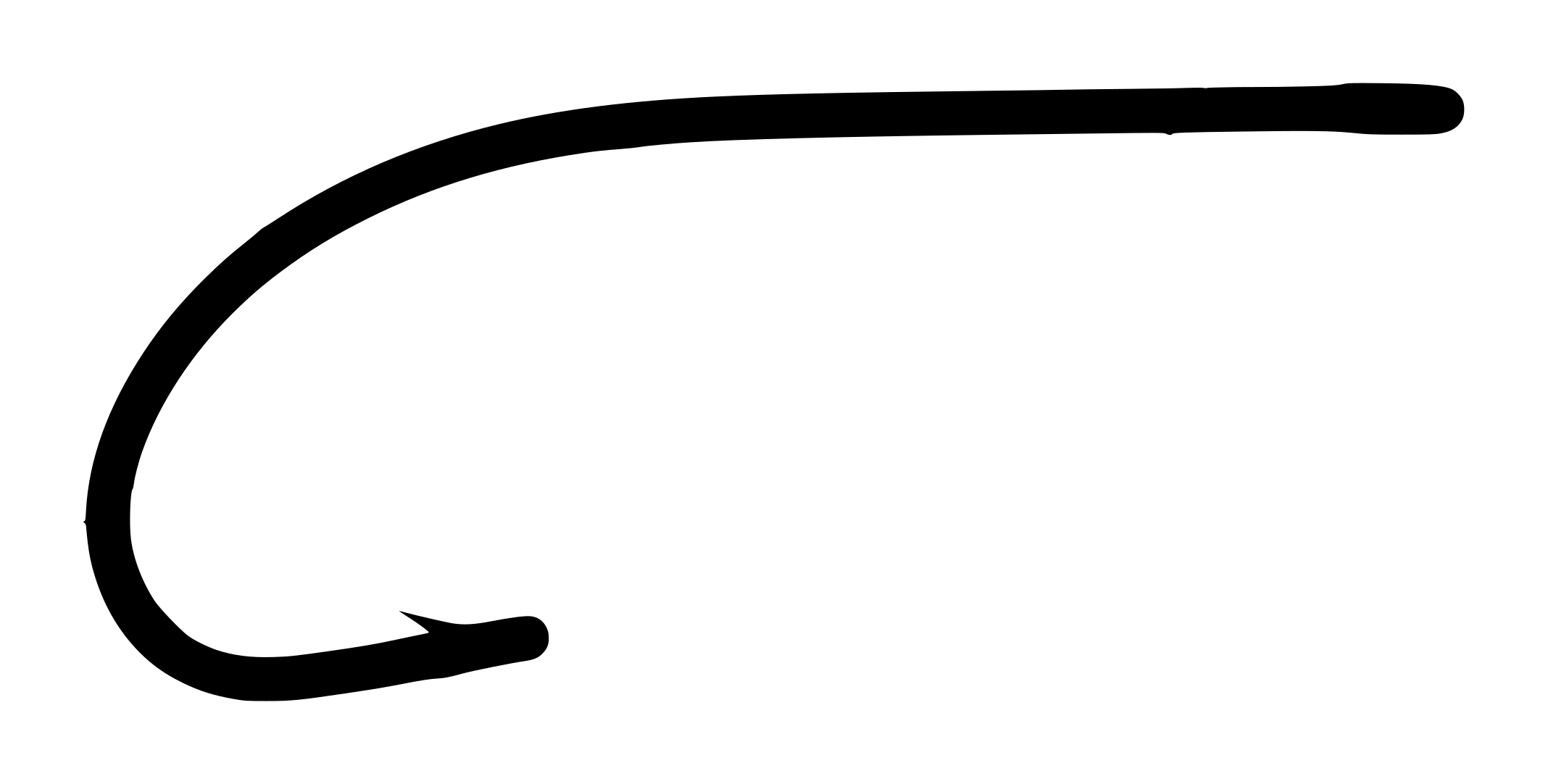
Partridge CS10/2 Bartleet Supreme, a salmon and sea trout wet fly hook from the mid-1970s to mid-1980s. The hook features a classic Bartleet bend with extended lower limb, looped up-eye for gut-loop attachment, heavy wire gauge, long shank, and traditional japanned black finish. The superior spear point geometry—characterized by a near-straight inner taper and flat inner face—represents the culmination of English Redditch salmon-iron design principles developed over generations of craftsmen. This model stands as one of the later expressions of traditional British salmon fly construction before modern materials and techniques began displacing gut-loop presentation methods.
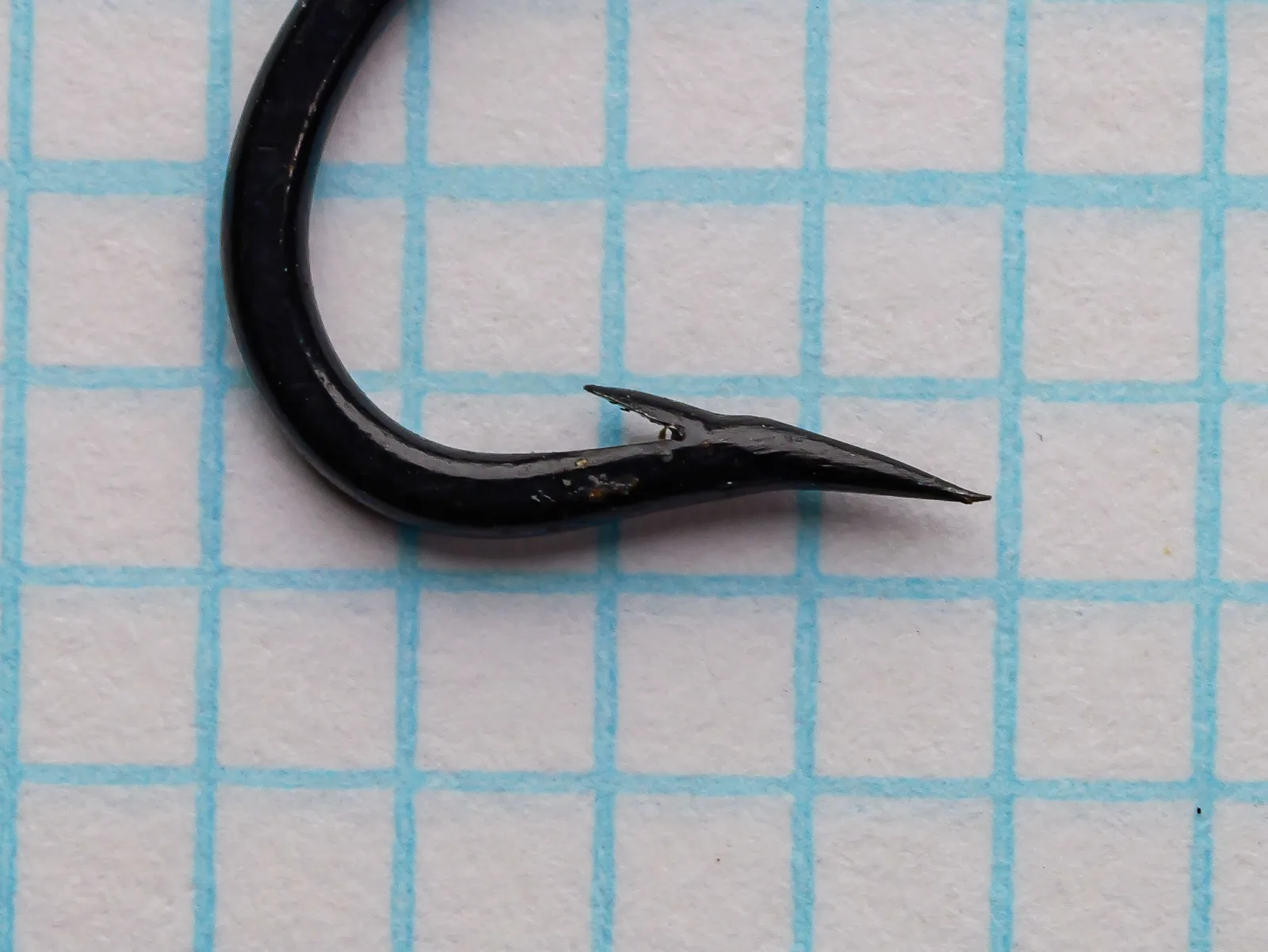
Side profile of the CS10/2 showing the characteristic pointed spear-style point with near-straight inner taper typical of Bartleet bend geometry, photographed on 1/10-inch measurement grid.
Photographic record
6 cataloged imagesSelect any record to load it above.
6 images shown
Partridge CS10/2 Bartleet Supreme Size 4 Point ProfileSide profile of the CS10/2 showing the characteristic pointed spear-style point with near-straight inner taper typical of Bartleet bend geometry, photographed on 1/10-inch measurement grid.Open originalPartridge CS10/2 Bartleet Supreme Size 4 Full ProfileFull side profile of the CS10/2 showing the looped up-eye, heavy-wire shank, and overall length on measurement grid. This is the Supreme variant with extended shank compared to the Standard (CS10/1).Open originalPartridge CS10/2 Bartleet Supreme Size 4 Pair ComparisonTwo CS10/2 hooks displayed side-by-side on measurement grid, showing consistency of manufacture and profile uniformity across specimens from the same card.Open originalPartridge CS10/2 Connoisseurs Package Back PanelBack of the Connoisseurs Series packaging showing product description, list of related Partridge salmon hook models and sizes, and manufacturer's address with B97 4JE Redditch postcode.Open originalPartridge CS10/2 Product Description DetailClose detail of the back-panel product copy describing the Bartleet Supreme as 'shorter in the shank and heavier in the wire' compared to CS10/1, with extended list of related Partridge patterns in various sizes.Open originalPartridge CS10/2 Connoisseurs Package Front LabelFront of the Connoisseurs Series package showing the red-and-white header with 'PARTRIDGE OF REDDITCH' branding, 'BARTLEET SUPREME SALMON FLY HOOKS' title, and the specification boxes showing model code CS10/2, size 4, and quantity 25.Open original
Technical profile
Looped Up-Eye | Bartleet Bend | Long Single Shank | Heavy Wire | Superior Point | Japanned Black Finish
Eye
Looped Eye, Turned UpLooped up-eye with tapered loop construction typical of Partridge salmon irons. Loop is smoothly rounded without sharp angles, allowing gut or leader to pass through cleanly. Loop diameter is proportionate to heavy wire gauge. P
Wire
Standard, Forged
Shank
1X Long — Curved / Humped
Bend
Dublin, Standard gapClassic Bartleet bend with smooth rounded curve characteristic of the Redditch tradition. Lower limb is extended relative to upper limb, creating the characteristic drooping profile. Point returns inward with a superior geometry — near-straight inner taper and nearly flat inner face. Bend is symmetrical and consistent across the specimen pair shown. P
Point
Superior (near-straight inner taper)Short, close-cut barb positioned just above the bend, oriented perpendicular to the shank axis. Barb length is proportionate to heavy wire gauge — approximately 0.8–1.0 mm. Barb edge is sharp and well-formed. Single barb typical of Bartleet-family hooks. P
Finish
Black Japanned — Inferred (photographically likely)Japanned black finish with warm brownish-bronze undertone visible in close macro photography. This is the traditional Redditch-era bronzed-black lacquer, distinct from modern Black Nickel finish. Surface shows uniform coverage with no pitting or loss of sheen on the specimen. The finish is characteristic of Bramley-era Partridge production (1975–1985). P
Two specimen hooks are bright with no corrosion, rust, or discoloration. Finish is uniform and intact across both examples. Looped eyes are perfect with no deformation. Points are sharp and needle-sharp. Original Connoisseurs packaging is in very good condition — light wear on edges, minor toning on back panel, no tears, creasing, or staining. All visible printed text is sharp and readable. Plastic window is clear. Card is structurally sound.
The CS10/2 Bartleet Supreme embodies the principles of English salmon-iron design developed over generations of Redditch craftsmen. The superior spear point is characterized by a near-straight inner taper and nearly flat inner face, creating a fine, needle-sharp penetration geometry optimized for the firm mouths of larger salmon. The point is formed through forging at the hook-closing stage, ensuring the inner face remains smooth and efficient rather than hollow or knife-edged.
The Bartleet bend is a smooth, rounded curve with extended lower limb — a geometry that provides a wide gape relative to shank length, facilitating better hook-set leverage without requiring an oversized overall hook. The rounded bend distributes stress evenly during the forging process and contributes to the bend’s durability under the load of large fish.
The heavy wire gauge
The extended shank (longer than the Standard CS10/1) moves the eye further away from the bend, allowing larger fly bodies and improving leverage during the hook set. The shank remains smooth and plain, without barb holders or ridges, as these hooks are intended for traditional gut-loop attachment and dressed-fly presentation rather than other mounting methods.
The looped up-eye is formed by bending the wire back on itself at the shank end and closing the loop with a smooth taper. This construction allows traditional gut-loop flies to be attached without the need for a split ring or other coupling. The tapered loop design ensures the eye lies slightly above the shank plane, reducing friction and improving fly swing characteristics.
The japanned finish (traditional bronzed-black lacquer) was the standard protective coating for Redditch salmon irons throughout the 20th century. This finish provides reliable corrosion resistance and a low-visibility profile in water — key advantages for classic wet-fly salmon fishing where flies present near or in the water column.
The CS10 Bartleet family is among Partridge’s most enduring and significant product lines, with roots extending back to the pre-1900 Redditch hook-making tradition. The ‘Bartleet’ bend nomenclature derives from Wm. Bartleet & Sons, the Redditch hook firm where Albert Partridge trained in 1901. When Albert Partridge and his successors established the Partridge brand, they inherited and refined the Bartleet bend geometry, which became the signature pattern for Partridge salmon and sea-trout irons.
The CS10 series encompasses four distinct variants, each optimized for different fishing situations: the CS10/1 Bartleet Traditional Single (standard shank, lighter wire), the CS10/2 Bartleet Supreme (longer shank, heavier wire — the subject of this entry), the CS10/3 Bartleet Blind Eye (traditional blind-eye iron for gut-loop dressed flies), and the CS10/4 Bartleet Double (double-hook version of the Supreme). This systematic notation allows anglers to select the precise pattern for their intended use.
The CS10/2 specifically was developed to address the needs of salmon anglers fishing large or active fish in strong flows, where a longer shank and heavier wire provide better hook-setting leverage and durability. Throughout the Redditch era (pre-1996), the CS10/2 remained in continuous production, establishing itself as a reliable choice for Atlantic salmon and sea-trout wet-fly dressing on both European and North American rivers.
The Connoisseurs Series branding (visible on this packaging) was introduced during the Bramley era (1970–1996) as a quality sub-range designation, positioning certain classic Partridge patterns as premium offerings for discriminating fly tiers. The CS10/2 in Connoisseurs packaging represents the mid-1970s to mid-1980s refinement of the pattern, characterized by careful forging, consistent sizing, and the traditional japanned-black finish of the Redditch workshop.
Production history: the CS10/2 was manufactured continuously at Crescent Works (Redditch) until the facility closure around 2005–2007. During the Mustad Singapore transition (2007–2008) and the subsequent consolidation to Wuxi, China (2008 onward), the CS10/2 remained in production, though collectors note geometric differences between English-made Redditch originals and modern Chinese variants (shank length, bend curvature, wire weight). The pattern was reissued under the Fishing Matters Heritage line around 2010 and remains in current production in various finishes and sizes.
Named Collaborator
Albert Edwin Partridge (1870s–1960s) was the founder of the modern Partridge hook brand and carried forward the Redditch hook-making tradition established by his father Edwin Partridge’s apprenticeship in 1836. Albert trained at Wm. Bartleet & Sons (where the Bartleet bend was perfected) before establishing his own operation at Crescent Works in the 1920s–1930s. Under his proprietorship, the A.E. Partridge & Sons Ltd. company (incorporated 1933) became a major supplier to prestigious British fishing brands. Albert’s direct involvement in design and his insistence on quality forging and finishing established Partridge’s reputation for craft excellence that persists today. The Bartleet bend, refined under Albert’s direction, became synonymous with Partridge and remains the company’s signature salmon-fly hook geometry.
Era and Packaging Dating
Package displays 'Made in England' printed text with Redditch B98 postcode visible, confirming post-1974 Redditch production. Packaging format is the classic card with printed Partridge Connoisseurs Series branding in red and black serif typography consistent with Bramley-era (1970–1996) Redditch output. Logo style and color palette match mid-1970s Partridge catalogs. Barcode present indicates 1970s or later. Packaging construction (card stock, print registration) and absence of any Mustad co-branding place production before 1996 Mustad acquisition. The 'Connoisseurs Series' designation appears on packaging as a quality sub-brand introduced during Bramley expansion in the 1970s. Specific date bracketed to 1975–1985 based on catalog evolution visible in contemporary period sources.
The Redditch Tradition: 150 Years of Craft Excellence
The Bartleet bend and the Partridge brand itself owe their origins to the remarkable Redditch metalworking tradition. In 1836, when Edwin Partridge began his apprenticeship in needle pointing and blueing, Redditch was already the undisputed center of British hook manufacturing — a position it had held for nearly two centuries. The town's dominance arose from a combination of nearby iron and steel resources, a guild system that transferred expertise across generations, and a reputation for uncompromising quality. When Albert Partridge inherited this tradition in the early 1900s, the Redditch craft was reaching its pinnacle. The CS10/2 Bartleet Supreme, produced in the Bramley era of the 1970s–1980s, represents the culmination of nearly 150 years of continuous refinement and represents some of the finest hand-forged hook work ever manufactured. Today, collectors and specialist fly tiers actively seek Redditch-era Partridge hooks precisely because they represent this unbroken chain of craft expertise — a lineage that cannot be replicated by modern industrial production.
Design lineage and influence
The Bartleet bend predates Partridge as a brand, originating in the Redditch workshop tradition of Wm. Bartleet & Sons, a major 19th-century hook manufacturer. When Albert Partridge trained at Bartleet in 1901, he absorbed the full technical knowledge of bend geometry, forging technique, and finishing that characterized Redditch craftsmanship. Upon establishing his own operation, Partridge refined the Bartleet bend to a high consistency and made it the foundation of his salmon and sea-trout line.
Competing designs from the same era include the Mustad O’Shaughnessy (more angular, wider gape), the Limerick bend (sharper overall contour), and the low-water patterns (finer wire, longer shank) from English makers like Allcock and Milward. The Bartleet’s strength lies in its balance — a generous gape and smooth bend curve without excessive wire weight or awkward angles. This balance made it the reference standard for Atlantic salmon flies on British and Irish rivers throughout the 20th century.
The CS10/2 Supreme variant specifically extends the concept of the Bartleet Standard (CS10/1) by increasing shank length and wire weight, positioning it alongside contemporary heavy-wire salmon irons from competitors. However, the Bartleet’s rounded geometry distinguishes it from the more angular O’Shaughnessy and makes it the preferred choice for classic full-dressed wet-fly patterns.
Downstream influence: the Bartleet bend continues as the reference geometry for modern Partridge salmon irons (Heritage reissues, current production) and has been adopted and adapted by other manufacturers seeking to emulate Redditch tradition. Fly tiers working with modern hooks often specify ‘Bartleet-style’ or ‘Bartleet-geometry’ when seeking a rounded, evenly-curved bend for traditional salmon-fly dressing.
Best matchRelated by Attribute
Computed automatically from catalog data — updated as new hooks are added.
Matches: Bend, Gap, Eye, Eye Orient., Finish +4 moreDiffers: Shank: 1X Long vs 2X Long; Wire: Standard vs Extra-Fine; Point: Superior vs Standard / Spear +4 more
Matches: Bend, Wire, Gap, Eye, Eye Orient. +5 moreDiffers: Shank: 1X Long vs 2X Long; Point: Superior vs Standard / Spear; Shank Feat.: Curved vs Plain +2 more
Matches: Bend, Gap, Eye, Eye Orient., Finish +3 moreDiffers: Shank: 1X Long vs 2X Long; Wire: Standard vs Extra-Fine; Point: Superior vs Standard / Spear +4 more
Matches: Bend, Gap, Finish, Offset, Application +1 moreDiffers: Shank: 1X Long vs Standard; Wire: Standard vs Fine (1X Fine); Eye: Looped Eye vs Blind — Tapered Shank +6 more
Matches: Gap, Eye, Eye Orient., Finish, Forging +4 moreDiffers: Bend: Dublin vs Limerick; Shank: 1X Long vs Standard; Point: Superior vs Standard / Spear +2 more
The CS10/2 Bartleet Supreme is a classic Atlantic salmon and sea-trout wet-fly hook designed for dressing full-dressed feather-wing patterns in medium to large sizes. The heavy wire gauge and extended shank make it ideal for large or active salmon in strong-flowing rivers or for flies intended to fish deep. The looped up-eye accommodates traditional gut loops for attachment of dressed flies. This pattern embodies the Redditch salmon-fly tradition and is particularly favored for traditional wet-fly presentation and classic streamer patterns on both Atlantic and Pacific salmon rivers.
Secondary Applications
Steelhead and sea-trout wet-fly dressing; classic salmon streamer presentations
Direct reissue of the same model code with identical bend geometry and specification. Modern production differs in country-of-origin (China vs. England) and may show minor geometric variance in shank length and bend radius; Redditch originals remain preferred by collectors.
Partridge CS10/1 Bartleet Traditional Single
Very Good
Lighter-wire single-hook alternative within the same Bartleet family for anglers preferring finer wire or standard shank length.
Mustad 80501BL (Heavy Salmon Single)
Good
Contemporary Norwegian industrial alternative with similar heavy wire and extended shank; used as functional substitute by some tiers when Partridge unavailable, though bend geometry and finish differ.
Daiichi 2050 Alec Jackson Spey
Moderate
Modern spey-fly pattern with extended shank and heavy wire; frequently suggested as substitute for vintage Bartleet work, though not geometrically identical. Favored by contemporary spey tiers.
Collector notes
Rated 4.5/10 — the CS10/2 Bartleet Supreme is uncommon in the modern market, particularly in smaller sizes like No. 4. English-made Redditch-era examples command a premium among salmon and steelhead specialists. Collector demand is focused on Bramley-era Partridge and classic Redditch hook traditions.
Reference value
$12 – $20 USD estimate
Packaging condition
Very Good — light wear, fully legibleRecorded specimen
Packaging format
GW-P-CS10-02-Connoisseurs-1980sCatalog code
Positive factors: This is an English-made Redditch hook from the respected Partridge stable during the Bramley era (1970–1996), when the company was at its most innovative. The Bartleet Supreme is the longer-shank, heavier-wire variant of the famous Bartleet bend — a pattern with roots in the pre-1900 Redditch tradition inherited from Wm. Bartleet & Sons. Original packaging in good condition significantly adds to appeal. Collectors seeking classic salmon and steelhead patterns actively hunt Redditch-era Partridge hooks, particularly blind-eye and looped-eye singles and doubles.
Limiting factors: The CS10/2 was continuously produced from the Redditch era through the Mustad and Fishing Matters periods, so it is not rare in larger sizes (6, 8, 10). Smaller sizes like No. 4 are less commonly encountered on the secondary market. The Connoisseurs Series branding is not a premium tier — it is a product-line classification. Modern Chinese-made CS10/2 hooks are readily available and command no collector premium.
Desirable variants: English-made specimens in Connoisseurs packaging with original Redditch factory markings. Smaller sizes (No. 2–4) are more collectible than larger sizes. Unopened cards with all 25 hooks intact are at the high end of value. Specimens showing the warm, rich japanned-black finish of the Redditch era (distinct from modern Black Nickel) are preferred by specialists.
Condition factors: Original packaging condition is critical — a card with light wear and all hooks present commands significantly more than loose hooks or damaged packaging. Hooks should show no corrosion or rust. The finish should retain its characteristic dark japanned tone without pitting or loss of sheen.
Packaging
Card sales card with plastic window, 3.5" × 5.0" overall. Bright red header band with white 'PARTRIDGE OF REDDITCH' text in serif font with flourish under name. Center white panel with black serif type: 'BARTLEET SUPREME / SALMON FLY HOOKS'. Model code box (left): 'CODE / CS10/2' in black border frame. Size box (center): 'SIZE / 4' handwritten in black ink. Quantity box (right): 'QTY / 25' with strikethrough price mark ('25' crossed through). Lower red footer: 'Connoisseurs Series' in white italic script with small fly logo. Transparent plastic window behind header shows two specimen hooks. Back of card (printed): detailed product description ('These Bartleet Supreme salmon fly hooks are either for flies for large or active fish...'), list of Partridge model codes and sizes, and footer 'PARTRIDGE OF REDDITCH / REDDITCH B97 4JE' with postcode. Card stock: smooth cream/off-white coated paper, well-printed, sharp registration. Print method: offset litho. Condition: light wear on edges, slight toning on back, no tears or creasing.
Market Value Notes
Low ($12): Good condition — opened card, 22–24 hooks present, light packaging wear, hooks bright and clean. High ($20): Excellent condition — sealed or near-sealed card, all 25 hooks, minimal package wear, perfect hook condition. Premium factors: English-made (Redditch) provenance, original Connoisseurs packaging, smaller sizes (No. 2–4) more desirable than larger, sealed card with full count. Platforms: Based on 1 eBay sold listing ($16.02 for size 4 × 10 in new condition); adjusted upward for 25-hook card format and packaging condition variance. Confidence: I inferred from limited single-listing data; size 4 × 25-hook Connoisseurs packaging is rare on secondary market, warranting conservative estimate.
Where to Find
eBay (UK and US auctions; search 'Partridge CS10/2' and 'Bartleet Supreme'). Specialist vintage fishing retailers focusing on UK and European stock. Tackle fairs and auctions in Redditch and broader Midlands region. Classic Fly Rod Forum marketplace and Spey Pages collector exchanges. Irish and Scottish fishing retailers occasionally stock Redditch-era Partridge. Expect 2–4 week search time for Connoisseurs packaging in good condition.
eBay market reference. Researcher-curated. Prices in USD. Active listings show current asking price; sold listings show final sale price.
Preservation
Storage and Preservation
Store the CS10/2 in a cool, dry environment away from moisture and humidity. Original packaging should be preserved — do not remove hooks from the card unless necessary for immediate use. The japanned-black finish of Redditch-era examples will develop a natural patina with age and exposure to moisture, which many collectors consider desirable and evidence of authenticity. However, prolonged exposure to humidity can accelerate oxidation.
Keep the package away from direct sunlight, which can fade the red Connoisseurs branding and cause the card to become brittle. Store vertically (not stacked) to prevent card warping. Avoid contact with other metals, as galvanic corrosion can occur if steel hooks are stored in contact with copper or brass items.
If hooks are removed from the card for use, store them in a dry pouch or tin lined with silica gel. Do not store in damp tackle boxes or with wet fly-tying materials. The original card is a significant part of the item’s value and collectability — preserve it whenever possible, even if hooks are partially removed.
Periodic inspection for corrosion is recommended, particularly if the package has been stored in a garage or shed subject to temperature fluctuation. A light patina on japanned-black hooks is normal and acceptable; active rust or white corrosion should prompt gentle dry-brushing to remove oxidation products.
Primary Source
Connoisseurs Series Packaging — Product Definition and Marketing
Source: Partridge of Redditch CS10/2 Connoisseurs Series package back panel, c. 1975–1985
The back-panel product description on the CS10/2 card provides the manufacturer’s official differentiation of the Supreme variant: ‘These Bartleet Supreme salmon fly hooks are either for flies for large or active fish (often in strong flowing rivers) or for flies to be fished fairly deep. They have all the graceful and effective characteristics of the Bartleet traditional hooks (CS10/1) but are shorter in the shank and heavier in the wire.’
This statement directly defines the engineering rationale for the CS10/2 design — the Supreme variant sacrifices extended shank length in exchange for heavier wire and increased depth of bend. This trade-off reflects a deliberate choice for anglers seeking greater leverage and durability over shank length. The copy explicitly positions the CS10/2 as purpose-built for ‘large or active fish’ and deep-fishing scenarios, contrasting it with the lighter, longer-shanked CS10/1 Traditional.
The reference to ‘graceful and effective characteristics of the Bartleet traditional hooks’ confirms the Partridge marketing position: the Bartleet bend itself is the defining geometry, and the various suffixes (/1, /2, /3, /4) are functional variants within a unified design family rather than separate hooks. The product description also confirms that the Bartleet family encompasses both single and double variants, blind-eye and eyed configurations — all sharing the core bend geometry.
The Connoisseurs Series branding itself — absent from earlier Partridge catalogs and present throughout Bramley-era production — suggests a positioning as a quality-focused sub-range. The use of the French word ‘Connoisseurs’ (emphasizing sophistication and discrimination) aligns with Bramley’s marketing strategy of positioning Partridge as the premium British alternative to industrial manufacturers like Mustad. This branding choice reflects 1970s–1980s marketing sensibilities and helps date the packaging to that period.
Marking Analysis
Package Marking: Size and Quantity Annotations
The size box on the front of the package displays ‘SIZE / 4’ with the ‘4’ hand-written in black ballpoint or fountain pen. This handwritten size indicates the package was filled and marked at the Redditch factory. The handwriting shows the characteristic neat, practiced script typical of factory workers performing repetitive marking tasks — the ‘4’ is clearly legible and positioned centrally in the box, suggesting a standardized procedure for package marking.
The quantity box shows ‘QTY / 25′ with a hand-drawn strikethrough across the ’25’. This strikethrough is intentional rather than accidental, possibly indicating: (a) a price correction (the original printed price is struck through on some Partridge cards from this era), or (b) a factory adjustment to quantity. Without additional context, the precise meaning of the strikethrough cannot be definitively determined; however, the card visibly contains 25 hooks, matching the marked quantity.
The presence of handwritten size notation rather than a printed or machine-stamped designation is consistent with 1970s–1980s Partridge factory procedure, where individual size codes were applied by hand to accommodate the wide range of sizes and variants produced. This handwriting adds authenticity evidence for the package dating and origin.
Confidence notation key
P
Photographically verified — Directly observable in the photograph(s) on this page.
V
Verified by documentation — Confirmed by manufacturer catalog, spec sheet, or published reference.
I
Inferred — A logical deduction from observable or documented evidence, not directly stated.
E
Estimated — An approximation based on visual comparison, proportional analysis, or limited data.
S
Speculative — A reasoned hypothesis that cannot be confirmed from available evidence.
Unnotated claims are the compiler’s synthesis; see Sources. All photographs on garrenwood.com are taken on a measurement grid where each square equals 1/10 inch (0.1″ / 2.54 mm).