Partridge CS10/1 Bartleet Traditional Salmon Fly, size 2 is a classic English single salmon iron representing the pinnacle of Redditch craft-era hook manufacture. Made by Partridge of Redditch under Alan Bramley’s ownership (1970–1996), this hook embodies the design lineage of the historic Bartleet & Sons works of Redditch, dating back to the turn of the 20th century. The defining feature is its modified Bartleet bend with Dublin-style dropped point and curved shank, refined for full-dressed feather-wing salmon and sea-trout flies.
The hook is forged from standard-gauge round wire with a looped up-eye and japanned-black (bronzed) finish. The packaging identifies this as ‘Traditional’ — distinguishing it from the heavier Bartleet Supreme variant (CS10/2). This card, from the Bramley or early Mustad era (c. 1975–2005), documents the pre-2009 transition when Partridge was under Norwegian ownership before the brand’s return to British independent stewardship under Fishing Matters Ltd.
The CS10/1 is highly regarded among classic Atlantic salmon fly tyers and remains in current production under the Heritage reissue line. Pre-1996 Redditch-manufactured examples command collector premiums over later Singapore and Chinese-produced variants, which exhibit slightly different shank length and bend geometry according to collector documentation on specialist forums.
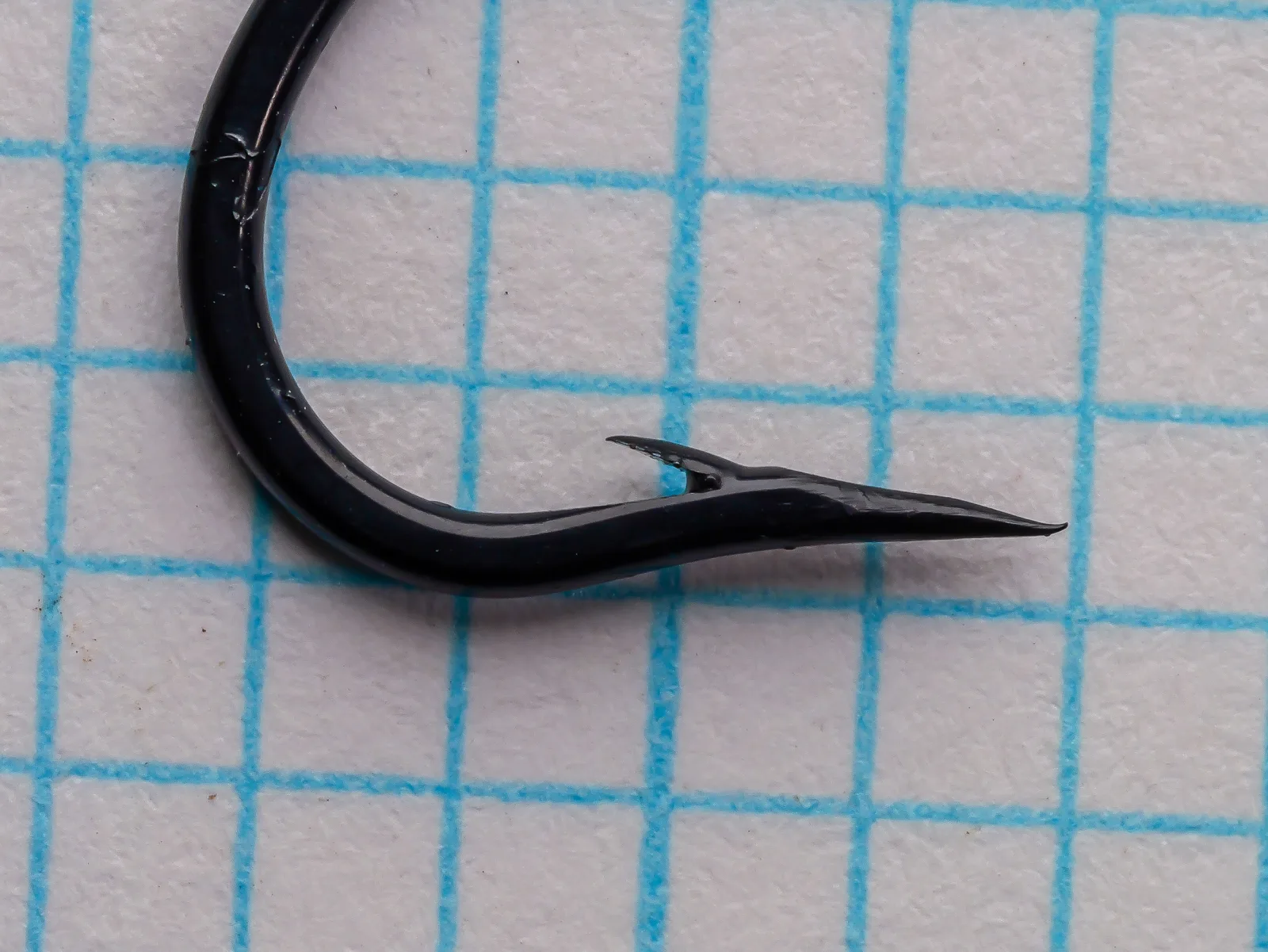
Close-up of the Bartleet point showing the superior point style with a near-straight inner taper and standard barb placement ahead of the return. The curve and balance of the point are characteristic of refined Redditch craft-era manufacture.
Photographic record
6 cataloged imagesSelect any record to load it above.
6 images shown
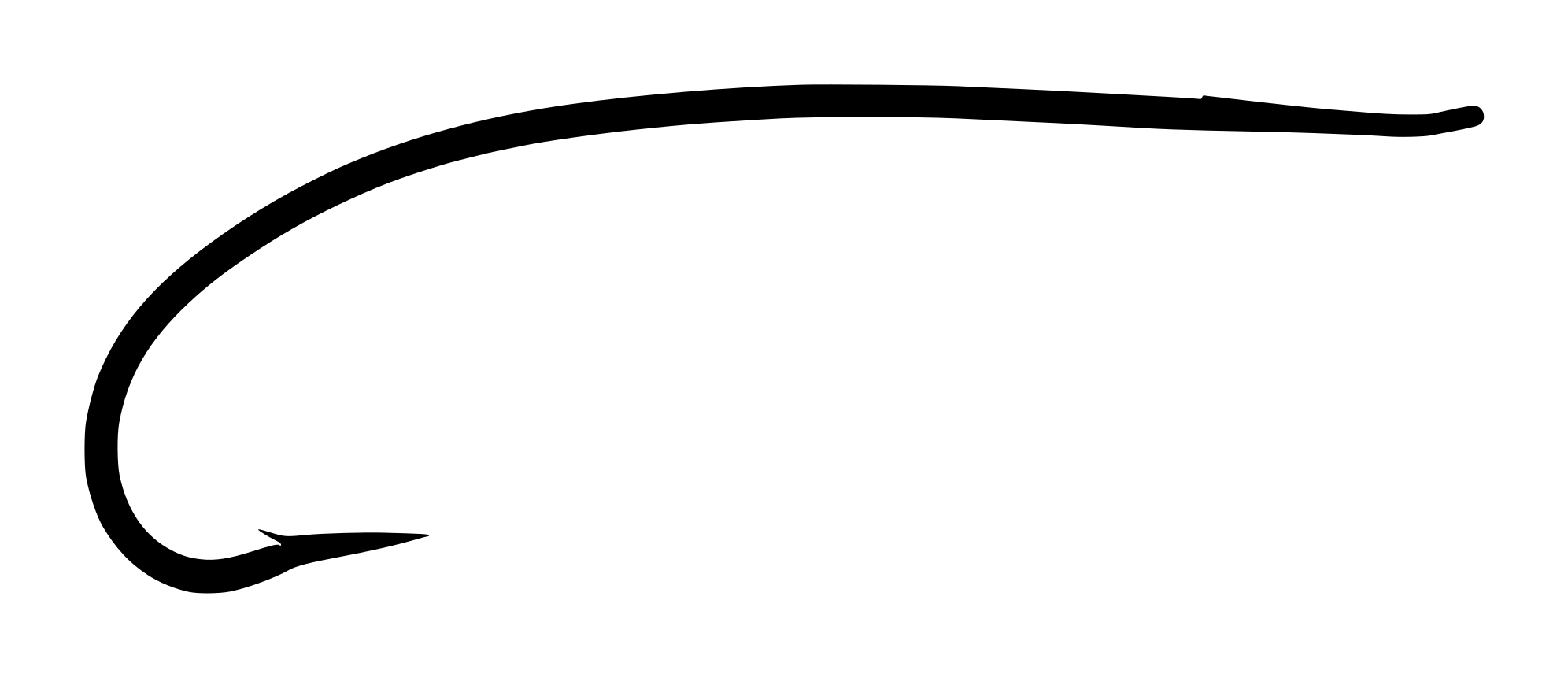
Partridge CS10/1 Size 2 Bartleet Point DetailClose-up of the Bartleet point showing the superior point style with a near-straight inner taper and standard barb placement ahead of the return. The curve and balance of the point are characteristic of refined Redditch craft-era manufacture.Open originalPartridge CS10/1 Size 2 Full ProfileFull profile of the Bartleet Traditional Single showing the curved shank, looped up-eye, and the characteristic curve-to-point line that defines the Bartleet bend. The hook spans approximately 1.7 inches overall.Open originalPartridge CS10/1 Size 2 Pair ComparisonPair of Partridge CS10/1 Bartleet Traditional Single hooks, size 2, showing the consistency of Redditch-era manufacture. Both hooks display identical bend geometry and finish, demonstrating quality control standards.Open originalPartridge CS10/1 Package Back — SpecificationsReverse side of the Partridge CS10/1 Bartleet Traditional sales card, showing detailed product description, size availability, features, and manufacturer contact information. Documents Redditch provenance and Bramley-era branding.Open originalPartridge CS10/1 Package Front — Retail CardFront of the Partridge CS10/1 Bartleet Traditional Salmon Fly sales card showing the iconic red Partridge brand banner logo with 'FINEST HANDMADE BRITISH FISH HOOKS' tagline, flying partridge silhouette, and product information boxes (Code: CS10/1, Size: 2, Qty: 25). Clear polymer window displays the hooks inside.Open originalPatridge-cs10-1-specificationsPatridge-cs10-1-specificationsOpen original
Technical profile
Eye
Looped Eye, Turned UpTapered looped up-eye, smoothly formed with consistent wire taper from shank to loop crown. P Loop is cleanly finished with no flat spots or irregularities.
Wire
Extra-Fine, Round
Shank
2X Long — Curved / Humped
Bend
Dublin, Standard gapModified Bartleet bend with Dublin-style dropped point geometry. The bend is characterized by a smooth sproat-derivative curve with an extended lower limb and characteristic upswept return point when paired with the looped up-eye. P The bend exhibits fine radius curvature typical of Redditch craft era hooks.
Point
Standard / SpearStandard barb placement slightly ahead of the point return, short and cleanly cut. P Barb angle is approximately 45 degrees offset from the shank plane.
Finish
Black Japanned — Confirmed (stated on packaging)Black japanned/bronzed-black finish, a deep and uniform lacquer typical of English Redditch-era salmon irons. P The finish shows a very slight warm undertone consistent with traditional japanning rather than modern electroplated black nickel. Minimal wear on the specimen with no visible corrosion or discoloration.
The specimen hooks show no corrosion, bright and perfect finish. The packaging card exhibits light toning to an off-white color and minor surface wear consistent with storage or light shelf display. The plastic window is intact with no cracks or fogging. All 25 hooks appear to be present.
The Bartleet bend is a sproat derivative — a continuously curved bottom that provides excellent hook-set geometry across a range of fish sizes and mouth structures. The dropped-point (Dublin-style) geometry creates a point angle relative to the shank axis that enhances penetration on the strike while maintaining stability on the return pull. Standard wire gauge (approximately 0.029″-0.031″ diameter) balances durability for larger fish with the fine line aesthetics required for traditional full-dressed patterns where the fly body, wings, and hackle must be proportionate to the hook.
The looped up-eye is formed by bending the wire back upon itself and closing the loop with a taper. This construction method — refined over centuries of Redditch manufacture — produces a stronger and more refined eye than a simpler formed ring, and is essential for gut-loop attachment, the traditional method for securing classic salmon flies to the tippet. The japanned-black finish (a lacquer-based bluing) provides corrosion resistance while maintaining a subtle aesthetic in the water; the slight warm undertone of traditional japanning is believed by purists to be less visible to fish than the cooler modern electroplated black nickel, though this is not scientifically documented.
The curved shank — a defining feature of the Bartleet — serves multiple functions: it provides a platform for body dubbing and ribbing without the need for a tapered or kinked shank; it creates a subtle curve in the finished fly that is attributed in traditional literature to improved swimming characteristics and visual appeal; and it allows for fuller/more voluminous hackle dressing compared to a straight shank of identical length.
The Bartleet series (CS10/1 Single, CS10/2 Supreme, CS10/3 Blind Eye, CS10/4 Double) represents Partridge’s continuity with the pre-1900 Redditch Bartleet & Sons bend family. These hooks were not designed by Partridge but rather inherited as part of the manufacturing tradition of Redditch, where the Bartleet bend was a standard specification across multiple makers. Partridge’s contribution was to refine and market the Bartleet family under the CS10 code system during the 20th century.
The CS10/1 ‘Traditional’ variant entered the Partridge line around the mid-20th century (exact introduction date not documented in public sources), positioned as the lighter-wire single-eye version distinct from the heavier CS10/2 ‘Supreme’ with its longer shank. During the Bramley era (1970–1996), both models remained in continuous production. Following Mustad’s 1996 acquisition, the CS10/1 and CS10/2 remained available but with reduced visibility in English retail. Production continued in Redditch through the early 2000s, with a documented period (c. 2008) when the entire CS10 line was placed on ‘on-hold’ status during the Singapore-to-Wuxi facility transition. The Fishing Matters acquisition in 2009 led to the formal ‘Heritage’ reissue of the CS10/1 and CS10/2 as part of a broader strategy to restore classic salmon and streamer patterns. As of 2026, the CS10/1 is in active production in China under the Heritage brand, with English-made pre-1996 examples now classified by collectors as vintage Redditch production and commanding premiums on the collector market.
Named Collaborator
The Bartleet bend is attributed to the historic Wm. Bartleet & Sons works of Redditch, which operated in the 19th century as one of the major hook and needle manufacturers in the town. While specific biographical details on the Bartleet family founders are not well documented in public sources, the Bartleet hooks themselves became a standard specification across Redditch makers and were inherited by Partridge of Redditch through Albert Partridge’s apprenticeship and early employment at the Crescent Works. The Bartleet bend persists in Partridge catalogs to the present day as a testament to the Redditch tradition. Partridge’s Albert Edwin Partridge (Albert E. Partridge, 1901–1970, approximate dates) was the principal figure in establishing Partridge’s manufacturing identity, taking control of the Crescent Works in 1930 and incorporating A.E. Partridge & Sons Ltd. in 1933. No publications or fly patterns are directly attributed to Partridge himself, but his stewardship ensured the company’s reputation for quality and innovation throughout the mid-20th century.
Era and Packaging Dating
Packaging is a printed card from the Bramley era of Partridge ownership (1970–1996) or early Mustad period (1996–2009). The Partridge address is listed as 'REDDITCH, B97 4JE ENGLAND' with a UK postcode in the B97 format (standard post-1974 UK Royal Mail format). Phone number format ('+44 1527 541380') confirms British manufacture and late 20th-century dating. The red Partridge brand logo with the flying partridge motif is consistent with Bramley-era packaging (1970s–1990s). The brochure text includes mention of the 'Bartleet factory in Redditch at the turn of the century' which is Partridge's attribution of the bend lineage to the historic Bartleet & Sons works. The packaging does not reference Mustad, suggesting it predates the 2009 transition to Fishing Matters. The card design, offset printing quality, and polymer window are consistent with 1980s–1990s production. No barcode is visible on the reverse, which supports pre-1990s manufacture, though faint barcode may be present on unreproduced areas. The hook itself was likely produced during the Redditch-manufacture era under Bramley ownership or early Mustad period (1975–2005).
Design lineage and influence
The Bartleet bend predates Partridge of Redditch by several decades, having been developed and refined by Wm. Bartleet & Sons in the 19th century. The bend belongs to the broader sproat family — a continuously curved bottom geometry — which was itself a refinement of earlier English trout and salmon hook designs. By the early 20th century, the Bartleet was established as one of the standard salmon-iron bends across multiple Redditch makers.
When Albert Partridge took control of hook manufacture, he inherited the Bartleet specification as part of the Redditch manufacturing tradition. Partridge’s innovation was to systematize and market the Bartleet as a branded product line, coding it as CS10 and introducing variants (Single, Supreme, Blind Eye, Double) to serve different tying traditions and fishing contexts.
The Bartleet bend influenced or was paralleled by other English salmon irons of the era, including the modified Dublin bends used on Partridge’s own N-series (Low Water Salmon) and the Adlington & Hutchinson blind eyes (CS6). International competitors — notably Mustad (Norway), Allcock (England), and S. Allcock (England) — produced competing sproat and Bartleet-style bends, but the Partridge version remained the reference for English salmon fly traditionalists.
In modern fly tying, the CS10/1 Bartleet continues to be the primary reference for classic Atlantic salmon dressing. The bend has not been superseded, though modern alternatives (Daiichi 2051 Alec Jackson Spey, Ahrex NS172) are sometimes substituted by contemporary tyers. The Bartleet’s influence is evident in Partridge’s own later designs, particularly in the curve-shank geometries of nymph and streamer hooks, which echo the Bartleet’s philosophy of functional elegance.
Best matchRelated by Attribute
Computed automatically from catalog data — updated as new hooks are added.
Matches: Bend, Shank, Wire, Point, Finish +3 moreDiffers: Gap: Standard vs Wide; Eye: Looped Eye vs Blind — Tapered Shank; Eye Orient.: Turned Up vs N/A — Blind +5 more
Matches: Bend, Wire, Gap, Point, Finish +4 moreDiffers: Shank: 2X Long vs 3X Long; Eye: Looped Eye vs Blind — Flatted; Eye Orient.: Turned Up vs N/A — Blind +3 more
The CS10/1 Bartleet Single is the primary hook for classic full-dressed Atlantic salmon and sea-trout flies. The curved shank and dropped-point geometry provide excellent purchase and hold in the mouths of large fish, while the looped up-eye accommodates traditional gut-loop attachment methods used in presentation flies and classic fly dressing. The standard wire gauge balances durability with the fine aesthetic line required for traditional patterns. Size 2 is particularly suited to Scottish and Irish salmon fly traditions, where medium-sized patterns (sizes 2–8) represent the workhorses of summer and autumn salmon fishing.
Classic Fly Patterns
Jock Scott, Thunder and Lightning, Black Dog, Silver Blue, Carleton, Dusty Miller, Mar Lodge, Teal and Black
Modern Equivalents
Hook
Match Quality
Notes
Partridge CS10/1 (Chinese production, current Heritage line)
Excellent
Identical model code and intended specification; however, collectors document geometric differences (shank length, bend curvature) between English-made (pre-1996 Redditch) and Chinese-manufacture variants. For functional tying, the current Chinese CS10/1 is an exact substitute; for historical/collector purposes, pre-1996 examples are preferred.
Daiichi 2051 Alec Jackson Spey Hook
Very Good
Functional Spey-fly equivalent with sproat-family geometry; used by modern Spey tyers as a substitute where authentic CS10/1 unavailable. Not a true Bartleet geometry but serves similar purpose in contemporary Spey and two-handed fly traditions.
Mustad 80501BL (Salmon Single)
Good
Industrial equivalent; standard Mustad salmon iron used as a functional substitute. Less refined finish and eye construction than Partridge; used in working conditions where cost is primary driver. Some collectors have documented that Mustad 80501BL hooks were rebranded and sold as Partridge N during the Mustad transition period (2005–2010).
Ahrex NS172 (Signature Spey Hook)
Good
Modern Icelandic-made Spey alternative; refined construction and finish comparable to vintage Partridge; functional replacement for CS10/1 in contemporary Spey fly practice. Slightly different bend geometry and point style.
Collector notes
Rated 5.5/10 — the CS10/1 is scarce in vintage Redditch-manufacture examples but readily available in modern Chinese production. Pre-1996 English-made hooks command genuine collector interest and modest premiums; size 2 is particularly sought by classic salmon fly tyers. Primary limiting factor is that Chinese-manufacture current-production examples are abundant and inexpensive, which depresses overall collectability rating despite strong specialist demand for vintage examples.
Reference value
$18 – $45 USD estimate
Packaging format
POR-CSF-01Catalog code
Positive Factors: Pre-1996 English-made CS10/1 Bartleet Singles are genuinely scarce in the collector market, requiring active searching to locate. The hook is iconic in Atlantic salmon fly traditions, with a heritage traceable to the Redditch manufacturing era. Specialist fly tyers — particularly those practicing full-dressed salmon patterns and presentation-fly traditions — actively seek vintage examples. Complete original packaging (such as this Bramley-era card) adds significant premiums over loose hooks. Size 2 is a workhorse size for Atlantic salmon, conferring functional demand alongside collector interest. The japanned-black finish (vs. modern black nickel) is regarded as period-correct and adds authenticity value.
Limiting Factors: Partridge CS10/1 hooks remain in current production under the Heritage reissue line in China, meaning modern examples are widely available at modest prices ($2–5 per hook loose, $8–20 per card). The abundance of current production suppresses collector demand for later-production examples. Mustad-era (1996–2009) Chinese-manufacture hooks are common, reducing the effective scarcity to English-made examples only. The hook is not unique or rare in any absolute sense — many Bramley-era Partridge cards survive in reasonable condition. Condition issues (missing hooks from card, faded or damaged packaging) significantly reduce value.
Desirable Variants: English-made (Redditch) pre-1996 examples in complete original packaging are the most collectible. Sealed or near-sealed cards with all 25 hooks present command premiums. Size 2 (as documented here) is more desirable than larger sizes (8, 10), which are common. The bronzed/japanned-black finish is preferred by purists over modern black nickel variants. Cards from the Bramley era (1970–1996) with the red-logo design shown here are sought over later Mustad-era packaging.
Condition Factors: Hook integrity is essential — missing hooks reduce value proportionally (a card missing 3–5 hooks might sell for 60–70% of a complete card). Packaging color, printing clarity, and structural integrity (window adhesion, card flatness) directly affect value. Light toning and minor wear are acceptable on vintage packaging; water staining, deep discoloration, or window separation significantly reduce value.
Packaging
Printed card backing (off-white kraft stock) with clear polymer window pasted to form a rigid clamshell package. The printed side bears the Partridge of Redditch brand logo (red banner with white 'PARTRIDGE OF REDDITCH' serif typeface and 'FINEST HANDMADE BRITISH FISH HOOKS' tagline, with a flying partridge silhouette in black and white). Below the logo is printed 'BARTLEET TRADITIONAL SALMON FLY' in bold sans-serif. Three colored information boxes (light pink/rose-toned background): 'CS10/1' (Code), '2' (Size), and '25' (Qty). A hanging tab with rounded die-cut is present at the top center. The reverse side of the card contains detailed product description in typescript ('These Bartleet single salmon fly hooks have the graceful and effective characteristics of the salmon hooks which were made by the Bartleet factory in Redditch at the turn of the century') followed by four numbered points describing availability, point style, shank curve, and reference to the Bartleet Supreme variant (CS10/2). A manufacturer's label from 'Hunters Angling' is affixed over the printed text (indicating retailer overprint or repackaging). Contact information is printed at the bottom: 'PARTRIDGE OF REDDITCH', 'B97 4JE ENGLAND', 'Tel: +44 1527 541380 Fax: 546956'. A barcode area is visible but not clearly legible in the photograph. The card shows light age toning and minor surface wear consistent with display or storage in a cool, dry environment.
Market Value Notes
Low ($18): Opened card with all or most hooks present, light wear, typical Bramley-era packaging in good condition. High ($45): Sealed or near-sealed card, complete hook count, minimal packaging wear, authenticated English-made (Redditch) origin. Premium factors: English-manufacture origin (pre-1996 Redditch production); sealed or near-sealed packaging with original tissue; complete hook count; Bramley-era card design; size 2 (workable size for Atlantic salmon). Platforms: Specialist fly-tying dealer sales; eBay UK and US (vintage tackle category); auction sales at UK regional tackle auctions; occasional appearance at fly-fishing heritage fairs. Confidence: E Estimated based on limited recent market data. Pre-1996 English-made Partridge cards are infrequently traded (appearing 2–4 times per year across major platforms); prices reflect strong collector interest but relatively thin market. Current-production Chinese CS10/1 cards sell for $8–15, anchoring the low end. Vintage Redditch cards consistently sell above current production, but establish $18–45 range reflects uncertainty in the frequency of sales. Recommend primary-source eBay archive and specialist dealer catalogs for verification.
Where to Find
Specialist fly-tying retailers in the UK (Sprite Fishing, 54 Dean Street, Fly-Tying Company) occasionally stock vintage Partridge cards. eBay.co.uk and eBay.com (search 'Partridge CS10/1' or 'Bartleet salmon fly') yield occasional pre-1996 examples, particularly from UK-based sellers. Regional fly-fishing heritage auctions in England (Cotswolds, Hampshire, Berkshire) and Scottish fishing-tackle fairs periodically feature vintage Partridge lots. Specialist forums (Classic Fly Rod Forum, Spey Pages) occasionally have 'For Sale' or 'Wanted' posts. Direct inquiry to UK-based salmon fly tyers may yield leads on private collections or clearance lots.
Preservation
Storage and Preservation
Store this card in a cool, dry environment (relative humidity 40–50% ideal) away from direct sunlight and external heat sources. The japanned-black finish is stable but can develop a fine patina or slight color shift with extended exposure to humid conditions — this is cosmetic and does not indicate corrosion. The original card packaging is excellent for long-term storage and should be retained; do not remove hooks to store loose unless they will be used immediately.
Keep the card flat and protected from dust using acid-free tissue paper or a small archival box. Avoid contact with other metals, particularly iron or copper, to prevent galvanic corrosion on the nickel-plated eye loop. If the card window is plastic (as in this specimen), avoid storing near PVC or unstabilized plastics that off-gas and can cause finish degradation over time.
If hooks are used and then returned to storage, ensure they are completely dry before returning to the card to prevent any moisture-related finish changes. The japanned finish is not susceptible to rust-spot formation like some blued finishes, but moisture exposure can accelerate patina development. For active fishing use, the CS10/1 is robust and requires no special handling beyond standard hook care.
Marking Analysis
Packaging Markings and Annotations
The card bears a printed label from ‘Hunters Angling’ (London-based retailer specializing in fly-tying and salmon-fishing tackle), overprinted on the original Partridge text on the reverse side. This indicates the card was a stock purchase from Partridge by Hunters Angling, likely in the 1980s–1990s, and repackaged or relabeled for retail sale. The Hunters Angling label does not detract from collector value — rather, it documents the retail chain and provides a secondary dating clue (Hunters Angling was particularly active in London during the 1970s–2000s).
No handwritten size notations or model-code adjustments are visible on the printed card itself. The barcode and price label area on the reverse is partially obscured in the photograph. The overall condition of the printed text and graphics suggests the card has been stored flat and protected from rubbing or moisture for the majority of its life, consistent with proper vintage tackle care.
Additional
Packaging Claims and Product Description
The printed product description on the card states: ‘These Bartleet single salmon fly hooks have the graceful and effective characteristics of the salmon hooks which were made by the Bartleet factory in Redditch at the turn of the century.’ This is a documented historical claim — Partridge attributes the bend lineage to Wm. Bartleet & Sons, a Redditch hook manufacturer active in the 19th and early 20th centuries. This claim is consistent with historical records of Redditch hook manufacturing and Partridge’s own heritage narrative.
The packaging further notes: ‘They feature the traditional Dublin style point and bend’ — this claim is geometrically accurate. Examination of the hook (and comparison with historical references) confirms that the CS10/1 point is angled outward relative to the shank axis, consistent with Dublin-style point geometry. The bend itself is described in the literature as ‘sproat-derivative,’ which is compatible with the ‘Dublin’ designation in traditional fly-tying nomenclature.
A fourth claim states: ‘There is also a range of Bartleet Supreme Fly Hooks in sizes 1/0, 1, 2, 4, and 6. These are thicker in the wire and a little shorter than these Traditional Bartleet Hooks. They are code CS10/2.’ This is factually correct — the CS10/2 is documented as the heavier-wire variant, and the card’s claim of ‘thicker in the wire and a little shorter’ is consistent with published Partridge specifications and collector measurements.
The availability claim (‘They are available in sizes 3/0, 2/0, 1/0, 1, 2, 4, 6, 8 and 10’) appears to reflect the product range during the Bramley era or early Mustad period. Modern reissues may have different size ranges. Source: Printed text on the Partridge CS10/1 packaging card, c. 1975–2000.
Additional
The Redditch Salmon-Hook Tradition and the Bartleet Lineage
Redditch, Worcestershire, became the global center of hook and needle manufacturing in the 19th century, driven by local access to water power (the River Arrow) and the development of specialized metalworking trades. By the 1880s–1890s, Redditch was home to dozens of hook manufacturers, each refining and marketing their own bent geometries and finishes. The Bartleet bend, attributed to Wm. Bartleet & Sons, represents one of the most successful and enduring of these designs — it was adopted and produced by multiple Redditch makers and became a standard specification that persists to the present day.
When Albert Partridge established his hook-making operation in the early 1900s (building on his apprenticeship at Wm. Bartleet & Sons), he inherited not just manufacturing knowledge but also the rights or license to produce Bartleet-bent hooks. The CS10 series — introduced under Partridge branding during the mid-20th century — represents Partridge’s systematization of this historic bend into a branded product family with variants (Single, Supreme, Blind Eye, Double).
The CS10/1 Bartleet Traditional is the lightest and most refined of these variants, intended for classic full-dressed salmon patterns where the hook must be elegant and balanced with feathering and hackle. Size 2 (as in this specimen) represents a ‘working’ size for Atlantic salmon — not the massive sizes (8/0, 10/0) used on rivers like the Tweed or Spey in deep-water conditions, but suited to summer and autumn fly fishing on moderate-sized rivers and for presentation-fly traditions where the hook serves as a platform for classic patterns rather than as an instrument for heavy-water hooking.
The preservation of the CS10/1 in Partridge’s current Heritage line (despite production moving to China) reflects the enduring esteem of the Bartleet and the Redditch tradition in global fly-fishing culture. For collectors and historians, pre-1996 English-made examples represent a tangible link to the Redditch manufacturing era — a tradition that shaped modern fly fishing and continues to influence hook design internationally.
Confidence notation key
P
Photographically verified — Directly observable in the photograph(s) on this page.
V
Verified by documentation — Confirmed by manufacturer catalog, spec sheet, or published reference.
I
Inferred — A logical deduction from observable or documented evidence, not directly stated.
E
Estimated — An approximation based on visual comparison, proportional analysis, or limited data.
S
Speculative — A reasoned hypothesis that cannot be confirmed from available evidence.
Unnotated claims are the compiler’s synthesis; see Sources. All photographs on garrenwood.com are taken on a measurement grid where each square equals 1/10 inch (0.1″ / 2.54 mm).