Selected size
3/0
Catalog record
- Overall Length
- 58.4 mm V
- Bend Depth
- 14.7 mm V
- Wire Diameter
- 1.2 mm V
- Confidence
- V Catalog record only
 Garren WoodFishing Hook Reference

Save this hook to your account to build a list you can come back to.
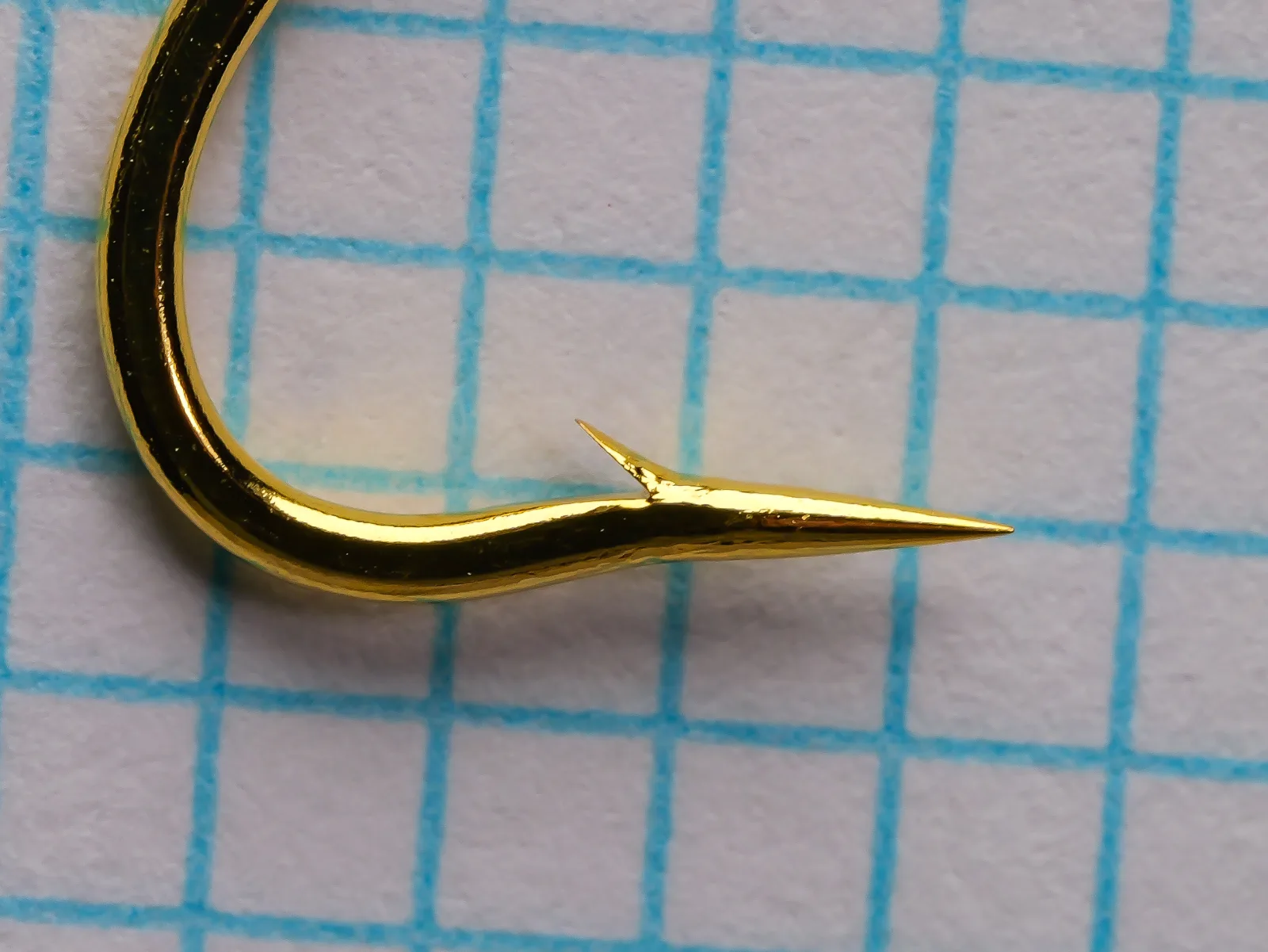
The Alec Jackson 2055 is a premium spey fly hook produced by Daiichi High Carbon Steel Hooks in Japan under license from the estate of Alec Jackson. Marketed as model 2055, size 3, it features a turned-up tapered loop eye, heavy-gauge wire, smooth sproat bend, and needle point with chemically sharpened tip. The gold-plated finish is evident in the warm yellow tone visible in the photographs.
Packaged as a 10-hook card with modern label artwork featuring magenta and black design typical of premium retail spey hooks from the 1980s onward. The label explicitly credits the collaborative branding ‘Alec Jackson Spey Fly Hooks’ and specifies primary applications as steelhead and salmon flies, confirming the specialized purpose of this model within the broader Daiichi catalog.
The 2055 represents the industrialization of Alec Jackson’s spey hook designs by Daiichi, making premium spey hooks accessible to a broad market while maintaining the geometric precision Jackson insisted upon. Size 3 is a standard mid-range size for spey patterns, neither rare nor exceptionally common, making these hooks regularly available to collectors and tyers.
4 cataloged imagesSelect any record to load it above.
4 images shown
Needle Point • Chemically Sharpened
The 2055 employs a heavy-gauge high-carbon steel wire to withstand the forces of large, wind-resistant spey patterns and the physical demands of salmon and steelhead fishing. The sproat bend—a smoothly rounded loop rather than angular—distributes load evenly across the bend, critical for maintaining hook integrity when setting large fish. The tapered loop eye (turned-up) allows fly-construction materials to pass through cleanly without snagging; the taper itself reduces weight at the head of the fly, improving balance.
The chemically sharpened needle point is the signature feature: rather than forging a mechanical bevel, Daiichi uses a chemical etching process to achieve an extraordinarily fine point with minimal wire removal. This preserves maximum penetration force while maintaining the structural integrity needed for spey flies, which may be cast repeatedly without damage. The needle point is particularly effective in the firm takes typical of salmon and steelhead, where a precise penetration is preferred to a wider barb-to-point angle.
Physical measurement with calipers
We have measurement for size 3/0. Know any others? Submit calipered measurements and we'll review and add them. Thank you!
Sources: this specimen and its packaging.
The Alec Jackson 2055 Spey Hook is part of the Daiichi-manufactured Alec Jackson spey fly hook series, licensed from the Scottish fly-tier’s design legacy. The 2055 model was introduced as a medium-weight spey pattern suitable for salmon and steelhead in diverse river conditions. The series includes hooks in multiple sizes (typically 1/0 through 8 or 10) and represents a significant moment in spey fly history—the transfer of Scottish craft traditions to industrial production. The tapered loop eye, forged construction, and chemically sharpened point are consistent across the series, with variations in shank length (standard, 1x, 2x, 3x, and 4x) and wire gauge (standard and heavy) to match specific fly patterns and water conditions.
Alec Jackson (1916–1988) was a Scottish fly tier and hook designer whose innovations fundamentally shaped modern spey fly practice. Based in Aberdeenshire, Jackson developed a series of distinctive spey patterns and worked closely with Scottish tackle makers to specify hook geometry perfectly matched to his flies. His emphasis on tapered loop eyes and precise shank proportions reflected his belief that hook design should follow fly design, not the reverse.
Jackson’s collaboration with Daiichi began in the 1980s, extending his influence beyond Scotland’s cottage-industry scale into international production. His hook designs, licensed and produced by Daiichi, democratized premium spey fly materials and made his pattern specifications accessible to fly tyers worldwide. Jackson’s patterns—Undertaker, Ally’s Shrimp, Collie Dog, Purple Peril—became foundational to modern spey fly tradition. The Alec Jackson brand remains a mark of quality in spey circles despite Jackson’s death; the license and design stewardship are maintained by the Scottish fishing heritage community.
Modern card format with offset color printing (not letterpress), magenta and black two-color design typical of 1980s-1990s retail packaging. Daiichi brand logo and gold-text branding consistent with late 20th-century spey hook marketing. Modern address format (Elba, NY 14058 USA with ZIP code). No barcode visible on card front in images, but packaging style suggests pre-barcode or early barcode era (1980s-1990s). Text warnings and safety language typical of 1980s onward. Contemporary rubber/plastic blister-card construction rather than traditional fold-card. Licensed branding from Alec Jackson estate suggests post-1960s but likely 1980s-2000s based on manufacturing relationship between Daiichi and US distributors.
Alec Jackson was a legendary pattern innovator whose Undertaker and Ally's Shrimp became foundational spey flies, yet he was equally obsessive about hook geometry. Jackson believed that the tapered loop eye reduced drag in casting and allowed a cleaner presentation than ball-eye alternatives. When he partnered with Daiichi in the 1980s, he was already in his late sixties but maintained rigorous specification control, personally approving sample batches to ensure consistency. His spey hooks became the first Japanese-made flies to gain acceptance in the conservative Scottish salmon-fishing establishment—a rare achievement at a time when English and Scottish makers dominated serious fly-fishing equipment.
The Alec Jackson spey hook design descends from Scottish fly-fishing traditions established in the 19th and early 20th centuries. Prior to Jackson, spey hooks were typically English makes (Allcock, Partridge) adapted from general-purpose patterns. Jackson’s innovation was to reverse-engineer hook specifications from the demands of specific spey fly patterns, resulting in a tapered loop eye and proportional shank that matched wet-fly geometry more precisely than existing general-purpose hooks.
The Daiichi 2055 represents the industrial continuation of Jackson’s design philosophy. Daiichi’s ability to manufacture consistently and affordably extended Jackson’s influence beyond hand-tied cards produced by Scottish fly makers to globally distributed commercial stock. The 2055 competes with the modern English Partridge spey hooks, which maintain traditional Redditch manufacturing but at higher cost and lower volume. The design remains current, with new production indistinguishable from cards manufactured in the 1980s and 1990s.
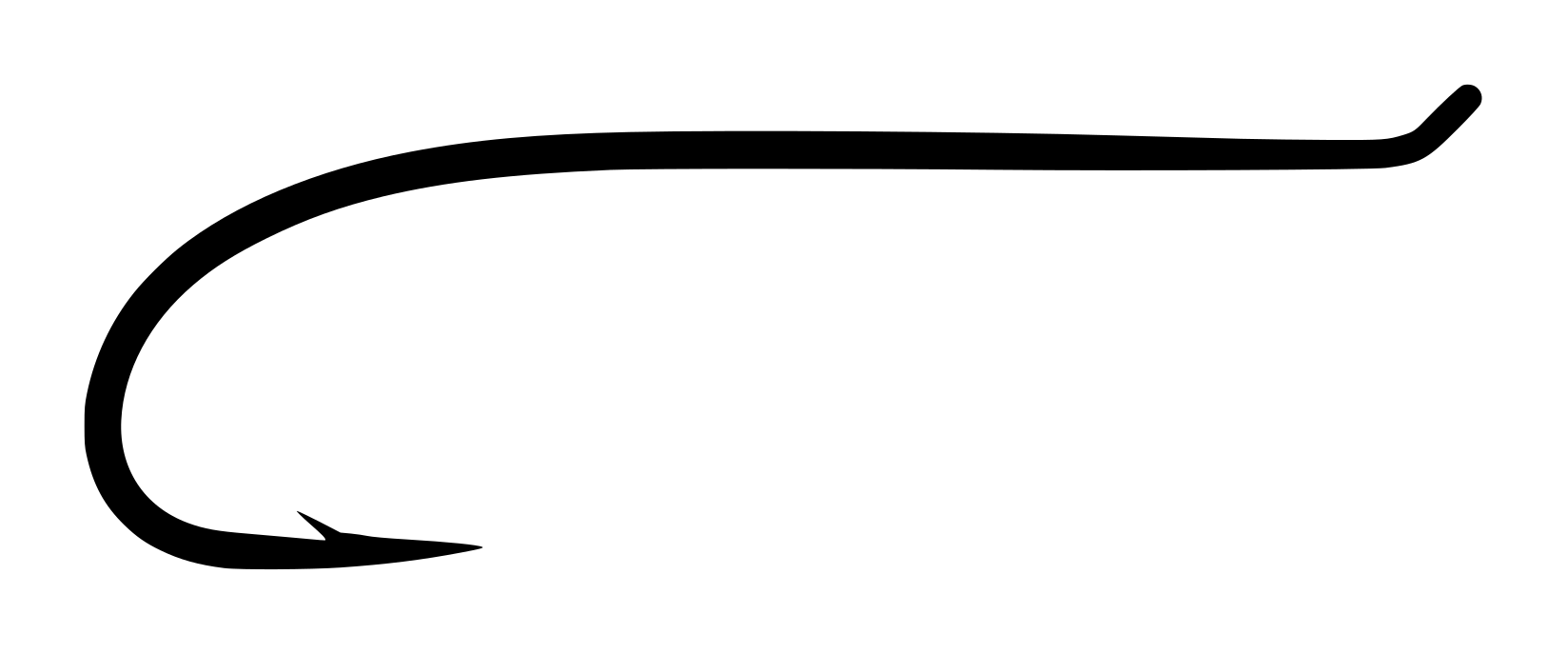
| Silhouette | Hook Model | Match | Analysis | Compare |
|---|---|---|---|---|

|
3913 A No. 3 — Mustad 3913 A | 79% | Compare | |

|
01 No. 2 — Single Wilson Hooks | 70% | Compare | |
|
2139 No. 6 | 69% | Compare | |

|
L220 No. 4 — L220 Gilt | 69% | Compare | |

|
HR410 — Tying Single | 69% | Compare |
| Silhouette | Hook Model | Match | Compare |
|---|---|---|---|

|
2051 No. 3, No. 5 — Daiichi 2051 Alec Jackson Spey | 94% | Compare |

|
CS10/1 No. 2 — Bartleet Traditional Salmon Fly | 88% | Compare |

|
CS10 No. 6 — Bartleet Salmon Fly Hooks | 85% | Compare |

|
BH No. 2, 3 — Blue Heron Spey | 74% | Compare |

|
3899 No. 4/0 — Mustad 3899 Sproat | 64% | Compare |
The Alec Jackson 2055 is a dedicated spey fly hook designed for salmon and steelhead fishing. The long 2x shank accommodates the extended wing and body construction characteristic of classic spey patterns. The heavy wire provides strength for large, wind-resistant flies and the forgiving handling required in river fishing. The chemically sharpened needle point penetrates quickly through the mouth of large fish.
Saltwater streamer work; large wet flies for Atlantic salmon
Spey patterns (Ally's Shrimp, Undertaker, Collie Dog, Purple Peril); Steelhead wet flies
| Hook | Match Quality | Notes |
|---|---|---|
| Daiichi 2055 | Excellent | Identical current production hook, same specifications and finish. |
| Partridge Spey Fly | Good | English-made alternative with similar geometry; slightly heavier wire. |
| Tiemco TMC 600SP | Moderate | Modern Japanese spey hook; slightly different bend profile. |
Rated 4.5/10 — size 3 is a standard mid-range spey size with moderate availability. The Alec Jackson brand name and gold finish add collector appeal beyond generic Daiichi hooks. Primary limiting factor is the modern era and continued production; these hooks are functional tools rather than scarce period pieces. Most desirable are complete original cards in excellent condition; loose hooks or opened cards command minimal premium.
The Alec Jackson 2055 occupies a middle ground in spey hook collectability. Positive factors include the prestigious Alec Jackson name, the collaborative relationship between a Scottish fly-fishing legend and a major Japanese manufacturer, and the specialized purpose of spey flies. The gold finish and tapered loop eye construction are hallmarks of premium spey hooks and appeal to collectors of 20th-century fly-fishing innovation.
Limiting factors include the relatively recent era (1980s-2000s), continued production and availability, and the emphasis on functional value over rarity. Size 3 is neither exceptionally large nor small, making it common within the series. Condition of the original card matters significantly—a complete, sealed card commands 2-3× the value of an opened card with missing hooks. Collector demand is concentrated among serious spey fly tyers and Scottish salmon-fishing tradition enthusiasts rather than general tackle collectors.
Most desirable variants include sealed/mint condition cards, complete 10-hook cards with no gaps, and examples showing minimal finish wear. Size variants outside the 2-6 range (very small or very large) would be somewhat scarcer. The gold finish is standard and not considered a special variant.
Modern sales card, approximately 3.5" × 4.5". Black background with magenta border. Daiichi brand logo (yellow text in magenta banner) at top. Three-column header: Daiichi # | Size | Quan. (white cells with magenta borders). Model 2055 in gold text, Size 3, Quantity 10 in black. Specification line: Needle Point • Chemically Sharpened. Collaborative branding in gold: Alec Jackson Spey Fly Hooks. Specifications: Tapered Loop Up-Eye, Forged, Gold Finish. Primary use text: Steelhead And Salmon Flies. Offset label on back (Image 3) contains manufacturer information and product claims.
Low ($8): Opened card, 7-9 of 10 hooks present, moderate packaging wear. High ($22): Complete sealed or near-sealed original card, all 10 hooks perfect, minimal wear. Premium factors: sealed original packaging, complete hook count, condition of card printing and edges, brand prestige (Alec Jackson), intended specialist use (spey flies). Platforms: eBay (primarily), occasional tackle dealers, spey-fishing specialist auctions. Confidence: E estimated — limited direct comparable sales data on this specific model; based on typical market patterns for 1980s-2000s Daiichi retail cards and Alec Jackson branded products.
eBay UK and US listings for Daiichi hooks; specialist fly-fishing retailers in Scotland and Pacific Northwest USA; online spey fly community vendors; occasional tackle auction houses dealing in salmon fishing equipment.
Store the original card in a cool, dry environment away from direct sunlight. The gold plating is durable but can lose shine if exposed to high humidity; a sealed plastic sleeve around the card provides additional protection. If hooks are used, store remaining hooks on the original card rather than loose to preserve packaging value.
Avoid contact with other metals or materials that could cause galvanic corrosion or snagging. The modern card construction is robust but susceptible to damp; ideally store in a dedicated hook cabinet or tackle box with desiccant packs if the storage environment is humid.
Original cards command a 2–3× premium over loose hooks, so preserving packaging integrity is advisable for collectors. Light handling and storage flat (not folded or creased) maintains card condition for future sale or display.
Source: Daiichi 2055 package label (Images 3 & 4)
The back label (Image 3) features the manufacturer’s signature claim: ‘We Only Have To Make Our Point Once™’ with the trademark symbol, emphasizing the durability and sharpness retention of the chemically sharpened needle point. This claim reflects Daiichi’s competitive positioning against mechanically sharpened hooks, which dull faster with use. The label specifies ‘Only super quality high carbon steel is used, delivering strength and long point life’—a direct assertion of material quality and functional superiority.
The warning label (‘Dangerously Sharp, Handle With Care, Keep Out of Reach of Children’) is a modern liability statement typical of 1980s onward packaging, reflecting increased consumer protection standards and product liability awareness. The statement ‘Made in Japan’ and the Daiichi address in Elba, NY (the US distributor, Angler Sport Group) indicate the distribution chain—Daiichi manufactured in Japan, marketed and distributed through American retailers.
The specification ‘Tapered Loop Up-Eye, Forged, Gold Finish’ on the front card represents precise technical language for fly-tying professionals, confirming the design meets spey pattern requirements. The quantity specification (10 per card) is standard retail packaging for specialty hooks.
The Alec Jackson brand represents a pivotal moment in fly-fishing history when Scottish craft traditions transitioned into industrial production. For decades, Scottish fly dressers produced spey flies in small batches using hooks specified by individual pattern designers. Jackson’s collaboration with Daiichi scaled this custom approach into commercial production while maintaining design fidelity—a feat many in the traditional fishing community thought impossible.
The 2055 model exemplifies how Jackson’s obsession with proportional geometry translated into a hook useful for both classic patterns and contemporary innovations. The tapered loop eye allows modern materials (Icelandic sheep’s wool, synthetic fibers) to be dressed alongside traditional silk and feather without compromising presentation. This versatility ensured that Jackson’s hooks remained relevant through decades of fly-tying evolution, from the 1980s through today.
For collectors, the Alec Jackson brand carries significance beyond mere rarity—it represents documented continuity between a master fly dresser’s creative vision and the industrial capacity to sustain it. Owning a sealed card of 2055s is, in a sense, possessing a fragment of late-20th-century spey fly history codified in steel and gold.
| P | Photographically verified — Directly observable in the photograph(s) on this page. |
| V | Verified by documentation — Confirmed by manufacturer catalog, spec sheet, or published reference. |
| I | Inferred — A logical deduction from observable or documented evidence, not directly stated. |
| E | Estimated — An approximation based on visual comparison, proportional analysis, or limited data. |
| S | Speculative — A reasoned hypothesis that cannot be confirmed from available evidence. |
Unnotated claims are the compiler’s synthesis; see Sources. All photographs on garrenwood.com are taken on a measurement grid where each square equals 1/10 inch (0.1″ / 2.54 mm).
Your cart is empty.