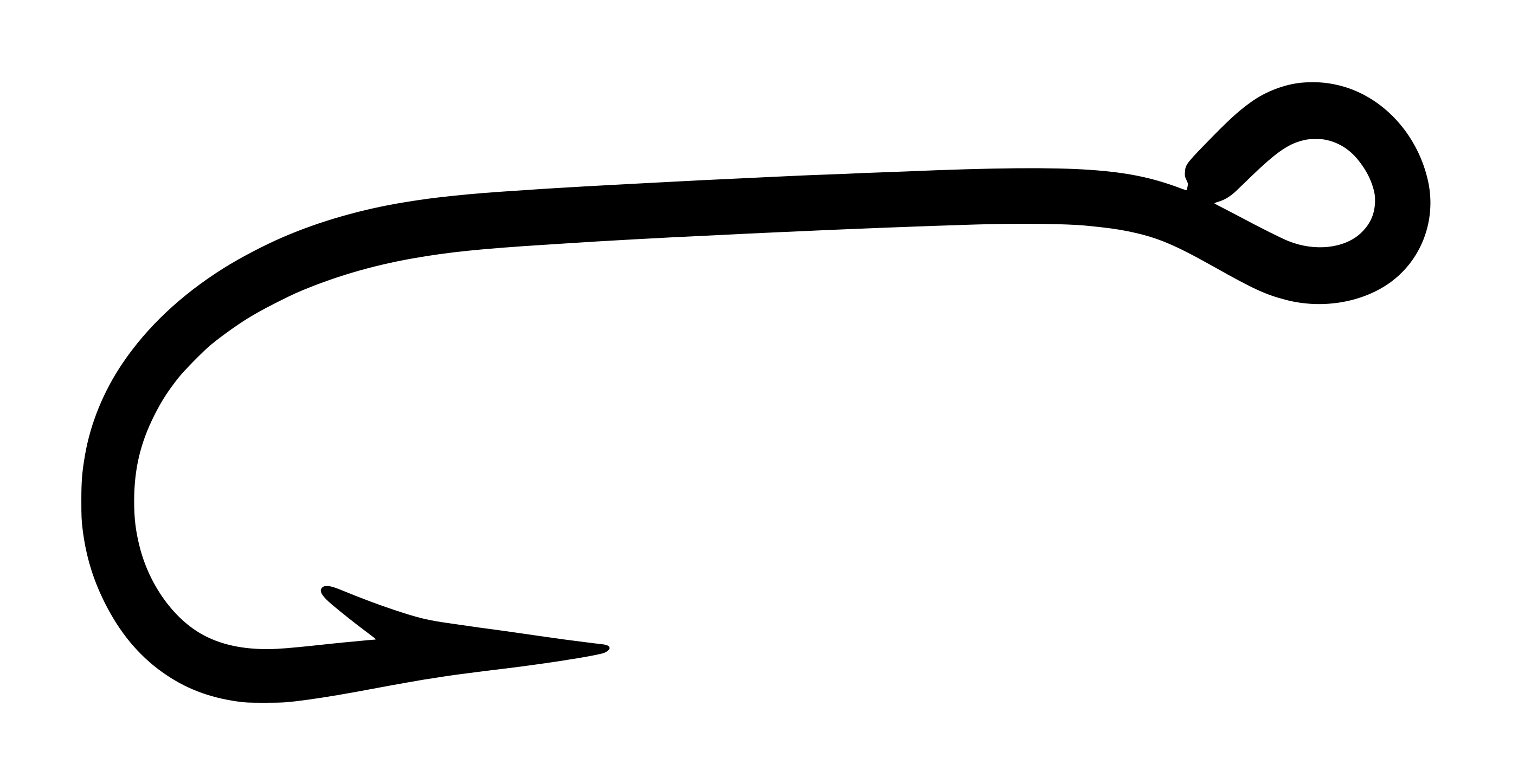
The Mustad 31363 Crystal Hook represents O. Mustad & Son’s mid-20th century premium line, featuring a superior point and tinned finish for corrosion resistance P. This size 10 specimen displays the classic Limerick bend with straight ring eye, packaged in the iconic Key Brand blue label format P.
Dating from approximately 1930-1950, the ‘Oslo – Norway’ marking places this hook in Mustad’s golden age of Norwegian production, before the company’s later international expansion V. The ‘Crystal’ designation indicated Mustad’s higher-grade hooks with precision-ground points and consistent tempering I.
With its tinned finish and versatile Limerick geometry, this hook served both wet fly tyers and bait fishermen targeting trout and similar species I. The original packaging and Norwegian provenance make this a solid piece for collectors of mid-century tackle, though the model’s relative commonness moderates its premium E.
Original Mustad 31363 Crystal Hook box label featuring the classic Key Brand skeleton key logo and Oslo, Norway manufacturing location.
Photographic record
5 cataloged imagesSelect any record to load it above.
5 images shown
Mustad 31363 Crystal Hook Box Label Size 10Original Mustad 31363 Crystal Hook box label featuring the classic Key Brand skeleton key logo and Oslo, Norway manufacturing location.Open originalMustad 31363 Crystal Hook Box Label Reverse Size 10Reverse side of the Mustad 31363 box label showing complete product specifications and Key Brand logo.Open originalMustad 31363 Crystal Hook Point Detail Size 10Close-up of the Mustad 31363 superior point showing the characteristic near-straight inner taper and single barb.Open originalMustad 31363 Crystal Hook Full Profile Size 10Complete profile view of the Mustad 31363 showing the Limerick bend geometry and straight ring eye on measurement grid.Open originalMustad-31363-Hooks-Size-10-Mustad-31363-Hooks-Size-10-Open original
Technical profile
Eye
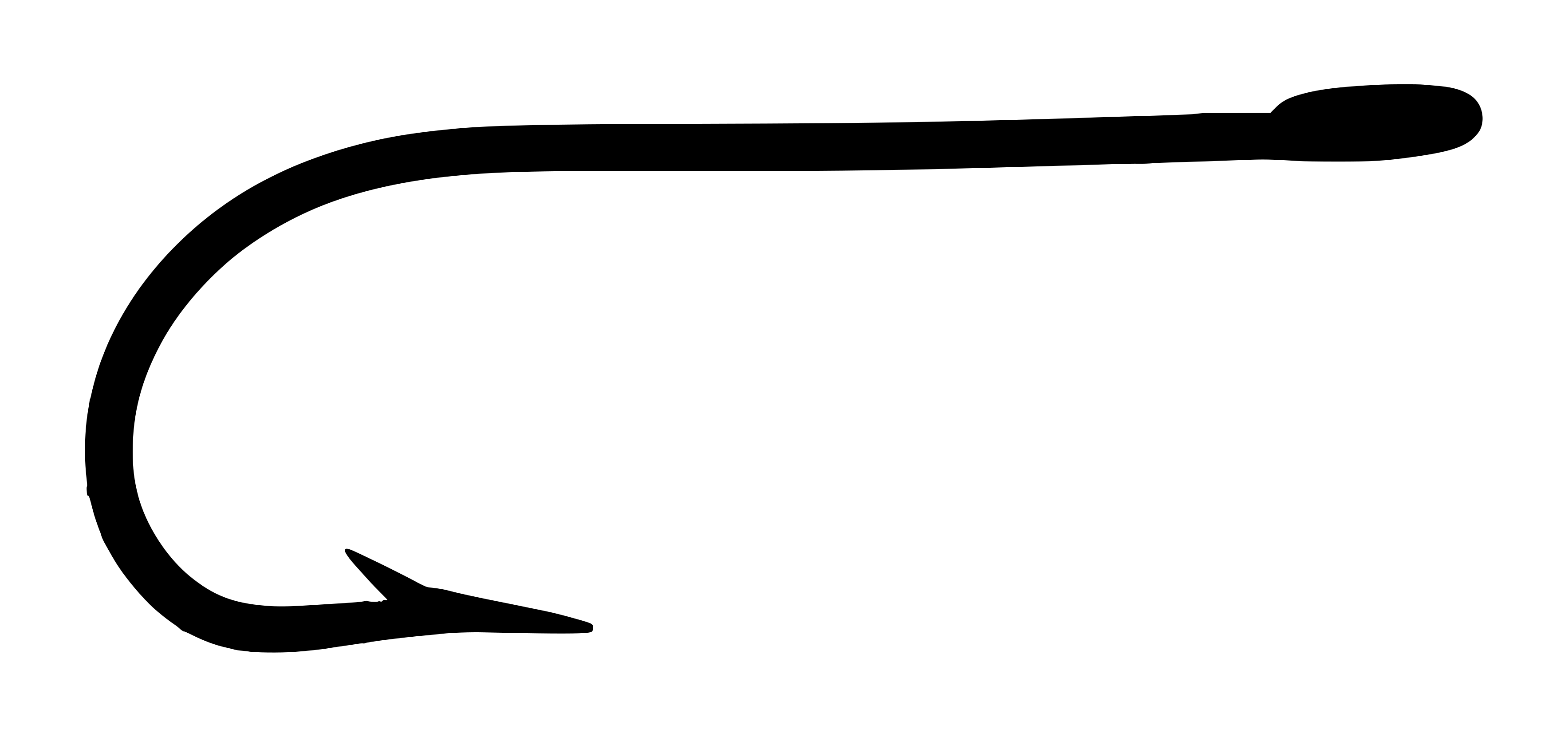
Ball Eye, Straight / InlineSmall straight ring eye cleanly formed with consistent gap. Ring shows proper closure with no visible joint P
Wire
Standard, Round
Shank
Standard — Plain
Bend
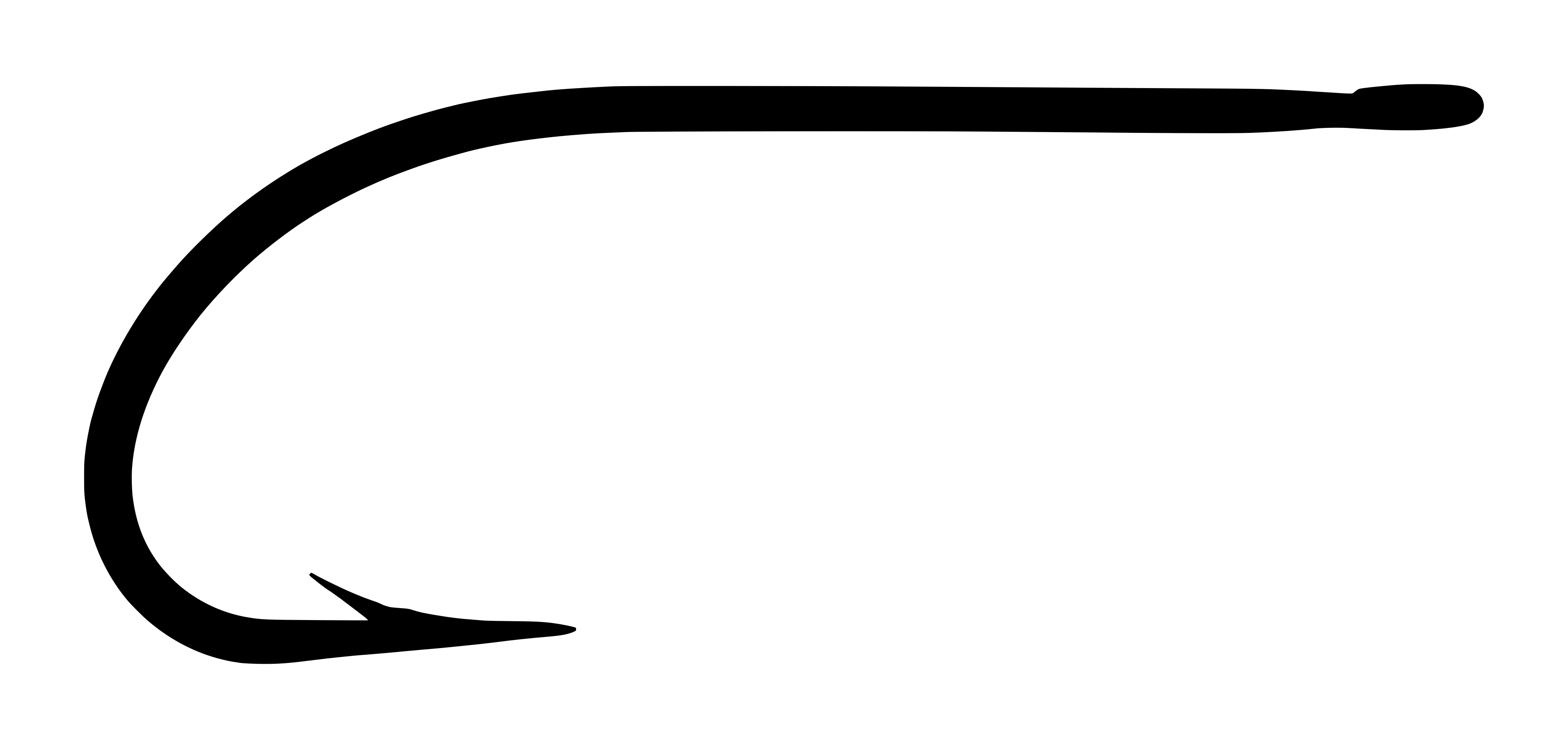
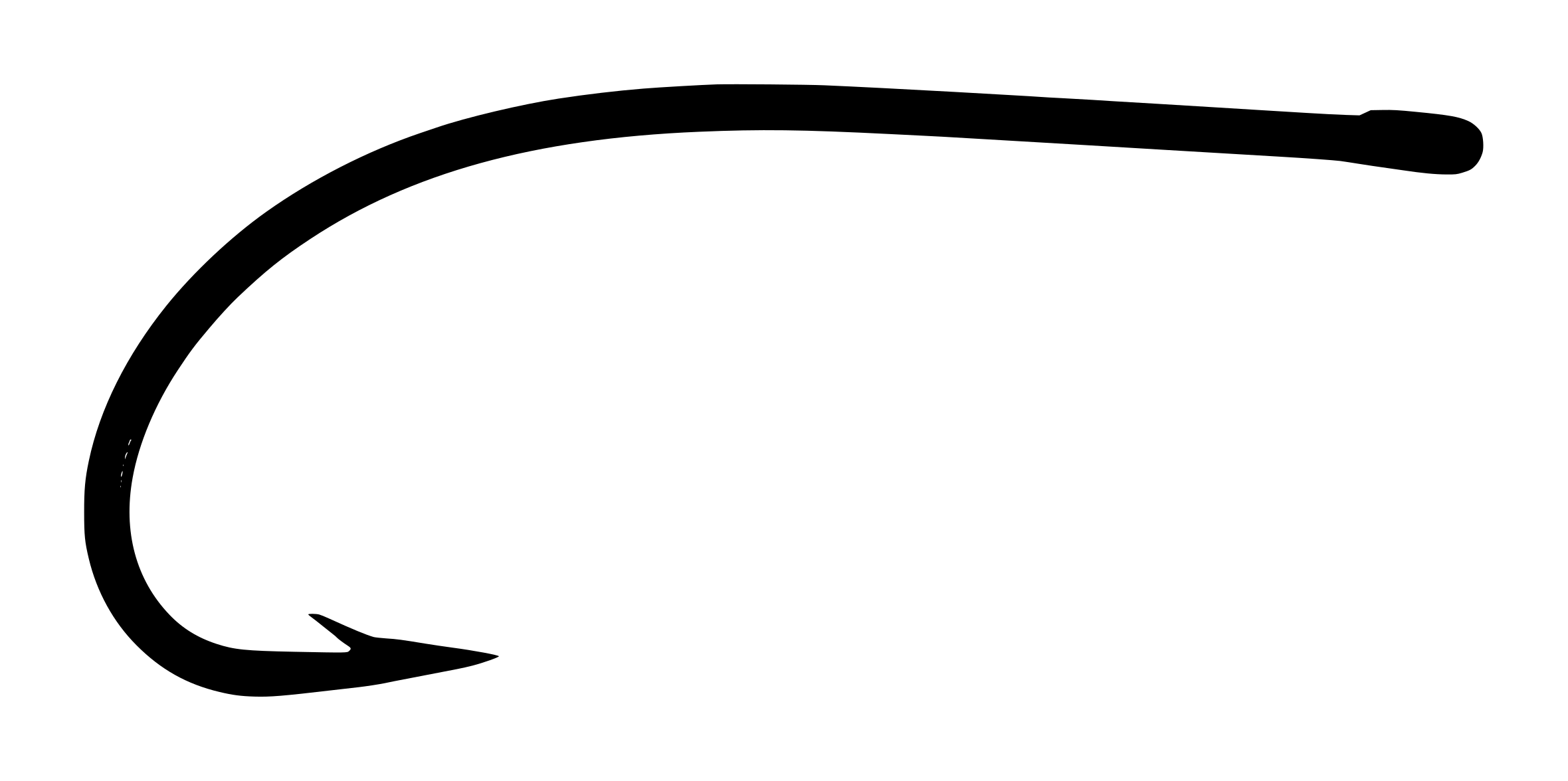
crystal, Standard gapSharp Limerick bend with angular bottom transition. Bend depth proportional to gap width, consistent with period Mustad specifications P
Point
Superior (near-straight inner taper)Classic superior point with nearly flat inner face tapering to sharp tip. Point shows no damage or dulling P
Finish
Tinned — Confirmed (stated on packaging)Bright silver tinned finish shows no corrosion or wear on specimen examined. Coating appears uniform with characteristic tin luster P.
Hook shows excellent condition with bright finish and sharp point. No corrosion or damage visible
The superior point geometry features a near-straight inner taper from barb to tip, providing excellent penetration while maintaining strength P. The tinned finish involves coating the carbon steel hook with a thin layer of tin, providing corrosion resistance superior to bare steel while maintaining the wire’s flexibility and strength characteristics.
The Limerick bend’s angular geometry creates positive bait retention while the straight ring eye allows for consistent leader attachment. The long shank provides additional leverage for hook setting while offering more surface area for fly body construction.
The Crystal series represented Mustad’s premium hook line during the mid-20th century, distinguished by superior metallurgy and precision manufacturing. Introduced in the 1920s, Crystal hooks featured carefully controlled tempering processes and precision-ground points that justified their premium pricing over standard Mustad offerings.
The series encompassed multiple bend styles and eye types, unified by consistent quality standards and the ‘Crystal’ branding. Model 31363 specifically targeted the wet fly and light bait fishing market with its Limerick bend and tinned finish, remaining in production through the 1950s before being absorbed into Mustad’s broader product rationalization.
Era and Packaging Dating
Box shows 'Oslo - Norway' addressing (before simplified 'Norway' marking), Key Brand logo in classic mid-century style, simple paper box construction typical of 1930s-1950s period, absence of postal codes or modern formatting.
The Norwegian Hook Empire
At its peak in the 1940s, Mustad's Gjøvik factory employed over 2,000 workers and produced hooks in more than 60,000 different patterns and sizes. The company's catalogs from this era resembled telephone books, with hooks designed for specific fishing conditions from Arctic char fishing in Norwegian fjords to tropical species in colonial markets worldwide.
Design lineage and influence
Best matchRelated by Attribute
Computed automatically from catalog data — updated as new hooks are added.
Matches: Shank, Gap, Eye, Eye Orient., Point +5 moreDiffers: Bend: Crystal vs Kirby (offset); Wire: Standard vs Heavy (1X Heavy); Offset: Straight vs Offset / Kirbed +2 more
Matches: Wire, Gap, Eye, Eye Orient., Point +4 moreDiffers: Bend: Crystal vs Limerick; Shank: Standard vs 1X Long; Finish: Tinned vs Black Japanned +2 more
Designed primarily for wet fly fishing and light bait presentations targeting trout, perch, and similar species. The Limerick bend provided secure bait retention while the tinned finish offered corrosion resistance in both fresh and brackish water conditions I.
Secondary Applications
Light bait fishing with worms, small minnows, and natural baits for panfish and stream trout
Classic Fly Patterns
Classic wet flies including March Brown, Partridge and Orange, Greenwell's Glory, and traditional Norwegian patterns
Modern Equivalents
Hook
Match Quality
Notes
Mustad 3261
Good
Similar Limerick bend and proportions, though modern wire and finish differ from vintage tinned coating
Partridge CS2
Moderate
Comparable wet fly hook with similar shank length, though bend geometry differs slightly
Collector notes
Mid-century Norwegian production with classic Key Brand packaging drives moderate collector interest, though common model status limits premium value.
Reference value
$8 – $20 USD estimate
Packaging condition
Very Good — light wear, fully legibleRecorded specimen
Positive factors include the classic Key Brand packaging from the golden age of Norwegian production, the premium Crystal series designation, and the complete original labeling with quantity marking. The ‘Oslo – Norway’ location marking adds geographical specificity valued by collectors of Scandinavian tackle.
Limiting factors include the relatively common model status within Mustad’s vast catalog and the standard size 10 designation, which lacks the rarity premium of larger or specialty sizes. While historically significant, the model’s widespread production and distribution reduce its scarcity value in today’s collecting market.
Packaging
Blue paper label on cream cardboard box with decorative asterisk border. Classic Key Brand skeleton key logo. Text reads 'O. MUSTAD & SON Manufacturers OSLO - NORWAY Qual. 31363 Superior Mustad-Crystal Hook Small ring Tinned No. 10 Made in Norway' with quantity '100'. Purple ink marking '10' over printed size.
Market Value Notes
Values based on complete original packaging examples. Premium for unopened boxes or cards with all hooks intact. Norwegian production era commands higher prices than later international manufacture.
Where to Find
Vintage tackle dealers, estate sales, online auctions. Complete boxed examples more commonly found in Scandinavia and Northern European markets.
Collector's Identification Tips
Key identifiers include the ‘Oslo – Norway’ location marking (pre-1960s), the specific Key Brand logo style with skeleton key, blue paper label format, and ‘Qual. 31363’ model code. The ‘Superior’ and ‘Crystal’ designations together indicate premium series. Beware of reproduction labels – originals show period-appropriate typography and paper stock with natural aging patterns.
Preservation
Storage and Preservation
Store in a cool, dry environment away from moisture to preserve the tinned finish, which can develop patina or corrosion if exposed to humidity. The original paper packaging is particularly vulnerable to moisture damage and should be protected in archival sleeves or storage boxes. Maintain hooks on their original cards or in the box rather than loose to preserve collecting value.
The tinned coating, while more corrosion-resistant than bare steel, can still deteriorate over decades. Avoid contact with dissimilar metals that could cause galvanic corrosion. Handle original packaging minimally to prevent further wear to the printed surfaces and edges.
Marking Analysis
Handwritten Markings
The purple ink marking ’10’ over the printed size designation appears to be a dealer or inventory marking, likely added by a tackle shop for quick size identification P. The ink shows characteristics of fountain pen or marker typical of mid-20th century retail practices. This type of marking was common among European tackle dealers who needed to quickly identify hook sizes in mixed inventory.
Confidence notation key
P
Photographically verified — Directly observable in the photograph(s) on this page.
V
Verified by documentation — Confirmed by manufacturer catalog, spec sheet, or published reference.
I
Inferred — A logical deduction from observable or documented evidence, not directly stated.
E
Estimated — An approximation based on visual comparison, proportional analysis, or limited data.
S
Speculative — A reasoned hypothesis that cannot be confirmed from available evidence.
Unnotated claims are the compiler’s synthesis; see Sources. All photographs on garrenwood.com are taken on a measurement grid where each square equals 1/10 inch (0.1″ / 2.54 mm).