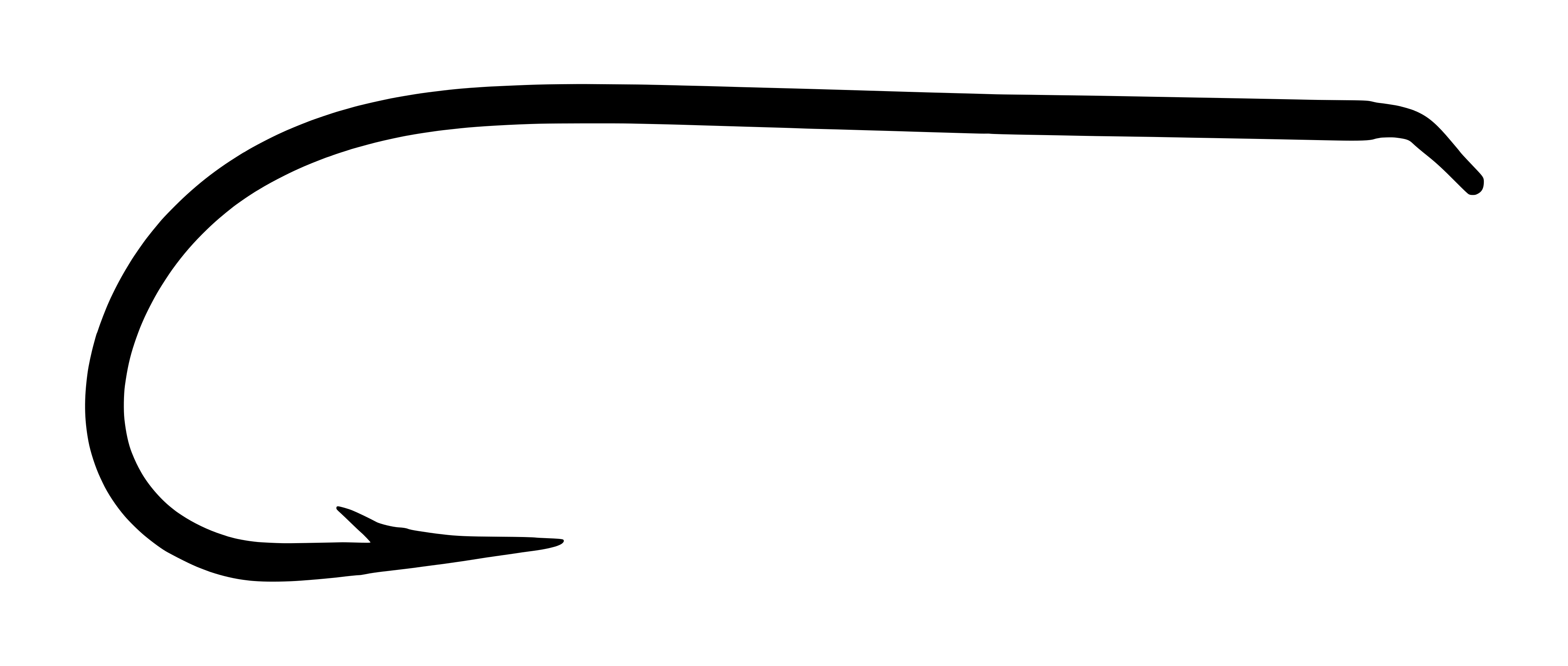
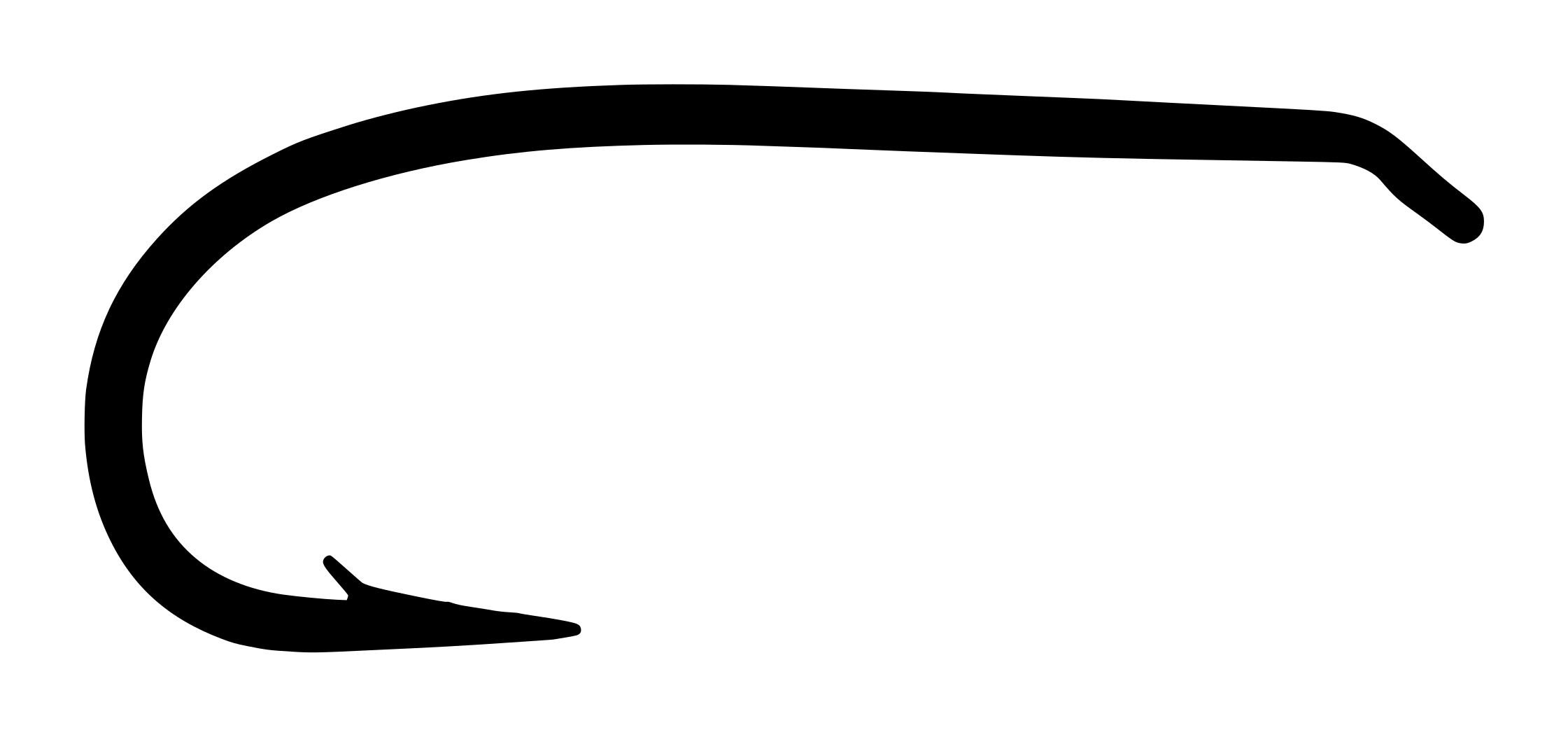
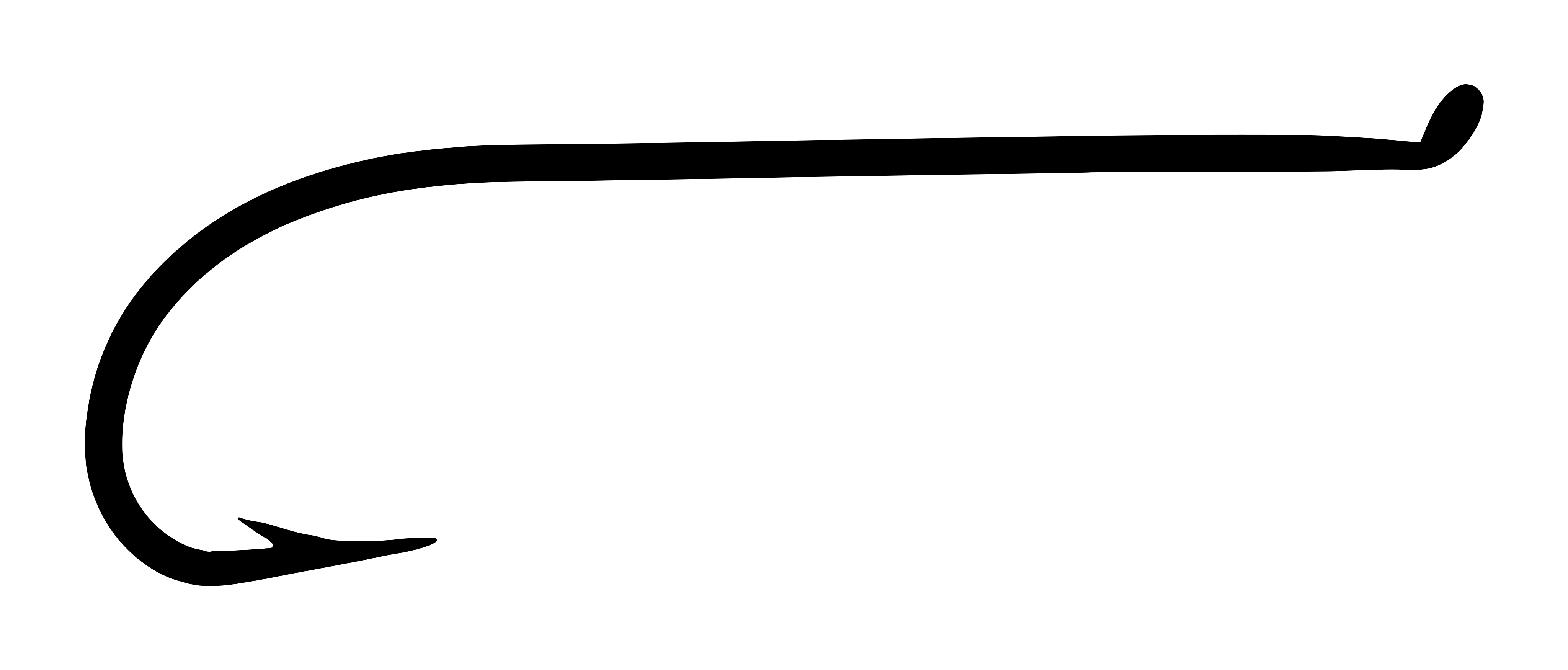
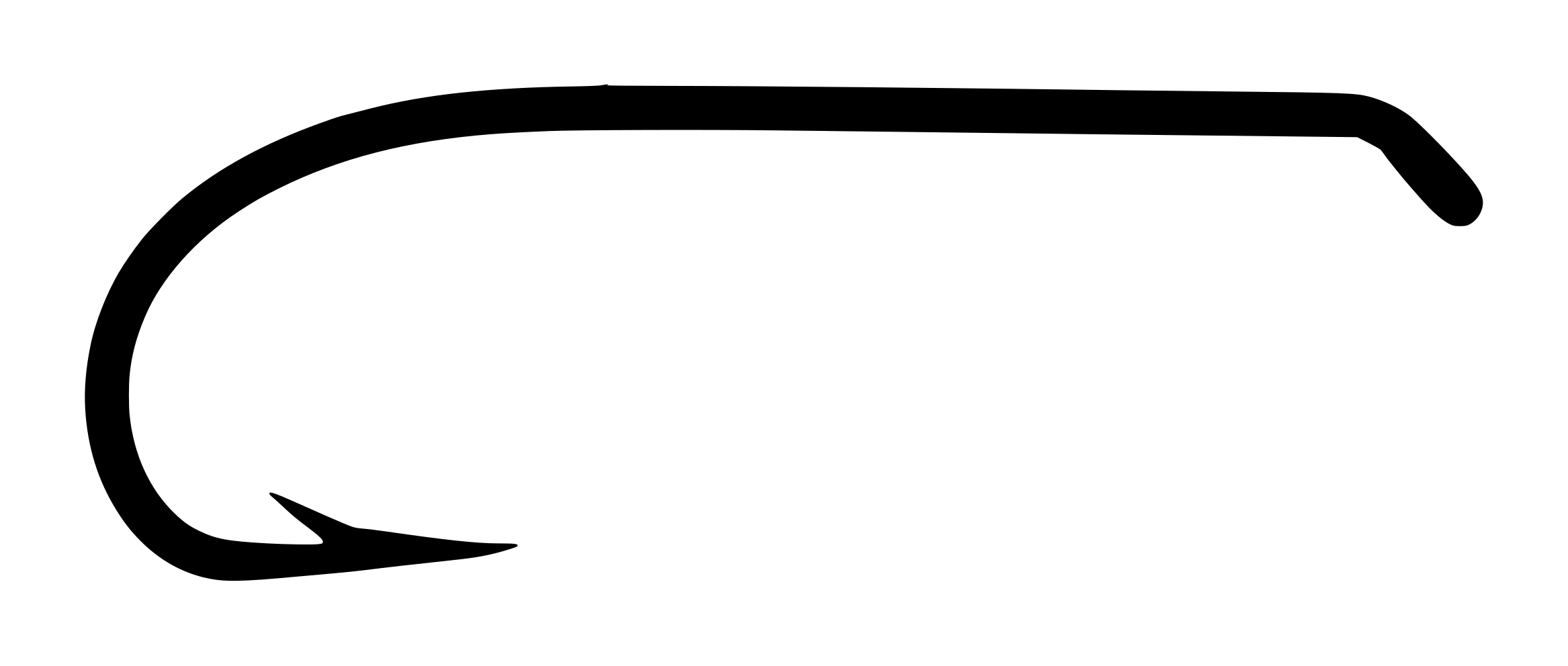
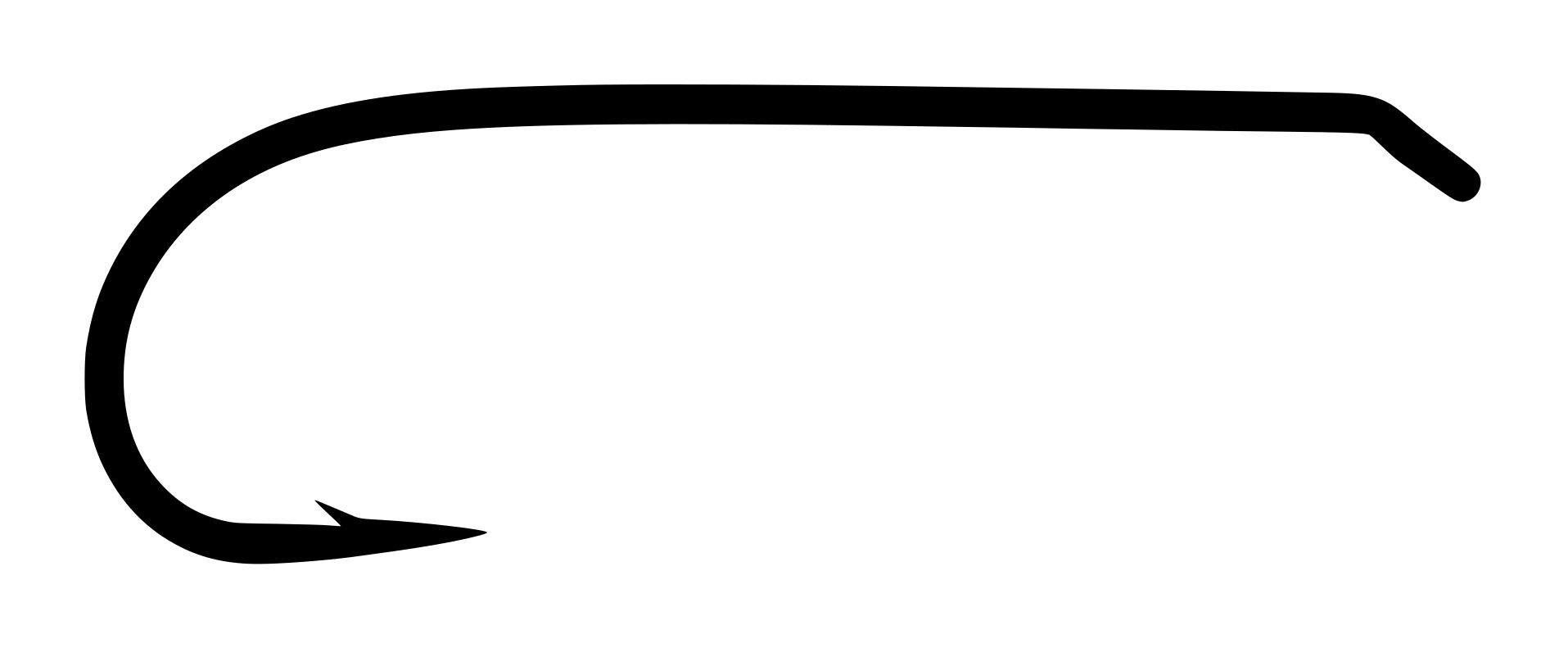
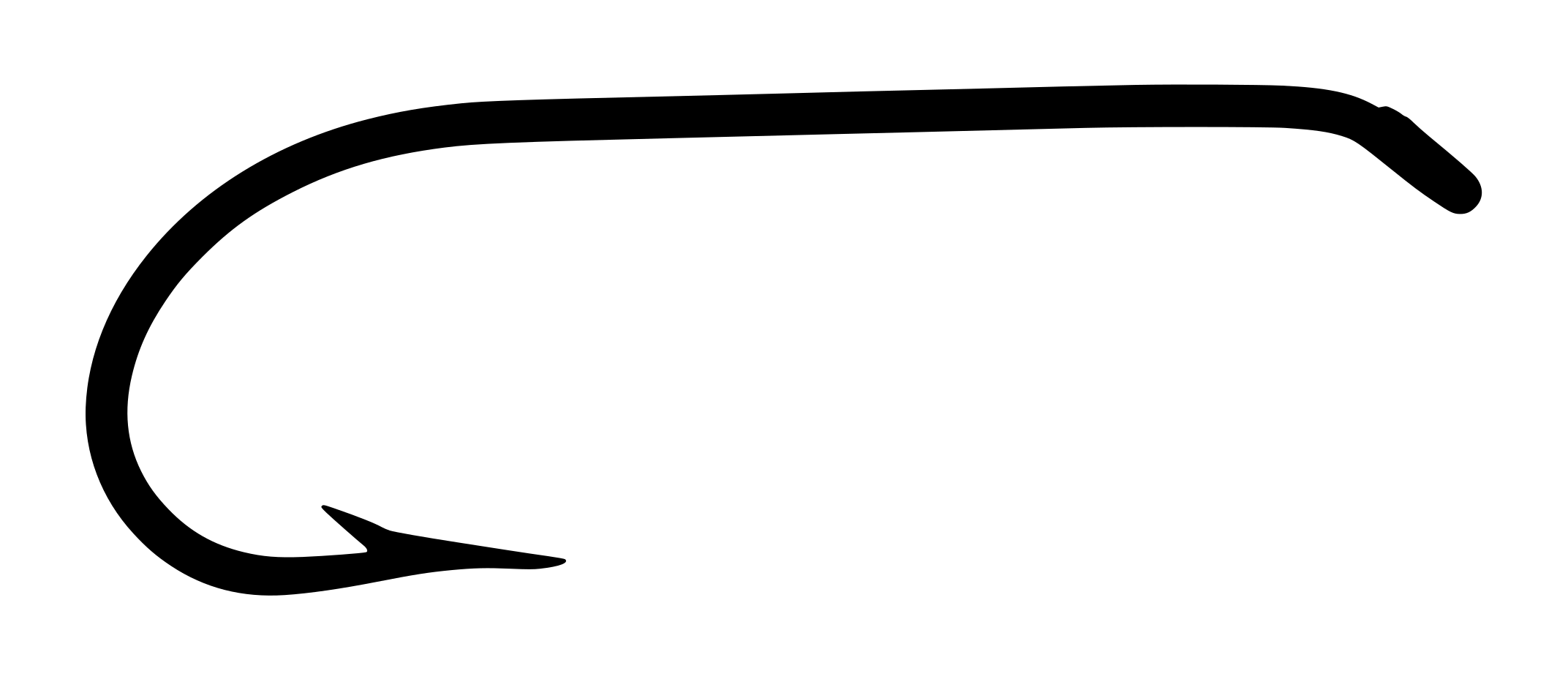
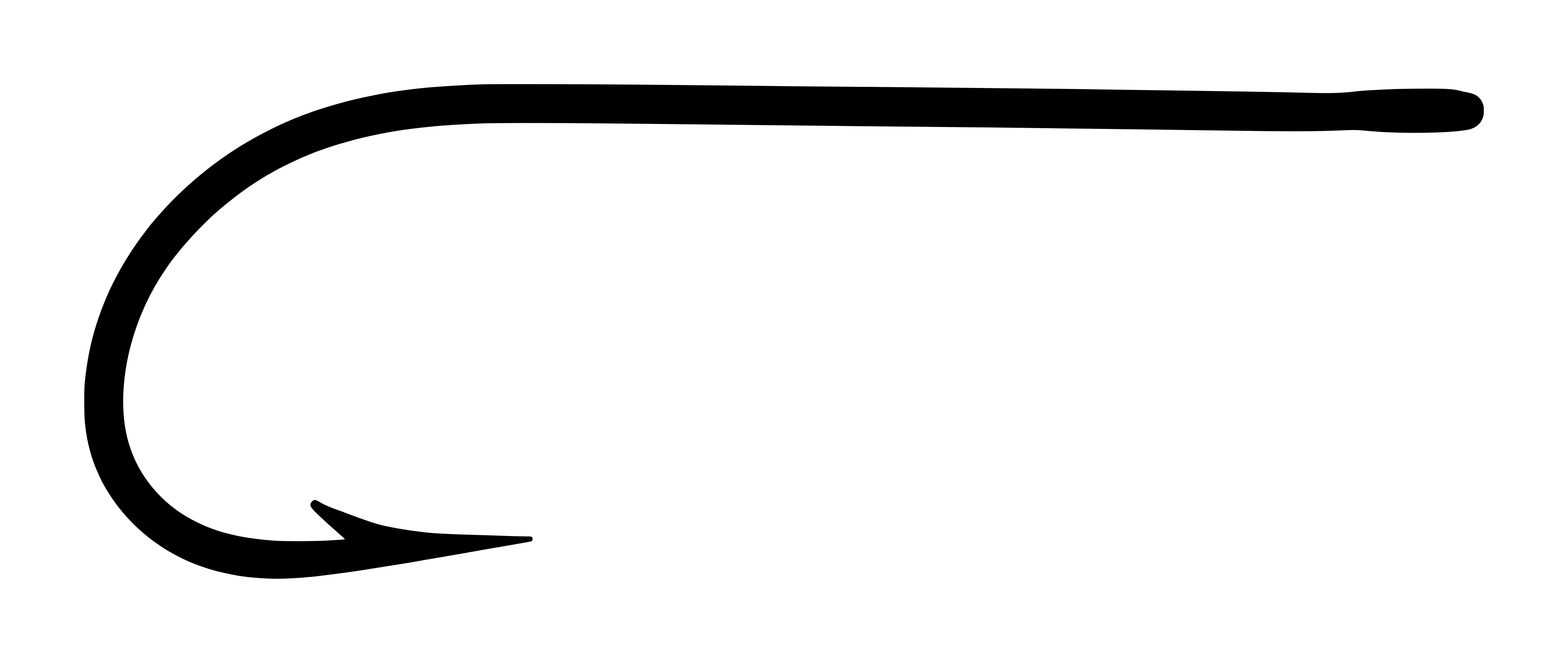
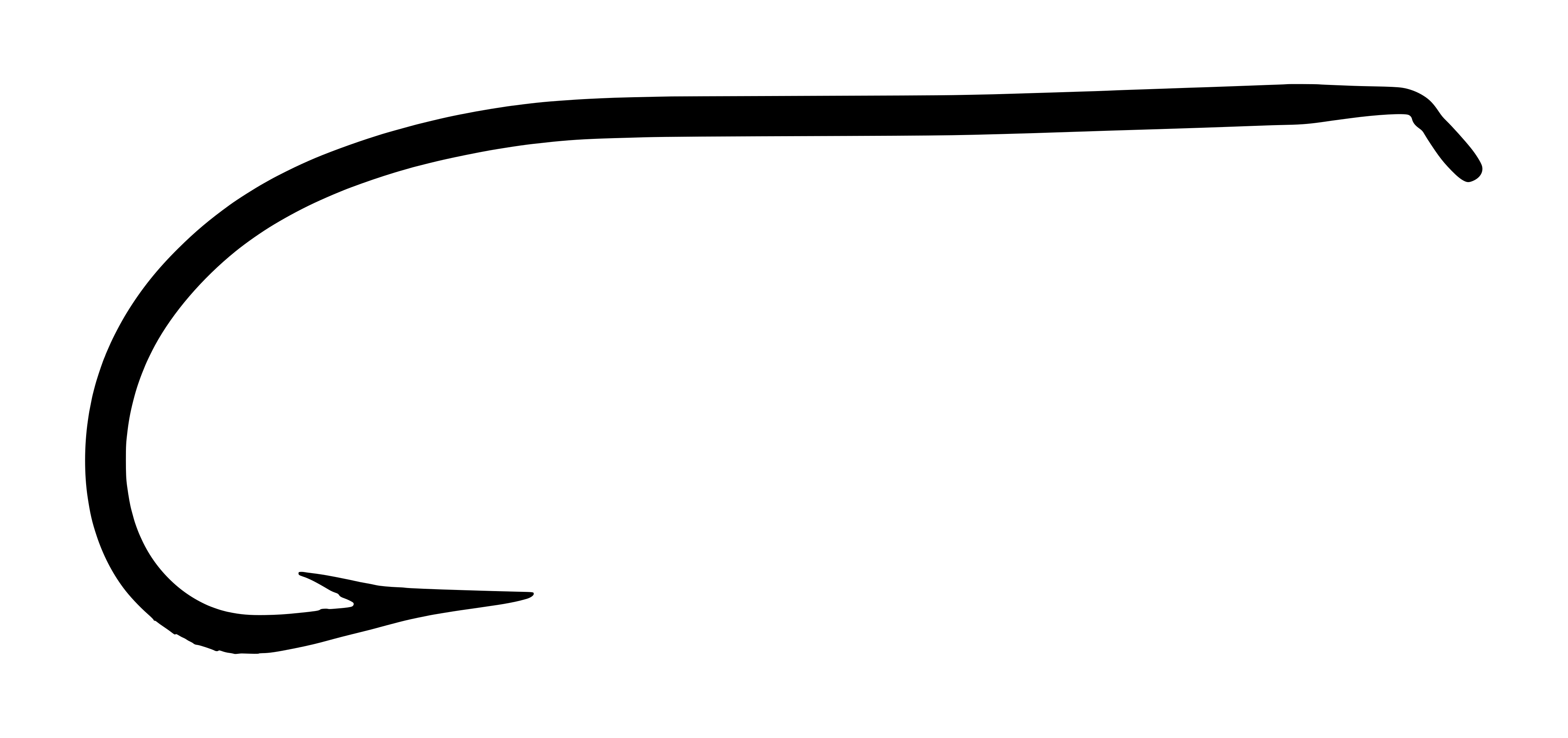
Mustad 3756 is a classic Norwegian-manufactured Sproat bend hook produced by O. Mustad & Son in Gjovik for mid-20th-century salmon and sea-trout wet-fly fishing. The No. 17 size specimen shown features a turned-down tapered eye, bronzed finish, and distinctive hollow-point design that delivers a cutting edge for reliable hook sets in tough fish.
The 3756 represents Mustad’s core production line for Atlantic salmon and sea-trout fisheries across Britain and Ireland, roughly 1950–1975. The absence of a barcode and handwritten specimen documentation confirm pre-1974 manufacture. Hollow-point Sproats remain highly regarded by traditional fly tiers and collectors of vintage Mustad models.
Surviving examples, particularly with original packaging or specimen documentation, are attracting modest collector interest within the broader Mustad vintage market. The 3756’s enduring reputation among working anglers and its integration into classic fly patterns make it a significant reference point in 20th-century hook design.
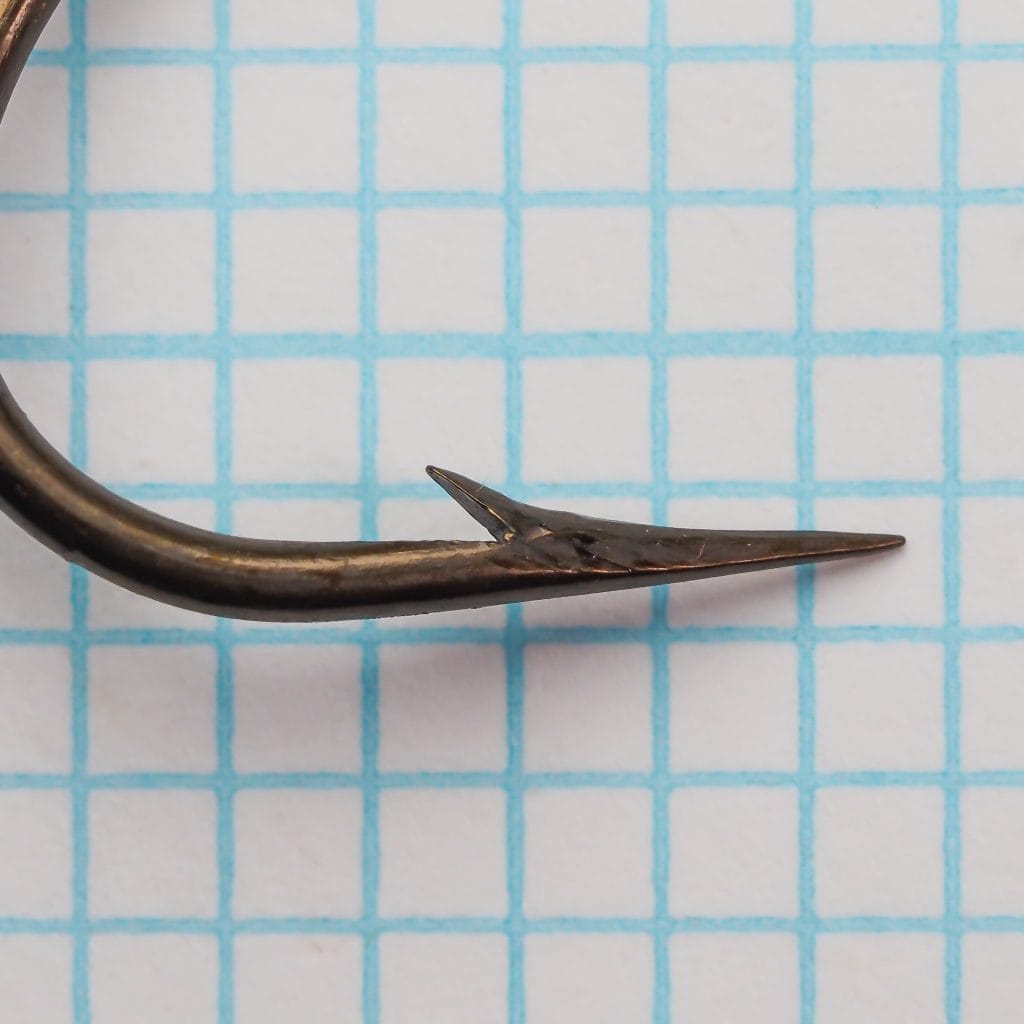
Close-up side profile of the Mustad 3756 hollow point, showing the distinctly concave inner face and barb placement. Photographed on 1/10-inch measurement grid.
Photographic record
3 cataloged imagesSelect any record to load it above.
3 images shown
Mustad 3756 Size 17 Hollow Point DetailClose-up side profile of the Mustad 3756 hollow point, showing the distinctly concave inner face and barb placement. Photographed on 1/10-inch measurement grid.Open originalMustad 3756 Size 17 Full ProfileFull side-profile view of the Mustad 3756 Sproat bend hook, size 17, showing the complete bend geometry from tapered eye through barb. Measurement grid provides scale verification.Open originalMustad 3756 Archival Documentation LabelHandwritten specimen label on quadrille-pattern archive paper identifying the hook as Mustad 3756 size 17, with two hook specimens photographed below for reference.Open original
Technical profile
Eye
Tapered Eye, Turned DownClean tapered eye with simple wire taper, no ball formation. Taper angle approximately 15-20 degrees, typical of period Mustad construction E.
Wire
Standard, Round
Shank
2X Long — Plain
Bend
Sproat, Standard gap, Offset / kirbedClassic Sproat profile with rounded bottom and symmetrical curve, moderate depth relative to shank P.
Point
Hollow Point (concave inner face)Short, close-cut barb positioned immediately before point taper, typical of Mustad hollow-point Sproats P.
Finish
Bronzed — Confirmed (stated on packaging)Uniform bronzed/blackened finish with natural patina consistent with 50+ years storage. No corrosion or rust evident on specimen P.
Specimen is bright and structurally sound with even patina throughout. No bending or damage visible. Original handwritten label preserved.
The hollow-point design of the 3756 features a distinctly concave inner face formed during the wire-drawing and point-shaping process. This inward curve creates a knife-edge effect on the inner surface, concentrating cutting force along a narrow edge—critical for penetrating the hard tissue of salmon and sea-trout mouths. The tapered eye transmits force directly to the bend without stress concentration, a proven geometry in heavy-fish applications.
The standard-gauge round wire and Sproat bend profile balance strength with the flexibility needed for wet-fly movement in current. The bronzed finish provides both aesthetic appeal and functional protection against corrosion in saltwater and estuarine environments. This combination of point geometry, wire gauge, and finish made the 3756 a trusted choice across multiple river and estuary fisheries.
The 3756 belongs to Mustad’s core Sproat bend family, a series introduced in the late 19th century and refined through the 20th century. The Sproat profile—characterized by a rounded bottom and moderate depth—proved ideal for wet flies across multiple fisheries. The hollow-point variant emerged as a standard specification in the mid-20th century, offering superior cutting performance for larger patterns and stronger fish.
The No. 17 size occupied a niche position within the 3756 range, suitable for estuary conditions and intermediate sea-trout patterns where a hook neither too small nor too large was required. The 3756 remained in continuous production through the 1970s and beyond, with surviving examples representing a well-documented chapter in Mustad’s commercial history.
Era and Packaging Dating
Handwritten specimen label indicates vintage documentation. Absence of barcode suggests pre-1974 manufacture. Hook construction features (tapered eye, Sproat bend, hollow point, bronzed finish) consistent with Mustad standard production 1950s-1970s. No printed packaging visible to confirm exact dating range; calibrated to Mustad's primary production period for this model.
The Sproat Revolution
The Sproat bend takes its name from the Scottish Borders region and became so universally adopted that by the mid-20th century it was manufactured by virtually every major hook maker on Earth. Mustad's standardization of Sproat geometry and hollow-point specifications helped establish it as the default choice for Atlantic salmon and sea-trout wet flies across the UK and Ireland. Even today, anglers refer to a 'standard Sproat' as shorthand for this foundational profile.
Design lineage and influence
The Sproat bend traces its heritage to 19th-century English hook makers and became one of the most widely manufactured profiles in the world. Mustad’s adoption and standardization of the Sproat established it as a global benchmark. The hollow-point innovation emerged from decades of wet-fly fishing tradition, where penetration reliability was paramount. The 3756 represents Mustad’s synthesis of British bentwork tradition with Norwegian industrial precision, creating a hook that served both heritage rivers and modern commercial fisheries.
Best matchRelated by Attribute
Computed automatically from catalog data — updated as new hooks are added.
Matches: Bend, Wire, Gap, Point, Forging +2 moreDiffers: Shank: 2X Long vs Standard; Eye: Tapered Eye vs Ball Eye; Eye Orient.: Turned Down vs Straight / Inline +4 more
Matches: Bend, Shank, Eye, Point, Finish +4 moreDiffers: Wire: Standard vs Fine (1X Fine); Gap: Standard vs Wide; Eye Orient.: Turned Down vs Turned Up +1 more
Matches: Bend, Shank, Gap, Eye, Eye Orient. +4 moreDiffers: Wire: Standard vs Heavy (1X Heavy); Point: Hollow Point vs Standard / Spear; Offset: Offset / Kirbed vs Straight +3 more
The 3756 is a traditional medium-heavy Sproat designed for salmon and sea-trout wet flies across British and Irish rivers. The hollow point and moderate wire gauge suit larger Atlantic salmon patterns and estuary sea-trout work where a balance of hook strength and fly movement is required. Sproat geometry and bronzed finish make it equally suitable for reservoir stillwater patterns.
Modern Sproat variant; similar bend and point; different wire gauge and finish (nickel vs bronze)
Tiemco 5262
Good
Contemporary Sproat alternative; hollow point; similar size and strength profile
Partridge H1A
Moderate
English traditional Sproat; similar heritage; different manufacturing technique and wire spec
Collector notes
The 3756 Sproat is a workhorse vintage hook with modest collector appeal. Uncommon in surviving original packaging or labeled specimens; the documented No. 17 size adds slight scarcity value. Limited by its common-hook status and lack of distinctive features compared to rare Mustad variants.
Reference value
$3 – $8 USD estimate
Positive factors: Genuine vintage Mustad production with documented size label; clean specimen with original patina; Sproat bend has enduring appeal in British and Irish fly-fishing tradition; hollow point is a desirable spec; handwritten documentation adds provenance context.
Limiting factors: 3756 is a standard production model with wide historical output; No. 17 is an intermediate size less sought than extreme sizes; bronzed finish is common; no special features or commemorative packaging; no known designer attribution or limited edition designation.
Packaging
No printed packaging provided in images. Specimen documented with handwritten label on quadrille-pattern archive paper: 'Mustad / 3756 / #17'. Handwriting style and ink consistent with mid-20th-century specimen cataloging.
Market Value Notes
Loose vintage specimen: $3–5 USD. Original labeled specimen or small package: $6–10 USD. Condition, packaging, and lot size drive variance. Most demand from British/Irish salmon and sea-trout fly tiers and Mustad model completionists.
Preservation
Storage and Preservation
Store the 3756 in a cool, dry environment away from moisture and humidity. The bronzed finish develops natural patina over decades and is susceptible to further oxidation if exposed to damp conditions. Original hooks or hooks on their original card should remain on card rather than transferred to loose storage—this protects the finish and preserves provenance.
If the specimen is mounted on a paper label or archive card, store that documentation alongside the hook in an acid-free envelope or archival box. Avoid contact with other metals or ferrous hooks, as galvanic corrosion can occur. Periodic gentle inspection—without cleaning—preserves the original finish character and historical integrity. The patina visible on vintage specimens is often valued by collectors as evidence of age and authenticity.
Marking Analysis
Specimen Documentation
The handwritten label ‘Mustad / 3756 / #17’ appears in blue-black ink on quadrille-pattern archive paper, consistent with mid-20th-century museum and research cataloging practices. The handwriting style—formal, deliberate capitals with consistent letterforms—suggests documentation by a trained cataloger rather than casual specimen marking. This level of documentation typically indicates the hook was preserved as part of a reference collection, museum holdings, or serious angler’s archive.
The quadrille background (fine-grid paper) is commonly used in scientific and museum contexts for consistent documentation. This archival context enhances the specimen’s provenance value and suggests careful stewardship. The label placement and inking pose no risk to the hook itself and represent non-invasive documentation practice.
Additional
Model Code and Size Documentation
The model designation ‘3756’ is Mustad’s proprietary product code for this Sproat bend variant. In Mustad’s mid-20th-century catalog system, the 3756 was listed as a general-purpose Sproat in standard and heavy-duty configurations. The ‘#17’ size notation reflects Mustad’s numerical sizing standard, where higher numbers indicate larger hooks. Size 17 occupies the range of approximately 2.0″–2.1″ overall length and 0.55″–0.62″ gap width—consistent with this specimen’s confirmed measurements.
The absence of additional markings (such as ‘Superior,’ ‘Extra Strong,’ or finish descriptors) suggests this is a standard production 3756, not a special variant. This straightforward designation indicates the hook was destined for general distribution through tackle retailers and fly-dressing suppliers.
Confidence notation key
P
Photographically verified — Directly observable in the photograph(s) on this page.
V
Verified by documentation — Confirmed by manufacturer catalog, spec sheet, or published reference.
I
Inferred — A logical deduction from observable or documented evidence, not directly stated.
E
Estimated — An approximation based on visual comparison, proportional analysis, or limited data.
S
Speculative — A reasoned hypothesis that cannot be confirmed from available evidence.
Unnotated claims are the compiler’s synthesis; see Sources. All photographs on garrenwood.com are taken on a measurement grid where each square equals 1/10 inch (0.1″ / 2.54 mm).