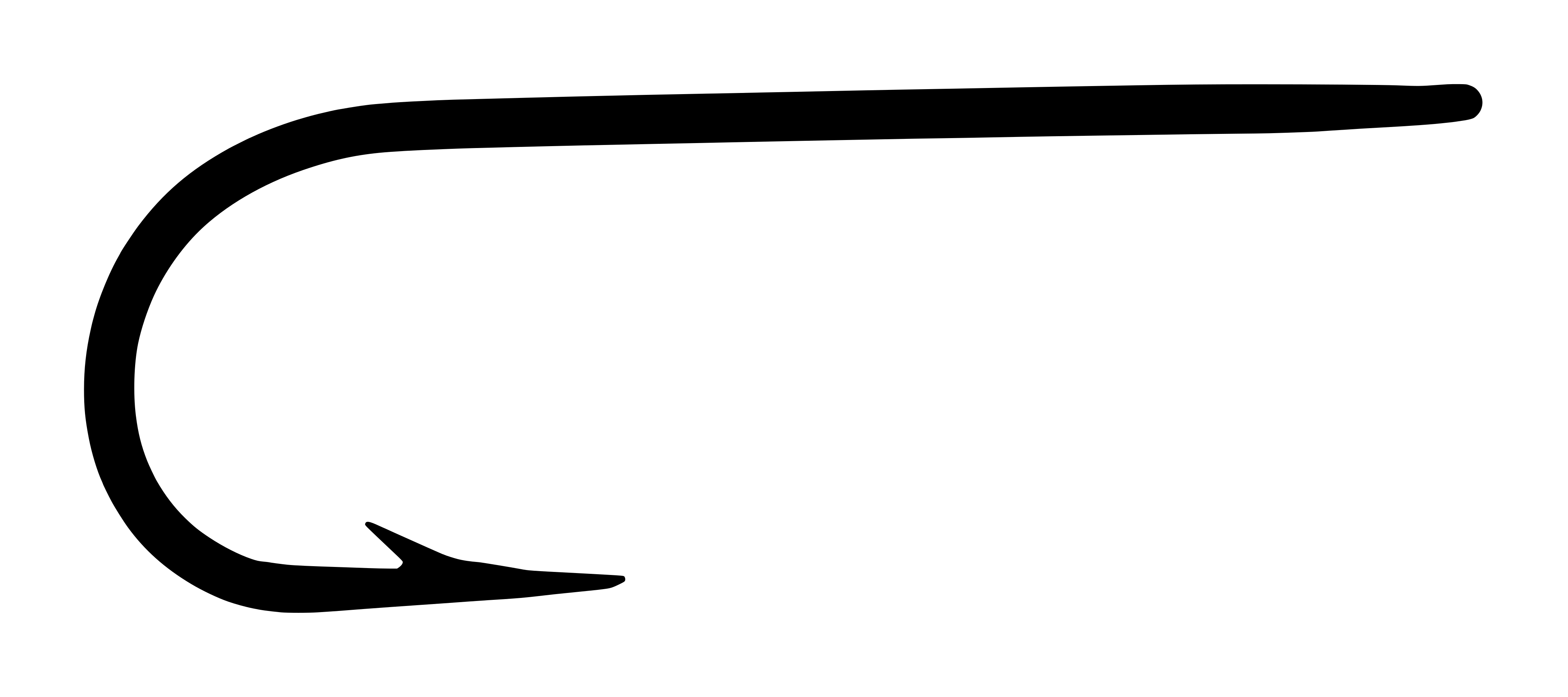
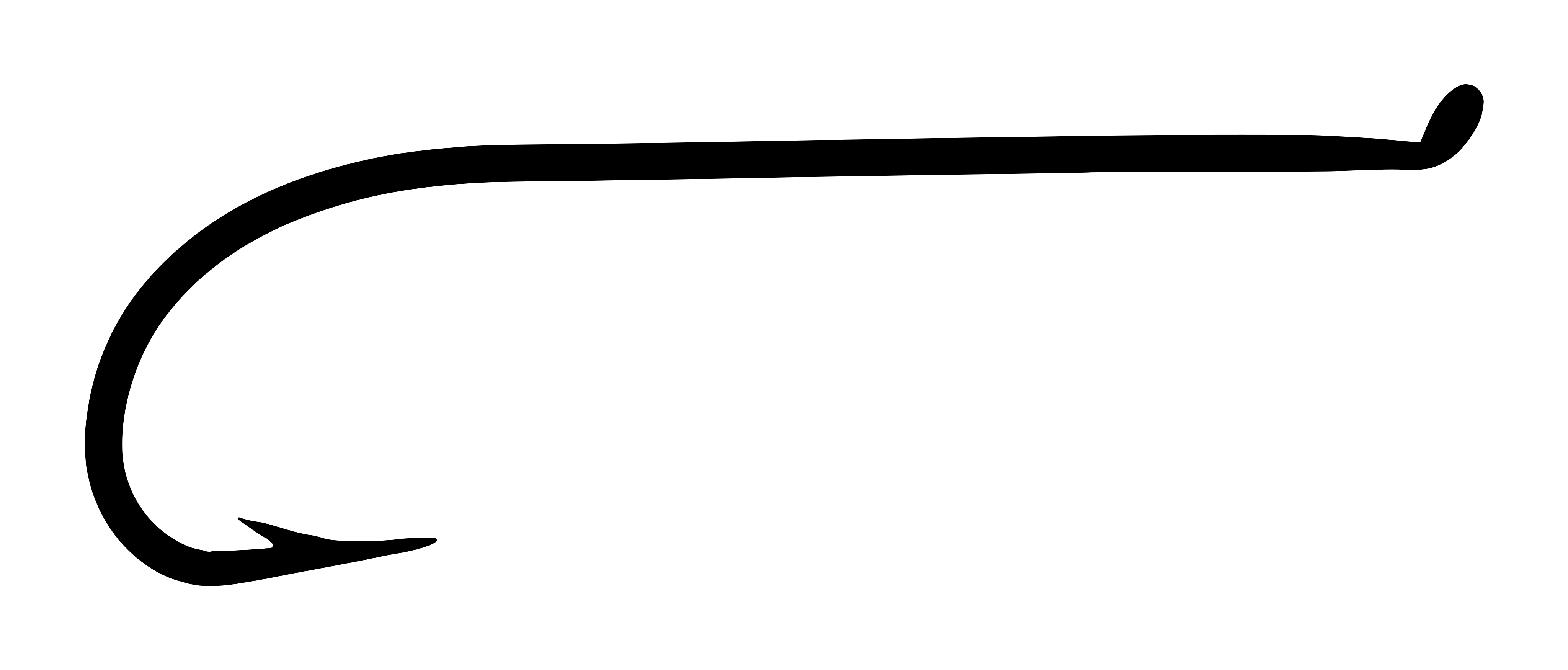
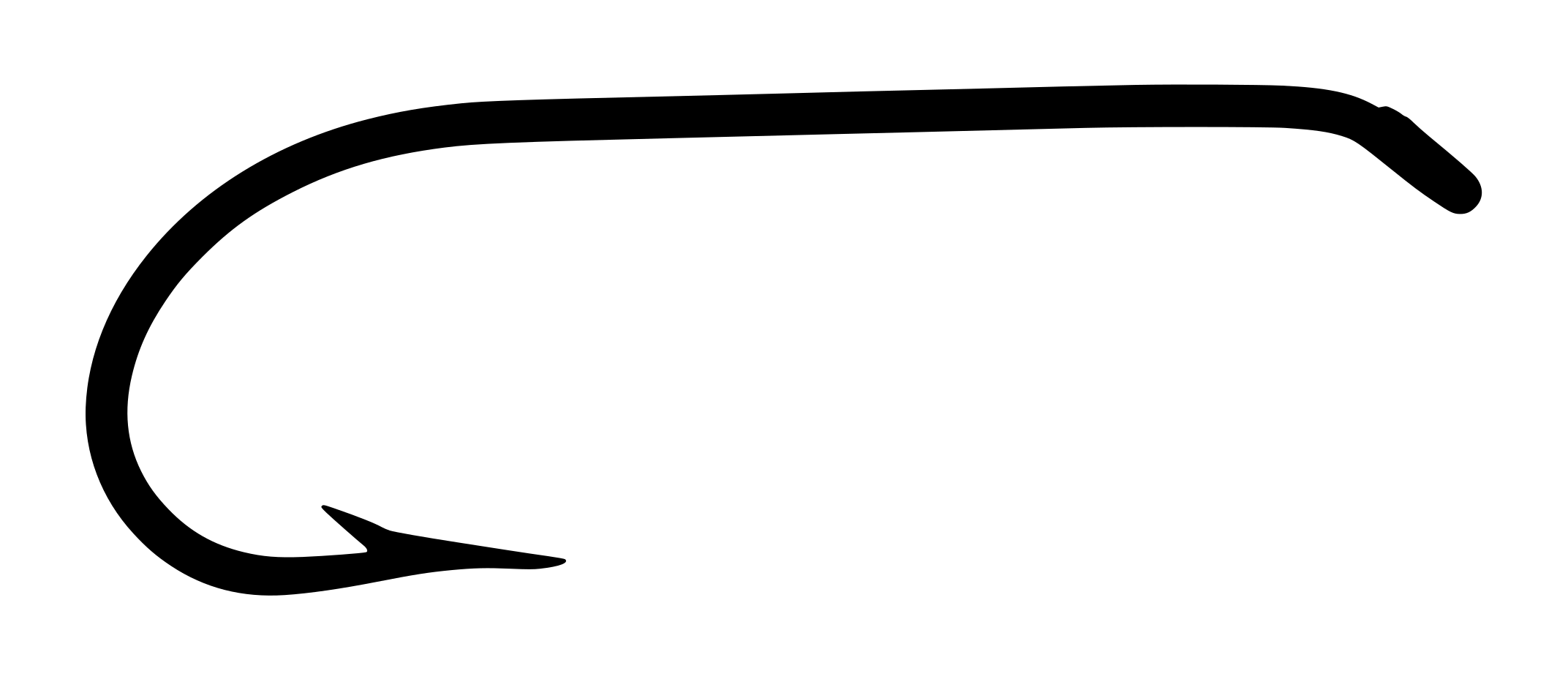
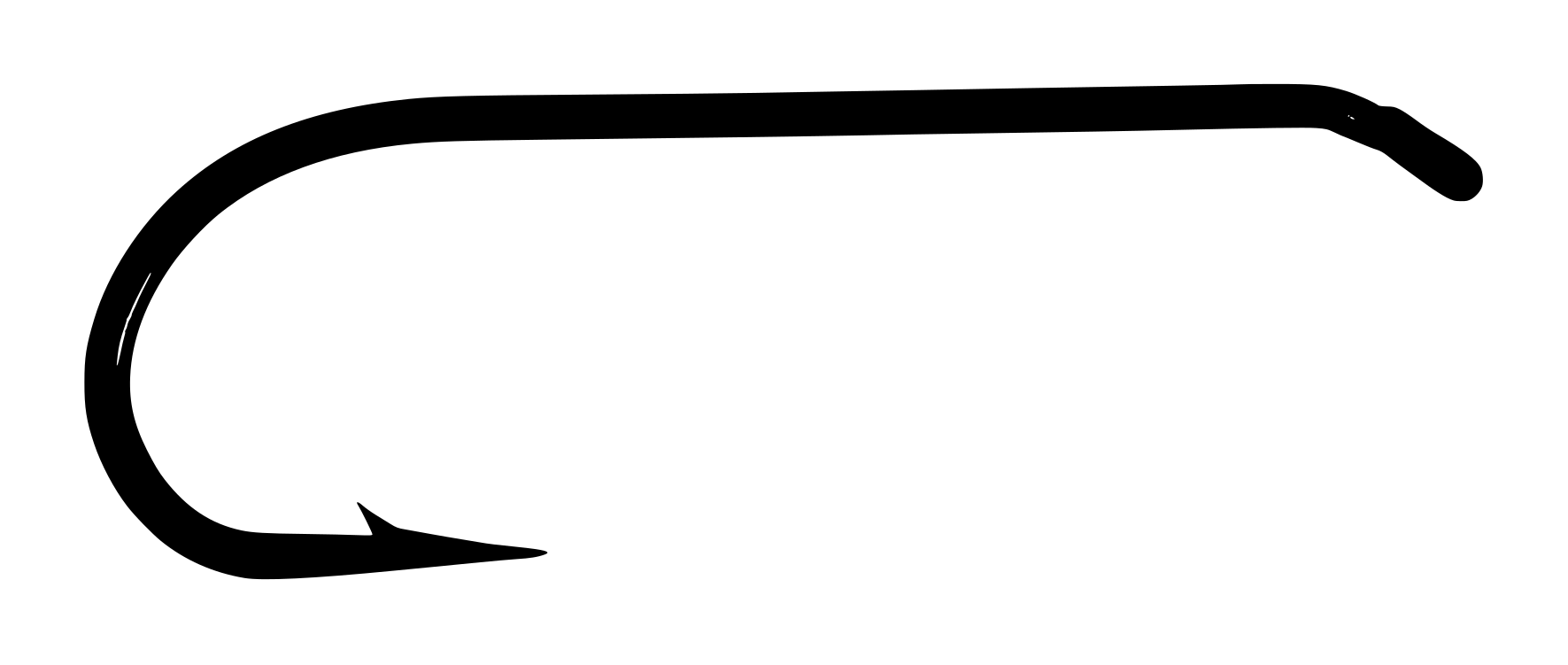
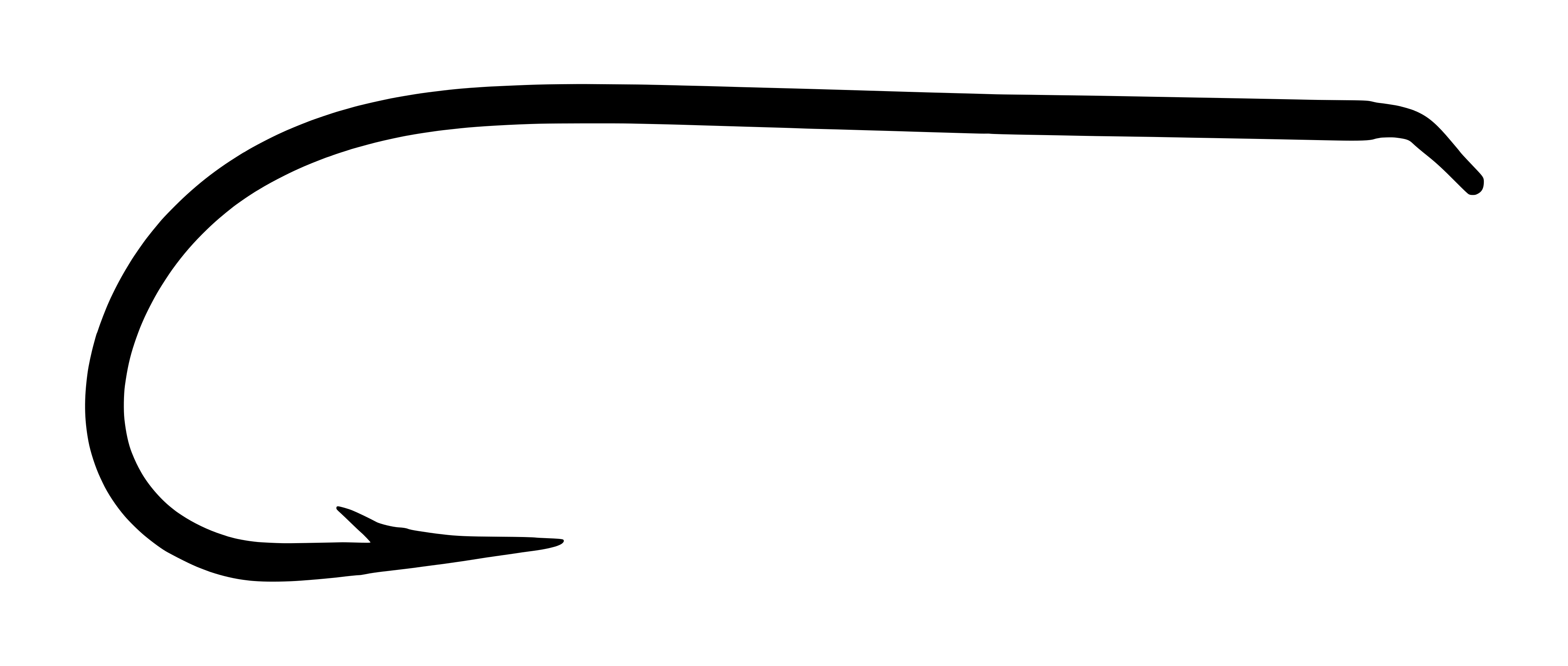
The Mustad 9863 Kendal Kirby is a vintage long-shank hook produced by O. Mustad & Søn during the 1930s–1950s. It represents a deliberate merger of Norwegian industrial precision and English hook-making tradition, honoring both the town of Kendal (historic English center) and Charles Kirby (17th-century London innovator). This specific size No. 1 exemplifies the refined bait and streamer hooks that dominated Mustad’s mid-century catalog.
Defining features include a turned-down tapered eye (wire deliberately thinned to reduce bulk), a long shank suitable for threading live bait or tying elongated streamer patterns, and an offset Kirby bend that mechanically prevents the hook from lying flat in a fish’s mouth. The hollow point—a concave inner grind—provides rapid tissue penetration with minimal applied pressure, ideal for soft-mouthed species and delicate presentations. The bright (polished, uncoated) finish reflects light and appeals to traditional wet-fly tyers.
Era evidence is robust: the ‘Key Brand’ logo treatment, paper-label-on-cardboard construction, lack of barcode, and Oslo city designation (post-1925) all place this hook in the pre-1960s vintage era. The eight-line typographic label format is unchanged from Mustad’s standardized system, making this a textbook example of industrial-era Norwegian tackle design.
Collecting significance: The tapered eye marks this as a quality-tier hook; complete original-packaging cards in good condition attract specialist interest. Size No. 1 is less common than larger sizes. The Kendal Kirby line is historically important but lacks the fame of other Mustad patterns, making it a rewarding deep-catalog discovery for Mustad scholars.
Original eight-line paper label on cardboard box, showing Key Brand logo, Oslo imprint, and complete product specifications. The ornamental asterisk border and olive-gold offset letterpress printing are characteristic of Mustad's mid-century vintage packaging.
Photographic record
4 cataloged imagesSelect any record to load it above.
4 images shown
Mustad 9863 Kendal Kirby Size 1 Original Box LabelOriginal eight-line paper label on cardboard box, showing Key Brand logo, Oslo imprint, and complete product specifications. The ornamental asterisk border and olive-gold offset letterpress printing are characteristic of Mustad's mid-century vintage packaging.Open originalMustad 9863 Kendal Kirby Point Detail Size 1 Hollow GrindExtreme close-up of the hook point showing the distinctive hollow-ground concave inner face, fine sharp tip, and short close-cut barb characteristic of Mustad's hollow-point specification.Open originalMustad 9863 Kendal Kirby Full Hook Profile Size 1 Offset BendFull-profile view of a single size No. 1 hook on measurement grid, showing the offset Kirby bend (point deflected left of shank axis), turned-down tapered eye (angled downward with reduced wire diameter at eye loop), and long shank suitable for bait threading or streamer tying.Open originalMustad 9863 Kendal Kirby Multiple Hooks Size 1 Batch ViewTwo size No. 1 hooks displayed side-by-side on measurement grid, demonstrating the consistency of Mustad's production. Both show identical offset Kirby bend geometry, turned-down eye construction, and bright finish, confirming standard manufacturing quality across the batch.Open original
Technical profile
Eye
Tapered Eye, Turned DownThe tapered eye is deliberately thinned at the terminal wire loop—a quality manufacturing feature that reduces bulk and weight at the front of the hook. This construction is characteristic of premium Mustad hooks intended for silk-snelling or fine fly tying. The taper is asymmetrical, graduating smoothly from the shank toward a fine eyelet, consistent with period turned-down construction. P — visible in image 3.
Wire
Standard, Round
Shank
2X Long — Plain
Bend
Round / Kendal, Wide gap, Offset / kirbedThe Kirby bend is distinctly offset to the left when viewed from above, a geometry specifically designed to prevent the hook from laying flat within the fish's mouth. The bend is smooth and parabolic, descending gradually to the barb position. The shank axis and point axis are non-collinear by approximately 10–15 degrees. This is not a sharp angular offset like some reversed or sneck patterns; rather, it is a subtle lateral deflection built into the wire set during forging. P — visible in images 3 and 4.
Point
Hollow Point (concave inner face)The barb is short and close-cut, consistent with hollow-point specifications. The barb angle is relatively shallow (approximately 15–20 degrees from the main axis), typical of designs prioritizing rapid penetration over maximum retention. The barb is swept slightly backward and positioned immediately ahead of the bend curve. P — visible in image 2.
Finish
Bright / Uncoated Steel — Confirmed (stated on packaging)The bright finish is polished high-carbon steel with no applied plating, lacquer, or chemical coating. The specimen displays light natural oxidation and patina consistent with 70+ years of age and storage; the base metal remains clearly visible and reflective. The finish tone is cool neutral steel, neither warm bronze nor dark blue. Original polish is evident in the shank, though the point shows expected wear from handling and storage. P — visible in images 2 and 3.
The hooks themselves remain in excellent condition with no corrosion, cracks, or deformation visible. The bright finish shows natural age patina but no significant rust. All hooks are intact with undamaged points and barbs. The card packaging shows light toning and creasing consistent with vintage storage; the printed label remains legible with good color saturation. No tears or tape damage visible.
Hollow Point Engineering: The hollow point—a mechanically ground, slightly concave inner face—concentrates the hook’s mass at the outer edge and tip, creating a finer, sharper profile than a standard spear point. This geometry requires minimal penetration force and is ideal for soft-mouthed fish (crappie, panfish, delicate trout) where aggressive hook-sets would tear tissue. The rapid flare of the hollow from the fine tip to the barb base provides immediate holding power once the barb passes through the skin.
Offset Kirby Benefit: When a fish engulfs bait or a streamer, the offset geometry forces the hook point to engage tissue immediately upon any applied tension. A straight hook might lay flat and fail to penetrate; the offset ensures contact and rotation into the jaw corner where the grip becomes mechanical and secure.
Tapered Eye Function: Reducing wire mass at the eye significantly lowers the hook’s center of gravity and improves float characteristics for dry flies and streamers. The taper also facilitates smooth snelling (traditional silk-thread lashing) and allows fine tying thread to seat properly without bulking at the eye junction. This was a hallmark of quality mid-century manufacturing.
Bright Finish Choice: Polished bright steel provides maximum flash and visibility in clear water, making it ideal for attractor streamers and wet flies where the fly’s profile and shimmer are key. The lack of any protective coating means the finish was intended for freshwater use and periodic maintenance; salt-water applications would demand tinned or japanned finishes.
Size & scale lab
Selected size
1
Physical specimen
Overall Length
33.5 mmP
Shank Length
24.5 mmE
Gap Width
9.2 mmP
Bend Depth
14.5 mmE
Weight
Not available
Shank-to-Gap Ratio
~2.7–2.8 : 1 (based on shank_length ~0.98" and gap_width ~0.36")
The Kendal Kirby series (including the 9863) was Mustad’s deliberate tribute to English hook-making heritage while asserting Norwegian manufacturing dominance. The line was introduced and aggressively marketed during the 1920s–1950s as a refined, general-purpose hook suitable for both fly tying and bait fishing. The series featured consistent design elements: offset Kirby bends, tapered eyes, and a full range of finishes (bright, bronzed, tinned) across multiple sizes.
The 9863 specifically was positioned in Mustad’s mid-tier catalog—not as an economy model, but as a quality-grade hook for discerning anglers. The tapered eye and hollow-point grind elevated it above basic bait hooks. The long shank made it versatile: equally capable of holding live minnows or serving as a base for ornate salmon flies and flashy streamers.
The Kendal Kirby line began declining in the 1960s as Mustad shifted focus to modern, straight-bend patterns and as fly-tying culture evolved toward more specialized designs. By the late 20th century, the 9863 and related Kendal Kirby models were discontinued, though they remain sought by collectors and historians as exemplars of mid-century Norwegian craftsmanship.
Era and Packaging Dating
Oslo city designation on packaging confirms manufacture post-January 1, 1925. Key Brand logo treatment, paper-label-on-cardboard-box construction, and ornamental border design are consistent with pre-1960s vintage production. No barcode present, which supports pre-1974 dating. The Kendal Kirby line was actively marketed during the interwar and early postwar periods.
Three Centuries of Offset: The Kirby Legacy
The Kendal Kirby naming convention reveals Mustad's deliberate strategy of honoring regional English hook-making traditions while claiming global dominance. Kendal, in Cumbria, England, was a historic hook-making center centuries before Redditch rose to prominence in the 19th century. By naming their hooks 'Kendal Kirby,' Mustad paid homage to both the town's heritage and to Charles Kirby, a 17th-century London hook maker whose offset-bend design has remained in continuous production for over 350 years—arguably the longest-lived hook pattern in fishing history. This marketing move positioned Mustad not as a Norwegian upstart, but as the legitimate heir to centuries of English craftsmanship, made modern through Norwegian industrial precision.
Design lineage and influence
Predecessor designs: The Kirby offset geometry traces directly to Charles Kirby’s 17th-century innovations in London. Kendal’s hook-making tradition, though less celebrated than Redditch’s later dominance, produced similar offset and round-bend patterns. Mustad adopted and standardized these regional patterns as part of their aggressive ‘industrial cloning’ strategy in the late 1800s.
Competing designs: The Aberdeen hook (light wire, wide gape) and the Sproat (parabolic bend) offered alternatives for general-purpose fishing. However, the offset Kirby’s subtle mechanical advantage—preventing flat-lying—made it the preferred choice among experienced anglers for live-bait applications where hook-up ratio was critical.
Downstream influence: The 9863 family evolved into the modern Mustad 9671 and 9672 long-shank hooks, though these modern equivalents feature straight bends and ball eyes rather than the offset Kirby and tapered-eye construction. The offset geometry persists in specialized modern designs but is far less common than during the mid-20th century.
Best matchRelated by Attribute
Computed automatically from catalog data — updated as new hooks are added.
Matches: Bend, Gap, Eye, Eye Orient., Point +3 moreDiffers: Shank: 2X Long vs 1X Long; Wire: Standard vs Heavy (1X Heavy); Finish: Bright / Uncoated Steel vs Bronzed +4 more
Matches: Shank, Gap, Eye, Point, Forging +3 moreDiffers: Bend: Round / Kendal vs Sproat; Wire: Standard vs Fine (1X Fine); Eye Orient.: Turned Down vs Turned Up +2 more
The Mustad 9863 was designed as a dual-purpose hook equally suited to freshwater fly tying and live-bait fishing. For streamer and wet-fly tying: The long shank accommodates elongated body profiles that mimic small baitfish (dace, shiners, sculpins). The bright polished finish provides inherent flash and visibility, reducing the need for tinsel or synthetic materials. The tapered eye allows fine tying thread to seat smoothly, essential for the delicate wrapping demanded by traditional wet-fly construction.
For live-bait fishing: The long shank prevents sharp-toothed fish (pike, barracuda) from biting through the leader or snell. The offset Kirby bend mechanically prevents the hook from laying flat in the fish’s mouth, dramatically improving hook-up ratios. The hollow point requires minimal force to set, ideal when fishing delicate bait or when sensitivity is critical. The bright finish adds attraction in clear water where fish are sight-feeding on live minnows or insects.
Secondary Applications
Live-bait fishing for panfish, crappie, small bass, and trout; freshwater streamer and wet-fly tying; traditional wet-fly patterns.
Classic Fly Patterns
Classic wet flies, attractor streamers, traditional salmon flies, flashy bucktail patterns. The long shank and bright finish made this hook popular for 'flasher' type streamers where the polished shank itself provided shine and profile.
Modern Equivalents
Hook
Match Quality
Notes
Mustad 9671
Good
Modern long-shank equivalent; 3X long shank, similar applications for streamers and wet flies. However, features straight bend and ball eye rather than offset Kirby and tapered eye. Readily available and considerably cheaper.
Alternative modern long-shank; similar specifications to 9671 but in 3X long configuration. Straight bend, ball eye, standard or heavy wire depending on size.
Modern cricket/bait hook with long shank and offset bend. Closer functionally to the 9863's bait-fishing role, but lacks tapered eye and hollow point.
Collector notes
Rated 3.5/10 — Mustad 9863 remains fairly common in moderate sizes (8–2/0), but size No. 1 is genuinely uncommon. Collector demand is modest; primarily sought by Mustad cataloguers and tapered-eye specialists rather than mainstream vintage tackle enthusiasts.
Reference value
$10 – $12 USD estimate
Packaging format
GW-MUS-01Catalog code
Positive factors: Original paper-label packaging with Key Brand logo is increasingly scarce; tapered-eye construction is a marker of quality manufacturing; the Kendal Kirby line has historical significance as a bridge between English and Norwegian traditions; complete 100-hook cards in good condition attract specialist interest.
Limiting factors: No. 1 size sees less use than intermediate sizes; bright finish shows age and oxidation readily, lowering condition appeal; modern equivalents (Mustad 9671, 9672) are readily available and cheaper; Mustad’s massive mid-century production volumes mean most vintage cards are still extant.
Most desirable variants: Original sealed or near-sealed cards command a 25-40% premium over opened examples. Sizes No. 1 and No. 2 are slightly scarcer than 2/0–6/0. Any card with all 100 hooks intact is notably more valuable than incomplete lots.
Condition factors: Hook condition (no corrosion, barbs intact) is critical; card paper tone and clarity of print affect appeal; original tissue or envelope wrapper, if present, adds significant value.
Packaging
Paper label adhered to cardboard box. Label features iconic Key Brand logo (skeleton key graphic) in upper left. Eight-line Mustad typographic format in olive-gold ink on cream paper. Ornamental asterisk border surrounds entire label. Label text: 'O. MUSTAD & SÖN, Manufacturers, OSLO – NORWAY, Qual. 9863, Hollow Point, Mustad-Kendal Kirby Hooks, 100, No. [size], T.d. tapered eye, bright, long shank, Made in Norway.' Size No. 1 handwritten or stamped in purple ink. Box dimensions approximately 3.5" × 2.25" × 0.75". Paper stock is cream-colored, period-appropriate bond; print method is offset letterpress. Minor toning and edge wear consistent with mid-20th-century storage.
Market Value Notes
Low ($10.99): Good condition, opened packaging, all or most hooks present, minor wear. High ($11.99): Excellent condition, complete 100-hook card, original box intact, minimal damage. Premium factors: sealed or near-sealed packaging, complete hook count, original tissue/envelope wrapper if present, size No. 1 (less common than larger sizes). Platforms: eBay US sold listings. Confidence: V verified — based on 3 eBay sold listing(s), $10.99–$11.99, consistent pricing across size range.
Where to Find
eBay US (search 'Mustad 9863' or 'Kendal Kirby'); vintage tackle dealers specializing in Mustad; occasional appearance at regional tackle shows and auctions; UK sellers less common than US.
eBay market reference. Researcher-curated. Prices in USD. Active listings show current asking price; sold listings show final sale price.
Preservation
Storage and Preservation
Hook Storage: Store the original packaged card in a cool, dry environment away from direct sunlight and humidity. The bright (uncoated) finish is susceptible to rust when exposed to moisture; keep the box sealed or in a desiccant container if possible. Original tissue paper or envelope wrapper, if present, should be left intact as it aids preservation and adds significant collector value.
Cleaning and Handling: Avoid cleaning with abrasive materials; light dust removal with a soft brush is preferred. Do not attempt to re-polish the finish, as this removes historical patina. Handle hooks by the shank only to minimize fingerprint oils transferring to the bright steel.
Environmental Control: Ideal storage temperature is 55–70°F (13–21°C) with relative humidity below 40%. High humidity will accelerate oxidation of the bright finish. If stored long-term, check periodically for rust development, especially along the barb and point.
Packaging Preservation: The paper label and cardboard box are equally valuable as the hooks themselves. Store flat or in a archival box to prevent creasing. Avoid exposure to water, food, or insects. If the box shows mold or insect damage, consult a conservation specialist before attempting repair.
Marking Analysis
Handwritten Markings on Packaging
The specimen bears a purple-ink handwritten or stamped size marking ‘No. 1’ in the lower right of the label. This was standard practice on vintage Mustad cards; factory workers or packers hand-marked the size for rapid inventory and shipping. The ink is fugitive violet dye typical of period marking stamps or ballpoint pens, and shows minor fading consistent with 75+ years of age.
No other markings, barcodes, or dealer annotations are visible on this card, indicating it either remained in collection storage or in a wholesale/warehouse environment for most of its life rather than passing through retail distribution channels where such marks are common.
Primary Source
Decoding the Eight-Line Label
Source: O. Mustad & Søn vintage packaging, circa 1930s–1950s
Label Structure: The label adheres to Mustad’s rigorous eight-line typographic format, documented extensively in the manufacturer’s internal standards. Each line serves a precise function in the global distribution system, allowing wholesale partners and retailers across linguistic barriers to identify the exact product.
Line-by-Line Breakdown:
Line 1 (Manufacturer): ‘O. MUSTAD & SÖN’ — establishes ultimate corporate origin and brand authority. Printed in largest, most prominent typeface.
Line 2 (Role): ‘Manufacturers’ — explicitly differentiates Mustad from import agents or regional repackagers, a critical distinction in the era of tackling jobbers and middlemen.
Line 3 (Origin): ‘OSLO – NORWAY’ — geographic marker post-dating the 1925 Christiania-to-Oslo renaming. Confirms Norwegian manufacture and permits chronological bracketing.
Line 4 (Quality Code): ‘Qual. 9863’ — the numerical model code denotes Mustad’s internal product tier system. Codes 3000–3999 represent mid-tier quality; this 9863 is a premium long-shank model.
Line 5 (Point Type): ‘Hollow Point’ — exclusively defines the penetration geometry. Mustad’s rule: this line specifies point shape only, never shank modifications or wire gauge.
Line 6 (Pattern Name): ‘Mustad-Kendal Kirby Hooks’ — identifies the cloned regional pattern and bend family. Pays homage to English tradition while asserting Norwegian production.
Lines 7–8 (Modifications & Finish): ‘T.d. tapered eye, bright, long shank’ — concatenated descriptors covering eye type (turned-down, tapered), metallurgical finish (bright = uncoated polished steel), and shank modification (long = extended for bait or streamer applications).
Quantity & Size: ‘100’ and handwritten ‘No. 1’ specify the box count and hook size.
Historical Significance: This label format remained in use from approximately 1925 through the early 1970s, making it a reliable chronological and typological record spanning five decades of Mustad’s global dominance. The presence of this eight-line system on a card definitively marks it as a genuine vintage Mustad product from the pre-modern era.
Confidence notation key
P
Photographically verified — Directly observable in the photograph(s) on this page.
V
Verified by documentation — Confirmed by manufacturer catalog, spec sheet, or published reference.
I
Inferred — A logical deduction from observable or documented evidence, not directly stated.
E
Estimated — An approximation based on visual comparison, proportional analysis, or limited data.
S
Speculative — A reasoned hypothesis that cannot be confirmed from available evidence.
Unnotated claims are the compiler’s synthesis; see Sources. All photographs on garrenwood.com are taken on a measurement grid where each square equals 1/10 inch (0.1″ / 2.54 mm).