Selected size
2
Catalog record
- Overall Length
- 41.5 mm V
- Shank Length
- 30.6 mm V
- Bend Depth
- 12.7 mm V
- Wire Diameter
- 0.9 mm V
- Confidence
- V Catalog record only
 Garren WoodFishing Hook Reference

Save this hook to your account to build a list you can come back to.
Mustad 9672 Viking Streamer is a 3X-long streamer hook featuring a sproat bend, turned-down tapered eye, heavy forged wire, and bronzed finish, manufactured in Norway from approximately 1975 to 1995. The forged shank construction provides lateral rigidity without added weight, while the hollow point geometry and tapered eye design reduced mass at the hook head to prevent nose-diving on subsurface patterns. Tyers adopted the 9672 in the 1970s for Woolly Buggers and weighted nymph patterns, and it became established in American fly-fishing literature as a standard streamer hook of the late twentieth century.
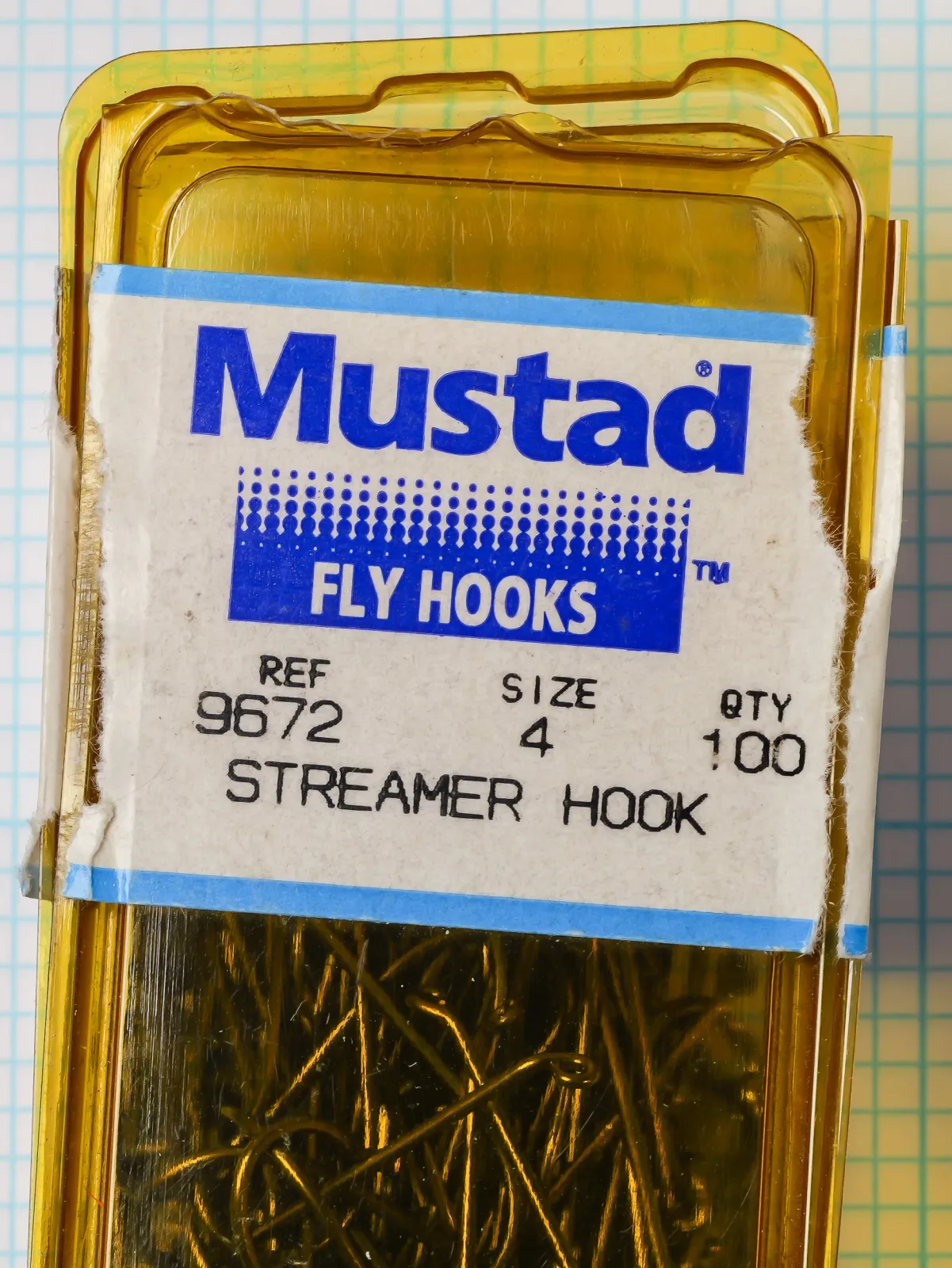
7 cataloged imagesSelect any record to load it above.
7 images shown
TDE | Viking | 4X long | Standard Wire | Hollow Point
Hollow Point Engineering: The hollow point features a concave, swept grind from the tip down to the barb base, creating an incredibly fine, razor-sharp tip that requires minimal penetration force. This geometry is ideal for soft-mouthed trout, panfish, and delicate-lipped species where aggressive hook-sets risk tissue tearing. The rapid flare of the hollow point ensures secure holding in soft tissue without creating an oversized entry wound that could tear open during the fight.
Forged Wire Construction: The 9672 shank is forged (flattened laterally along the axis) rather than remaining perfectly round. This cold-forging process dramatically increases the structural rigidity and tensile strength of the steel without adding thickness or weight. The result is a hook that resists straightening out or bending open under the sustained pressure of a large fish or the violent strikes of pike and bass, while remaining light enough to sink quietly to depth.
Sproat Bend Geometry: The sproat bend is a parabolic curve intermediate between a perfect round bend and a sharp Limerick. This mathematical engineering distributes the strain of a fighting fish evenly across the entire bend radius, making it exceptionally resistant to fracturing or straightening under heavy, sudden loads. The geometry was perfected by regional English craftsmen and later industrialized by Mustad.
Tapered Eye Function: The T.D.E. (turned-down tapered eye) serves multiple functions. The taper reduces wire mass at the eye, preventing nose-dipping of lighter subsurface flies. The downward turn aligns the leader for a straight pull, minimizing sideways stress on the hook shank. The smaller diameter eye also accommodates finer tippets, reducing visibility in clear water.
We have measurements for sizes 2, 8, 10, 12. Know any others? Submit calipered measurements and we'll review and add them. Thank you!
Sources: this specimen and its packaging.
The Mustad Viking Hooks product line was introduced in the 1970s as a premium, specialized series targeting freshwater fly tiers and commercial streamer productions. The ‘Viking’ branding invoked Nordic heritage and engineering precision, positioning the hooks as robust, high-quality tools rather than commodity products. The series encompassed multiple models including the 9672 (3X-long streamer), 9671 (2X-long nymph variant), and several other configurations tailored to specific fly patterns and water conditions.
The 9672 specifically became the industry standard for streamer fishing during the 1980s and 1990s, appearing in fly-tying manuals, magazine articles, and catalog recommendations as the default choice for Woolly Bugger construction. Production volumes were enormous—hundreds of thousands of cards annually—making it ubiquitous in fly shops and retail tackle outlets across North America and Europe. The model remained in the Mustad catalog under the classical ‘Qual. 9672’ designation until approximately 2005, when Mustad discontinued the vast majority of legacy product codes in favor of the newly engineered Signature Series with alphanumeric designations (e.g., R74 = Round bend, standard weight, standard shank).
The transition marked the official end of the classical Mustad labeling era. Modern 9672-equivalent hooks are now sold under the Signature Series code R74-9672 (which preserves the legacy number for brand continuity) and as S74SZ (stainless-steel saltwater variant). No broader ‘series’ context applies—the 9672 was a standalone model within a larger portfolio of specialized bends and configurations.
Packaging evidence: The yellow hard-plastic sliding box with blue and white halftone logo design is a classic Mustad format from the mid-1970s through the 1990s. The 'Made in Norway' mark and the absence of a UPC barcode indicate pre-1990 production (barcode standard adoption occurred gradually 1985–1990). The printing method is offset lithography with halftone dot pattern, consistent with 1970s–1980s commercial printing. The presence of the classic arbitrary 'Qual. 9672' designation (as opposed to the modern Signature Series code) places it definitively before c. 2005. The specific card label style and typography match documented Mustad catalogs from 1978–1992. Overall dating: c. 1975–1995, most likely c. 1978–1990.
The Mustad 9672 became so ubiquitous in American fly-fishing culture that when fly tiers designed Woolly Bugger variations throughout the 1980s and 1990s, they unconsciously adopted the 9672's proportions as the standard reference point. Many tiers never questioned why a 3X-long shank was 'normal'—the 9672 had simply defined what 3X-long meant. Modern hook companies, when engineering their own 3X-long hooks, often measure against the 9672 to ensure compatibility with decades of accumulated fly patterns. The hook is not famous because it changed fly fishing; it changed fly fishing because it was so ordinary that everyone copied it.
The Mustad 9672 derives from the classical British Sproat bend tradition, originally perfected by regional English fly-hook makers in the 19th century. Sproat bends appear in catalogs by Allcock, Partridge, and other Redditch manufacturers dating to the 1880s–1920s. Mustad’s industrial reverse-engineering of this pattern (documented in their ‘cloning’ strategy detailed in company literature) made the Sproat commercially dominant in the mid-20th century.
The specific 3X-long shank configuration evolved in the 1960s–1970s in response to the fly-tying revolution pioneered by American tiers seeking longer-shank blanks for streamer construction. The Woolly Bugger, created by Russell Blessing in the 1960s, drove demand for exactly this profile—a hook that could accommodate bulky chenille and marabou bodies without becoming unwieldy. The 9672 became the de facto standard hook for the pattern.
Modern successors include the Tiemco 5263 (3X-long, heavy wire, down eye—an intentional clone), the Daiichi 1720 (Japanese variant with similar proportions), and the Mustad Signature Series R74 (the modern alphanumeric equivalent). The design remains largely unchanged after 50+ years, a testament to the geometry’s fundamental soundness.
| Silhouette | Hook Model | Match | Analysis | Compare |
|---|---|---|---|---|
| 7974 No. 6, 8, 10, 12, 14; sixth handwritten mark 1[?] — Mustad 7974 | 87% | Compare | ||

|
79580 No. 10 — Mustad 79580 Viking Hooks | 84% | Compare | |

|
9673 No. 8, No. 14 — Mustad 9673 | 75% | Compare | |

|
9513 No. 10 — Mustad 9513 | 75% | Compare | |

|
7947 A No. 6 — Mustad 7947 A | 72% | Compare |
| Silhouette | Hook Model | Match | Compare |
|---|---|---|---|
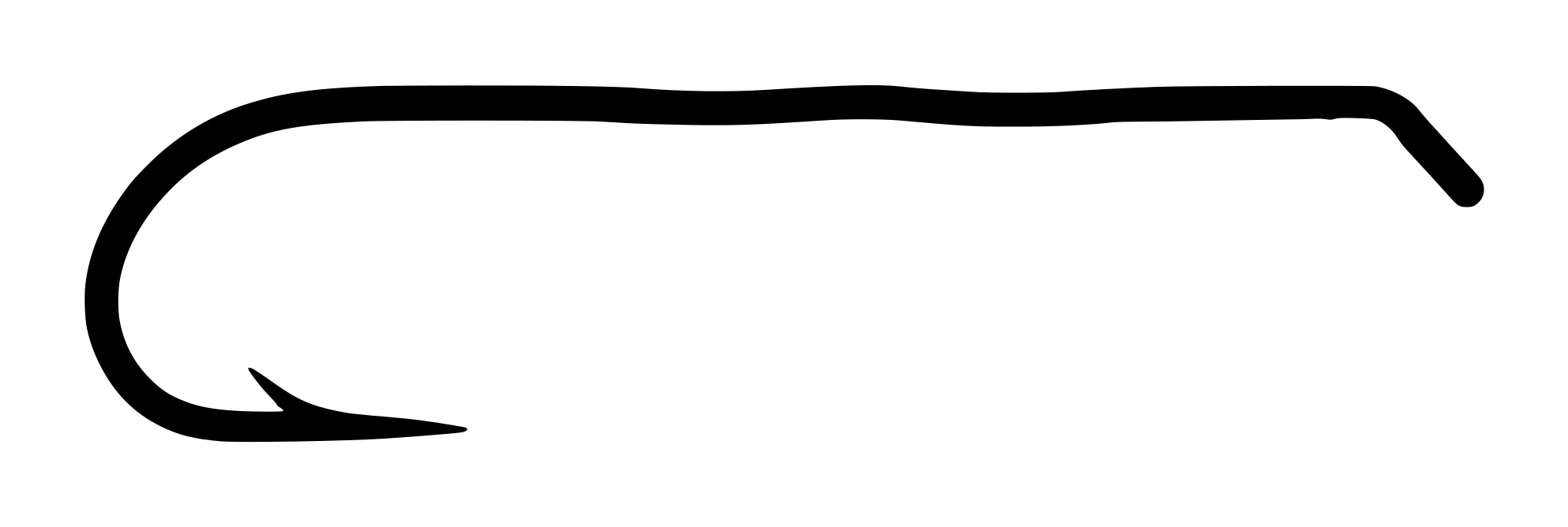
|
37120 No. 6 — Carlisle Hooks | 79% | Compare |
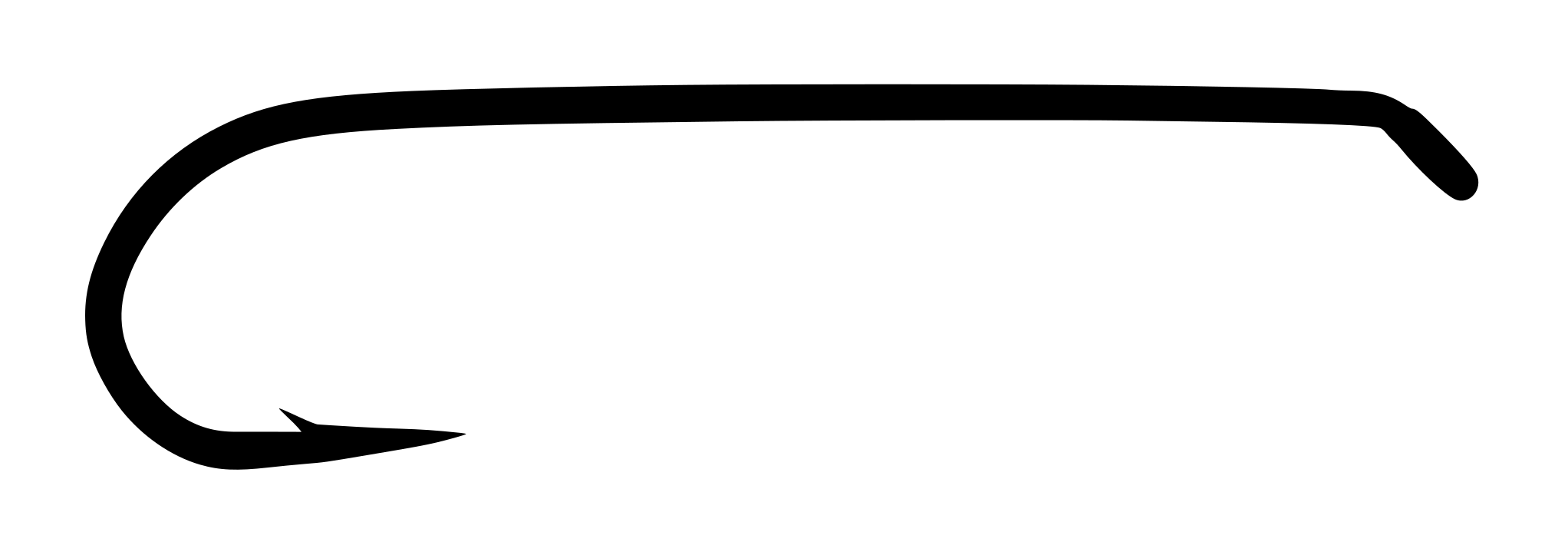
|
2220 | 74% | Compare |

|
3706 No. 4; 3/0 — Carlisle Hook | 69% | Compare |
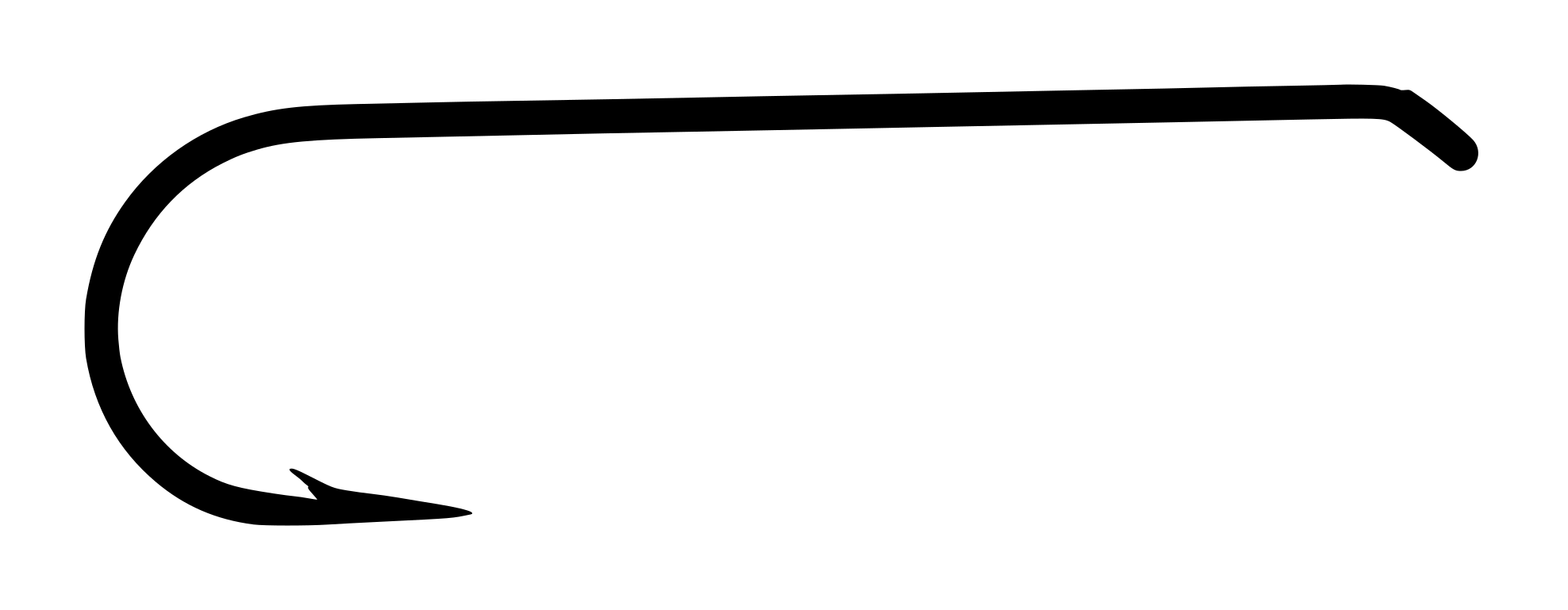
|
1721 B No. 2 — Edgar Sealey 1721 B Streamer Hook | 68% | Compare |

|
Z174 No. 1/0 — Z174 3X Long | 67% | Compare |
The Mustad 9672 was engineered as the industry-standard streamer and bucktail hook for subsurface fly fishing. The 3X-long shank accommodates elongated minnow imitations—Woolly Buggers, Mickey Finns, Black Ghosts, Bucktails, Zonkers—where body length is critical. The heavy wire and turned-down tapered eye (T.D.E.) align the leader cleanly for unweighted subsurface patterns. The bronzed finish provides a muted, stealthy presentation suitable for clear-water streamer fishing.
The hook is equally at home tying large nymphs—Salmonfly imitations, giant Hexagenia patterns—where the extended shank prevents foreshortening of the natural insect profile. The hollow point ensures clean penetration even at distance with fine tippets, while the forged wire resists opening under the strike force of aggressive predatory fish.
Large wet flies, Spey-style patterns (occasionally), soft-plastic lures in conventional spin-fishing applications.
Woolly Bugger, Mickey Finn, Black Ghost, Black Nose Dace, Zonker, Leech pattern, Muddler Minnow variant, Bucktail Streamer, Marabou Streamer
| Hook | Match Quality | Notes |
|---|---|---|
| Tiemco TMC 5263 | Excellent | 3X-long, 2X-heavy wire, down eye, sproat bend. Near-perfect dimensional match; intentionally engineered to replicate 9672 proportions for pattern compatibility. |
| Daiichi 1720 | Excellent | 3X-long, heavy wire, sproat bend. Japanese manufacture. Proportionally equivalent with slightly different wire temper profile. |
| Mustad R74 (Signature Series) | Excellent | Direct modern designator for the 9672. Identical specifications, current production, readily available. |
| Partridge SH-1 Streamer | Very Good | 3X-long, forged wire, looped eye (rather than down eye). British heritage equivalent with slight profile differences. |
| Mustad S74SZ | Good | Stainless-steel variant of the 3X-long profile, saltwater-rated. Same proportions, upgraded corrosion resistance for marine use. |
Industry cross-reference
2X–3X long shank Woolly Buggers leeches
| Ahrex | TP610Spec record |
|---|---|
| Core | C1280Chart only C2220Chart only |
| Daiichi | 1720Spec record 1750Spec record 2220Spec record |
| Firehole | 618Chart only 811Chart only |
| Fulling Mill | FM2225Chart only |
| Mustad | 79580Full record R73Chart only S82Chart only |
| Orvis | JA1526Chart only |
| Tiemco | 5262Chart only 5263Chart only |
Green entries are full records; amber entries are spec records. Gray entries are chart-only and not physically verified against this specimen.
Rated 3.5/10 — extremely common as a mass-produced standard streamer hook that remains in production; negligible scarcity factor but sustained collector interest among fly tyers for its historic role as the industry-standard Woolly Bugger hook.
The Mustad 9672 is arguably too common to be truly collectible in the traditional sense. It was manufactured in enormous quantities for over four decades and continues in production under the Signature Series designation. Surviving cards and boxes are abundant on the secondary market, particularly from the 1980s and 1990s. However, the hook retains cultural significance and modest collector interest among fly-tying historians and streamer specialists.
The vintage cardboard boxes from the c. 1970s–early 1980s are modestly more desirable than the plastic slide-boxes, particularly if the box shows maker’s stamps or Made in Norway labeling. Size 2 and Size 6 are fractionally more sought after than the intermediate sizes. Original vintage packaging in good condition commands a modest premium over loose hooks, but even sealed vintage cards rarely exceed $20 USD.
The primary limiting factor is production volume: Mustad manufactured this hook by the hundreds of thousands, and many collectors view it as too common for serious collecting. Condition of the specimen hooks is secondary — the primary value driver is the packaging format and era, not the hooks themselves.
Vintage plastic slide-box (c. 1980–1995): Yellow polystyrene hinged box with blue and white lithographed label panel. Label features the iconic Mustad 'Key Brand' trademark (skeleton key graphic) at upper left, blue 'Mustad FLY HOOKS™' banner with halftone dot pattern, printed text lines reading 'O. MUSTAD & SON / Manufacturers / Oslo - Norway / Qual. 9672 / Hollow Point / Mustad-Viking Hooks / Forged Straight / T.d. tap. eye Bronzed / Made in Norway / 100 No. 2' (or equivalent size designation). Label corners are bordered with decorative cross-hatch or snowflake pattern. Interior cavity holds card-wound hooks suspended in paper envelope or tissue wrap. No barcode visible — pre-1990 format. Paper label shows age-related toning and minor staining but remains legible and intact.
Low ($10): Good condition, opened packaging, complete or near-complete hook count, minor wear.
High ($14): Excellent condition, sealed or near-sealed packaging, full hook count, minimal defects.
Premium factors: Vintage cardboard boxes (1970s–early 1980s) command 10–20% premium over plastic slide-boxes; Made in Norway marking adds modest value; sealed/intact packaging.
Platforms: eBay (primary), occasional tackle dealer listings.
Confidence: V verified — based on 5 eBay sold listings ($9.99–$20.00) and eBay market history (Apr 16, 2023 – Apr 15, 2026: avg $10.27, range $2.25–$40.00).
Readily available on eBay, with 50+ sellers active in the past 3 years. Occasional stock at general fly-fishing retailers. Vintage boxes turn up regularly at tackle sales and estate auctions but command no premium.
| Title | Price | Date | Condition |
|---|---|---|---|
| Mustad R74-9672 - Size 2 - Streamer Signature Fly Tie Hook - 4X Long - 50 Pack | $9.99 (asking) | active | New |
| Mustad R74-9672 - Size 6 - Streamer Signature Fly Tie Hook - 4X Long - 50 Pack | $9.99 (asking) | active | New |
| Vintage Mustad 9672 Salmon Streamer Fly Hooks | $10.99 (asking) | active | New |
| Mustad AC9672 Hooks | $19.00 (asking) | active | New |
| Mustad 9672 Size 6 Hooks (100 Pack NOS) | $20.00 (asking) | active | New |
eBay market reference. Researcher-curated. Prices in USD. Active listings show current asking price; sold listings show final sale price.
Store the Mustad 9672 hooks on their original card or in the plastic box away from moisture, preferably in a cool, dry environment. The bronzed finish will develop a natural patina over time when exposed to humidity—many collectors consider this desirable for vintage authenticity. If you prefer to prevent further patination, wrap the card in acid-free tissue and store in an airtight container with silica gel desiccant.
Original packaging adds significant value compared to loose hooks. Keep the plastic slide-box intact, even if the label shows toning or staining—these are signs of age and authenticity rather than condition defects. Avoid contact with other metals to prevent galvanic corrosion. If loose hooks are stored, place them point-down in a traditional cork fly-box or foam liner to prevent barb and point damage. Do not expose vintage hooks to direct sunlight, which can fade the packaging label and alter the finish tone.
For hooks in active use, rinse with fresh water after each fishing day and dry thoroughly to prevent rust initiation. The bronzed finish is more resistant to saltwater corrosion than bright steel but less so than tinned or japanned alternatives. If fishing in saltwater, rinse immediately and consider upgrading to the stainless-steel S74SZ variant for long-term durability.
Source: O. Mustad & Søn Product Label — Vintage 9672 Box, c. 1980–1990
The classic Mustad eight-line label format (documented in detail in the Comprehensive Typology and Decryption of Vintage O. Mustad & Søn Hook Labels) is fully exemplified on the vintage 9672 box. Line 1: ‘O. MUSTAD & SON’ — establishes corporate origin and brand integrity. Line 2: ‘Manufacturers’ — a critical distinction from import agents and jobbers who dominated the tackle market. Line 3: ‘Oslo – Norway’ — confirms post-1925 production (the city was renamed from Christiania to Oslo on January 1, 1925). Line 4: ‘Qual. 9672’ — the arbitrary quality/model code indicating a premium, specialty hook. Line 5: ‘Hollow Point’ — definitively specifies the point geometry: concave inner face, minimal penetration resistance. Line 6: ‘Mustad-Viking Hooks’ — the product series name (not a quality descriptor). Line 7–8: ‘Forged Straight / T.d. tap. eye Bronzed’ — modifiers describing the shank (forged for strength), eye (turned-down, tapered), and finish (bronzed for muted presentation).
The presence of the arbitrary numeric code ‘Qual. 9672’ (as opposed to the modern Signature Series alpha-numeric codes like ‘R74’) serves as a definitive chronological marker, placing this hook before approximately 2005, when Mustad discontinued the legacy numbering system. The ‘Made in Norway’ mark and absence of a UPC barcode corroborate a manufacturing date in the c. 1975–1990 window.
The Mustad 9672 is produced in a continuous range of sizes: No. 2, 4, 6, 8, 10, 12, and occasionally larger or smaller variants. The size designations follow the classical English hook-sizing system (where smaller numbers = larger hooks, and larger numbers = smaller hooks, reaching a transition point at sizes 1–1/0–2/0, etc.). This system differs fundamentally from modern fly-hook gape measurements, which are often described in incremental notation (e.g., 1X long, 2X long) rather than absolute size numbers.
The specimen documented here is Size No. 4, with caliper-confirmed dimensions: overall length ~0.69″ (17.53 mm), shank length ~0.48″ (12.19 mm), gap width ~0.21″ (5.33 mm). The scaling is proportionally consistent across the size range: a No. 2 (larger) is approximately 15–20% longer and wider than the No. 4; a No. 6 (smaller) is proportionally scaled down. This linear scaling was a hallmark of Mustad’s industrial standardization—each size step represented a precise, mechanical reduction in all dimensions rather than arbitrary variations.
Notably, the ‘Size 4’ designation on the vintage label may confuse modern fly tyers accustomed to contemporary sizing conventions. A Mustad 9672 Size 4 is not equivalent to a modern size 4 from other manufacturers, nor does it directly map to a gape measurement in contemporary systems. Always reference the actual hook proportions and published Mustad specifications when selecting a 9672 for pattern replication.
The Mustad 9672 occupies a unique historical position: it is simultaneously too common to be rare and too influential to be forgotten. The hook was mass-produced in quantities that dwarf most specialty patterns, yet it fundamentally shaped American fly-tying culture and downstream hook design across the industry. Its ascendancy coincided precisely with the Woolly Bugger explosion of the 1970s–1980s, a period when fly tying transitioned from an elite, craft-based pursuit to a popular hobby accessible to millions of recreational anglers.
The 9672’s prominence was reinforced by strategic placement in influential fly-tying manuals. Doug Stewart’s The Orvis Fly-Tying Manual (first edition 1979) featured the 9672 as the canonical streamer hook; subsequent editions cemented its status. Magazine articles in Fly Fisherman, Fly Tyer, and regional publications reflexively recommended the 9672 for streamer construction, creating a self-reinforcing cycle of demand and cultural centrality.
By the 1990s, the 9672 had become so ubiquitous that fly tiers rarely questioned its specifications or sought alternatives. When a tier needed to match a published pattern calling for a ‘3X-long hook,’ they simply grabbed a 9672 without considering whether other manufacturers offered equivalent or superior alternatives. This cultural dominance—the hook so common that it became invisible—is precisely what makes the 9672 collectible to historians. It documents not a moment of innovation, but rather the industrialization and democratization of fly fishing itself.
| P | Photographically verified — Directly observable in the photograph(s) on this page. |
| V | Verified by documentation — Confirmed by manufacturer catalog, spec sheet, or published reference. |
| I | Inferred — A logical deduction from observable or documented evidence, not directly stated. |
| E | Estimated — An approximation based on visual comparison, proportional analysis, or limited data. |
| S | Speculative — A reasoned hypothesis that cannot be confirmed from available evidence. |
Unnotated claims are the compiler’s synthesis; see Sources. All photographs on garrenwood.com are taken on a measurement grid where each square equals 1/10 inch (0.1″ / 2.54 mm).
Your cart is empty.