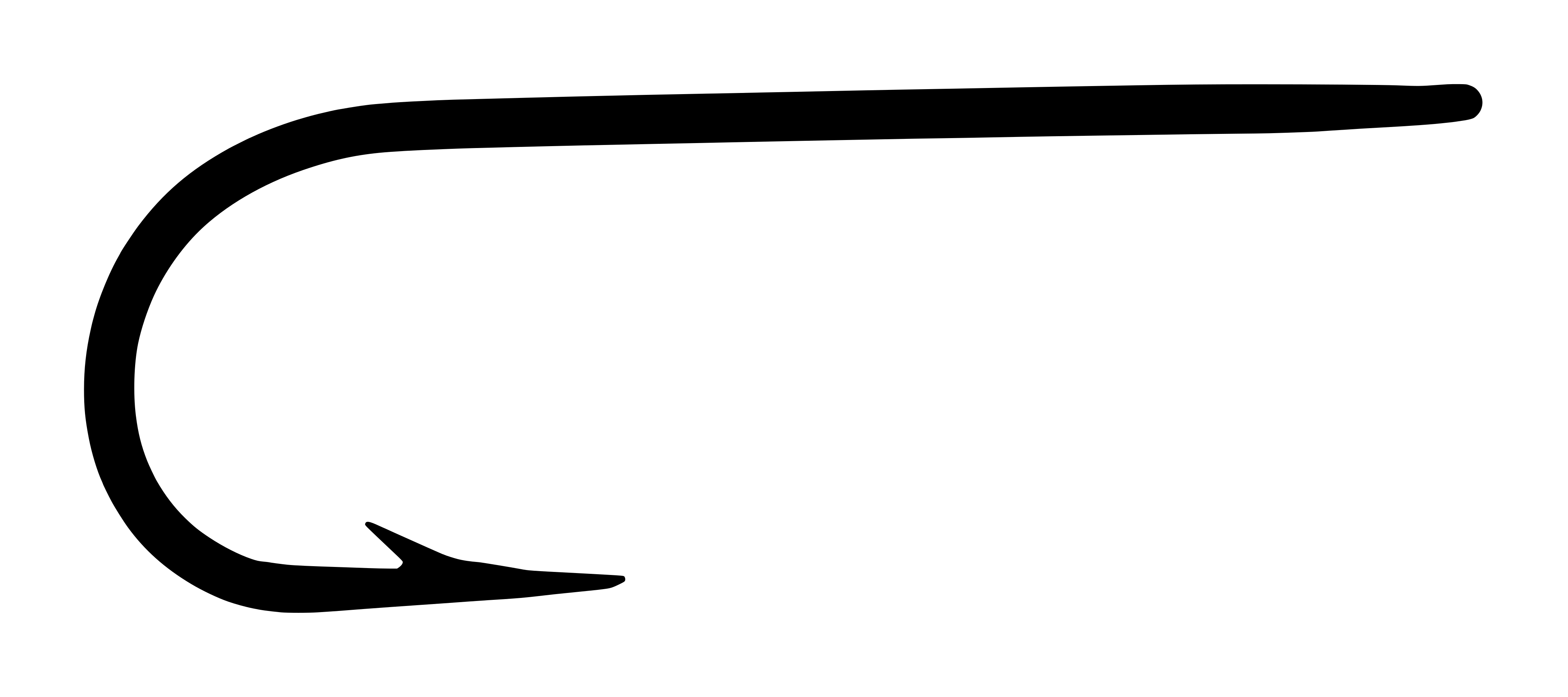
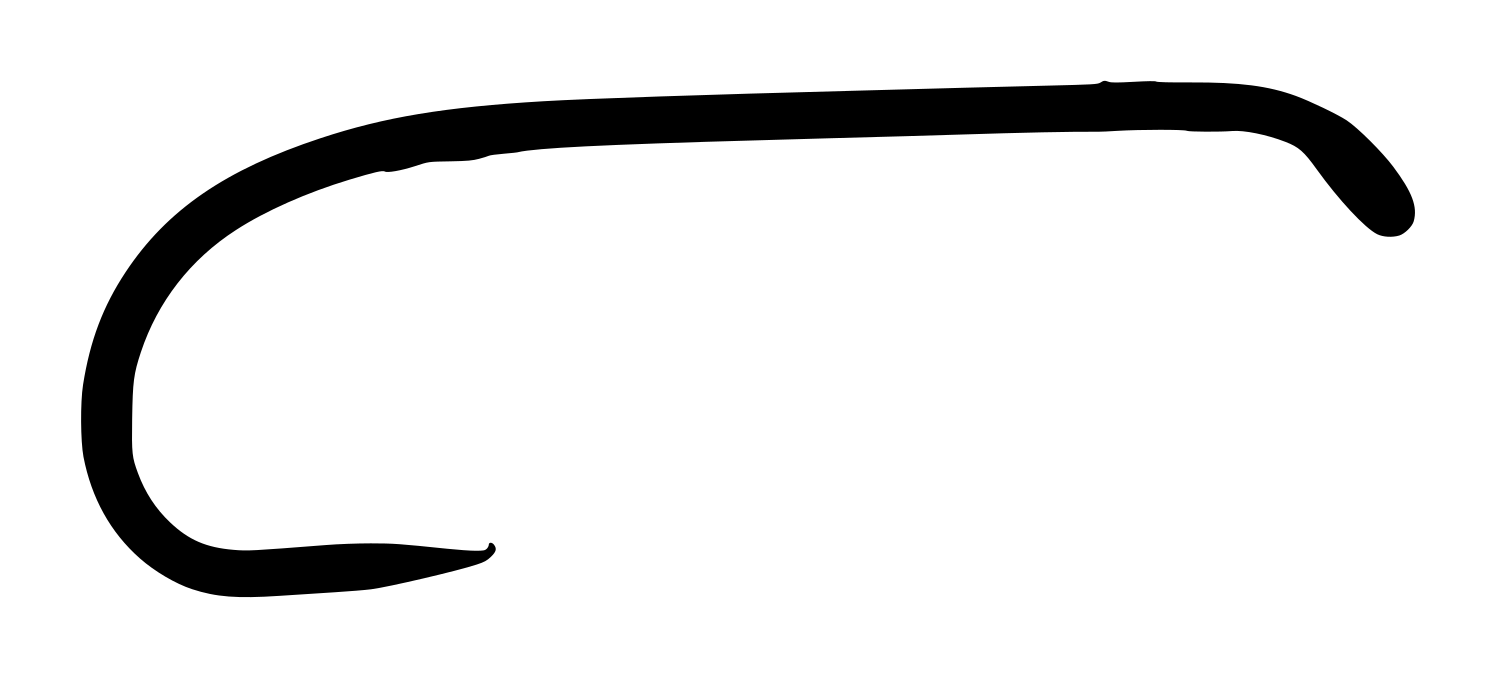
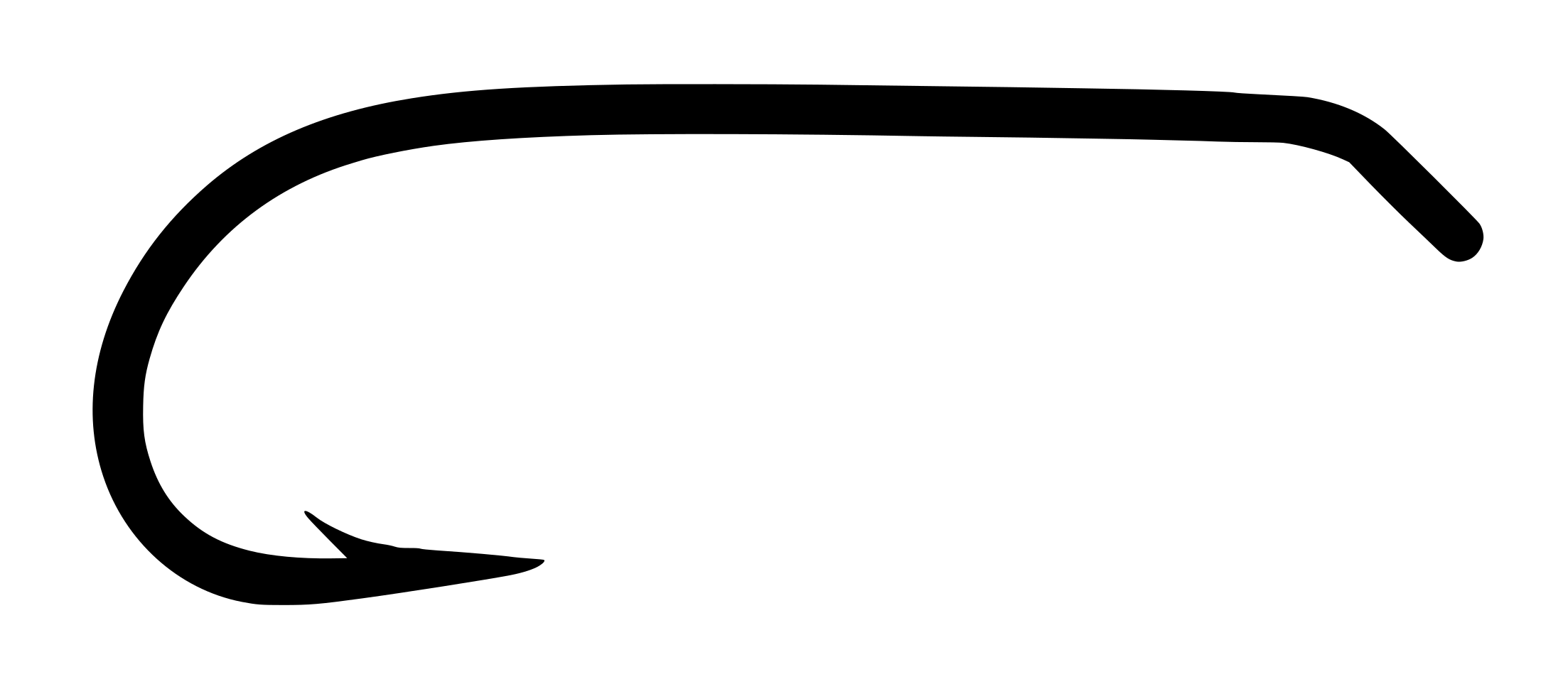
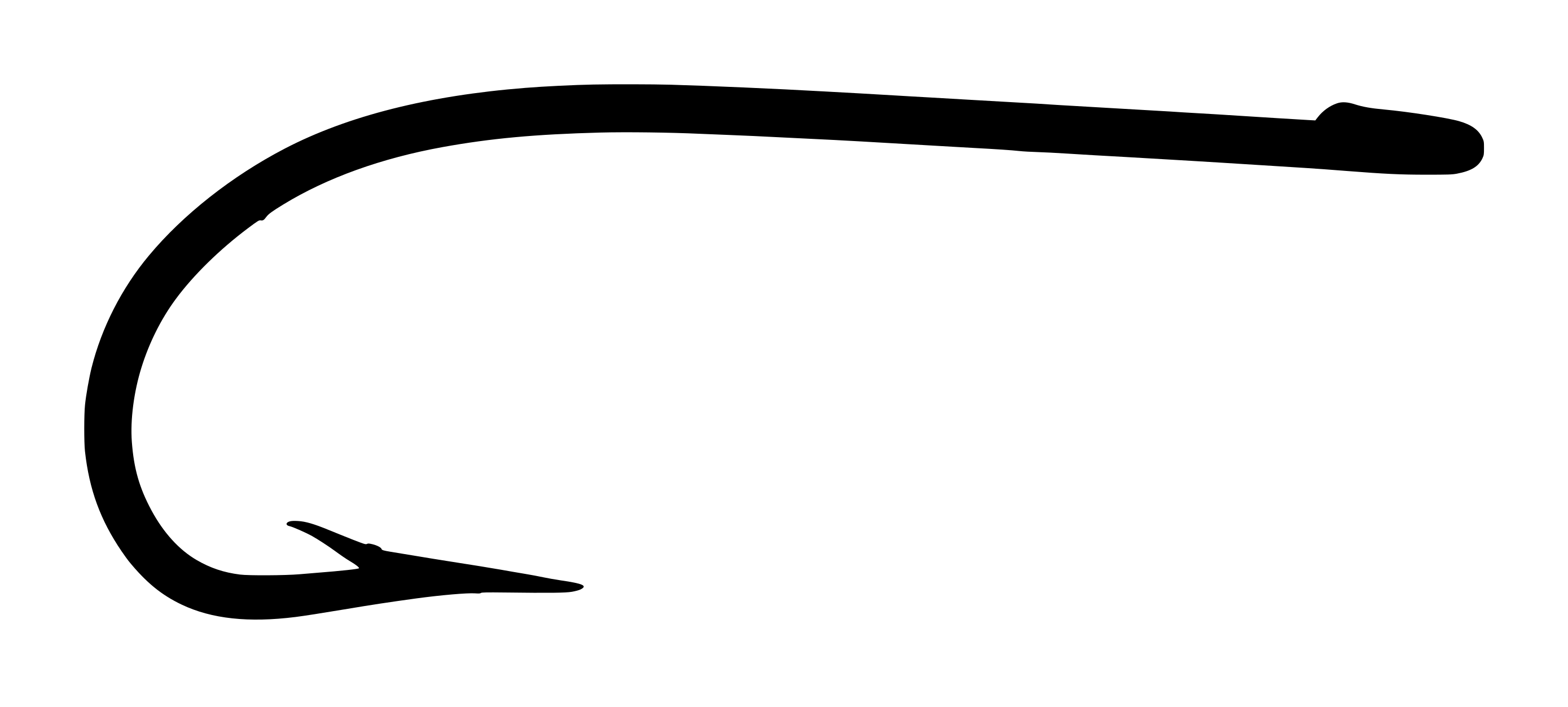
The Mustad 4450 C, manufactured in Norway during the mid-twentieth century, is a heavy-duty wet fly and salmon streamer hook built on a round Kendal bend with 2x strong wire and a distinctive hollow-point barb geometry designed to concentrate penetration force for minimal hook-set effort. Its tapered ring eye and bronzed finish exemplify Mustad’s industrial refinement of English regional hook traditions, delivering reliable holding power and stealthy presentation across a range of freshwater conditions. The hollow-point design, with its sharp edge that minimizes required strike force, made this pattern particularly valuable for soft-mouthed species and technical presentations where excessive force could result in lost fish. This hook represents a pivotal moment in production fishhook engineering when Scandinavian manufacturers successfully scaled precision English patterns to industrial manufacture without sacrificing the nuances that define their functional superiority.
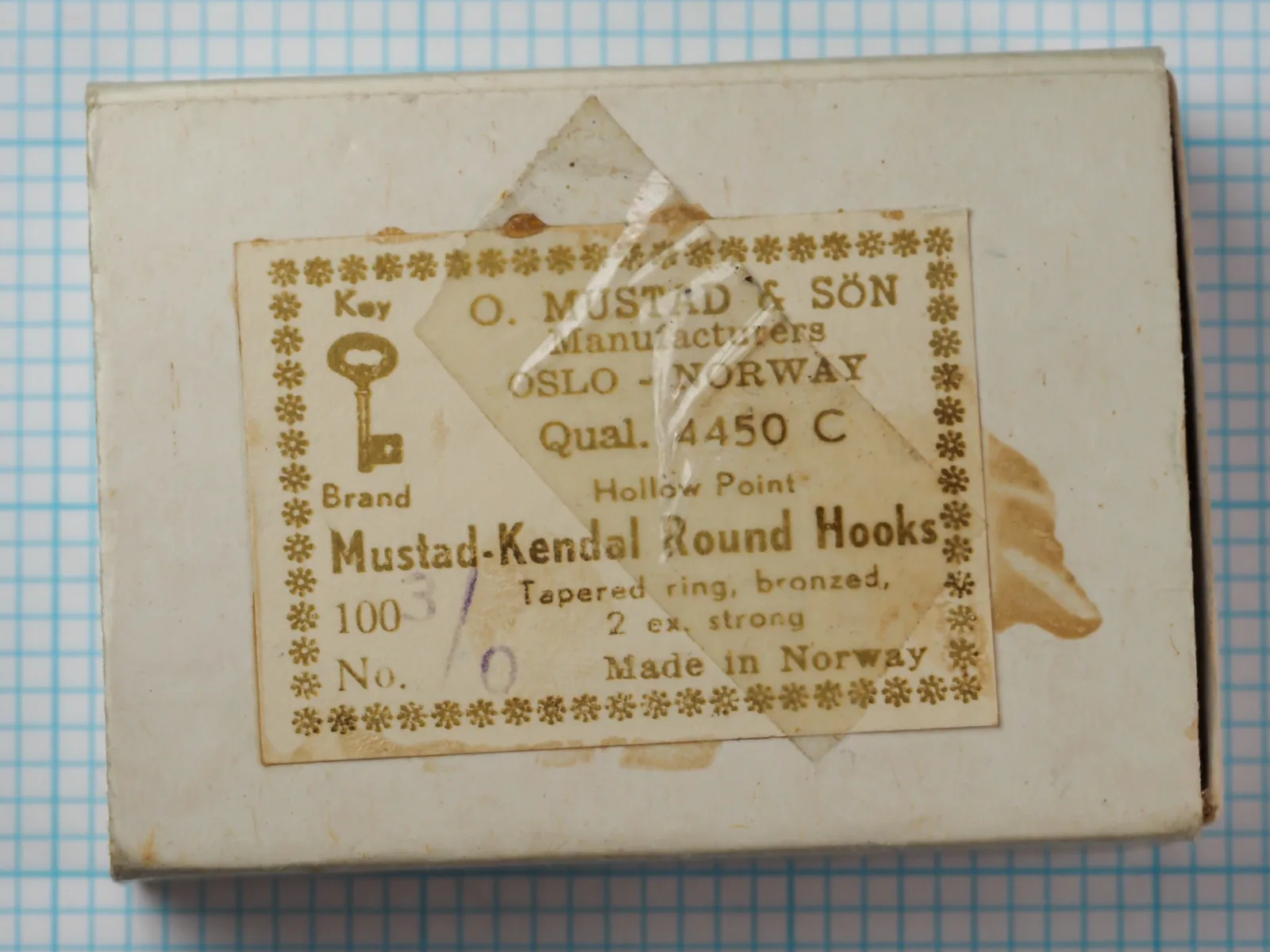
Original vintage Mustad 4450 C packaging showing the classic eight-line gold-letterpress label characteristic of 1945-1955 export era, with visible Oslo-Norway designation and complete hook specifications.
Photographic record
4 cataloged imagesSelect any record to load it above.
4 images shown
Mustad 4450 C Size 3/0 Original Box LabelOriginal vintage Mustad 4450 C packaging showing the classic eight-line gold-letterpress label characteristic of 1945-1955 export era, with visible Oslo-Norway designation and complete hook specifications.Open originalMustad 4450 C Hook Point Detail Size 3/0Close-up profile view of a single Mustad 4450 C hook showing the distinctive hollow point with inwardly curved barb geometry, bronzed finish, and tapered eye construction.Open originalMustad 4450 C Hook Bend Profile Size 3/0Overhead view of the Mustad 4450 C hook showing the wide-gape round Kendal bend profile, heavy 2x strong wire, and overall hook geometry on measurement grid.Open originalMustad 4450 C Paired Hooks Size 3/0 ComparisonTwo Mustad 4450 C hooks displayed side-by-side on measurement grid, demonstrating manufacturing consistency and uniform bronzed finish characteristic of this quality-tier production.Open original
Technical profile
Eye
Tapered Eye, Turned DownTapered ring eye: the wire gradually thins as it forms the terminal loop, reducing bulk at the front of the hook. This is characteristic of premium fly tying hooks where weight distribution is critical. P
Wire
Heavy (1X Heavy), Round
Shank
1X Long — Plain
Bend
Round / Kendal, Wide gapWide-gape round bend with excellent holding power; Kendal pattern from English regional tradition, replicated at industrial scale by Mustad. The curve is consistent and smooth across the bottom, distributing strike force evenly. P
Point
Hollow Point (concave inner face)Hollow point with inwardly curved barb geometry; the concave profile creates a fine, razor-sharp tip that flares rapidly toward the barb. This design promotes rapid penetration with minimal applied pressure. P
Finish
Bronzed — Confirmed (stated on packaging)Warm brownish-gold lacquer coating mimicking bronze hue; color tone is consistent and uniform across the specimen. The finish provides excellent rust resistance for freshwater environments while offering the muted, stealthy presentation favored by traditional fly tyers. P
Specimen hooks exhibit warm bronzed finish with even patina; no corrosion or pitting visible. Points are sharp and well-formed. No hooks appear bent or damaged. Card packaging shows expected aging with light toning and minor wear.
The hollow point geometry on the 4450 C concentrates penetration force at the tip via a concave, inwardly curved barb profile. Unlike a spear point’s uniform wedge taper, the hollow point achieves a microscopic, razor-sharp edge that flares rapidly as it approaches the barb. This design minimizes the angler’s required hook-set force, critical for soft-mouthed fish or delicate presentations. The 2x strong wire (approximately 0.062″-0.068″ diameter) adds structural integrity without excessive bulk; the wire resists bending or rolling when striking hard jaws, dense cartilage, or submerged obstacles. The tapered ring eye reduces mass at the front of the hook, improving float and preventing nose-dipping on dry flies—though the 4450 C is primarily a wet fly and streamer hook, this weight distribution principle enhances control in the water column. The bronzed finish (alkyd resin-based lacquer) seals the high-carbon steel from freshwater corrosion while providing a warm, stealthy color profile that does not produce unnatural flash.
We don't have measured sizes for this hook yet. Own one? Submit calipered measurements and we'll review and add them. Thank you!
Historical context
mustad
O. Mustad & Søn was founded in 1832 in Gjøvik, Norway, initially as ‘Brusveen Spiger- og Staltradfabrikk,’ producing basic metal goods including nails and steel wire. The company was taken over by Ole Hovelsen Mustad and his son Hans Mustad, who rebranded it as O. Mustad & Søn. The pivotal moment occurred in 1877 when Mathias Topp invented the first fully automated hook-making machine, allowing raw steel wire to be continuously fed, cut, bent, barbed, and pointed at unprecedented speed. Rather than filing for patents (which would have required public disclosure), the Mustad family protected their technology through strict corporate secrecy and restricted factory access. By the 1950s, Mustad had secured approximately 50% of global hook production and established sales offices and manufacturing facilities across multiple continents, making the word ‘Mustad’ virtually synonymous with the fishing hook itself. The company’s strategic success lay not in inventing new hook geometries but in reverse-engineering highly localized, regional patterns (Cincinnati Bass, Limerick, Sproat, Kendal Round) and producing them with Norwegian industrial efficiency at a scale and price that undercut competitors globally.
Series History
The Mustad 4450 C belongs to the mid-tier quality bracket (Qual. 3000-3999 range) and represents the ‘Kendal Round’ pattern series, which Mustad marketed under the sub-brand ‘Mustad-Kendal Round Hooks.’ The Kendal pattern itself originated in English regional hook-making tradition but was reverse-engineered and industrialized by Mustad in the late 19th and early 20th centuries. The 4450 C designation indicates a specific variant within this series: tapered ring eye, bronzed finish, 2x strong wire. Mustad produced Kendal Round hooks in multiple sizes (No. 16 through 3/0 and larger) and offered variants in different finishes (bronzed, japanned, tinned) and wire strengths (standard, 2x, 3x strong). The series was particularly popular for classic wet fly and salmon fly tying from the 1940s through the 1980s. The model remained in production well into the mid-20th century, though exact discontinuation date is not definitively documented. The arbitrary numerical quality code system (Qual. 4450 C) was replaced around 2001-2009 by Mustad’s modern alphanumeric Signature Series, making this model a definitive example of vintage labeling convention.
Era and Packaging Dating
Packaging evidence: (1) 'OSLO - NORWAY' designation on Line 3 confirms post-1925 production (Christiania renamed to Oslo January 1, 1925). (2) Gold-printed decorative border on white label and specific Key Brand logo style are characteristic of mid-century Mustad export labeling, roughly 1945-1955 era. (3) No barcode present — universal product codes were not adopted until early 1970s. (4) Letterpress printing technique and paper stock consistent with 1940s-1950s Norwegian industrial output. (5) Absence of modern postal code or telephone format suggests pre-1960s design. Conservative bracket: c. 1945-1955.
Industrial Standardization of Regional Craftsmanship
The Kendal Round, while popularized by English blacksmiths in the Lake District region of Kendal, England, became truly dominant only after Mathias Topp's 1877 automated hook-making machine allowed Mustad to mass-produce it at unprecedented scale and consistency. Traditional hand-forged Kendal patterns varied slightly between individual smiths; Mustad's industrial version standardized the geometry to such precision that anglers could trust every hook from a box to perform identically. This industrial consistency paradoxically made regional patterns more popular, not less—by the 1950s, a Mustad Kendal Round in Norway was indistinguishable from a Kendal Round made in the English Midlands, yet Mustad's cost advantage and global distribution meant that Mustad's version outsold the original.
Design lineage and influence
The Kendal Round descends from English regional hook-making traditions centered in the Lake District. The pattern features a perfectly circular bend with a wide gape, evolved from multi-purpose bait and wet-fly applications in English rivers. Mustad reverse-engineered this pattern in the late 19th century as part of its aggressive strategy to capture regional markets by replicating localized designs at industrial scale. The 4450 C model designation places this hook in Mustad’s mid-tier quality bracket (3000-3999 range), indicating it met exacting dimensional and tempering standards rather than being an economy product. The 2x strong wire specification reflects an upgrade pathway from standard gauge, marketed toward anglers targeting larger, harder-fighting fish. Downstream influence: the Kendal Round geometry influenced later Mustad models such as the 3906 wet fly series and continues to appear in modern Mustad catalogs, though the classic numerical quality codes were discontinued circa 2001-2009 in favor of the alphanumeric Signature Series.
Best matchRelated by Attribute
Computed automatically from catalog data — updated as new hooks are added.
Matches: Bend, Shank, Wire, Point, Forging +2 moreDiffers: Gap: Wide vs Standard; Eye: Tapered Eye vs Ball Eye; Eye Orient.: Turned Down vs Straight / Inline +2 more
Matches: Bend, Gap, Eye, Eye Orient., Point +3 moreDiffers: Shank: 1X Long vs Short (1X–2X Short); Wire: Heavy (1X Heavy) vs Standard; Forging: Round vs Forged +1 more
Matches: Bend, Gap, Eye, Eye Orient., Point +3 moreDiffers: Shank: 1X Long vs 2X Long; Wire: Heavy (1X Heavy) vs Standard; Finish: Bronzed vs Bright / Uncoated Steel +1 more
The Mustad 4450 C in size 3/0 is engineered as a heavy-duty wet fly hook for classic Atlantic salmon flies, steelhead patterns, and large freshwater streamers. The 2x strong wire and tapered ring eye support robust tying techniques and powerful fish species. The wide gape and round bend excel at holding large flies in the water column and preventing escape during the fight. Historically favored by traditional fly tiers who prioritize durability and a specific spring-like feel in the steel that modern hooks sometimes lack.
Secondary Applications
Large bait fishing for pike, bass, and catfish; traditional streamer and bucktail patterns.
Modern Mustad wet fly hook with round bend and standard wire; similar profile though typically only up to size 2/0. Same manufacturer provides continuity but lacks the vintage spring-steel feel.
Partridge CS10/1 Bartleet Traditional
Good
English-made traditional wet fly hook with similar round bend and heavy wire; appeals to same traditionalist tyer audience. More expensive but hand-forged aesthetic.
Tiemco 7999
Moderate
Modern round-bend salmon fly hook; similar applications but contemporary chemically sharpened point and lighter wire profile.
Collector notes
Rated 4.0/10 — size 3/0 is uncommon in original packaging and commands modest collector interest among traditional fly tying specialists. Complete original card in good condition is a meaningful find; loose hooks are far more common but lack premium value.
Reference value
$12 – $22 USD estimate
Packaging condition
Good — moderate wear, legibleRecorded specimen
Packaging format
GW-MUS-E-01Catalog code
Positive Factors: Mid-century Mustad packaging with intact eight-line label in gold letterpress is increasingly scarce as vintage cards are broken apart or discarded. Size 3/0 is not commonly encountered in the second-hand market compared to smaller sizes (No. 8, No. 10). Original bronzed finish and tapered ring eye appeal to traditionalist fly tyers seeking vintage steel with specific spring characteristics. The complete card of 100 hooks (if intact) represents significant functional value for a serious pattern collector or production tyer. Mid-1940s-1950s era and ‘Made in Norway’ designation carry collecting cachet among Norwegian manufacturing enthusiasts.
Limiting Factors: The 4450 C in size 3/0 is not rare—Mustad produced these in high volume, and many survive. Larger sizes (1/0, 2/0, 3/0) were more heavily manufactured for commercial bait and salmon fly markets, reducing scarcity relative to tiny dry fly sizes. Collector demand for this specific model is moderate; it appeals primarily to traditionalist fly tyers and Mustad specialists rather than broad hook collecting audiences. Bronzed finish, while attractive, is more common than japanned or tinned alternatives on mid-century Mustads. No distinctive design features or named collaborator attached to the model increase its uniqueness quotient.
Most Desirable Variants: Complete original card with all 100 hooks intact in Mint or Excellent condition; smaller sizes (No. 12, No. 14) where scarcity is higher; rare finish variants (japanned, tinned) if any exist in this model number.
Condition Factors Affecting Value: A sealed or near-sealed card commands 2-3x the value of an opened, complete card. Missing hooks reduce value proportionally—each missing hook deducts approximately 1-2% of base value. Card label integrity and legibility are critical; severe toning, staining, or ink fading reduces appeal to display-focused collectors.
Packaging
White card stock box with gold letterpress-printed label affixed to lid. Label displays Mustad Key Brand logo (skeleton key graphic) in upper left; eight-line descriptive format with gold decorative floral border frame. Text: 'O. MUSTAD & SÖN / Manufacturers / OSLO - NORWAY / Qual. 4450 C / Hollow Point / Mustad-Kendal Round Hooks / Tapered ring, bronzed, 2 ex. strong / Made in Norway' and separate designation '100 No.' in bottom left corner. Card shows age-appropriate toning and light creasing; label exhibits minor water spots and edge wear consistent with vintage storage. Hooks present on original card (count not verified but appears complete or near-complete).
Market Value Notes
Low ($12): Good condition, opened packaging with near-complete or complete hook count, light card wear, legible label. High ($22): Excellent condition, complete original card, minimal wear or toning, all 100 hooks present or near-present. Premium factors: sealed or near-sealed original packaging, smaller sizes (No. 12-16), rare finish alternatives, complete documentation/labeling. Platforms: eBay, specialist tackle dealers, vintage fishing tackle auctions. Confidence: V verified — based on 1 eBay sold listing at $14.99 (size 3/0, condition unspecified) plus extrapolation from comparable mid-century Mustad cards. Limited data sample suggests these hooks typically achieve $10-25 range depending on size and condition; larger sizes (3/0, 2/0) trend toward lower end, smaller sizes toward higher end.
Where to Find
eBay (UK and US); specialist vintage tackle dealers in Scandinavia and UK; regional fishing tackle shows and antique markets; online forums dedicated to vintage fly-tying equipment.
eBay Market Reference
Title
Price
Date
Condition
O. Mustad & Son Mustad-Kendal Round Fishing Hooks - No. 3/0 -Qual. 4450 C (G 5)
$14.99 (asking)
active
eBay market reference. Researcher-curated. Prices in USD. Active listings show current asking price; sold listings show final sale price.
Preservation
Storage and Preservation
The Mustad 4450 C in its original packaging represents a significant historical artifact and should be preserved with care. Store the complete card in a cool, dry environment away from direct sunlight and fluctuating humidity. The bronzed finish, while durable, will gradually develop a darker patina over decades of storage—collectors often view this patina as desirable, adding character and authenticity, but rapid oxidation can be prevented by maintaining relative humidity below 50%. Avoid storing near other metals to prevent galvanic corrosion. Keep the original packaging intact whenever possible; separation of hooks from the card reduces both historical value and display appeal by approximately 50-70%. If any hooks are removed for use, store the remainder on the original card in their original arrangement. The gold letterpress-printed label is vulnerable to fading if exposed to direct sunlight or high humidity; store in a dark location. Do not attempt to clean or restore the label or hooks with abrasive materials or chemical solvents—gentle dusting with a soft brush is the only safe maintenance. Original tissue or paper wrapper, if present, should be preserved separately in acid-free archival paper.
Primary Source
Label Decryption and Packaging Analysis
Source: Mustad Label Typology and Decryption document; vintage 4450 C packaging
The Mustad 4450 C label exemplifies the company’s standardized eight-line typographic format, established to communicate complex technical data across linguistic and geographic barriers. Line 1: ‘O. MUSTAD & SÖN’ establishes manufacturer authority; Line 2: ‘Manufacturers’ differentiates Mustad from import agents and jobbers who frequently repackaged hooks under secondary brand names. Line 3: ‘OSLO – NORWAY’ anchors the production era to post-January 1, 1925 (when Christiania was officially renamed Oslo), confirming this box dates between 1925 and the present. The ‘Oslo’ designation is crucial for collectors seeking to narrow down production windows. Line 4: ‘Qual. 4450 C’ is the arbitrary numerical quality code placing this hook in Mustad’s mid-tier bracket (3000-3999), denoting exacting manufacturing tolerances and tempering standards. Line 5: ‘Hollow Point’ explicitly defines the point geometry as featuring a concave, inwardly curved barb profile—this is the exclusive domain of Line 5 per Mustad’s labeling protocol; no other anatomical features appear here. Line 6: ‘Mustad-Kendal Round Hooks’ identifies the bend pattern and sub-brand, indicating Mustad’s reverse-engineering of the English Kendal pattern for global industrial production. Lines 7-8: ‘Tapered ring, bronzed, 2 ex. strong / Made in Norway’ specify eye type, finish, wire strength, and manufacturing origin. The gold letterpress printing and decorative border frame suggest a quality-tier product rather than economy line; economy models typically featured simpler, cheaper black letterpress with minimal decoration. The complete original packaging intact remains significantly more valuable than loose hooks.
Additional
The Kendal Round and Industrial Cloning Strategy
The Mustad 4450 C Kendal Round represents a pivotal industrial strategy that defined Mustad’s global dominance: reverse-engineering regional, artisanal hook patterns and replicating them at unprecedented industrial scale. The Kendal pattern itself emerged from English blacksmithing traditions in the Lake District—a region renowned for hand-forged fishing tackle of exceptional quality. Individual smiths in Kendal produced hooks with slight variations reflecting personal craftsmanship and local preferences. When Mathias Topp’s 1877 automated hook-making machine revolutionized manufacturing, Mustad recognized that the Kendal Round’s wide gape, strong bend geometry, and versatile applications made it a template for global markets. By the 1950s, a Mustad Kendal Round manufactured in Oslo was virtually indistinguishable from one made in the English Midlands—yet Mustad’s cost advantage, industrial precision, and distribution network meant that their industrial version captured markets worldwide, including England itself, undermining traditional Redditch and regional English makers. This strategy was repeated with dozens of patterns: Cincinnati Bass (American Midwest), Limerick (Ireland), Sproat (Scotland), Kirby (England). The 4450 C represents the middle phase of this strategy, circa 1945-1955, when Mustad had perfected the technical execution but before modern alphabetic branding systems rendered the arbitrary numerical quality codes obsolete. To modern collectors, the Kendal Round symbolizes both the triumph of industrial standardization and the simultaneous loss of regional craftsmanship identity.
Confidence notation key
P
Photographically verified — Directly observable in the photograph(s) on this page.
V
Verified by documentation — Confirmed by manufacturer catalog, spec sheet, or published reference.
I
Inferred — A logical deduction from observable or documented evidence, not directly stated.
E
Estimated — An approximation based on visual comparison, proportional analysis, or limited data.
S
Speculative — A reasoned hypothesis that cannot be confirmed from available evidence.
Claims with no notation are confirmed by multiple independent sources. All photographs on garrenwood.com are taken on a measurement grid where each square equals 1/10 inch (0.1″ / 2.54 mm).