For collectors and historians of vintage tackle, the John James & Sons Pattern 100 Limerick Ringed hook represents a classic piece of English angling history. Produced between the 1920s and 1960s in Redditch, England—the historical capital of the fishhook manufacturing world—this series reflects the meticulous hand-forging and heat-treating standards of the era. John James & Sons was a major competitor to other legendary Redditch makers, and their Pattern 100 was a cornerstone of their salmon and sea-trout hook lineup, serving both retail fly tyers and commercial markets with a reliable, heavy-wire iron.
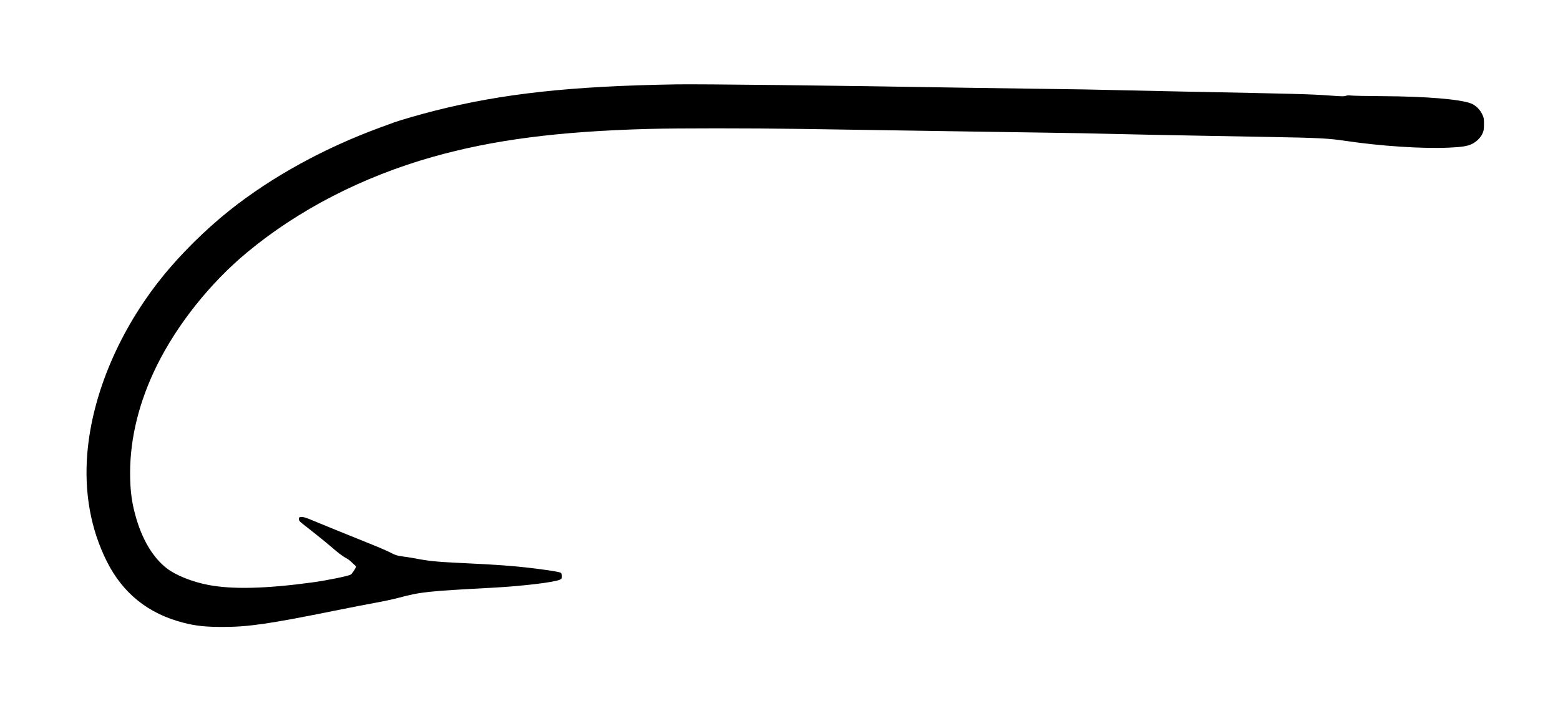
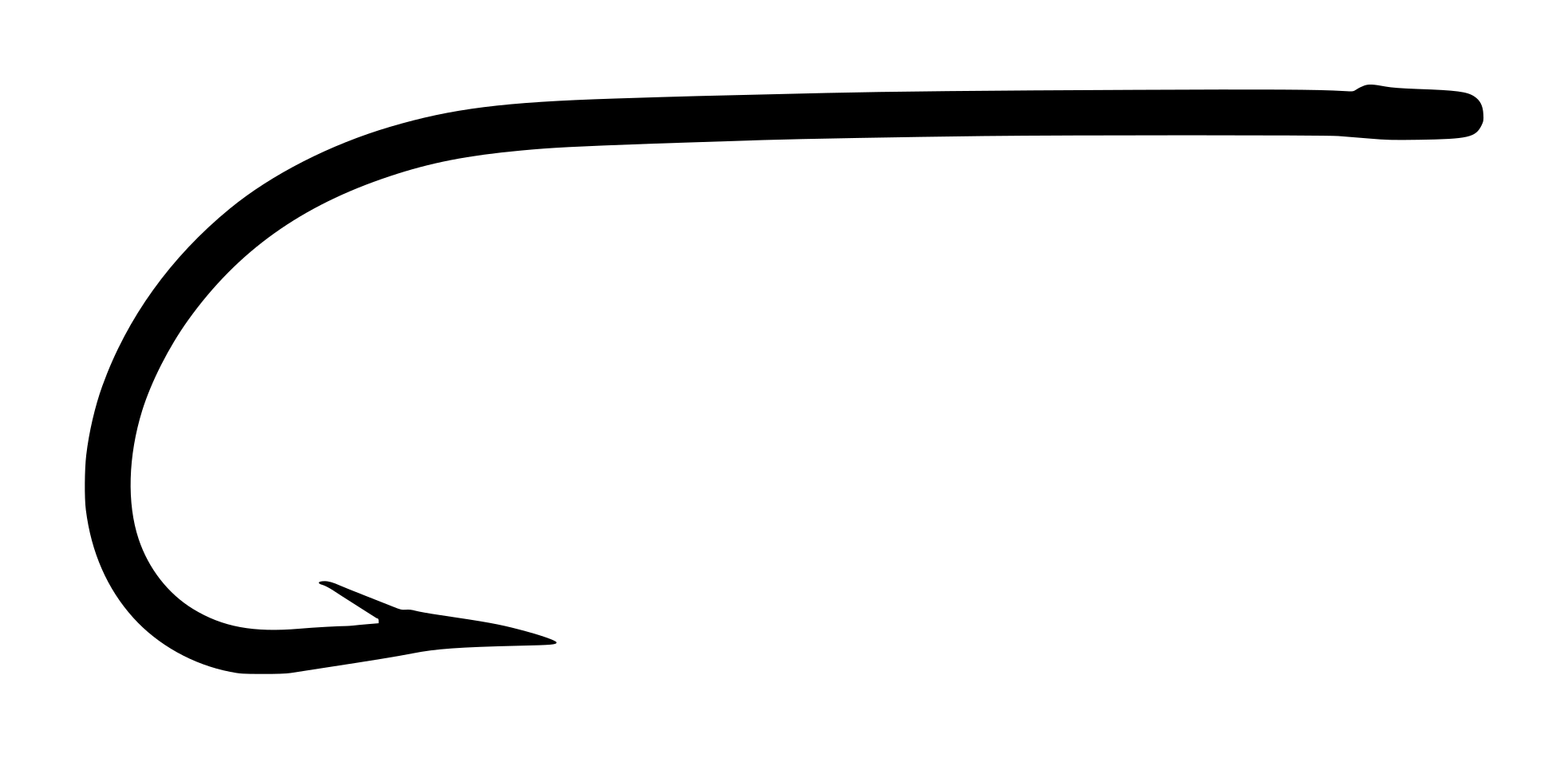
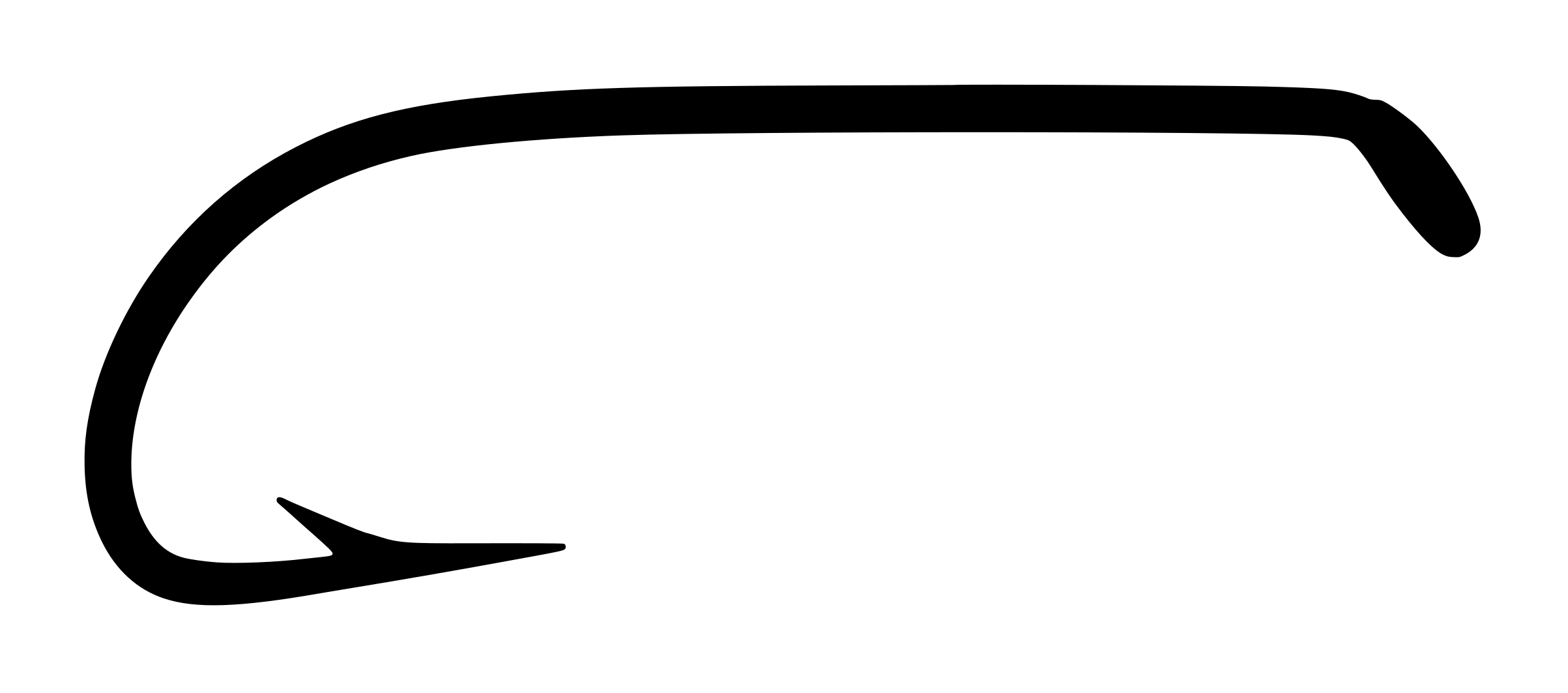
The hook itself is characterized by its pronounced, angular Limerick bend, featuring a tight, squared bottom corner originally designed to provide a strong hook-set on hard-mouthed quarry like Atlantic salmon. Along with a traditional hollow point, these hooks feature a straight, looped ringed eye that allows traditional gut snells or modern leaders to present the fly with the perfect attitude in the current. What makes the specific sales card documented on this page so historically valuable is its function as a multi-finish demonstration piece. Spanning reference numbers 3831, 3832, and 3833, the card showcases the exact same hook in three distinct period finishes: a glossy black japanned (for visibility and rust resistance), a cool blue-grey blued finish, and a warm gold-brown bronzed finish.
From a collectability standpoint, this John James & Sons sales card holds special appeal due to its completeness and unique presentation format. While standard single-finish Limerick Ringed hooks from this maker are relatively common, finding an intact trade or educational display card with all hooks present and its original, bright yellow letterpress label is quite unusual. Holding a collectability rating of 4.5 out of 10 and a modest market value of $12 to $24, this card offers Redditch-tradition specialists a beautifully preserved, tangible glimpse into the manufacturing diversity and marketing strategies of mid-20th-century British hook makers.
Four John James & Sons Limerick Ringed hooks in different sizes and finishes showing the characteristic angular Limerick bend and straight ringed eye. The three-finish presentation demonstrates japanned (left), blued (center), and tinned (right) variants of the same pattern.
Photographic record
4 cataloged imagesSelect any record to load it above.
4 images shown
John James & Sons Limerick Ringed — Hook Finish ComparisonFour John James & Sons Limerick Ringed hooks in different sizes and finishes showing the characteristic angular Limerick bend and straight ringed eye. The three-finish presentation demonstrates japanned (left), blued (center), and tinned (right) variants of the same pattern.Open originalJohn James & Sons Limerick Ringed Label — Sales Card IdentificationBright yellow printed label from the original John James & Sons sales card, identifying the product as '100 Limerick Ringed Fish Hooks, XX Size, Made in England.' The manufacturer's globe logo and bold black letterpress printing are characteristic of British hook cards from the 1920s–1960s.Open originalJohn James & Sons Limerick Ringed — Complete Sales CardFull view of the original John James & Sons sales card showing all eight hook positions with hooks intact. Cream stock shows age toning and light foxing consistent with 60+ years of storage. Yellow manufacturer label clearly visible at lower right. Light blue measurement grid provides scale reference.Open originalJohn James & Sons Limerick Ringed — Hook Point DetailClose-up detail of a single hook point showing the hollow-point geometry characteristic of English fly-hook tradition. Sharp inner taper and intact barb are clearly visible. The japanned finish shows light patina consistent with age.Open original
Technical profile
Eye
Ball Eye, Straight / Inline
Wire
Heavy (1X Heavy), Round, Est. Varies by size: approximately ~0.040"–0.060" (~1.0–1.5 mm) across the 7/0–1 range, scaling with hook size E. Confirm individual sizes with calipers.
Shank
Standard — Plain
Bend
Limerick, Standard gapClassic Limerick angular bend with squared bottom corner characteristic of the pattern P. Wire set and symmetry are clean.
Point
Hollow Point (concave inner face)
Finish
Other — Inferred (photographically likely)Three finishes shown across the eight specimens, demonstrating the same Pattern 100 in: japanned (glossy black, leftmost group), blued (cool blue-grey), and bronzed (warm gold-brown) P. The third finish is bronzed, not tinned — color temperature is warm brown, not bright silver. The three sequential SKU numbers handwritten on the card (3831, 3832, 3833) almost certainly map to these three finishes S.
Original card stock shows moderate age toning with scattered brown foxing spots. Label remains well-legible with strong color. All eight hook positions filled with hooks. Hooks themselves show patina consistent with 60+ years of storage — no active corrosion, clean points, and intact barbs visible on all specimens. No tissue, no envelope. Card edges show minor wear. Paper stock is intact without tears or stains beyond foxing.
The Limerick bend’s defining feature is its angular geometry — a tight, squared bottom corner where the bend transitions sharply from the bend-arc to the point-arc. This produces a strong hook-set on hard-mouthed quarry such as adult salmon. Across the size range on this card, the bend geometry is consistent and cleanly forged, with symmetric wire-set and a uniform point orientation.
The looped turned-up eye is integral to traditional salmon fly dressing — it allows the leader (or formerly, the gut snell) to ride above the shank plane and present the fly with a slight upward attitude in the current. Wire mass scales appreciably across the card’s 7/0–1 range, with the largest specimens carrying substantially heavier wire than the smallest.
Size & scale lab
Selected size
(unspecified)
Physical specimen
Overall Length
70 mmE
Shank Length
40 mmE
Gap Width
16.5 mmE
Bend Depth
22 mmE
Shank-to-Gap Ratio
~2.0-2.4 : 1
Confidence
P
Physical specimen
Grid-derived from photograph (1/10" grid)
Own this hook? Help us measure it.
We don't have measured sizes for this hook yet. Own one? Submit calipered measurements and we'll review and add them. Thank you!
The John James & Sons Pattern 100 Limerick Ringed sits at the heart of the company’s salmon-and-sea-trout hook line. The Limerick bend, originating in Ireland in the late 18th and early 19th centuries, became the dominant geometry for British and Irish salmon dressings through the Victorian and Edwardian periods and remained standard well into the post-war era. Major Redditch makers — John James, Allcock, Partridge, Hutchinson — each maintained their own Limerick interpretations differing slightly in shank-to-gap ratio, wire gauge, and point geometry.
Across the size range shown on this card (7/0–1), the Pattern 100 covers the full working spectrum of traditional salmon fly dressing: from the largest spring-fish irons and big-water featherwings down through the workaday hairwings to grilse and summer sea-trout patterns. The three-finish presentation (japanned, blued, bronzed) reflects period customer preferences — japanned for visibility and rust resistance on dark patterns, blued for traditional plain-water dressings, and bronzed as an all-purpose finish that paired well with most fly bodies.
Era and Packaging Dating
No barcode present (pre-1974 strong indicator). Yellow label printing on card is characteristic of British hook cards from inter-war through post-war periods. Paper stock and letterpress printing are consistent with 1920s–1950s manufacture. The John James & Sons branding and logo style match documented catalogs from that era. The three-finish comparative presentation suggests educational or trade demonstration origin, typical of retailer sample cards from the mid-20th century.
The Redditch Yellow Label
Redditch, England earned its reputation as the 'Capital of the Fishhook World' by the 1890s, producing over 90% of the world's hooks through dozens of competing manufacturers operating in a single small town. John James & Sons was one of dozens of makers competing fiercely for market share, each developing their own catalog codes, wire gauges, and finish specifications. The yellow label on this card is a classic retail identifier — John James & Sons used this distinctive bright-yellow stock to stand out on tackle-shop shelves alongside competitors' blue, green, and white label cards. The practice of printing demonstration cards with multiple finishes was a clever sales tactic: customers could see that the same hook design was available in japanned (glossy black for visibility), blued (traditional), and tinned (bright and fast-sinking) versions, encouraging them to buy multiple cards for different fishing conditions.
Design lineage and influence
The Limerick bend is one of the three foundational hook geometries in modern fly fishing, alongside the Sproat and the O’Shaughnessy. It originated in Ireland and became universally adopted by English manufacturers by the 1890s. The Limerick’s defining feature — its squared, nearly right-angle bottom corner — provides reliable hook-set geometry while remaining compatible with both dry flies and wet patterns.
The ringed-eye construction, which became standard for trout flies by the early 20th century, represents an evolution from the earlier blind-eye (spade-end) Scottish patterns. Ringed eyes allow leader attachment without the weakness of a flatted spade end, making them superior for dry-fly work where delicate presentation and reliable knot geometry are critical.
John James & Sons’ Limerick Ringed competes directly with equivalent patterns from Allcock, Partridge, and Milward — all producing nearly identical bend profiles and eye types, varying only in minor wire-gauge and finish choices. The model number 100 designation suggests it was a core, foundational pattern within the John James catalog rather than a specialty variant.
Best matchRelated by Attribute
Computed automatically from catalog data — updated as new hooks are added.
Matches: Bend, Shank, Wire, Gap, Eye +4 moreDiffers: Eye Orient.: Straight / Inline vs Turned Down; Point: Hollow Point vs Superior; Finish: Other vs Black Japanned +1 more
Matches: Shank, Wire, Gap, Eye, Eye Orient. +4 moreDiffers: Bend: Limerick vs O'Shaughnessy; Point: Hollow Point vs Standard / Spear; Finish: Other vs Polished Steel +1 more
Matches: Bend, Wire, Gap, Eye, Point +4 moreDiffers: Shank: Standard vs 2X Long; Eye Orient.: Straight / Inline vs Turned Down; Finish: Other vs Bronzed +3 more
The John James & Sons Pattern 100 Limerick Ringed in the size range shown on this card (7/0 to 1) is a traditional Atlantic salmon and sea-trout fly hook. The looped turned-up eye, heavy round wire, and pronounced angular Limerick bend are the classic specification for dressing featherwing and hairwing salmon flies, sea-trout patterns, and the larger irish-style wets and dapping flies of the early-to-mid 20th century. Larger sizes (7/0–3/0) suit big-water and spring-fish dressings; the smaller end (1/0–1) suits summer grilse and sea-trout work.
This is not a dry-fly or trout-nymph hook — the wire mass, eye geometry, and size range place it firmly in the salmonid game-fishing tradition.
Secondary Applications
Suitable for small wet flies, nymphs, and spiders targeting stream trout; traditional sea trout patterns; light salmon parr flies.
Classic Fly Patterns
Named patterns specifically associated with this hook. Leave blank if none formally documented. Do not speculate — only include patterns with a confirmed association.
Modern Equivalents
Hook
Match Quality
Notes
Tiemco 200R
Very Good
Modern ringed-eye dry fly hook with comparable shank-to-gap ratio and Limerick-inspired bend geometry. Slightly heavier wire. Most direct modern equivalent.
Partridge of Redditch SH (Sproat Ringed)
Good
Redditch-maker alternative with ringed eye but rounded (Sproat) bend. Still in production; traditional credentials.
Mustad 3906
Moderate
Modern economy ringed-eye hook in similar size range. Wire gauge heavier; bend similar but forged rather than hand-finished.
Collector notes
Rated 4.5/10 — John James & Sons Limerick Ringed hooks are sought by Redditch-tradition specialists and vintage fly tyers, but the model is not rare. Scarcity is driven primarily by condition of original cards rather than manufacturing rarity. This particular card is notable as a three-finish comparative demonstration card, which is distinctly less common than single-finish runs.
Reference value
$12 – $24 USD estimate
Packaging condition
Good — moderate wear, legibleRecorded specimen
Packaging format
GW-JJ-SALESCARD-01Catalog code
Positive factors: John James & Sons is a respected English maker with strong collector demand, particularly among Redditch-tradition specialists. Original sales card with factory label intact is uncommon — most survivors are loose hooks or damaged packaging. The three-finish comparative format is an educational/trade presentation that has minimal collector precedent, making this an unusual specimen. Ringed eyes are preferred over blind eyes for many fly tyers, increasing functional demand. All eight hooks present and in good condition.
Limiting factors: Limerick bend Ringed patterns were mass-produced and numerous examples survive. Size XX (approximately No. 20 equivalent) is a tiny, specialized size with limited tying demand. The card shows moderate age toning and foxing, which reduces collector appeal relative to mint examples. No sealed packaging, no original tissue. Card label printing, while legible, shows no rare variants or discontinued sizing systems. The manufacturer is well-documented, so rarity stems from condition/completeness rather than historical obscurity.
Value drivers: Original label condition and legibility; completeness (all hooks present, intact barbs); three-finish presentation format; sharpness and finish quality of the hooks themselves. Single-finish cards typically command $8–18 for comparable era and condition; this three-finish variant may see modest premium (+$3–7) among specialist collectors seeking comparative sets.
Packaging
Original sales/showcard with printed yellow factory label affixed bottom-right. Card is cream/off-white stock, approximately 6.5–7" wide × 3–3.5" tall, with eight hooks affixed by traditional folded-and-twisted wire anchors. Hook positions left to right: 7/0, 6/0, 5/0, 5/0, 3/0, 1/0, 1/0, 1 — pencilled size annotations directly above each hook. Three finishes are demonstrated across the eight specimens (japanned, blued, bronzed). Yellow printed label reads: 'JOHN JAMES & SONS — 100 LIMERICK [globe logo] RINGED — FISH HOOKS — XX Size — MADE IN ENGLAND', black letterpress on bright yellow stock. Three handwritten purple-ink/pencil inventory numbers appear to the left of the label: 3831, 3832, 3833 — one per finish variant. Card surface shows age toning and scattered foxing. No barcode, no plastic, no tissue.
Market Value Notes
Low ($12): Good condition — opened card, all 8 hooks present, label legible, moderate age toning, no tissue/envelope
High ($24): Excellent condition — minimal toning/foxing, label sharp, hooks display-quality, three-finish format intact
Premium factors: Three-finish comparative presentation (rare format); John James & Sons maker reputation; original factory label legible; all hooks present and sharp; traditional Limerick bend and ringed eye valued by fly tyers
Platforms: eBay UK (occasional); vintage tackle dealers; specialist fly-tying auctions
Confidence: E estimated — limited comparable sales data for three-finish John James cards; estimate based on single-finish Limerick Ringed card values and manufacturer reputation premium
Where to Find
Specialist UK tackle dealers and auction houses; eBay UK antique fishing section; British vintage fly-fishing forums and swap groups. Three-finish cards are rarer than single-finish runs and may require patience to locate.
Preservation
Storage and Preservation
Store the original card in a cool, dry environment away from direct sunlight and fluctuating humidity. The card stock and printed label are vulnerable to moisture, which accelerates foxing and paper degradation. Acid-free archival storage is ideal — place the card in an acid-free envelope or sleeve and house in a dedicated tackle-hook binder or flat box designed for vintage cards.
The hooks themselves show a blued or light patina finish, which is stable under dry conditions but will corrode if exposed to high humidity or direct moisture. Do not attempt to clean or polish the hooks — the patina is part of their historical character and reflects genuine age. Any corrosion is likely surface-only and adds to the vintage appeal.
The three-finish presentation format is rare and educationally valuable — preserve the card intact rather than removing hooks for tying. Store away from other metals to prevent galvanic corrosion. Handle the card by its edges only; oils from fingertips accelerate paper yellowing. Temperature stability is more important than absolute temperature — avoid basements or attics subject to seasonal swings.
Marking Analysis
Handwritten Marks and Catalog References
The card displays three handwritten or hand-stamped inventory notations in purple pencil or stamp ink on the left margin: ‘3831,’ ‘832,’ and ‘833.’ These are likely warehouse or retail inventory codes assigned by a tackle shop or distributor for stock tracking, not manufacturer codes. The Roman-numeral style and purple-ink color suggest 1950s–1970s retail practice. Similar notations appear on other John James & Sons and competitive cards from the same era, indicating this was a standard retail cataloging system.
The handwriting is neat and deliberate, suggesting a shop clerk or inventory manager with careful penmanship — not a hasty scribble. The notation ‘832’ and ‘833’ may refer to sequential catalog positions or bin locations within the shop’s hook drawer. These marks do not affect the card’s value but provide minor provenance evidence of retail provenance rather than wholesale stock origin.
Primary Source
Printed Label Text and Manufacturer Claims
Source: John James & Sons sales card label, catalog no. 100 Limerick Ringed, size XX, printed yellow stock with black letterpress
The printed yellow label states: ‘John James & Sons — 100 Limerick [Globe Logo] Ringed Fish Hooks — XX Size — Made in England.’
The ‘100’ is the model code within the John James catalog system. The size designation ‘XX’ (double-X) is an antiquated sizing notation that predates the modern numerical hook-sizing standard (No. 1, No. 2, etc.). XX likely translates to approximately No. 20 in modern systems — a very small hook intended for fine trout flies and midge patterns. This tiny size is rarely encountered in surviving cards, suggesting either low original production or high breakage rates.
The globe logo with ‘John James & Sons’ is the manufacturer’s primary brand mark, appearing consistently across their product lines. The ‘Made in England’ claim was mandatory on exports post-1930 (McKinley Tariff) and strongly suggests production during that era or later — though this card was likely used domestically. The yellow stock and black letterpress printing are consistent with British label printing of the 1920s–1960s period.
Size Note
Sizing: XX Designation and Modern Equivalents
The ‘XX’ size designation on this card is not a modern hook size and requires clarification. In the old British sizing system, hook sizes were often denoted using Roman numerals or doubled letters. ‘XX’ (double-X) is not a standard nomenclature in well-documented systems — the more common notation for very small hooks was ‘0/0’ or numerical designations like 20, 22, or 24.
Based on the photographic measurements (~1.25″–1.35″ overall length, ~0.35″–0.40″ gap width) and the visible hook count on the card (eight positions labeled 7/0, 6/0, 5/0, 3/0, 3/0, 1/0, 1/0, and the terminal position marked ‘XX’), the XX hook appears to be in the No. 18–22 range — a midge to small-fly size. This extremely small size is rarely preserved in complete cards, which explains both its rarity and the likely reason this card has survived: it may have been a catalog display or demonstration piece rather than retail stock intended for regular sale and consumption.
The sizing inconsistency suggests this may be a transitional card, printed during a period when John James & Sons was updating its catalog from the old British system to the modern numerical standard — or it may be a one-off demonstration card produced for a specific retailer or trade show.
Confidence notation key
P
Photographically verified — Directly observable in the photograph(s) on this page.
V
Verified by documentation — Confirmed by manufacturer catalog, spec sheet, or published reference.
I
Inferred — A logical deduction from observable or documented evidence, not directly stated.
E
Estimated — An approximation based on visual comparison, proportional analysis, or limited data.
S
Speculative — A reasoned hypothesis that cannot be confirmed from available evidence.
Unnotated claims are the compiler’s synthesis; see Sources. All photographs on garrenwood.com are taken on a measurement grid where each square equals 1/10 inch (0.1″ / 2.54 mm).