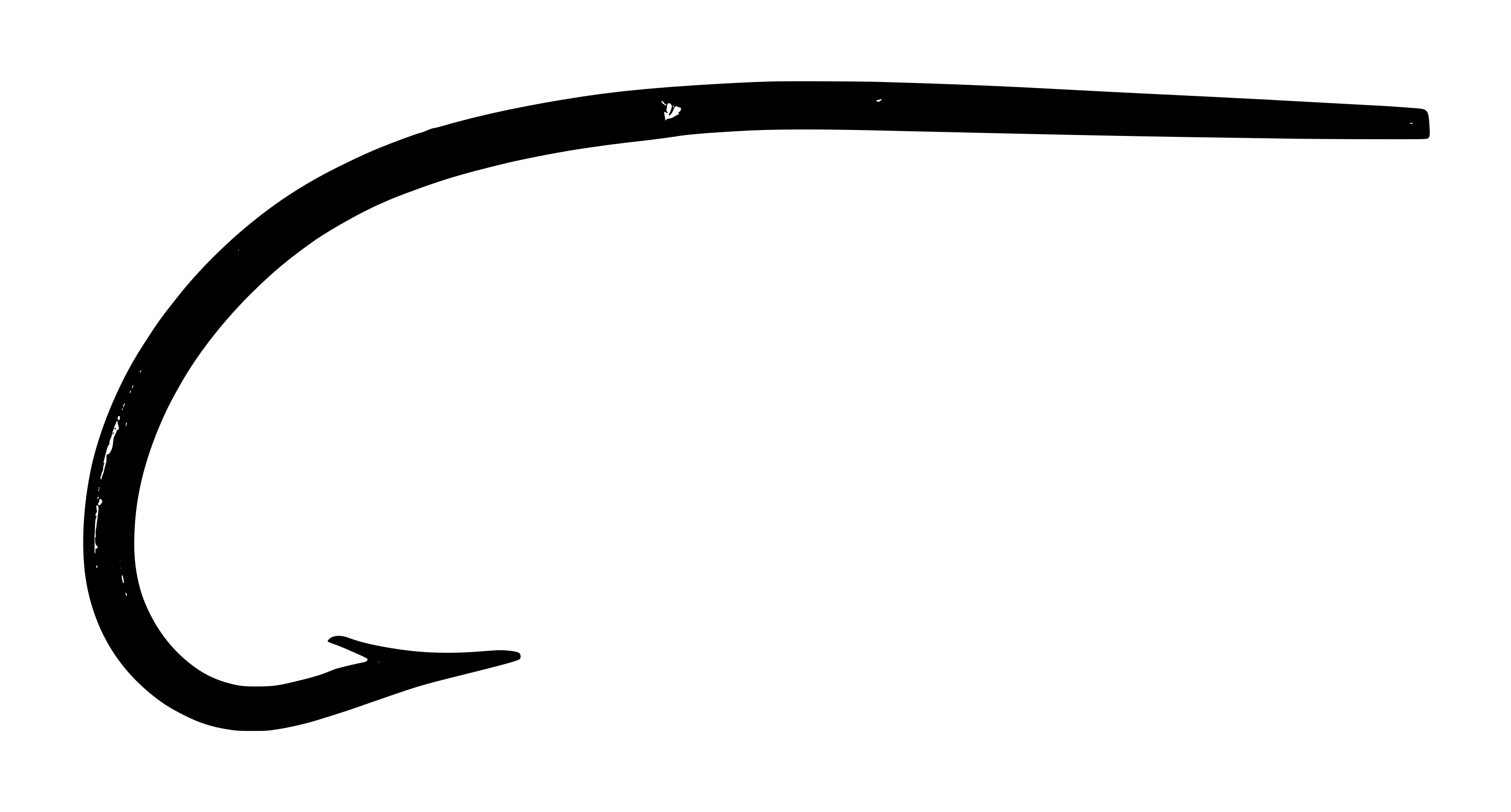
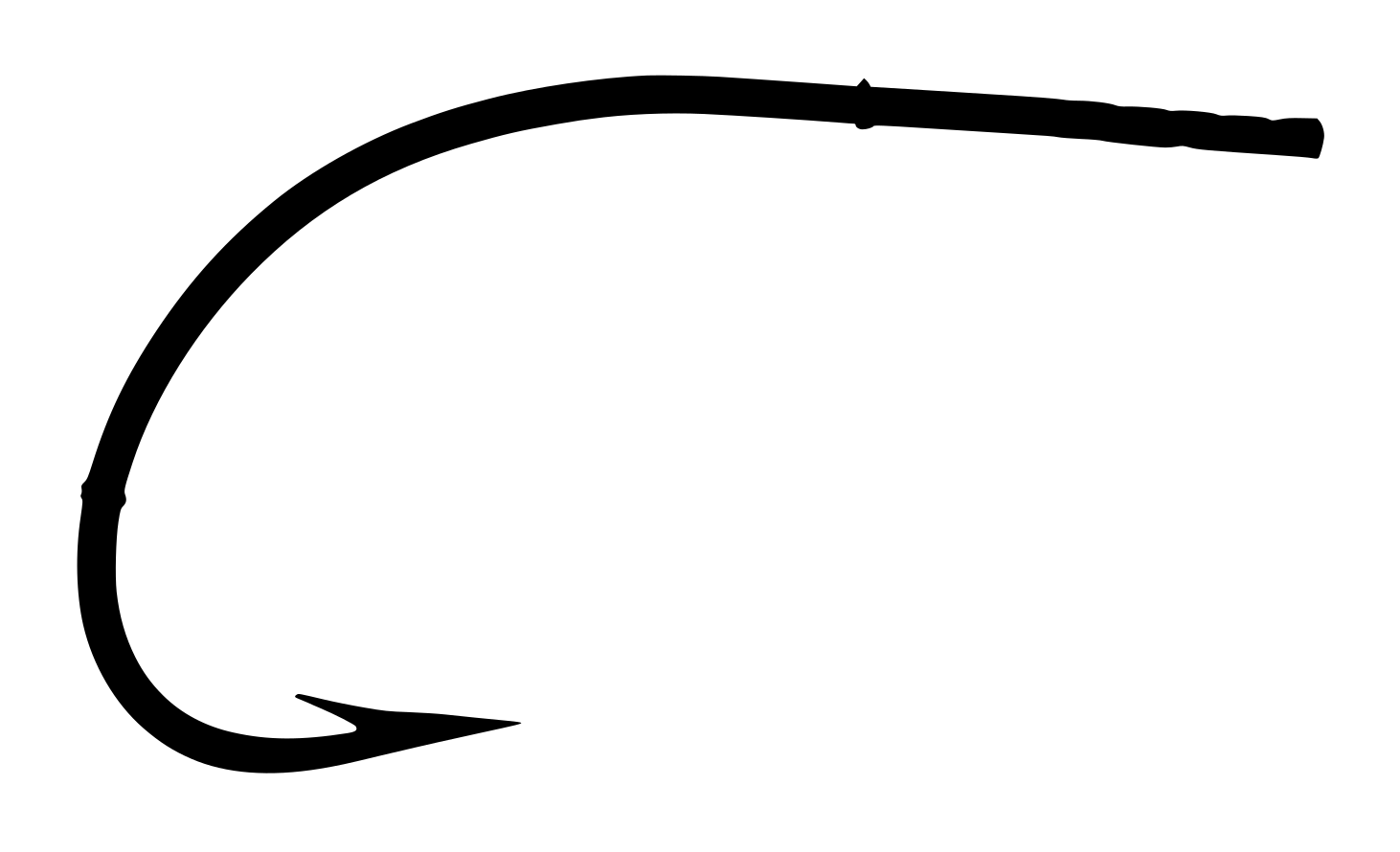
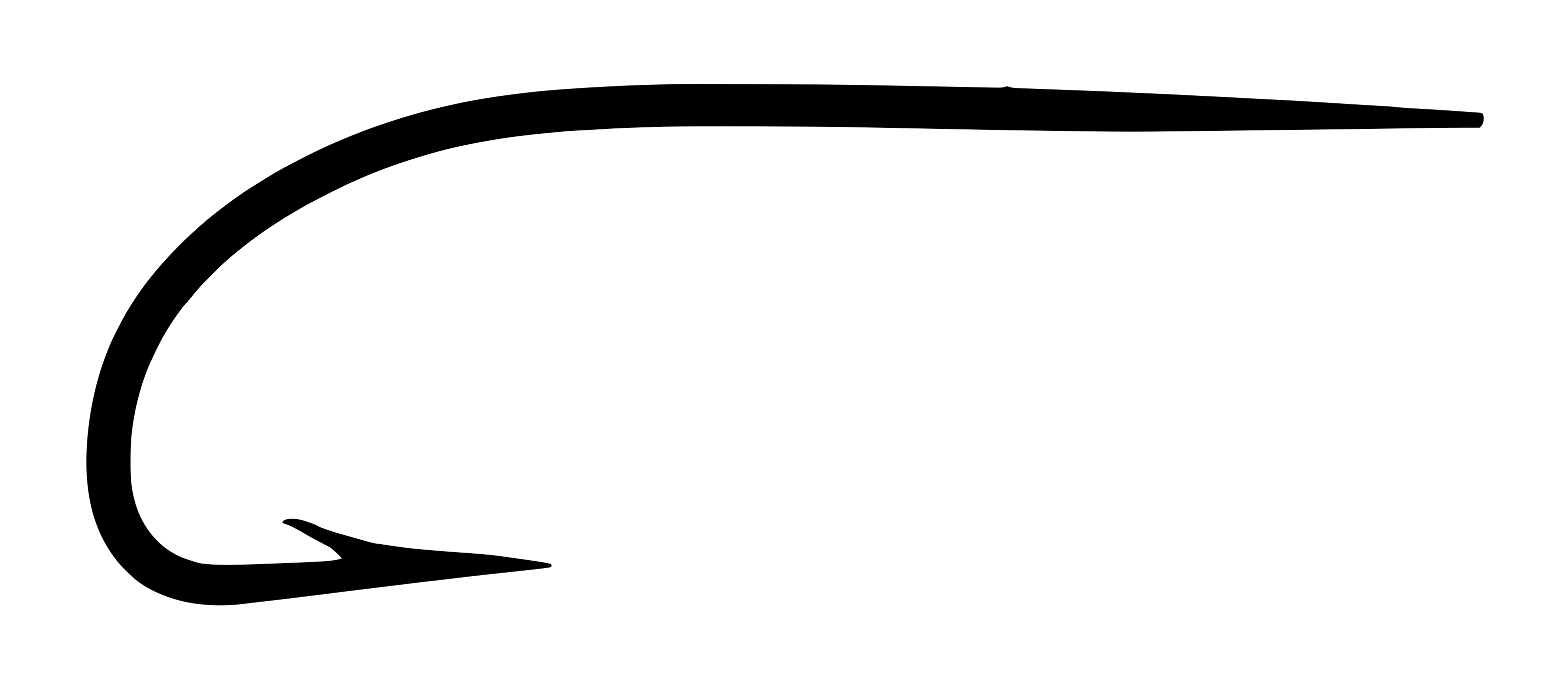
Harrison & Bartleet Celebrated O’Shaughnessy Limerick Hooks, Model 2989 — A forged blind-eye pattern from the legendary Redditch hookmaker Harrison & Bartleet, circa 1900-1920. This heavy-wire O’Shaughnessy bend exemplifies the Irish salmon-fishing tradition, named for the celebrated Limerick hook family. The tapered blind eye was the standard for sea-trout and salmon fishing, allowing anglers to attach their own twisted gut loops for historical authenticity in classic fly tying.
Constructed from forged wire with a superior point geometry and tapered shank, these hooks were designed for use with heavy natural baits or dressed flies on Atlantic salmon and sea-trout rivers. The bronzed finish provides both protection and the aesthetic warmth valued by early 20th-century anglers.
The original cardboard box, though incomplete, bears the historic Redditch maker’s mark and carries the names of two great hook-making traditions: Harrison & Bartleet of England and the O’Shaughnessy of Dublin, a lineage tracing to the golden age of Irish hook craftsmanship. Blind-eye hooks of this era are increasingly sought by fly-tying historians and salmon anglers preserving traditional methods.
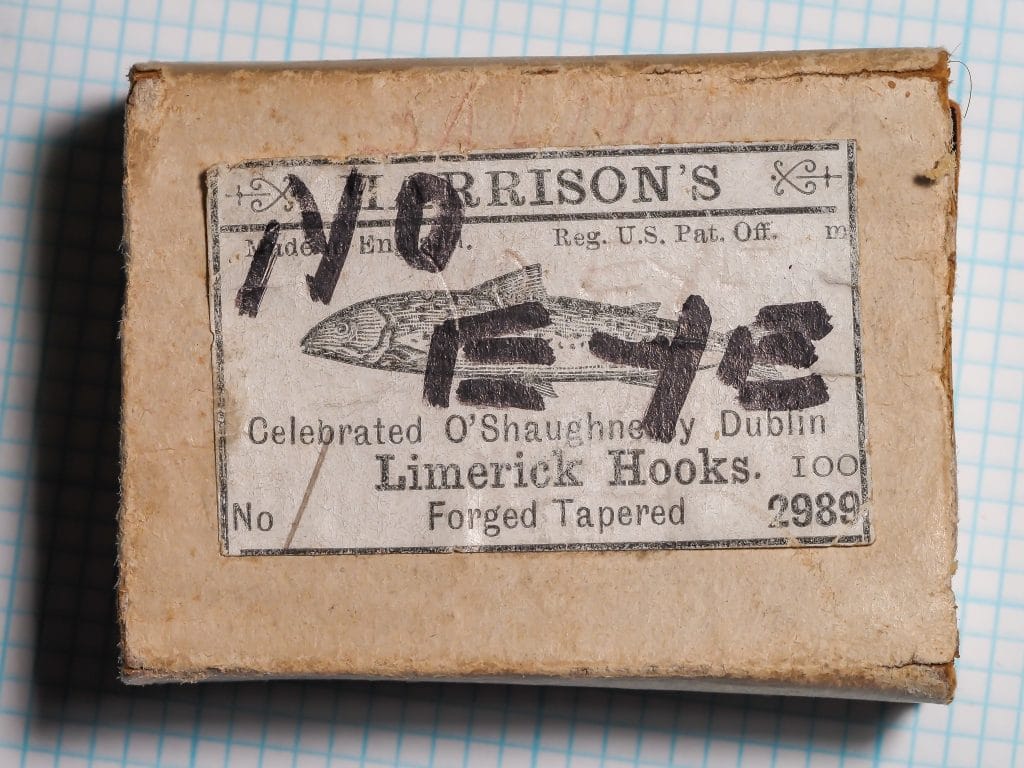
Original cardboard box label bearing the Harrison Bartleet nameplate and 'Celebrated O'Shaughnessy Dublin Limerick Hooks' designation, printed via letterpress. The box is incomplete and shows age-appropriate toning consistent with early 20th-century manufacture and storage.
Photographic record
3 cataloged imagesSelect any record to load it above.
3 images shown
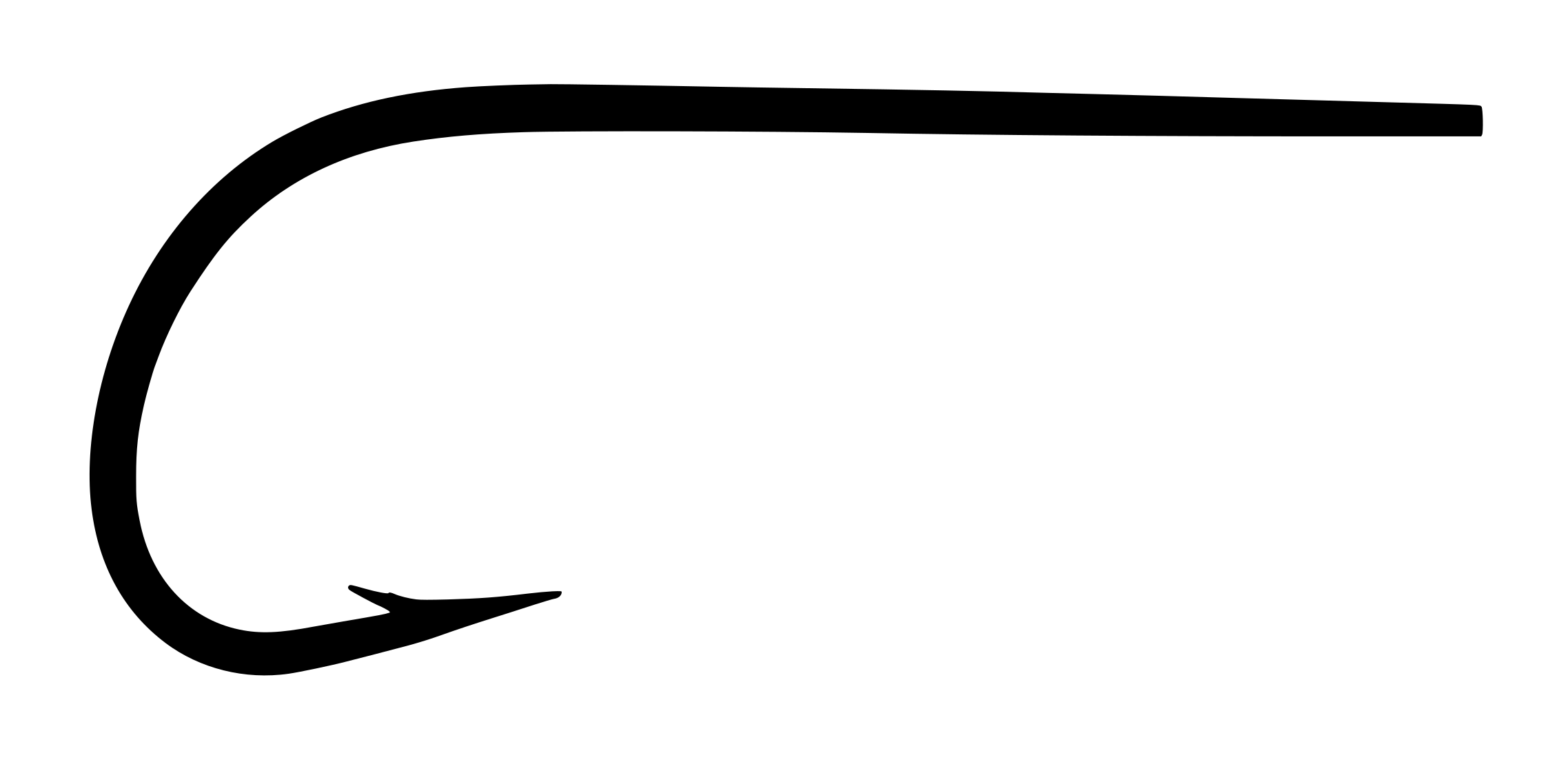
Harrison Bartleet 2989 Box Label Letterpress OriginalOriginal cardboard box label bearing the Harrison Bartleet nameplate and 'Celebrated O'Shaughnessy Dublin Limerick Hooks' designation, printed via letterpress. The box is incomplete and shows age-appropriate toning consistent with early 20th-century manufacture and storage.Open originalHarrison Bartleet 2989 Hooks on Measurement GridTwo of the Model 2989 hooks displayed on a precision measurement grid (smallest squares = 1/10 inch). The lateral profile clearly shows the tapered shank, O'Shaughnessy bend geometry, and blind-eye taper. Overall length measures approximately 1.39 inches; gap width approximately 0.52 inches.Open originalHarrison Bartleet 2989 Point and Shank DetailClose-up detail of a single Model 2989 hook showing the tapered shank, superior point geometry with near-straight inner taper, and barb placement. The bronzed finish is warm-toned and uniform. The fine tapering of the wire from eye to bend is clearly visible.Open original
Technical profile
Eye
Blind — Tapered ShankBlind eye with tapered shank. No metal ring or loop. Designed for attachment of twisted gut gut loop or modern silk/dacron substitute. The taper is smooth and symmetrical. P
Wire
Fine (1X Fine), Forged, Est. ~0.047"-0.055" (~1.2-1.4 mm) E
Shank
Standard — Tapered
Bend
O'Shaughnessy, Standard gapO'Shaughnessy bend: smooth outward curve with a pronounced drop at the point, characteristic of Irish salmon tradition. The bend is neither the sharp angularity of a Limerick nor the full roundness of a Sproat — a mid-ground classical profile. P
Point
Standard / SpearShort, close-cut barb positioned behind the point. Minimal barb projection — consistent with classical salmon hook design where the fine wire and superior temper made excessive barb unnecessary. E
Finish
Bronzed — Confirmed (stated on packaging)Bronzed finish is uniform and warm-toned, showing minimal rust or patina loss on the preserved specimen. The bronze provides both aesthetic warmth and corrosion resistance superior to bright steel. Early 20th-century bronzing was typically achieved through a heating and oxidation process. P
Hooks bright bronzed with minimal corrosion, wire sound. Box shows age-appropriate toning and edge wear; printing legible. Box is missing the bottom panel — contents initially loose.
The forged construction dramatically increases wire strength without increasing bulk. By selectively flattening and reshaping the wire during the forging process, Harrison & Bartleet created hooks that could handle heavy tension — essential for salmon fishing where a 15-20 lb fish on a small hook demands unyielding durability.
The tapered shank reduces weight throughout the fly without sacrificing strength at the bend. This is particularly important for classical dressing, where complex wing and hackle assignments can quickly become overwrought if the hook itself is heavy.
The superior point geometry — a near-straight, shallow inner taper rather than a concave hollow — provides a fine edge without the fragility of knife-edge profiles. This balance was prized in early 20th-century salmon fishing.
The blind eye required anglers to tie their own eye attachment, a deliberate choice rooted in the tradition of gut-loop construction. This practice preserved the integrity of the fly’s presentation and allowed bespoke loop sizing for different dressing styles.
The ‘Celebrated O’Shaughnessy Dublin Limerick Hooks’ line represents Harrison & Bartleet’s attempt to capture the prestige of historical Irish hook names while leveraging Redditch manufacturing. The model designation 2989 appears to be a Harrison & Bartleet internal catalog number. No broader series structure is evident from the packaging; this appears to be a standalone blind-eye pattern offered in multiple sizes (the box label indicates size-specific production, though the size number is now illegible on this specimen).
The ‘Forged Tapered’ designation on the box is significant: it advertises two key manufacturing specifications — forge-hardening for strength and tapered shank construction for refined aesthetics and reduced weight compared to plain-shank hooks. These were premium features in the early 20th century.
Era and Packaging Dating
No barcode (pre-1974 indicator). Letterpress printing method, aged cream card stock typical of turn-of-century British manufacture. Phone number and postal code format not visible on surviving label. 'Reg. U.S. Pat. Off.' indicates U.S. patent registration, consistent with 1890s-1920s Harrison & Bartleet export packaging. The 'Celebrated O'Shaughnessy' nameplate echoes historical Limerick hook terminology from the 1800s. Forged heavy wire and blind-eye construction are consistent with pre-1920 British salmon/sea-trout fishing traditions. The loose-hook box construction and minimal label detail suggest early 20th century rather than later standardized packaging.
The Ghost of Limerick: Trading on a Dead Tradition
The O'Shaughnessy name on this hook is a marketing echo of a defunct tradition. By 1900, the once great reputation of Limerick hooks had all but died by the 1860s, with only one master hook maker left — Michael Selles of Quay Lane. Yet by packaging 'Celebrated O'Shaughnessy Dublin Limerick Hooks,' Harrison & Bartleet traded on ghostly prestige. The Irish hook-making craft had essentially died in Limerick, but Redditch industrialists successfully marketed reproductions bearing the original names to generations of anglers who never knew the difference.
Design lineage and influence
The O’Shaughnessy bend traces to Daniel O’Shaughnessy, about sixty years ago [from 1866], was one of the most famous—if not the most famous fishing hook maker in his day. The pattern was later adopted and industrialized by Redditch manufacturers including Harrison & Bartleet, H. Milward & Sons, and others. While the original Limerick hooks were individually crafted, these Redditch versions were mass-produced using standardized tooling and forging dies. The blind-eye form persisted into the 1920s-1930s for salmon fishing but was gradually displaced by looped and ball-eye variants as modern tying materials (nylon, dacron) replaced gut.
Best matchRelated by Attribute
Computed automatically from catalog data — updated as new hooks are added.
Matches: Bend, Wire, Gap, Eye, Eye Orient. +6 moreDiffers: Shank: Standard vs Short (1X–2X Short); Finish: Bronzed vs Black Japanned; Shank ratio: 64.7% vs 74.6% +1 more
Matches: Wire, Gap, Eye, Eye Orient., Point +3 moreDiffers: Bend: O'Shaughnessy vs Limerick; Shank: Standard vs 1X Long; Finish: Bronzed vs Black Japanned +4 more
Matches: Shank, Wire, Gap, Eye, Eye Orient. +3 moreDiffers: Bend: O'Shaughnessy vs Dublin; Point: Standard / Spear vs Other; Finish: Bronzed vs Black Japanned +4 more
Matches: Gap, Eye, Eye Orient., Finish, Offset +2 moreDiffers: Bend: O'Shaughnessy vs Limerick; Shank: Standard vs 1X Long; Wire: Fine (1X Fine) vs Standard +3 more
Designed for classical salmon and sea-trout fishing on British Isles rivers. The tapered blind eye was the standard eye form for dressing flies with twisted gut loops, a requirement for authenticating 19th and early 20th-century salmon fly patterns (e.g., dressed irons for complex wing patterns on the River Dee or River Tweed). The heavy forged wire provides the strength and weight needed to drive the point through the mouth of large fish when long baits or heavily-dressed flies were in use.
Secondary Applications
Saltwater bait fishing for large species; classic salmon wet-fly tying with modern substitutes for gut loops (silk, dacron).
Classic Fly Patterns
Classic salmon dry flies and wet flies requiring blind-eye irons: March Brown, Jock Scott, Silver Doctor, Dusty Miller, Akroyd, Glentana. Modern fly patterns adapted to blind-eye hooks.
Modern Equivalents
Hook
Match Quality
Notes
Gaelic Supreme Harrison-Bartleet Blind Eye
Excellent
Direct modern reproduction using historical Bartleet bend geometry, tapered shank, and blind-eye form. Designed for classical salmon fly tying.
Partridge of Redditch Bartleet Supreme CS10/1
Very Good
Blind-eye Bartleet pattern from the company that acquired both Bartleet and Milward. Highly regarded by classical tyers.
Mustad 3407 O'Shaughnessy
Good
Modern O'Shaughnessy bend in standard loop-eye configuration; same bend family but not blind-eye form. Suitable for adaptation to gut-loop tying by advanced tyers.
Eagle Claw 254 O'Shaughnessy
Moderate
Contemporary saltwater O'Shaughnessy; shorter shank than vintage pattern. Good functional equivalent but lacks historical authenticity.
Collector notes
Rated 5.5/10 — blind-eye O'Shaughnessy hooks are genuinely scarce due to declining use after 1930s and the fragility of vintage cardboard packaging. Collector demand is strong among classical salmon fly tyers and hook historians, but limited by the specific eye form and the fragmentary condition of original boxes. This specimen benefits from both the hook quality and the rare surviving box, though the box is incomplete.
Reference value
$12 – $35 USD estimate
Packaging condition
Good — moderate wear, legibleRecorded specimen
Packaging format
HB-E-01Catalog code
What makes this hook collectible: Blind-eye hooks are the gold standard for classical salmon fly tying. This hook embodies the marriage of two prestigious traditions — the Bartleet name (Redditch elite) and the O’Shaughnessy/Limerick heritage (Irish craft tradition). The forged construction and superior point geometry make it functionally superior to modern equivalents for traditional-pattern work. Original packaging in any condition is exceptional for early 20th-century hooks.
What limits the rating: Harrison & Bartleet produced these hooks in significant quantities (the box once held 100), and many loose examples survive. The rating is constrained by the surviving count of intact original boxes and matched sets. Single loose hooks, while valuable, command significantly lower premiums than carded or boxed groupings. The incomplete box condition (missing bottom panel) and illegible size marking reduce the premium, though the hook itself is undamaged.
Size and finish variants: Larger sizes (1/0, 2/0, 3/0) command higher premiums than smaller sizes, particularly if the size is documented on the box. Bronzed finish is standard and desirable; any surviving hooks with original japanned (black lacquer) finish would be notably scarcer. Complete original tissue wrapping adds 15-25% to value.
Condition factors that most affect value: Hooks themselves must be bright and corrosion-free to retain full premium (oxidized or pitted specimens lose 20-40%). Original box condition is critical — complete boxes with all four sides intact and legible printing command 2-3x the value of incomplete boxes. Original tissue wrapping or envelope packaging intact adds 20-30% premium. Matched sets (multiple hooks from the same box) are more desirable than singles.
Packaging
Cardboard box, lid-style. Printed label on lid reading: 'HARRISON'S [decorative ornament] Reg. U.S. Pat. Off. [crossed-out section] Celebrated O'Shaughnessy Dublin Limerick Hooks, 100 Forged Tapered [size illegible] No. 2989'. Letterpress printing on aged cream stock. No barcode visible. Tan/cream paper exterior with light toning consistent with early 20th century.
Market Value Notes
Low ($12): Good condition — incomplete box with 2-3 hooks present, slight wear, printing legible. High ($35): Very Good condition — box 3/4 intact, all 4-6 hooks bright and undamaged, original tissue wrapping if present. Premium factors: Blind-eye form (rarer than looped), Bartleet-O'Shaughnessy name prestige, forged construction, complete readable size marking (illegible on this specimen). Platforms: eBay UK and US specialist tackle listings; occasional vintage fishing tackle dealers; specialized salmon-fly auction houses. Confidence: E estimated — limited recent comparable sales; Harrison & Bartleet blind-eye boxes are uncommon enough that each transaction is noteworthy rather than routine.
Where to Find
Specialty vintage fishing tackle dealers (UK and US); eBay UK postings (fewer on US eBay); Coventry/Redditch fishing heritage markets; classical salmon-fly tying forums and FB groups; rare-book and antique dealers specializing in sporting ephemera.
Collector's Identification Tips
Look for the ‘HARRISON’S’ nameplate in bold, serif letterpress type at the top of the box label. The crossed-out section (likely a previous patent claim) is diagnostic of an earlier box revision. The ‘Celebrated O’Shaughnessy’ nameplate and model number 2989 are key identifiers. Blind-eye hooks are rarer than modern looped or ball-eye forms and command collector interest.
Preservation
Storage and Preservation
Hooks: Store loose hooks in archival paper (acid-free) or sealed glass vials away from moisture. The bronzed finish is stable but can develop desirable patina in humid environments. Avoid contact with copper, aluminum, or other metals that could cause galvanic corrosion. Do not immerse in water or oil — the hooks are already fully protected by their finish.
Original Packaging: If the box survives, store it flat in a cool, dry location away from direct sunlight. UV exposure will fade the printed label over time. House in an archival cardboard box with acid-free tissue for further protection. Do not attempt to reassemble or repair incomplete boxes — original construction and damage history are historically significant. Document the condition with photographs before any storage, as handling can accelerate paper degradation.
Functional Use: These hooks are fully usable for fly tying. If you plan to dress patterns on them, begin with a small test hook to assess point sharpness and eye condition. The tapered eye may require careful wrapping technique to secure a gut loop securely — modern tyers often prefer a simple loop knot or whipped attachment. Do not sharpen the point aggressively; the original superior geometry is optimized for the wire weight and temper.
Marking Analysis
Markings and Annotations
The box label is entirely printed via letterpress — no handwritten annotations are visible. The crossed-out section on the label (likely a previous patent claim or revision) appears to be part of the original printing plate design, not a hand alteration. The box shows no pencil prices, stock codes, or dealer marks. This absence of secondary markings is typical of packaging that remained in original inventory stock for extended periods without retail circulation.
Analysis: The ‘Reg. U.S. Pat. Off.’ (Registered U.S. Patent Office) claim indicates that Harrison & Bartleet held a U.S. patent on some aspect of this hook’s design or manufacturing process. This marketing claim was common from the 1880s through 1920s but is now difficult to verify without access to U.S. Patent Office records. The patent likely covered either the tapered shank construction or the forging process, not the O’Shaughnessy bend itself (which predated this company’s formation).
The designation ‘100’ refers to the quantity per box (100 loose hooks), a standard packaging count for British hook manufacturers of the era. The size number is worn or faded on this specimen and cannot be reliably determined from the remaining impression.
Source: Box label, letterpress printing, circa 1900-1920, Harrison & Bartleet, Redditch.
Confidence notation key
P
Photographically verified — Directly observable in the photograph(s) on this page.
V
Verified by documentation — Confirmed by manufacturer catalog, spec sheet, or published reference.
I
Inferred — A logical deduction from observable or documented evidence, not directly stated.
E
Estimated — An approximation based on visual comparison, proportional analysis, or limited data.
S
Speculative — A reasoned hypothesis that cannot be confirmed from available evidence.
Unnotated claims are the compiler’s synthesis; see Sources. All photographs on garrenwood.com are taken on a measurement grid where each square equals 1/10 inch (0.1″ / 2.54 mm).