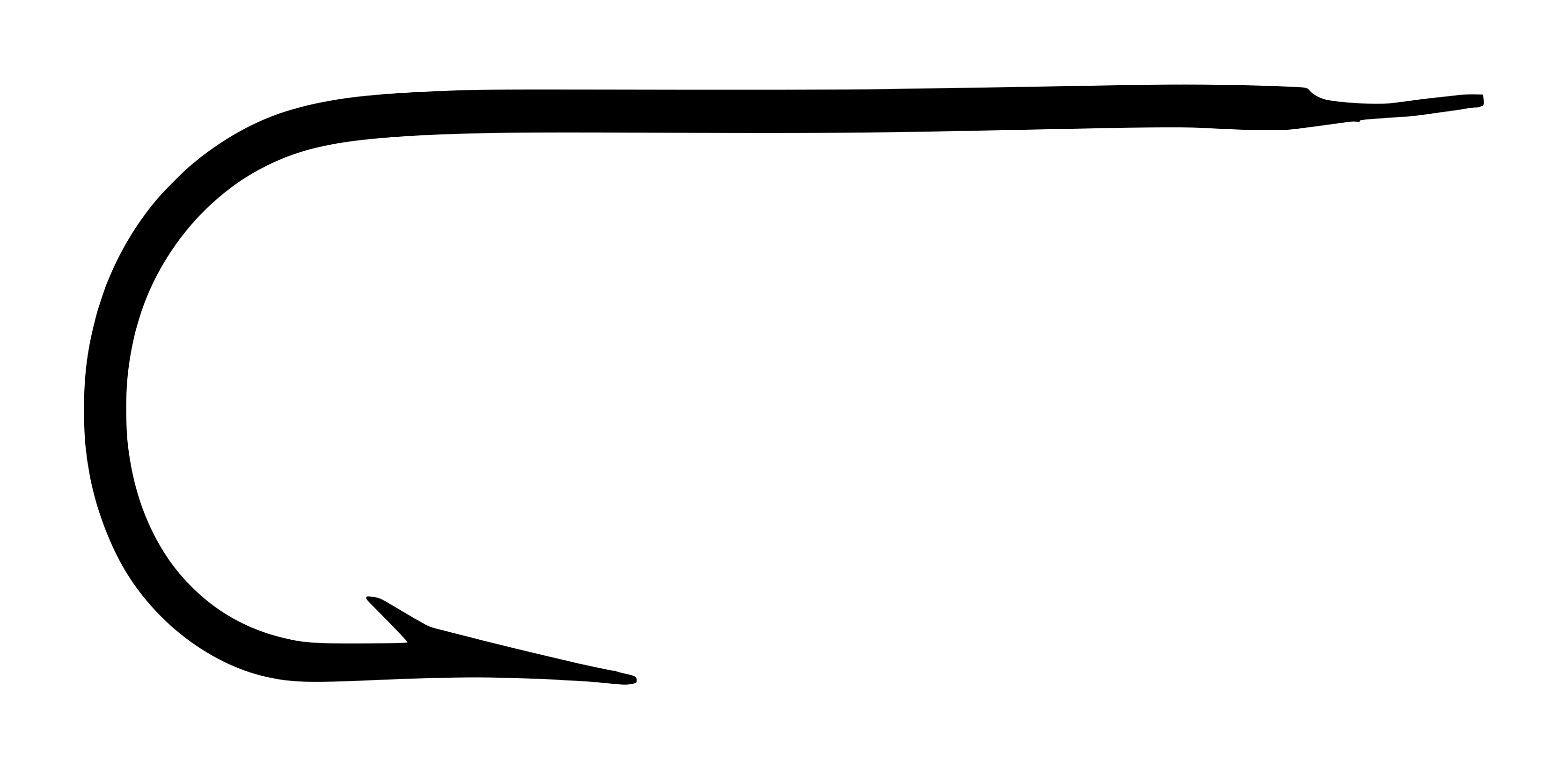
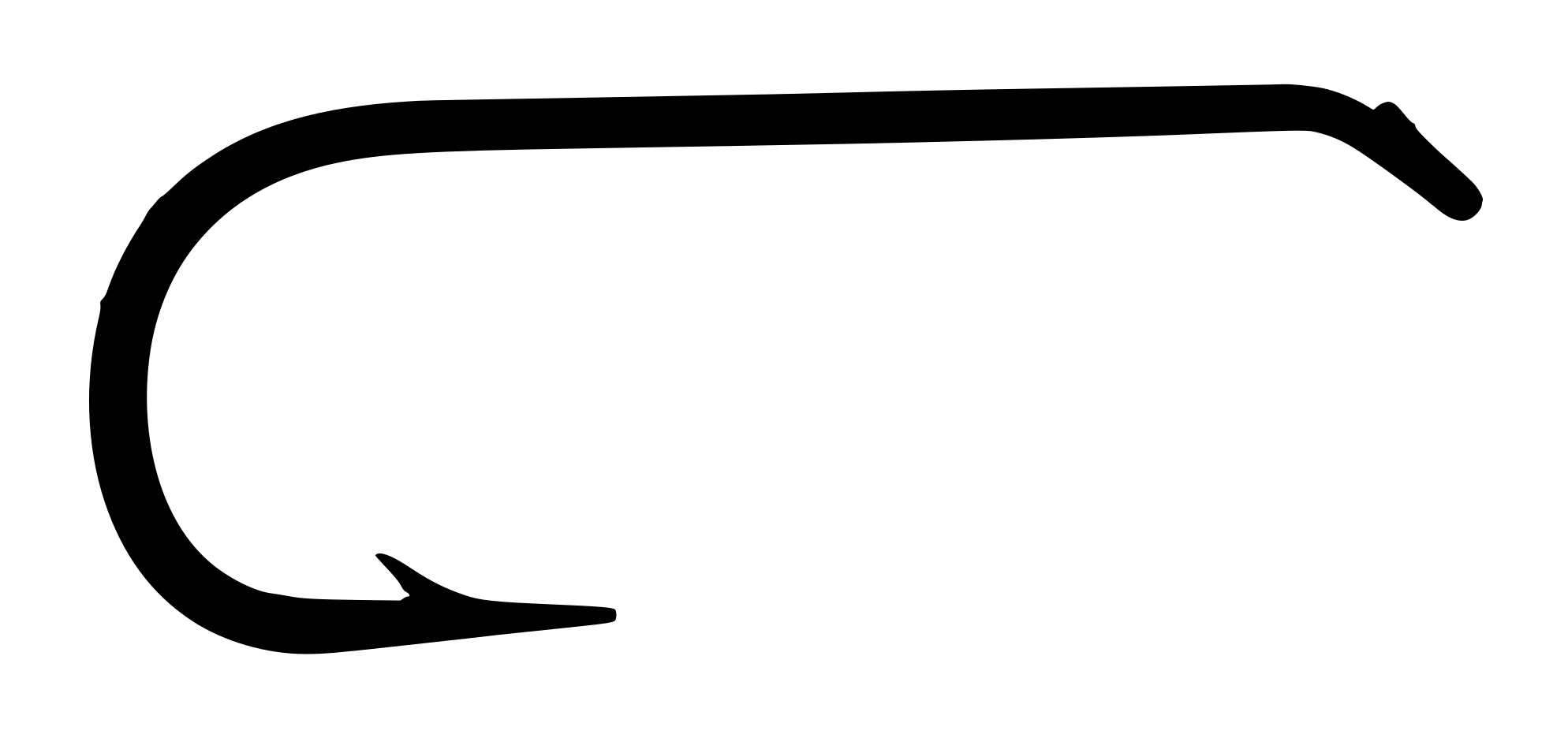
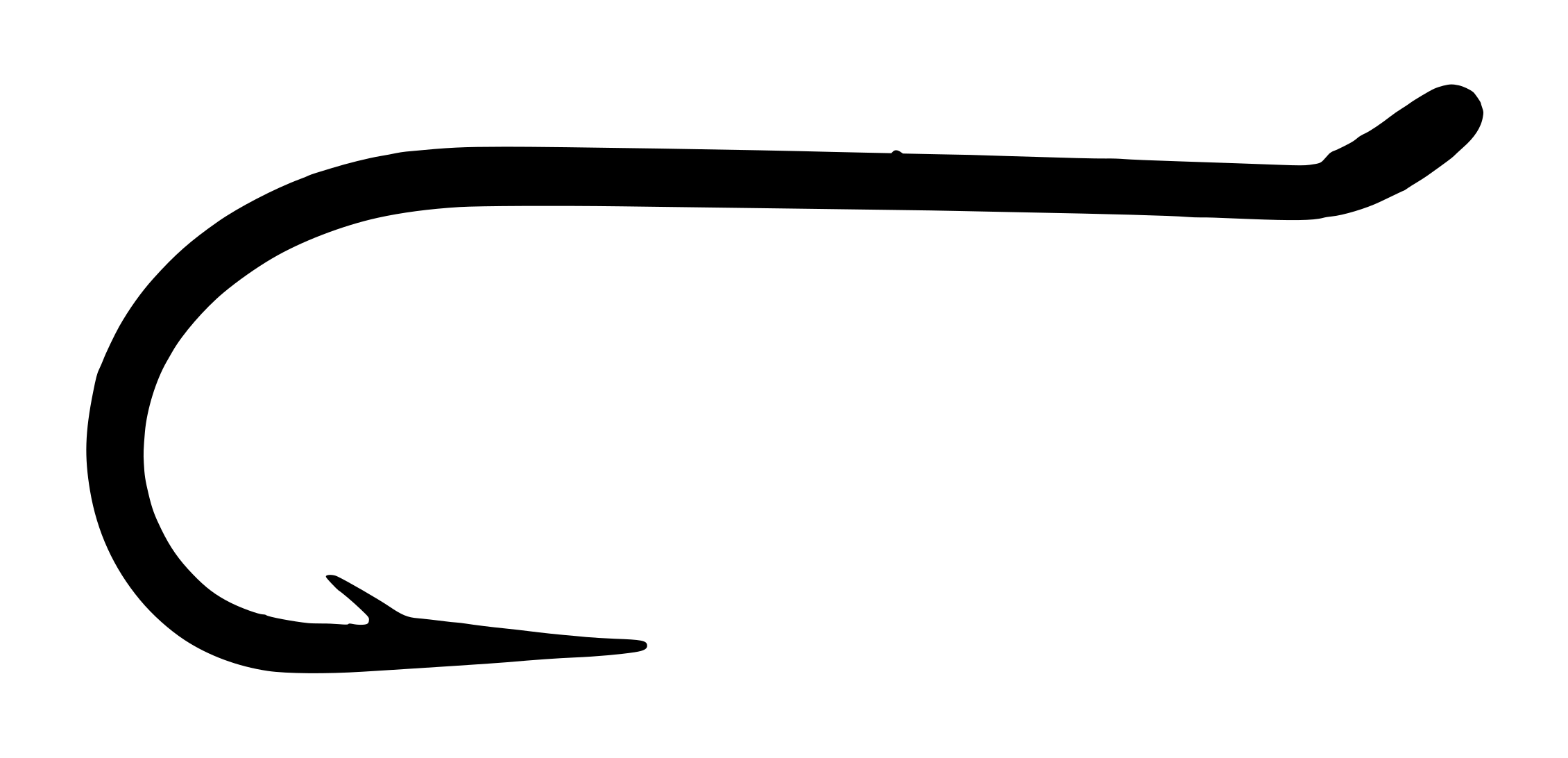
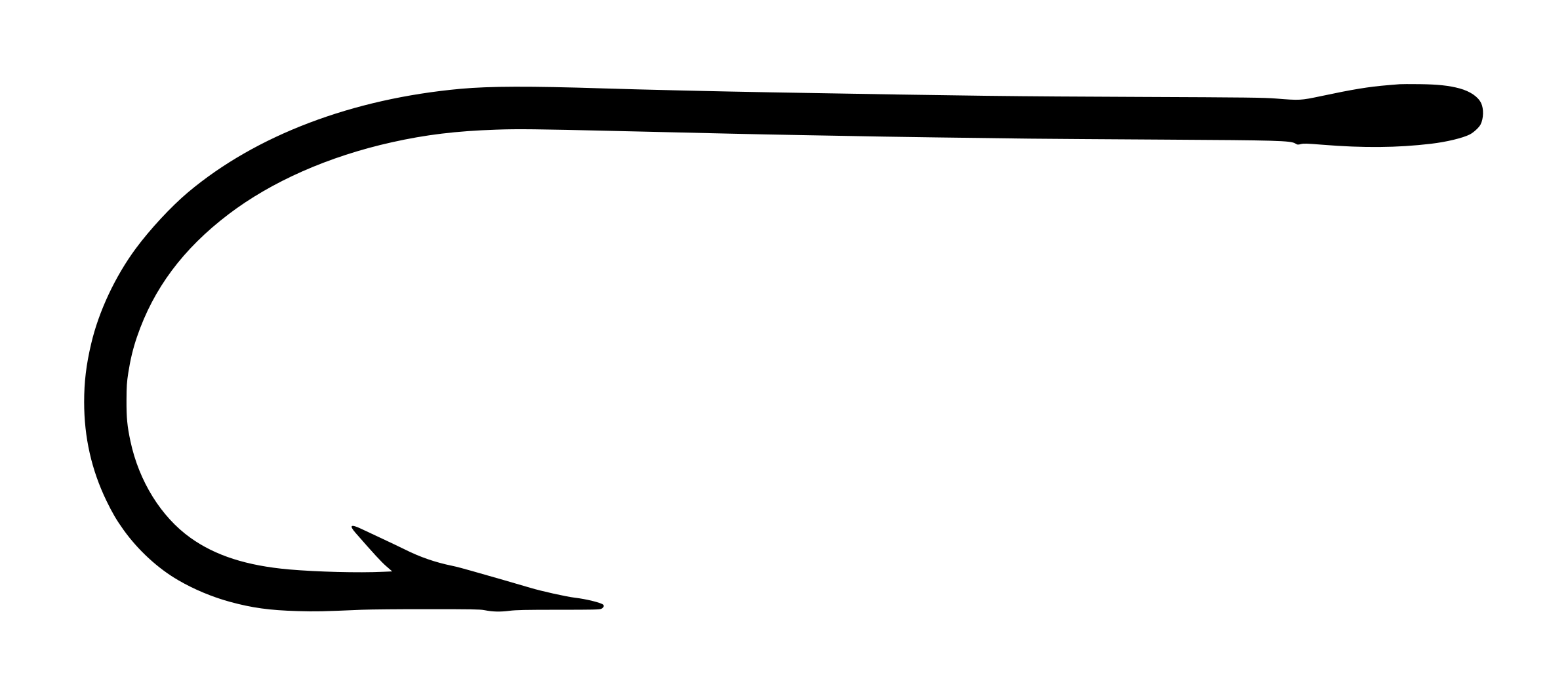
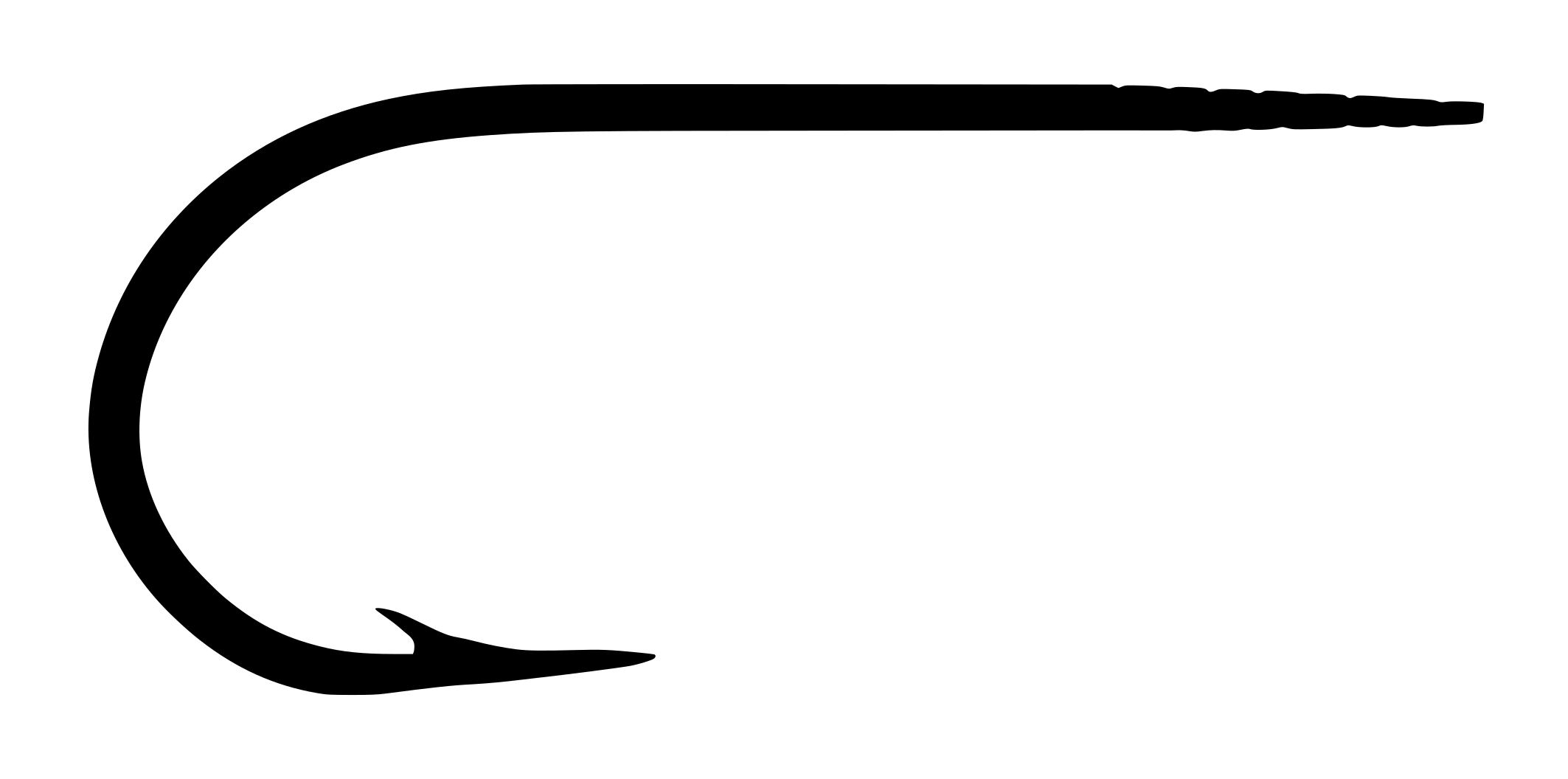
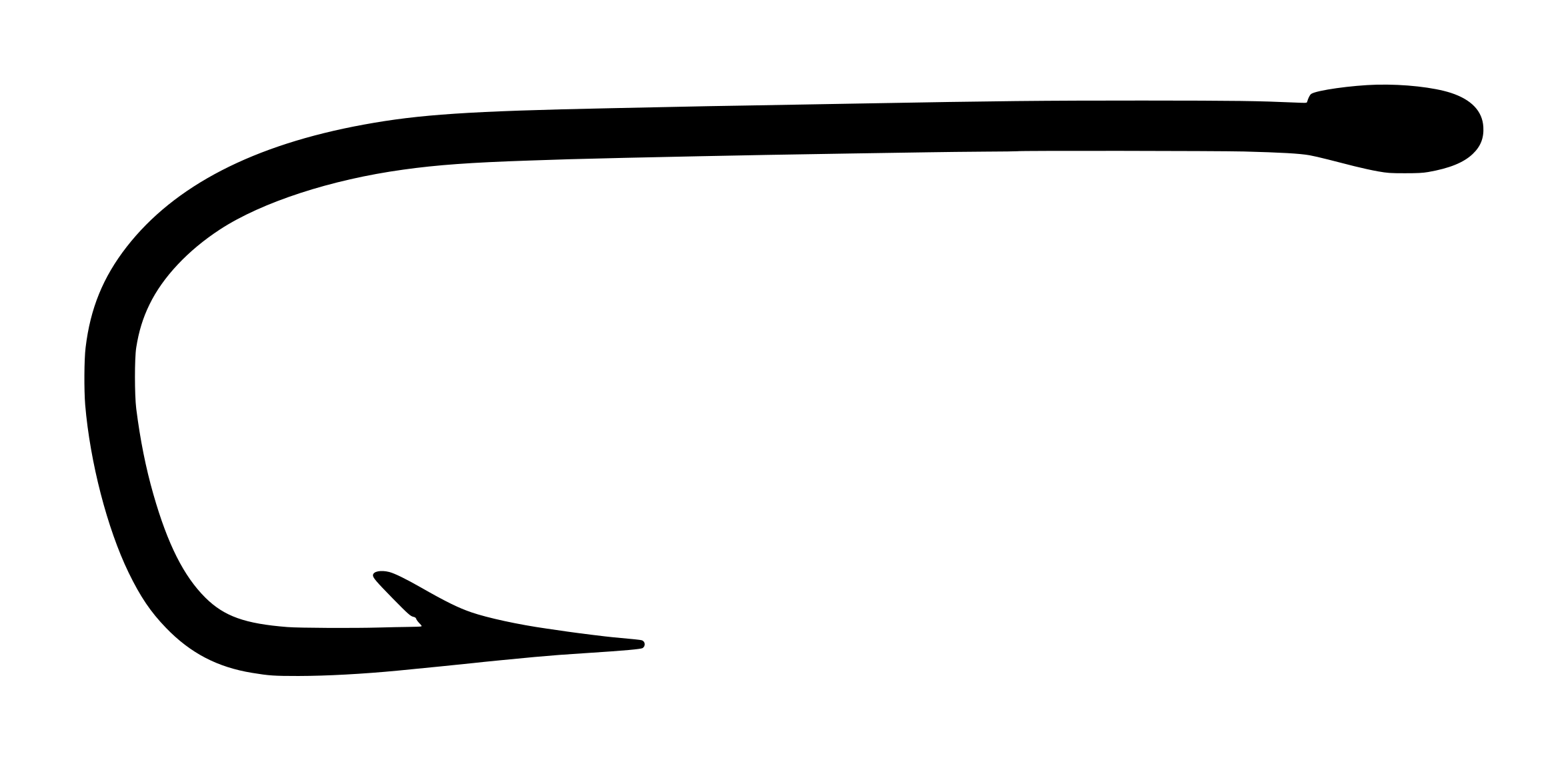
- Overall Length
- 22 mm
- Shank Length
- 13 mm
- Gap Width
- 8 mm
- Bend Depth
- 9 mm
- Shank-to-Gap Ratio
- ~1.7:1
- Confidence
- P Physical specimen
Grid-derived from photograph (1/10" grid)
Save this hook to your account to build a list you can come back to.
The Mustad 1798 represents the classic Kendal Round bend in a blind-eye (spade end) configuration, manufactured by O. Mustad & Sön during their mid-century dominance of the global hook market. This fine wire, tinned hook was specifically designed for European bait fishing traditions where snelled attachment was preferred over eyed hooks P.
The distinctive blue packaging with Key Brand logo and ‘Oslo – Norway’ designation places this specimen firmly in the 1950s-1960s production era, before Mustad’s major packaging redesigns of the 1970s V. The Kendal Round bend, originally popularized in Kendal, England, demonstrates Mustad’s strategy of adopting regional British patterns to capture European markets I.
This model holds moderate collecting interest as an example of pre-modern hook design and Norway’s industrial fishing tackle dominance. The blind-eye construction, now largely obsolete, represents a centuries-old tradition that persisted well into the modern era S.
4 cataloged imagesSelect any record to load it above.
4 images shown
The blind-eye construction eliminates the weight and visibility of a metal eye, creating a cleaner bait presentation that many traditional anglers believed was less likely to spook fish. The fine wire gauge minimizes trauma to delicate baits like worms and maggots while maintaining sufficient strength for typical coarse fish species. The filed point provides sharp penetration through mechanical grinding rather than chemical etching, while the tinned finish offers corrosion protection in freshwater environments without the cost premium of more exotic plating P.
Grid-derived from photograph (1/10" grid)
We don't have measured sizes for this hook yet. Own one? Submit calipered measurements and we'll review and add them. Thank you!
O. Mustad & Sön, founded in 1832 in Gjøvik, Norway, grew from a small nail and farm implement manufacturer into the world’s largest fishhook producer by the mid-20th century. Under the leadership of Hans Mustad and later generations, the company established the Gjøvik factory as a global hub, producing over 60,000 different hook patterns and sizes to serve regional fishing preferences worldwide. The Key Brand trademark, visible on this packaging, became one of the oldest and most recognizable symbols in the fishing industry, representing Mustad’s promise that their hooks were the ‘key to success’ for anglers.
The 1798 was part of Mustad’s extensive catalog of traditional European bait hooks, specifically designed to meet the preferences of coarse fishing markets in Britain and continental Europe. The Kendal Round designation acknowledged the pattern’s origins in Kendal, England, a historic hook-making center alongside Redditch. Mustad’s adoption of this British regional pattern demonstrated their strategy of manufacturing locally-preferred designs at industrial scale from their Norwegian facility. The series remained in production through the 1960s but was gradually phased out as eyed hooks gained dominance over traditional snelled attachments.
Blue box construction with Key Brand logo and 'Oslo - Norway' typography indicates mid-century production. Pre-barcode packaging confirms pre-1974. The decorative border design and letterpress printing style are consistent with 1950s-1960s packaging standards.
During the 1950s, Mustad claimed to manufacture over 60,000 different hook patterns and sizes, making their Gjøvik factory the most diverse fishhook production facility in history. The company's industrial scale allowed them to economically produce even highly specialized regional patterns like this Kendal Round, which originated in the English Lake District town of Kendal.
Designed for traditional bait fishing, particularly European coarse fishing techniques. The blind-eye (spade end) construction requires snelling the line directly to the flattened shank end, a method preferred by bait anglers for its clean presentation and reduced visibility underwater. The fine wire minimizes damage to delicate baits while the tinned finish provides corrosion resistance in freshwater applications P.
Traditional wet fly tying for anglers skilled in snelling techniques
Not typically used for fly tying
| Hook | Match Quality | Notes |
|---|---|---|
| Drennan Spade End Coarse Hooks | Excellent | Modern production spade end hooks maintaining traditional construction |
| Kamasan B980 Specimen Hook | Good | Similar bend geometry but with modern eye construction |
Moderate interest driven by Norwegian industrial history and obsolete blind-eye construction, but limited by relatively common availability.
Positive factors include the hook’s representation of Mustad’s mid-century global dominance and the increasingly obsolete blind-eye construction that modern collectors find historically interesting. The attractive blue Key Brand packaging and clear era dating add visual appeal and research value to collections focused on industrial fishing tackle development.
Limiting factors include the hook’s utilitarian nature and relatively abundant survival rate, as Mustad produced these by the millions for European markets. The lack of association with famous anglers or signature techniques reduces premium collecting interest compared to more specialized patterns.
Small rectangular blue cardboard box with decorative star border pattern. Features Key Brand logo with key symbol on left side, company name 'O. MUSTAD & SÖN Manufacturers Oslo - Norway' in center, model designation 'Qual. 1798' and specifications printed in black letterpress. Box contains 100 hooks and measures approximately 2.5 x 1.5 inches. Typography and border design consistent with 1950s-1960s packaging standards.
Unopened cards command premium, individual hooks have minimal value. Condition of packaging significantly affects price.
European tackle fairs, eBay UK, specialist vintage tackle dealers, estate sales in traditional fishing regions
| Title | Price | Date | Condition |
|---|---|---|---|
| MUSTAD HOOKS #6 FLY TYING FILED, FLATTED EYE KENDAL ROUND TINNED FINE WIRE 1798 | $11.99 (asking) | active | New other (see details) |
| 1,000 MUSTAD HOOKS #6 FLY TYING FILED, FLATTED EYE KENDAL ROUND TINNED 1798 | $49.99 (asking) | active | New other (see details) |
| 100 MUSTAD 1/0 FLY TYING HOOKS ROUND BENT FLATTED EYE TINNED FINE WIRE 1798 | $12.99 (asking) | active | New other (see details) |
eBay market reference. Researcher-curated. Prices in USD. Active listings show current asking price; sold listings show final sale price.
Store in a cool, dry environment to prevent corrosion of the tinned finish. The original blue cardboard box is susceptible to moisture damage and fading, so consider archival storage sleeves for long-term preservation. Avoid handling hooks directly — use tweezers to prevent oils from compromising the tin plating. The decorative box graphics are prone to rubbing and should be protected from contact with other items during storage.
Source: Original Mustad 1798 packaging, c. 1950-1965
The box text ‘Mustad-Kendal Round Hooks’ explicitly identifies the bend family while ‘Flatted Tinned Fine Wire’ provides complete construction specifications. The ‘Oslo – Norway’ designation indicates production at Mustad’s primary facility rather than subsidiary operations. The ‘Made in Norway’ marking reflects mid-century country-of-origin labeling practices that became standardized for international trade.
| P | Photographically verified — Directly observable in the photograph(s) on this page. |
| V | Verified by documentation — Confirmed by manufacturer catalog, spec sheet, or published reference. |
| I | Inferred — A logical deduction from observable or documented evidence, not directly stated. |
| E | Estimated — An approximation based on visual comparison, proportional analysis, or limited data. |
| S | Speculative — A reasoned hypothesis that cannot be confirmed from available evidence. |
Claims with no notation are confirmed by multiple independent sources. All photographs on garrenwood.com are taken on a measurement grid where each square equals 1/10 inch (0.1″ / 2.54 mm).
Your cart is empty.