Selected size
10
Catalog record
- Overall Length
- 16.1 mm V
- Shank Length
- 10.5 mm V
- Bend Depth
- 6 mm V
- Wire Diameter
- 0.6 mm V
- Confidence
- V Catalog record only
 Garren WoodFishing Hook Reference
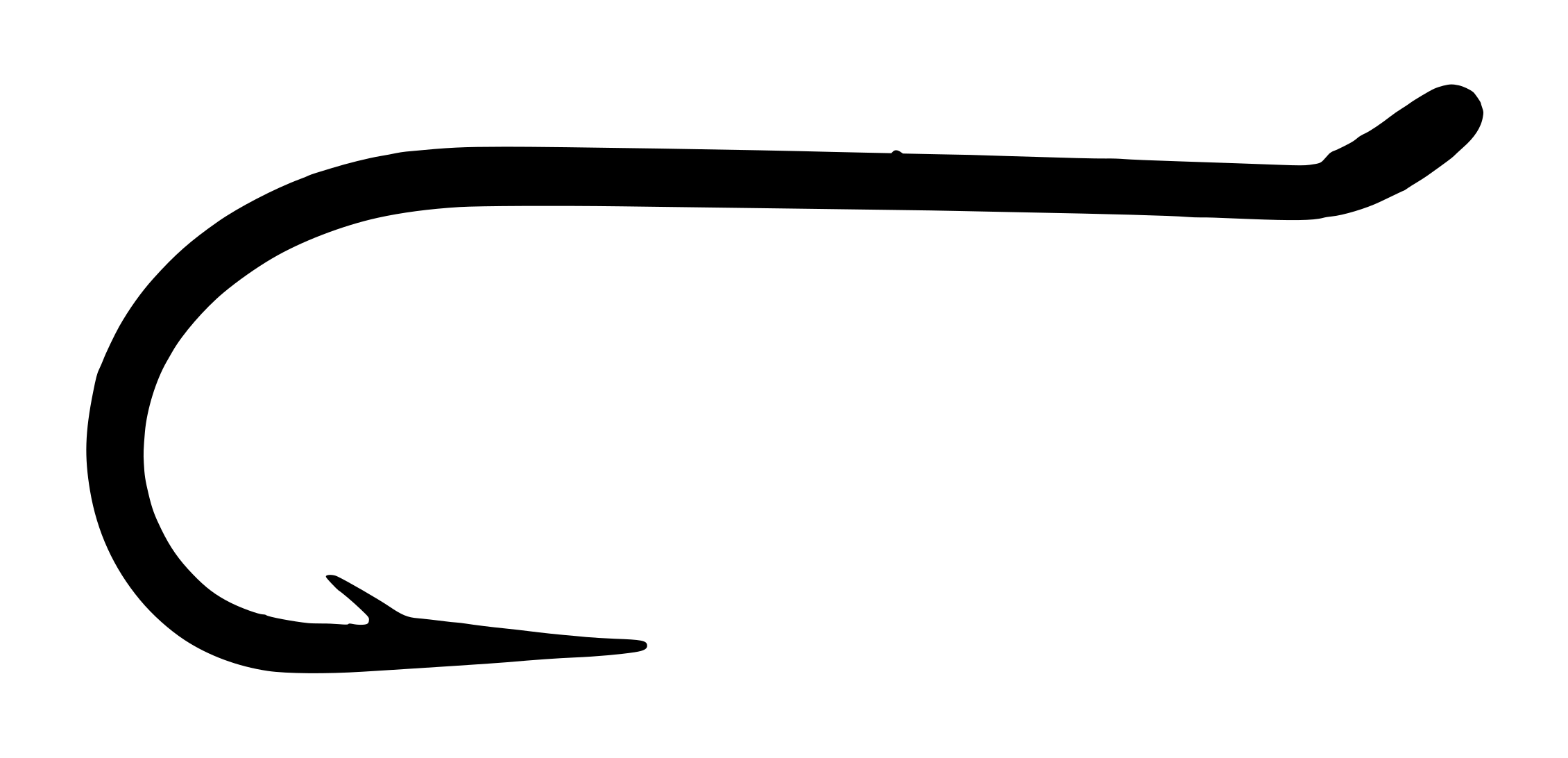
Save this hook to your account to build a list you can come back to.
Allcocks W172 ‘Tie Perfect’ Trout Hook, Size 14, Bronzed Finish. A classic mid-twentieth-century trout hook manufactured by S. Allcock & Co. of Redditch, England. This size 14 sproat-bend hook represents the British industrial tradition of precision-forged fishing hooks, sold in original packaging of 100 hooks per card. The turned-up tapered eye, standard-wire sproat bend, and tapered point reflect traditional English hook geometry optimized for small dry and wet flies for trout and grayling.
The ‘Tie Perfect’ branding appears on packaging alongside ‘Model Perfect,’ suggesting Allcocks’ positioning of this hook as a reliable utility pattern for the postwar fly-fishing market. The rustproof designation and bronzed finish indicate awareness of corrosion resistance, important for hooks intended to withstand stream conditions over a fishing season. Original packaging bears US and Canadian registration marks (U.S.A. 166790, CANADA 117/272/29), evidencing international distribution during the 1950s.
This is a common model in larger sizes but size 14 represents a smaller utility size less frequently encountered in original packaging. The complete 100-hook card in excellent condition with bright, unoxidized hooks and original tissue wrapper represents an exemplary specimen of mid-century British production standards.
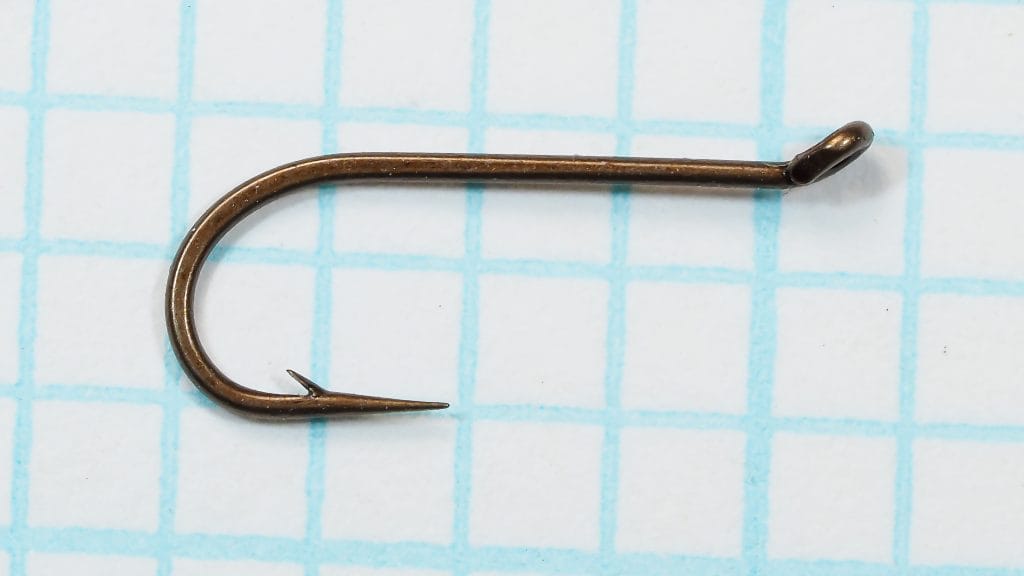
4 cataloged imagesSelect any record to load it above.
4 images shown
The W172 employs a standard spear point (neither hollow nor knife-edge) with a slightly tapered inner face that provides adequate penetration and hook-holding capability for small flies. The point geometry reflects British manufacturing tradition: a balance between sharpness and durability, without the exaggerated taper or hollow concavity of premium Redditch craft hooks.
The sproat bend shape—with rounded bottom and sweep from barb to eye—is fundamentally a curve-based geometry that distributes stress evenly across the bend radius. This makes it highly reliable for standard wire gauges and prevents point failures under moderate strike pressures. The turned-up tapered eye reduces the footprint at the head of the fly and accommodates small tippets without requiring special knot-tying techniques.
The bronzed finish provides corrosion resistance superior to bare steel, important for hooks left in wet fly boxes or used in flowing streams where hooks may remain moist for extended periods. The standard wire gauge (approximately 0.024″-0.026″ diameter) balances strength and material economy; thinner wire would be prone to deformation, thicker wire would be unnecessarily heavy for small dry flies.
Grid-derived from photograph (1/10" grid)
We have measurements for sizes 10, 14. Know any others? Submit calipered measurements and we'll review and add them. Thank you!
Sources: this specimen and its packaging.
The W series designation appears to represent Allcocks’ postwar product line of standard hook patterns. The ‘Tie Perfect’ naming suggests a comprehensive range of utilitarian hooks intended for working fly tyers rather than premium collectors or specialized patterns. The W172 is a standard sproat-bend trout hook with no documented special geometry or feature; it represents the core of Allcocks’ commercial output during the 1950s-1960s period.
The model remained in production until Mustad’s acquisition of Allcocks in 1965, after which production was consolidated into Mustad’s Norwegian facilities. The W172 does not appear in Mustad’s post-acquisition catalogs, suggesting discontinuation rather than transfer to the Mustad numbering system.
Package bears US and Canadian registration marks (U.S.A. 166790, CANADA 117/272/29), indicating post-1949 documentation and likely 1950s production. Offset lithography print quality and mauve/pink card stock are characteristic of 1950s British hook packaging. Text layout and logo treatment consistent with Allcocks mid-twentieth-century house style. No barcode present (barcode introduction c. 1974). Rustproof (stainless steel) designation suggests post-WWII manufacturing. The 'Tie Perfect' nomenclature and 'Model Perfect' branding are consistent with Allcocks 1950s product lines. Overall evidence points to 1950-1965 era, most likely early-to-mid 1950s based on card presentation.
Allcocks' 1950s 'Tie Perfect' branding reflected a postwar marketing pivot toward working fly fishers rather than collectors or premium-market customers. The registration marks on this card (U.S.A. 166790, CANADA 117/272/29) show that even as British manufacturing faced increasing competition from Scandinavian industrial producers like Mustad, Allcocks maintained aggressive international trademark protection and direct distribution networks. Within a decade of this card's production, Mustad acquired Allcocks outright in 1965, consolidating British hook manufacturing under Norwegian control—a transition that marked the end of independent Redditch hook manufacturing as it had existed for nearly two centuries.
The sproat bend itself originated in nineteenth-century British hook manufacture and became the dominant trout fly hook pattern across the English-speaking world by the early twentieth century. The W172 represents a direct continuation of this tradition without significant modification or innovation. Competing designs from contemporaneous manufacturers included Partridge of Redditch’s exclusive patterns (which commanded premium prices for hand-forging and specialty geometries) and Mustad’s mass-produced equivalents (which undercut British manufacturers on price through Norwegian industrial efficiency).
The turned-up tapered eye became standard on trout hooks during the late nineteenth century, replacing blind-eye (spade-end) construction which had dominated salmon and sea-trout hooks. By the 1950s, the eye form on the W172 represented established, proven geometry with no technical development trajectory. The hook’s design did not notably influence downstream manufacturers; rather, it reflected consensus on optimal trout hook form across the industry.
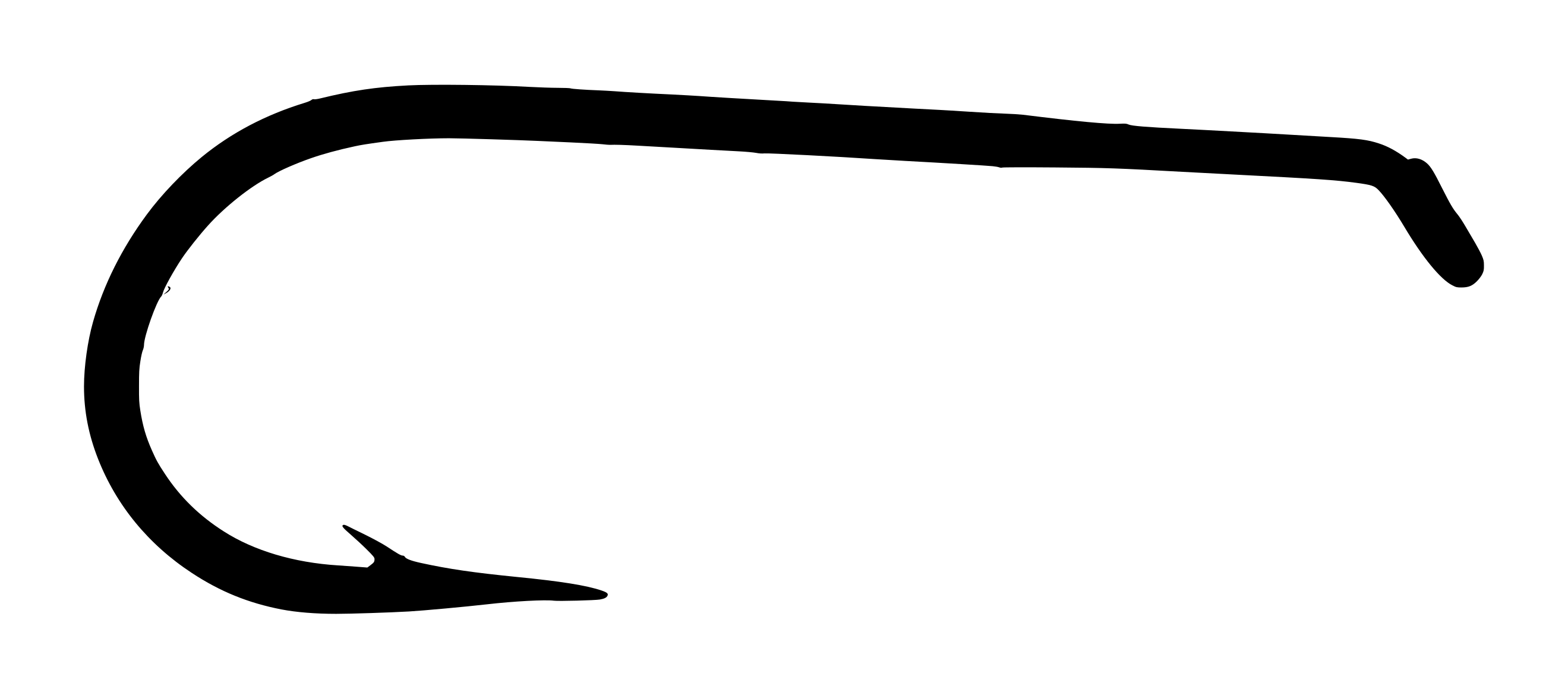
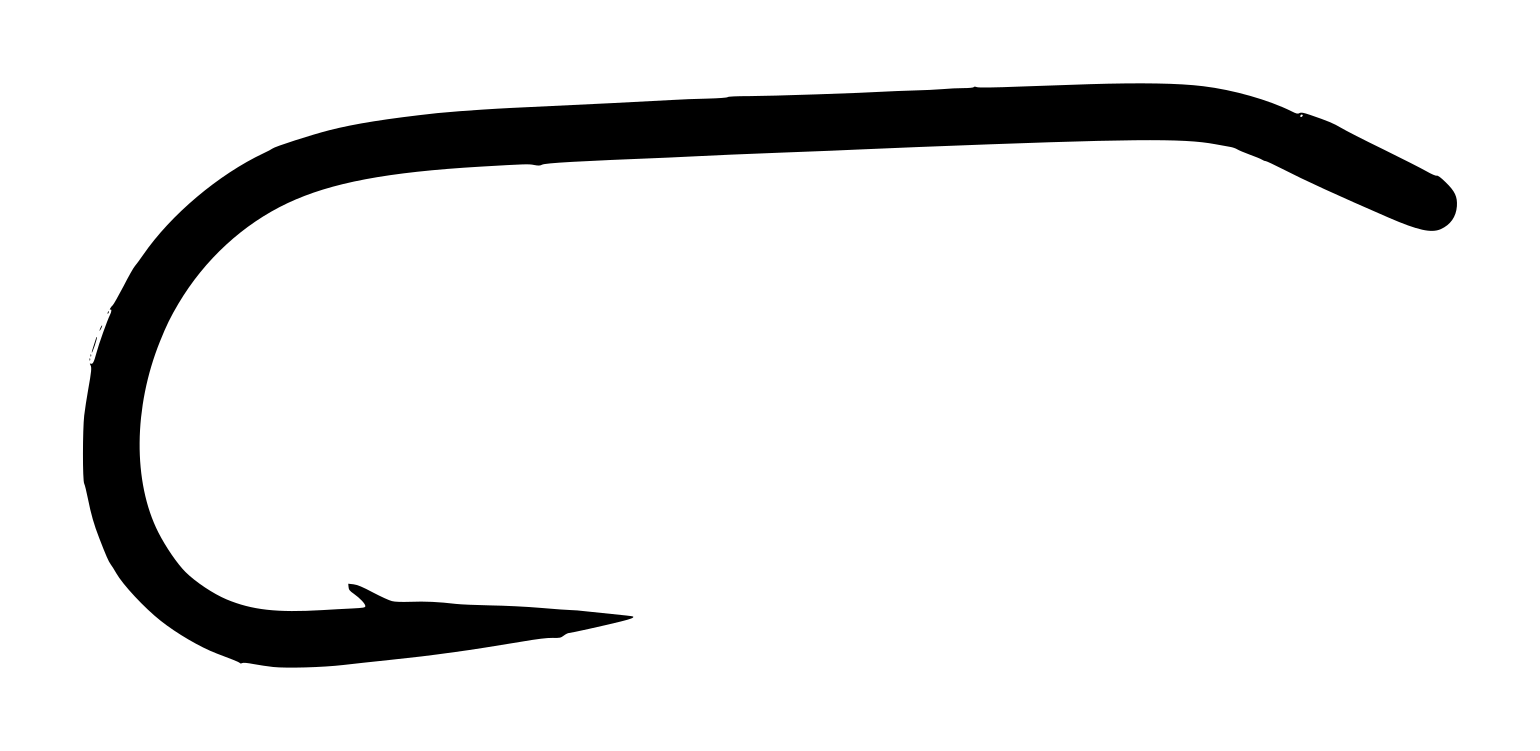
| Silhouette | Hook Model | Match | Analysis | Compare |
|---|---|---|---|---|
|
W173 No. 8 — W173 TDE Tapered Eye | 83% | Compare | |

|
Blue Label 2x Fine TDE No. 14 — Blue Label | 81% | Compare | |
|
FW500 No. 12 — Dry Fly Traditional | 80% | Compare | |
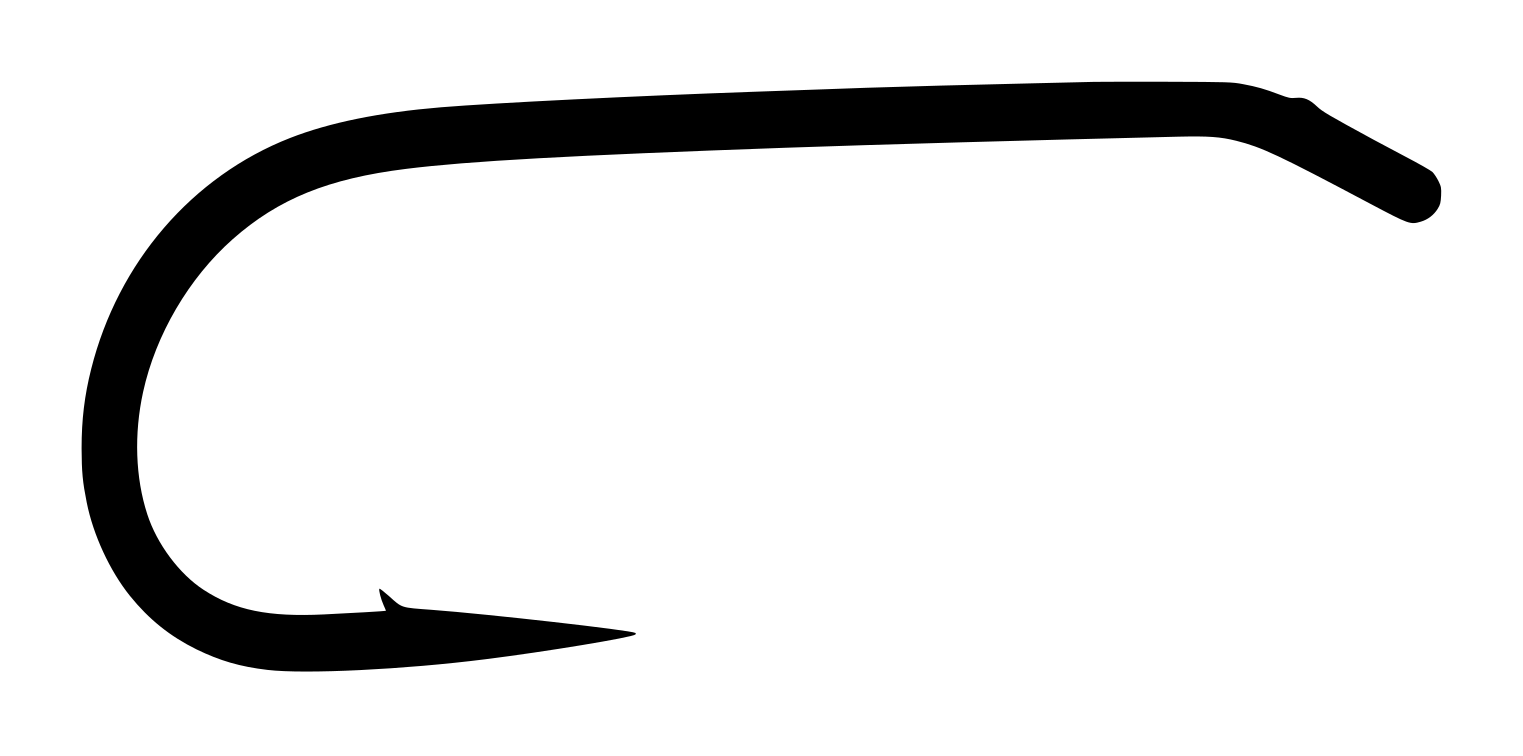
|
FW501 No. 12 — Dry Fly Trad. Barbless | 79% | Compare | |
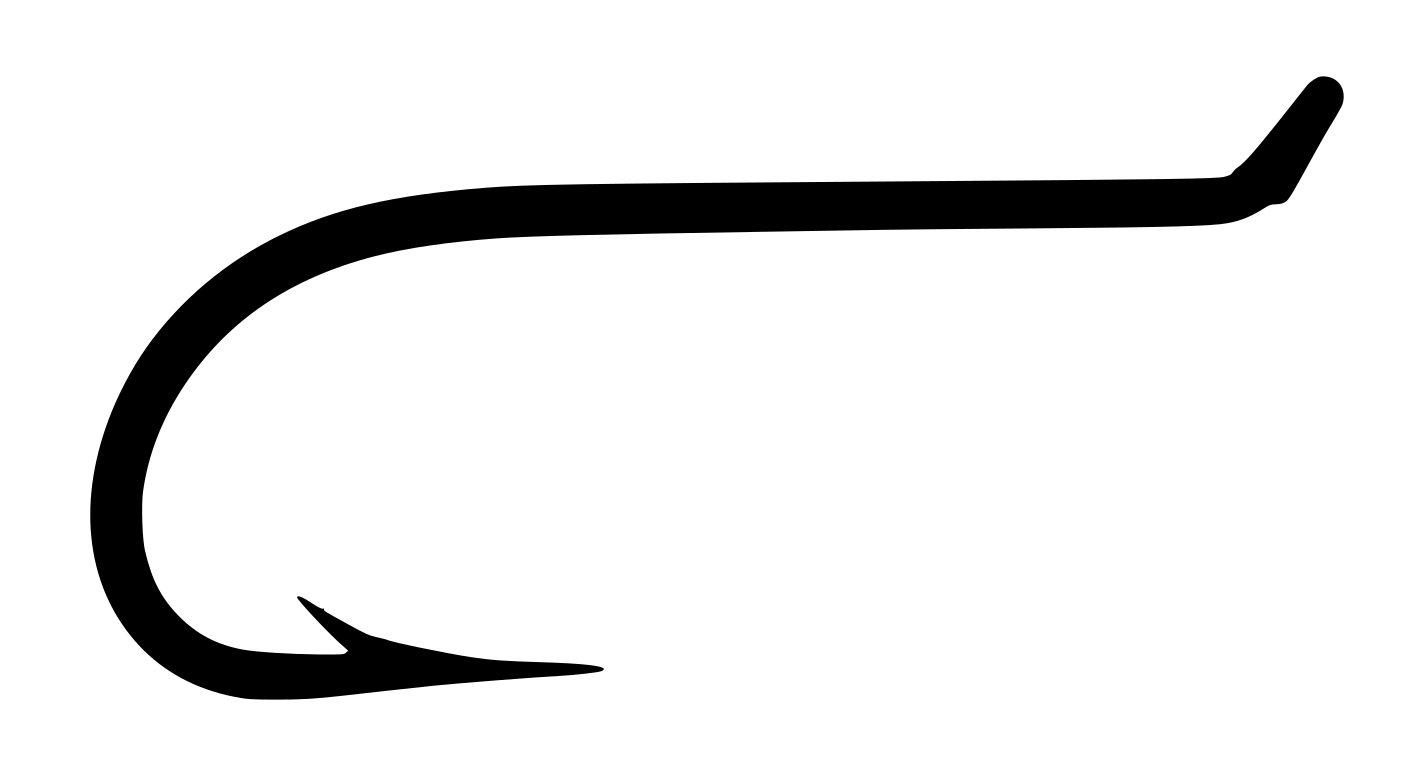
|
94842 No. 10–24 — Viking | 78% | Compare |
| Silhouette | Hook Model | Match | Compare |
|---|---|---|---|
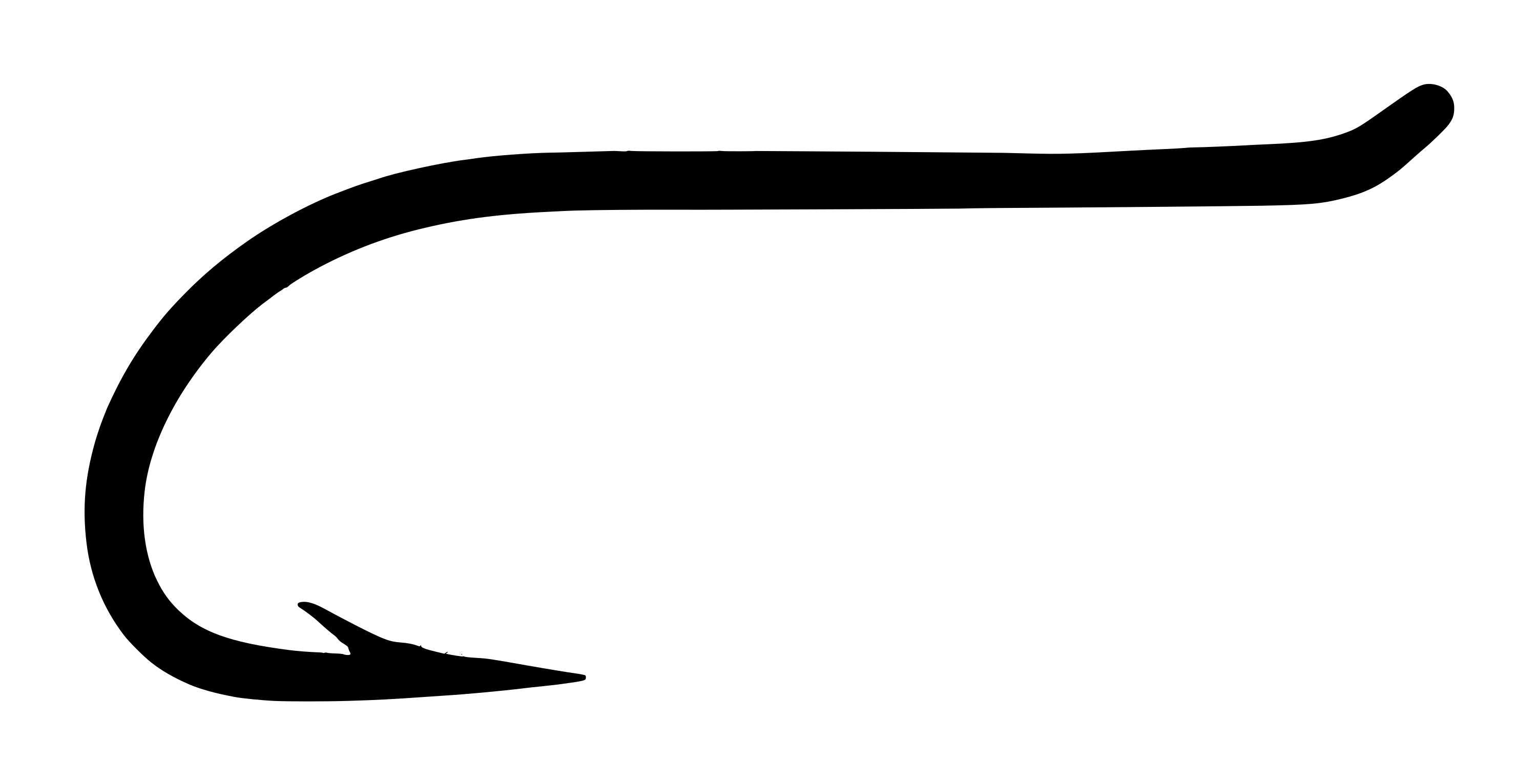
|
S4324 HE No. 10 — Hand Forged Hook (Octopus Brand) | 68% | Compare |
|
|
94842 No. 10–24 — Viking | 68% | Compare |
|
|
FW500 No. 12 — Dry Fly Traditional | 67% | Compare |
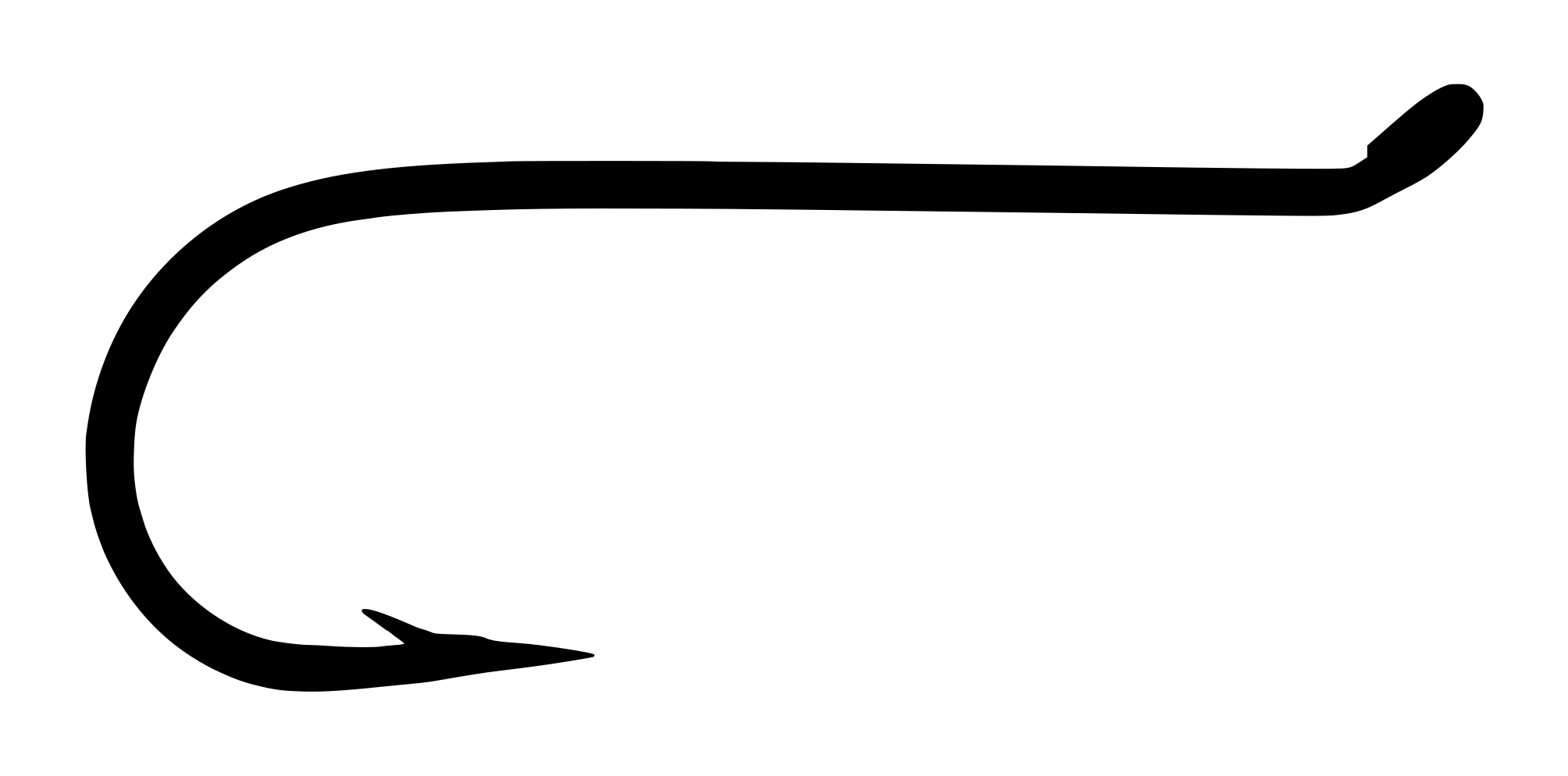
|
D5B No. 8 — D5B Mayfly | 64% | Compare |
|
|
FW501 No. 12 — Dry Fly Trad. Barbless | 63% | Compare |
The W172 size 14 is a utility dry and wet fly hook intended for small trout and grayling in streams and rivers. The sproat bend with standard wire gauge provides adequate strength for small mayfly and caddisfly imitations while maintaining enough delicacy for fine leaders and precise presentation. The turned-up tapered eye accommodates small-diameter tippets and produces minimal water disturbance, important for selective trout in clear water.
Standard dry fly and wet fly patterns for size 14: March Brown, Greenwells Glory, Blue Dun, Iron Blue, Partridge and Orange, Snipe and Purple
| Hook | Match Quality | Notes |
|---|---|---|
| Mustad 3906B | Very Good | Sproat bend, standard wire, tapered eye; closest modern equivalent in standard trout hook category |
| Tiemco 101 | Good | Standard dry fly hook with sproat-like bend geometry; finer wire than W172 but similar utility role |
| Partridge L2A | Good | Contemporary British sproat alternative; finer wire and specialized design but same general application |
Rated 3.5/10 — Common in standard sizes (14-16) but less frequently encountered in original packaging with full hook count intact. Collector demand is modest; primarily of interest to Redditch hook historians and vintage British tackle collectors rather than active fly tyers. The complete card in excellent condition adds moderate premium over loose hooks.
Positive factors: Original packaging with manufacturer markings and registration details is an asset for collectors of packaging history and mid-century industrial design. The bright, unoxidized bronze finish and complete 100-hook count demonstrate quality preservation over 70+ years. Allcocks hooks have modest following among British tackle collectors and Redditch tradition enthusiasts. The card format with tissue wrapper is increasingly scarce as packaging deteriorates with age.
Limiting factors: The W172 is a utilitarian, mass-produced hook with no special geometry or design distinction. Larger sizes (18-20) remain more common than size 14, but the model itself was produced in high volume and has not become genuinely scarce. The sproat bend and standard point style are standard patterns available from many manufacturers in both vintage and modern forms. No named designer or special collaboration elevates collector interest. Condition of the card (light toning, minor edge wear) is good but not mint; the value premium is moderate rather than substantial.
Size and finish variants: All available sizes appear to have been produced in bronzed finish. Size 14 is slightly less common than sizes 12-16 in the original card format. Complete cards with all 100 hooks intact command a premium; cards with missing hooks decline in value proportionally to loss.
Condition factors: Original tissue wrapper presence is a notable positive; cards without original tissue are valued slightly lower. Hooks with no corrosion or patina fetch the highest prices. Card printing condition (ink fade, edge splitting) affects package value independently of hook condition.
Pink/mauve sales card with red border frame. Printed in red and black offset lithography on medium-weight cardboard. Header: 'No. W172' with red stag rampant logo. Text: 'MADE IN ENGLAND' (red), 'Qty. 100' (red), 'ALLCOCKS' (black), 'Tie Perfect' (partially overprinted), 'STRAIGHT MODEL PERFECT' (red), 'RECD. U.S.A. 166790, CANADA 117/272/29' (red), 'RUSTPROOF HOOKS' (red), size '14' in large black numerals, 'ALLCOCKS, REDDITCH, ENGLAND' at bottom (black). Original tissue wrapping visible in package image. Card stock appears mid-twentieth century standard; print quality consistent with 1950s-1960s offset production.
Low ($6): Good condition—card opened, some toning and minor wear, all or most hooks present and bright.
High ($14): Excellent/Mint condition—sealed or near-sealed original card, full 100-hook count, minimal wear, original tissue wrapper intact.
Premium factors: Original tissue wrapper, full hook count, card printing clarity, bright unoxidized finish, Allcocks branding and British manufacture appeal.
Platforms: eBay (primarily UK and US listings), occasional vintage tackle dealers, Redditch hook specialist auctions.
Confidence: E estimated—limited specific sales data for size 14 W172 in original packaging; range based on comparable Allcocks trout hook cards and general mid-century British hook values.
eBay UK (most common venue for British vintage hooks); occasional appearance on eBay US. Redditch tackle fairs and specialist hook dealers (primarily UK and Europe). Online vintage fishing tackle forums and dealers specializing in British production hooks. Complete cards less frequently listed than individual loose hooks.
Store the card in a cool, dry environment away from direct sunlight and moisture. The bronzed finish is stable but benefits from low humidity; excessive moisture can promote patina development or light surface oxidation over decades, which some collectors value aesthetically but others prefer to avoid.
Keep the original card and tissue wrapper intact whenever possible. The packaging provides both protection and historical documentation. If hooks must be removed, store removed hooks in sealed glass or plastic containers with silica desiccant to prevent oxidation. Avoid contact with other metals (iron, copper, aluminum) which can promote galvanic corrosion of the bronze coating.
Handle the card edges carefully to avoid paper splitting or loss of the border frame printing. Display cards in acid-free sleeves if exhibited; avoid mounting directly to walls or surfaces with adhesive, which will damage the card permanently.
The tissue wrapper is fragile; if present, do not remove or unfold it unless absolutely necessary. Original tissue is a significant authenticity marker and adds measurable value to the specimen.
Source: Allcocks W172 package, images 2-3
‘RUSTPROOF HOOKS’ — This claim, printed prominently on the card, signals Allcocks’ response to postwar angling market expectations. ‘Rustproof’ in mid-twentieth-century British hook marketing typically referred to bronzed or blued finishes that provided superior corrosion resistance compared to bare steel. The claim reflects awareness that wet fly boxes, stream-side storage, and humid British climate could corrode unfinished hooks over a season. This marketing language became standard on British hook cards by the 1950s.
‘Qty. 100’ — Allcocks packaged trout hooks in standard 100-hook cards, reflecting both retail convention and bulk purchasing behavior of fly shops and mail-order suppliers. A 100-hook card represented a season’s supply for a serious trout fly fisher, or a restocking order for a tackle shop.
‘MADE IN ENGLAND’ and ‘ALLCOCKS, REDDITCH, ENGLAND’ — These markings were essential to Allcocks’ brand positioning during the postwar period, when ‘Made in England’ still carried prestige and indicated quality craftsmanship in international markets. The explicit Redditch attribution tied the hooks to the historic center of hook manufacturing, a point of pride in British industrial tradition.
Registration marks ‘U.S.A. 166790, CANADA 117/272/29’ indicate trademark registrations in both countries, evidence of formal international distribution and protection of the Allcocks brand during the 1950s. These registrations would have been renewed periodically; their presence on this card confirms active distribution to and trademark defense in North American markets.
No handwritten marks, owner stamps, or annotations visible on the card or packaging. The card appears to be an unhandled stock example, retaining its original printed text and tissue wrapper. The absence of pencil markings, shop prices, or inventory notations is consistent with the card’s archival preservation rather than retail shelf use.
Size 14 represents a small utility hook in mid-twentieth-century British fly fishing tradition. Stream trout fishing emphasized size range 12-16 for standard dry and wet flies; size 14 sits in the center of this range and was produced in volume. However, size 14 is less commonly encountered in original packaging today than sizes 12, 16, and 18, suggesting either that size 14 cards were produced in lower total numbers or that larger sizes were preserved more frequently.
The small size presents no anomaly relative to Allcocks’ product line. All evidence indicates the W172 was produced in standard trout sizes (10-20 minimum, possibly including 8 and 22 extremes), with size 14 representing a normal catalog offering rather than a special or unusual variant.
| P | Photographically verified — Directly observable in the photograph(s) on this page. |
| V | Verified by documentation — Confirmed by manufacturer catalog, spec sheet, or published reference. |
| I | Inferred — A logical deduction from observable or documented evidence, not directly stated. |
| E | Estimated — An approximation based on visual comparison, proportional analysis, or limited data. |
| S | Speculative — A reasoned hypothesis that cannot be confirmed from available evidence. |
Unnotated claims are the compiler’s synthesis; see Sources. All photographs on garrenwood.com are taken on a measurement grid where each square equals 1/10 inch (0.1″ / 2.54 mm).
Your cart is empty.