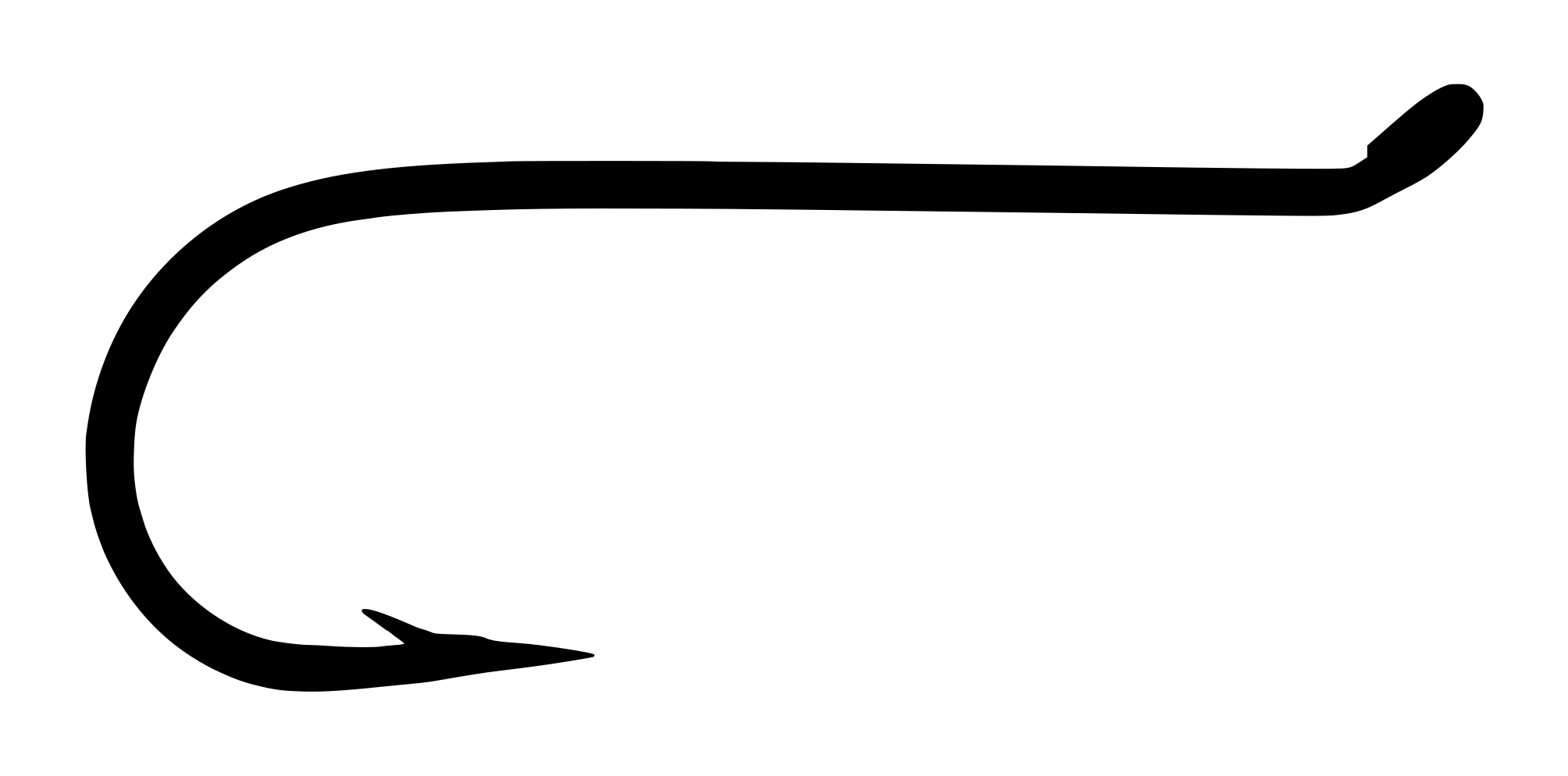
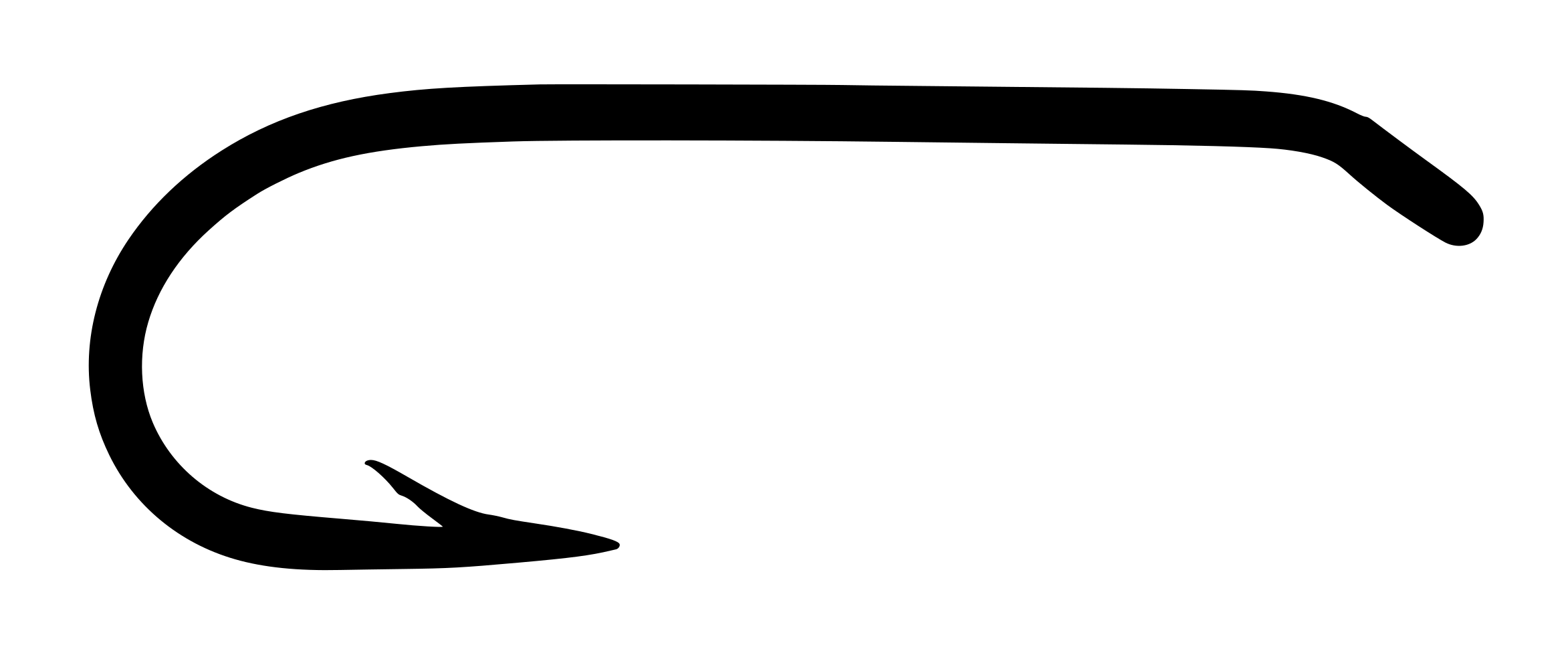
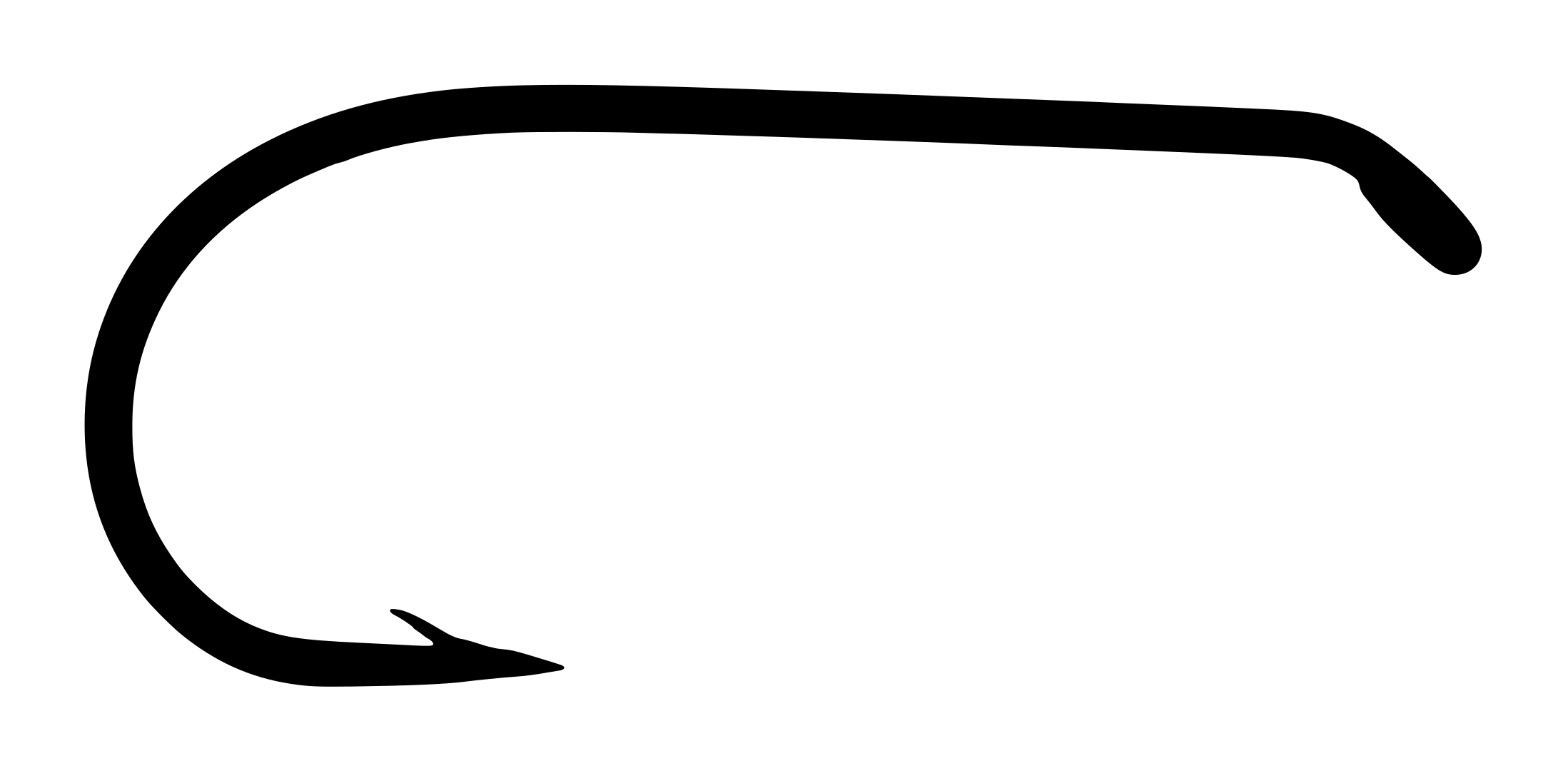
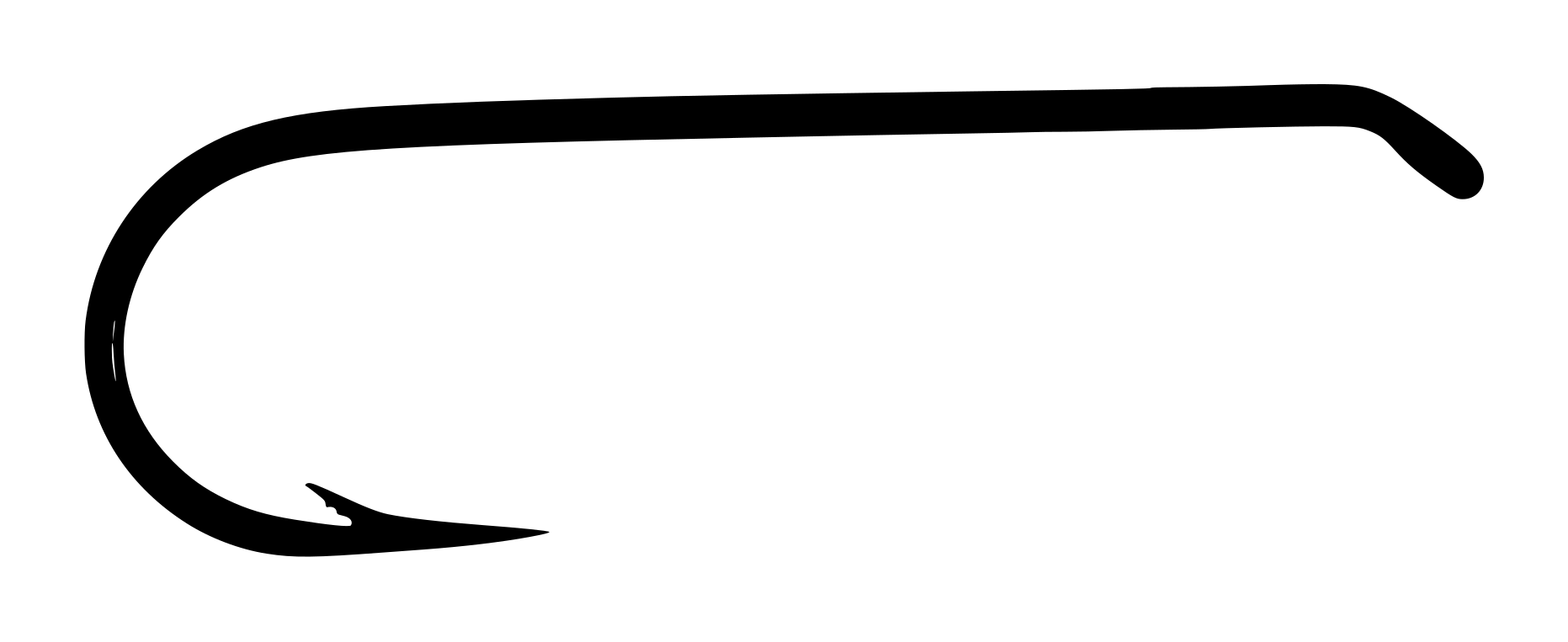
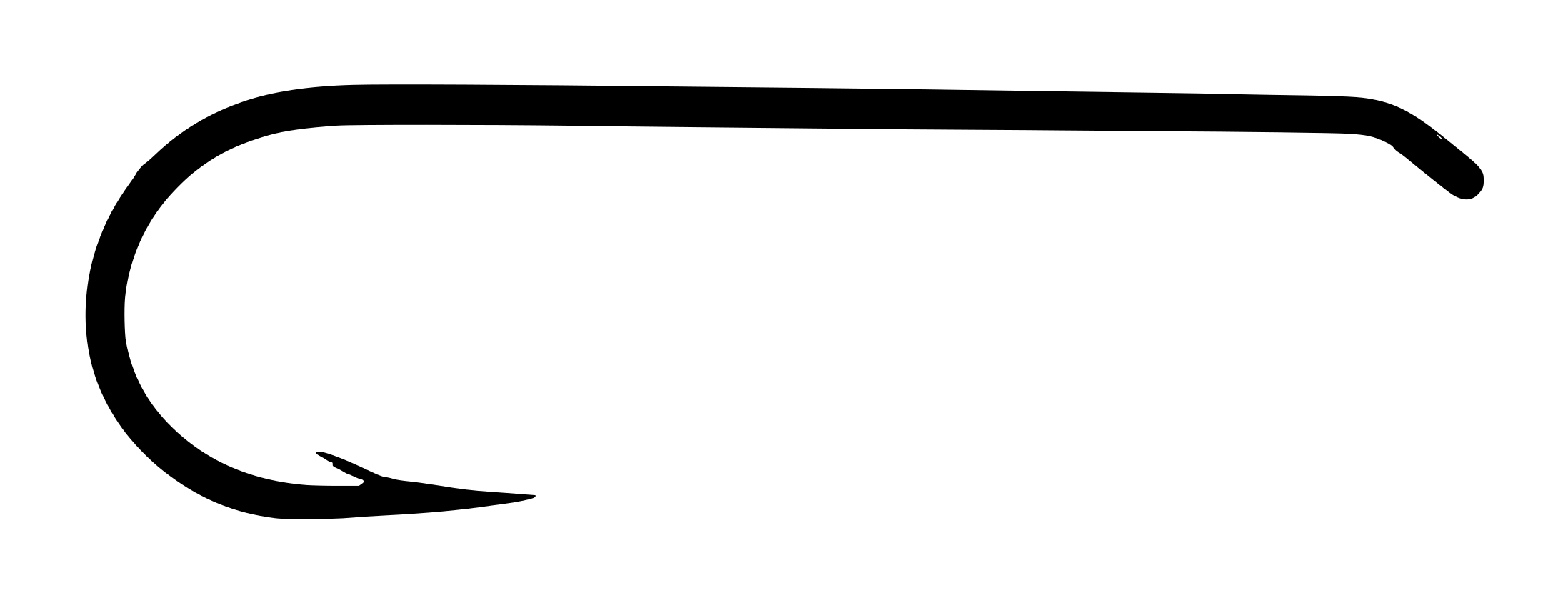
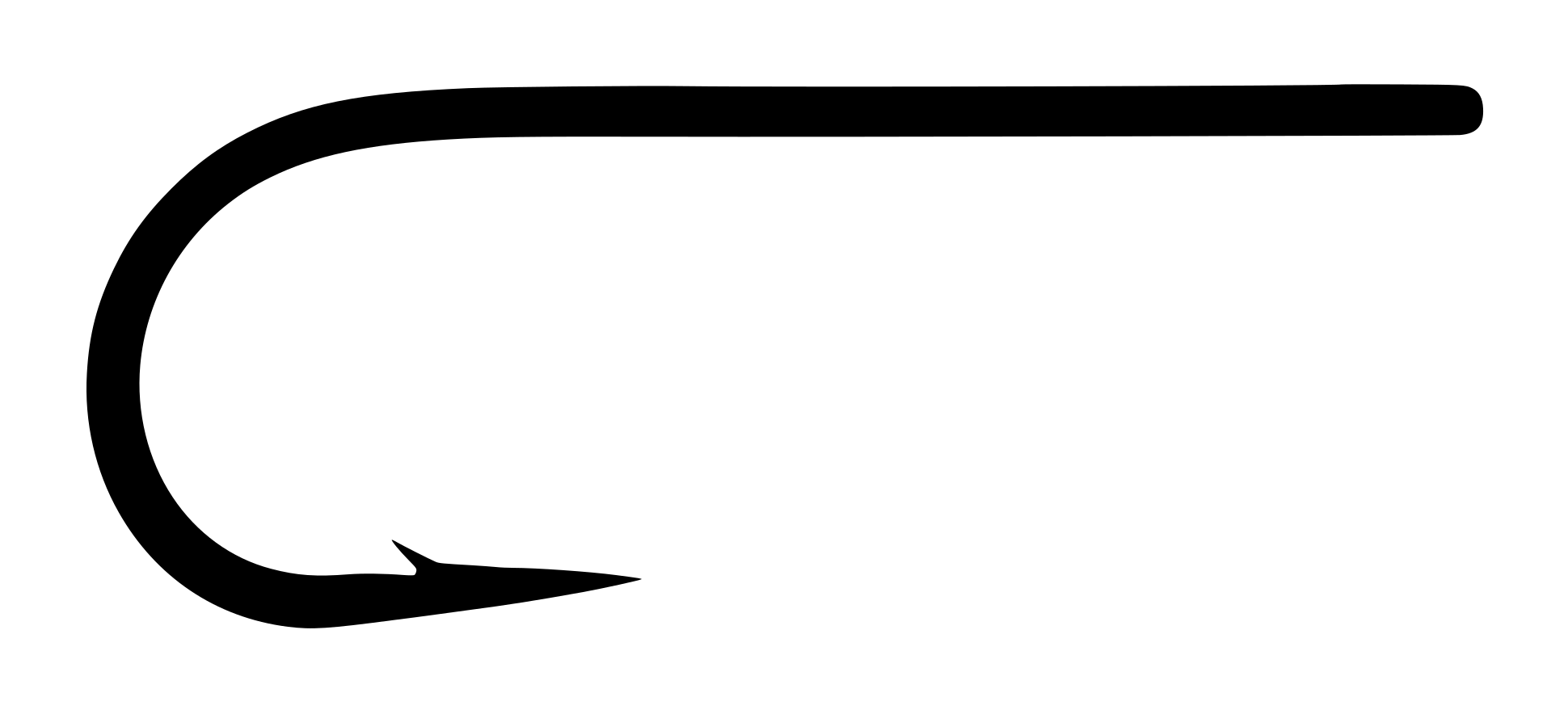
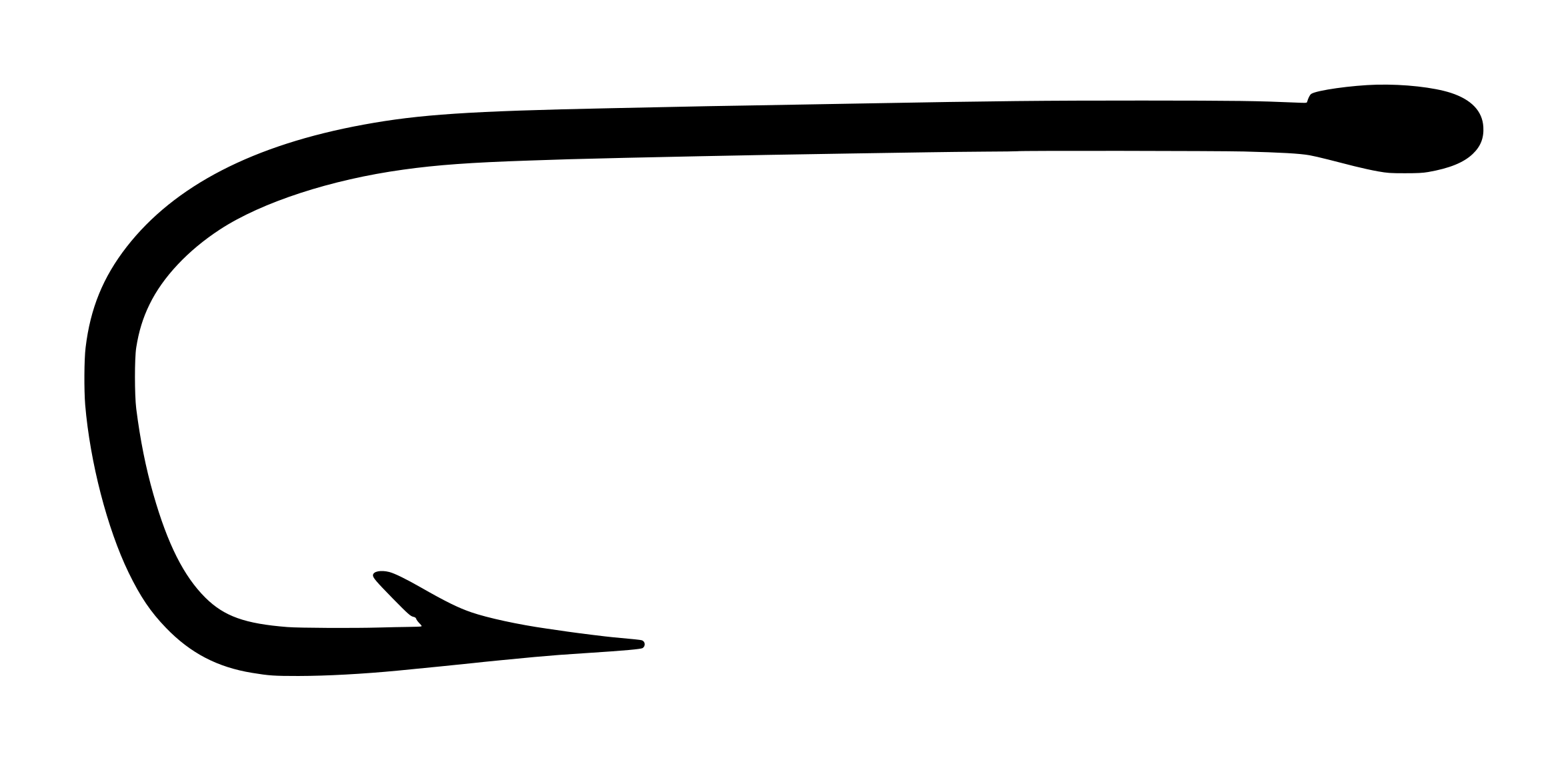
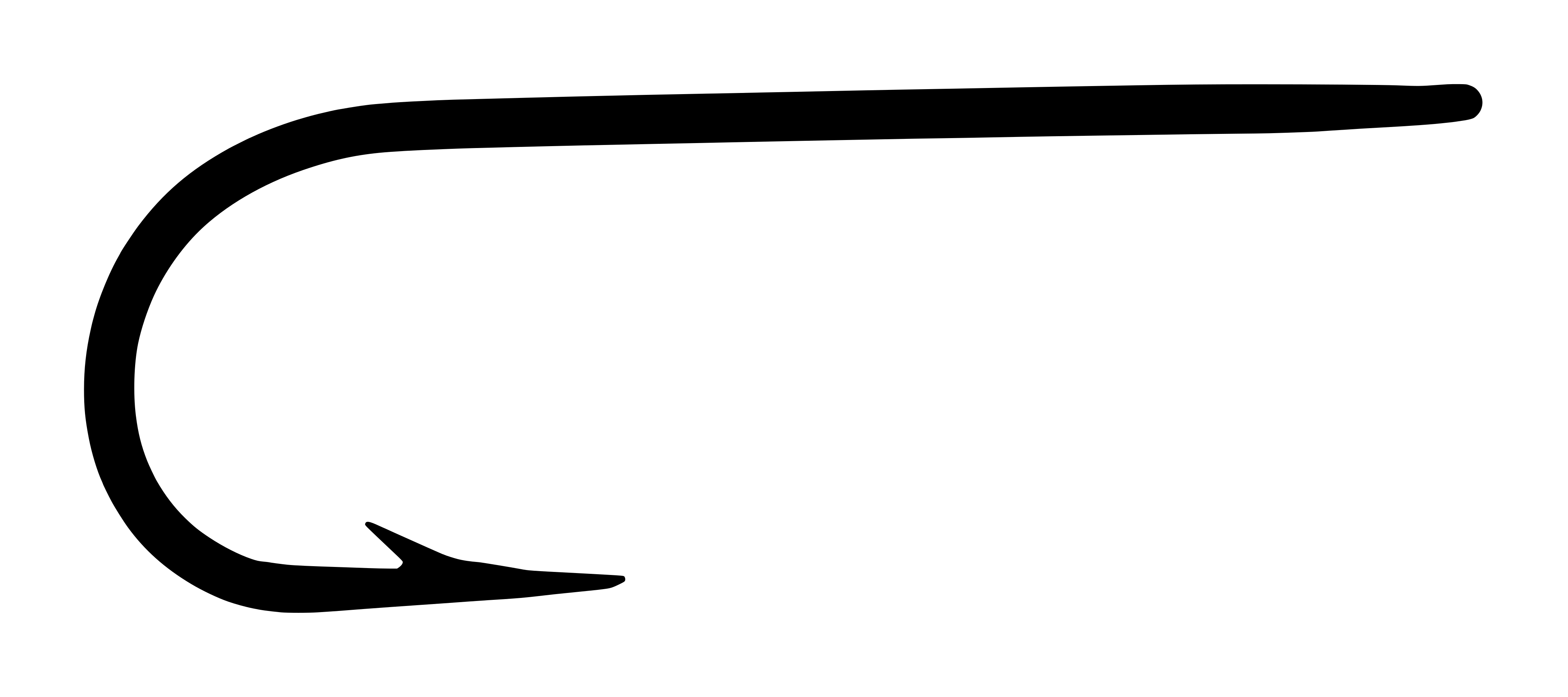
The Partridge D5B Mayfly is a specialty Redditch-era dry fly hook designed specifically for longer-bodied mayfly patterns. Introduced in 1980 to replace the original wide-ranging Partridge ‘long mays’ series, the D5B is available in four limited sizes (8, 10, 12, 14) and combines a long shank, wide gap, and offset sproat bend to accommodate extended mayfly body profiles while maintaining hooking geometry suitable for dry-fly work. The fine-to-medium wire (0.66 mm) keeps the fly riding properly on the water.
This example is a size 8 carded package from the Redditch production era, bearing an authentic B-prefix postcode (B97 4JE) and period telephone number. The bright green label with detailed reverse specifications is characteristic of 1970s–1980s Partridge packaging. The bronzed finish, looped up-eye, and integral forged construction are hallmarks of the Redditch tradition. Collector appeal is moderate — original Redditch production, specialty application, and period packaging make this desirable among vintage trout hook enthusiasts, though the D5B was produced in quantity and remains attainable in the secondary market.
Reverse of the original Partridge D5B carded package, showing the historical note explaining the 1980 replacement of the original 'long mays' range and the complete specification table with body length, gap, wire diameter, and weight for all four sizes.
Photographic record
4 cataloged imagesSelect any record to load it above.
4 images shown
Partridge D5B Mayfly Size 8 Card Back Label and SpecificationsReverse of the original Partridge D5B carded package, showing the historical note explaining the 1980 replacement of the original 'long mays' range and the complete specification table with body length, gap, wire diameter, and weight for all four sizes.Open originalPartridge D5B Mayfly Size 8 Front Card LabelFront of the D5B carded package, showing the signature bright green label with 'PARTRIDGE OF REDDITCH' header and running hook motif. Code D5B, Size 8 (handwritten in blue ink), and Quantity 25 are clearly marked in the three information boxes.Open originalPartridge D5B Mayfly Size 8 Hook Profile DetailClose-up side profile of a single size 8 D5B hook mounted on a 1/10-inch measurement grid, showing the characteristic offset sproat bend, looped up-eye, extended shank, and bronzed finish.Open originalPartridge D5B Mayfly Size 8 Hook Pair ComparisonTwo consecutive D5B size 8 hooks from the same package, displayed side-by-side on the measurement grid to demonstrate consistency of manufacture and symmetry of the offset sproat bend.Open original
Technical profile
Eye
Tapered Eye, Turned UpLooped up-eye construction, characteristic of Partridge trout hook tradition. Loop is integral to the shank, tapered in section. Eye diameter approximately 0.9-1.0 mm, suitable for size 8/0 thread. Loop shows clean finishing with no sharp edges or irregularities visible in macro photography. P Confirms specification statement on packaging: 'up turned ball eye.'
Wire
Fine (1X Fine), Round, Est. ~0.026"-0.028" (~0.66 mm) V
Shank
2X Long — Plain
Bend
Round / Kendal, Wide gapModified sproat bend with slight forward (outward) offset — the lower limb curves forward relative to the shank axis, characteristic of the mayfly application for improved hooking geometry. Bend radius is smooth and continuous, not angular. Point entry is gradual rather than sharp. P Bend symmetry is clean on both sides of the shank. Offset is approximately 0.08"-0.10" forward relative to vertical shank plane, consistent with design intent for dry-fly hook-set mechanics.
Point
Standard / SpearSmall barb, close-cut and neatly formed. Barb sits immediately behind the point taper, short and swept-back at approximately 15-20 degree angle relative to the point axis. Barb is proportional to fine-wire construction — not oversize. Placement is typical for Redditch-era dry-fly hooks. No microbarbs visible; single clean barb per hook. P
Finish
Bronzed — Confirmed (stated on packaging)Warm bronzed finish consistent with Redditch-era Partridge standards. Tone is mid-brown with slight golden undertones under natural light. No uneven patina or corrosion visible on specimen hooks; finish is uniform across all three hooks photographed. Characteristic warmth of bronze clearly distinguishes from the cooler black-japanned finish used on heavy salmon irons from the same era. P Finish quality is excellent with no visible chippage or wear.
Specimen hooks are bright and clean with no oxidation or corrosion. Card shows minor yellowing and light creasing consistent with age and storage. All 25 hooks are accounted for (confirmed by package label). Cellophane window over hooks is intact and clear. No loose hooks or missing hooks. Card is flat and displayable.
The D5B’s engineering reflects Partridge’s design philosophy for extended-body dry fly work. The long shank (approximately 5.7″-5.9″ for size 8) provides material for dubbing or body construction without requiring the fly to extend beyond the hook curve, maintaining balance on the water. The wide gap (0.26″ on this size 8 specimen) reduces the proportion of gape-to-shank, which is actually narrower than standard dry-fly hooks relative to the extended shank — this geometry is deliberate, allowing a relatively slender fly while maintaining sufficient hookset purchase on the fish’s jaw.
The offset sproat bend (forward-curving lower limb) aids in rotating the hook during the strike. The fine-to-medium wire (0.66 mm = approximately 23-gauge) balances strength with the floatation requirements of a dry fly — heavier wire would cause excessive sinking, but the offset and bend geometry provide structural integrity despite the fine wire. The superior point (near-straight inner taper) penetrates cleanly without the resistance that a hollow point would introduce to fine-wire construction. The bronzed finish was the Partridge standard for trout hooks, offering a warm finish that does not spook fish in clear water and is less visible than bright steel.
The D5B Mayfly hook is a specialty product within Partridge’s broader trout hook catalog. According to the back-label historical note, the original Partridge mayfly range (referred to as ‘long mays’) was produced in sizes ranging from 2/0 to 18, accommodating the full spectrum of British mayfly patterns from giant drakes down to minute species. This original range was discontinued and replaced in 1980 by the size-limited D5B range, which is available in four sizes only: 8, 10, 12, and 14.
The 1980 replacement represented a rationalization of manufacturing complexity and a focus on the most practically useful sizes for modern fly tyers. The D5B designation and the specific 1980 introduction date position this as a mid-cycle product refresh during the Partridge period before the Mustad acquisition. The hook remained in continuous production through the Redditch era and was retained (though with reduced emphasis) through the Mustad and early Fishing Matters periods. Current availability of the D5B is variable; it appears in the Fishing Matters Heritage line catalog but is not highlighted as a core product.
Era and Packaging Dating
Postcode B97 4JE on the address footer indicates post-1974 production — British postcodes were introduced nationwide in the 1960s but were not consistently printed on packaging until the mid-1970s, and the full 6-character format (B97 4JE) was standardized by the mid-1970s. Telephone number format '(0527) 43555' with parenthetical area code is consistent with 1970s–1980s British telephone numbering convention (the '0527' is the Redditch STD code). The packaging style — offset-printed card with bright green label, cream card stock, sans-serif typeface — is consistent with mid-to-late 1970s/early 1980s print conventions. The note stating 'The D5B range, available only in sizes 8, 10, 12 and 14 replaced the old pattern in 1980' confirms introduction year as 1980. Redditch origin (confirmed by address and manufacturing context) indicates pre-1996 Mustad acquisition, and the lack of any Mustad co-branding on the packaging suggests pre-1996. All evidence points to c. 1980–1996 (Redditch production), with the specific package likely c. 1980–1985 based on label condition and print style.
Design lineage and influence
Best matchRelated by Attribute
Computed automatically from catalog data — updated as new hooks are added.
Matches: Bend, Shank, Eye, Point, Finish +5 moreDiffers: Wire: Fine (1X Fine) vs Extra-Fine; Gap: Wide vs Standard; Eye Orient.: Turned Up vs Turned Down +3 more
Matches: Bend, Wire, Gap, Eye, Point +5 moreDiffers: Shank: 2X Long vs Standard; Eye Orient.: Turned Up vs Turned Down; Forging: Round vs Forged +3 more
Matches: Bend, Wire, Eye, Point, Finish +4 moreDiffers: Shank: 2X Long vs 3X Long; Gap: Wide vs Standard; Eye Orient.: Turned Up vs Turned Down +1 more
The D5B is a specialized mayfly hook designed for dry fly tying, particularly for longer-bodied mayfly patterns including sulphurs, drake, and olive species. The wide gap and offset bend aid hooking and hold on the fly over extended presentations. The long shank accommodates extended mayfly body representation while the relatively fine wire keeps the fly riding properly on the water.
Classic Fly Patterns
Sulphur Dun, Olive Dun, Drake, extended body mayflies
Modern Equivalents
Hook
Match Quality
Notes
Partridge D5B (current production, made in China)
Excellent
Same pattern code, but current production is China-manufactured under Fishing Matters Ltd ownership. Geometry may differ subtly from Redditch originals.
Tiemco 101 Dry Fly
Very Good
Similar extended-shank dry fly profile; Japanese manufacture with very fine wire and up-eye. Substitutes functionally for D5B in modern tying.
Daiichi 1180 Mayfly
Good
Japanese mayfly hook with extended shank and similar bend profile; available in comparable size range.
Collector notes
Rated 4.0/10 — moderately collectible due to original Redditch production and specialty mayfly application, but common within the D5B line overall. Size 8 is less commonly encountered than sizes 10 and 12. Complete original packaging with all 25 hooks intact commands modest premium over loose hooks.
Reference value
$10 – $25 USD estimate
Packaging condition
Good — moderate wear, legibleRecorded specimen
Packaging format
GW-P-D5B-1970sCatalog code
The D5B Mayfly represents Redditch-era Partridge production at a point of significant transition in hook design (1980 introduction). Collector appeal is driven by three factors: (1) authentic Redditch manufacture with period-accurate packaging; (2) specialty mayfly design with documented engineering rationale visible on the back label; (3) the broader collector interest in Partridge trout and dry-fly patterns from the pre-Mustad acquisition era (pre-1996).
Limiting factors include: (1) the D5B was in continuous production and remains available in secondary markets, reducing scarcity; (2) complete original carded packages are more desirable than loose hooks, but even carded examples typically sell in the $10-25 range; (3) size availability varies — size 8 is less common than 10 and 12, but still not genuinely rare.
Most desirable form: Complete original Redditch-era carded package with all 25 hooks, bright green label with no fading, and minimal wear. Loose hooks from this range are valued primarily as functional tying material rather than collectibles. Condition of the card itself (no creasing, no yellowing) adds 10-20% to value. Size 8 in sealed or near-sealed card commands the highest premium within the range.
Packaging
Card-mounted sales card format, approximately 5.5" × 8.5" printed card. Bright green label area with bold black sans-serif 'PARTRIDGE OF REDDITCH' header and running hook motif. Three information boxes below: CODE (D5B), SIZE (8 — handwritten in blue ink), and QTY (25). Footer text 'PARTRIDGE MAYFLY HOOKS' and 'HIGH CARBON SHEFFIELD STEEL' in block capitals. Reverse side provides detailed specifications including history note about original 'long mays' sizing (2s to 18s), replacement rationale for the 1980 introduction of size-limited D5B range (8, 10, 12, 14), construction notes for up-eye and down-eye availability, uses statement, and full specification table with body length in mm, gap in mm, wire diameter in mm, and hook weight in mg for all four sizes. Address footer: 'PARTRIDGE OF REDDITCH, REDDITCH B97 4JE, ENGLAND. TEL: (0527) 43555.' B-prefix postcode indicates post-1974 production. No barcode visible. Letterpress or offset print on cream card stock. Hooks mounted in clear cellophane window at top of card. Overall condition good with light yellowing and minor creasing.
Market Value Notes
Low ($10): Good condition — opened package, complete or near-complete hook count, card shows light wear and minor creasing. High ($25): Excellent/Mint condition — sealed or effectively sealed, all 25 hooks present, bright green label with minimal yellowing, card flat and crisp. Premium factors: Complete original packaging, all hooks present, bright label condition, Redditch-made origin, size 8 rarity within range, period-correct postcode and telephone format. Platforms: eBay UK (primary), specialist Redditch fly-hook dealer network, occasional tackle fair appearances. Confidence: E estimated — based on 1 comparable eBay sold listing ($20.10 for 200-hook bulk lot of mixed D5B sizes, which would suggest per-card value of $8-15 for average condition, adjusted upward for size 8 scarcity and complete single-card presentation.
Where to Find
eBay UK remains the primary secondary market source. Specialist Redditch fly-hook dealers and vintage tackle retailers (particularly UK-based) occasionally stock period carded Partridge hooks. Tackle fairs in the Midlands (Worcestershire/Redditch region) and classic fly-tying festivals may feature examples. Direct purchase is unlikely through current Partridge of Redditch distribution (brand is owned by Fishing Matters Ltd and production is now in China); original Redditch stock is purely secondary market.
eBay market reference. Researcher-curated. Prices in USD. Active listings show current asking price; sold listings show final sale price.
Preservation
Storage and Preservation
Store this carded package in a cool, dry environment away from moisture and direct sunlight. The bronzed finish will naturally develop a patina over time with humidity exposure — collectors often view this as desirable and characteristic of period-correct Redditch hooks. Original packaging should be retained rather than removing hooks, as the card and label significantly enhance both collectible value and historical documentation.
If the card begins to show excessive yellowing or brittleness, place the entire package in an archival-quality flat storage box (acid-free cardboard or polypropylene) with silica gel to control humidity. Avoid stacking heavy objects on top of the card. Do not attempt to clean the bronzed hooks with abrasive methods — light dusting with a soft brush is sufficient. The hooks should never be stored loose or in metal containers, as contact with ferrous metal can promote galvanic corrosion on the fine wire.
Marking Analysis
Handwritten Annotations
The size field (SIZE 8) on the front card label has been filled in by hand in blue ballpoint ink rather than printed. This is consistent with Redditch-era Partridge practice, where size numbers were often hand-stamped or pen-written at the point of packaging, allowing the same printed card format to be used for multiple sizes. The handwriting is neat and legible, suggesting skilled factory worker rather than casual dealer markup. No other visible annotations or dealer markings are present on the specimen.
Primary Source
Historical Context from Back Label
Source: Partridge D5B Mayfly Hooks card back label, 'SPECIFICATION' section, c. 1980–1985
The reverse side of the card contains a valuable historical note: ‘The original Partridge Mayfly Hooks known as “long mays” ranged in sizes from 2’s to 18’s — someone had obviously come across some giant and minute mayflies!’ This note indicates that the original range served an exceptionally broad spectrum of British mayfly species, from the largest drakes down to minute ephemerids. The note continues: ‘The D5B range, available only in sizes 8, 10, 12 and 14 replaced the old pattern in 1980.’ This 1980 date is the only documented introduction date for the D5B in published sources, and it appears here as original manufacturer copy.
The specification table on the reverse provides direct engineering documentation: Body Length (mm), Gap (mm), Wire Diameter (mm), and Hook Weight (mg) for each size. For size 8 specifically: Body Length 16 mm, Gap 6.8 mm, Wire Diameter 0.66 mm, Weight 84 mg. These factory specifications allow direct comparison between Redditch originals and modern Chinese production, enabling collectors and tyers to assess whether current production matches historical geometry. The detailed construction specification — ‘Bronze finish/medium weight wire (2 x fine)/about 2 x long/forged offset Capt. Hamilton bend/wide gap/up turned ball eye/medium length point/small barb’ — provides a complete engineering summary in period manufacturer language.
Additional
The Mayfly Fishing Tradition in British Fly Tying
The Partridge D5B represents a continuity with one of the oldest and most prestigious traditions in British fly fishing: the seasonal pursuit of mayfly (Ephemera danica and related species) on chalk streams and limestone rivers. The mayfly hatch — typically occurring in May and June in southern England — is the apex event of the trout season, when massive fish rise to take imitations of the large upright-winged duns and spinners.
The original Partridge ‘long mays’ range, with its extreme size spectrum from 2/0 down to 18, reflects the reality of mayfly diversity and the trial-and-error approach of early 20th-century fly tyers. The 1980 rationalization to just four sizes (8, 10, 12, 14) represents a mature understanding: that the majority of mayfly tying falls within a practical window, and that beyond this range, tyers either use general-purpose dry-fly hooks or tier alternative patterns. The D5B’s extended shank and offset bend are specifically engineered to handle the proportional demands of mayfly patterns — the body must be long enough to represent the insect’s slender abdomen, yet the hook must remain a dry fly that floats and sets effectively.
Today, with chalk stream fly fishing facing pressure from reduced water quality and population pressure, the D5B and similar traditional mayfly hooks have taken on a secondary role — they are specialist tools for a specialized fishery rather than bread-and-butter patterns. This makes original Redditch examples not merely functional hooks but links to a vanishing tradition of English fly-fishing craftsmanship and entomological knowledge.
Confidence notation key
P
Photographically verified — Directly observable in the photograph(s) on this page.
V
Verified by documentation — Confirmed by manufacturer catalog, spec sheet, or published reference.
I
Inferred — A logical deduction from observable or documented evidence, not directly stated.
E
Estimated — An approximation based on visual comparison, proportional analysis, or limited data.
S
Speculative — A reasoned hypothesis that cannot be confirmed from available evidence.
Unnotated claims are the compiler’s synthesis; see Sources. All photographs on garrenwood.com are taken on a measurement grid where each square equals 1/10 inch (0.1″ / 2.54 mm).