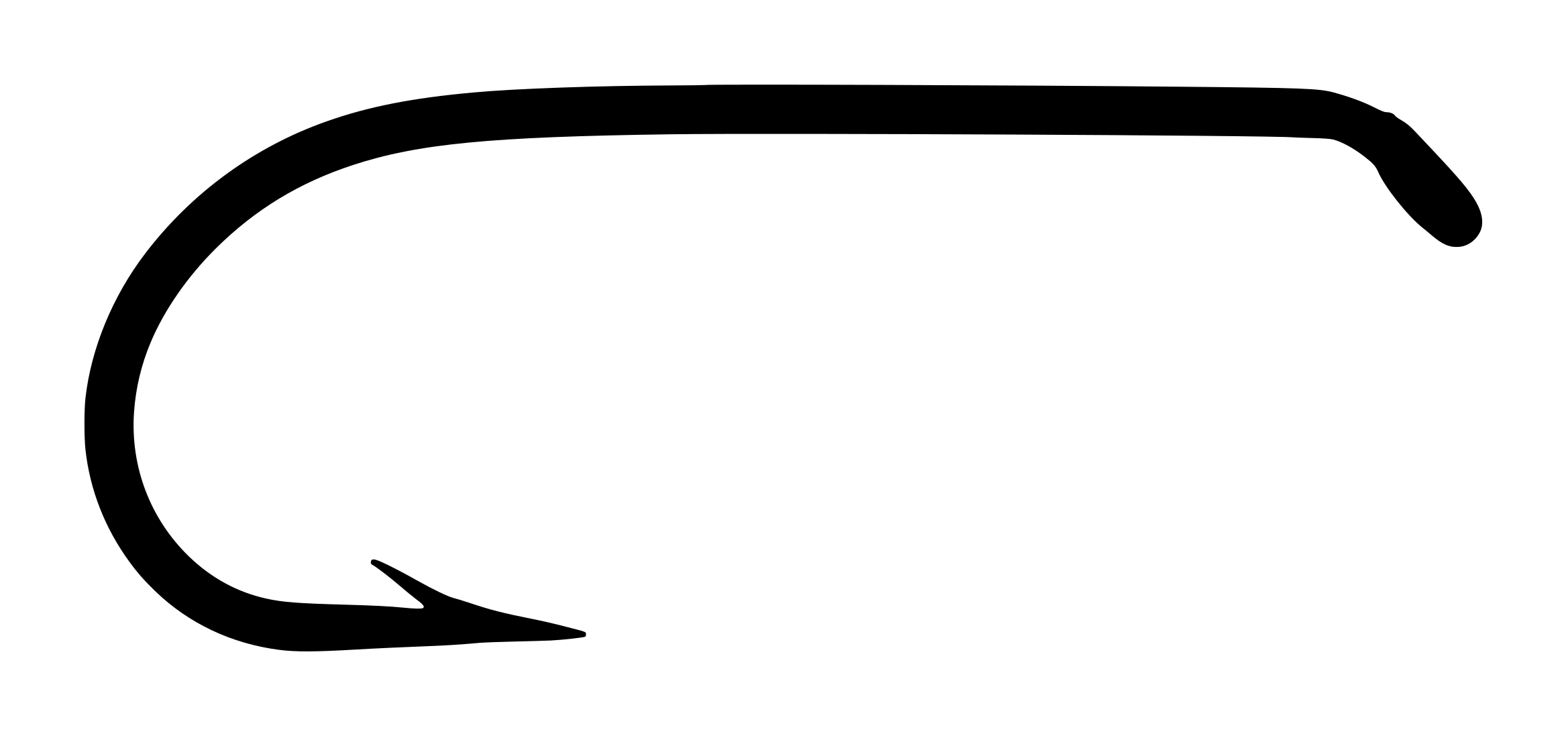
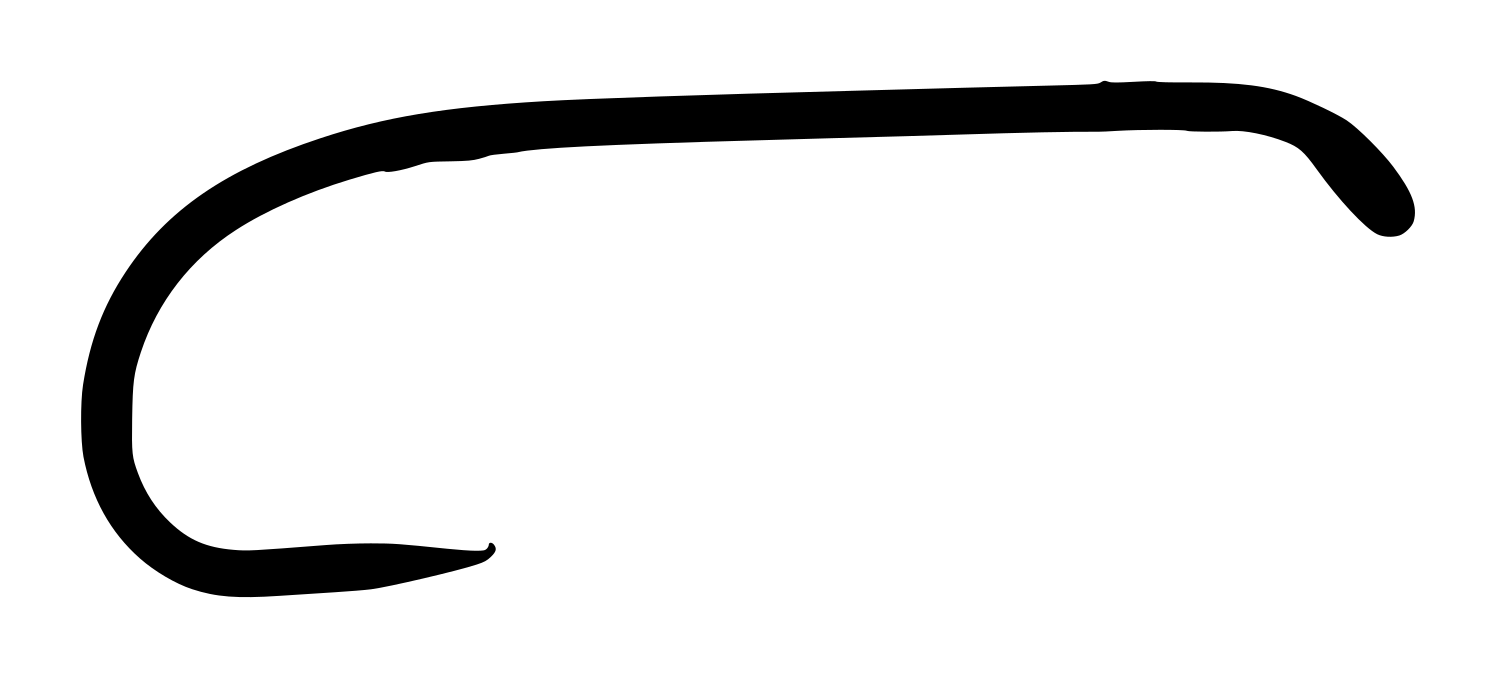
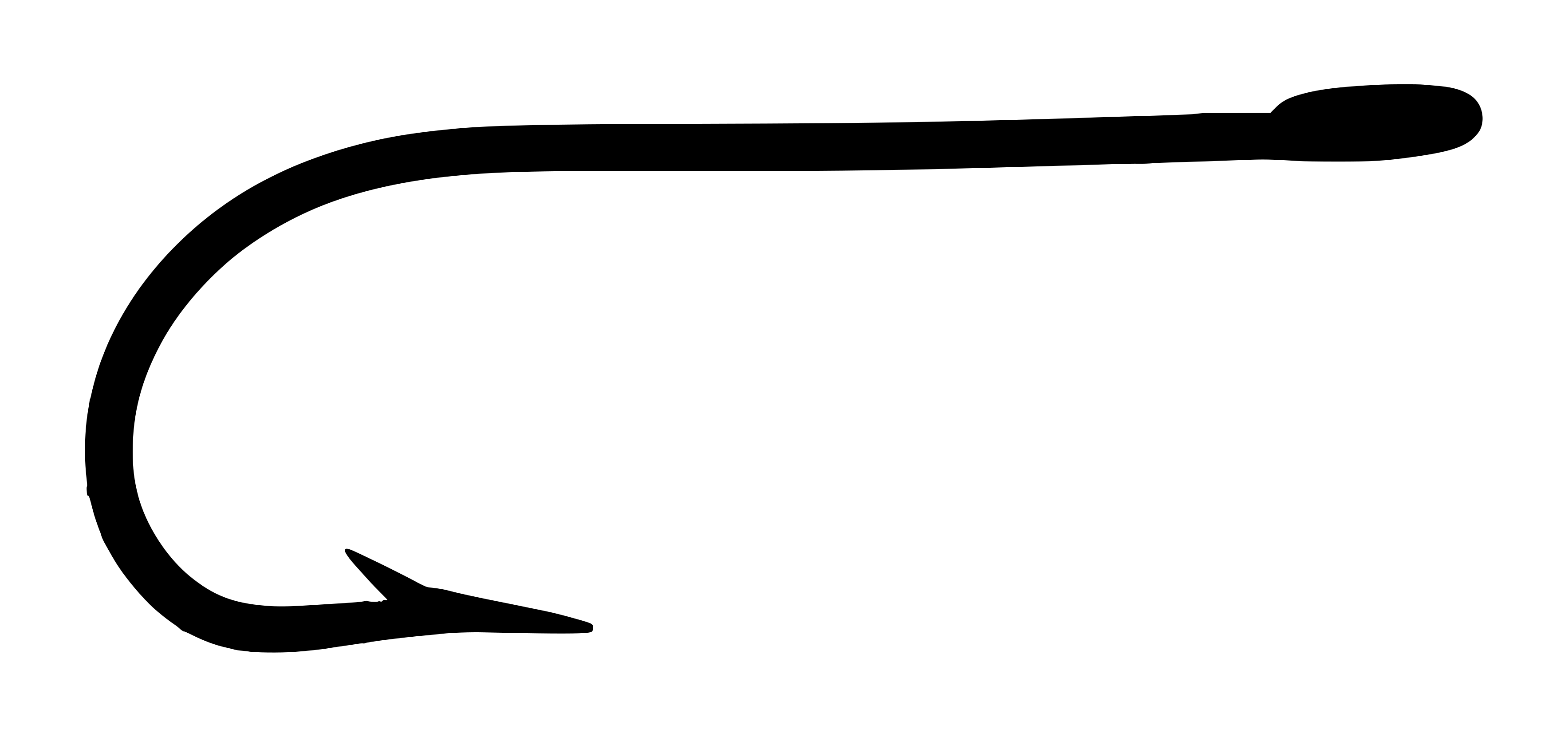
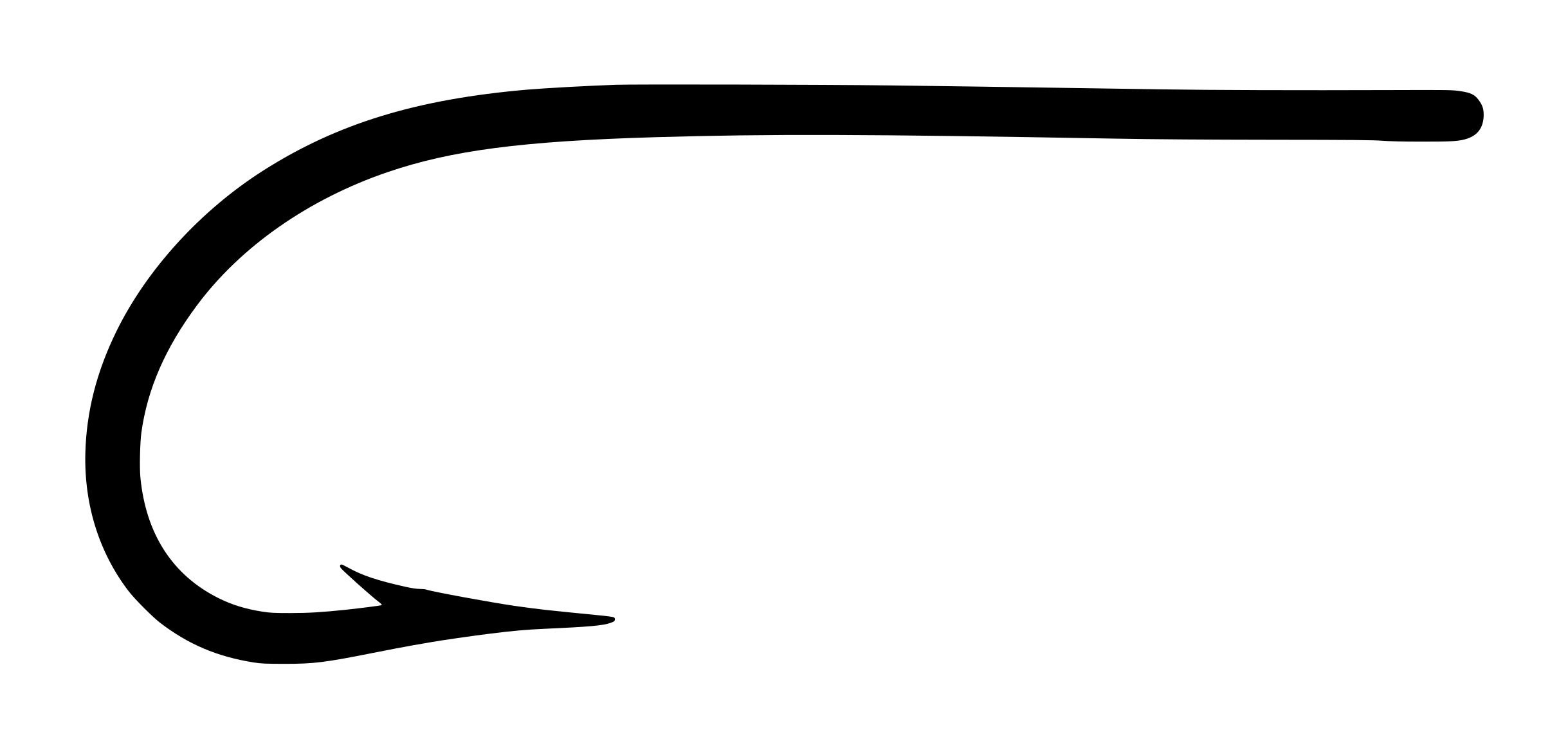
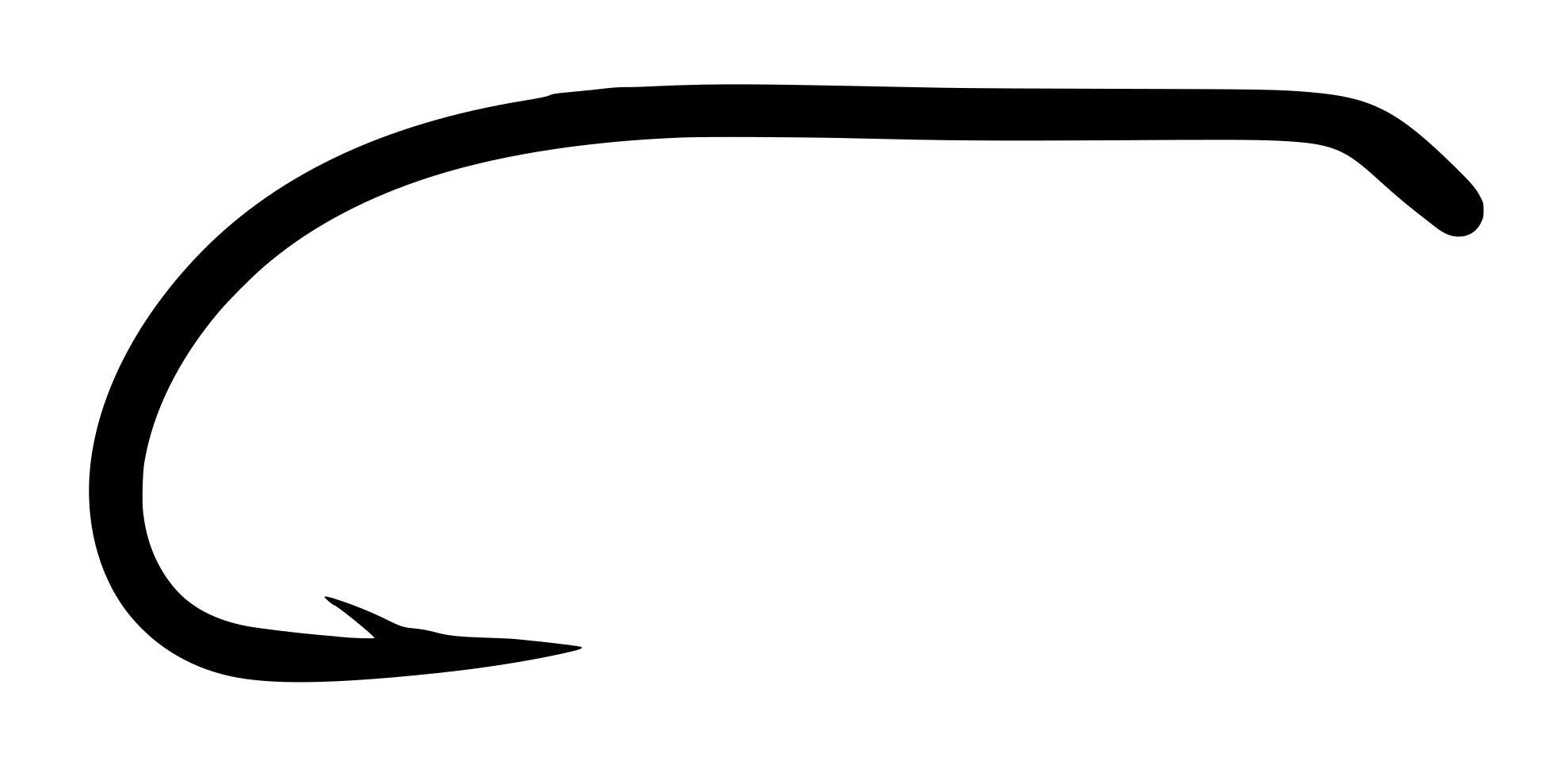
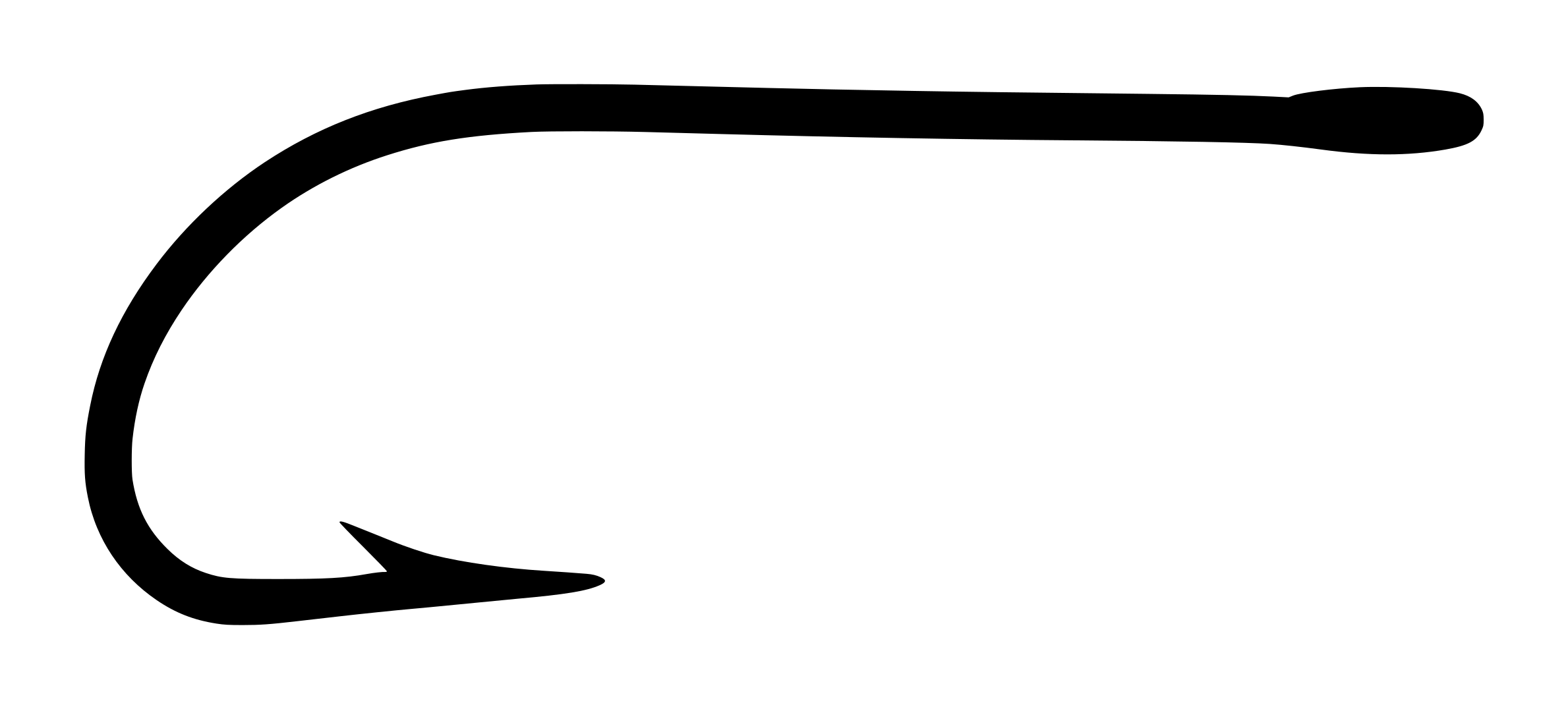
The Partridge E6A is a classic Redditch-era small trout hook in extra-fine wire, sized for delicate dry and wet fly work on tiny streams and spring creeks. Coded as a 4X Fine short-shank down-eye pattern, the E6A represents the traditional English approach to small-fly hook design — a thin wire Sproat bend with a simple tapered down eye, optimized for precise casting and subtle presentation.
This specimen is packaged in original Redditch factory cardboard with blue stamped branding typical of the interwar and early postwar era (c. 1920–1950). The ‘MADE BY PARTRIDGE OF REDDITCH, ENGLAND’ imprint and hand-lettered side label are strong markers of wholesale/factory stock from the peak of English hook manufacturing. The bronze finish, flat-forged bend geometry, and hand-labeled sizing are characteristic of pre-war Partridge production before Mustad’s 1996 acquisition.
The E6A occupies a specialized niche in the modern collector’s market — it is neither a mainstream pattern like the Bartleet CS10 series nor a famous named designer pattern, but rather a coded reference-catalog hook that represents Partridge’s systematic nomenclature for trout patterns. Its rarity today stems not from historical fame but from limited production runs and the wholesale nature of its original distribution.
Original Partridge E6A factory packaging showing blue-stamped design specification ('Bronze Down/Eye Flat Forged Redditch Bend Extra Fine Wire') and hand-lettered typewriter label indicating size 10 and quantity per box. This wholesale-format box is typical of pre-1950 Redditch production.
Photographic record
5 cataloged imagesSelect any record to load it above.
5 images shown
Partridge E6A Original Redditch Factory Box Size 10Original Partridge E6A factory packaging showing blue-stamped design specification ('Bronze Down/Eye Flat Forged Redditch Bend Extra Fine Wire') and hand-lettered typewriter label indicating size 10 and quantity per box. This wholesale-format box is typical of pre-1950 Redditch production.Open originalPartridge E6A Three Boxes — Original Factory StockThree examples of the original Partridge E6A factory box, demonstrating consistency of the blue-stamped branding and hand-labeled packaging. This shows how wholesale stock was prepared and organized in the Redditch era.Open originalPartridge E6A Hook Specimen — Tapered Down Eye and Sproat Bend ProfileSingle E6A hook, size 10, photographed on 1/10-inch measurement grid showing the tapered down-eye (TDE) and rounded sproat bend geometry characteristic of the pattern. Bronze finish is clearly visible.Open originalPartridge E6A Two Hooks — Comparative Scale and Bend GeometryTwo Partridge E6A hooks, size 10, positioned on measurement grid to show scale and bend consistency between specimens. Demonstrates the fine wire and precise forging typical of Redditch production.Open originalPartridge E6A Box — Side Label Detail Showing Hand-Lettered Size and CodeClose-up of the side-label detail on the Partridge E6A factory box, showing the hand-lettered typewriter text 'E6A 4XFine Short Length Down Eye Hooks 10' with quantity notation '100/25'. This marking is diagnostic of mid-20th-century Redditch wholesale packaging.Open original
Technical profile
Eye
Tapered Eye, Turned DownTapered down eye (TDE) showing characteristic conical compression from shank diameter toward eye opening. P Eye appears well-formed and symmetrical in close examination, typical of quality Redditch craftsmanship.
Wire
Standard, Forged, Est. ~0.009"-0.011" (~0.23-0.28 mm) E
Shank
1X Long — Plain
Bend
Round / Kendal, Standard gapSproat bend with smooth, rounded bottom curve. The lower limb exhibits the gentle upward arc characteristic of the Sproat family. P Bend curvature is moderate — neither deeply concave nor overly flat — and symmetrical across the shank axis. Wire set is clean with no visible offset or twist.
Point
Standard / SpearSmall, sharply cut barb positioned at standard location on inner curve. P Barb is close-set and clean-edged, consistent with fine-wire forging practice.
Finish
Bronzed — Confirmed (stated on packaging)Warm bronze finish with even coloration across both hook faces. P No evidence of corrosion or patina on the specimen shown. Finish tone is classic reddish-brown typical of Redditch-era bronzing, warmer and less uniform than modern plating.
Hooks appear bright with no oxidation or corrosion visible. Original factory packaging in good condition with minor edge wear consistent with age. No missing hooks observed in the illustrated cards.
The E6A exemplifies the English school of fine-wire trout hook engineering. Extra-fine wire (typically 0.009–0.011 inch diameter, calibrated for a No. 10 size) provides minimal bulk in the hook eye and shank, allowing dressers to create slim, delicate silhouettes that imitate natural insects without adding diameter or weight that would disturb surface film or slow sinking rate.
The tapered down eye (TDE) serves a practical function: it naturally guides thread and material wraps and provides a strong transition from shank to eye without a sharp stress concentration. The Sproat bend, with its rounded bottom and moderate bite angle, offers a balance between hook-up reliability and delicate presentation — less aggressive than an OShaughnessy, less cutting than a Limerick, and more stable than an Aberdeen in soft-bodied insects.
The flat-forged wire construction (as stated on the packaging) means the hook was shaped from flat stock before being finished and sharpened, a technique that produces a stiffer, more uniform bend geometry than cast wire. The bronze finish provided modest corrosion resistance and visual appeal, though modern anglers would consider it inferior to contemporary electroplated finishes.
We don't have measured sizes for this hook yet. Own one? Submit calipered measurements and we'll review and add them. Thank you!
Historical context
partridge
Partridge of Redditch traces its formal hook-manufacturing origins to Albert Edwin Partridge, who was recorded working for Wm. Bartleet & Sons at the Crescent Works in Redditch in 1901. The Partridge-branded hook line began in 1903 with a special commission from Captain G.E.M. Hamilton for custom trout hooks — the genesis of the ‘Captain Hamilton’ bend that would define much of Partridge’s dry and wet fly catalog.
In 1927, the Partridge family operation relocated to Mount Pleasant in Redditch, and in 1930 Albert Partridge assumed full control of the Crescent Works. A.E. Partridge & Sons Ltd. was formally incorporated in 1933, establishing the legal entity that would become the centerpiece of English specialist hook manufacturing for the next 60+ years. During the interwar and postwar decades, Partridge manufactured hooks on a trade basis for prestigious retailers including Hardy Brothers, Farlows, and Army & Navy.
Under Albert and later his son Ted Partridge, the company became renowned for disciplined hook design, careful attention to bend geometry, and innovative finishes. The E6A code represents this systematized approach — a reference-catalog designation that allowed wholesale customers to order precisely specified hook patterns without ambiguity.
Series History
The E6A does not belong to a named collector series in the modern sense. Rather, it represents Partridge’s historic practice of assigning code letters (E, D, L, K, G, H, M, N, P, Q, R, X, Z, etc.) to distinct hook families, with numeric suffixes and letter qualifiers indicating specific bend geometry, shank length, and wire weight.
The ‘E’ prefix in the E6A designation historically indicated extra-fine-wire dry-fly patterns, while the ‘6’ and ‘A’ suffix conveyed additional specificity about bend curvature and eye configuration. The ‘4X Fine’ marking on the packaging is the commercial descriptor — a reference to the taper ratio, indicating a hook designed to accept thread and materials four sizes finer than standard 1X trout proportions.
This code system predates the modern model-naming conventions used by Partridge’s successors. The E6A was produced throughout the 1920s–1960s period but appears to have been discontinued or severely limited by the Mustad acquisition era (post-1996). It is not currently listed in active Fishing Matters–era Partridge catalogs, making it a genuine orphan code — historically documented but no longer manufactured.
Era and Packaging Dating
Packaging shows classic Redditch-era cardboard box with blue stamped branding and hand-lettered typewriter label. No barcode present (pre-1974 strong indicator). 'Made by Partridge of Redditch, England' attribution and Crescent Works location implicit in design. Hand-stamped size and hand-typed model code on label typical of mid-20th century factory packaging. Flat-forged Sproat bend and simple stamped packaging design consistent with pre-1960 Partridge production. This appears to be clearance factory stock or original wholesale packaging from the classic Redditch era, likely 1920s-1940s based on box construction and print method.
The Redditch Code Language
The E6A code exemplifies Redditch's systematic hook nomenclature, which allowed fly shops and manufacturers to order standardized patterns without ambiguity or translation errors. Letters designated bend families, numbers indicated specific geometry variants, and suffix letters specified wire, eye, or finish. This alphanumeric language became so specialized that only experienced fly dressers and wholesale managers could decipher it. A customer ordering 'E6A size 10, 25 to the box' received exactly the same hook every time, regardless of which Redditch maker filled the order—a testament to the standardization that made English hook manufacturing legendary.
Design lineage and influence
The E6A belongs to the broader tradition of extra-fine English trout hooks that emerged in the late 19th and early 20th centuries. The Sproat bend itself traces to the Irish fishing heritage and was adopted widely by Redditch makers for its balance of hook-up reliability and delicate presentation. The tapered down-eye design represents a refinement of simpler loop-eye construction, offering greater strength without bulk.
Contemporary competitors included the Allcock Redditch fine-wire patterns, some of which used nearly identical Sproat geometry, and the Mustad 94838 (later 94850) series produced in Norway for export to British and European markets. The E6A’s lack of a modern successor suggests that its specialized niche — very small, very fine wire — was eventually superseded by the more versatile Captain Hamilton dry-fly patterns (L-series) and competition-focused nymphs that Partridge developed under later ownership. Modern equivalent would be the Partridge K14ST (Oliver Edwards) for slightly larger and more robust small-fly work, though true 4X-fine specifications are now rare in production hooks.
Best matchRelated by Attribute
Computed automatically from catalog data — updated as new hooks are added.
The E6A 4X Fine is designed for delicate dry-fly and small wet-fly dressing on limestone streams, spring creeks, and clear chalk-stream fisheries where selective trout demand precise imitation with minimal visual disturbance. The extra-fine wire (approximately 0.009–0.011 inch) and short shank allow dressers to create slim silhouettes that float flush in surface film or sink slowly without drag-resistance. The tapered down eye and Sproat bend geometry provide reliable hook-up on small fish (6–12 inch wild trout) without the aggressive bite of heavier irons. This hook was favored by English and European dry-fly tradition, particularly for small olive duns, pale evening duns, and tiny mayfly imitations where wire diameter and bulk matter more than holding power.
Secondary Applications
Small stream trout (6-12 inch fish in tight water), spring creek selective feeding situations, midge pupae and emerging dun imitation, soft-hackle wet fly work on clear chalk streams, small dry-fly representation on technical water.
Classic Fly Patterns
The E6A was used historically for fine dry flies, small wet flies, and nymphs on chalk streams and spring creeks. Specific patterns would include small North Country soft-hackles, delicate March Browns, tiny Olive duns, and miniature Pheasant Tail nymphs. Modern tyers seeking small, fine-wire hooks in the E6A's geometry typically substitute contemporary designs like Partridge K14ST (larger) or Tiemco TMC 101 (modern equivalent).
Modern Partridge successor for small-fly work; continuous-curve nymph geometry rather than dry-fly bend, but similar fine-wire specification and specialist positioning.
Tiemco TMC 101 (Extra-Fine Dry Fly)
Very Good
Japanese equivalent in ultra-fine wire with tapered eye and sproat-like bend; widely available and functionally similar for small dry-fly work.
Partridge L3A 'The Dry' (Captain Hamilton Bend)
Good
Later Partridge design; slightly heavier wire but same manufacturer heritage; represents the E6A's successor within Partridge's own evolution of small dry-fly patterns.
Daiichi 1180 (Ultra-Fine Dry Fly)
Moderate
Similar wire gauge and overall geometry; looped eye rather than tapered down-eye; less historical connection but functionally analogous.
Collector notes
Rated 4.5/10 — Uncommon but not scarce. The E6A is a genuine Redditch-era piece with original factory packaging and hand-labeling, which adds meaningful collector appeal. However, it lacks the fame of signature designs (Bartleet, Captain Hamilton dry-fly patterns) and was produced in reasonable quantities for wholesale distribution. The size No. 10 in extra-fine wire is more desirable than larger stockier sizes that remain common. Original factory packaging in good condition is the primary value driver.
Reference value
$12 – $35 USD estimate
Packaging condition
Good — moderate wear, legibleRecorded specimen
Packaging format
PR-E6A-BOX-01Catalog code
Collectability Drivers: Original Redditch factory packaging with hand-lettered labeling is the strongest value factor — it represents authentic wholesale stock and documentation of pre-war Partridge production practices. The absence of a barcode and the typewriter/handwritten annotation date the piece credibly to the 1920–1950 window. The extra-fine wire specification and small size (No. 10) reflect a specialized pattern category, not mass-market production. Collectors of Redditch hooks, English dry-fly tradition, and fine-wire specialty patterns show consistent demand for such pieces.
Limiting Factors: The E6A is not a named-designer pattern with historical cachet. It lacks celebrity status compared to Partridge’s Bartleet, Captain Hamilton, or later Hans van Klinken signature designs. The original factory box, while valuable, is a wholesale packaging format rather than the colorful retail card packets that modern collectors more readily recognize and display. Size No. 10 in modern fly fishing is niche — larger and smaller sizes were more widely used. The pattern itself is fully discontinued; there is no modern equivalent, which limits new-tyer interest.
Desirable Variants: Complete original factory boxes with full hook count in Redditch English-made condition command a premium. Size No. 10 (as documented here) is more desirable than intermediate sizes (14, 12) which were also produced. Bronze finish on original Redditch stock is preferred over later replated or stored examples showing patina. Packaging with clear typewriter labels and hand-written size notations — evidence of factory warehouse origin — are more authentic than later repackaging.
Condition Factors: Mint or excellent condition with no corrosion and original tissue wrapping intact adds 20–30% to value. Good condition with hooks bright but packaging worn reduces value to baseline. Fair condition with missing hooks or edge damage limits appeal to reference-only collectors (reduction of 30–50%). Redditch-made hooks showing no zinc-pot aging are worth 10–15% more than post-Mustad Chinese-made equivalents in the same pattern code.
Packaging
Kraft cardboard box with blue stamped borders and Partridge head logo. Label area shows blue-stamped text: '4 X FINE (SHORT LENGTH) DOWN/EYE HOOKS', 'BRONZE DOWN/EYE FLAT FORGED REDDITCH BEND EXTRA FINE WIRE', and 'CODE E6A', 'MADE BY PARTRIDGE OF REDDITCH, ENGLAND'. Hand-lettered typewriter label on side of box reads 'E6A 4XFine Short Length Down Eye Hooks 10' with sizes '100/25' printed or handwritten. Yellow kraft tissue or wrapper visible inside box edges. No barcode. Overall box condition: good, with light edge wear and age toning. Interior box appears to contain organized hooks on original card or tissue.
Market Value Notes
Low ($12): Good condition — opened or lightly opened box, hooks intact or nearly complete, packaging with visible wear or minor damage, Redditch-made but surface toning present.<br />
High ($35): Excellent/Mint condition — sealed or minimal-use box, complete hook count, packaging sharp with light aging only, no corrosion or oxidation, original tissue intact.<br />
Premium factors: Original Redditch factory packaging with hand-lettered side labels, pre-1950 production date evidence, small size (No. 10) in extra-fine wire, Partridge-coded reference-catalog pattern (code scarcity adds appeal).<br />
Platforms: Specialist tackle dealers, UK eBay, rare-hook forums and private sales, occasional fly-fishing antique dealers.<br />
Confidence: E estimated — limited comparable sales data for this specific model code. Valuation anchored on: (1) Redditch factory wholesale packaging rarity (adds premium over modern cards), (2) size No. 10 extra-fine wire demand (niche specialist), (3) E6A code obscurity (not frequently listed). Comparable Redditch-era small trout hooks in original packaging typically range $8–40; the E6A falls in upper range due to packaging authenticity and code rarity.
Where to Find
UK specialist fly-fishing dealers (Wye Valley Fly Dressing, Sprite Fishing affiliate network). Rare-book and vintage-tackle eBay listings under 'Partridge vintage hooks' or 'Redditch fly hooks.' UK tackle fairs and fly-dressing symposia. Private collections and estate sales — often undervalued as 'old hook box lots.' Not commonly stocked by modern mail-order retailers.
Preservation
Storage and Preservation
Store the E6A in its original Redditch factory box in a cool, dry environment away from direct sunlight and moisture. The bronze finish is susceptible to patina development in damp conditions — some collectors appreciate the aged patina as evidence of authenticity, while others prefer to slow or prevent oxidation.
If the box must be opened, ensure hooks are stored on their original card or tissue. Never store loose with other metals, as galvanic corrosion can occur. The cardboard box itself is a significant part of the specimen’s value — preserve it intact and avoid aggressive cleaning or ‘restoration’ of the packaging. Light dust removal with a soft brush is acceptable; do not attempt to bleach or refinish the kraft cardboard.
For hooks that show surface oxidation or patina, resist the urge to polish or plate-strip them. The vintage bronze finish, even when darkened, is authentic to the Redditch era and adds historical value. Polishing or replating erases evidence and reduces collectability substantially. Store in acid-free tissue if additional wrapping is necessary.
Marking Analysis
Packaging Handwriting and Markings
The E6A packaging exhibits both blue-stamped printed text and hand-lettered typewriter annotations. The blue-stamped legend — ‘BRONZE DOWN/EYE FLAT FORGED REDDITCH BEND EXTRA FINE WIRE’ — is the original factory standard, present on all E6A boxes. This stamping, along with the Partridge head logo and ‘CODE E6A’ block, represents Partridge’s pre-war printing house process.
The side-label handwriting is more significant to dating: ‘E6A 4XFine Short Length Down Eye Hooks 10’ with ‘100/25’ size markings. This appears to be typewriter-prepared (not handwritten in ink), consistent with factory warehouse labeling practices of the 1930s–1950s. The typeface matches period office equipment. The presence of both printed and typed annotations suggests this box was part of a wholesale inventory system — likely stock held for trade orders rather than original retail packaging.
The hand-annotated size ’10’ in blue or black ink on one specimen suggests this may be factory clearance stock or a sample box that circulated among wholesale agents. Such marking practices were common when Redditch factories reorganized inventory or when sales representatives carried sample boxes to retailers. The combination of stamped branding + typed label + hand-size notation is highly diagnostic of mid-20th-century English factory practice and strongly supports the c. 1930–1950 dating.
Primary Source
Packaging Text and Manufacturing Claims
The printed legend on the E6A box provides specific engineering specifications that document Partridge’s approach to this pattern: ‘BRONZE DOWN/EYE FLAT FORGED REDDITCH BEND EXTRA FINE WIRE.’
Bronze: The choice of bronze (rather than japanned black, nickel, or silver) indicates this hook was designed for dry-fly and wet-fly work where visibility of the hook itself is less critical than on larger patterns. Bronze also offered reasonable corrosion resistance without the expense of electroplating, making it economical for wholesale distribution.
Down/Eye: The ‘Down/Eye’ specification means the eye is angled downward from the shank axis, improving fly balance and thread guidance on small flies. This is distinct from looped eyes (which lacked directional bias) or up-eyes (used on salmon patterns).
Flat Forged: ‘Flat Forged’ indicates the wire was shaped from flat stock, a manufacturing technique that produces a stiffer, more uniform bend than cast wire. This was a marker of quality — flat forging required additional setup and skill, so its mention suggests Partridge was positioning the E6A as a premium offering.
Redditch Bend: The reference to ‘Redditch Bend’ is somewhat generic (all Partridge hooks were made in Redditch), but it may refer to the specific local tradition of Sproat geometry as inherited from earlier Redditch makers. This phrase appears frequently on Redditch-era packaging as a mark of provenance and craftsmanship.
Extra Fine Wire: This is the defining specification — extra-fine wire (typically 0.009–0.011 inch for a No. 10 size) was a deliberate engineering choice to minimize bulk in the fly dressing while maintaining sufficient strength for small trout. The E6A represents a specialist offering aimed at sophisticated fly dressers on technical waters, not a mass-market trout hook.
Source: ‘BRONZE DOWN/EYE FLAT FORGED REDDITCH BEND EXTRA FINE WIRE’ — blue stamped text, Partridge E6A original packaging, Redditch-era box.
Size Note
Size Nomenclature and 4X Fine Designation
The E6A packaging designates this hook as ‘4X Fine’ — a taper specification that refers to the relative wire diameter compared to standard patterns. In historical English fly-tying nomenclature, ‘1X’ represented a standard wire gauge for the size number (approximately 0.011–0.012 inch for size 10). Each ‘X’ step finer reduced the wire by roughly one gauge increment.
‘4X Fine’ means the E6A’s wire is approximately four steps finer than the 1X standard — placing it in the range of 0.008–0.010 inch, consistent with ultra-delicate dry-fly and small-nymph work. This is a genuine classification, not marketing exaggeration. Modern equivalents like the Tiemco 101 and Partridge K14ST maintain similar ultra-fine specifications for the same applications.
The physical measurements confirm this specification: the confirmed wire diameter estimate (~0.009–0.011 inch / 0.23–0.28 mm) aligns perfectly with the ‘4X Fine’ claim. The hook was manufactured to precise standards, not as a casual approximation. This precision is one marker of Redditch craftsmanship — the specification on the box matched the finished hook.
Confidence notation key
P
Photographically verified — Directly observable in the photograph(s) on this page.
V
Verified by documentation — Confirmed by manufacturer catalog, spec sheet, or published reference.
I
Inferred — A logical deduction from observable or documented evidence, not directly stated.
E
Estimated — An approximation based on visual comparison, proportional analysis, or limited data.
S
Speculative — A reasoned hypothesis that cannot be confirmed from available evidence.
Claims with no notation are confirmed by multiple independent sources. All photographs on garrenwood.com are taken on a measurement grid where each square equals 1/10 inch (0.1″ / 2.54 mm).