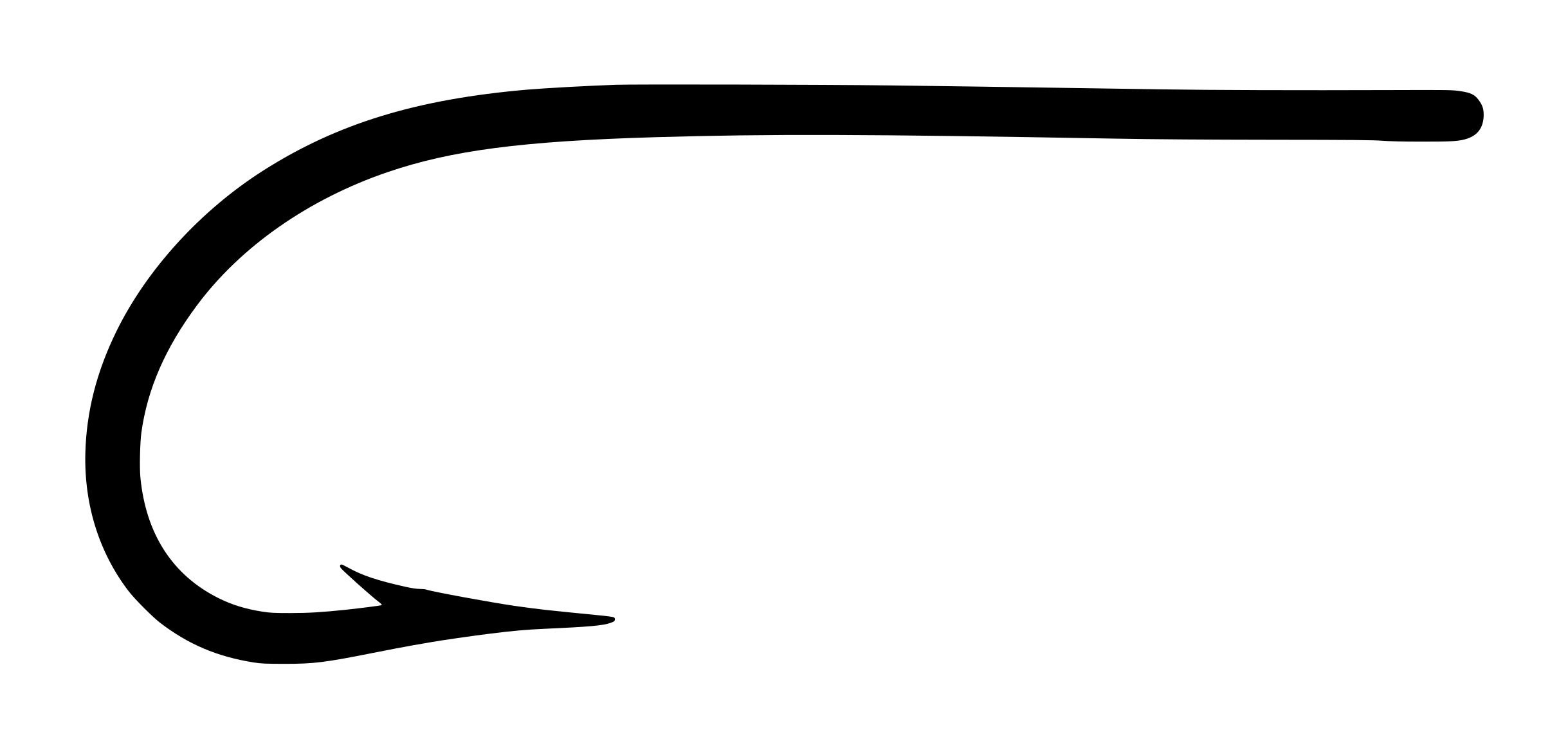
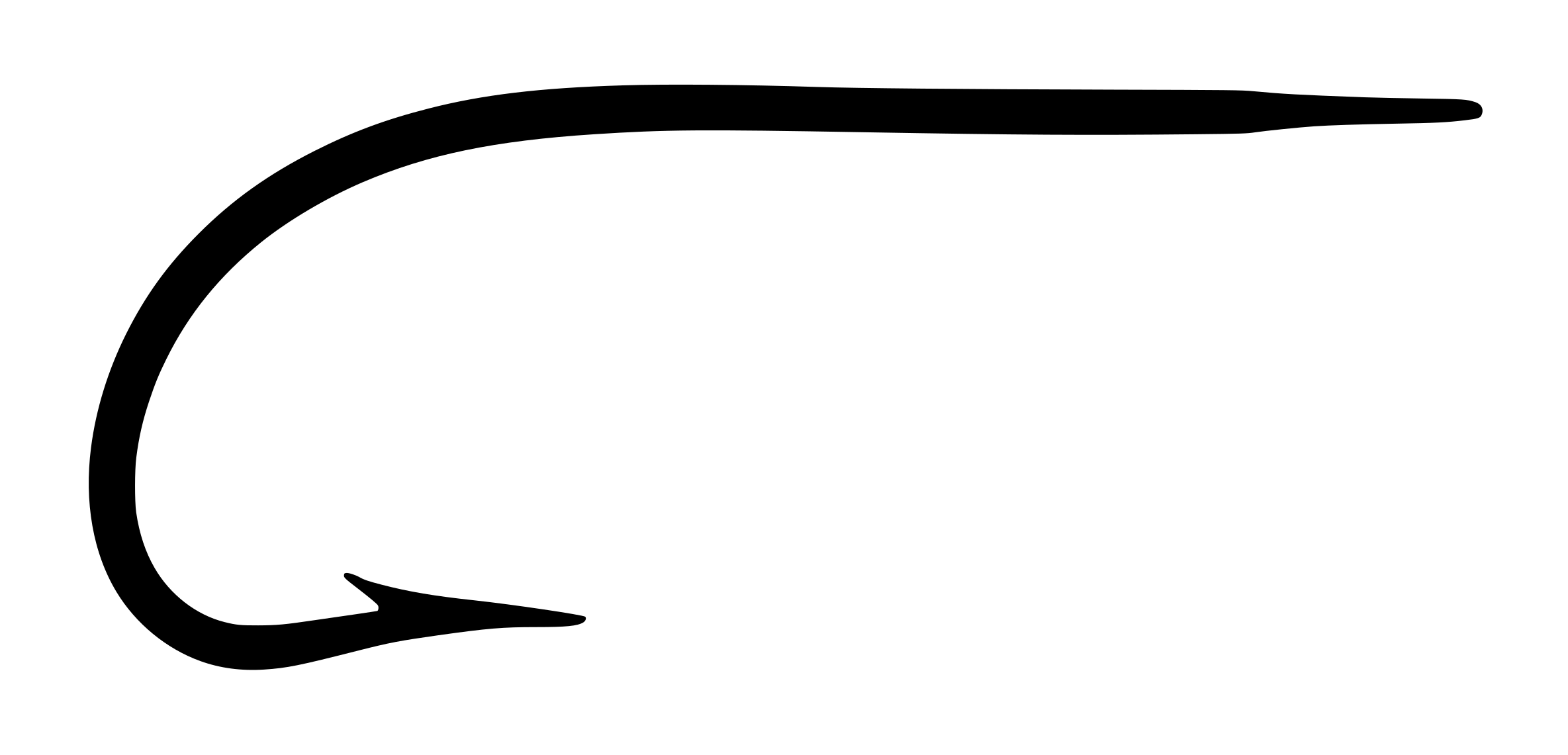
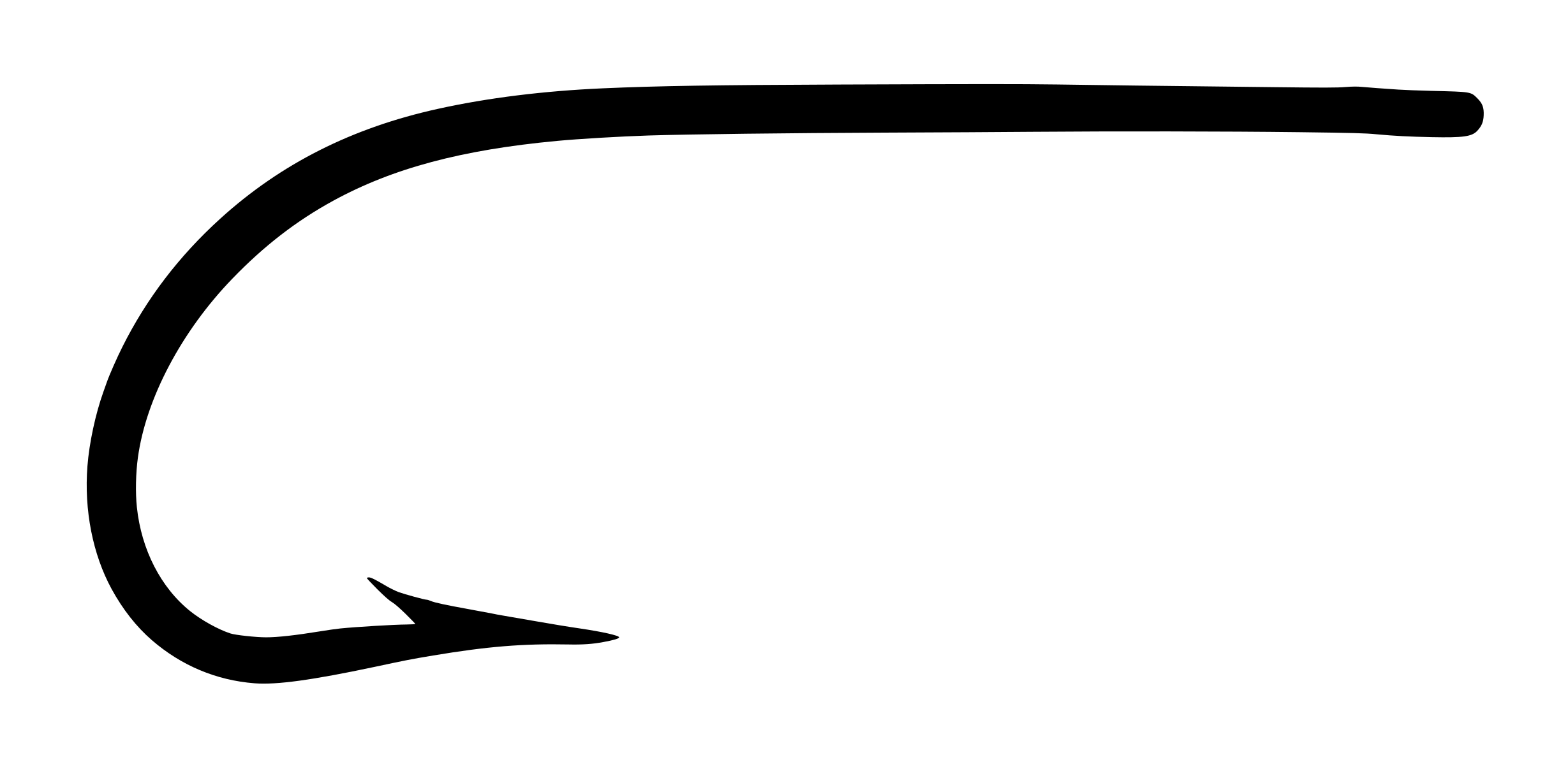
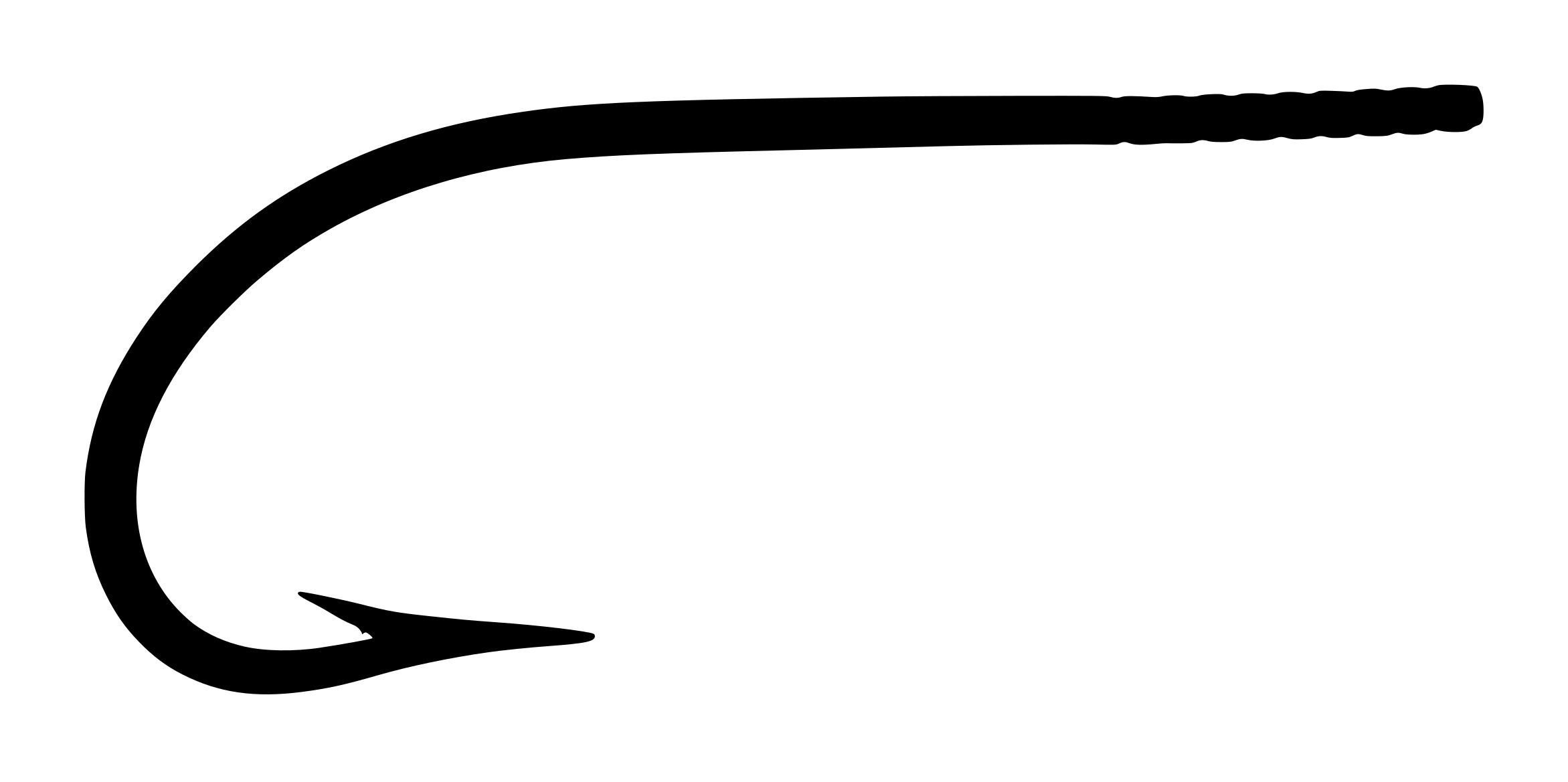
The Mustad 34007 is a heavy-duty stainless steel saltwater fly hook manufactured by O. Mustad & Søn of Norway. The model designation ‘34007’ (with leading zeros) identifies it as a premium-tier stainless steel variant, distinguishing it from the tinned carbon steel 3407. The hook features a distinctive O’Shaughnessy bend—a deep, parabolic curve characteristic of heavy saltwater and offshore applications—combined with a forged shank that dramatically increases structural rigidity without adding weight.
The 34007 served as the foundational hook for iconic saltwater fly patterns including the original Lefty’s Deceiver, Clouser Minnow, and Surf Candy. Its long shank and forged construction made it the industry standard for streamer tying between 1980 and 2000. Two packaging formats are documented: vintage cardboard boxes from the 1950s-1960s bearing the traditional eight-line Mustad label with ‘Oslo – Norway’ designation, and 1980s-1990s slide-boxes with bright blue inserts.
The stainless steel construction was both a blessing and limitation—while eliminating rust concerns in saltwater environments, early stainless hooks like this were notoriously difficult to sharpen due to the metal’s ‘gummy’ consistency compared to modern chemically sharpened variants. Collectors value both packaging formats, particularly examples with original cardboard boxes and complete label documentation.
Vintage cardboard eight-line label box (left, c. 1950-1965) and modern slide-box packaging (right, c. 1980s-1990s) for the iconic Mustad 34007 stainless steel O'Shaughnessy hook.
Photographic record
9 cataloged imagesSelect any record to load it above.
8 images shown
Mustad 34007 Packaging Comparison Size 2/0 and 3/0Vintage cardboard eight-line label box (left, c. 1950-1965) and modern slide-box packaging (right, c. 1980s-1990s) for the iconic Mustad 34007 stainless steel O'Shaughnessy hook.Open originalMustad 34007 Point Detail Size 2/0Close-up profile of the superior point geometry, showing the near-straight inner taper and fine, keen tip characteristic of Mustad's quality stainless construction.Open originalMustad 34007 Side Profile Size 2/0Full profile view of the Mustad 34007 size 2/0, showing the standard shank length, deep O'Shaughnessy bend, and ringed eye proportions typical of this saltwater fly hook model.Open originalMustad 34007 Hook Pair Size 2/0Two Mustad 34007 hooks, size 2/0, photographed side by side to demonstrate manufacturing consistency and hook proportions.Open originalMustad 34007 Vintage Box Size 3/0 with LabelOriginal vintage cardboard box for Mustad 34007 size 3/0, showing the traditional eight-line letterpress label with 'OSLO - NORWAY' designation, quality code, and 'Made in Norway' marking — key dating and authentication elements.Open originalMustad 34007 Size 1 ProfileMustad 34007 in size 1, showing proportional scaling of the O'Shaughnessy bend and shank for smaller hook dimensions.Open originalMustad 34007 Size 2/0 Horizontal Profile with GridHorizontal profile of Mustad 34007 size 2/0 positioned on 1/10-inch measurement grid, facilitating dimensional analysis of overall length, shank length, and gap width.Open originalMustad 34007 Size 3/0 ProfileMustad 34007 in size 3/0, the largest size documented in the specimen set, showing the full deep O'Shaughnessy bend and heavy forged shank proportions typical of offshore saltwater applications.Open originalMustad-34007-Package-Size-1Mustad-34007-Package-Size-1Open original
Technical profile
Eye
Ball Eye, Straight / InlineStandard ringed eye with minimal taper; ball formed by bending wire back onto the shank axis. Construction is simple but robust, allowing the eye to withstand repeated line-tying cycles and the high loads characteristic of offshore stripers and tarpon P.
Wire
Standard, Forged
Shank
Standard — Plain
Bend
O'Shaughnessy, Standard gapDeep O'Shaughnessy bend with parabolic profile, creating a wide, open gape relative to the shank length. The bend is slightly flared but not reversed, with the point running parallel to the shank axis. Forged flattening along the bend increases rigidity noticeably P.
Point
Superior (near-straight inner taper)Short, close-set barb positioned at approximately 45 degrees to the shank. The barb is swept rearward and cut cleanly; typical of mid-century Mustad production. Barb size is proportional to hook gauge, without the oversized barbs characteristic of some modern budget models P.
Finish
Polished Steel — Inferred (photographically likely)Bright stainless steel with a polished, reflective appearance. The finish shows minimal patina and no corrosion even on older specimens, a hallmark of stainless metallurgy. Tone is cool and neutral, lacking the warm bronze or gold undertones of tinned or bronzed finishes P.
Size 3/0 specimen in the vintage box shows excellent condition: hooks are uniformly bright with no oxidation or corrosion, original card with minimal toning and one small water stain. Size 2/0 specimen in the slide-box format shows very good condition with full hook count and no visible wear. All specimens retain their original finish without pitting or surface degradation.
The actual point geometry is a true superior point—a near-straight inner taper that concentrates penetrative force at the tip while maintaining structural strength. This design was engineered for durable, all-purpose saltwater work where hook failure mid-fight is unacceptable.
The forged shank is the hook’s distinguishing engineering feature. By subjecting the steel wire to a mechanical drop-press along the bend section, Mustad dramatically altered the metallurgical grain structure, increasing tensile strength and rigidity without additional wire gauge. This cold-forging process allows the hook to resist the compressive and tensile loads imposed by large, powerful fish without bending open or straightening under pressure.
The stainless steel construction trades sharpness for corrosion resistance. Stainless is inherently softer and more ‘gummy’ than carbon steel, making it harder to hone to a razor edge. However, the trade-off in durability and rust-free performance was deemed worthwhile for environments where salt spray, sand, and saltwater corrosion would quickly degrade carbon steel hooks.
The 34007 does not belong to a named series in the traditional sense; rather, it is a model number within Mustad’s broader ‘Qual.’ (Quality) tier system, which stratified hooks by manufacturing tolerance, wire gauge, tempering standard, and target market. Economy models were numbered 1000-2999; quality (mid-tier) models occupied 3000-3999; and premium models were numbered 4000 and above. The 34007, falling within the mid-range tier, represented Mustad’s commitment to precision manufacturing for demanding applications. The triple-zero designation (‘34007’ rather than ‘3407’) specifically denoted stainless steel construction, a premium material choice for corrosion-prone saltwater environments. The model was introduced around 1950 and remained in continuous production through the 1990s, surviving the transition to the Signature Series naming convention (c. 2001) only in legacy catalogs and specialty orders. No broader product line or variant sub-series is documented for the 34007; it stands as a singular, monolithic hook designation tied primarily to Lefty Kreh’s advocacy and the Deceiver pattern’s popularity.
Named Collaborator
Lefty Kreh (born 1925) is widely considered the father of modern saltwater fly fishing. A legendary angler, author, and fly tier, Kreh pioneered techniques and patterns that revolutionized the sport in the 1950s and 1960s. His most famous creation, the Lefty’s Deceiver (originally tied on the Mustad 34007), remains the foundational pattern in saltwater fly boxes worldwide. Kreh was not a hook designer himself but an exceptionally skilled pattern developer who understood how specific hook geometries could enhance fly performance. His partnerships with major manufacturers, including Mustad, helped legitimize fly fishing for saltwater game fish at a time when baitcasting and spinning were dominant. Kreh authored dozens of articles and several influential books, including ‘Fly Fishing in Salt Water’ (1974), which codified saltwater fly techniques. His advocacy for the Mustad 34007—and later, his collaboration with manufacturers to develop signature hook models bearing his name—elevated the 34007 from a generic commercial hook to an iconic tackle piece. Kreh’s legacy extends beyond tying; he was an tireless conservationist and advocate for catch-and-release practices, shaping modern fisheries management philosophy.
Era and Packaging Dating
Two distinct packaging formats visible: (1) Vintage cardboard box with traditional eight-line letterpress label reading 'OSLO - NORWAY' and 'Qual. 34007' with 'Made in Norway' — indicates post-1925 (Oslo name) and pre-1970s manufacturing. Paper stock, print method, and absence of barcode suggest 1950-1965 production. (2) Modern slide-box with bright blue insert, block-letter 'MUSTAD' logo, and 'Home Waters' price tag indicates 1980s-1990s retail. The model code 34007 (with triple-zero) persisted into the 1990s before the Signature Series transition c. 2001. Stainless steel finish was standard on this model throughout its production life.
The Lefty Connection: How a Norwegian Hook Revolutionized Saltwater Fly Fishing
The Mustad 34007 is inextricably linked to legendary fly tier Lefty Kreh's development of the original Lefty's Deceiver in the mid-1960s. While Kreh tied on many hooks throughout his prolific career, the 34007's long shank and robust O'Shaughnessy bend proved to be the perfect platform for the bucktail-and-flashy-hair design that revolutionized saltwater fly fishing. The model number '34007'—with its distinctive triple-zero—was Mustad's coding system to denote premium stainless steel construction, setting it apart from the more common tinned carbon steel 3407. Interestingly, old-school stainless hooks like the 34007 were notorious among working guides for being 'gummy' and difficult to sharpen on a boat deck compared to modern chemically sharpened carbon steel, leading many professionals to prefer the tinned 3407 despite greater rust risk.
Design lineage and influence
The O’Shaughnessy bend originated in the 19th century as a heavy-duty saltwater pattern favored by commercial and sport anglers targeting large marine species. Mustad, by acquiring or reverse-engineering regional patterns, standardized the O’Shaughnessy and offered it in multiple wire gauges and finishes. The 34007 represents the premium stainless iteration of this lineage, introduced around mid-century as stainless steel technology became more cost-effective.
Competitors to the 34007 include the Tiemco 811S, a modern chemically sharpened equivalent, and the Gamakatsu SL11-3H, both of which offer superior sharpness but with less robust bend geometry. The Mustad 3407 (tinned version) remained the working professional’s choice despite rust concerns, due to its superior edge-holding properties.
Best matchRelated by Attribute
Computed automatically from catalog data — updated as new hooks are added.
Matches: Bend, Shank, Gap, Eye, Eye Orient. +5 moreDiffers: Wire: Standard vs Heavy (1X Heavy); Finish: Polished Steel vs Nickelled; Application: Streamer, Saltwater vs Bait, Saltwater +2 more
Matches: Bend, Shank, Wire, Eye Orient., Point +4 moreDiffers: Gap: Standard vs Wide; Eye: Ball Eye vs Needle Eye; Finish: Polished Steel vs Bronzed +4 more
The Mustad 34007 is engineered specifically for saltwater fly fishing, particularly for streamer patterns targeting large, fast-moving game fish. The long shank provides platform space for voluminous bucktail flies (such as Lefty’s Deceiver), while the forged construction ensures the hook will not bend or straighten under the head-shaking runs of striped bass, permit, and tarpon. The O’Shaughnessy bend offers superior holding power when set against the hard mouth structures of marine species.
Secondary Applications
Bass bugs, large freshwater streamers (pike, musky), saltwater baitfish imitations
Classic Fly Patterns
Lefty's Deceiver, Clouser Minnow, Surf Candy, Zonker, Half and Half, Black Ghost
Modern Equivalents
Hook
Match Quality
Notes
Mustad S71SZ-34007
Excellent
Current Mustad direct equivalent, maintains original O'Shaughnessy geometry and specifications
Tiemco TMC 811S
Excellent
Direct modern equivalent with 2XH wire and O'Shaughnessy bend for saltwater/streamer work
Daiichi 2546
Very Good
Heavy-wire O'Shaughnessy alternative, slightly different proportions but same saltwater application
Dai-Riki 930
Very Good
Alternative heavy-wire O'Shaughnessy variant for saltwater and streamer patterns
Industry cross-reference
Saltwater streamer hook
Standard / long shank corrosion-resistant baitfish
Green entries are full records; amber entries are spec records.
Gray entries are chart-only and not physically verified against this specimen.
Collector notes
The Mustad 34007 is common in modern slide-box packaging (late 1980s-1990s) and therefore commands modest collector interest. Vintage examples in original cardboard boxes from the 1950s-1965 period, however, are significantly more desirable. Its association with Lefty Kreh and the original Deceiver pattern provides historical prestige, but mass production throughout its 45-year lifespan limits rarity.
Reference value
$15 – $45 USD estimate
Packaging condition
Good — moderate wear, legibleRecorded specimen
Packaging format
GW-M-34007-A (vintage cardboard eight-line label), GW-M-34007-B (1980s slide-box)Catalog code
Positive Factors: (1) Strong historical association with Lefty Kreh and the iconic Deceiver pattern—a landmark fly in saltwater history. (2) Vintage cardboard packaging with the traditional eight-line label represents the classic Mustad era (1950s-1960s) and is increasingly sought by tackle archivists. (3) The O’Shaughnessy bend is mechanically distinctive and has remained in continuous production, giving the model notable longevity. (4) Stainless steel construction was relatively premium for its era, adding perceived quality value. (5) Two distinct packaging formats provide variety for collectors assembling period-accurate examples.
Limiting Factors: (1) Mass production and wide commercial availability mean surviving examples are not rare. Original boxes may be found on eBay and specialty dealers regularly. (2) The model remained in production into the 1990s, diluting the ‘vintage’ appeal of mid-period examples. (3) Modern equivalent hooks (Tiemco 811S, Gamakatsu SL11-3H) have largely superseded it in working use, reducing demand from active anglers. (4) Stainless steel hooks are less collectible than their tinned counterparts among some purists, who view tinned carbon steel as the ‘classic’ saltwater standard. (5) Condition issues (corrosion, rust spots on packaging) are common on examples that were actively fished or stored in humid environments.
Packaging
Two formats documented: (1) Vintage cardboard box, approximately 3.5" × 2.5", cream-colored stock with traditional eight-line Mustad label printed in black letterpress. Label reads: Key Brand logo (top left), 'O. MUSTAD & SON / Manufacturers / OSLO - NORWAY / Qual. 34007 / Superior / Mustad-O'Shaughnessy Hooks / Stainless steel / 100 No. 3/0 / Forged Ringed / Made in Norway.' Decorative asterisk borders frame the label. (2) 1980s slide-box format: clear plastic clamshell with bright blue paper insert bearing block-letter 'MUSTAD' logo and printed specifications. 'Home Waters' price tag handwritten in blue ink on white sticker (2.0, 1015).
Market Value Notes
Vintage cardboard boxes in good condition with unbroken hook count typically command $25-45 USD on specialty dealers and tackle forums. Modern slide-box packaging in unused condition brings $8-15, reflecting lower collector demand. Rare sizes (particularly 8/0 and larger) and examples with associated Lefty Kreh documentation or early packaging variants can exceed the high end. Condition of both hooks and packaging dramatically affects value; specimens showing corrosion or incomplete boxes drop 40-60% in price.
Where to Find
Vintage cardboard examples most commonly appear on eBay, specialist vintage tackle dealers (particularly those specializing in saltwater fly history), and Craigslist regional postings from tackle-shop estate liquidations. Modern slide-box examples are more abundant but less sought; occasional finds at fly-fishing expos and local tackle shops with legacy inventory. Lefty Kreh memorial auctions and saltwater fly fishing collector forums occasionally feature premium examples.
Preservation
Storage and Preservation
Store the Mustad 34007 in a cool, dry environment away from direct sunlight and humidity. Original cardboard packaging should be kept in archival-quality acid-free boxes or protective sleeves to prevent further toning, water damage, or insect ingress. The hooks themselves, being stainless steel, are highly resistant to rust and corrosion; however, the paper card can deteriorate rapidly if exposed to moisture. Avoid storing near salt air (coastal environments) or areas prone to temperature fluctuations, which can accelerate paper deterioration and promote mold growth on vintage packaging. The stainless finish requires no special care—it will not tarnish or patina under normal conditions. Do not attempt to ‘restore’ vintage packaging with cleaning agents or moisture; original patina and toning are desirable markers of age and authenticity. If the packaging shows old water stains or discoloration, leave them undisturbed; they authenticate the object’s history. Store loose hooks in sealed glass or plastic vials rather than in humid conditions; avoid plastic bags, which can trap moisture and promote corrosion of any remaining carbon steel components in larger hook assortments. Inspect periodically for signs of mold or pest damage.
Marking Analysis
Handwritten Annotations and Archival Markings
The slide-box specimen examined bears a handwritten price tag in blue ballpoint ink reading ‘Home Waters / 2.0 / 1015’, positioned on a white sticker affixed to the blue paper insert. The handwriting is consistent with retail shop markup from the 1980s-1990s; the shop name ‘Home Waters’ suggests a specialty saltwater fly retailer. The price of $10.15 (or possibly $1.01 if a typo) is consistent with late-1980s retail pricing for mid-range fly hooks; modern equivalent pricing suggests $10.15 is more plausible. The ‘2.0’ designation refers to the size (2/0 — double-aught); this notation confirms retail organization and inventory tracking. The vintage cardboard box specimen bears no handwritten marks, owner initials, or collector annotations—a condition suggesting it remained in original inventory until recently. The absence of handwriting may indicate the box was stored in a commercial or institutional collection rather than an individual angler’s tackle kit.
Size Note
Size Designation and Scaling
The Mustad 34007 was produced in a wide range of sizes spanning the aught scale (3/0, 2/0, 1/0) and standard sizes (1, 2, 4, 6, 8, and smaller). Interestingly, vintage cataloging conflates the tinned 3407 and stainless 34007 without always clearly distinguishing them by size, creating occasional confusion in collector records. The specimens examined include both size 3/0 (large, documented in the vintage cardboard box) and smaller sizes (1, 2) visible in the modern slide-box format. The size scaling is consistent with Mustad’s standard O’Shaughnessy progression; larger sizes show proportionally increased shank and gap, maintaining the characteristic 1.8-2.0:1 shank-to-gap ratio throughout the range. It is noteworthy that Mustad did not publish a detailed size chart differentiating the 34007 from the 3407 in vintage catalogs; collectors relying on old literature may encounter ambiguity. Cross-referencing with physical specimens and original packaging is therefore essential for accurate sizing confirmation.
Primary Source
Analysis of Vintage Label Text and Archival Significance
Label Text Examined: ‘O. MUSTAD & SON / Manufacturers / OSLO – NORWAY / Qual. 34007 / Superior / Mustad-O’Shaughnessy Hooks / Stainless steel / 100 No. 3/0 / Forged Ringed / Made in Norway’
Key Findings: (1) The presence of ‘OSLO – NORWAY’ (rather than ‘CHRISTIANIA – NORWAY’) confirms manufacture post-January 1925, when Norway’s capital was officially renamed. The Oslo designation alone dates the label to mid-20th century. (2) The word ‘Superior’ appears on Line 5, which per Mustad’s standardized eight-line system is designated exclusively for point style definition – it is a true superior point (near-straight inner taper). (3) The specific callout of ‘Stainless steel’ on Line 7 distinguishes this model sharply from the tinned carbon steel 3407, confirming that the triple-zero designation (34007) was Mustad’s coding convention for stainless. (4) ‘Forged Ringed’ on the final line describes both the shank treatment (forged) and the eye type (ringed), consistent with the label’s hierarchical organization. (5) The specification ‘100 No. 3/0’ indicates a standard wholesale box of 100 hooks in size 3/0—a standard commercial unit. (6) The phrase ‘Made in Norway’ adds significant authenticity and collectibility value, confirming manufacture at the Gjøvik factory during the era of Norwegian hook dominance (pre-1970s for this cardboard format). The eight-line label format itself is a chronological marker; Mustad abandoned this rigid typographic system around 2001 in favor of the Signature Series.
Archival Implications: This label is a primary document of mid-20th-century industrial manufacturing standardization, demonstrating how a major Norwegian industrial firm used standardized nomenclature to communicate complex technical specifications across language barriers. The label’s survival on cardboard stock provides a snapshot of printing technology, paper composition, and commercial graphics circa 1950-1965. Researchers studying Mustad manufacturing, saltwater fly fishing history, or the Lefty Kreh era should prioritize original packaging documentation as a first-order source, as catalogs and secondary literature often conflate model variants.
Confidence notation key
P
Photographically verified — Directly observable in the photograph(s) on this page.
V
Verified by documentation — Confirmed by manufacturer catalog, spec sheet, or published reference.
I
Inferred — A logical deduction from observable or documented evidence, not directly stated.
E
Estimated — An approximation based on visual comparison, proportional analysis, or limited data.
S
Speculative — A reasoned hypothesis that cannot be confirmed from available evidence.
Unnotated claims are the compiler’s synthesis; see Sources. All photographs on garrenwood.com are taken on a measurement grid where each square equals 1/10 inch (0.1″ / 2.54 mm).