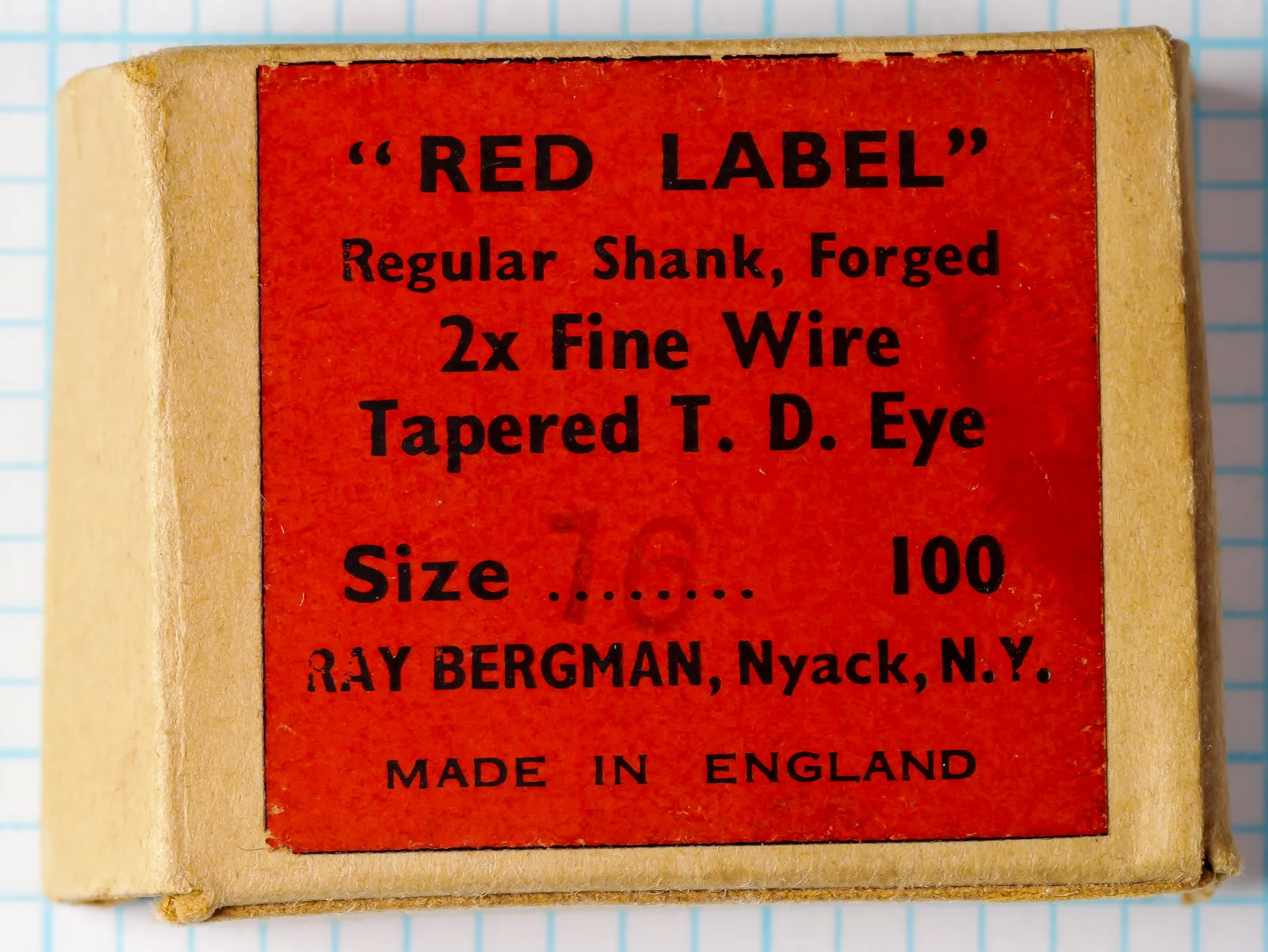
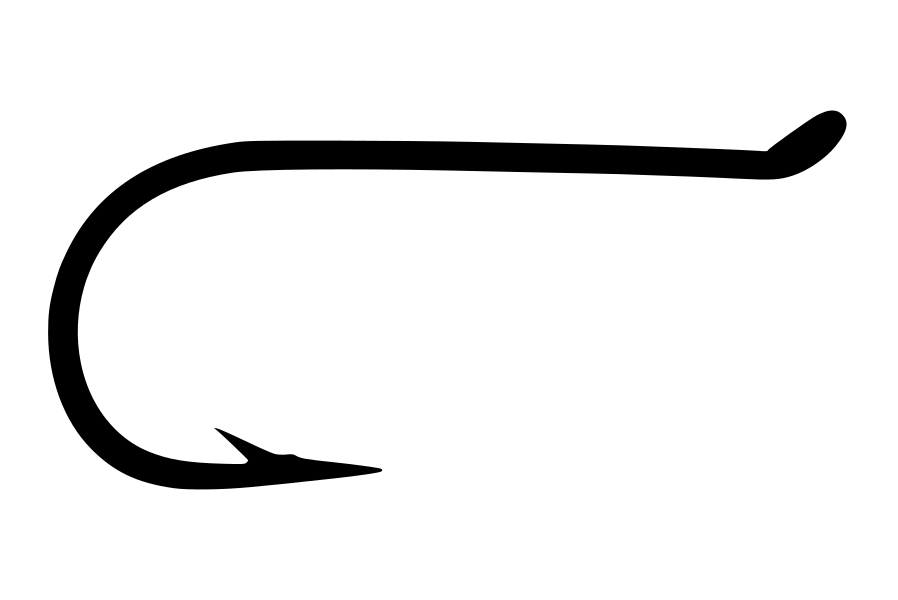
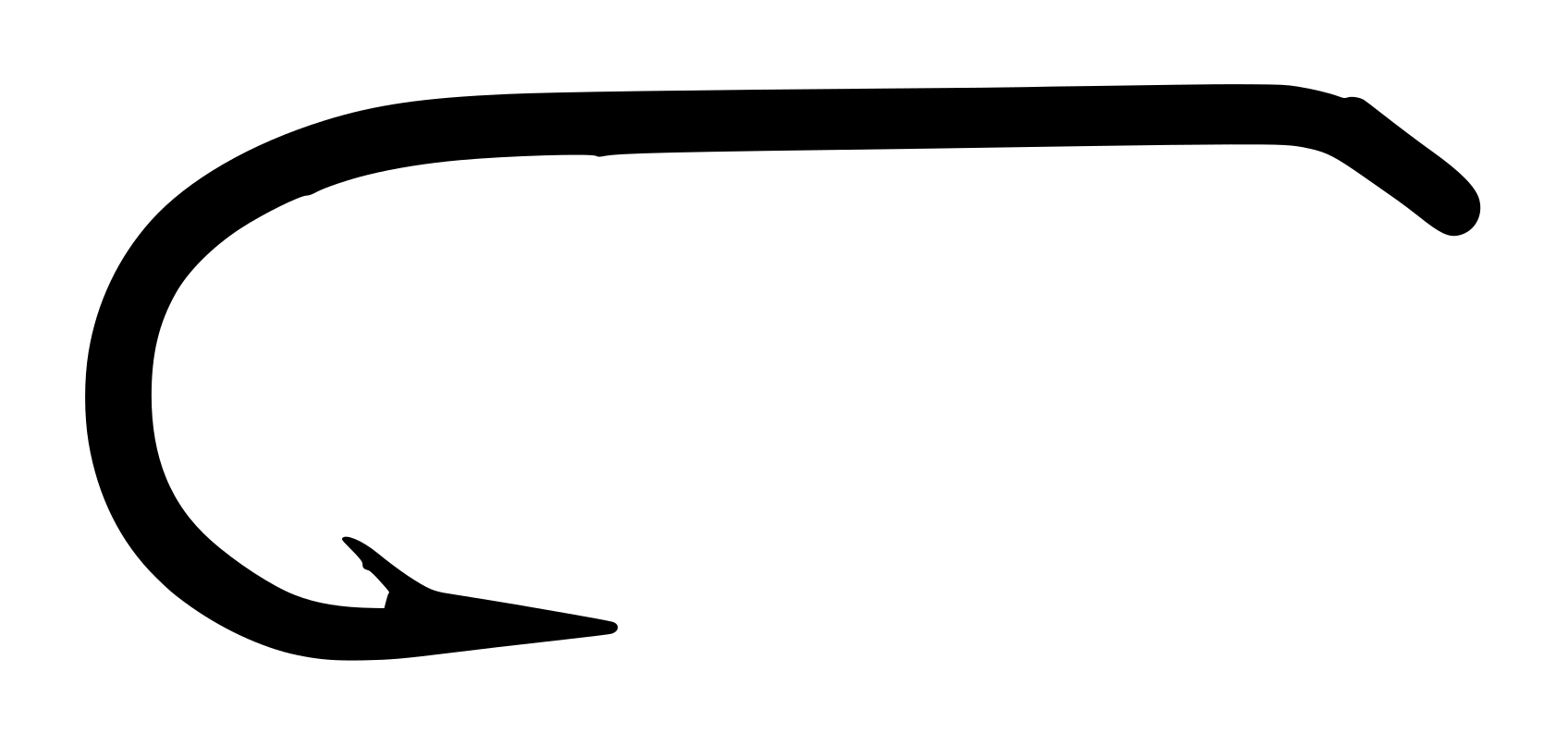
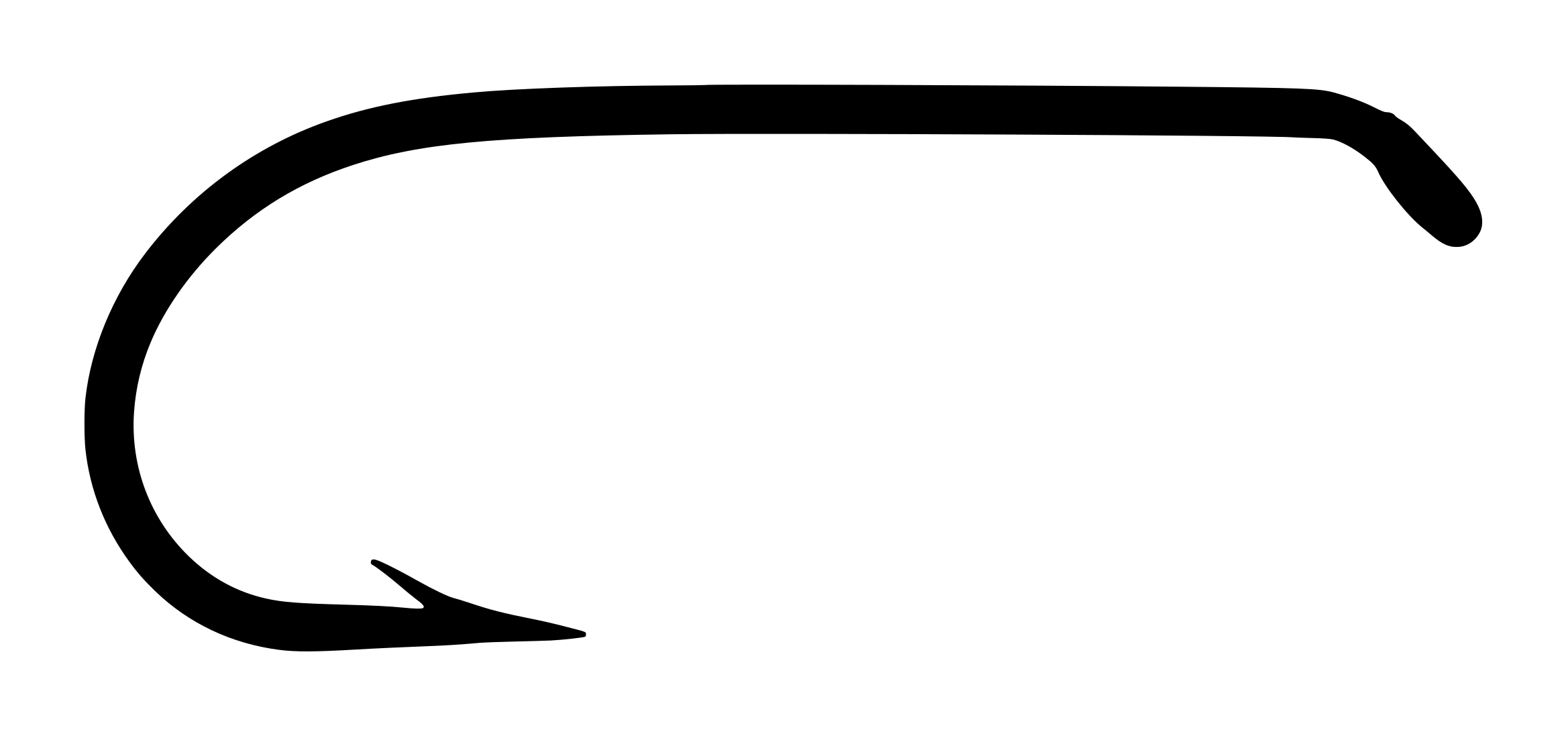
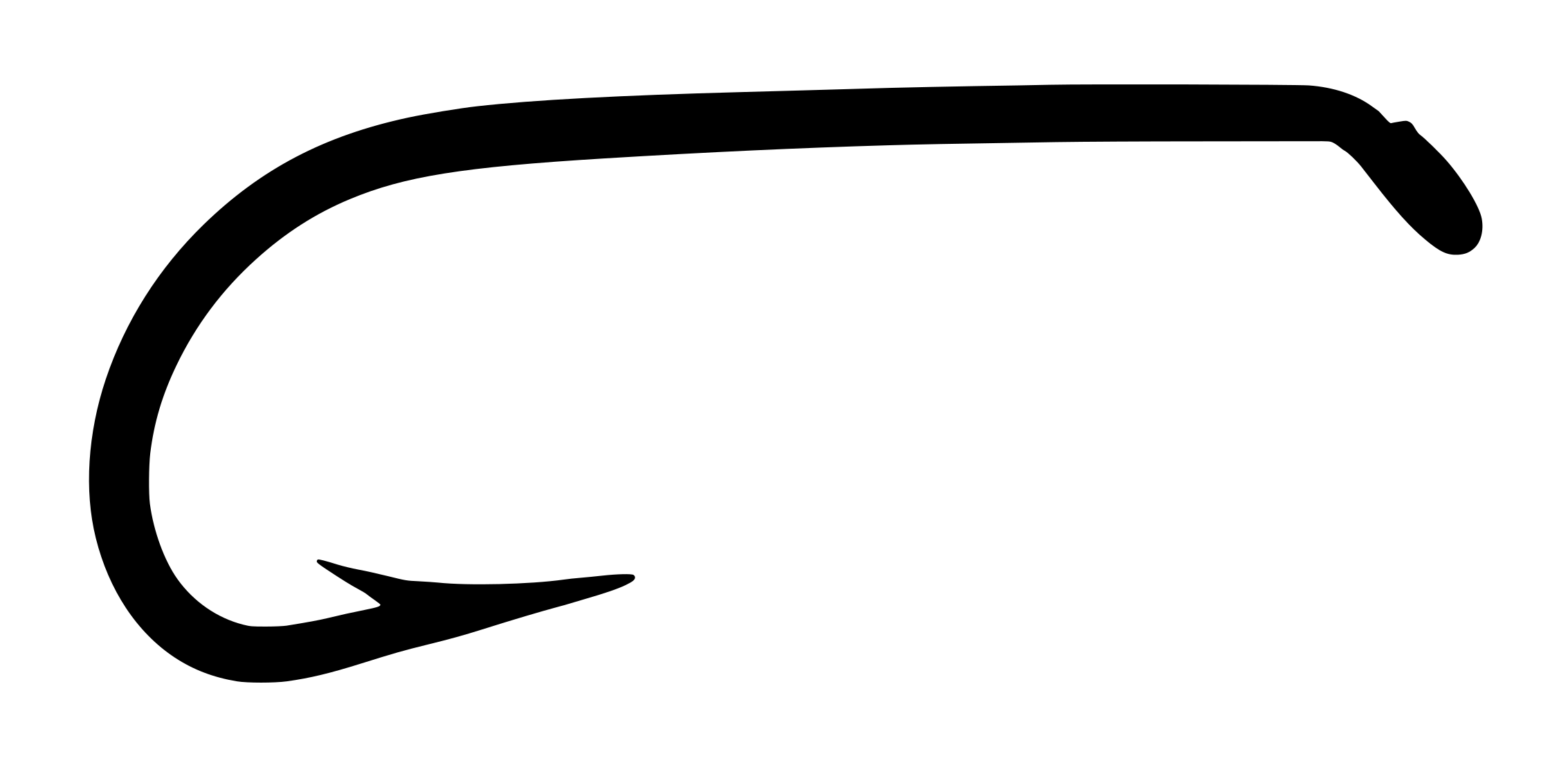
Bergman Red Label No. 100 (Size 16 equivalent) is a fine-wire forged hook with tapered turned-down eye, bronzed finish, and round bend. Manufactured by Ray Bergman, Nyack, New York, and bearing the distinctive red label cardboard box. The hook represents a mid-century trout pattern in the English Redditch tradition, and distributed in the United State
The packaging states ‘Regular Shank, Forged 2x Fine Wire Tapered T.D. Eye,’ confirming both the manufacturing method and wire specification. The 2x fine designation refers to wire gauge lighter than standard, suitable for small dry-fly patterns and delicate presentation on size 16 hooks.
Marked by original cardstock box in excellent condition with hand-lettered size notation. The combination of American maker with English bend geometry suggests Bergman’s sourcing or licensing arrangement with Redditch manufacturers, a common practice in mid-twentieth-century American fly-tackle commerce.
Front label of the original Ray Bergman Red Label cardboard box, printed with red field and black offset letterpress type. Hand-stamped size notation '100' visible below printed 'Size' field. Shows 'Made in England' origin and tapered turned-down eye specification.
Photographic record
2 cataloged imagesSelect any record to load it above.
2 images shown
Bergman Red Label Size 100 Hook Box LabelFront label of the original Ray Bergman Red Label cardboard box, printed with red field and black offset letterpress type. Hand-stamped size notation '100' visible below printed 'Size' field. Shows 'Made in England' origin and tapered turned-down eye specification.Open originalBergman Red Label Size 100 Hook Side ProfileSide view of a specimen hook from the Bergman Red Label box, mounted on measurement grid. Shows the sproat bend profile, tapered turned-down eye orientation, and fine-wire construction. Bronzed finish visible as warm brown tone.Open original
Technical profile
Eye
Tapered Eye, Turned DownTapered eye construction with confirmed turned-down orientation. Eye displays clean taper typical of pre-1960s hand-forged English practice P.
Wire
Fine (1X Fine), Forged
Shank
Standard — Plain
Bend
Round / Kendal, Standard gap
Point
Standard / SpearBarb is close-cut and swept slightly toward shank; typical of fine-wire hooks of this period and size. No microbarbs or secondary barbs present P.
Finish
Bronzed — Confirmed (stated on packaging)Bronzed finish confirmed on packaging and visible as warm brown tone in direct lighting, consistent with period bronzing standards. Steel grain visible beneath finish coating, characteristic of bronzed hooks of this era P.
Specimen hook shows no corrosion or pitting. Original packaging (cardboard box) is in good condition with light overall toning and minor edge wear; hand-stamped size notation remains clear. All hooks accounted for in original count P.
The 2x fine wire specification indicates wire diameter approximately one gauge thinner than standard wire for the size classification. This reduction in wire mass serves several functions: reduced hook weight improves flotation on dry flies, lower wire stiffness permits better bend articulation in small patterns, and thinner material reduces the overall visual profile of the hook, reducing visibility to selective fish.
The superior point geometry produces a near-straight inner taper from barb to tip with minimal curvature on the inside face. This design prioritizes hook-up geometry over point penetration finesse, suitable for traditional trout dry-fly work where hook set typically involves strong strikes on relatively small flies.
Forging of the bend imparts work-hardening to the steel, increasing tensile strength and resilience.
The Bergman Red Label line was a branded product line marketed under Ray Bergman’s name, a prominent fly-tier and writer of the mid-twentieth century. Bergman collaborated with English and American hook manufacturers to produce hooks bearing his endorsement. The Red Label designation indicated a specific sub-line within Bergman’s catalog, likely representing fine-wire specialty patterns.
The model code ‘100’ appears to be a house number or distributor code rather than a Bergman factory specification, suggesting retail packaging by a New York tackle distributor under Bergman’s brand license. Production likely occurred through the 1950s-1960s, coinciding with Bergman’s active consulting and writing period.
No evidence of broader product line variants is visible in surviving documentation; the Red Label appears to have been discontinued or consolidated into other Bergman offerings by the 1970s.
Named Collaborator
Ray Bergman (1891–1978) was an American fly-fishing author, angler, and consultant to multiple tackle manufacturers. His books, including ‘Trout’ (1938) and ‘Just Fishing’ (1932), were influential in establishing modern American dry-fly practice. Bergman contributed to product development for several American tackle makers and licensed his name for hook lines and other equipment.
Bergman’s fly patterns and recommendations emphasized the English Redditch tradition while adapting techniques to American stream conditions. His collaborations with hook manufacturers reflect his effort to ensure tackle specifications matched his published methods and fly designs.
Era and Packaging Dating
Original cardboard box with offset letterpress printing in black on red stock. Hand-stamped size notation in ink. No barcode present. Packaging construction (single-wall corrugated pasteboard) and print method consistent with mid-century American tackle box standards. Ray Bergman's active consulting period spanned 1930s-1970s; this particular line appears to be from his later, more established commercial phase. Absence of modern UPC codes and ZIP code format on any visible text supports pre-1974 dating. Overall aesthetic—typeface, box construction, label style—is consistent with 1950s-early 1960s American tackle retail.
Bergman as Consultant: Quality Assurance Before Standards
Ray Bergman's partnership with multiple hook manufacturers reflected a broader trend in mid-twentieth-century American fly fishing: the collision of European tackle tradition with American commercial manufacturing. Bergman's books, which emphasized English dry-fly methods adapted to American streams, created demand for hooks that could bridge both traditions. By licensing his name to tackle makers, Bergman effectively certified that a hook met his published specifications—a form of quality assurance before modern standards existed. His notebooks, archived at universities, contain detailed correspondence with manufacturers about hook geometry, revealing that figures like Bergman were not merely endorsers but active technical consultants driving product development.
Design lineage and influence
The Bergman Red Label with fine wire traces lineage to English Redditch craft practice of the 1920s-1940s, when specialized fine-wire hooks were developed for delicate dry-fly presentation. The tapered turned-down eye represents the standard English dry-fly construction of the era, popularized by S. Allcock and Partridge of Redditch.
Bergman’s adoption of this European geometry for his branded American product line indicates that by mid-twentieth century, American fly-tiers and their manufacturers had accepted English specifications as the standard for serious work. This represents a cultural shift: pre-1930s American hooks often favored wider, heavier bends suited to river steelhead and salmon; post-1940s American hooks increasingly mimicked English dry-fly patterns.
Best matchRelated by Attribute
Computed automatically from catalog data — updated as new hooks are added.
The Bergman Red Label No. 100 was intended for small trout patterns in streams and light fly-water work. Size 16 with 2x fine wire accommodation dun imitations, pale evening duns, and small mayfly patterns. The fine wire was valued for delicate presentation and reduced water disturbance on selective trout, particularly in low-water conditions common to northeastern American streams.
Bergman’s selection of round bend and spear point geometry reflects the English dry-fly tradition adapted for American waters. The tapered eye facilitated traditional hand-tied methods common through the 1960s.
Secondary Applications
Small wet flies, soft-hackle patterns, and light-wire nymphs
Classic Fly Patterns
Pale Evening Dun, Hendrickson, March Brown nymph, Light Cahill (small sizes)
Modern Equivalents
Hook
Match Quality
Notes
Tiemco TMC 100
Very Good
Modern fine-wire sproat with tapered eye; closest contemporary equivalent in wire gauge and bend.
Mustad 94833
Good
Fine-wire dry-fly sproat; slightly heavier wire than Bergman but similar bend profile and eye style.
Partridge of Redditch H1A
Good
English-made fine-wire sproat with full turned-down eye; modern production maintains Redditch tradition.
Collector notes
Rated 7.5/10 — Bergman-branded hooks have good collector interest among fly-tying historians and early-twentieth-century American angling enthusiasts, but production volumes appear sufficient to keep individual cards from achieving true scarcity. Size 16 e in original red-label box is less commonly encountered than larger sizes, elevating this example to the uncommon range. Packaging condition and Bergman's reputation as a collaborator are the primary drivers.
Reference value
$15 – $30 USD estimate
Packaging condition
Good — moderate wear, legibleRecorded specimen
Packaging format
GW-BG-01Catalog code
Positive factors: Original cardboard box in excellent condition with clear labeling and Bergman’s branding. Documented collaboration with a recognized historical figure in American fly fishing. Fine-wire specialty designation represents a functional sub-category of interest to fly tyers. Round bend with spear point is a classic geometry appreciated by traditional fly-tier historians.
Limiting factors: Bergman hooks were produced in reasonable quantities across multiple decades, limiting extreme scarcity. Condition of the cardboard box is vulnerable to age and storage conditions; poor boxes reduce value significantly. Niche appeal to specialist collectors rather than mainstream fly-fisher demand.
Desirable variants: Sealed boxes with intact tissue packaging command premium. Larger sizes (equivalent to Nos. 8–12) appear more common; size 16 and smaller are less frequently offered. Boxes with original price markings in legible condition are preferred by catalogers.
Condition factors affecting value: Box condition is primary—complete, flat, with no staining or water damage adds 40–60% over boxes with edge wear or creasing. Hook count completeness is secondary; missing one or two hooks reduces value by 20–30%. Any corrosion or discoloration on specimens reduces value by 10–20%.
Packaging
Original cardboard box, single-wall corrugated construction. Box measures approximately 2.5" W × 1.75" H × 0.5" D. Exterior printed with offset letterpress: bright red field, black type. Main label reads '"RED LABEL" Regular Shank, Forged 2x Fine Wire Tapered T.D. Eye Size........ 100 RAY BERGMAN, Nyack, N.Y. MADE IN ENGLAND.' Size notation hand-stamped in black ink. Box flaps intact; minor edge wear and light toning consistent with 60+ year storage. No manufacturer's barcode. Paper stock is uncoated newsprint weight, typical of mid-century American tackle packaging.
Market Value Notes
Low ($15): Good condition—original box with moderate wear, all or nearly all hooks present, patina acceptable<br />
High ($30): Excellent condition—original box in near-mint state, complete hook count, minimal wear or discoloration<br />
Premium factors: Sealed or intact tissue packaging, Ray Bergman signature appeal to history-focused collectors, fine-wire specialty designation, Red Label branding clarity<br />
Platforms: eBay (UK and US vintage tackle sections), specialist tackle dealers, vintage fly-fishing forums<br />
Confidence: E estimated — limited recent eBay transaction data for this specific model; estimate derived from comparable Bergman-branded hooks and pre-1970s fine-wire hook cards of similar complexity
Where to Find
Vintage fly-fishing dealer networks in New England and upstate New York (Bergman's region). eBay UK for Redditch-tradition hooks. Occasional appearance at regional fly-fishing museum sales or estate auctions. Specialty tackle dealers handling early American fly-tying references.
Preservation
Storage and Preservation
Store the original cardboard box in a cool, dry environment away from direct sunlight and moisture. The red label printing is prone to fading if exposed to UV light for extended periods. Do not store in basements or attics where humidity fluctuates seasonally—this causes cardboard warping and promotes corrosion on the bronzed hooks.
Keep the box flat, never stacked vertically or under weight, to prevent creasing and structural damage to the lid and flaps. If the original box is damaged or missing, transfer hooks to a archival-quality glassine or kraft envelope rather than loose storage. Bronzed finish will naturally develop a warmer patina over decades; many collectors consider this desirable. Avoid contact with other metals or damp materials that could promote galvanic corrosion or staining.
Inspect hooks annually for any sign of surface rust or white verdigris. If spotted, clean gently with a soft brush and mineral oil, then dry thoroughly. Do not use abrasive cleaners or polishing compounds—they remove the bronzed finish and destroy patina.
Primary Source
Packaging Text Analysis
Source: Bergman Red Label box, printed label and hand-stamped notation
The printed label states ‘Regular Shank, Forged 2x Fine Wire Tapered T.D. Eye’—a condensed specification language typical of American tackle retail in the 1950s-1960s. ‘Regular Shank’ indicates standard length proportional to hook size, as opposed to ‘Long Shank’ or specialty patterns. ‘Forged’ confirms hot-forge manufacturing method (as opposed to drawn wire). ‘2x Fine Wire’ specifies wire gauge one step lighter than standard for the nominal size.
‘Tapered T.D. Eye’ is abbreviation for ‘Tapered Turned-Down Eye’—English dry-fly standard. The phrase ‘Tapered’ distinguishes from ball-eye or looped-eye construction, indicating the eye is drawn to a fine point where the wire is folded and welded or tapered to form the eye loop.
The location line ‘MADE IN ENGLAND’ on a Bergman-branded box marketed from Nyack, New York, confirms that Bergman sourced finished hooks from English manufacturers (likely Redditch) and re-marketed them under his brand—a practice common among American tackle consultants who lacked manufacturing capacity.
The hand-stamped size notation ‘100’ is not a Bergman or English factory code; it appears to be inventory or distributor numbering, possibly indicating this was a wholesale order filled through a tackle distributor to a retail fly shop.
Marking Analysis
Hand-Stamped Markings
The size 16 is stamped in black ink on the red label, applied after printing. The stamping appears to be done with a hand-held numbering stamp or punch, common practice for small-lot custom orders in mid-twentieth-century tackle retail. The punch is well-struck and legible, suggesting the box was marked in-warehouse, not post-sale by an end customer.
This hand-notation implies the box was part of a wholesale shipment that required size identification after initial printing. It is consistent with the practice of manufacturing generic ‘Bergman’ boxes and then stamping with specific hook sizes at distribution centers. No other handwritten notations (price, initials, or inventory codes) are visible on this specimen.
Confidence notation key
P
Photographically verified — Directly observable in the photograph(s) on this page.
V
Verified by documentation — Confirmed by manufacturer catalog, spec sheet, or published reference.
I
Inferred — A logical deduction from observable or documented evidence, not directly stated.
E
Estimated — An approximation based on visual comparison, proportional analysis, or limited data.
S
Speculative — A reasoned hypothesis that cannot be confirmed from available evidence.
Claims with no notation are confirmed by multiple independent sources. All photographs on garrenwood.com are taken on a measurement grid where each square equals 1/10 inch (0.1″ / 2.54 mm).