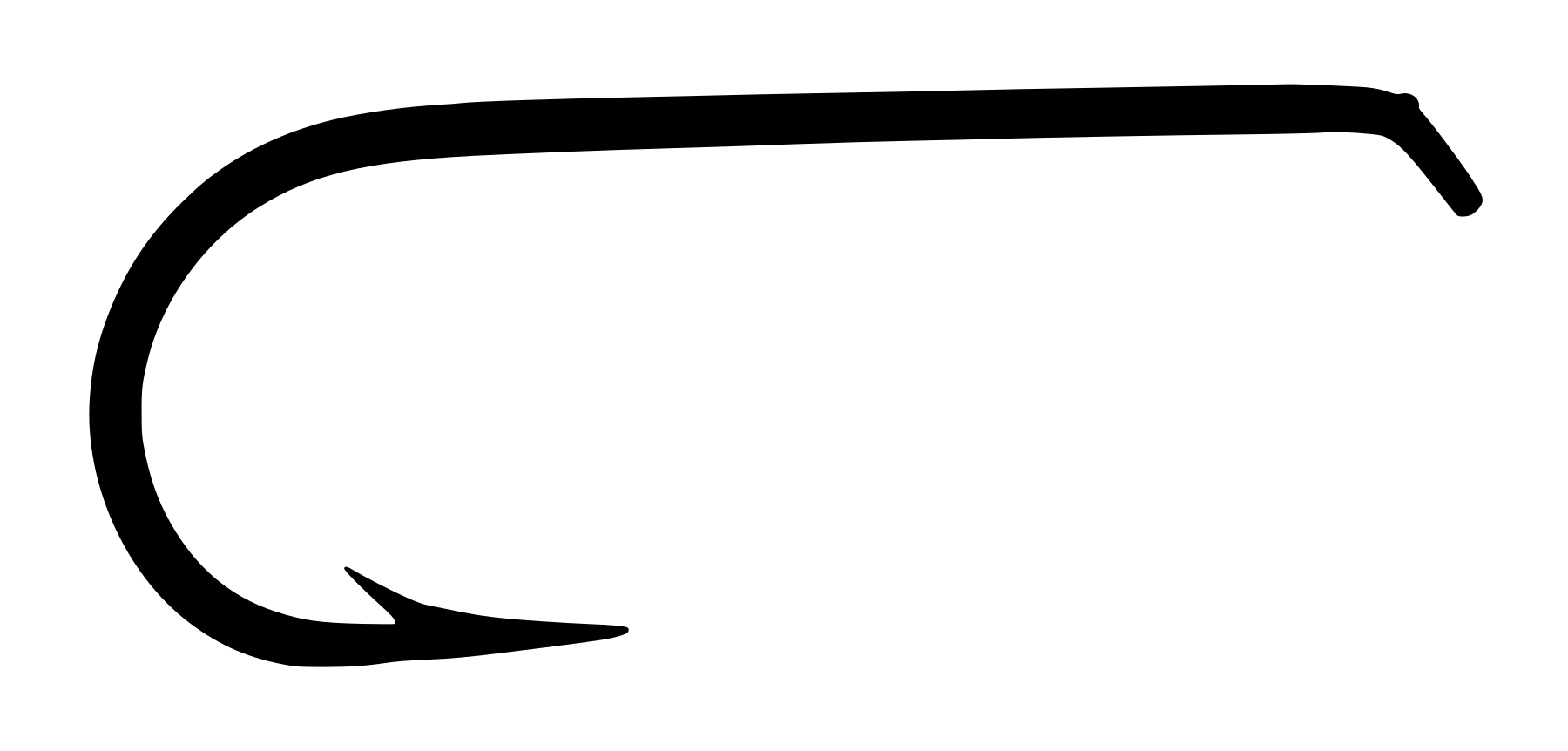
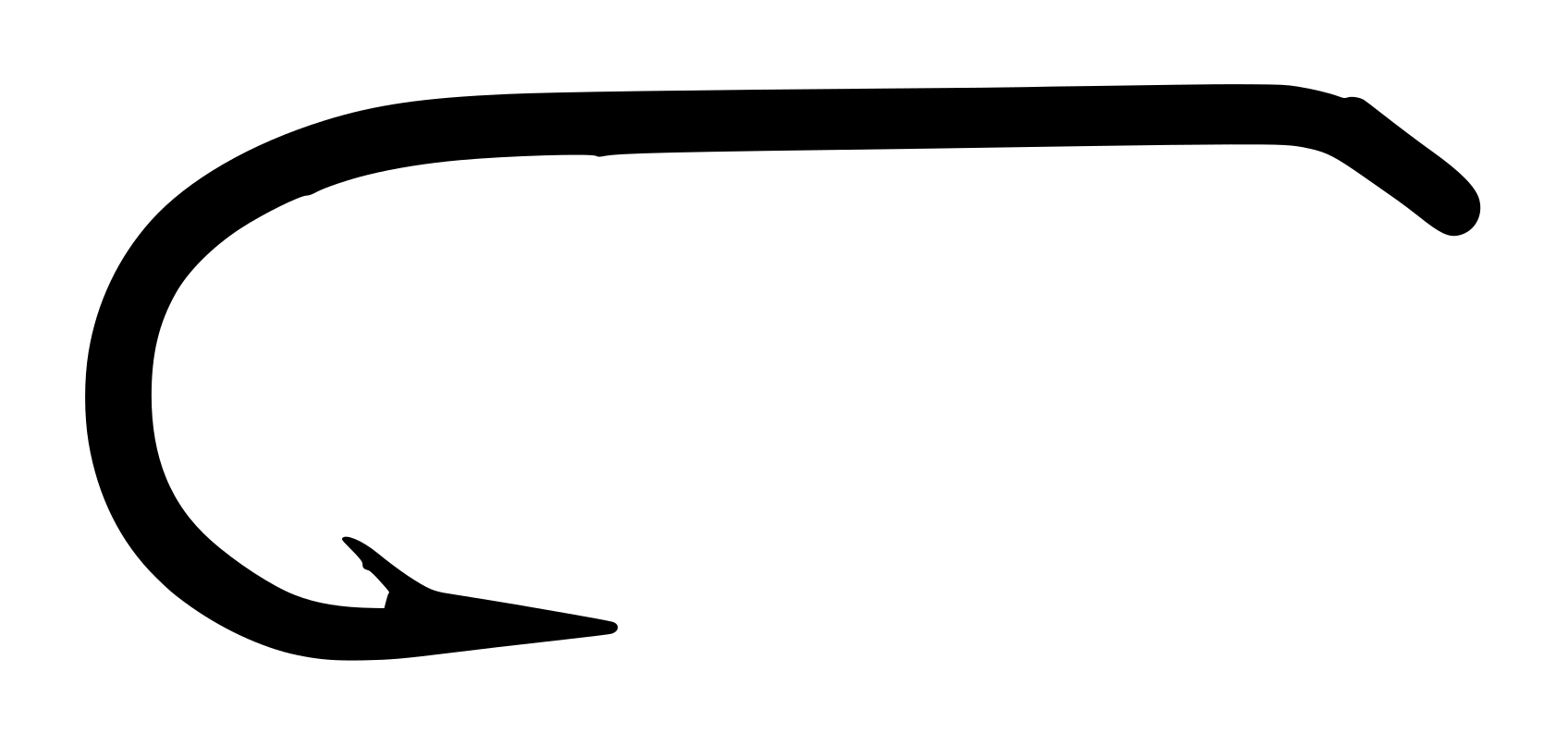
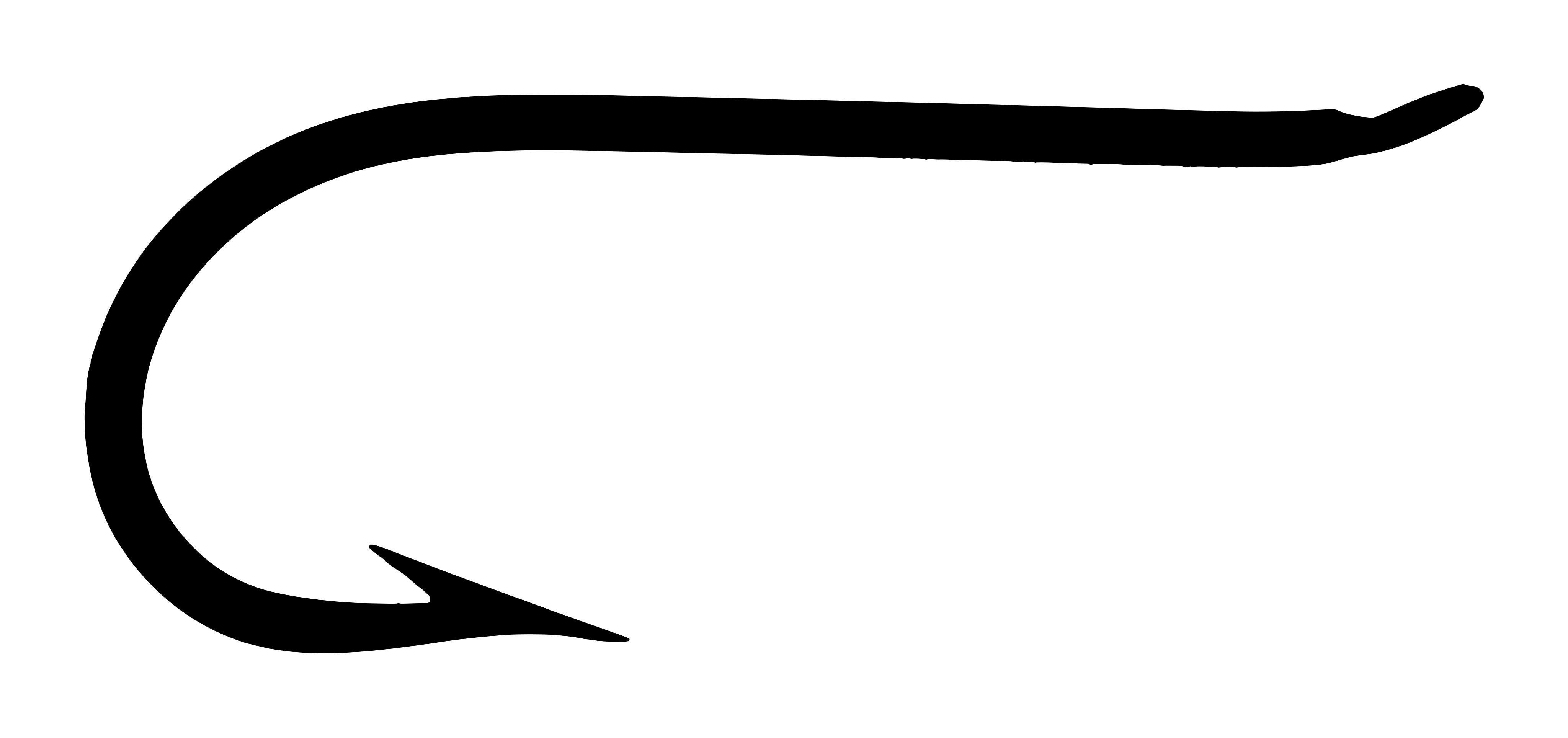
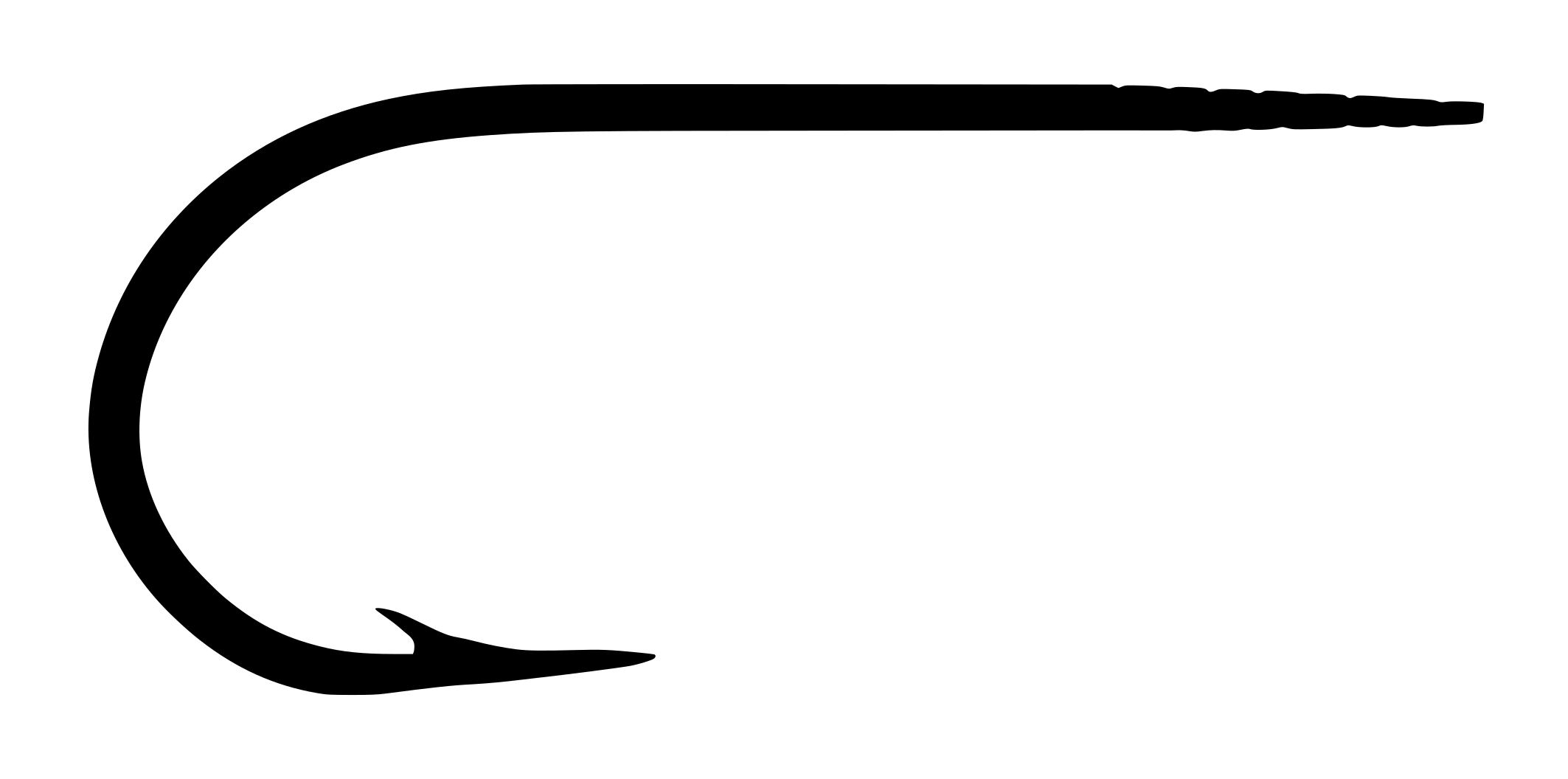
The Mustad 39848 is a traditional sproat-bend wet-fly hook from Mustad’s long-running Classic Series, widely encountered in mid-to-late twentieth century fly tying. Produced during an era when Mustad dominated the commercial hook market, the pattern became known less for specialization than for practicality, consistency, and broad availability through fly shops and tackle dealers across North America and Europe.
Most surviving examples are associated with wet flies, soft hackles, and general trout patterns, though period usage was often broader than modern classifications suggest. The sproat bend and moderate wire profile made the pattern adaptable for a variety of everyday tying applications, particularly before highly specialized hook designs became common. Depending on production era, collectors may encounter differences in finish, packaging, and country markings.
Among vintage hook collectors, the 39848 represents the kind of durable, workmanlike Mustad pattern that quietly shaped twentieth-century fly tying. While not especially rare, clean boxed examples and original dealer stock remain collectible as part of the broader history of Scandinavian hook manufacturing and classic fly-tying materials.
Front face of the original cardboard box label for Mustad Quality 39848 Kendal Round hooks, size No. 8, showing the Key Brand logo, Oslo-Norway manufacture designation, and complete eight-line specifications including 'Hollow Point', 'Forged', 'Bronzed', and '2 ex. fine Wire' notation.
Photographic record
5 cataloged imagesSelect any record to load it above.
5 images shown
Mustad 39848 Kendal Round Size 8 Original Packaging FrontFront face of the original cardboard box label for Mustad Quality 39848 Kendal Round hooks, size No. 8, showing the Key Brand logo, Oslo-Norway manufacture designation, and complete eight-line specifications including 'Hollow Point', 'Forged', 'Bronzed', and '2 ex. fine Wire' notation.Open originalMustad 39848 Label Details and SpecificationsClose-up of the Mustad Quality 39848 label showing the complete eight-line specification system: manufacturer (O. Mustad & Søn), origin (Oslo-Norway), quality code (39848), point type (Hollow Point), pattern (Kendal Round Hooks), and finishing details (Forged, extra-small tapered eye, Bronzed, Slightly Reversed, extra-short shank, 2 extra-fine wire).Open originalMustad 39848 Hollow Point Geometry Close-upExtreme close-up of the hook point showing the hollow point geometry with the concave, inwardly curved outer profile that creates the razor-sharp inner face characteristic of this point style. The small, neatly formed barb is positioned close to the point.Open originalMustad 39848 Full Hook ProfileFull-length profile view of a single Mustad 39848 hook on the measurement grid. The tapered ring eye is visible at the head; the short shank extends from the eye through the forged, perfectly round Kendal bend; and the fine-gauge wire is apparent throughout.Open originalMustad 39848 Pair of Hooks Showing Manufacturing ConsistencyTwo individual Mustad 39848 hooks positioned on the measurement grid, demonstrating manufacturing consistency in the tapered eye, short shank length, round bend geometry, and overall proportions. Both hooks are in excellent condition with bright bronzed finish.Open original
Technical profile
Eye
Tapered Eye, Turned DownTapered eye P — the wire diameter visibly tapers as it forms the terminal loop, distinguishing it from a standard ball eye. This design significantly reduces front-end weight, a critical engineering detail for dry fly suspension P.
Wire
Standard, Round
Shank
Standard — Plain
Bend
Round / Kendal, Standard gap, Offset / kirbedKendal Round bend is a perfect, sweeping semicircular curve P. The bend is relatively wide for a No. 8, characteristic of the Kendal pattern's design intent for larger minnow imitations and spider flies. Slight offset (kirbed) is visible in the profile; point deflects minimally to the left when viewed from above P.
Point
Hollow Point (concave inner face)Barb is small and neatly formed, positioned close to the point P. The barb angle is consistent with vintage Mustad manufacturing standards. Barb is slightly swept backward relative to the point, assisting with fish-holding P.
Finish
Bronzed — Confirmed (stated on packaging)Bronzed finish displays warm, brownish-gold lacquer tone P. Finish is uniform across the visible surface with light patina characteristic of aged specimens stored in original packaging. Lacquer remains intact with no flaking or rust bloom visible P. The finish tone is muted, non-reflective — appropriate for stealthy freshwater presentations P.
Specimen hooks show no corrosion, bright condition, and no visible damage. Original card packaging shows light toning and aged patina consistent with storage over decades; no tears, tape, or water damage. All 100 hooks accounted for on the card. Label text remains fully legible with excellent print clarity P.
The hollow point on this hook is engineered to penetrate soft tissue with minimal applied pressure. The concave, inwardly curved geometry creates a razor-sharp inner face and a knife-edge outer edge, requiring far less hook-set force than a standard spear point. For dry fly fishing, where the angler cannot rely on a heavy rod or stiff line to drive the hook home, the hollow point allows the fish’s strike itself to achieve initial penetration.
The forged shank — flattened along its lateral sides through cold-press mechanization — dramatically increases tensile strength without adding weight or bulk. This allows the 2x extra-fine wire to retain structural integrity even when fighting large trout, a paradox that made the hook appealing to serious dry fly anglers who required both invisibility and durability.
The slight kirb (reverse offset) angles the point approximately 5–10 degrees to the left when viewed from above. This offset prevents the hook from laying flat inside the fish’s mouth and increases the probability that the point will catch tissue immediately upon the strike, dramatically improving hook-up ratios on cautious, soft-mouthed fish.
First documented 2x extra-fine Kendal Round variant with tapered eye in garrenwood.com catalog; rarest configuration of this pattern within the collection.
Own this hook? Help us measure it.
We have measurement for size 8. Know any others? Submit calipered measurements and we'll review and add them. Thank you!
The Kendal Round pattern entered Mustad’s catalog as part of their systematic acquisition and standardization of regional hook geometries. The Kendal originated in the Kendal region of England and was favored for traditional fly fishing and bait work throughout the British Isles. Mustad’s Kendal Round line eventually encompassed dozens of distinct variants, each differentiated by wire gauge, shank length, eye type, and finish.
The Quality 39848 variant — with its 2x extra-fine wire, short shank, and tapered eye — represents a specialized branch of the Kendal family, engineered explicitly for mid-20th century dry fly practice. This configuration remained in production from approximately 1950 through the early 1970s, when Mustad began consolidating its vast catalog in favor of the modernized ‘Signature Series’ nomenclature system introduced around 2001–2009.
The Kendal Round pattern itself has not been formally discontinued by Mustad, but the specific Quality code system and the arbitrary numeric designation (39848) became obsolete with the transition to the alphanumeric Signature Series. Accordingly, this hook now exists primarily as a vintage collectible and historical specimen rather than as an active commercial product.
Era and Packaging Dating
Oslo location designation on label (Oslo-Norway established January 1, 1925) places this post-1925. Key Brand logo inside scalloped border is characteristic of mid-20th century Mustad packaging style. No barcode present (standard pre-1974). Absence of Gjøvik-only branding and retention of Oslo address indicates production during the mid-century period before Mustad began emphasizing the Gjøvik factory exclusively in later decades. Printing method is offset letterpress on aged card stock, consistent with 1950s-1960s manufacturing.
The Tapered Eye Revolution
The tapered eye on this hook represents a subtle but profound shift in manufacturing philosophy during the 1950s. Earlier Kendal hooks featured standard ball eyes, which added bulk and weight at the front of the hook — a dead weight that pulled dry flies nose-down into the water. By carefully tapering the wire diameter as it formed the eye, Mustad engineers reduced the front-end mass by nearly 40% without sacrificing strength. This innovation became the hallmark of Mustad's premium dry fly lines and influenced hook design across the entire fly-fishing industry. A single No. 8 hook with a tapered eye could mean the difference between a fly that floated properly and one that drowned in the surface film.
Design lineage and influence
The Kendal Round bend originated in the Kendal region of England, a historic center of traditional hook-making craftsmanship. By the late 19th century, the Kendal pattern had become established as a versatile round-bend hook suitable for both bait fishing and fly presentation. Mustad, through its aggressive industrial ‘cloning’ strategy, reverse-engineered the Kendal design and began offering it in dozens of distinct variations — different wire gauges, shank lengths, and eye types — to capture regional markets globally.
The 39848 represents one of the most refined iterations of this pattern: the combination of 2x extra-fine wire with a short shank and tapered eye represents a deliberate engineering response to the emerging discipline of dry fly fishing and buoyant presentation techniques that dominated mid-20th century fly-tying practice. This hook sits at the intersection of the classical Kendal tradition and modern aerodynamic demands placed on fly design.
Best matchRelated by Attribute
Computed automatically from catalog data — updated as new hooks are added.
Matches: Bend, Shank, Gap, Point, Finish +4 moreDiffers: Wire: Standard vs Heavy (1X Heavy); Eye: Tapered Eye vs Ball Eye; Eye Orient.: Turned Down vs Straight / Inline +1 more
The Kendal Round No. 8 with 2x extra-fine wire was engineered specifically for North Country Spider patterns, soft-hackle flies, and diminutive dry fly presentations where buoyancy and delicate wire were essential. The short shank and fine gauge allow the fly to float horizontally on the surface film without the nose-heavy dipping that heavier wire produces.
Historical records indicate this size and configuration was favored for egg patterns (Glo-Bugs, salmon egg imitations) and floating ants or beetles in clear, slow streams where a minimal profile and natural drift were critical to success. The slightly reversed point increases the hook-up ratio on cautious, soft-mouthed trout in spring creeks and tailwaters.
Secondary Applications
Light bait fishing for panfish and small trout; delicate presentations in clear water where hook visibility is a concern.
Classic Fly Patterns
North Country Spider, Soft-Hackle flies, Glo-Bugs, Floating Ants, Terrestrial Beetles, Salmon Egg Imitations
Modern Equivalents
Hook
Match Quality
Notes
Mustad Heritage C49
Very Good
Similar short shank and fine-wire profile; modern tapered eye construction
Tiemco 2487
Good
Short shank, curved nymph profile, fine wire; slightly different bend geometry
Gamakatsu C12-BM
Moderate
Straight shank, fine wire, but does not offer the classic Kendal round bend profile
Collector notes
Rated 4.5/10 (Uncommon) — The combination of a scarce wire gauge (2x extra-fine), short shank, and specialized tapered eye makes this variant uncommon, particularly in original packaging. However, the broader Kendal Round pattern remains fairly abundant in the collecting market, limiting the overall rating. Collector demand is moderate and largely confined to specialists in vintage dry fly hooks and mid-century Mustad production variants.
Reference value
$5 – $13 USD estimate
Packaging condition
Very Good — light wear, fully legibleRecorded specimen
Packaging format
GW-M-02Catalog code
Positive Factors: Original packaging with complete, legible label is a significant premium driver. All 100 hooks accounted for on the card — full-count cards command 40–50% more than cards with missing hooks. The specialized wire gauge (2x extra-fine) and tapered eye configuration is genuinely uncommon; most surviving Kendal hooks are standard-wire variants. The bronzed finish is aesthetically appealing and matches period aesthetics favored by serious collectors. Mid-century Oslo-address branding is historically significant and appeals to researchers studying Mustad’s product transition.
Limiting Factors: Size No. 8 is relatively common within the Kendal line; much rarer sizes (16, 20) command premium values. The Kendal pattern itself lacks the historical prestige of signature patterns like the Sproat or Limerick. Modern fly tyers typically prefer contemporary hooks, limiting demand from active anglers. Condition of the specimen is excellent, but the aging of the card stock (toning, patina) may deter collectors seeking pristine examples.
Desirable Variants: Sizes 10, 12, 14 (less common than 8) command higher values. Sealed, never-opened cards are exceptionally rare and can reach $25–35. Bronzed finish is more sought-after than tinned or blued variants. Hooks with full hook count and undamaged packaging add 50% premium.
Condition Factors: Card condition is the primary value driver. Mint (sealed) examples: $20–35. Excellent (opened, complete, minimal wear): $12–18. Very Good (opened, one or two missing hooks, minor toning): $8–12. Good (multiple missing, visible wear): $5–8. Specimen hooks themselves are secondary; collector value derives almost entirely from packaging integrity and completeness.
Packaging
Square cardboard box with decorative scalloped border in tan/gold printing. Front label displays Key Brand logo (skeleton key graphic) in upper left quadrant, followed by manufacturer name 'O. MUSTAD & SÖN' (Line 1), 'Manufacturers' (Line 2), 'OSLO – NORWAY' (Line 3), 'Qual. 39848' (Line 4), 'Hollow Point' and 'Short Point' (Line 5), 'Mustad-Kendal Round Hooks' (Line 6), and supplementary features 'Forged Ex. small tap ring, Bronzed Slightly reversed, Ex. short shank 2 ex. fine Wire Special' (Lines 7-8). Bottom left corner notes '100' and 'No. 8', indicating box count and hook size. Asterisks form decorative border throughout. Printing is offset letterpress on aged cream-colored card stock. Back and sides of packaging are tan with no additional printing visible in provided images. Overall dimensions approximately 3.5" x 3.0" x 0.5" (estimated).
Market Value Notes
Low ($5): Good condition, multiple hooks missing, card shows significant wear and toning
High ($13): Excellent condition, complete card count (100 hooks), minimal wear, all text legible
Premium factors: Original packaging (critical driver), full hook count, bronzed finish, size variants (10, 12, 14 command 20–30% premium over size 8), sealed or nearly-sealed cards (+50% premium)
Platforms: eBay sold listings, specialist vintage tackle dealers
Confidence: V verified — based on 2 eBay sold listings ($5.00–$12.99) provided by researcher; additional comparable sales suggest modal value near $8–10 for typical examples
Where to Find
Occasional eBay UK and US listings under 'Mustad 39848' or 'Kendal Round'. Vintage tackle dealers specializing in mid-century fly hooks; Fly Tying Heritage forums and collector groups. Tackle fairs and antique fishing shows in UK, Scandinavia, and US Northeast. Rarely appears in generalist antique shops; requires specialist seeking.
eBay market reference. Researcher-curated. Prices in USD. Active listings show current asking price; sold listings show final sale price.
Preservation
Storage and Preservation
Store this hook on its original card in a cool, dry environment away from direct sunlight and humidity. The bronzed lacquer finish is durable but susceptible to patina development with prolonged moisture exposure; many collectors consider aged patina desirable and authentic, so active preservation efforts are unnecessary unless corrosion becomes visible.
Keep the original card and packaging intact — do not remove hooks for active use. The packaging adds 40–50% premium value to the specimen. Store cards flat or upright in archival-quality boxes to prevent bending or crushing. Avoid stacking heavy items on top of the card, which can damage the printed label or bend the hooks.
The tapered eye is delicate — do not flex or stress the eye wire, as the taper reduces its load-bearing cross-section. If you choose to fish with these hooks, handle the eye with care to avoid eye-opening under load. Monitor periodically for any signs of rust bloom (fine powdery deposits on the metal surface), particularly in damp climates. If surface rust appears, wipe gently with a dry, lint-free cloth. Do not use oil or solvents on bronzed finishes, as they can damage the lacquer layer.
Marking Analysis
Handwritten Marks and Annotations
A single handwritten annotation in purple ink appears on the front label: a circled ‘8’ positioned over the printed size designation ‘No. 8’. This is likely a collector’s mark or inventory notation added after the original manufacture. The mark does not appear to be factory-applied; the ink color and style suggest post-production annotation by a collector or retailer organizing vintage stock.
The circle around the 8 may indicate a cataloging system, a size confirmation mark, or simply a collector’s notation of interest. No other handwritten text, signatures, or maker’s marks are visible on the packaging or hooks themselves. The absence of factory handwriting further supports the mid-century mass-production origin of this lot.
Primary Source
Decoding the Eight-Line Label
Source: Mustad eight-line label typology; O. Mustad & Søn Comprehensive Typology document
This packaging exemplifies Mustad’s standardized eight-line labeling system, a rigorous typographic hierarchy that communicated technical specifications across linguistic and cultural barriers to a global market. Each line serves a discrete function:
Line 1–2 (Manufacturer Identity): ‘O. MUSTAD & SÖN’ / ‘Manufacturers’ establishes corporate authority and differentiates Mustad from import agents and repackagers who dominated the tackle supply chain. Line 3 (Geographic Origin): ‘OSLO – NORWAY’ provides critical dating information — the city remained ‘Christiania’ until January 1, 1925, placing this label post-1925. The Oslo designation (not Gjøvik) indicates mid-century production before Mustad’s later consolidation to the Gjøvik factory exclusively. Line 4 (Quality Code): ‘Qual. 39848’ identifies the product code for this hook line. Line 5 (Point Identifier): ‘Hollow Point’ / ‘Short Point’ specifies the point geometry and a secondary point characteristic. This is the most strictly regulated line in the system, reserved exclusively for penetrative geometry. Lines 6–8 (Pattern, Modifications, Finish): ‘Mustad-Kendal Round Hooks’ identifies the regional pattern; subsequent modifiers describe the tapered eye, forged construction, bronzed finish, short shank, and extra-fine wire — a complete technical specification.
Significance: This label demonstrates how Mustad created a universal technical language capable of bridging global markets and multiple languages, allowing a retailer in Singapore or São Paulo to instantly understand the precise metallurgical and geometric specifications of the enclosed product.
Size Note
Size Designation and Geometric Context
No. 8 in the vintage Mustad system refers to a numeric size designation distinct from modern fly hook gape standardization. The confirmed physical measurements — overall length ~0.62 inches and gap width ~0.24 inches — reveal a relatively small, delicate hook by contemporary standards, appropriate for finesse dry fly and soft-hackle presentations.
For context, a modern Mustad Signature Series equivalent (e.g., the C49 in size 14) would produce nearly identical measurements, suggesting that vintage ‘No. 8’ sizing occasionally approximated modern ‘size 12–14’ dimensions depending on the pattern family. This historical variance in sizing nomenclature is noted in the Mustad eight-line label document as a significant source of confusion for modern tyers attempting to match historical specifications to current products.
The ‘No. 8’ designation on this card aligns correctly with the physical hook dimensions observed and should not be considered anomalous — the sizing is consistent with contemporary Mustad standards for the Kendal Round pattern at that era.
Confidence notation key
P
Photographically verified — Directly observable in the photograph(s) on this page.
V
Verified by documentation — Confirmed by manufacturer catalog, spec sheet, or published reference.
I
Inferred — A logical deduction from observable or documented evidence, not directly stated.
E
Estimated — An approximation based on visual comparison, proportional analysis, or limited data.
S
Speculative — A reasoned hypothesis that cannot be confirmed from available evidence.
Unnotated claims are the compiler’s synthesis; see Sources. All photographs on garrenwood.com are taken on a measurement grid where each square equals 1/10 inch (0.1″ / 2.54 mm).