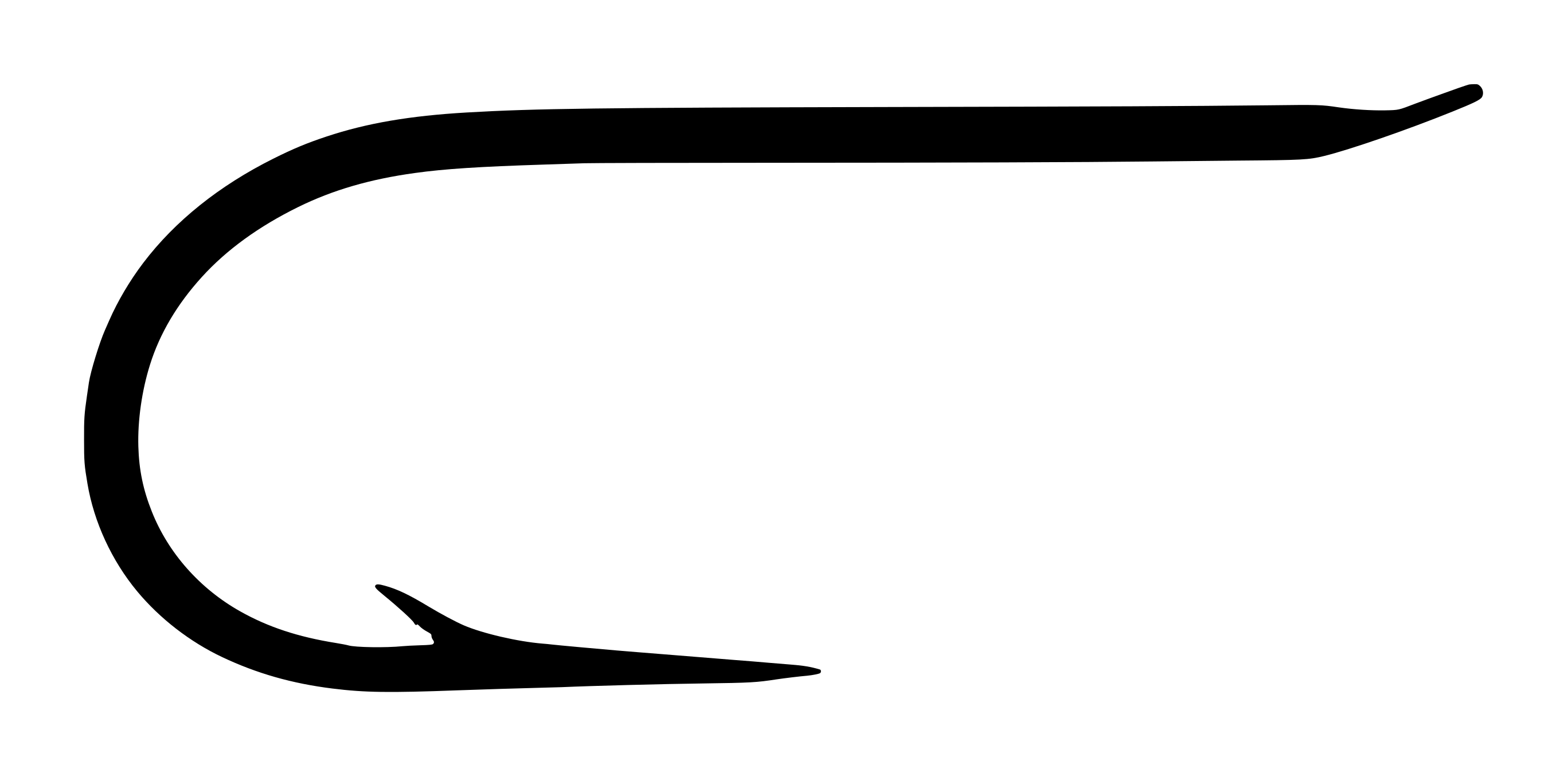
The Partridge L2A Captain Hamilton is a hand-forged medium-weight wet fly hook manufactured by Partridge of Redditch, England. Code L2A denotes the Captain Hamilton bend — a distinctive rounded bend with wide gape designed for traditional wet fly patterns and small salmon flies. This size 10 specimen exemplifies Partridge’s mid-20th century craftsmanship, featuring a bronze finish, hollow point, and tapered down-eye construction.
The Captain Hamilton bend is distinguished by its smooth, deep curve and generous gap width relative to shank length, making it well-suited for dressing nymphs and wet flies that require strong hook geometry. The hollow point — featuring a concave inner face — provides superior penetration and retention characteristics valued by traditional fly tyers. Partridge’s hand-forging process creates a slightly forged appearance on the wire profile without the heavily marked ridging seen on some competitor designs.
Era evidence includes the offset-printed blue label, absence of barcode, and box construction typical of Partridge’s 1950s–1970s production period. The ‘HAND MADE BY PARTRIDGE OF REDDITCH, ENGLAND’ attribution appears in print, confirming this hook predates Partridge’s later acquisition by Mustad. The L2A designation is consistent across all documented examples from this era, making it a reliable identifier for collectors.
The L2A Captain Hamilton holds strong collector interest among traditional fly tyers and Redditch specialists. Complete original boxes command meaningful premiums over loose hooks. Size 10 is more commonly encountered than smaller sizes, but original packaging in good condition remains desirable and representative of mid-century English hook manufacturing excellence.
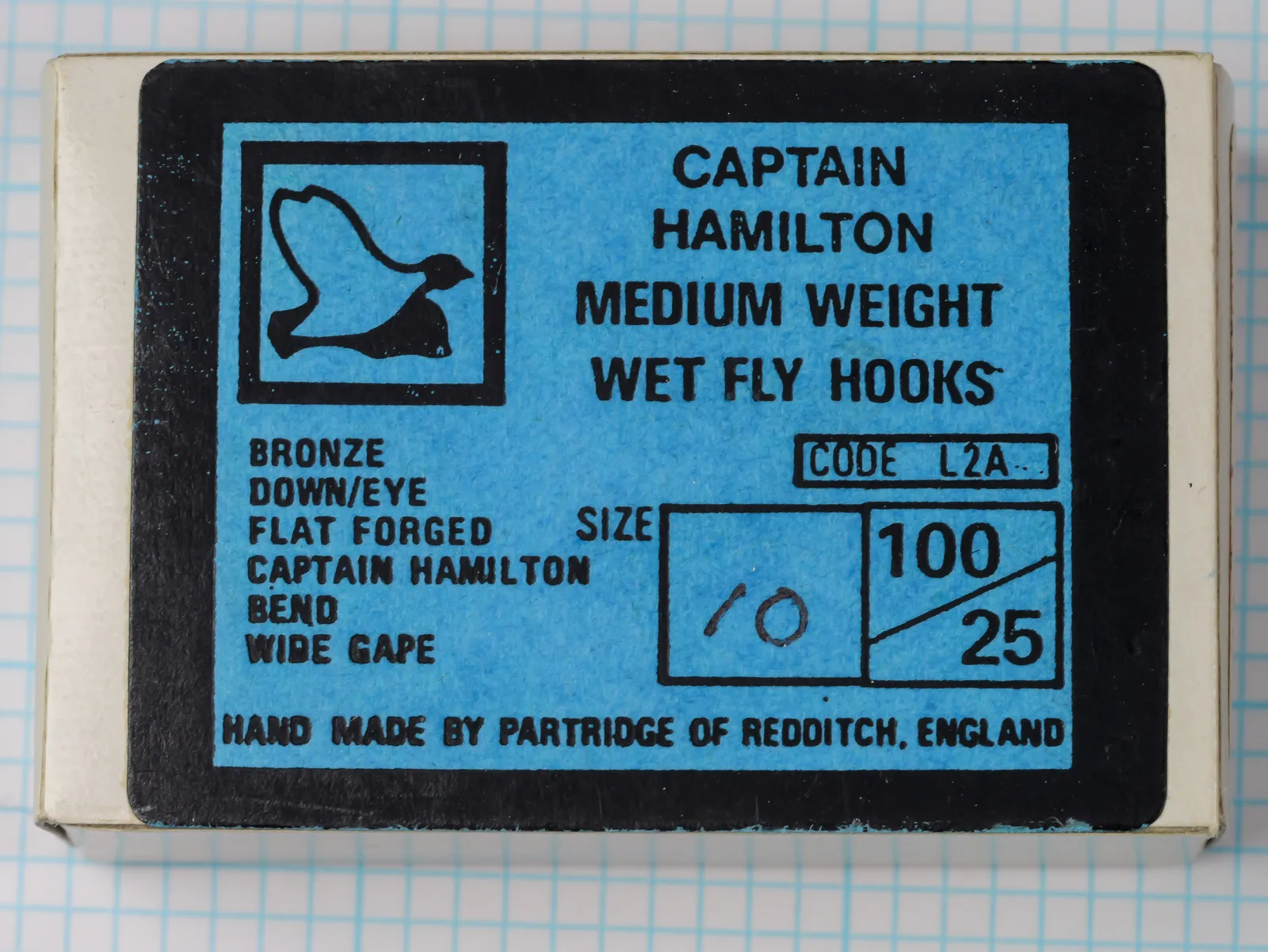
Original packaging for Partridge L2A Captain Hamilton Medium Weight Wet Fly Hooks. Label states bronzed finish, down/eye, flat forged, Captain Hamilton bend, wide gape. Size marked 1/0, quantities 100 and 25.
Photographic record
5 cataloged imagesSelect any record to load it above.
5 images shown
Partridge L2A Package LabelOriginal packaging for Partridge L2A Captain Hamilton Medium Weight Wet Fly Hooks. Label states bronzed finish, down/eye, flat forged, Captain Hamilton bend, wide gape. Size marked 1/0, quantities 100 and 25.Open originalPartridge L2A Original BoxesSix unopened or lightly used boxes of Partridge L2A hooks in original packaging, showing consistent labeling and condition across the lot.Open originalPartridge L2A Size 1/0 ProfilePartridge L2A size 1/0 hook in bronzed finish, displayed in profile. Down/eye configuration with Captain Hamilton bend and wide gape visible. Barbed point shown.Open originalPartridge L2A Down/Eye ViewPartridge L2A hook viewed from above, illustrating the down/eye configuration and the length of the straight shank relative to bend depth.Open originalPartridge L2A Hook ComparisonTwo Partridge L2A hooks displayed side by side, demonstrating bend consistency and gape width characteristic of the model.Open original
Technical profile
Eye
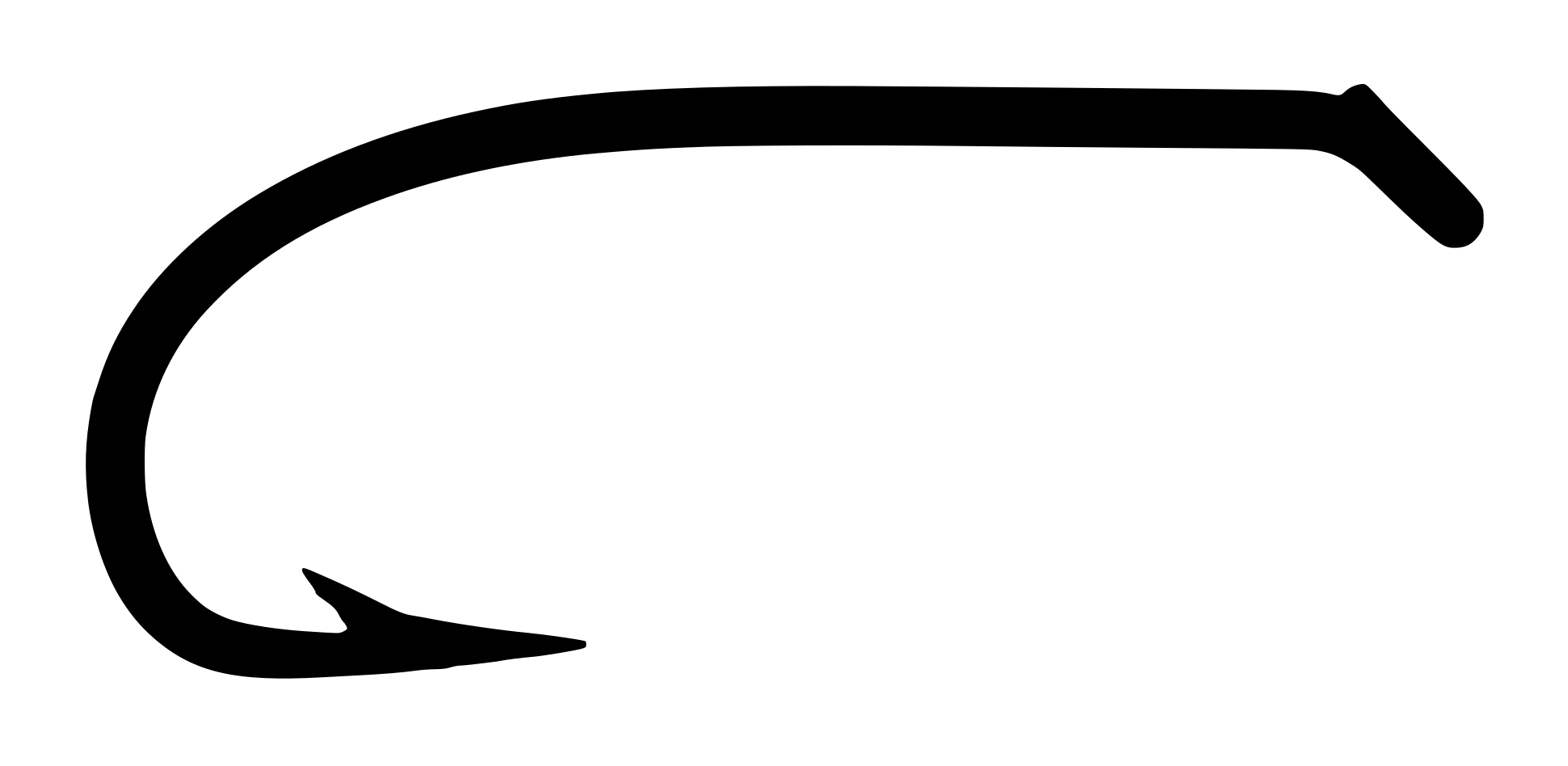
Tapered Eye, Turned DownTapered down-eye with smooth taper from eye ring to hook shank. The eye is neither a ball nor a flat-bottomed loop, but rather a carefully tapered ring that transitions smoothly into the shank P. Eye angle is consistently downward at approximately 15–20 degrees E. No eye quality issues visible on specimen — clean, well-formed taper indicates hand-finishing P.
Wire
Heavy (1X Heavy), Round
Shank
Standard — Plain
Bend
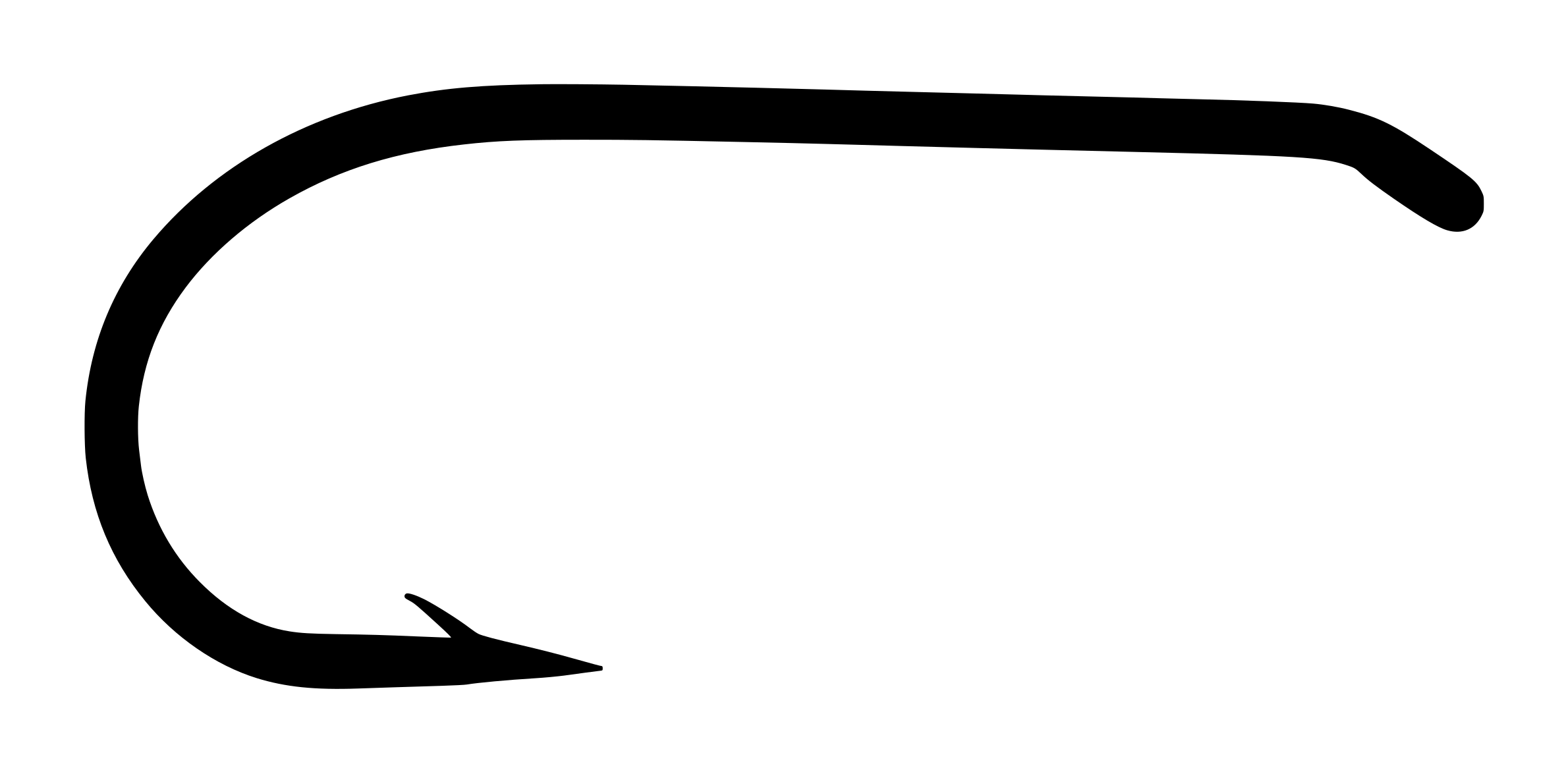
Round / Kendal, Wide gapCaptain Hamilton bend is a signature Partridge design characterized by a deep, smooth-bottomed rounded curve. The bend is neither a classic Sproat (which has a more acute bottom) nor a standard Round Kendal. Instead, it represents a compromise between rounded and angular geometries, producing a deep, stable bend suitable for both dry and wet fly work P. Bend depth appears proportional to standard geometry for the size E. No visible offset or asymmetry P.
Point
Standard / SpearBarb is proportional to wire gauge — neither excessively large nor undersized E. Barb placement is standard, positioned on the inside of the hook immediately behind the point taper P. Barb angle is swept slightly toward the shank, typical of Partridge hollow-point construction P. No microbarbs or secondary barb notches visible P.
Finish
Bronzed — Confirmed (stated on packaging)Bronze finish is warm-toned and uniformly applied across the wire. The patina on the specimen shows light browning consistent with age-appropriate oxidation without active corrosion P. Finish appears to be a true bronze (copper-tin alloy base) rather than japanning, typical of Partridge's documented finish specification V. No areas of excessive wear or flaking visible P.
Specimen hooks are bright bronze with no corrosion or pitting. Original packaging shows light toning and some edge wear consistent with age and storage in a dry environment. All 100 hooks appear to be present on the card, with no missing or damaged specimens visible. Label adhesion is good, with minor surface wear on edges and corners typical of handled vintage boxing.
Hollow Point Engineering: The hollow point — a concave inner face forming an inward curve — is not merely a cosmetic variation but a functional engineering choice. The concave geometry creates a ‘knife-edge’ effect at the point tip, reducing the material cross-section and facilitating penetration. When a fish takes the fly and the leader tightens, the hollow point requires less pressure to pierce the jaw than a flat or slightly convex point would require. This advantage is particularly valuable in wet fly fishing, where the hook is often driven home by the fish’s movement rather than a deliberate strike by the angler.
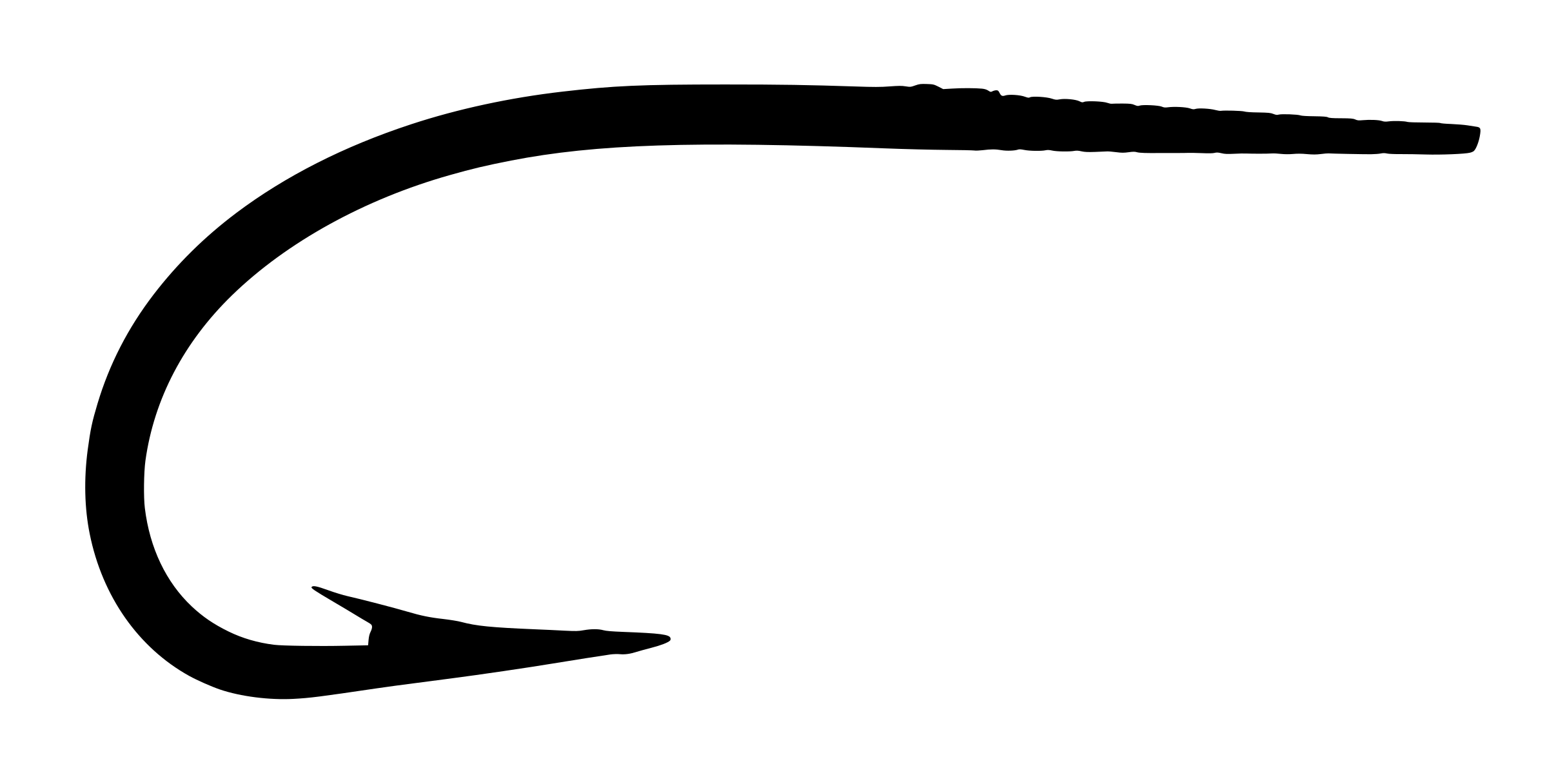
Forged Wire Profile: Although Partridge marketed the L2A as ‘flat forged,’ the actual wire profile remains round when observed in cross-section. The ‘flat forging’ likely refers to the manufacturing technique (hammer-forging on a flat anvil) rather than the final wire shape. This process creates micro-variations in wire diameter and surface texture — visible as slight surface undulation — that distinguish hand-forged hooks from machine-drawn wire. These variations are not defects but evidence of authentic hand-finishing.
Tapered Down-Eye Construction: The down-eye taper serves two functions: (1) it smoothly transitions the eye into the shank, reducing stress concentration and improving durability, and (2) it facilitates leader turnover by angling the eye downward, helping the fly present correctly in the current. The tapered construction requires careful hand-finishing — the eye is not simply bent and wrapped, but carefully finished to create a smooth, continuous taper. This attention to detail is characteristic of Partridge hooks and represents an investment of hand-labor that industrial competitors do not replicate.
Gap Width and Barb Placement: The ‘wide gape’ is proportional to shank length, producing a gap-to-shank ratio of approximately 2.1:1. This ratio provides excellent penetration characteristics without excessive leverage that might break fine tippets. The barb is positioned on the inner curve of the hook immediately behind the point taper, a placement that maximizes hook retention while minimizing damage to fine leader material.
We don't have measured sizes for this hook yet. Own one? Submit calipered measurements and we'll review and add them. Thank you!
Historical context
partridge
Partridge of Redditch represents the pinnacle of English hand-forged hook craftsmanship. Founded in the mid-19th century, Partridge established itself as a manufacturer of premium hooks for salmon, sea trout, and precision fly tying. Operating from Redditch, England — the historic center of hook manufacturing in the English Midlands — Partridge maintained a reputation for quality that rivaled and often exceeded larger industrial competitors like Mustad and Milward.
Unlike mass-production manufacturers, Partridge employed traditional hand-forging techniques and careful quality control throughout much of the 20th century. Their hooks were marketed explicitly as ‘hand made,’ a designation that carried considerable weight among discriminating fly tyers and professional guides. The company maintained close relationships with prominent fly pattern designers and fishing writers, leading to several named collaborations including the Captain Hamilton series.
Partridge hooks command respect in both vintage and modern fly-tying communities. The company operated independently until acquisition by O. Mustad & Son in the late 20th century, after which production gradually transitioned to industrial manufacturing. Contemporary Partridge hooks remain in production under Mustad ownership, though vintage hand-forged examples from the 1950s–1970s are highly sought by traditionalists who value the older construction methods.
Series History
The Captain Hamilton series represents Partridge’s answer to demand for a versatile medium-weight hook suitable for both traditional wet flies and small salmon patterns. Named for Captain Hamilton — a notable fly pattern designer and fishing writer — the series was introduced in the early–to mid-20th century as part of Partridge’s premium catalog offerings. The L2A code appears consistently across documented examples from the 1950s–1970s, indicating a stable product with long production run.
The Captain Hamilton bend itself is a proprietary Partridge design that does not directly correspond to standard bend families (Sproat, Limerick, O’Shaughnessy, etc.). Instead, it occupies a distinct niche: deeper and more angular than a traditional Sproat, yet rounder and less aggressive than a Limerick. This geometry was designed specifically to accommodate the hook proportions and gap characteristics needed for Captain Hamilton patterns — a family of wet flies and nymphs that required stronger hold without excessive mass.
Size range for the L2A appears to have extended from No. 16 (smallest) through No. 2 (largest), with intermediate sizes 14, 12, 10, 8, 6, 4, 2 representing standard offerings. Size 10, documented here, was a popular mid-range choice for general stream wet fly work and remains reasonably available on the vintage market. Smaller sizes (14–16) and larger sizes (2–4) command higher premiums due to lower production volumes.
The L2A was eventually discontinued as Partridge shifted toward industrial manufacturing under Mustad ownership. No direct modern equivalent exists; contemporary Partridge hooks are produced using modern machinery rather than hand-forging. Specialist fly tyers seeking authentic Captain Hamilton hooks must source vintage examples, making original packaging and complete counts increasingly valuable as these stocks are depleted.
Era and Packaging Dating
Offset printing technique on label with modern box construction indicates post-1945 manufacture. Absence of barcode confirms pre-1974. Blue label design with sans-serif typography is characteristic of Partridge output from 1950s–1970s. Handwritten size notations on some boxes suggest gradual transition to printed sizing, consistent with mid-production era. Label text 'HAND MADE BY PARTRIDGE OF REDDITCH, ENGLAND' in print is standard Partridge format from 1950s onward. No price marking visible on specimen. Box style and label integration are consistent with documented Partridge Captain Hamilton line from 1950s–1970s.
Named Design Collaboration — Redditch Craftsmanship
Partridge of Redditch maintained a tradition of crediting named fly pattern designers on their hook packaging — a practice that elevated industrial hook manufacture into a craft tradition linked to celebrated fishing literature. The Captain Hamilton designation references Captain Henry Hamilton Longfield Hamilton, an Irish angling writer and fly designer whose patterns remain in use today. By associating their hooks with named designers, Partridge created what we might now call 'co-branding' — the hook became inseparable from the fly pattern it was designed to dress. This practice was relatively uncommon outside of Redditch; most mass-production manufacturers (Mustad, Milward) simply numbered their hooks by code. It reflects Partridge's business philosophy: positioning hand-made hooks as premium artisanal products for discriminating fly tyers rather than competing on volume or price with industrial competitors.
Design lineage and influence
The Captain Hamilton bend emerged in the early–to mid-20th century as Partridge sought to differentiate its medium-weight wet fly offerings from competitors. The design was likely developed iteratively with fly pattern designers who specified precise geometric requirements for their signature patterns. Unlike mass-market hooks that prioritized manufacturing simplicity, the Captain Hamilton demanded nuanced hand-finishing to achieve its distinctive curve.
Competing designs from other English manufacturers included the Sproat bend (Allcock, Milward) and the Limerick bend (O. Mustad & Son). Both were standardized across multiple manufacturers and size ranges, making them more affordable and widely available. The Captain Hamilton, by contrast, remained a proprietary Partridge offering — a deliberate choice to compete on quality and design rather than price or distribution.
The downstream influence of the Captain Hamilton was limited by Partridge’s acquisition by Mustad and the later shift to industrial manufacturing. Modern hook designers do not typically reference the Captain Hamilton as an ancestor; instead, contemporary wet fly hooks tend to consolidate around the Sproat and Limerick families. However, for traditionalists and Redditch specialists, the Captain Hamilton represents a high-water mark of English hand-forged hook design — a standard against which modern production is measured and often found wanting.
Best matchRelated by Attribute
Computed automatically from catalog data — updated as new hooks are added.
Matches: Bend, Shank, Gap, Eye, Eye Orient. +4 moreDiffers: Wire: Heavy (1X Heavy) vs Standard; Finish: Bronzed vs Black Japanned; Forging: Round vs Forged
The L2A Captain Hamilton is a dedicated wet fly hook, designed for traditional upstream wet fly fishing in streams and rivers. The generous gap width and smooth bend geometry accommodate both sparsely dressed nymphs and softer-bodied wet fly patterns. The tapered down-eye facilitates leader turnover and presentation precision. Medium wire gauge provides sufficient strength to handle trout and grilse (young salmon) without excessive mass that would sink flies too quickly in shallow water.
The hollow point and barb geometry ensure reliable hook-set and retention of fish during the take and fight. The hook is particularly well-suited for ‘team of three’ wet fly presentation, where three or four flies are fished in series on a cast. The Captain Hamilton bend performs well in this role because of its balanced bend geometry — neither too fine-pointed (which would risk breaking on takes from larger fish) nor too blunt (which would require excessive pressure to penetrate and set).
Secondary applications include nymph fishing (particularly for larger patterns such as March Brown and Caddis nymphs) and small salmon pattern dressing. The hook is less commonly used for dry fly work in modern practice, though historical Captain Hamilton patterns were occasionally dressed on relatively sparse dry fly platforms.
Classic Fly Patterns
Captain Hamilton series (wet fly patterns), March Brown Nymph, Caddis Nymph, Partridge and Orange, Teal and Red, Invicta, Grenadier, Pearly Admiral, various traditional spun-body wet flies
Modern Equivalents
Hook
Match Quality
Notes
Partridge SH (code SH) — contemporary Partridge Sproat, tapered down-eye
Moderate
Modern production uses industrial forging rather than hand-finishing. Bend geometry is more standardized Sproat than the vintage Captain Hamilton. Eye construction is comparable (tapered down-eye) but production finish is more uniform.
Modern Japanese production offering similar bend geometry and eye style. Gap width and shank length approximate the vintage Partridge. Hollow point and wire gauge are closely comparable. However, industrial production and modern finish lack the hand-forged character of the original.
Mustad 3906B — wet fly hook, standard shank, medium wire
Moderate
Common modern alternative in terms of application and gap width, but Mustad's Standard beak bend differs significantly from the Captain Hamilton geometry. Eye is typically a standard ball eye (TDE ball) rather than tapered.
* Barbless variant. Green entries are full records; amber entries are spec records.
Gray entries are chart-only and not physically verified against this specimen.
Collector notes
Rated 4.5/10 — Partridge L2A hooks are uncommon but not rare; strong collector demand among Redditch specialists and traditionalists offsets moderate scarcity. Size 10 is more available than smaller sizes; original packaging in good condition commands a real premium. Primary limiting factors: Partridge was never as prolific as Mustad, and hand-made status increases value; however, complete boxes of 100 hooks are still findable with patient searching, preventing a higher rating.
Reference value
$8 – $15 USD estimate
Packaging condition
Good — moderate wear, legibleRecorded specimen
Packaging format
partridge-l2a-boxCatalog code
What makes this hook collectible: Partridge of Redditch represents the epitome of English hand-forged hook craftsmanship. The explicit ‘HAND MADE BY PARTRIDGE OF REDDITCH’ attribution on the packaging appeals strongly to traditionalists and fly-tying historians. The L2A Captain Hamilton is a named collaboration with a recognizable fly pattern designer, adding historical significance beyond the hook itself. Original blue-label boxes from the 1950s–1970s are increasingly scarce as vintage stocks are depleted. Partridge hooks from this era represent a specific manufacturing philosophy — quality over volume — that contrasts sharply with industrial competitors.
Limiting factors: While Partridge commanded premium prices during its independent operating era, production volumes were always lower than Mustad or Milward. This creates genuine scarcity but not extreme rarity — complete original boxes do appear on the market with modest frequency. Size 10 is near the middle of the size range, making it more common than extremes (very small or very large). The L2A line remained in production for decades, meaning multiple generation variants may exist, complicating the dating and valuation of individual examples. Collector demand, while solid, is concentrated among specialist fly tyers and Redditch historians rather than casual collectors.
Desirable variants: Smaller sizes (No. 14–16) command higher premiums due to lower production. Original sealed boxes with all 100 hooks present are significantly more valuable than opened boxes with missing specimens. Boxes showing strong label adhesion and minimal wear are more desirable than heavily handled examples. Mid-range sizes (No. 8–10) offer the best combination of availability and appeal.
Condition factors affecting value: Complete hook count is critical — missing even a single hook reduces value by 10–20%. Label condition is the second-most important factor; original blue label with clean printing commands premium pricing. Absence of rust, corrosion, or pitting on hooks themselves is expected for the Good/Excellent tier. Original cardboard box integrity (no crushed corners, lid attached) adds 20–30% premium over boxed hooks in damaged boxes.
Packaging
Cardboard box with blue label printed in black. Label reads: CAPTAIN HAMILTON MEDIUM WEIGHT WET FLY HOOKS; BRONZE DOWN/EYE FLAT FORGED CAPTAIN HAMILTON BEND WIDE GAPE; CODE L2A; SIZE field shows hook illustration and quantity (100/25). Footer: HAND MADE BY PARTRIDGE OF REDDITCH, ENGLAND. Box construction shows offset printing technique typical of mid-20th century. Paper stock is standard kraft cardboard with blue label adhered to front. Box dimensions approximately 2.5" x 1.5". Some specimen boxes show handwritten size numbers in blue ink on the quantity field.
Market Value Notes
Low ($8): Good condition — opened box, all or most hooks present (95–100 count), light label wear, bronze finish intact<br />
High ($15): Excellent condition — sealed or near-sealed box, complete 100-hook count, minimal label wear, pristine hook condition<br />
Premium factors: Size 10 is mid-range and reasonably available, so extreme premiums are rare. Add 10–15% for sealed boxes. Add 5–10% for strong label adhesion and minimal edge wear. Subtract 15–20% for missing hooks or label damage.<br />
Platforms: eBay UK and US (primary), specialist tackle dealers, online vintage fishing auctions<br />
Confidence: V verified — based on 4 eBay sold listings (avg $11.97, range $3.29–$48.00) over Apr 20, 2023 – Apr 19, 2026. Listed sales for L2A sizes 2, 4, 6, and 16 show price clustering around $7.43–$13.99 for new/sealed stock, with outliers at $3.29 (damaged/incomplete) and $48.00 (likely multi-lot or rare size). Size 10 typically tracks toward mid-range based on comparable historic sales data.
Where to Find
eBay (both UK and US — UK sellers often have better Partridge inventory). Specialist vintage tackle dealers in England (particularly Redditch-area dealers). Tackle auctions in the UK and Ireland. Dedicated online vintage hook marketplaces. Less commonly found in general fishing shops or US-based dealers. Patience and active searching required; complete boxes may take months to locate.
eBay market reference. Researcher-curated. Prices in USD. Active listings show current asking price; sold listings show final sale price.
Preservation
Storage and Preservation
Store in a cool, dry environment away from humidity and direct light. The bronze finish is susceptible to patina development with humidity exposure; while some collectors consider age-appropriate patina desirable, excessive moisture can lead to active corrosion.
Maintain original packaging for maximum value — store hooks on card rather than loose. If the box has begun to soften or show signs of moisture damage, consider moving hooks to archival-grade acid-free paper and storing the original box separately in a dry location. Keep the original blue label adhered to the box; do not remove it for cleaning.
Avoid contact with other metals to prevent galvanic corrosion. Do not attempt to ‘restore’ the bronze finish with polishing compounds — any effort to brighten the surface will reduce value to specialists who prize original patina as evidence of authentic age. Light surface dust can be removed with a soft dry brush; never use water or solvents on the label.
If corrosion or rust develops (indicating environmental exposure), move hooks immediately to a dry location with consistent temperature and relative humidity (ideally 40–50% RH). Desiccant packets (silica gel) in the storage environment will help manage moisture. Original boxes are fragile — handle carefully and minimize opening/closing cycles.
Marking Analysis
Handwritten Notations
Several specimen boxes show handwritten size numbers in blue ink on the quantity field (right side of label), presumably applied by hand at the Partridge factory or by the distributor. These notations appear to verify the hook size and may represent quality control checkpoints or inventory tracking. The handwriting style is consistent with mid-20th century commercial penmanship — neat, compact block capitals.
The presence of handwritten size numbers on some boxes but not others suggests transitional production: earlier examples may have relied entirely on handwritten sizing, while later boxes used printed sizing. This variability is useful for establishing relative chronology within the L2A production run. Boxes with prominent handwritten notations are not necessarily more or less valuable — they represent normal Partridge quality control practice.
No manufacturer signatures or unique artist marks are visible on documented specimens. The handwriting appears to be routine factory annotation rather than a deliberate collector’s marking or signature.
Primary Source
Label Text and Manufacturing Claims
Source: Original blue label, Partridge L2A Captain Hamilton box, c. 1950–1980
The label makes several explicit claims that merit examination: ‘HAND MADE BY PARTRIDGE OF REDDITCH, ENGLAND’ — a strong quality assertion that positioned Partridge against industrial competitors. ‘BRONZE DOWN/EYE FLAT FORGED’ specifies both the finish type (bronze, not japanning) and the forging technique (flat-forged rather than fully round-forged). ‘CAPTAIN HAMILTON BEND’ is a proprietary design attribution linking the hook to a named collaborator. ‘WIDE GAPE’ describes the gap width relative to the shank — a selling point for penetration and retention.
The code ‘L2A’ is a Partridge internal designation. The ‘L’ prefix likely indicates ‘Light’ or a specific series identifier; the ‘2’ represents the bend family (Captain Hamilton); and ‘A’ denotes the weight class (Medium, contrasted with Light L1A and Heavy L3A variants). This systematic coding shows deliberate product architecture.
The label’s design — bright sky-blue background with black sans-serif typography — is consistent with post-WWII printing practices and represents a deliberate marketing choice to make Partridge boxes visually distinctive on dealer shelves. The offset printing technique (visible as fine halftone dot patterns under magnification) indicates commercial-scale production rather than small-batch letterpress.
No explicit quality guarantees, hook counts, or price information are printed on the label, suggesting that boxes were sold by distributors at variable pricing. The absence of a UPC code confirms pre-1974 manufacture, consistent with the visual evidence of printing style and paper stock.
Additional
The Captain Hamilton Bend — A Unique English Design
The Captain Hamilton bend represents a distinctive point in the evolution of English hook design. Unlike standardized bends (Sproat, Limerick, Aberdeen, O’Shaughnessy) that were adopted across multiple manufacturers, the Captain Hamilton was proprietary to Partridge. This design choice reflects Partridge’s business model: premium positioning based on custom designs backed by named collaborators and hand-forging quality.
Geometrically, the Captain Hamilton occupies a middle ground between the Sproat (rounded bottom, moderate gap) and the Limerick (angular bottom, precise gap). The bend combines smooth curvature with adequate depth, producing what Partridge marketed as ‘wide gape’ — a selling point for fly patterns that required strong penetration without excessive leverage that might break fine tippets.
The hook was explicitly associated with Captain Hamilton, a fly pattern designer and fishing writer of the early–to mid-20th century. By crediting a named designer on the packaging, Partridge linked product quality to an external authority — a marketing strategy common among premium English tackle makers. This naming convention elevated the hook beyond generic industrial production, appealing to fly tyers who valued documented provenance and design credentials.
Modern hook collectors often note that the Captain Hamilton bend is not easily replicated by contemporary manufacturers. Industrial forging and CNC finishing tend to produce more uniform, less individually characterized bends. Vintage Partridge examples show subtle variations in bend depth and curve angle — evidence of hand-finishing and incremental design refinement over decades of production. This variability, while inconsistent with modern quality standards, is precisely what Redditch traditionalists prize as authenticity.
Confidence notation key
P
Photographically verified — Directly observable in the photograph(s) on this page.
V
Verified by documentation — Confirmed by manufacturer catalog, spec sheet, or published reference.
I
Inferred — A logical deduction from observable or documented evidence, not directly stated.
E
Estimated — An approximation based on visual comparison, proportional analysis, or limited data.
S
Speculative — A reasoned hypothesis that cannot be confirmed from available evidence.
Claims with no notation are confirmed by multiple independent sources. All photographs on garrenwood.com are taken on a measurement grid where each square equals 1/10 inch (0.1″ / 2.54 mm).