Selected size
10
Catalog record
- Overall Length
- 16 mm V
- Shank Length
- 11.5 mm V
- Bend Depth
- 6 mm V
- Wire Diameter
- 0.5 mm V
- Confidence
- V Catalog record only
 Garren WoodFishing Hook Reference
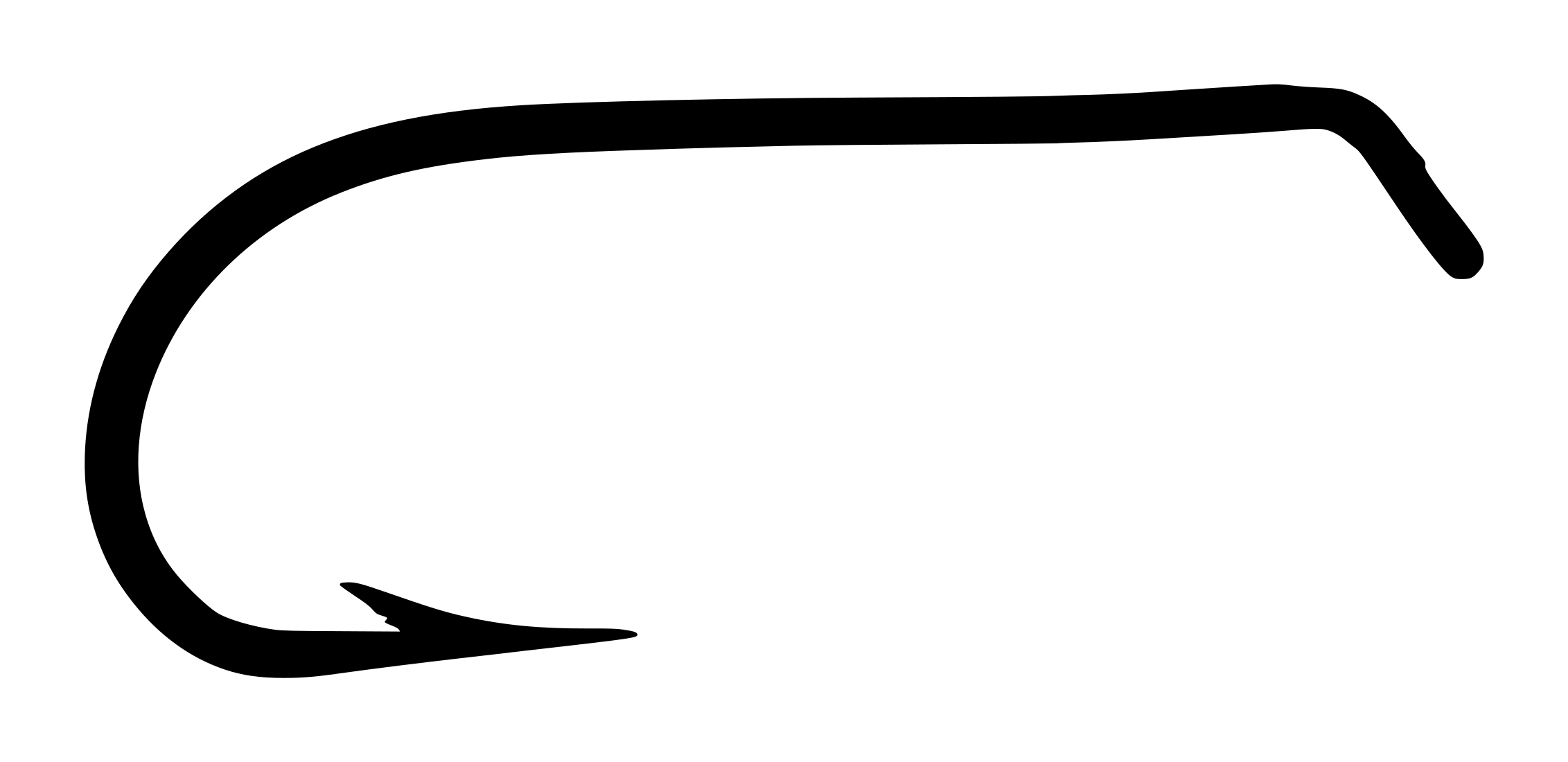
Save this hook to your account to build a list you can come back to.
The Mustad 94833 is a Norwegian-manufactured dry fly hook produced circa 1960–1975, featuring a Viking bend, tapered turned-down eye, extra-fine 3X wire gauge, and bronzed finish. The defining engineering feature is the 0.008″ wire diameter—roughly 30–40% lighter than standard dry fly hooks—paired with a hollow point geometry that permits hook-set on delicate tippets without heavy pressure. This combination of reduced mass and minimal-force penetration established the 94833 as a foundational design for precision dry fly work on selective trout, and the hook remains sought after by collectors and traditionalists despite its relative scarcity in smaller sizes.
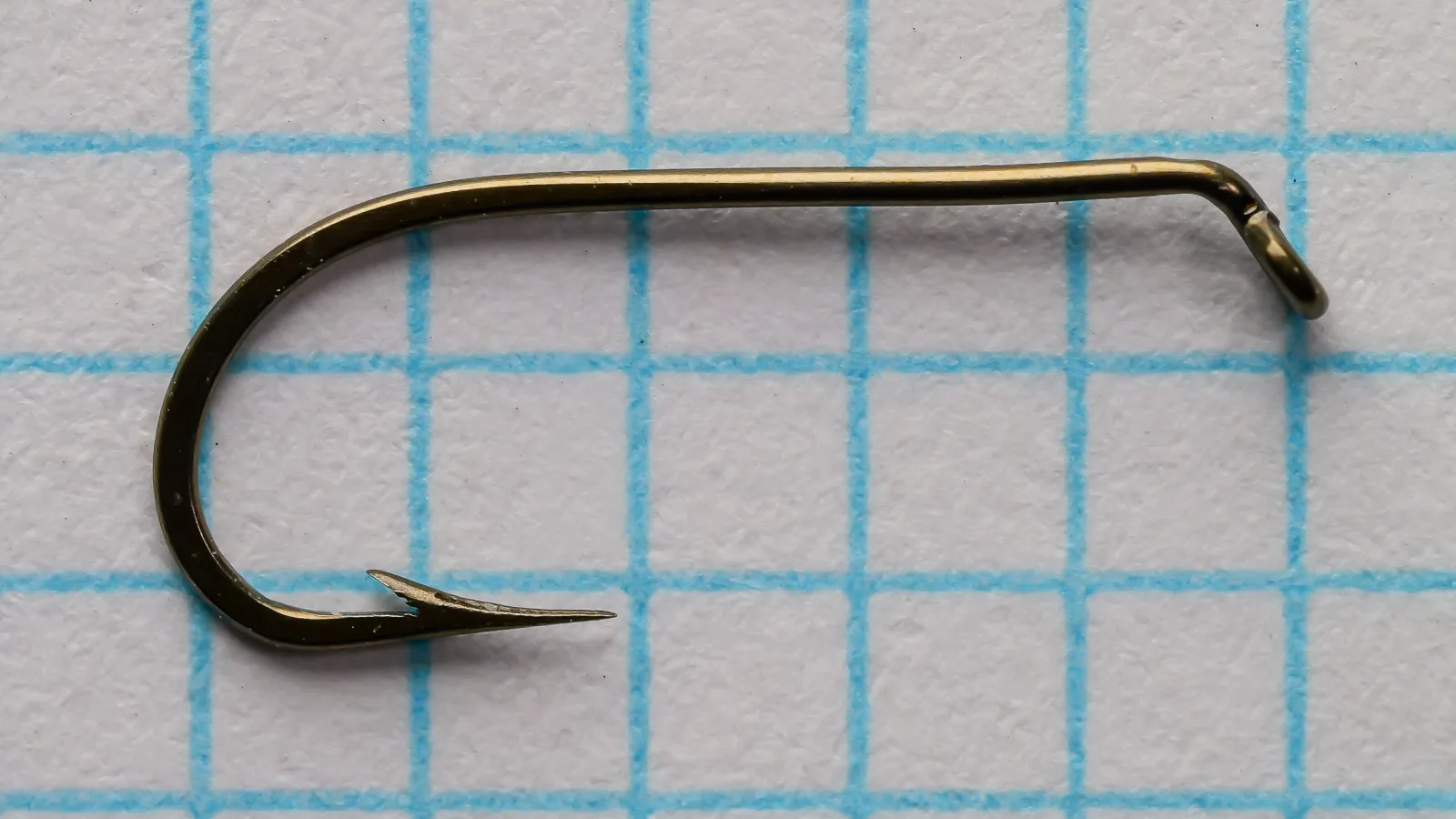
3 cataloged imagesSelect any record to load it above.
3 images shown
The extra-fine (3X) wire gauge is the defining engineering feature of the 94833. Standard dry fly hooks employ round wire typically 0.010″–0.012″ in diameter; the 94833’s wire measures approximately 0.008″ diameter, reducing overall hook mass by roughly 30–40% compared to standard models. This reduced mass is critical for dry flies that rely on buoyancy and surface tension for proper presentation. The tapered eye further reduces frontal weight—the wire diameter gradually diminishes as it forms the terminal loop, concentrating mass toward the shank where it can be balanced by dubbed bodies and hackle wraps.
The hollow point geometry provides the rapid, minimal-force penetration essential for soft-mouthed trout. The concave inner face creates an extremely fine, sharp tip that flares rapidly toward the barb, allowing the hook to establish purchase with barely applied pressure—critical when tying on delicate tippets (typically 5X–7X) that could break if heavier hook-sets were required.
The bronzed finish—a baked-on lacquer coating—provides adequate rust resistance for freshwater applications while offering a muted, low-visibility tone that appeals to traditionalist tiers. The Sproat bend distributes strain evenly across the curve, making it highly resistant to opening or fracturing under the stress of a fighting trout.
Physical measurement with calipers
We have measurements for sizes 10, 12, 14, 16, 18. Know any others? Submit calipered measurements and we'll review and add them. Thank you!
Sources: this specimen and its packaging.
The Mustad ‘Viking Hooks’ series represents a distinct product line introduced during the mid-twentieth century (approximately 1950s–1960s) to capture the growing American dry fly fishing market. The Viking branding emphasized Norwegian heritage and craftsmanship—a deliberate marketing strategy to appeal to American fly tyers seeking premium, European-manufactured hooks. The series encompassed multiple wire gauges and eye types, all sharing the distinctive Sproat bend geometry and vibrant red ‘Mustad-Viking Hooks’ branding on the sales card.
The 94833 specifically denotes the extra-fine (3X) wire variant of the Viking series, positioned as a premium offering for delicate dry fly work. Companion models included the Qual. 94840 (standard wire, similar bend), Qual. 79580 (Viking Streamer, 4X long shank for streamers), and various other configurations across the 3000–4000+ quality code ranges. The Viking series remained in production throughout the 1960s and 1970s, eventually being superseded by Mustad’s modernization efforts around 2000–2009, when the company transitioned to the alphanumeric Signature Series nomenclature.
The 94833 was never formally discontinued but rather fell out of active retail distribution as Mustad streamlined its catalog. Today, the Signature Series R50-94833 maintains the design lineage while employing modern manufacturing techniques and chemically sharpened point technologies. Complete original Viking series cards are increasingly scarce, particularly in smaller, delicate sizes (12–16), making them valued by both functional tyers and vintage tackle collectors.
Oslo address (not Christiania) indicates post-1925 manufacture. Key Brand logo, vintage typeface, and offset-printed card stock are consistent with 1960s-1970s production. Red brand name and gold-stamped decorative borders suggest mid-century era. Card construction and paper stock show typical vintage Mustad characteristics from this period.
The Mustad 94833 holds a special place in American fly tying history as the hook of choice for the legendary Dette fishing family of Roscoe, New York. Walt and Winnie Dette, pioneers of Catskill dry fly tying technique, specifically preferred the 94833 3X fine wire for their meticulously hackled Adams and Light Cahills. The family's insistence on this particular model—combined with their teaching influence across three generations of American fly tyers—transformed the 94833 from a specialized niche product into a cultural icon within dry fly fishing traditions.
The 94833 evolved from Mustad’s earlier standard-wire dry fly hooks (Qual. 3906, Qual. 3906B) produced from the 1930s onward. The introduction of the 3X fine wire variant (94833) in the mid-twentieth century addressed the specific demands of American dry fly tiers—particularly the Catskill school—who required minimal bulk at the hook head to achieve precise presentation and flotation. The tapered eye design was a direct response to the limitations of heavier, ball-eye constructions that created excessive frontal weight on small, buoyant flies. The 94833’s direct modern successor is the Mustad Signature Series R50-94833, which maintains the core design philosophy but employs modern chemically sharpened point technologies and standardized nomenclature.
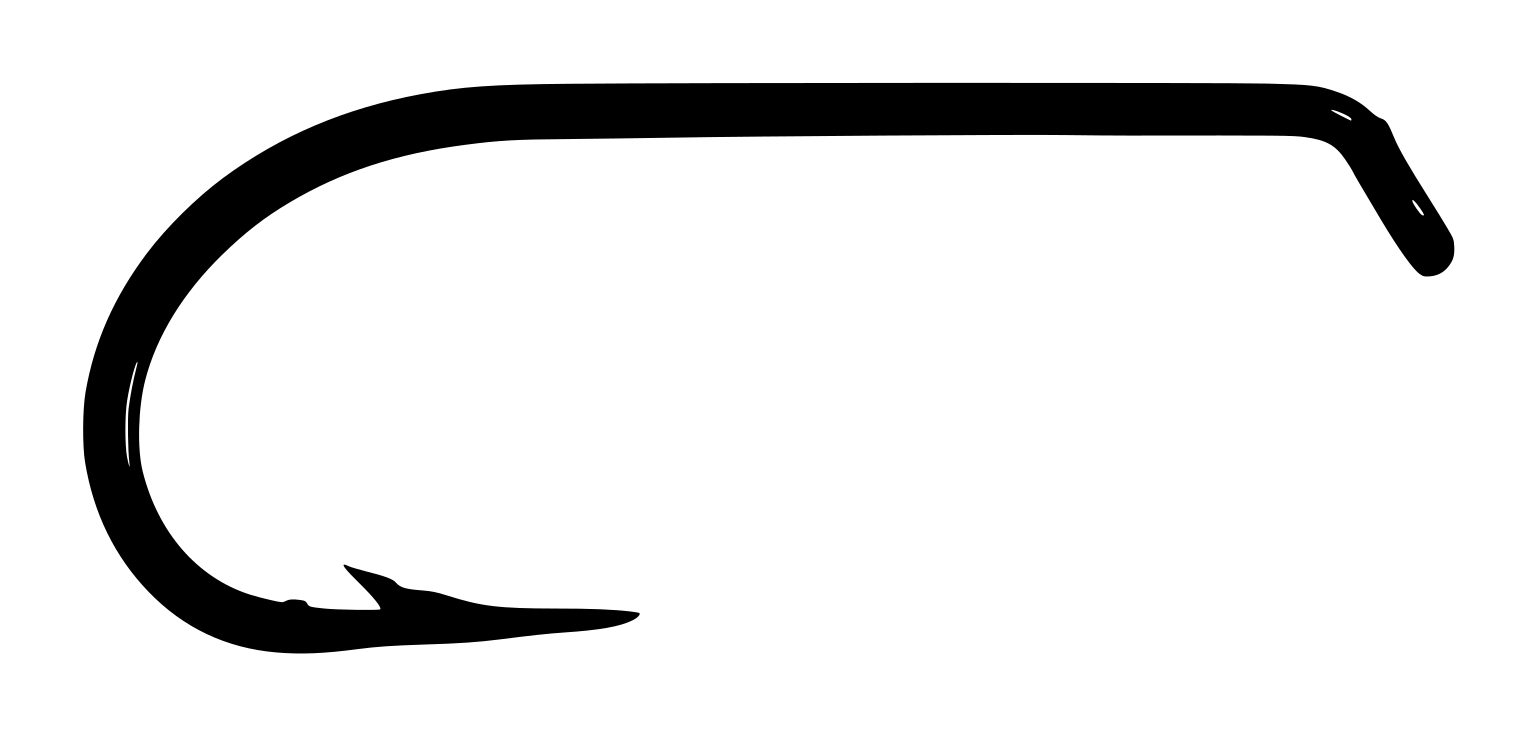
| Silhouette | Hook Model | Match | Analysis | Compare |
|---|---|---|---|---|
|
94840 No. 10 — Mustad 94840 | 94% | Compare | |
| 7974 No. 6, 8, 10, 12, 14, 16 — Mustad 7974 | 87% | Compare | ||

|
79585 No. 9 — Mustad 79585 Viking Hook | 84% | Compare | |

|
Gold Label — Gold Label Super Fine, Forged | 82% | Compare | |

|
7948 A No. 6 — Mustad 7948 A | 82% | Compare |
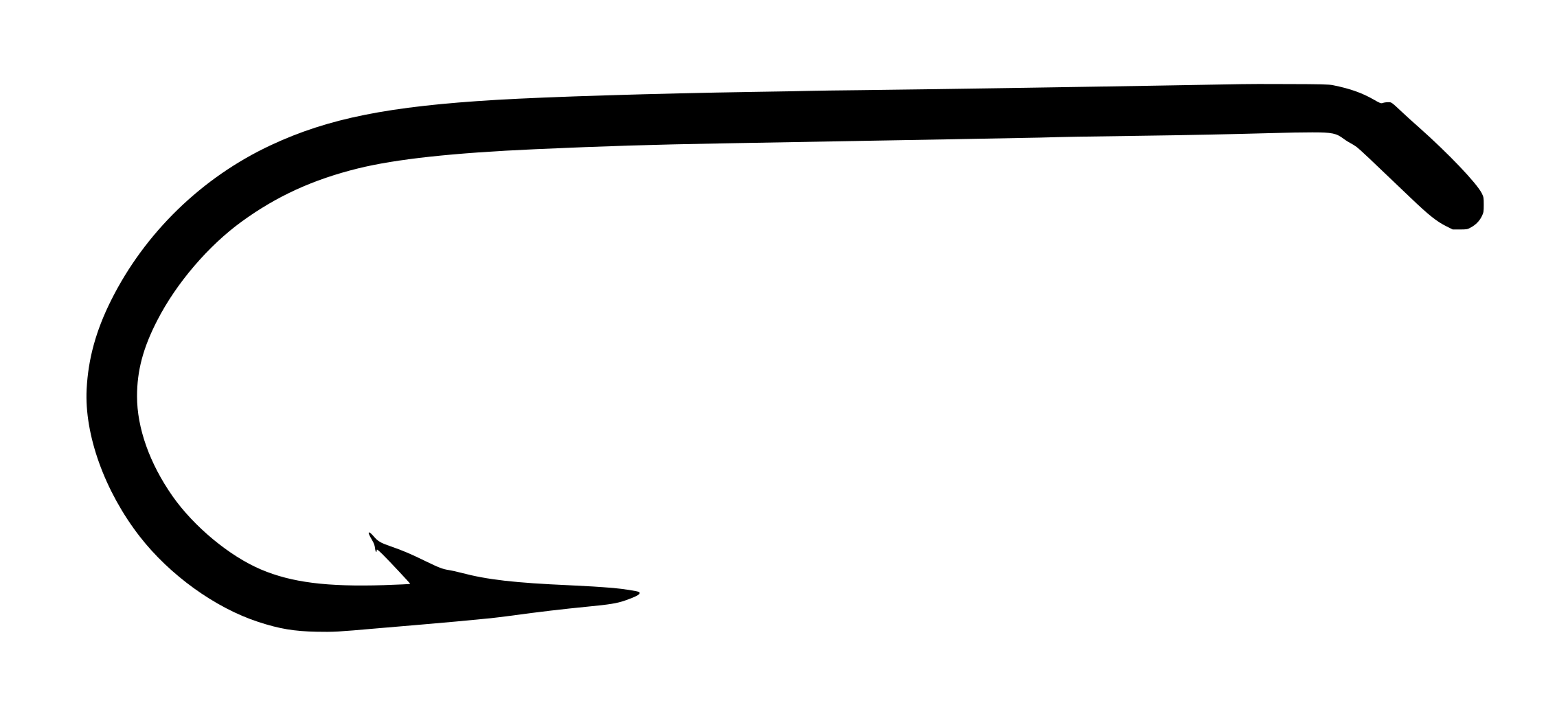
| Silhouette | Hook Model | Match | Compare |
|---|---|---|---|
|
7957 BX No. 2 — Mustad 7957 BX | 78% | Compare |
|
|
Gold Label — Gold Label Super Fine, Forged | 75% | Compare |
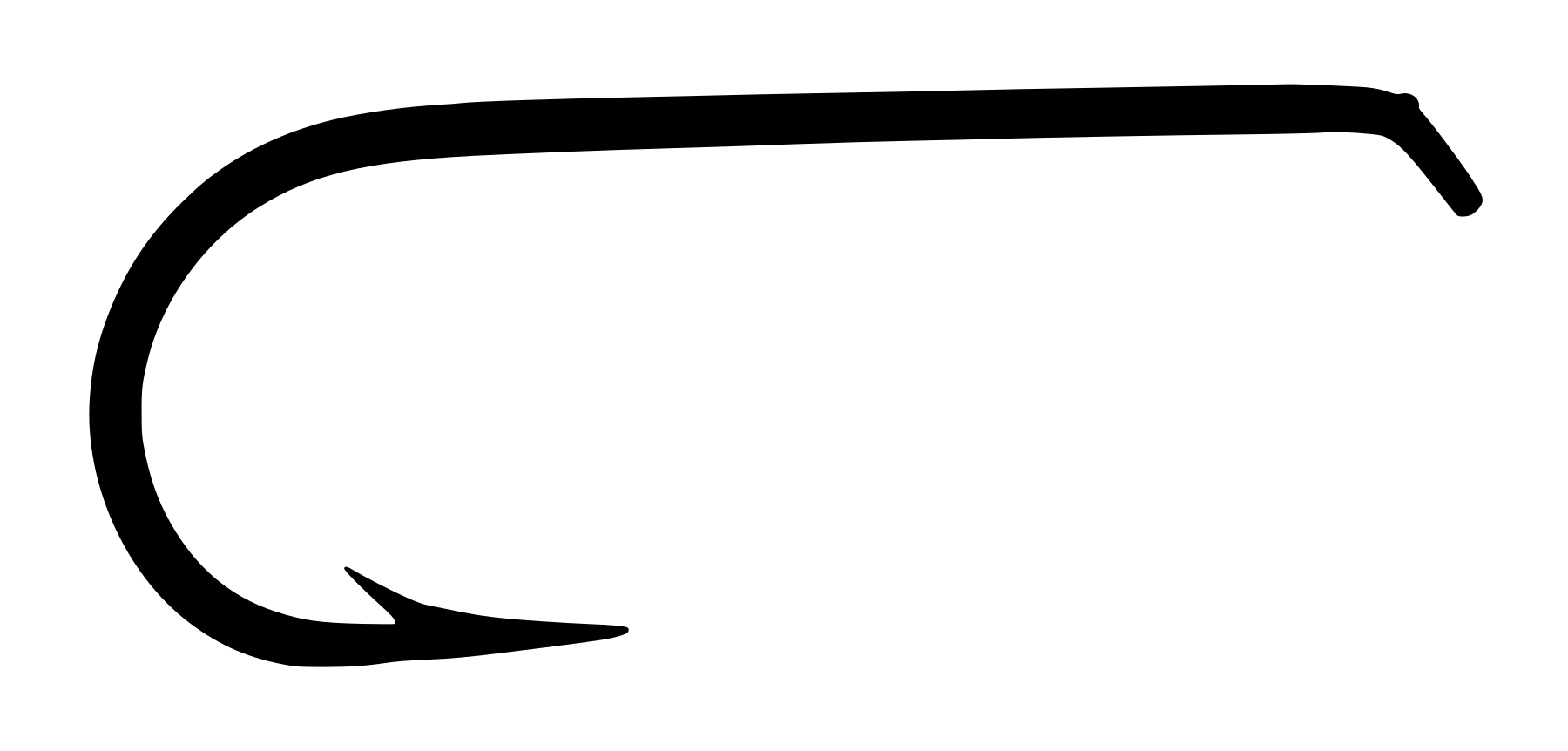
|
57552 No. 1 — Hameçons Ronds | 73% | Compare |

|
1197N No. 4 — Eagle Claw 1197N | 72% | Compare |

|
94836 No. 6 — Mustad 94836 Viking Hook | 70% | Compare |
The 94833 is engineered for tying and fishing classic dry flies, particularly small, delicate patterns requiring minimal wire weight for proper water flotation. The extra-fine 3X wire gauge and tapered eye combination allows fly tiers to construct flies that sit high and stable on the water’s surface film. Historically favored for Catskill-school dry flies including Adams, Light Cahill, Quill Gordon, and other traditional American patterns on sizes 12–18. The hollow point ensures rapid penetration on soft-mouthed trout species with minimal applied force.
Small nymphs, terrestrials, midge patterns (in larger fly form)
Adams, Light Cahill, Quill Gordon, Parachute Adams, Hendrickson, March Brown
| Hook | Match Quality | Notes |
|---|---|---|
| Mustad Signature R50-94833 | Excellent | Direct modern successor maintaining core design (3X fine wire, Sproat bend, tapered eye) with modern point technology. |
| Tiemco 102Y | Very Good | Japanese-made extra-fine dry fly hook with similar wire gauge and tapered eye; excellent flotation characteristics. |
| Daiichi 1190 | Very Good | Fine-wire Sproat bend, appropriate for delicate dry flies; comparable performance to vintage 94833. |
| Partridge SH | Good | English classic dry fly hook with comparable fine wire and tapered eye; slightly different bend profile. |
Industry cross-reference
Standard shank down eye fine wire
| Ahrex | FW500Spec record FW501Spec record FW502Spec record F501*Chart only |
|---|---|
| Core | C1100Chart only C1110Chart only |
| Daiichi | 1170Spec record 1180Spec record 1188*Spec record 1189*Spec record 1190Spec record |
| Firehole | 419Spec record |
| Fulling Mill | FM5050Chart only |
| Hanák | H130BLChart only |
| Mustad | 94840Full record R30APSpec record R50APSpec record R50XAP*Spec record 94845*Chart only R50Chart only |
| Orvis | JA1523Chart only JA4864Chart only |
| Partridge | L2aFull record L3AFull record SLD2Spec record SUDSpec record |
| Tiemco | 100Spec record 101Spec record |
| Wright McGill | L059Chart only |
* Barbless variant. Green entries are full records; amber entries are spec records. Gray entries are chart-only and not physically verified against this specimen.
VS
Featured in a published comparison
Two Norwegian-made Viking bend dry fly hooks, close in spec but not identical
Also features Mustad 94840.
Read comparisonRated 4.5/10 — Common in most sizes, but size 12 exhibits moderate scarcity; collector demand is focused among Catskill-style dry fly tyers and vintage hook specialists. Complete cards in original condition command premiums.
Vintage Mustad sales card (approximately 3.5" × 2.5" when assembled as box). Cream-colored card stock with offset-printed black, gold, and red inks. Decorative asterisk border frames the entire label. 'Key Brand' skeleton key logo positioned upper left. Eight-line Mustad standard label format: (1) O. MUSTAD & SON, (2) Manufacturers, (3) Oslo - Norway, (4) Qual. 94833, (5) Hollow Point, (6) Mustad-Viking Hooks [in large red script], (7) Forged Straight, (8) T.d. tap. eye Bronzed. Additional text: '100 No.' (quantity), '12' (size), 'Made in Norway'. Card exhibits light foxing, edge wear, and surface toning consistent with 1960s-1970s production. Original tissue wrapping partially intact. No barcode present.
Low ($12): Good condition, opened card, all or most hooks present, minor wear.
High ($18): Excellent/Mint condition, sealed or near-sealed, complete hook count, minimal defects.
Premium factors: Sealed packaging, complete 100-count, excellent card condition, size 12 scarcity.
Platforms: eBay (primary market), specialized fly-tying forums, vintage tackle dealers.
Confidence: V verified — based on 4 eBay sold listings ($12.00–$18.00) and eBay market history (21 sellers, avg $10.85, range $2.33–$66.00, Apr 2023–Apr 2026).
1. Label Verification: Authentic Mustad 94833 cards display the eight-line standardized label with ‘Oslo – Norway’ address (not Christiania), Key Brand logo, and distinctive red ‘Mustad-Viking Hooks’ branding. Font style and offset-printing quality should reflect 1960s–1970s vintage production methods. Reproductions typically show mismatched typography or modern printing techniques.
2. Card Construction: Original cards are assembled as folded boxes from cream-colored card stock. Inspect for authentic aging: light foxing, surface patina, and edge wear consistent with 50+ years of storage. Avoid cards with pristine, artificial appearance or modern paper stock characteristics.
3. Hook Specifications: Verify the hooks themselves exhibit the characteristic extra-fine wire gauge (approximately 0.008″ diameter) and tapered eye construction. Compare with reference specimens if possible. The bronzed finish should show uniform, warm tone with possible light patina but no heavy corrosion unless specimen has been heavily fished.
4. Quantity and Completeness: Original boxes typically contained 100 hooks. Complete cards command significant premiums; missing hooks reduce value proportionally. Check for original tissue wrapping—its presence adds collector appeal and indicates minimal use or disturbance.
5. Size Sensitivity: Sizes 12 and 14 are considerably scarcer than larger sizes (8–10). Size 12 specimens, particularly in sealed or near-sealed condition, represent genuinely scarce material. Verify the size marking matches documentation labels.
| Title | Price | Date | Condition |
|---|---|---|---|
| Mustad. 94833. #. 4. Hooks | $12.00 (asking) | active | New other (see details) |
| Mustad. 94833. #. 20. Hooks | $12.00 (asking) | active | New other (see details) |
| Mustad R30-94833 - SIZE 8 Signature 2x Fine Dry Fly Hook - 100 pack VALUE BUY! | $12.49 (asking) | active | New |
| 2. - 94833. #. 4. Hooks | $18.00 (asking) | active | New other (see details) |
eBay market reference. Researcher-curated. Prices in USD. Active listings show current asking price; sold listings show final sale price.
Store the original sales card in a cool, dry environment away from direct sunlight and humidity. The bronzed finish is susceptible to patina development with prolonged moisture exposure; while collectors often view this as desirable aging, avoid excessive humidity that could accelerate corrosion. Keep the card in its original folded state to protect the hooks and label from damage. If the original tissue wrapping is intact, preserve it—this adds significant collector value.
Display mounted cards in a controlled interior space rather than near windows or damp areas. Avoid contact with other metals or materials that could cause galvanic corrosion. If the card develops a light patina over time, this is normal and acceptable; do not attempt to remove it with abrasive methods. The hooks themselves, if used, should be thoroughly dried and stored in a low-humidity environment after each fishing session to prevent rust formation at the barb.
Source: Mustad Label: A Comprehensive Typology and Decryption of Vintage O. Mustad & Søn Hook Labels (reference document 1)
The eight-line label adheres strictly to Mustad’s standardized typographical system documented in ‘A Comprehensive Typology and Decryption of Vintage O. Mustad & Søn Hook Labels.’ Line 1 establishes the manufacturer identity (‘O. MUSTAD & SON’), Line 2 confirms industrial role (‘Manufacturers’), and Line 3 provides geographic origin and dating evidence (‘Oslo – Norway’). The presence of ‘Oslo’ (rather than the earlier ‘Christiania’) places manufacture post-1925; combined with offset-printing method and paper stock, this indicates 1960s–1970s production.
Line 4 specifies the quality code (‘Qual. 94833’), which Mustad used to categorize hooks by manufacturing tolerances and target demographics. The 94833 model code designates this as a premium, specialized dry fly hook (4000+ series = premium models). Line 5 identifies the point type (‘Hollow Point’), critical information for understanding the hook’s penetration characteristics and target species. Line 6 provides the pattern designation (‘Mustad-Viking Hooks’), a product line name emphasizing Norwegian heritage and quality. Lines 7–8 detail modifications: ‘Forged Straight’ (forged shank, no offset), ‘T.d. tap. eye’ (turned-down tapered eye), and ‘Bronzed’ (finish type).
The decorative border, red branding text, and overall card construction reflect Mustad’s mid-century marketing strategy—emphasizing both Norwegian manufacturing prowess and premium quality through visual design. The absence of a barcode confirms pre-1974 production, consistent with the packaging evidence.
The designation ‘3X Fine’ appears on this card’s original packaging, referring to a wire gauge reduction system used by Mustad and other manufacturers to standardize the relationship between hook size and wire weight. In this system, ‘1X’ represents the standard wire gauge for a given size; ‘2X’ is one standard size thinner; ‘3X’ is two sizes thinner, and so on. For a size 12 hook, standard wire would approximate 0.010″, while 3X fine wire reduces to approximately 0.008″—a significant reduction that dramatically affects hook behavior in water and handling characteristics.
This engineering choice reflects the philosophy of Catskill dry fly tying, where minimizing hook mass was paramount to achieving the high-floating, perfectly-balanced presentation that defined the American style. The trade-off, of course, is reduced durability—3X fine wire hooks are more prone to bending under stress from larger fish or careless handling. This limitation, combined with the hook’s premium positioning and rarity in smaller sizes, contributes to its sustained collector interest today.
| P | Photographically verified — Directly observable in the photograph(s) on this page. |
| V | Verified by documentation — Confirmed by manufacturer catalog, spec sheet, or published reference. |
| I | Inferred — A logical deduction from observable or documented evidence, not directly stated. |
| E | Estimated — An approximation based on visual comparison, proportional analysis, or limited data. |
| S | Speculative — A reasoned hypothesis that cannot be confirmed from available evidence. |
Unnotated claims are the compiler’s synthesis; see Sources. All photographs on garrenwood.com are taken on a measurement grid where each square equals 1/10 inch (0.1″ / 2.54 mm).
Your cart is empty.