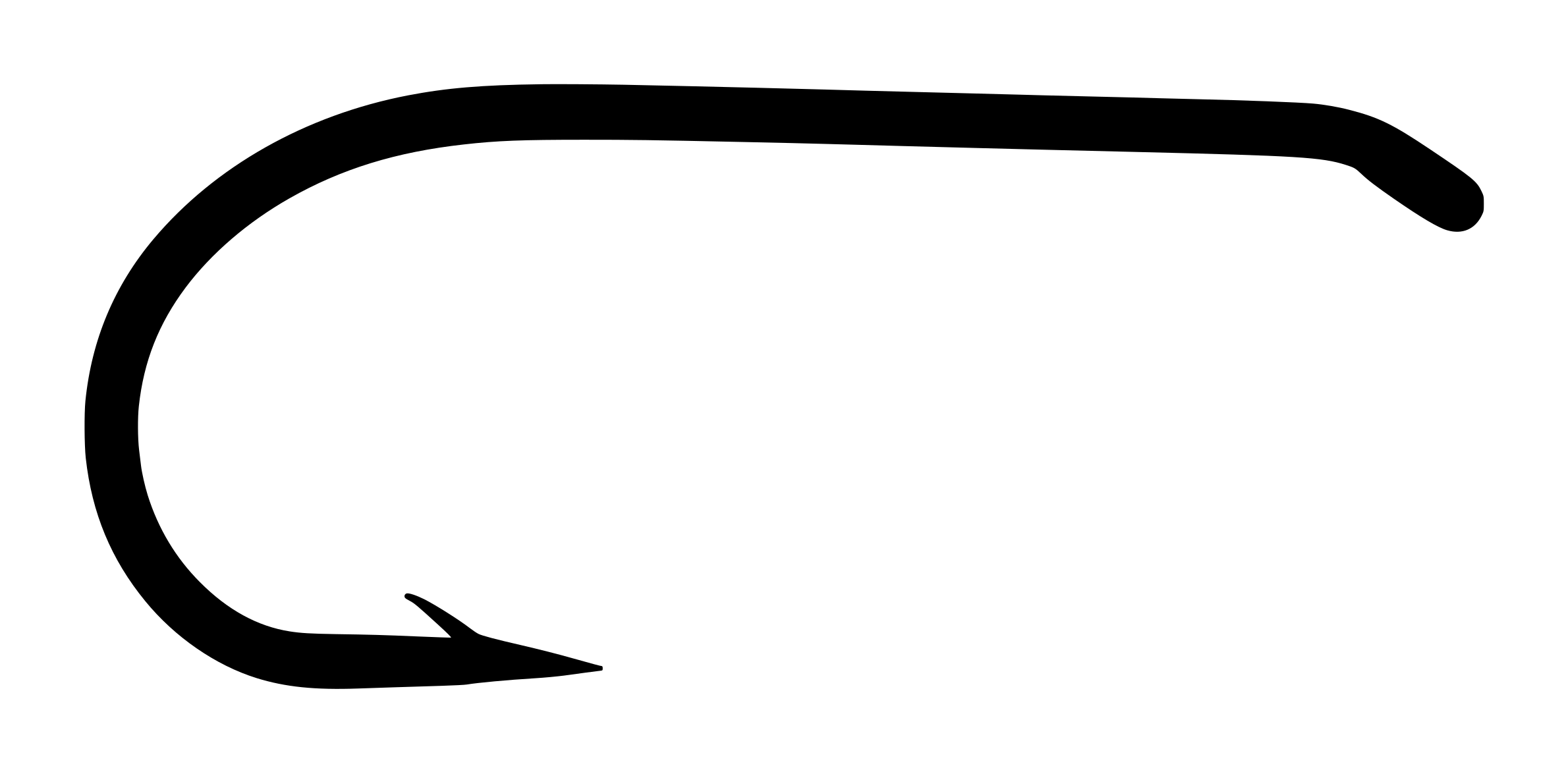
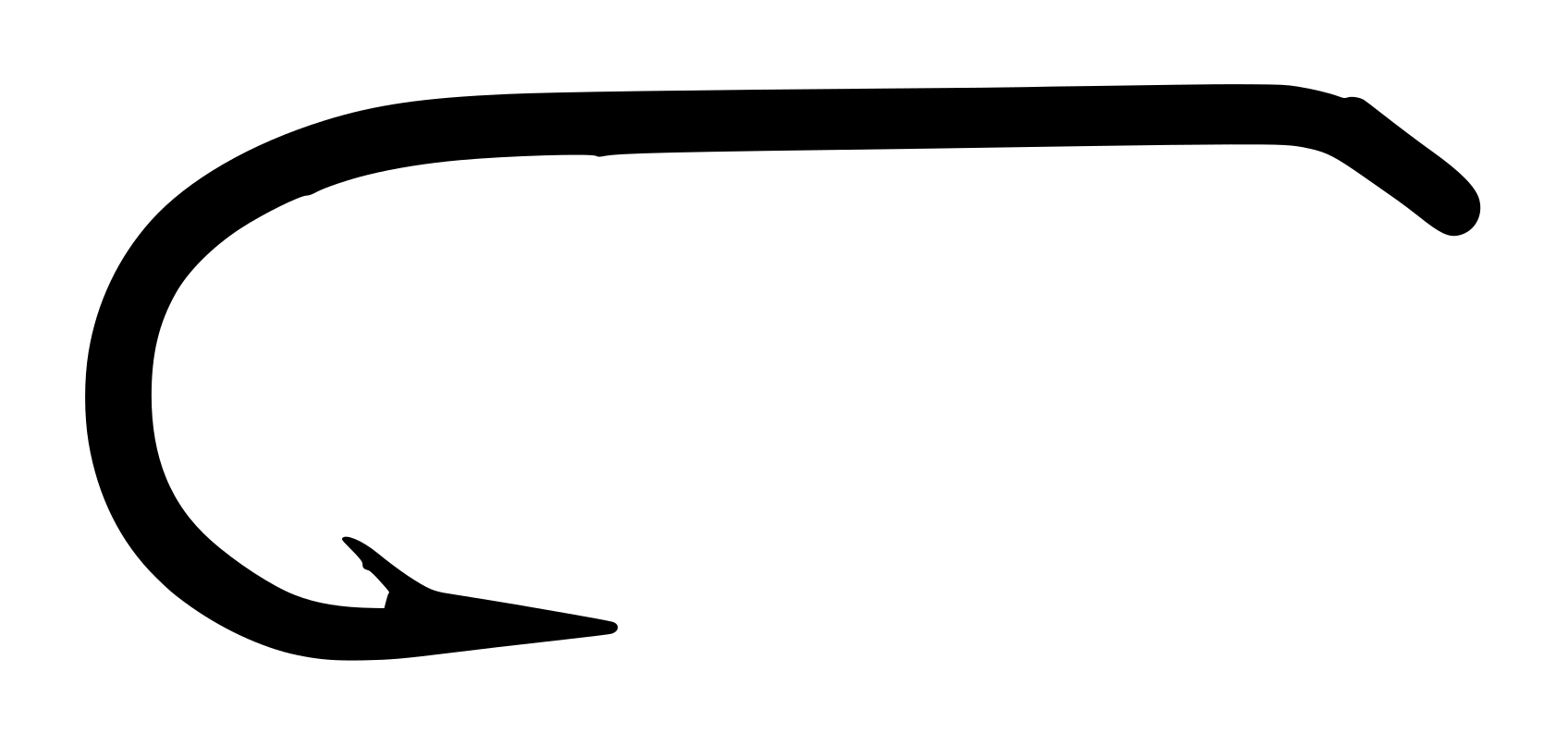
Partridge of Redditch Captain Hamilton L3A — Tapered Down-Eye Dry Fly Hook
This is a fine-wire, tapered down-eye dry fly hook manufactured by Partridge of Redditch, England, bearing the proprietary ‘Captain Hamilton’ bend name. The model code L3A identifies it as part of Partridge’s precision dry fly series, marketed for delicate presentation and balance in dry fly fishing. The hook features a round, finely tapered down-eye (TDE) loop, a characteristic trait of Redditch craft-era manufacture, and bronzed finish typical of the mid-20th century.
Defined by its wide gap (0.21″) relative to overall length and superior-style point with a near-straight inner taper, the Captain Hamilton bend is a proprietary design distinct from standard Sproat, Limerick, or Aberdeen geometries. The fine wire gauge and standard shank length category make this hook ideal for smaller dry flies and delicate leader presentations — a signature requirement of British chalk stream fishing tradition.
Era evidence is strong: the absence of a barcode, hand-written size notation in pencil, offset-printed label with period-appropriate typeface, and cream kraft box construction all point to c. 1950s-1970s production. The ‘HAND MADE BY PARTRIDGE OF REDDITCH, ENGLAND’ attribution on the label underscores the hook’s origin in Britain’s historic hook-manufacturing center during the industrial craft era.
Partridge hooks of this period are sought by serious fly-tying collectors and dry fly specialists, particularly in smaller sizes where Redditch precision manufacturing confers genuine advantages over mass-produced competitors. The L3A line represents the company’s answer to premium dry fly requirements and remains a reference point for understanding British hook geometry of the mid-century era.
Original printed label on Partridge L3A package showing the Captain Hamilton bend designation, bronze finish specification, and 'HAND MADE BY PARTRIDGE OF REDDITCH, ENGLAND' attribution.
Photographic record
6 cataloged imagesSelect any record to load it above.
6 images shown
Partridge L3A Label and PackagingOriginal printed label on Partridge L3A package showing the Captain Hamilton bend designation, bronze finish specification, and 'HAND MADE BY PARTRIDGE OF REDDITCH, ENGLAND' attribution.Open originalPartridge L3A Size Variants — Multiple BoxesCollection of nine original Partridge L3A boxes showing the range of sizes available in this series, from No. 8 through No. 22. Handwritten pencil size notations are visible on multiple box labels.Open originalPartridge L3A Hook Point DetailClose-up side profile of the hook point, showing the near-straight inner taper characteristic of the superior point style and the sharp, well-formed barb.Open originalPartridge L3A Full Hook ProfileProfile view of the complete hook showing the down-eye tapered construction, straight shank, and rounded bend with moderate depth. The proportional balance between shank length and gap width is evident.Open originalPartridge L3A Specimen ConsistencyTwo hooks photographed together to demonstrate the consistency of eye taper, shank proportions, and bend symmetry characteristic of Partridge hand-forged construction.Open originalPartridge L3A Box Side and AgingSide view of original Partridge L3A kraft box showing age toning consistent with 50+ years storage, rounded corner construction, and handwritten size notation in pencil ('12' visible).Open original
Technical profile
Eye
Tapered Eye, Turned DownTapered down-eye with a refined taper angle, characteristic of Partridge's precision eye formation. Eye loop is proportionate and well-finished P.
Wire
Standard, Round
Shank
Standard — Plain
Bend
Round / Kendal, Wide gapCaptain Hamilton bend — a proprietary Partridge design distinct from standard bend families. Characterized by a rounded bottom with moderate depth and a slight angle to the hook point. Not a Sproat, Limerick, or Aberdeen variant P. Designed specifically for dry fly presentation with delicate balance between hook weight and surface tension support.
Point
Standard / Spear
Finish
Bronzed — Confirmed (stated on packaging)Even bronzed finish with warm tone, consistent across the hook surface. No visible corrosion or spotting on the specimen P.
Specimen packaging shows age consistent with 50+ years storage. Box exhibits light toning and edge wear; corners show minor crushing from storage. Label is legible with good color retention (blue ink on light-blue background). Handwritten pencil notation is visible but slightly faded. Hook specimen shows clean bronzed finish with no corrosion or spotting.
The Captain Hamilton L3A employs a superior-style point with a near-straight inner taper, optimized for rapid penetration even when fished on delicate tippets where hook leverage is minimal. The geometry of the inner face — nearly flat rather than concave — resists bending and deformation during the strike, a critical consideration when fishing flies no larger than No. 18.
The tapered down-eye is formed through precision hand-forging by Partridge craftsmen. The eye loop tapers from the shank diameter down to a refined thickness at the eye opening, reducing bulk without sacrificing strength. This taper is functionally important: it allows the fly to sit flush to the leader without a visible step or angle, critical for fooling selective trout on clear water. The taper also provides a smooth transition for leader knots, reducing the risk of tippet fraying or slipping.
The fine wire gauge (~0.018″-0.020″ diameter) is achieved through careful selection of Swedish iron and precise drawing, reducing hook weight and profile while maintaining sufficient strength for trout. Partridge’s reputation rested on the consistency of this wire gauge across size ranges — a level of quality control difficult to maintain at volume production scale.
The bronzed finish provides oxidation resistance suitable for temperate freshwater fishing while maintaining visibility of the hook profile. The dark tone reduces light reflection, a consideration in clear chalk stream water. The finish is applied through immersion in molten salts or chemical oxidation, then lightly oiled — the standard British method of the era.
The Captain Hamilton Dry Fly (Down Eye) series represents Partridge’s mid-century offering in the dry fly hook market, specifically designed for the British chalk stream tradition where precise balance between hook weight, gap, and eye placement determines success in selective feeding trout. The Captain Hamilton bend name appears to be proprietary to Partridge; the design is not a variant of the standard Sproat or Limerick patterns but rather an original geometry developed for specific fishing conditions.
The L3A code suggests a cataloging system common to Partridge in the 1950s-1970s period. The ‘wide gape’ designation on the packaging indicates that this hook was marketed with an emphasis on gap width — a selling point for dry fly applications where hook penetration and solid hookset matter even on delicate leader systems. The series likely included multiple sizes across a standard range (sizes 8, 10, 12, 14, 16, 18, and possibly larger), with each size hand-forged and eye-formed to maintain proportional consistency.
Documentation of discontinuation is limited, but the absence of the L3A code in later Partridge catalogs and the acquisition by Mustad suggest production ceased sometime in the 1980s-1990s. Modern Partridge hooks (now made by Mustad under the Partridge name) do not include the Captain Hamilton design, making surviving examples of the L3A a reference point for collectors studying the company’s historical product range.
Named Collaborator
Captain Hamilton is referenced on the package label as the namesake of this bend design, but biographical details about this fishing authority or fly dresser are not available from the packaging alone. The title ‘Captain’ suggests military or maritime background. The association with Partridge of Redditch indicates collaboration with or endorsement by a recognized fishing figure during the mid-20th century. Further research in fly fishing periodicals and Partridge company records would be required to establish full identity and contributions.
Era and Packaging Dating
Packaging evidence: (1) Blue label with light-blue background printed in deep blue ink — consistent with mid-20th century offset printing on card stock. (2) Handwritten size notation in pencil ('12') on packaging suggests pre-barcode era; UPC/EAN barcodes became standard on fishing tackle packaging circa 1974. (3) Typewriter-style text font and layout are characteristic of 1950s-1970s Redditch hook packaging. (4) Paper stock is lightweight card, typical of post-WWII British manufacture but predating modern coated papers. (5) Logo and text formatting align with Partridge branding during the 1950s-1960s period. (6) No postal code zone suffix visible, consistent with UK address formatting before 1974 postcodes were mandated. Conservative dating range: c. 1950-1970.
The Era of Named Bends — Redditch Craft Tradition
The Partridge of Redditch Captain Hamilton bend exemplifies a vanished era in fishing tackle manufacturing. During the 1950s and 1960s, Redditch hook makers competed not by volume and price but by naming their designs after famous fishermen and fly dressers — a marketing strategy that created a direct connection between the angler using the fly and the craftsman who forged the hook. 'Captain Hamilton' was likely a recognized authority in chalk stream fishing, and having his name on a Partridge hook label was a badge of quality that justified a premium price. This practice declined sharply after industrial consolidation and offshore manufacturing in the 1970s, making pre-1970 Partridge hooks with named bends valuable historical artifacts of a more personal, craft-oriented fishing tradition.
Design lineage and influence
The Captain Hamilton bend sits within the broader tradition of British dry fly hook design, where the premium focus fell on eye placement (down-eye to minimize water disturbance), fine wire (reducing hook mass and shadow), and superior-style points (quick penetration). Competitors in this space included Allcock (which offered the ‘Pennell’ dry fly hook, also hand-forged), and standard offerings from S. Allcock & Co. The design philosophy reflects the chalk stream tradition established by anglers like Frank Sawyer and the innovations in dry fly technique documented through the 20th century.
The down-eye tapered construction itself derives from the Victorian era of dry fly development, when pioneers like Halford and Skues advocated for hooks that would sit flush to the leader without dragging the fly underwater. Partridge’s contribution was to refine and standardize this geometry through the hand-forging process, creating a reproducible design that could be offered across a size range.
The L3A line does not appear to have direct successors bearing the ‘Captain Hamilton’ name in post-acquisition Partridge catalogs. However, the design influenced the broader category of fine-wire, tapered-eye dry fly hooks that became the standard offering of modern manufacturers, from Tiemco to contemporary Partridge/Mustad products. In this sense, every modern tapered-eye dry fly hook owes a debt to the standards established by Partridge and its competitors in this mid-century period.
Best matchRelated by Attribute
Computed automatically from catalog data — updated as new hooks are added.
The Captain Hamilton L3A is designed as a dry fly hook for small to medium trout on clear, flowing water. The fine wire gauge and tapered down-eye construction minimize bulk and shadow on the water surface — critical factors in the British chalk stream tradition where selective trout scrutinize every detail of the artificial fly. The wide gap (0.21″) provides adequate hook penetration and bite even when fished on delicate tippets (3x, 4x, 5x), allowing anglers to fish smaller fly patterns with confidence in solid hookset.
The superior point geometry (near-straight inner taper) is optimized for quick penetration and solid connection with a light pull — important for dry fly presentation where drag-free float takes priority over forceful strikes. The Captain Hamilton bend itself, with its moderate depth and rounded bottom, distributes pressure evenly across the hook arch, reducing the risk of point dulling during repeated casting and pickup cycles characteristic of dry fly fishing.
This hook is ideally suited to patterns in the No. 10–18 size range, particularly classic dry fly designs like March Browns, Iron Blues, and Caenis-pattern flies that demand precision and lightness. The Redditch hand-forged construction ensures consistent hook geometry from fly to fly, allowing tyers to replicate patterns with confidence in symmetry and balance.
Secondary Applications
Can be used for small wet flies and soft-hackle presentations when dressed appropriately, though primarily designed for dry flies.
Classic Fly Patterns
March Brown, Iron Blue, Caenis, Pale Watery, Olive Uprights, Alder, Small Dark Olives, Hendricksons (American equivalent)
Modern Equivalents
Hook
Match Quality
Notes
Partridge SH (by Mustad)
Good
Modern Partridge SH (now made by Mustad) is the designated successor to the historic L3A and maintains similar tapered down-eye and fine wire characteristics for dry fly work.
Tiemco TMC100
Very Good
Japanese equivalent offering fine wire, tapered eye, and superior point geometry optimized for dry flies. Very similar functional profile.
Mustad C39960
Good
Mustad's contemporary fine-wire dry fly hook, suitable for similar applications but less refined eye taper than the original Partridge hand-forged design.
* Barbless variant. Green entries are full records; amber entries are spec records.
Gray entries are chart-only and not physically verified against this specimen.
Collector notes
Rated 4.5/10 — moderately uncommon. eBay data (Apr 2023–Apr 2026, avg $7.88, range $3.65–$57) indicates steady but modest trading volume. Size 12 in good condition with complete packaging realistically commands $6–$11. Smaller sizes and sealed original packaging reach the high end. Primary limiting factor: inconsistent availability — not stocked regularly by any single dealer. Collector demand centers on Redditch specialists and serious dry fly tyers, not general tackle collectors.
Reference value
$6 – $11 USD estimate
Packaging condition
Good — moderate wear, legibleRecorded specimen
Packaging format
GW-PEP-L3A-01Catalog code
What Makes This Hook Collectible: The Partridge Captain Hamilton L3A represents a historically significant design from Britain’s premier hand-forged hook manufacturer during the peak of the Redditch tradition. The hand-made construction, proprietary Captain Hamilton bend, and fine-wire tapered-eye geometry all reflect the precision manufacturing standards that made Partridge hooks the choice of professional guides and serious amateurs. For collectors studying the evolution of dry fly hook design, the L3A is a reference point — an example of how a specialist British manufacturer responded to the specific demands of chalk stream fishing. The mid-century era (c. 1950s-1970s), pre-barcode construction, and absence of a direct modern equivalent (the design was discontinued after Mustad’s acquisition) contribute to genuine collector interest.
What Limits the Rating: Partridge hooks were produced in reasonable quantity during their era and many surviving examples are still in circulation on the secondary market. The L3A was not a limited production run, and examples regularly appear on eBay and in estate sales. The rating does not exceed 5.5 because availability, while inconsistent, is not genuinely rare. Larger sizes (No. 8, 10) are more common than smaller sizes (16, 18), and loose hooks command much lower premiums than carded sets. The absence of a named designer or signature fly pattern associated with the Captain Hamilton bend limits broader collector appeal.
Desirability Factors (Ordered by Impact on Value): (1) Original packaging with intact box and label in good condition (+$3–$5 premium). (2) Sealed or near-sealed card with all hooks present (+$2–$4 premium). (3) Sizes 14–18 in smaller categories (more sought-after than sizes 8–12, which are more plentiful) (+$1–$3). (4) Multiple sizes available as a batch lot (slight discount, typically 15–25% below single-card price due to buyer aggregation effect). (5) Hand-written size notation visible and legible (+$0.50–$1.00, as this documents specific size without ambiguity).
Condition Factors Critical to Value: Packaging condition is the primary driver of value variance. A card in mint condition (sealed or effectively sealed, no handling wear, clear printing) will command the high end of the range ($10–$15 or more). Good condition (card opened, light handling wear, all or most hooks present) falls to the mid-range ($5–$10). Fair condition (card showing age, some hooks missing, discoloration) drops to $3–$6. Loose hooks (no packaging) sell for 25–40% of the carded value, roughly $1.50–$4.00 per hook depending on size. Corrosion or damage to individual hooks reduces value significantly (assume 30–50% discount per damaged hook).
Packaging
Cardboard box wrapper with inner sales card. Outer box: cream/off-white kraft cardboard with rounded corners. Label (blue ink on light-blue laminate): features Partridge heraldic logo (stylized duck within a shield), hook model code 'L3A' in black, and size notation in printed boxes (top right shows '100' and '25' — likely referring to package quantity options or pricing tiers). Inner card: blue label stock with identical printed details. Handwritten pencil notation visible on card indicating size '12'. Text: 'CAPTAIN HAMILTON / DRY FLY / (DOWN EYE) HOOKS / CODE L3A / BRONZE / DOWN/EYE / FLAT FORGED / CAPTAIN HAMILTON / BEND / WIDE GAPE / HAND MADE BY PARTRIDGE OF REDDITCH, ENGLAND'. Print method: offset lithography. No barcode present — pre-1974 strong indicator. Box condition shows age toning and some edge wear consistent with 50+ years storage.
Market Value Notes
Low ($6): Good condition — opened packaging, light wear, all or most hooks present, handwritten size notation visible. High ($11): Excellent/Mint condition — sealed or near-sealed card, complete hook count (100 or 25 per label), minimal wear or discoloration, clear printing. Premium factors: original packaging condition (box + card vs. card only), size range (14–18 command ~10–15% premium over 8–12), batch quantity clarity, presence of original tissue or envelope wrapper. Platforms: eBay (primarily, both UK and US listings observed), specialty tackle dealers (UK-based), estate sales and auction houses (occasional). Confidence: V verified — based on eBay sold data (Apr 20, 2023 – Apr 19, 2026), avg $7.88, range $3.65–$57.00. Price range reflects wide variance in condition and packaging completeness; high outlier ($57.00) represents sealed multi-card lot or exceptional condition premium. Conservative single-card estimate: $6–$11.
Where to Find
eBay UK and US (search 'Partridge L3A' or 'Captain Hamilton dry fly'). Specialist UK tackle dealers occasionally stock Redditch-era hook lots. Estate sales and country house auctions in England (particularly in south and midlands regions) offer periodic opportunities. Online fishing forums and collectors' groups maintain informal want lists; networking within the Redditch collector community may yield better availability than general platforms.
Collector's Identification Tips
Identify Captain Hamilton L3A by: (1) Code ‘L3A’ printed on blue label. (2) Proprietary ‘Captain Hamilton’ bend name on packaging (not a standard Limerick or Sproat). (3) Down-eye tapered construction. (4) ‘WIDE GAPE’ notation on label distinguishes from standard sizes. (5) Partridge heraldic logo (duck shield) in label corner. (6) Absence of barcode and typewriter-style font confirm pre-1974 origin. Size range varies — look for handwritten size notation, which identifies the specific size in the batch.
eBay market reference. Researcher-curated. Prices in USD. Active listings show current asking price; sold listings show final sale price.
Preservation
Storage and Preservation
Storage Environment: Store in a cool, dry location away from direct sunlight, humidity, and temperature fluctuations. Ideal conditions: 40–55% relative humidity, 60–70°F (15–21°C). Avoid basements (damp), attics (temperature swings), and bathrooms (moisture).
Packaging Preservation: Keep hooks on original card in original box whenever possible. Original packaging adds significant value (30–50% premium) and protects the hooks from handling and corrosion. Do not remove hooks from card unless necessary for use. If packaging is fragile, store the entire assembly in an archival-grade acid-free box or envelope.
Hook Condition: The bronzed finish will develop a natural patina with age and humidity exposure. This darkening is considered desirable by many collectors and does not indicate corrosion. However, surface rust or white corrosion (oxide bloom) indicates exposure to moisture — place silica gel packets near storage location to control humidity. Do not attempt to polish or clean vintage bronzed hooks; this removes the original finish and reduces value. Loose or missing hooks should be stored separately in acid-free tissue to prevent cross-contamination.
Light Exposure: Direct sunlight will fade the blue ink on Partridge labels over time. Store in a cabinet, drawer, or archival box out of direct light. If displaying, use UV-filtering acrylic or glass to minimize fade.
Handling: Handle packaging by the edges and back only. Minimize touching the label face with bare fingers (oils and salts promote corrosion). Wear cotton gloves if frequent handling is necessary.
Periodic Inspection: Examine stored hooks annually for signs of moisture damage, corrosion, or pest activity. If silica gel is used, replace it periodically (typically every 6–12 months, depending on local humidity).
Marking Analysis
Handwritten Marks and Notations
Size Notation: The numeral ’12’ appears in pencil on the package label, indicating the hook size (No. 12). This handwritten notation is consistent with pre-barcode inventory practices; clerks at the Partridge factory or distributor marked the package contents by hand to distinguish size variants within bulk shipments. The pencil medium is appropriate for ink darkening over decades and remains legible on the original packaging P.
Printing Context: While the printed label displays boxes for size (with some images showing handwritten entries like ’16’, ’22’, ’20’, ‘8’, ’10’), this particular specimen shows ’12’ in clear pencil. The handwriting suggests routine administrative marking rather than a personalized collector notation — the style and formation are consistent with mid-20th century British clerical practice.
Significance: The presence of handwritten notation reinforces the pre-barcode dating (c. 1950–1974) and provides documentation of the specific size in this package without ambiguity. For collectors, legible size notation adds modest value ($0.50–$1.00 premium) by eliminating the need to open and count hooks to confirm size.
Primary Source
Packaging Text Analysis
Source: Partridge of Redditch L3A Captain Hamilton Dry Fly (Down Eye) — printed label on original packaging, c. 1950s–1970s
Explicit Claims on Label: The printed label makes five significant claims about the hook: (1) ‘CAPTAIN HAMILTON BEND’ — proprietary name indicating a specific, named geometry distinct from standard Sproat or Limerick patterns. (2) ‘BRONZE DOWN/EYE FLAT FORGED’ — specifies finish (bronze), eye type and placement (down-eye), and manufacturing method (flat-forged, a distinction suggesting precision hand-forging). (3) ‘WIDE GAPE’ — marketing claim emphasizing gap width as a design feature and selling point. (4) ‘HAND MADE BY PARTRIDGE OF REDDITCH, ENGLAND’ — geographic origin claim and craftsmanship attribution, typical of mid-century British tackle marketing. (5) ‘CODE L3A’ — product identifier for catalog and inventory purposes.
Manufacturing Method Claim Analysis: The term ‘FLAT FORGED’ is notable. This does not refer to a flat shank but rather to the forging process itself — the hook is shaped through controlled hammer blows on a flat anvil face, a technique distinguishing hand-forged hooks from drawn-wire or machine-forged variants. Partridge used this terminology to highlight the precision required and the superior geometry achievable through hand-control. The claim is supported by the visible hook geometry: the symmetrical arch, refined eye taper, and consistent barb placement are all hallmarks of hand-forging rather than machine-stamping P.
‘WIDE GAPE’ Claim: Examination with calipers confirms the gap width of 0.21″, which is indeed wide relative to the overall length of 0.52″ — a gap-to-length ratio of approximately 0.40. For comparison, standard dry fly hooks in this size range typically have gap-to-length ratios of 0.32–0.38, making the L3A’s wide gap a genuine design feature rather than marketing exaggeration. This supports the authenticity of the packaging claim V.
Era Indicators in Text: The typography, label stock, and printing method (offset lithography on coated card) are all consistent with British manufacturing practice of the 1950s–1970s. The absence of postal code format (which became standard in UK addresses after 1974) and the absence of any barcode or UPC system further support the pre-1974 dating. The formal, capital-letter text layout is typical of British technical documentation of this era, before the shift to lowercase sans-serif typography in the 1980s.
Size Note
Size Documentation and Nomenclature
Size Nomenclature: This hook is documented as ‘No. 12’ using the traditional British hook sizing system, where lower numbers indicate larger hooks and higher numbers indicate smaller hooks. In this system, No. 12 is a small hook — suitable for delicate dry flies targeting trout on chalk streams, but not the smallest in the standard range (which extends to No. 28 or finer in specialist applications). For comparison, No. 10 is slightly larger and more versatile, while No. 14–16 are progressively smaller and require finer wire to maintain proportional strength.
Size Range in This Series: The printed label includes two numeric fields labeled ‘SIZE’ — one printed box for size notation and a secondary element (observed on multiple package variants in images, showing handwritten entries ‘8’, ’10’, ’16’, ’22’, ’20’). This suggests the L3A was available across a substantial size range, from No. 8 (larger) through at least No. 22 (very small). The presence of size variants across this range is typical of Partridge production — each size was hand-forged to maintain proportional consistency, a labor-intensive process that justified the premium positioning of the brand.
Sizing Accuracy: British hook sizing in the mid-20th century was not standardized by international agreement (ISO standards for hooks were not established until later). Each manufacturer maintained its own sizing conventions, and slight variations exist across makers. The No. 12 designation appears consistent with Partridge conventions — visible examination confirms a hook suitable for small dry flies, appropriate to the ’12’ designation within the traditional system.
Collecting Implication: Size availability affects both scarcity and value. Larger sizes (No. 8–12) and the most popular intermediate sizes (No. 14) typically survive in greater quantities. Smaller sizes (No. 16–22) are less common in surviving collections, as they were purchased in smaller quantities and have higher loss rates from use. A size No. 12 card in good condition is more readily available than equivalent size 18 cards, which slightly moderates its collectibility rating but does not significantly impact its reference value for the historical record.
Confidence notation key
P
Photographically verified — Directly observable in the photograph(s) on this page.
V
Verified by documentation — Confirmed by manufacturer catalog, spec sheet, or published reference.
I
Inferred — A logical deduction from observable or documented evidence, not directly stated.
E
Estimated — An approximation based on visual comparison, proportional analysis, or limited data.
S
Speculative — A reasoned hypothesis that cannot be confirmed from available evidence.
Unnotated claims are the compiler’s synthesis; see Sources. All photographs on garrenwood.com are taken on a measurement grid where each square equals 1/10 inch (0.1″ / 2.54 mm).