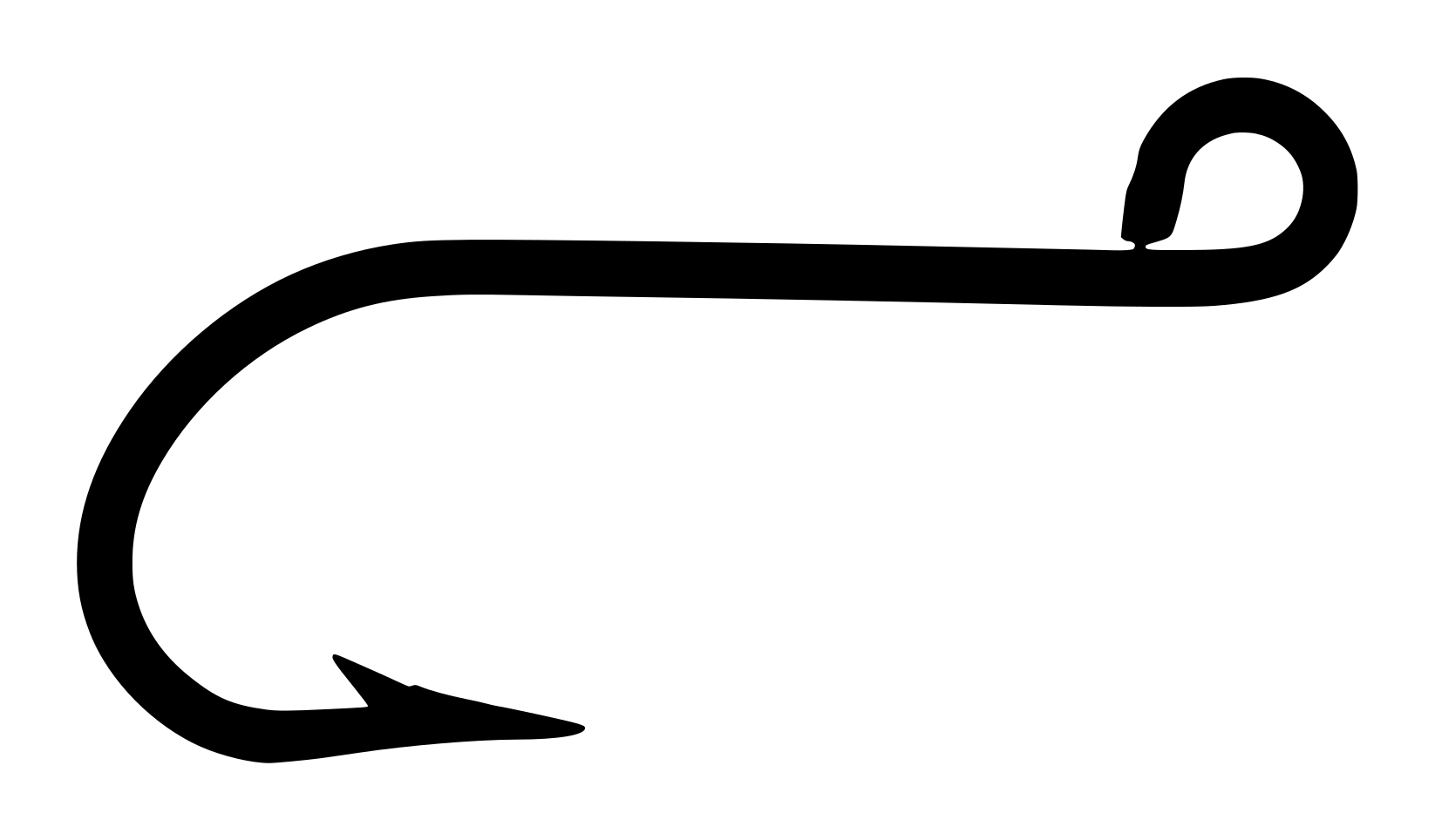
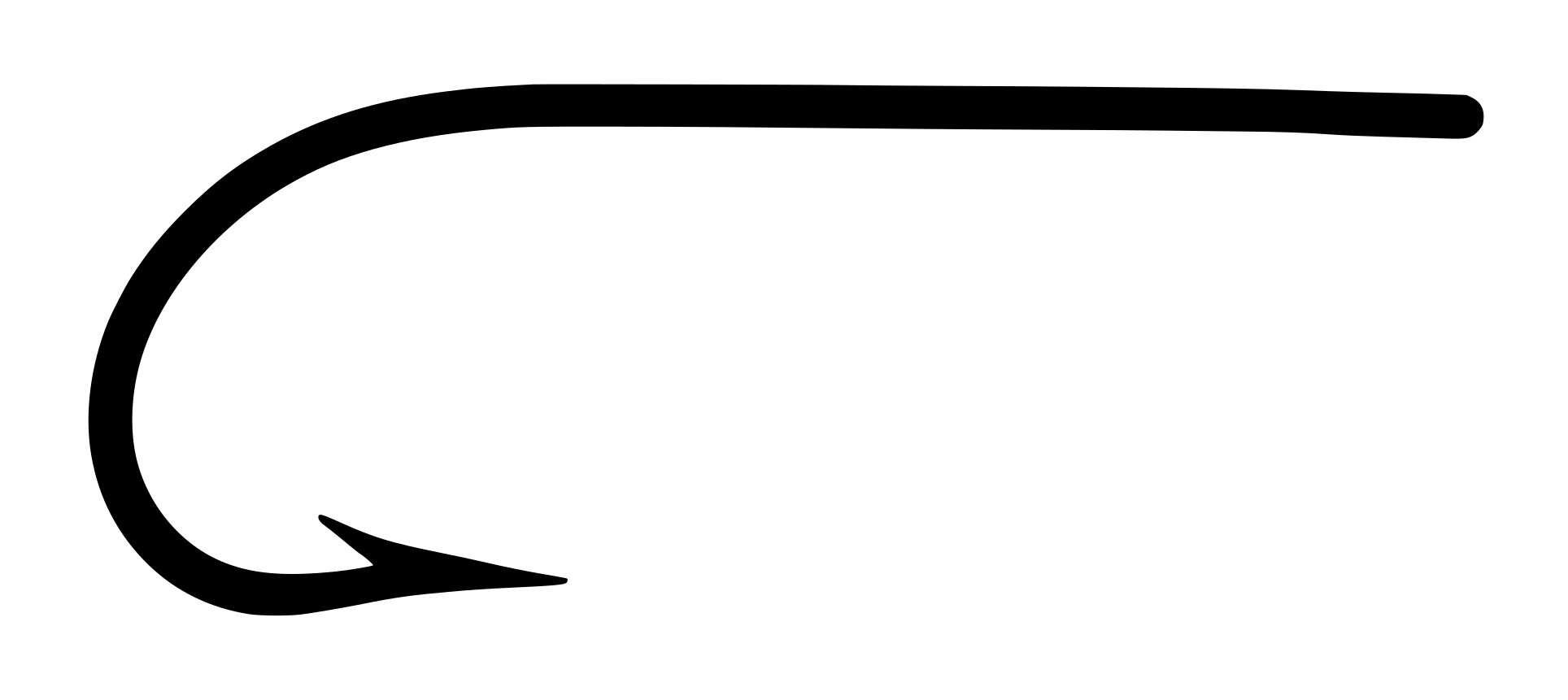
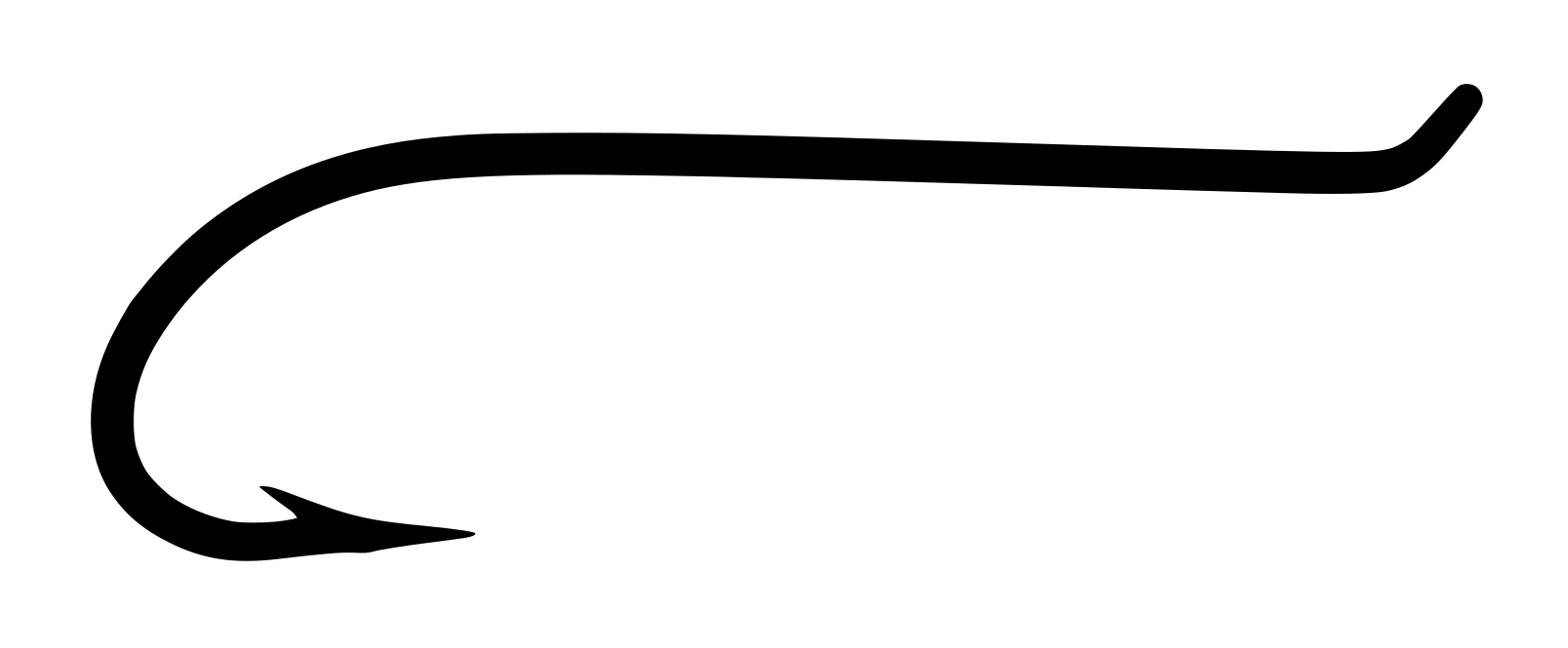
The Mustad 3177 Superior Barbless Hook represents an early example of conservation-minded tackle from Norway’s premier hook manufacturer. Produced during the 1920s-1940s era, this Kirby bend hook features Mustad’s superior point geometry and blue-black finish, designed for bait fishing applications where easy release was desired P.
The hook showcases Mustad’s ‘Key Brand’ identity with its distinctive red label featuring elaborate floral borders and the iconic key logo. The Norwegian spelling ‘Sön’ and Oslo location marking place this specimen in the company’s early 20th century production period, before their packaging modernization of the 1950s-60s V.
Notable for its barbless construction decades before catch-and-release became mainstream, the 3177 demonstrates Mustad’s forward-thinking approach to angling ethics. The Kirby bend with its characteristic offset point provided secure hooksets even without a barb, making this an innovative design for its era I.
Close-up of the turned-up loop eye construction showing the wire bent back parallel to the shank.
Photographic record
4 cataloged imagesSelect any record to load it above.
4 images shown
Mustad 3177 Superior Barbless Size 10 Eye DetailClose-up of the turned-up loop eye construction showing the wire bent back parallel to the shank.Open originalMustad 3177 Superior Barbless Size 10 Point DetailPoint detail showing the superior point geometry with straight inner taper and barbless construction.Open originalMustad 3177 Superior Barbless Size 10 Full ProfileComplete side view showing the Kirby bend geometry and long shank proportions on measurement grid.Open originalMustad 3177 Key Brand Original Packaging LabelOriginal red paper label with Key Brand logo and elaborate floral border design from the 1920s-1940s production era.Open original
Technical profile
Eye
Looped Eye, Turned UpTurned-up loop eye formed by bending wire back parallel to shank, creating a secure attachment point for leaders or line P.
Wire
Standard, Round
Shank
1X Long — Plain
Bend
Kirby (offset), Standard gap, Offset / kirbedClassic Kirby geometry with moderate depth and characteristic left offset visible when viewed from above P. The bend maintains consistent curvature without flat spots or irregularities P.
Point
Superior (near-straight inner taper)
Finish
Blued — Confirmed (stated on packaging)Traditional blue-black chemical bluing provides corrosion resistance while maintaining the natural steel strength. The finish shows characteristic dark blue-gray coloration typical of period Mustad bluing processes P.
The superior point geometry creates a near-straight inner taper that concentrates penetration force at the tip while maintaining structural strength. This design proved particularly effective for barbless applications where initial penetration was critical for secure hooksets. The Kirby offset compensates for the lack of barb by angling the point away from the fish’s mouth opening, reducing the likelihood of the hook sliding free during the fight.
The blued finish provides corrosion resistance through controlled oxidation of the steel surface, creating a protective layer while preserving the hook’s temper and strength characteristics. This finish was preferred over tinning or plating for bait hooks as it maintained the steel’s natural flexibility and sharpness retention.
The 3177 series represented Mustad’s early entry into barbless hook production, decades ahead of the mainstream conservation movement. Introduced in the 1920s, these hooks targeted anglers who practiced early forms of catch-and-release or fished in areas where easy hook removal was valued. The ‘Superior’ designation indicated Mustad’s premium point geometry, distinguishing these hooks from their standard spear point models.
The series utilized traditional Kirby bend geometry, a time-tested design that provided reliable hooksets through point offset rather than barb retention. Production continued through the 1940s, after which Mustad shifted focus to their more popular barbed models as bait fishing evolved. The 3177 series stands as an early example of environmentally conscious tackle design.
Era and Packaging Dating
Red paper label with elaborate floral border, 'Key Brand' logo with key illustration, 'Oslo - Norway' marking, and Norwegian spelling 'Sön' indicate early 20th century production before Mustad's packaging modernization in the 1950s-60s. No barcode confirms pre-1974 production.
The Key to Success
The Mustad company's 'Key Brand' logo wasn't just marketing - they were literally one of the world's largest key manufacturers in the early 1900s. Their expertise in forming consistent, precise wire loops for keys translated directly into superior fishhook eye construction. Norwegian ironworkers would joke that Mustad could 'unlock any fish's mouth' with their hooks, a play on the company's dual identity as both key and hook makers.
Design lineage and influence
The 3177 draws its heritage from traditional English Kirby hooks, adapted with Norwegian manufacturing precision and barbless construction. The Kirby bend, developed in the 17th century, provided the offset geometry that made barbless fishing practical. Mustad’s contribution was applying industrial consistency to this artisanal design while adding their superior point geometry.
Contemporary competitors like Allcock and Milward produced similar barbless bait hooks, but Mustad’s superior metallurgy and point sharpening gave the 3177 series distinct advantages. The design influenced later Mustad barbless models and contributed to the broader acceptance of conservation-minded tackle in European fishing circles.
Best matchRelated by Attribute
Computed automatically from catalog data — updated as new hooks are added.
Matches: Bend, Eye Orient., Point, Forging, Offset +3 moreDiffers: Shank: 1X Long vs Short (1X–2X Short); Wire: Standard vs Fine (1X Fine); Gap: Standard vs Wide +4 more
Matches: Bend, Shank, Wire, Gap, Point +4 moreDiffers: Eye: Looped Eye vs Ball Eye; Eye Orient.: Turned Up vs Turned Down; Finish: Blued vs Bronzed +3 more
Matches: Bend, Wire, Gap, Point, Forging +3 moreDiffers: Shank: 1X Long vs 2X Long; Eye: Looped Eye vs Ball Eye; Eye Orient.: Turned Up vs Straight / Inline +4 more
Matches: Bend, Shank, Gap, Point, Forging +3 moreDiffers: Wire: Standard vs Heavy (1X Heavy); Eye: Looped Eye vs Ball Eye; Eye Orient.: Turned Up vs Straight / Inline +2 more
Matches: Bend, Shank, Wire, Gap, Point +4 moreDiffers: Eye: Looped Eye vs Ball Eye; Eye Orient.: Turned Up vs Straight / Inline; Finish: Blued vs Tinned +3 more
Designed for bait fishing applications where fish release was intended, particularly effective for trout, panfish, and other freshwater species. The Kirby bend’s offset point geometry provided reliable hooksets even without a barb, while the superior point design ensured clean penetration. The long shank offered leverage for hook removal and provided space for larger baits like worms or grasshoppers I.
Secondary Applications
Early conservation fishing, catch-and-release angling, areas with barbless regulations
Classic Fly Patterns
Not typically used for fly tying
Modern Equivalents
Hook
Match Quality
Notes
Mustad C49S
Good
Modern barbless bait hook with similar proportions, though uses different bend geometry
Collector notes
Moderate collectability driven by early barbless construction and distinctive Key Brand packaging, limited by relatively common survival.
Reference value
$15 – $35 USD estimate
Packaging condition
Good — moderate wear, legibleRecorded specimen
Packaging format
MUS-R-01Catalog code
The 3177 holds moderate collector appeal due to several positive factors: its status as an early barbless hook design, the attractive Key Brand packaging with elaborate graphics, and its representation of Mustad’s pre-war Norwegian production era. The conservation angle adds historical significance as these hooks preceded mainstream catch-and-release practices by decades.
Limiting factors include the relatively large production runs typical of Mustad’s industrial scale, the survival of numerous examples in collector hands, and the modest fishing applications compared to more specialized patterns. Complete original packaging adds significant value, but loose hooks remain readily available to collectors at modest prices.
Packaging
Red paper label with decorative floral border pattern, Key Brand logo with key illustration, black text on red background. Shows 'O. Mustad & Sön Manufacturers Oslo - Norway', 'Qual. 3177 Superior', 'Mustad-Barbless Hooks', 'Ringed, Blued, Kirbed', '100 No.' and 'Made in Norway'. Some age-related wear and corner damage visible.
Market Value Notes
Complete cards with original packaging command premium pricing. Individual hooks or partial cards available at lower end of range. Condition of paper label significantly affects value.
Store in a cool, dry environment to prevent deterioration of the blued finish. The chemical bluing provides some corrosion resistance but can develop surface oxidation with prolonged humidity exposure. Original paper packaging is particularly vulnerable to age-related deterioration – store cards flat in archival sleeves away from direct light.
Avoid handling the hooks directly when possible, as skin oils can accelerate finish degradation. The red paper label is susceptible to fading and should be protected from UV exposure. Complete original packaging significantly enhances collector value, making preservation of the card and label a priority for serious collectors.
Marking Analysis
Package Markings and Stamps
The size marking ’10’ appears to be stamped or printed on the left side of the label, consistent with Mustad’s practice of marking individual package sizes. The text quality and placement suggest factory application rather than retailer marking. No handwritten price tags or dealer codes are visible on this specimen, indicating it may have been stored as new-old-stock rather than retail inventory.
Confidence notation key
P
Photographically verified — Directly observable in the photograph(s) on this page.
V
Verified by documentation — Confirmed by manufacturer catalog, spec sheet, or published reference.
I
Inferred — A logical deduction from observable or documented evidence, not directly stated.
E
Estimated — An approximation based on visual comparison, proportional analysis, or limited data.
S
Speculative — A reasoned hypothesis that cannot be confirmed from available evidence.
Unnotated claims are the compiler’s synthesis; see Sources. All photographs on garrenwood.com are taken on a measurement grid where each square equals 1/10 inch (0.1″ / 2.54 mm).