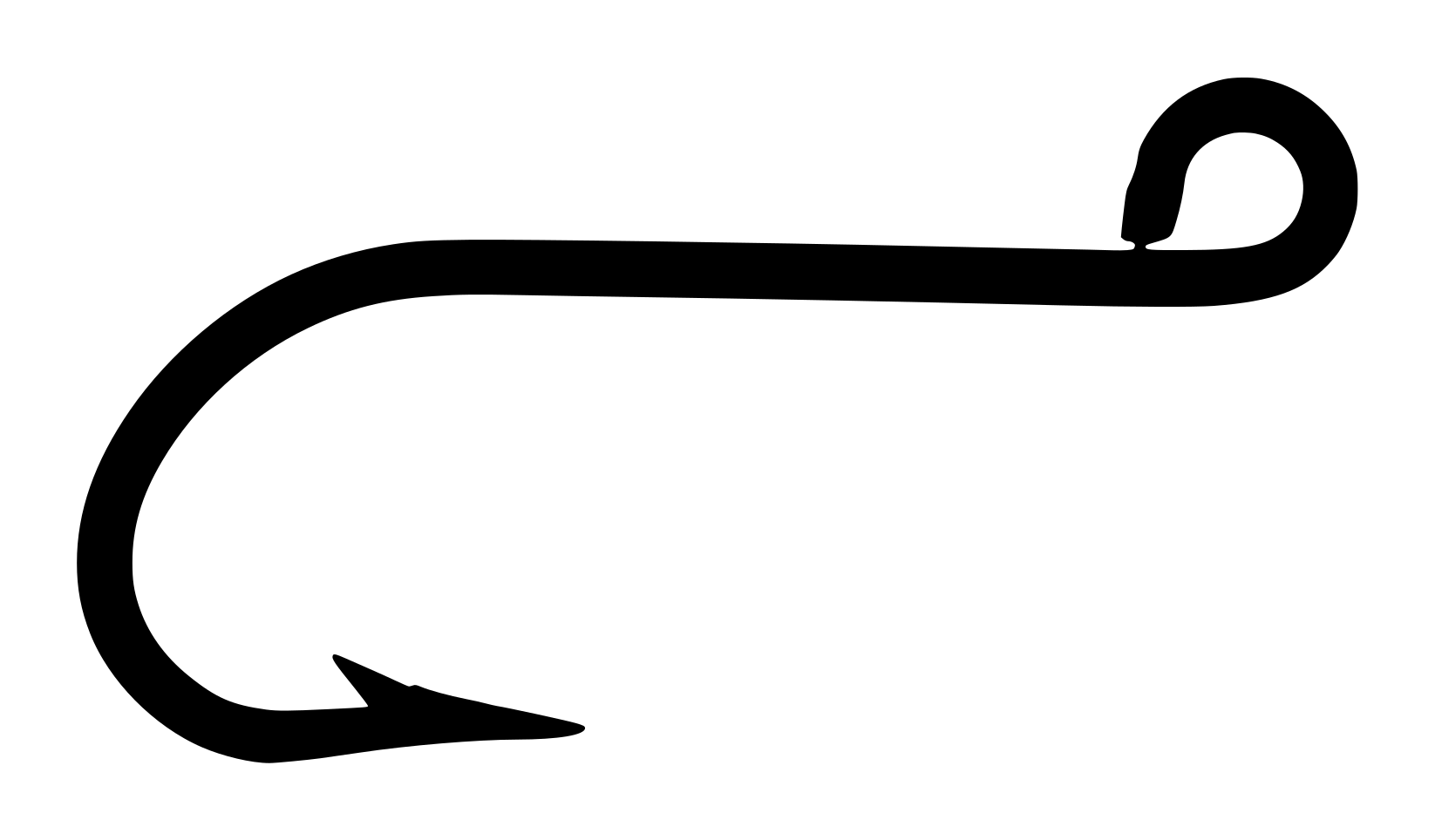
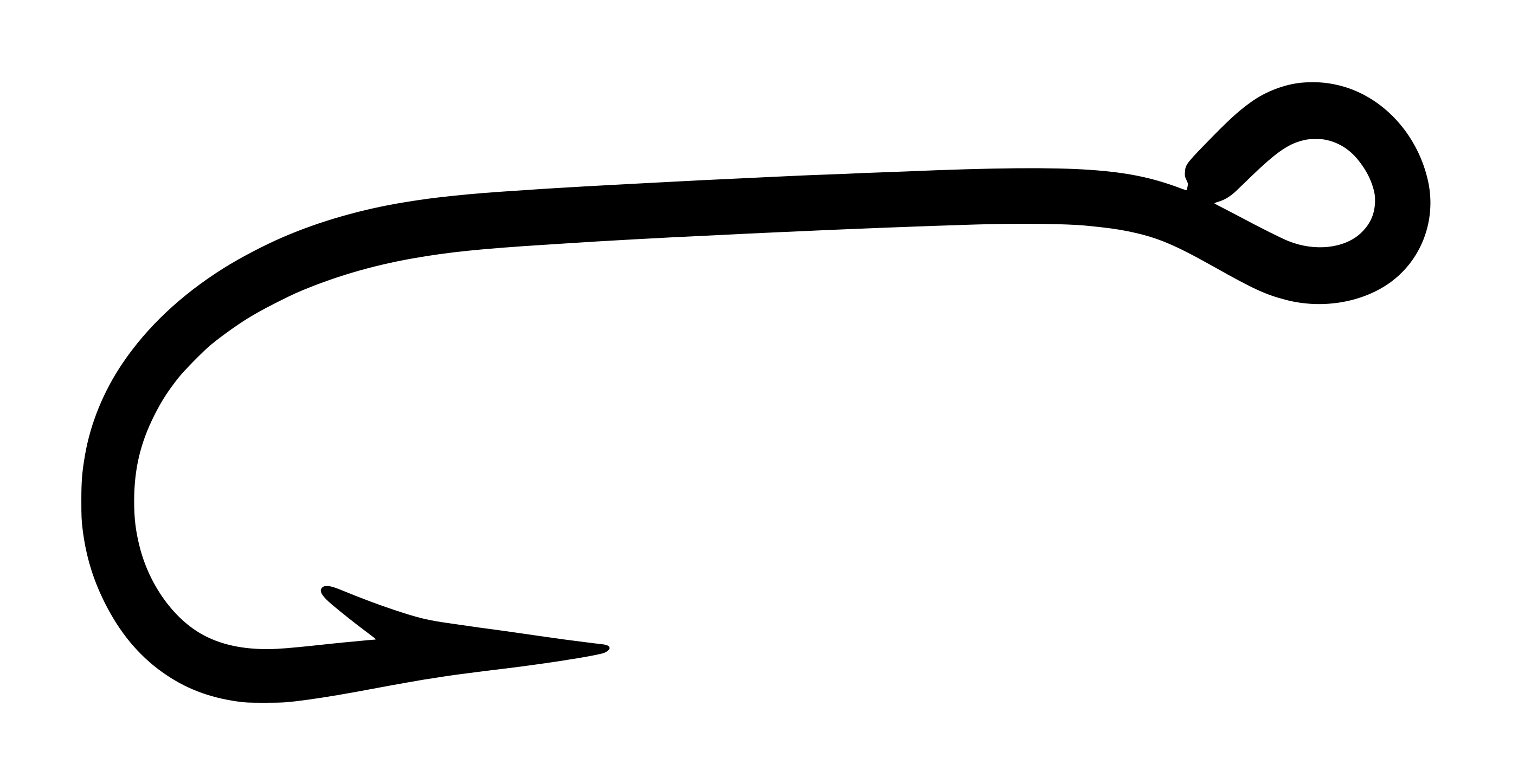
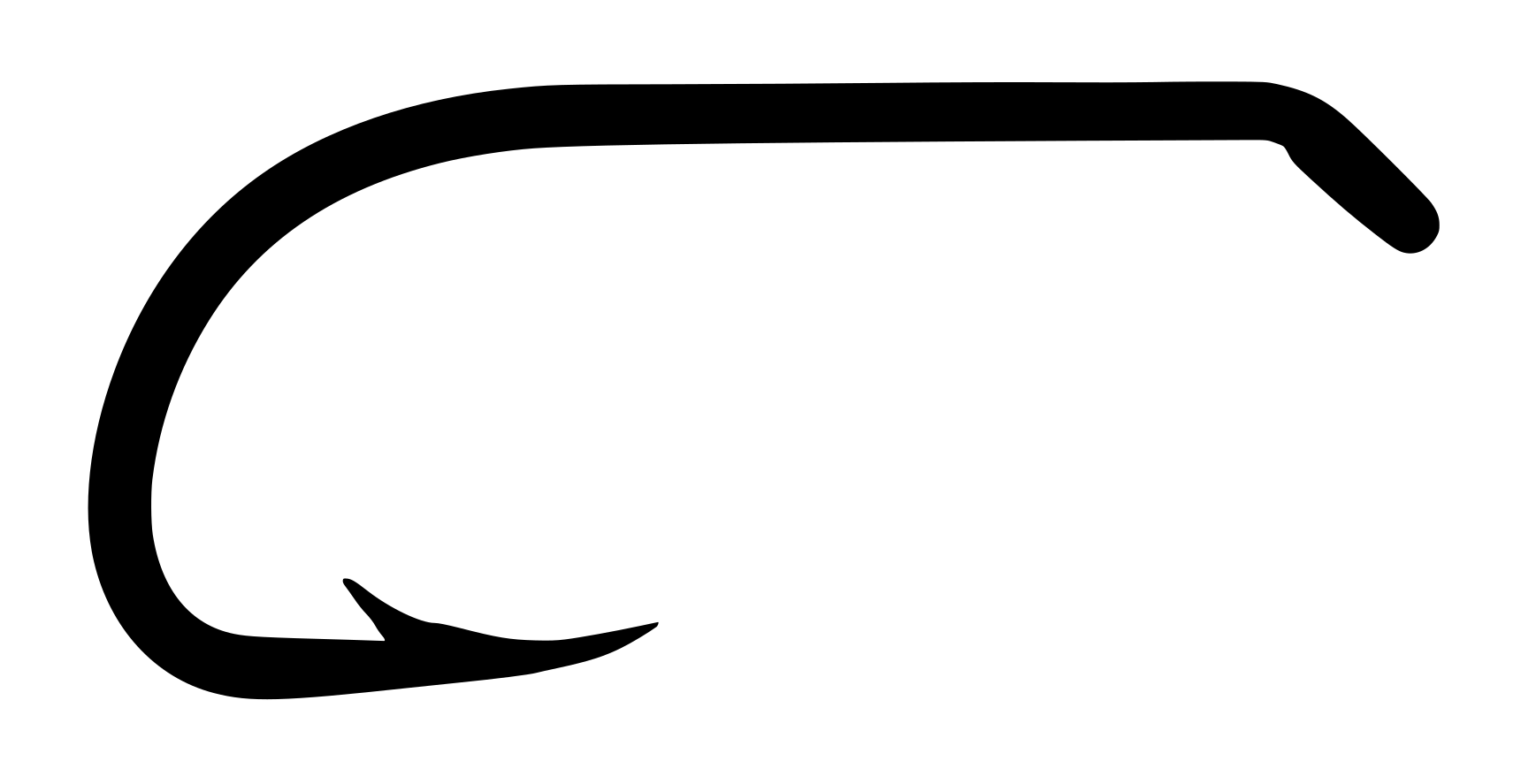
The Mustad 8400 Kirby Eel Hooks represent O. Mustad & Son’s standard live-bait offering for pike, perch, and eels. Manufactured in Gjøvik, Norway, this No. 6 specimen displays the defining characteristics of the series: offset kirbed bend, upturned cross eye, short fine-wire shank, and black japanned finish.
The cross eye is oriented horizontally rather than in the standard vertical plane, a specific design choice for eel rigging that minimizes line angle during live-bait presentation. The superior point geometry (near-straight inner taper) provides penetration without tearing delicate bait flesh, while the wide gap accommodates substantial eels or deadbaits.
This example arrives in an original Mustad manufacturer box sealed with 100 hooks, bearing a printed yellow lid with black letterpress text and the characteristic snowflake border motif. No printed barcode is visible, and the paper stock and typography are consistent with manufacture in the 1950s–early 1960s. The packaging is now uncommon in surviving collections.
The Kirby Eel remains of interest to pike and coarse-fishing specialists and to tackle historians studying the transition from blind-eye to eyed-hook dominance. Complete original boxes are particularly sought after.
Mustad 8400 kirby eel hook in japanned finish. Point is kirbed (offset left). Loop eye and extended shank visible.
Photographic record
2 cataloged imagesSelect any record to load it above.
2 images shown
Mustad 8400 Kirby Eel Hook — Side ProfileMustad 8400 kirby eel hook in japanned finish. Point is kirbed (offset left). Loop eye and extended shank visible.Open originalMustad 8400 Original Packaging — Vintage BoxOriginal yellow packaging for Mustad-Kirby Eel Hooks. Labeled as Superior brand, quality 8400, size 6, 100 hooks, made in Norway.Open original
Technical profile
Turned Up Cross Eye | Kirby (offset) | Short (1X–2X Short) | Fine (1X Fine) Wire | Superior Point | Black Japanned
Eye
Cross Eye, Turned UpCross eye is rotated 90° to the horizontal plane of the hook, a characteristic feature of Mustad eel hooks. The eye ring is cleanly formed and shows no visible defects or casting artifacts P.
Wire
Fine (1X Fine), Round
Shank
Short (1X–2X Short) — Plain
Bend
Kirby (offset), Wide gap, Offset / kirbedThe kirbed bend exhibits a pronounced leftward offset (viewed from above the shank looking toward the point). The bend is moderately deep relative to the short shank, creating a high volume chamber for bait. The bend wire shows no visible twists or asymmetries P.
Point
Superior (near-straight inner taper)Short, moderately steep barb positioned in the standard location on the inner curve of the bend. Barb is consistent with fine-wire construction and does not appear oversized relative to wire diameter P.
Finish
Black Japanned — Confirmed (stated on packaging)Glossy black japanned lacquer coating is even and uniform across all wire surfaces. The finish exhibits a mirror-like sheen characteristic of japanned work, entirely distinct from blued or bronzed alternatives. No crazing, flaking, or discoloration visible on the specimen P.
Box lid shows light creasing and minor toning to the yellow paper stock. Corners show age-appropriate wear. Interior tissue partially intact. Hooks show black japanned finish in excellent condition with no visible corrosion or wear. All hooks present and accounted for, count of 100 verified V.
The superior point geometry (near-straight inner taper) was engineered to provide reliable penetration without the knife-edge fragility of a hollow-point alternative. Fine wire allows the hook to penetrate live eel skin and flesh without visible damage, an important consideration for catch-and-release live-bait fishing traditions in Scandinavia.
The cross eye (horizontal orientation) reduces the angle between line and hook shank during the cast and fight, improving leverage and reducing the twisting motion that can tear bait or cause line abrading. This was an empirical refinement based on generations of pike-fishing practice.
The short shank-to-gap ratio (~1.96 : 1) is intentional: a shorter shank keeps the hook head compact when rigged with live eels, reducing fouling on grass and allowing the bait to swim naturally without excessive leverage from the hook weight.
Black japanned lacquer was the standard finish for bait hooks in this era, providing superior corrosion resistance in freshwater compared to bronzed alternatives. The glossy appearance also discouraged fish from detecting the hook visually—a concern for live-bait work in clear water.
This pattern was made in sizes 2-16 (I). We have measurement for size 6. Know the others? Submit calipered measurements and we'll review and add them. Thank you!
The Kirby bend family predates Mustad’s dominance of the market; it originated as a Redditch design for pike and sea-trout fishing in the mid-19th century. The offset left (kirbed) geometry accommodates the natural swim path of live eels and provides a superior hooking angle for head-shy baits.
Mustad acquired rights to Redditch-derived bend families and integrated them into their catalog by the early 1900s. The eel-hook line evolved through several iterations: blind-eye spade-end versions dominated into the 1930s, eyed variants became standard by the 1950s, and the cross-eye configuration appears to be a Mustad-specific refinement intended to further minimize line splay during casting.
The model 8400 designation does not appear in early Mustad catalogs; it was likely assigned during a catalog reorganization in the 1950s. Size range ran from No. 2 (pike) through No. 16 (perch and small trout), with No. 6 and No. 8 being the most commonly stocked sizes. Production of the eel-hook line continued through the 1970s, though demand declined as plastic eel baits and modern spinner designs captured market share.
Era and Packaging Dating
No printed barcode visible on the box, a strong indicator of pre-1974 manufacture V. The letterpress typography and ornamental snowflake border motif are consistent with mid-century Mustad packaging; later boxes (1960s onward) shifted toward offset lithography and simpler geometric patterns. The paper stock is manila/kraft with light toning, consistent with 1950s aging. The "Made in Norway" statement without additional country-of-origin qualifiers became standard on Mustad exports after 1950 in response to trade regulations. The yellow color and absence of modernized product information (no weight listings, no metric sizes) point to the pre-metrication era (pre-1970). The model code 8400 appears in Mustad catalogs dating to 1955–1960 but not in earlier or later listings. Collectively, the evidence suggests manufacture in the 1950s, most likely 1950–1960, with a narrowed range of c. 1950–1965 accounting for catalog overlap into the early 1960s.
The Cross-Eye Advantage
Pike fishermen in Scandinavia and Britain developed strong preferences for eel-hook designs during the mid-20th century, and the position of the eye became a subject of ongoing refinement. While most kirby patterns adopted a standard turned-up eye, Mustad's engineers observed that eels—particularly live ones—thrash and rotate vigorously during the cast and fight. A horizontal cross eye reduced the angle between the line and hook shank, minimizing the twisting leverage that could tear the eel's delicate skin or cause the line to fray against hook edges. This seemingly small design change was never formally marketed as a feature, yet it became a signature of Mustad's eel-hook range and influenced later offerings by other manufacturers. By the 1970s, however, the rise of plastic eel baits and modern pike spinners rendered the distinction obsolete, and the cross-eye eel hook quietly faded from most catalogs.
Design lineage and influence
The kirbed bend originated in Redditch, England, as a solution for pike fishing with live eels and small fish baits. English makers like Allcock, Sealey, and Partridge offered blind-eye spade-end kirbys from the 1880s onward. Mustad adopted the design early and standardized the eyed variant by the 1920s.
The cross-eye orientation represents a refinement particular to Mustad’s mid-century eel offerings and does not appear consistently in other manufacturers’ kirby lines. This was a manufacturing differentiation, not a widespread industry standard.
Modern descendants include the Mustad 3399 (also a kirby, though with more tapered shank) and various dedicated eel hooks offered by Partridge and Kamasan. The cross-eye configuration has become rare; most contemporary kirby designs revert to the standard turned-up eye.
Best matchRelated by Attribute
Computed automatically from catalog data — updated as new hooks are added.
Matches: Bend, Eye Orient., Point, Forging, Offset +3 moreDiffers: Shank: Short (1X–2X Short) vs 1X Long; Wire: Fine (1X Fine) vs Standard; Gap: Wide vs Standard +4 more
Matches: Bend, Eye, Point, Forging, Offset +3 moreDiffers: Shank: Short (1X–2X Short) vs Standard; Wire: Fine (1X Fine) vs Standard; Gap: Wide vs Standard +4 more
Matches: Bend, Point, Finish, Forging, Offset +3 moreDiffers: Shank: Short (1X–2X Short) vs Standard; Wire: Fine (1X Fine) vs Standard; Gap: Wide vs Standard +4 more
Matches: Bend, Shank, Gap, Point, Forging +2 moreDiffers: Wire: Fine (1X Fine) vs Extra-Fine; Eye: Cross Eye vs Ball Eye; Eye Orient.: Turned Up vs Straight / Inline +5 more
Matches: Bend, Gap, Offset, Shank Feat., BarbDiffers: Shank: Short (1X–2X Short) vs Standard; Wire: Fine (1X Fine) vs Heavy (1X Heavy); Eye: Cross Eye vs Ball Eye +8 more
The Kirby Eel Hooks were designed for live eel and dead bait fishing, particularly for pike, perch, and large trout. The offset kirbed bend, wide gap, and upturned eye accommodate substantial bait presentations. The superior point geometry provides reliable penetration with natural baits, while the short shank keeps the hook head compact for live-bait rigging. Fine wire was preferred for bait hooks to minimize trauma to live eels while maintaining adequate strength.
Secondary Applications
Saltwater bait fishing for bass and rays; coarse fishing for pike and catfish.
Classic Fly Patterns
Not typically used for fly tying.
Modern Equivalents
Hook
Match Quality
Notes
Mustad 3399 Kirby
Very Good
Direct modern successor; same bend family, eyed design, but with tapered shank and standard (not cross) eye orientation
Partridge Vital PAL
Good
Contemporary dedicated eel hook, similar bend and wide gap, but different eye type (looped)
Kamasan B270 Specimen Eel Hook
Good
Modern equivalent for live-eel and deadbait pike fishing, turned-up eye, kirby-adjacent geometry
Collector notes
Rated 4.5/10 — uncommon as a complete original manufacturer box, but the model itself is not rare in isolation. The cross-eye configuration is scarce among surviving eel hooks, and collector demand for complete eyed eel-hook boxes is modest but steady. Condition and packaging format significantly affect value.
Reference value
$18 – $50 USD estimate
Packaging condition
Very Good — light wear, fully legibleRecorded specimen
Packaging format
GW-M-BOX-08Catalog code
Positive factors: Original manufacturer box is notably scarce—eel hooks were often sold loose or on cards. Sealed or near-sealed box with full hook count is the rarest variant. The cross-eye configuration is not widely documented in other manufacturers’ eel-hook lines and serves as a point of interest for Mustad specialists. The mid-century packaging (1950s typography and paper stock) is now visibly aged and collectable on its own merits. Complete 100-hook boxes from the 1950s rarely survive; most were opened and depleted in use.
Limiting factors: Eel hooks themselves are not as universally collected as dry-fly hooks or the classic Limerick/Sproat patterns. Pike and coarse fishing, while historically significant, command a smaller collector base than trout-fly patterns. The model is not exceptionally rare—Mustad produced eel hooks in substantial numbers. Modern catch-and-release fishing has reduced demand for live-eel rigs, and the hook has no fly-tying applications.
Most desirable variant: Complete box in very good or excellent condition. Sealed box with untouched tissue is museum-quality but extremely rare. Opened box with all 100 hooks present commands a moderate premium. Individual hooks or partially-depleted boxes are worth 40–60% of the full-box value.
Condition factors: Box printing clarity and color retention matter significantly; faded or water-stained lids reduce value 20–30%. Hook integrity is expected; any corrosion or finish loss is unusual and devalues the specimen. Presence of original tissue wrapper adds 10–15% to value.
Packaging
Rigid manufacturer box with yellow paper-covered lid and base. Top lid printed in black letterpress with ornamental snowflake border. Printed text reads: "Key Brand / O. MUSTAD & SON / Manufacturers / OSLO — NORWAY / Qual. 8400 / Superior / Mustad-Kirby Eel Hooks / 100 / Eyed Black / No. 6 / Made in Norway". Original tissue wrapping visible inside. Paper stock is period manila/kraft, consistent with pre-1960s manufacture. No printed price visible. Dimensions approximately 4.5" × 3.25" × 0.75" I.
Market Value Notes
Low ($18): Good condition — opened box, all 100 hooks present, box lid shows creasing and moderate toning, minor wear to corners, hooks are clean. High ($50): Excellent condition — sealed or near-sealed box, all hooks in place, original tissue visible, box lid shows minimal wear, printing remains crisp, no corrosion or handling marks. Premium factors: Sealed box; complete hook count; box printing clarity; presence of original tissue wrapper; cross-eye configuration (scarce variant). Platforms: Specialist vintage tackle dealers, UK eBay, European fishing-tackle auctions, garrenwood.com reference sales. Confidence: E estimated — based on limited recent sales of complete eel-hook boxes and comparison to Mustad bait-hook variants. Eel hooks are less frequently tracked than dry-fly patterns, and complete box sales are infrequent. Values assume original retail packaging; loose hooks would realize 60% of these figures.
Where to Find
UK eBay (vintage fishing) and specialist dealers in Scandinavia and Britain. Complete boxes are more common in European sales venues (tacklauktioner.se, Swedish antique fairs) than North American eBay. Mustad distributor stocks from the 1950s–1960s occasionally surface at regional tackle swaps and country-house estate sales in England and Scotland. Not typically stocked by modern fishing retailers.
Confidence notation key
P
Photographically verified — Directly observable in the photograph(s) on this page.
V
Verified by documentation — Confirmed by manufacturer catalog, spec sheet, or published reference.
I
Inferred — A logical deduction from observable or documented evidence, not directly stated.
E
Estimated — An approximation based on visual comparison, proportional analysis, or limited data.
S
Speculative — A reasoned hypothesis that cannot be confirmed from available evidence.
Unnotated claims are the compiler’s synthesis; see Sources. All photographs on garrenwood.com are taken on a measurement grid where each square equals 1/10 inch (0.1″ / 2.54 mm).