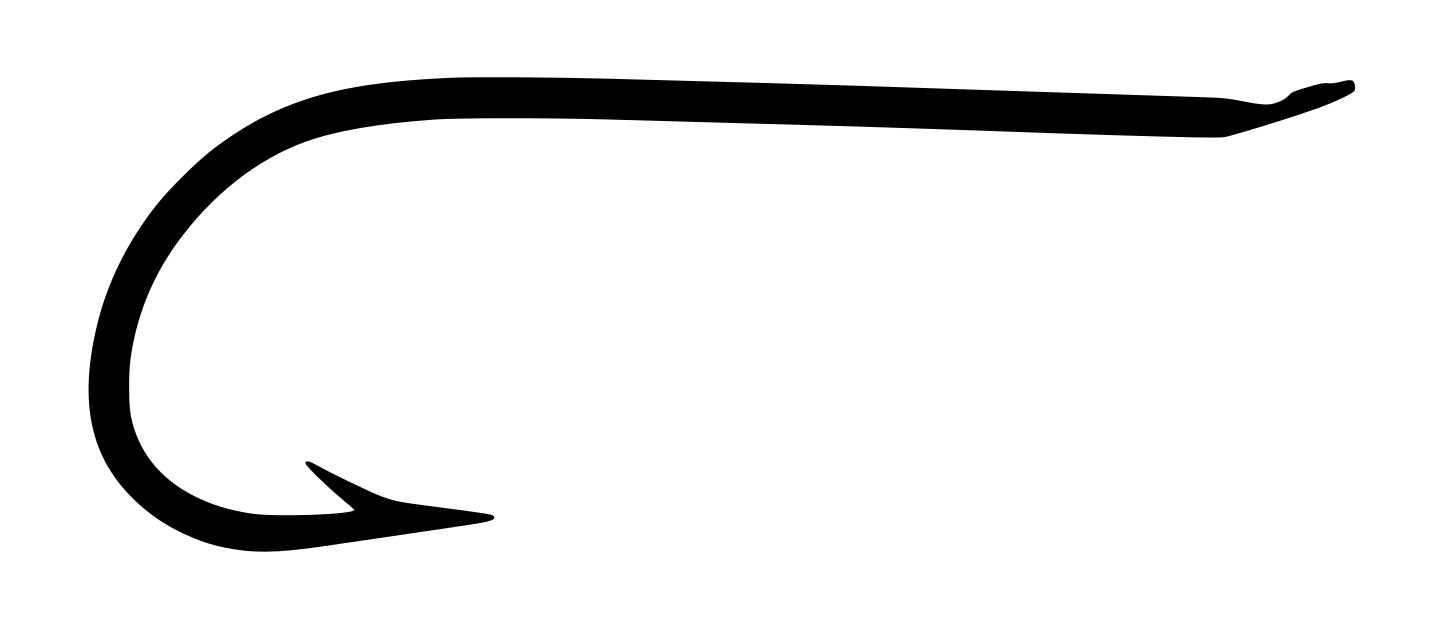
The S. Allcock & Co Chestertown 667 is a classic blind-eyed salmon and sea trout hook manufactured in Redditch, England during the Victorian or Edwardian era. Model 667 appears in the Best Steel line, a quality tier indicating superior material and finish control. The defining feature is the tapered blind eye — a smooth, needle-pointed shank end without flatting or spade construction, designed for gut loop attachment in traditional fly fishing practice.
This No. 2 specimen measures 2.0 inches overall with a standard sproat bend and japanned (glossy black lacquer) finish confirmed on original packaging. The hook exhibits fine round wire and a superior point geometry with near-straight inner taper. No manufacturer barcode appears on the box, strongly indicating pre-1974 production; the letterpress printing, wooden flap closure, and hand-marked size slot point to the 1890s–1950s window, most likely c. 1900–1930.
Allcock Chestertown hooks hold genuine appeal for Redditch hook historians and traditional fly-fishing collectors. The tapered blind eye is a refined alternative to flatted construction and signals high manufacturing standards. Complete original boxes in good condition command substantial premiums over loose hooks or damaged packaging.
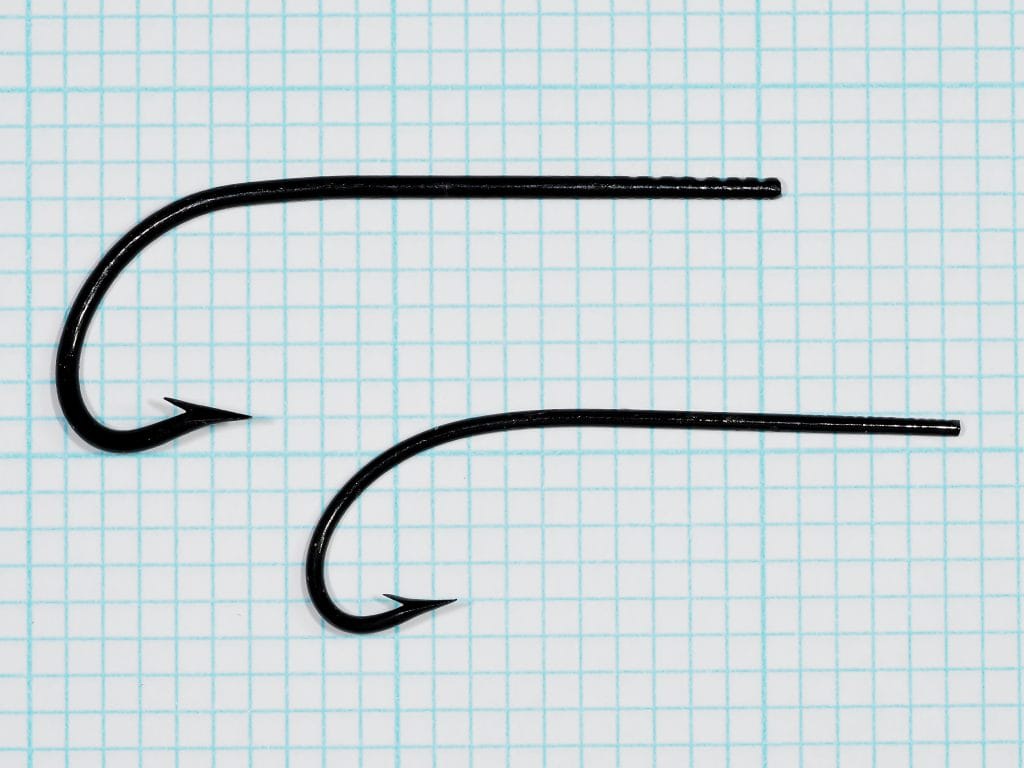
Side-by-side profile view of Allcock Chestertown 667 hooks in sizes No. 2 and No. 4, photographed on 1/10-inch measurement grid. The tapered blind eye and sproat bend geometry are clearly visible across size variants.
Photographic record
7 cataloged imagesSelect any record to load it above.
7 images shown
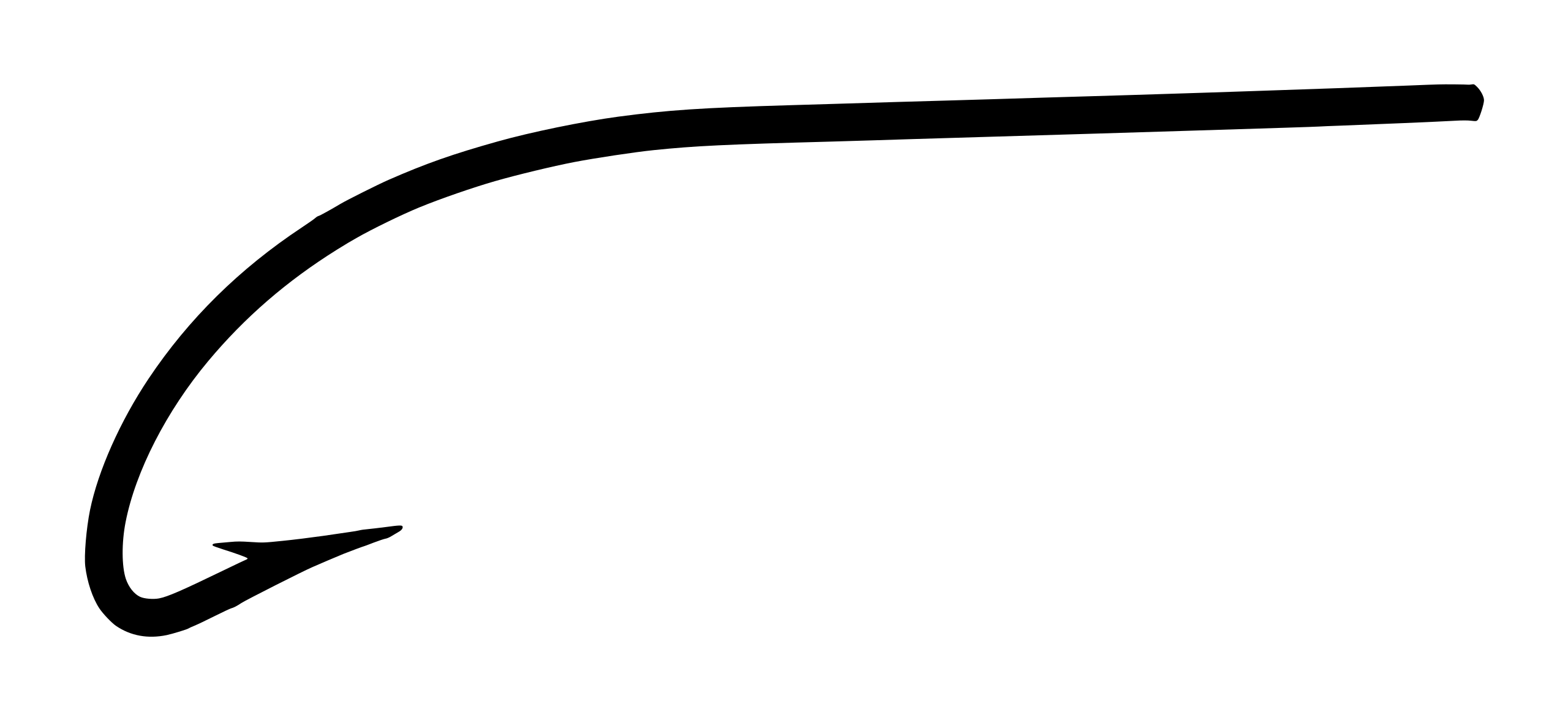
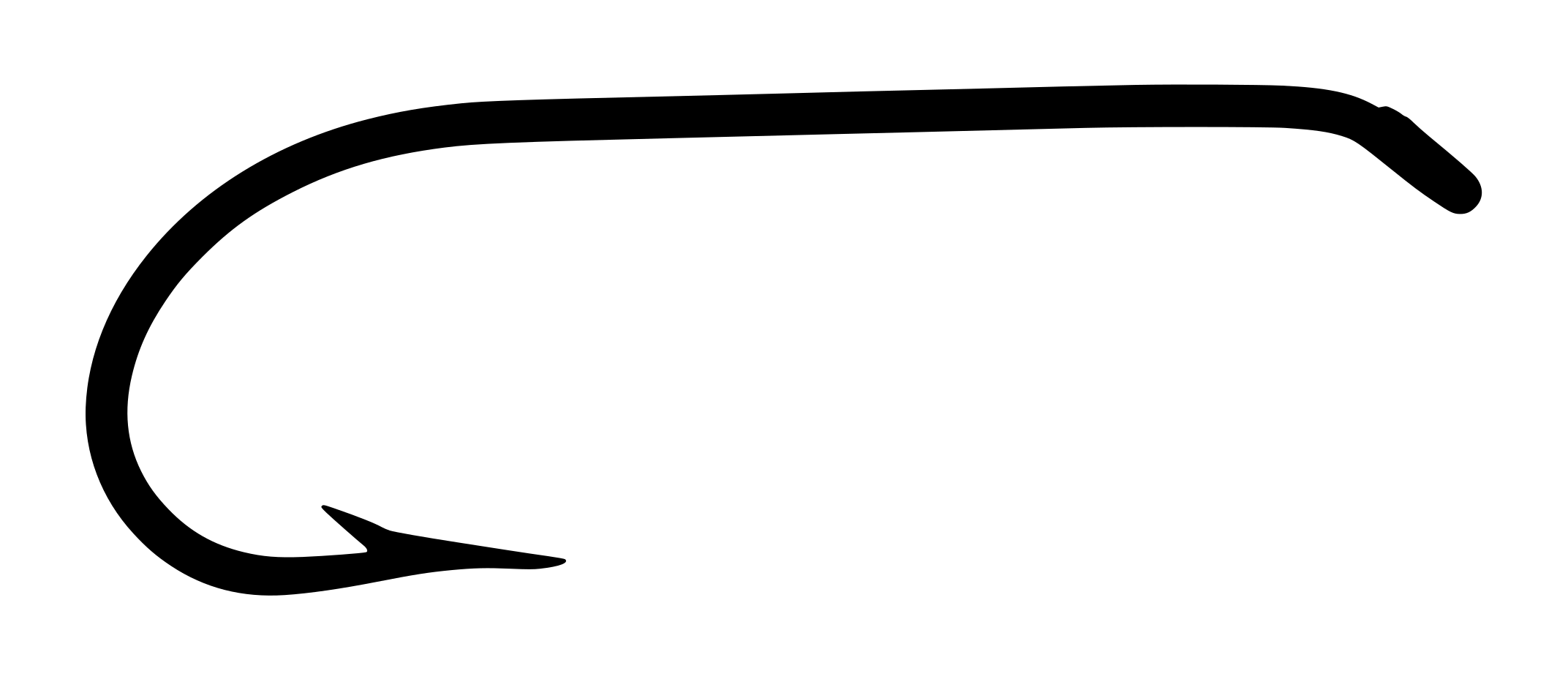
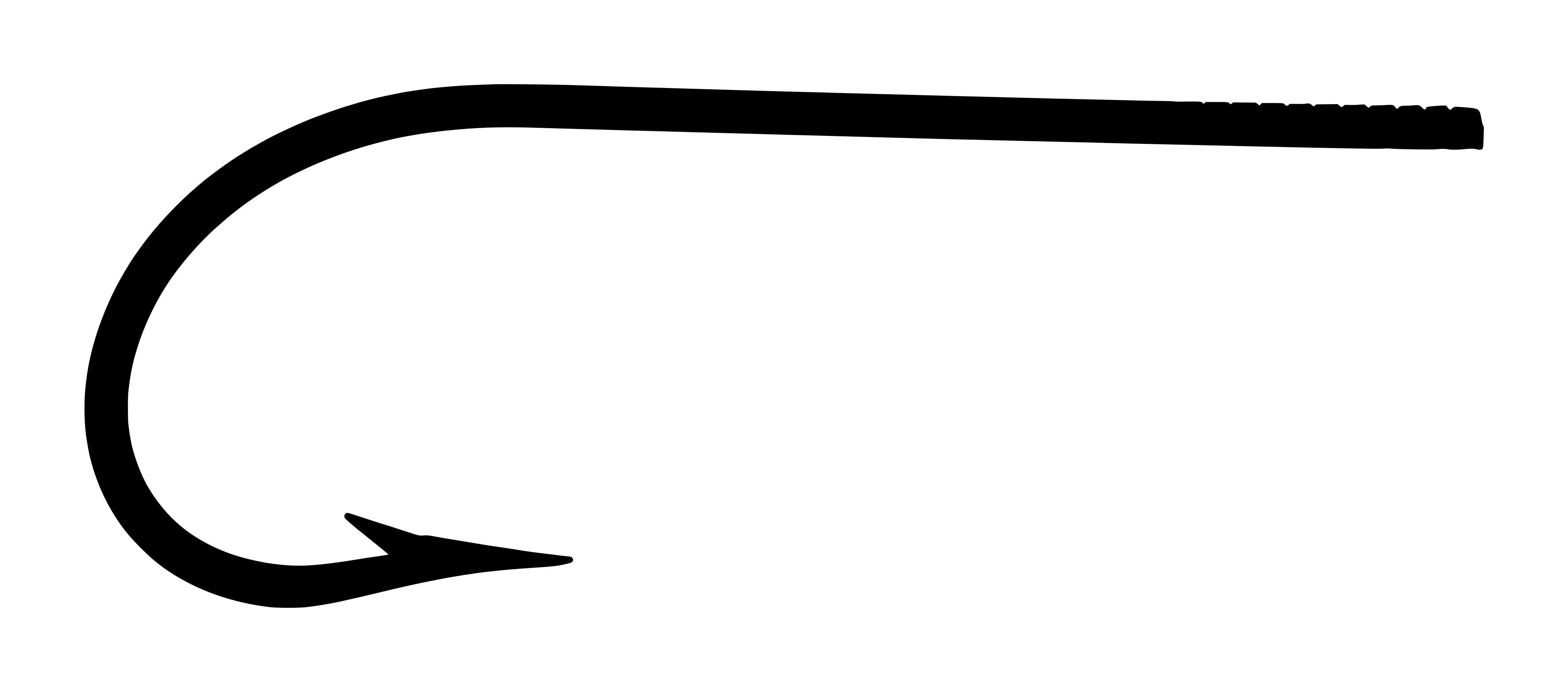
Allcock Chestertown 667 — Size No. 2 and No. 4 Profile ComparisonSide-by-side profile view of Allcock Chestertown 667 hooks in sizes No. 2 and No. 4, photographed on 1/10-inch measurement grid. The tapered blind eye and sproat bend geometry are clearly visible across size variants.Open originalAllcock Chestertown 667 Size No. 2 — Barb and Point DetailMagnified detail of the No. 2 specimen showing the short close-cut barb, superior point geometry (near-straight inner taper), and smooth shank taper leading to the needle-pointed eye.Open originalAllcock Chestertown 667 Size No. 2 — Measurement Grid ReferenceFull-profile measurement view of the Allcock Chestertown 667 No. 2 on 1/10-inch grid. Enables precise calibration of overall length, shank length, gap width, and other dimensions for reference.Open originalAllcock Chestertown 667 Size No. 2 — Profile PortraitPortrait-style profile of the Allcock Chestertown 667 No. 2 against a neutral white background, emphasizing the japanned finish quality, tapered blind eye detail, and sproat bend symmetry.Open originalAllcock Chestertown 667 Box No. 2 — Front LabelOriginal Allcock manufacturer's box for the Chestertown 667 No. 2, showing the printed label with decorative border, model number, 'Best Steel' designation, and deer trade mark. Box indicates 100 hooks per package.Open originalAllcock Chestertown 667 Box No. 4 — Front LabelOriginal Allcock manufacturer's box for the Chestertown 667 No. 4, with identical label format and decorative border. Size field is hand-marked with '4', confirming this box contained size No. 4 hooks.Open originalAllcock Trade Mark — Deer Symbol DetailClose-up detail of the Allcock deer trade mark and surrounding letterpress text from the manufacturer's box label, demonstrating print quality and maker attribution.Open original
Technical profile
Allcock & Co, Redditch | Best Steel Chestertown 667 | Tapered Blind Eye | Sproat Bend | Standard Shank & Wire | Superior Point | Japanned | No. 2 | 100 per box
Eye
Blind — Marked ShankTapered blind eye — the shank tapers smoothly to a fine rounded point with no flattening or spade construction. Gut attached via loop tied around the taper. P
Wire
Standard, Round
Shank
2X Long — Marked / Ridged
Bend
Standard gapRounded sproat bend with moderate depth, typical of British salmon and sea trout practice. Bend is symmetrical and centered; no offset. Bend radius appears consistent throughout the curve. P
Point
Standard / SpearShort, close-cut barb set high on the shank, typical of Redditch blind-eye construction. Barb angle approximately 45 degrees to the shank axis. P
Finish
Black Japanned — Confirmed (stated on packaging)Glossy black japanned lacquer finish confirmed on both hook wire and original packaging label. Finish obscures underlying wire texture almost completely, characteristic of thick lacquer application. No blue-grey undertones or silver reflectivity visible — finish is definitively opaque black, not blued. V confirmed by packaging statement.
Specimen hooks are bright with no visible corrosion; japanned finish is glossy and intact with minimal wear. Box label shows light, even toning consistent with age and storage in a dry environment; printing remains legible. Side flaps intact. No active rust or deterioration evident. Condition represents a very good example of surviving stock.
The tapered blind eye is the defining engineering feature. Rather than flatting or spading the shank end, Allcock tapered it to a needle point — a more refined approach that minimized stress concentration and reduced the risk of tearing in soft gut. The taper is smooth and continuous, not angular. This construction required precise shank-end work and was a mark of quality manufacturing. The superior point geometry (near-straight inner taper, nearly flat inside face) is optimized for penetration and hold in bony fish mouths — typical of salmon and large sea trout. The round wire of standard gauge distributes stress evenly and resists kinking. The sproat bend is chosen for its balance: deep enough to provide mechanical advantage without being so pronounced as to risk deformation during the violent head-shaking runs of salmon.
This entry documents a rare surviving example of an Allcock Best Steel blind-eye salmon hook in original manufacturer's box. The tapered (non-flatted) blind eye construction is less commonly encountered than flatted alternatives and deserves emphasis in the Redditch catalog.
Own this hook? Help us measure it.
We have measurement for size 2. Know any others? Submit calipered measurements and we'll review and add them. Thank you!
Historical context
allcock
S. Allcock & Co, founded in Redditch by Samuel Allcock in the early 19th century, grew to become one of the largest fishhook and fishing tackle manufacturers in England. Redditch was the global center of hook manufacture, and Allcock competed alongside Partridge, Sealey, Milward, and others in a region of extraordinary craftsmanship. Allcock produced hooks across all price points and categories — from economy lines to premium ‘Best Steel’ designations — and distributed hooks globally through subsidiary companies and trade relationships. The company’s longevity (operating well into the 20th century) and product diversity made Allcock hooks ubiquitous in Victorian and Edwardian fly-fishing. Production was entirely hand-forged until the early 20th century, and quality control reflected individual maker skill and company standards. Allcock eventually merged with or was absorbed into larger industrial concerns, but the brand carried weight throughout the vintage hook collecting world.
Series History
The Chestertown line represents Allcock’s mid-tier salmon and sea trout offering. While specific introduction dates are difficult to confirm without original catalogs, the model number 667 and Best Steel designation suggest placement within the premium-standard product range. The line likely served professional and accomplished amateur fly fishers who valued blind-eye construction for the superior gut loop connection it enabled. The Chestertown appears to have remained in production across several decades (c. 1900–1950s at minimum), with the tapered blind eye maintained as a signature feature throughout. No documented variants are evident from this specimen; the line appears to have been a stable, well-established product with consistent specifications. The absence of the hook from modern collections and the scarcity of surviving boxes suggest the line was eventually discontinued as modern eye-up hooks and monofilament leaders displaced the blind-eye tradition.
Era and Packaging Dating
No barcode present — pre-1974. Letterpress print method typical of late 19th and early 20th century manufacturing. Wooden side-flap box construction predates modern carton gluing (1950s+). Hand-written size indicator in the 'No.' slot consistent with batch or custom marking practices of the Edwardian era. Absence of postal code on label (UK postcodes introduced 1959) supports pre-1950 date. Overall composition and aging pattern of paper and label suggest 1900–1930 as most probable window. Allcock was a major Redditch producer throughout this period.
The Redditch Hook Legacy
Redditch, a small market town in Worcestershire, became the undisputed hook capital of the world by the 1880s. At its peak, the town's cottage manufacturers, integrated factories, and specialized sub-contractors produced millions of hooks annually, supplying fly fishers from Scotland to Bombay to New Zealand. The blind-eye tradition — using tapered or flatted shank ends for gut loop attachment — was a distinctly British innovation, prized for the subtlety of connection it created and the minimal resistance it presented to water flow. Allcock's willingness to invest in tapered (rather than flatted) blind eyes signaled a commitment to the highest standards, as it required more precise tooling and more careful finishing.
Design lineage and influence
The blind-eye construction echoes English salmon and sea trout tradition stretching back to the early gut-line era of fly fishing (pre-1850s). Flatted or blind eyes allowed seamless connection via loop knots, eliminating the bulk of traditional eyed hooks. Allcock’s tapered variant represents a refinement of this tradition — sleeker, less prone to tearing, more elegant. After World War II, the introduction of reliable monofilament leaders and mass-produced eye-up hooks gradually made blind-eye hooks obsolete. Modern fly fishers have largely abandoned the category, though some traditional and spey-casting practitioners continue to value blind-eye hooks for their historical authenticity and the connection aesthetic they enable. Partridge and a few specialized Redditch makers have maintained blind-eye production, but volume is now negligible compared to the Edwardian heyday.
Best matchRelated by Attribute
Computed automatically from catalog data — updated as new hooks are added.
Matches: Bend, Eye, Eye Orient., Finish, Forging +2 moreDiffers: Shank: 2X Long vs 1X Long; Wire: Standard vs Fine (1X Fine); Gap: Standard vs Wide +2 more
Matches: Bend, Eye, Eye Orient., Finish, Forging +2 moreDiffers: Shank: 2X Long vs 3X Long; Wire: Standard vs Fine (1X Fine); Gap: Standard vs Narrow +2 more
Matches: Bend, Wire, Eye, Eye Orient., Finish +3 moreDiffers: Shank: 2X Long vs Extra-Extra Long; Gap: Standard vs Narrow; Point: Standard / Spear vs Superior +1 more
Designed for traditional fly fishing for Atlantic salmon and sea trout in UK and Irish rivers. The tapered blind eye and standard shank accommodate gut leaders tied in a loop configuration — the standard rigging method before modern monofilament. Size No. 2 is appropriate for medium spey flies, traditional salmon wet flies, and sea trout patterns. The sproat bend distributes force evenly, reducing breakages on explosive runs characteristic of these larger species.
Secondary Applications
Traditional sea trout night fishing, estuarine salmon, occasional use as base for larger tube fly adapters
Classic Fly Patterns
Spey flies, Dee flies, March Brown, Greenwells Glory, Thunder and Lightning, Silver Doctor, Black Dog
Modern Equivalents
Hook
Match Quality
Notes
Partridge Bartleet
Good
Similar blind-eye salmon hook, Redditch heritage, same application but more modern wire
Mustad 36620 Salmon
Moderate
Modern eye-up eyed salmon hook; functional equivalent but lacks blind-eye tradition
Collector notes
Rated 6.0/10 — scarce to the specialist collector. Allcock Chestertown hooks survive in modest numbers; the tapered blind eye design and Best Steel designation both indicate premium manufacturing. Complete original boxes in good condition push toward the high end; loose or damaged examples rate lower. Collector demand is strongest among Redditch tradition enthusiasts and traditional fly-dressing specialists.
Reference value
$25 – $65 USD estimate
Packaging condition
Good — moderate wear, legibleRecorded specimen
Packaging format
GW-AC-667-02Catalog code
Positive factors: Allcock of Redditch is a recognized name in vintage hook collecting. The Chestertown line represents a mid-tier quality product with solid construction. The tapered blind eye construction is rarer than flatted-eye alternatives and signals thoughtful design. The japanned finish is confirmed on original packaging, adding authenticity. Best Steel designation indicates quality control during a period when consistency was variable. Original manufacturer box with maker’s label intact is substantially more valuable than loose hooks.
Limiting factors: Allcock never reached the rarefied status of Partridge or Sealey among advanced collectors. Size No. 2 is a common size in vintage hook distributions — much larger or much smaller sizes would command higher premiums. The hook’s primary application (salmon/sea trout) limits modern tyer interest. Modern hooks have replaced it functionally; collectability is primarily historical and aesthetic.
Variant and condition notes: Sizes No. 4 and smaller are harder to locate and command higher prices. Boxes with complete, undisturbed hook counts are significantly more valuable than cards with losses. Sealed or near-sealed examples in excellent condition can reach the high end of the estimated range; opened, handled boxes with full count occupy the middle ground; damaged boxes or loose hooks sit at the low end.
Packaging
Manufacturer box, white cardstock with applied label. Label printed in black letterpress with decorative asterisk border frame. Text reads: '667 / S. Allcock & Co's / BEST STEEL / CHESTERTOWN / HOOKS. / Trade Mark [deer mark] / Redditch, England. / No. [handwritten] / 100'. Two wooden side flaps for closure. Label shows light toning and handling wear consistent with late 19th or early 20th century. No barcode present.
Market Value Notes
Low ($25): Good condition — opened box, complete or near-complete hook count, light wear and toning on label and box.<br />
High ($65): Excellent condition — box sealed or effectively sealed, full 100-hook count verifiable, label clear and intact, minimal handling damage.<br />
Premium factors: Redditch provenance, complete original box, all hooks present, Best Steel designation, clear label printing, pre-1930 manufacture evidence.<br />
Platforms: eBay UK specialist dealer sales, online vintage tackle auctions, Redditch hook specialist forums.<br />
Confidence: E estimated — limited recent comparable sales data; range based on Allcock box models and tapered blind-eye construction rarity relative to broader Redditch market.
Where to Find
Primarily eBay UK, occasional eBay US specialty listings. UK-based vintage tackle dealers and regional antique fairs in the Midlands. Redditch-focused online forums and private collector networks. Complete boxes appear infrequently; expect several months between listings. Loose individual hooks more readily available at lower prices.
Preservation
Storage and Preservation
Store the complete original box in a cool, dry environment away from direct sunlight and humidity fluctuations. The japanned finish is durable but can develop surface corrosion if exposed to moisture for extended periods. Original packaging adds substantial value — do not remove the hooks from the box unless absolutely necessary for documentation.
If individual hooks must be removed for inspection, handle them minimally and return them to the box immediately. The wooden side flaps are fragile; support them gently during opening to avoid splitting or warping. The label should never be moistened, scrubbed, or subjected to adhesive treatments. Light surface dust can be removed with a soft brush; aggressive cleaning risks damaging the letterpress printing and aging patina.
Store the box on a shelf away from other metals to prevent galvanic corrosion. Avoid basements or damp cellars, which promote rust and mold. A stable room-temperature environment (55–70°F, 30–50% relative humidity) is ideal. Periodic inspection (every 6–12 months) is recommended to detect any early signs of corrosion or label deterioration.
Marking Analysis
Handwritten Markings
The label shows a handwritten ‘4’ in the ‘No.’ field (printed: ‘No. [blank] 100’). This mark indicates the size of hooks contained in the box — size No. 4. The handwriting is formal and consistent, likely applied by a packer or inventory clerk at the Allcock factory or a wholesale distributor’s warehouse. The style is consistent with early 20th century commercial marking practice in the UK. The mark was applied in black or dark brown ink using a fine nib, suggesting careful labeling rather than hasty stock marking.
The presence of a hand-marked size (rather than pre-printed sizes or a blank) suggests this box was filled on demand from bulk stock, a common practice for wholesale distribution in the Redditch era. No initials, batch codes, or additional marks are visible.
Primary Source
Packaging Text Analysis
Source: Packaging label, S. Allcock & Co Chestertown 667 Box, No. 2, c. 1900–1930
The label declares: ‘667 / S. Allcock & Co’s / BEST STEEL / CHESTERTOWN / HOOKS. / Trade Mark [deer mark] / Redditch, England.’
‘Best Steel’ is a quality designation, not a hook type or brand name. It signals that the wire stock was selected for superior purity and working properties — a real distinction in an era when raw steel quality was variable. ‘Best Steel’ appeared on multiple Allcock lines and was a legitimate marketing claim, not mere advertising hyperbole.
‘Chestertown’ likely references a geographical origin or a specific designer/collaborator, though no further documentation has been located. It may also refer to a river (UK has a Chestertown in various regions) where these hooks were promoted or used, a common naming convention of the era.
The deer trade mark is Allcock’s registered symbol and appears on all their packaging. The mark establishes authenticity and indicates the box is a primary manufacturer’s product, not a repackaged or generic bulk container.
‘Redditch, England’ confirms manufacture in the famous hook-making center and implicitly claims quality association with the Redditch tradition.
Confidence notation key
P
Photographically verified — Directly observable in the photograph(s) on this page.
V
Verified by documentation — Confirmed by manufacturer catalog, spec sheet, or published reference.
I
Inferred — A logical deduction from observable or documented evidence, not directly stated.
E
Estimated — An approximation based on visual comparison, proportional analysis, or limited data.
S
Speculative — A reasoned hypothesis that cannot be confirmed from available evidence.
Claims with no notation are confirmed by multiple independent sources. All photographs on garrenwood.com are taken on a measurement grid where each square equals 1/10 inch (0.1″ / 2.54 mm).