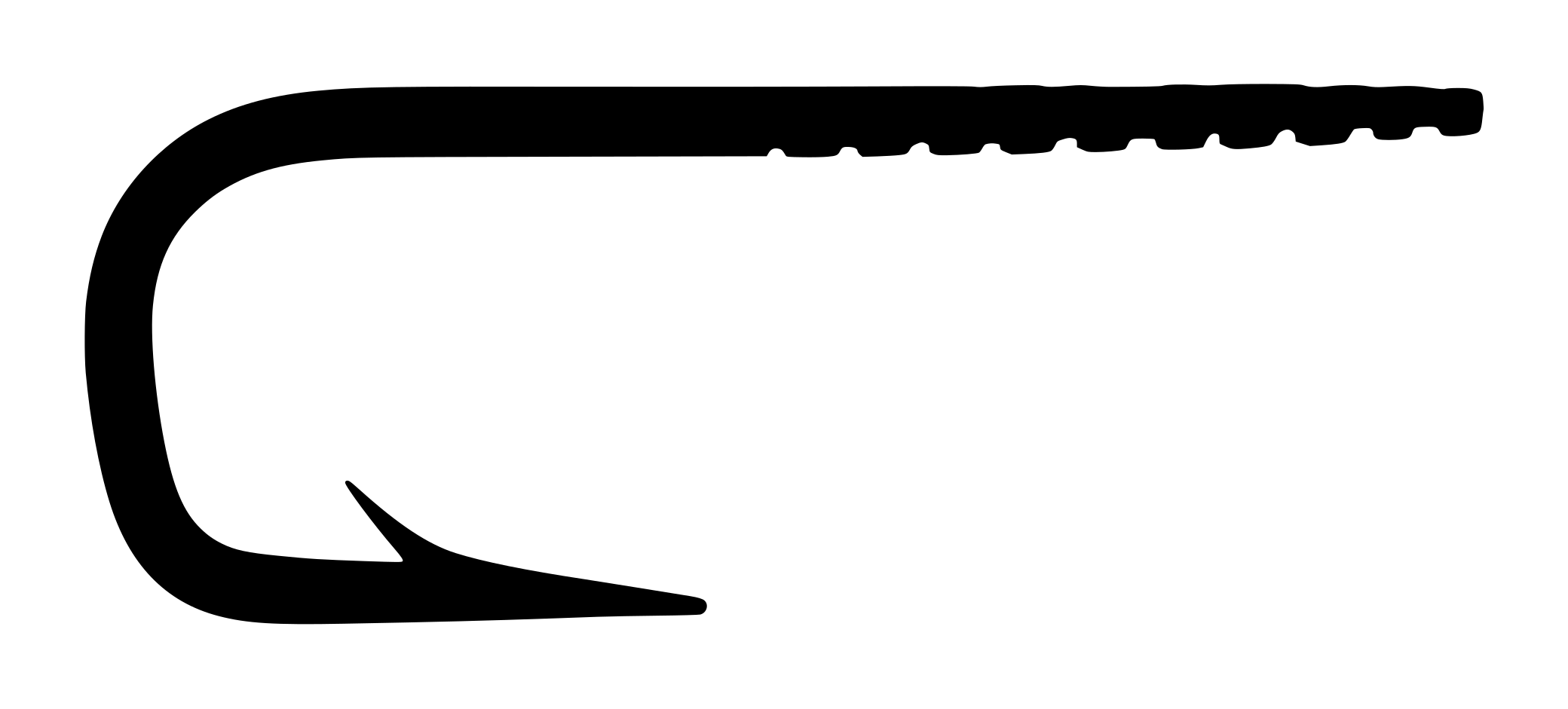
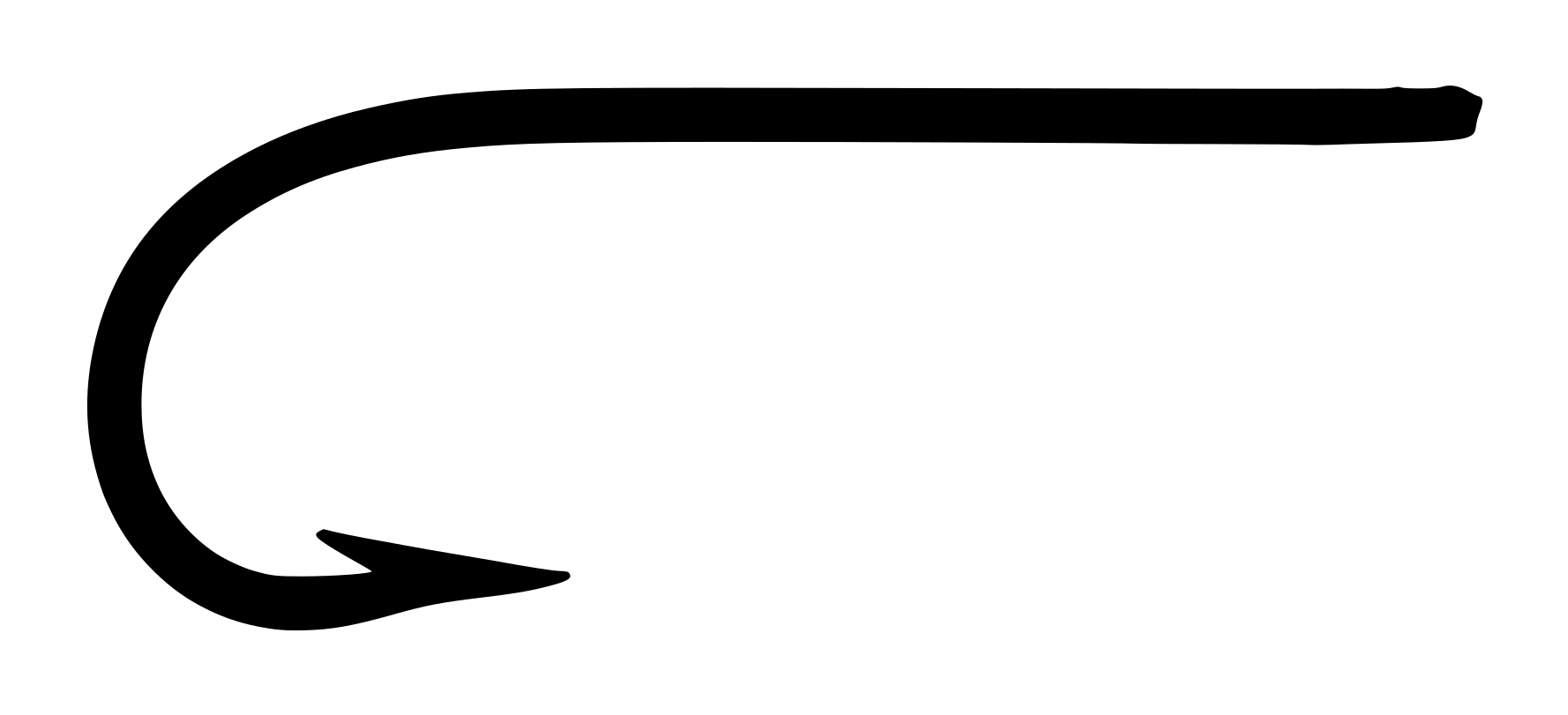
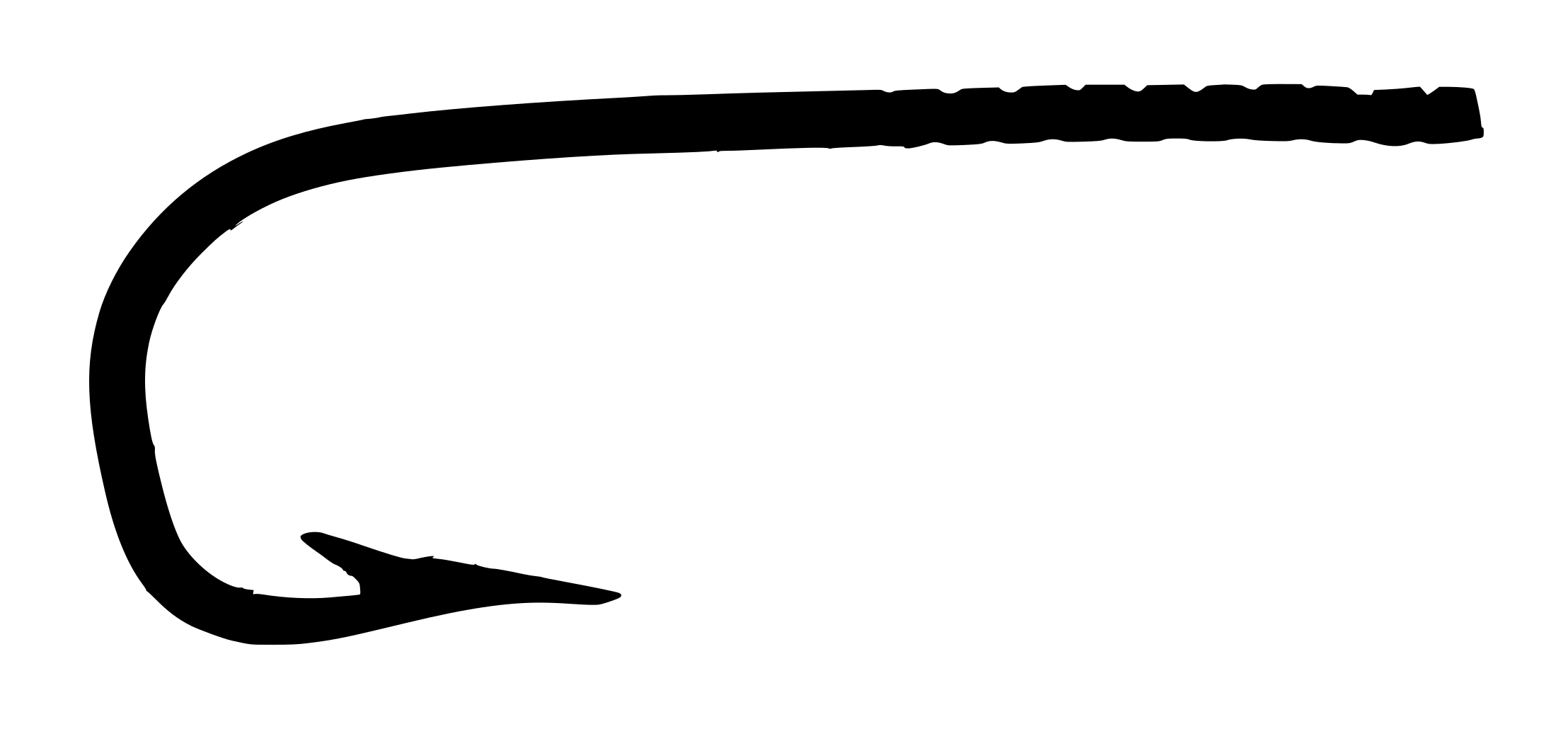
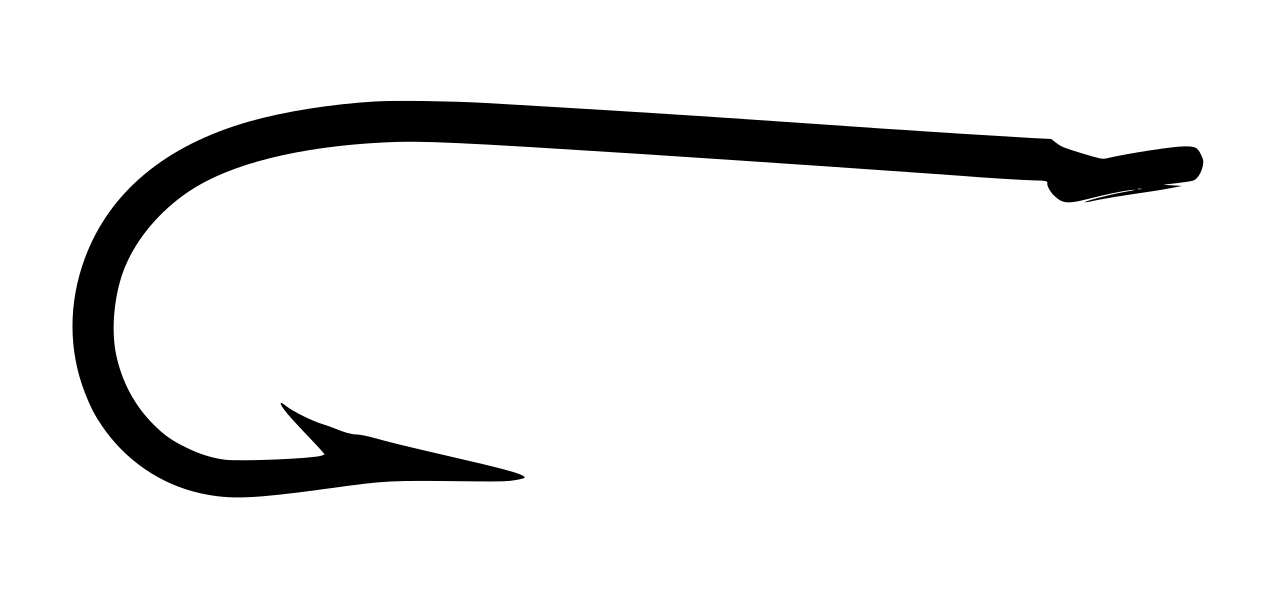
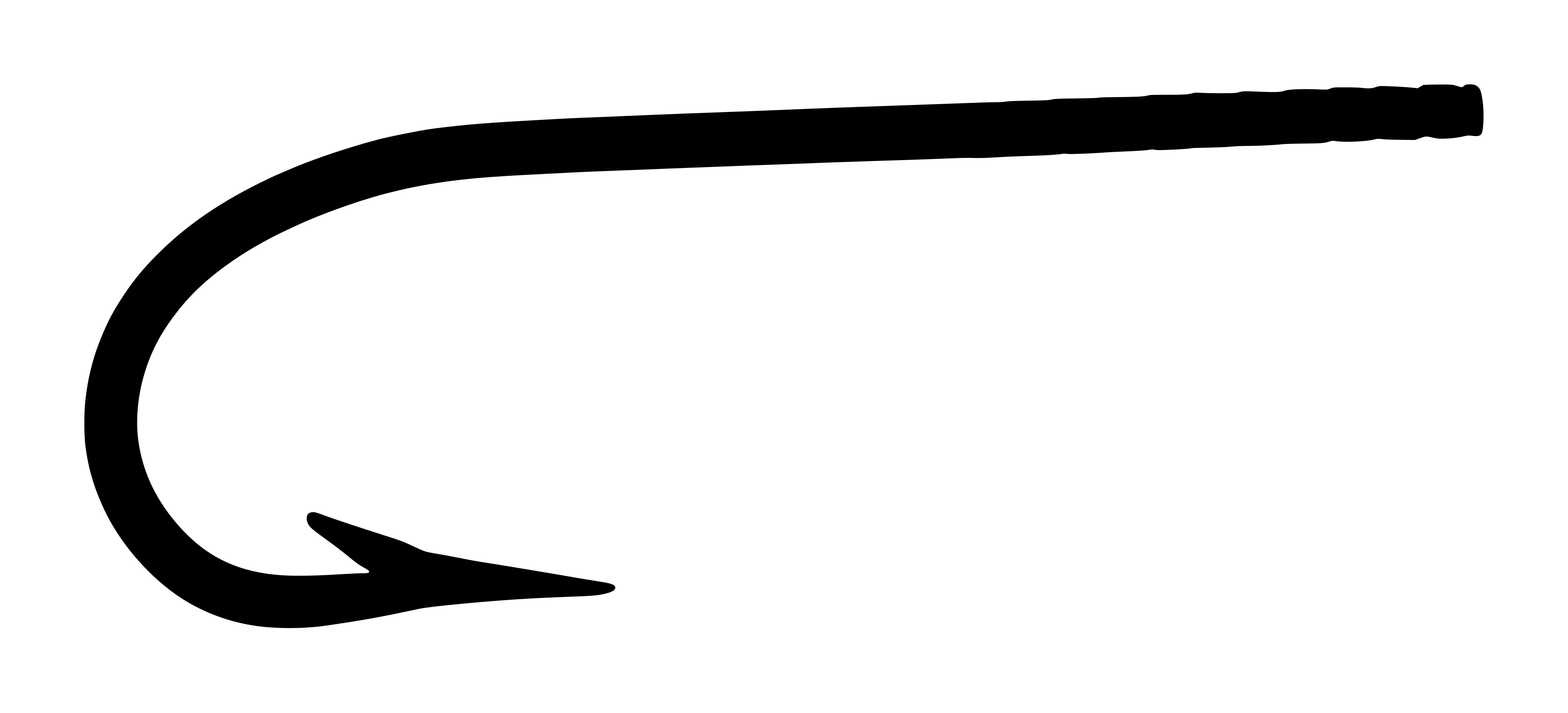
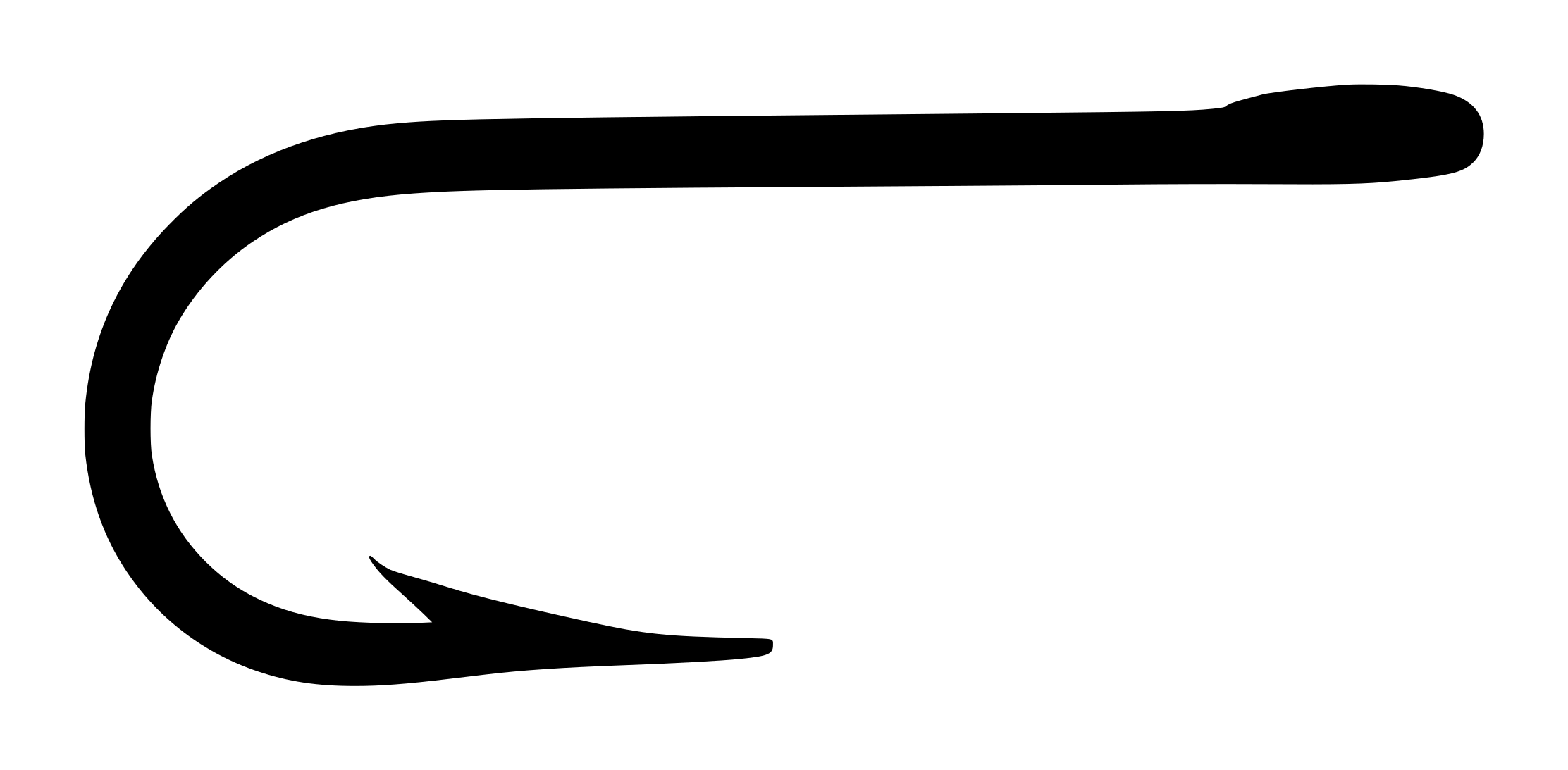
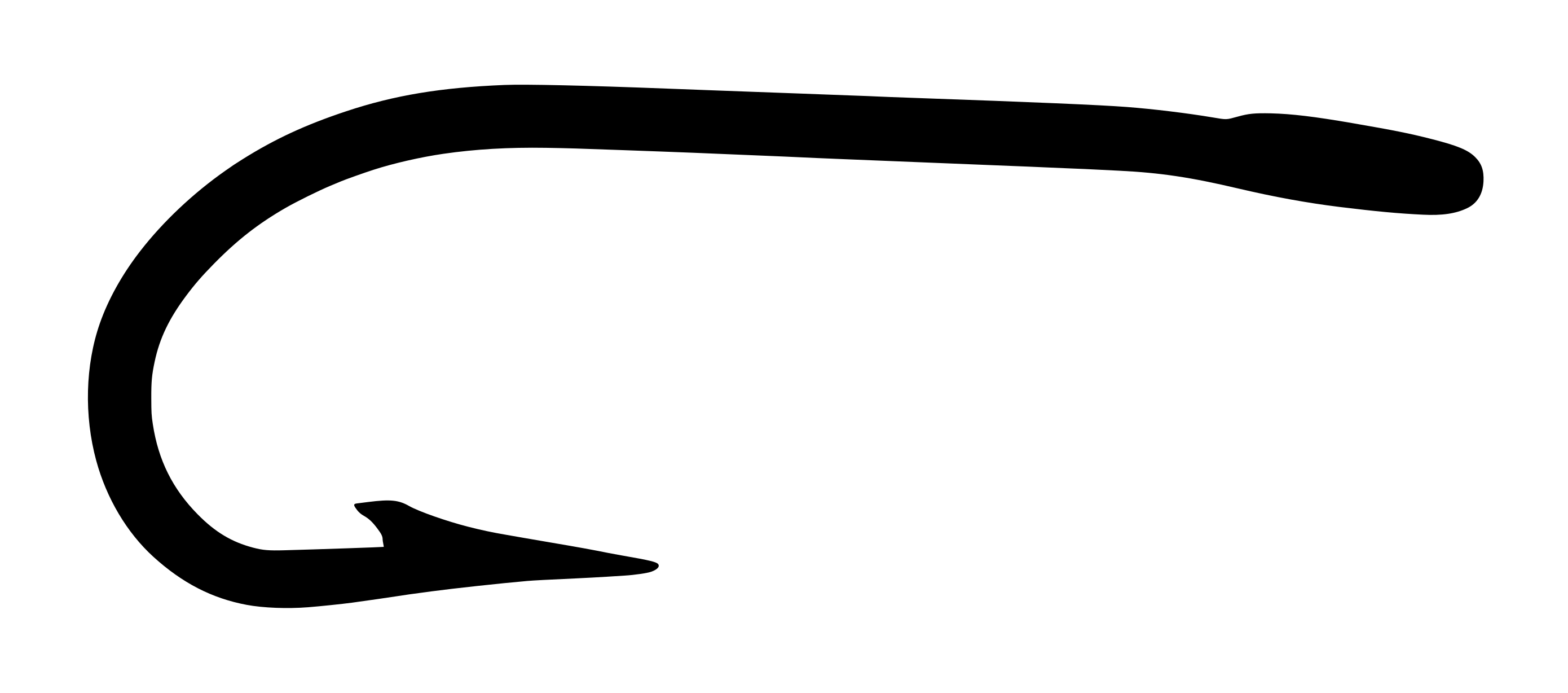
The S. Allcock & Co., Ltd. Kendal Sneck No. 195 Flat is a specialized saltwater and sea trout bait hook manufactured in Redditch, England, likely between 1900 and 1940. This is a size No. 7, nickelled finish, with a distinctive sneck bend, tapered blind eye for gut-loop rigging, and marked (ridged) shank designed to anchor traditional silk whippings for bait attachment.
The hook exemplifies the pre-industrial era of British tackle craftsmanship — engineered for specific functional demands rather than modern standardization. The combination of sneck geometry (sharp angular heel), hollow point, and tapered shank reflects deep knowledge of bait-fishing mechanics among Redditch makers. The marked shank was not decorative; it served as a mechanical anchor point for thread wrapping, a technique that predates modern chemically sharpened designs.
Era Evidence: The turquoise hand-applied label, letterpress printing, Edwardian trade-mark logo, ‘Rustproof Hooks’ marketing language, and complete absence of barcode all place this hook in the early-20th-century production window. The language ‘Fabriqué en Angléterre’ (Made in England) is typical of Allcock export-market packaging c. 1900–1940. Handwritten period annotations on the envelope envelope support original stock provenance.
Collecting Significance: Allcock hooks enjoy strong collector followership among British fishing historians and fly-tyer communities. The Kendal Sneck in original labeled packaging represents a bridge between Victorian saltwater traditions and mid-20th-century standardization. Complete original cards with all 100 hooks intact are genuinely scarce; most surviving examples are either loose or missing significant hook counts. This specimen’s legible label and size No. 7 (a practical fishing size, not an extreme) make it a desirable example for collectors of British bait hooks and industrial design history.
Side profile of the Allcock Kendal Sneck No. 195 nickelled hook, size No. 7, showing the characteristic sneck bend with sharp angular heel and marked (ridged) shank, on 1/10-inch measurement grid.
Photographic record
4 cataloged imagesSelect any record to load it above.
4 images shown
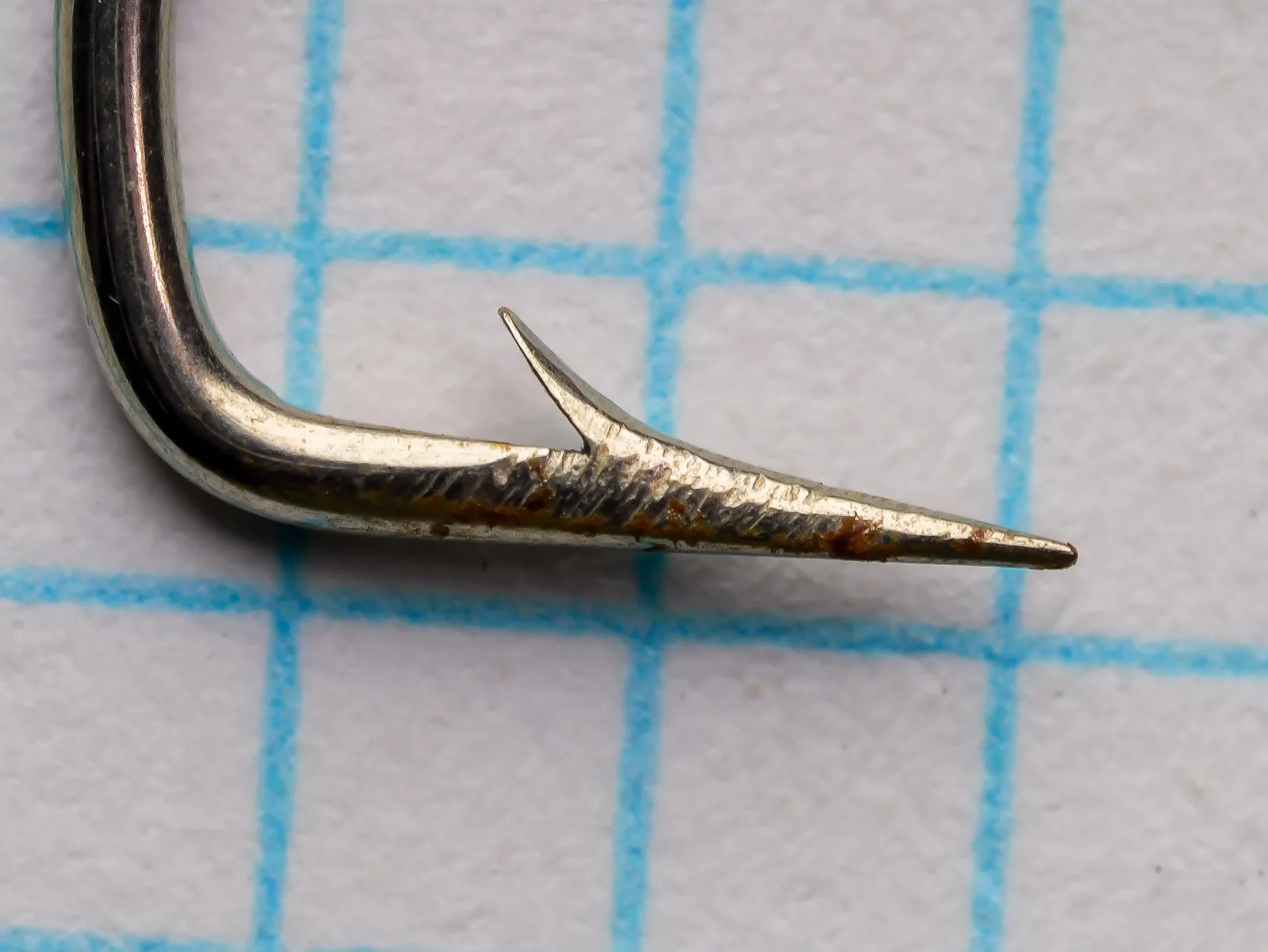
S. Allcock Kendal Sneck No. 195 Size 7 — Profile ViewSide profile of the Allcock Kendal Sneck No. 195 nickelled hook, size No. 7, showing the characteristic sneck bend with sharp angular heel and marked (ridged) shank, on 1/10-inch measurement grid.Open originalS. Allcock Kendal Sneck No. 195 Size 7 — Eye and Point DetailFront-facing view of the Allcock Kendal Sneck, size No. 7, showing the tapered blind eye (smooth rounded taper, not a flattened spade end) and the hollow-point barb geometry, on measurement grid.Open originalS. Allcock Kendal Sneck No. 195 Size 7 — Marked Shank DetailClose-up detail of the marked (ridged) shank on the Allcock Kendal Sneck, size No. 7, showing the regularly-spaced impressed marks that served as anchor points for silk thread whippings in traditional bait-fishing rigging.Open originalS. Allcock Kendal Sneck No. 195 — Original Turquoise Package LabelOriginal turquoise hand-applied label from the S. Allcock & Co., Ltd. Kendal Sneck No. 195 Flat hook card, showing letterpress printing with period trade-mark logo, manufacturer details, and specifications. Label indicates a 100-hook count, Redditch, England manufacture, and French text ('Fabriqué en Angléterre').Open original
Technical profile
Eye
Blind — Marked ShankTapered blind eye — the shank tapers smoothly to a rounded point with no flatting or spade construction. Gut was tied around the taper as a loop. P Confirmed by researcher examination.
Wire
Extra-Heavy (2X+), Forged
Shank
1X Long — Marked / Ridged
Bend
Sneck, Standard gapPronounced sneck bend with sharp angular definition at the heel. The bend profile slopes inward at an acute angle, characteristic of the sneck family. P Clearly visible in both profile and side views.
Point
Standard / SpearShort, close-cut barb positioned immediately behind the point taper. P Visible in close detail.
Finish
Nickelled / Nickel-Plated — Confirmed (stated on packaging)Cool silver-grey tone consistent with nickel plating. V Confirmed on original packaging label and P photographically consistent with historical nickelled finishes from this manufacturer.
The hooks themselves are bright nickelled with no visible corrosion or pitting. Label is legible with all text clearly readable; moderate toning and light creasing consistent with age. Envelope envelope has aged patina. This appears to be original stock — not a modern repacking.
Hollow Point Geometry: The hollow point is manufactured via a specific forging and finishing process. The inner face of the point tapers inward (concave), creating a knife-edge effect on the barb side. This geometry serves two functions: (1) the concave inner face allows penetration through tougher bait materials and fish mouth tissue with less force — important when using live bait that requires rapid hook-set, and (2) the hollow configuration creates a sharper effective edge than a ‘superior’ (flat-faced) point, an advantage when bait or cartilage dulls the tip.
Sneck Bend Mechanics: The pronounced angular heel of the sneck bend shifts the load path during fish-fighting. Rather than distributing stress evenly through a curved bend, the sneck concentrates initial stress at the heel corner. Paradoxically, this makes the hook more resistant to bending straight — the corner acts as a stress concentration point that the hook material is specifically forged to handle. For bait hooks used on strong saltwater fish, this geometry was superior to softer round bends.
Marked Shank Purpose: The regularly-spaced ridges or marks impressed into the shank served as anchor points for silk or linen thread wrappings. When a bait angler whipped thread around the shank to hold a mackerel flapper, herring, or eel in place, the marks prevented the thread from sliding along the smooth metal. Modern hooks use barbs or intentionally rough finishes for this purpose; historical marked-shank designs predated those innovations.
Tapered Blind Eye: Rather than flattening the shank end to a spade, Allcock tapered it to a smooth rounded point. Gut line was looped and tied around this taper. The advantage: a smooth taper does not create a stress concentration point (unlike a sharp flatted edge), reducing the risk of gut-line breakage at the eye. The disadvantage: requires more skilled hand-finishing. This choice reflects Allcock’s prioritization of functionality over manufacturing economy.
Nickelled Finish: Nickel plating provides excellent corrosion resistance in saltwater environments compared to bronzed or blued finishes. The cool silver-grey tone also offered visibility in murky coastal waters — some historical sources suggest nickelled finishes were easier to track visually when retrieving baited lines. The plating thickness on quality British hooks like Allcock was typically 0.0005–0.001″, sufficient to provide decades of protection when stored dry.
We don't have measured sizes for this hook yet. Own one? Submit calipered measurements and we'll review and add them. Thank you!
Historical context
allcock
S. Allcock & Co., Ltd. was one of the major hook and tackle manufacturers of Redditch, England, a town that dominated English hook production from the Victorian era through the mid-20th century. Allcock’s roots trace to the 19th century; the company was a recognized leader in saltwater and salmon hook design by 1880. The firm operated from Redditch, the historic heart of English needle and hook manufacturing, where access to skilled labor, wire mills, and established trade networks created an industrial ecosystem unique to the region.
Allcock built its reputation on specialized designs for specific fishing traditions — saltwater bait hooks for coastal and estuarine work, salmon flies, sea-trout patterns, and robust bait hooks for pike and catfish. The company was known for careful engineering: marked shanks (as seen on this specimen) were intentional design features, not cost-saving shortcuts. They served functional purposes in traditional rigging techniques where silk thread needed to be anchored securely to the hook body.
By the early 20th century, Allcock was exporting globally — the phrase ‘Fabriqué en Angléterre’ (Made in England) on period packaging reflects this export orientation. The company competed directly with rivals like Partridge of Redditch, Edgar Sealey & Sons, and H. Milward & Sons. Unlike Mustad (the Norwegian industrial giant), Allcock maintained craft-oriented production methods and custom-order capacity well into the 1950s and 1960s. The firm was eventually acquired by Mustad in 1964, which marked the end of independent Allcock production.
Series History
The Kendal Sneck was not a flagship Allcock pattern, but rather a specialized regional design reflecting demand from coastal fishing communities in northern England. The sneck bend itself — characterized by a sharp angular offset at the heel — has ancient roots in English fishing tackle; similar patterns appear in 18th and 19th-century river and coastal hooks. Allcock’s ‘Kendal Sneck’ nomenclature likely references the town of Kendal in the Lake District, a historic center of fishing and angling culture.
No. 195 Flat appears to have been in continuous production from at least 1900 through the 1940s; the surviving label suggests this hook was already an established catalog item by the Edwardian era. The use of ‘Rustproof Hooks’ and ‘Taper Shanks’ in the marketing language indicates the company was actively positioning these features as advantages — suggesting these were either newer innovations or market-differentiating claims at the time of this packaging’s creation.
Unlike Mustad’s highly documented product lineages, Allcock’s catalog records are sparse in the public domain, making definitive product introduction dates difficult to establish. What is clear is that the Kendal Sneck remained in production until at least the early 1960s, when Mustad’s acquisition likely consolidated or discontinued regional Allcock patterns in favor of Mustad’s standardized offerings. The hook represents the final generation of independently-designed British bait hooks before industrial consolidation.
Era and Packaging Dating
No barcode present (pre-1974 strong indicator). Package label format is hand-applied turquoise paper with letterpress printing, typical of Edwardian/interwar British hook packaging. Trade mark deer logo and typography consistent with Allcock house style c. 1900-1930s. Handwritten annotations and price marking on envelope suggest this is original stock from that period. The term 'Rustproof Hooks' in marketing language is characteristic of early 20th century — this terminology was phased out by 1950s. Overall packaging aesthetic, paper stock weight, and serif typeface all point to c. 1900-1940 range, with weight of evidence suggesting c. 1910-1935.
The 'Rustproof' Marketing Era
The phrase 'Rustproof Hooks' on this label reflects a marketing shift in early-20th-century tackle design. Before the widespread adoption of nickel plating and stainless steel, rust was the primary enemy of fishing tackle. Redditch makers competed partly on corrosion resistance — Allcock's prominent use of 'Rustproof' indicates they were advertising their nickel-plating process as a key selling point. By the 1950s, this language had disappeared from packaging, a sign that nickel plating had become so standard that it no longer needed emphasis. This single word on a century-old label is a window into how technological shifts reshape marketing narratives.
Design lineage and influence
The sneck bend family has deep roots in English fishing tradition. Historical precedents include 18th-century Scottish and Northern English river hooks with pronounced angular heels, used for salmon and sea trout. The distinguishing feature — the sharp inward-sloping heel — provided mechanical advantage during hook-set and made the bend less likely to bend straight under stress, a critical factor when fighting large fish on silk and gut tackle.
Allcock’s contemporaries produced competing sneck variants: Partridge of Redditch offered several sneck patterns for salmon and bait, and Edgar Sealey & Sons likewise marketed sneck designs. The Norwegian Mustad company produced sneck-pattern hooks as well, though Mustad’s industrialized sneck variants often featured different geometries optimized for mass production rather than craft fishing.
The tapered blind eye (as opposed to the flattened ‘spade’ blind eye common on other British salmon hooks) was a deliberate Allcock choice, reflecting their focus on gut-loop rigging. This eye type required more skilled hand-finishing than a simple flatted end, indicating Allcock valued functional elegance over manufacturing speed.
The Kendal Sneck’s direct legacy is mixed. Mustad’s 1964 acquisition of Allcock likely resulted in the discontinuation of this specific pattern — it was absorbed into Mustad’s global sneck-bend catalog (e.g., the Mustad Sneck, which has different geometry). Modern fly-tiers occasionally reference historical Allcock sneck patterns in specialized bait-fishing contexts, but the Kendal Sneck itself is now a historical artifact rather than an active design ancestor.
Best matchRelated by Attribute
Computed automatically from catalog data — updated as new hooks are added.
Matches: Shank, Gap, Eye, Eye Orient., Point +3 moreDiffers: Bend: Sneck vs Beak / Reversed Point; Wire: Extra-Heavy (2X+) vs Heavy (1X Heavy); Finish: Nickelled vs Polished Steel +1 more
Matches: Bend, Gap, Eye, Eye Orient., Shank Feat. +1 moreDiffers: Shank: 1X Long vs Standard; Wire: Extra-Heavy (2X+) vs Standard; Point: Standard / Spear vs Superior +3 more
Matches: Shank, Gap, Eye, Eye Orient., Application +2 moreDiffers: Bend: Sneck vs Kirby (offset); Wire: Extra-Heavy (2X+) vs Heavy (1X Heavy); Point: Standard / Spear vs Superior +3 more
Matches: Shank, Gap, Eye, Eye Orient., Point +3 moreDiffers: Bend: Sneck vs Kirby (offset); Wire: Extra-Heavy (2X+) vs Fine (1X Fine); Finish: Nickelled vs Bright / Uncoated Steel +2 more
The Kendal Sneck was a specialized saltwater and sea trout bait hook, engineered for live or dead bait presentation in coastal and estuarine environments. The pronounced sneck bend and tapered shank were designed to accommodate gut loops for secure bait attachment and to provide a mechanical advantage during hook-set against strong fish. The marked shank offered anchor points for whipping with silk or thread, a critical feature for bait anglers before modern chemically sharpened hooks became standard.
Secondary Applications
Occasionally used for salmon in river conditions where bait was permitted.
Classic Fly Patterns
Not typically used for fly tying.
Modern Equivalents
Hook
Match Quality
Notes
Mustad Sneck (various sizes)
Moderate
Mustad inherited Allcock patterns post-1964 acquisition, but Mustad's sneck geometry differs from the original Kendal — more angular heel, different point proportions. Functionally similar for bait fishing, but not a true equivalent.
Partridge of Redditch Sneck (historical)
Very Good
Contemporary competitor from the same manufacturing tradition. Similar sneck geometry and marked shank. Partridge sneck patterns are closest functional equivalent, though specific size and finish variants vary.
Collector notes
Rated 5.5/10 — Kendal Sneck is moderately scarce in original packaging, particularly in smaller sizes like No. 7. Collector demand is moderate-to-good among British hook specialists and coastal fishing historians. Size and finish variants affect rarity significantly; nickelled is common, but complete original cards with all hooks intact are less frequently encountered than Mustad contemporaries.
Reference value
$12 – $35 USD estimate
Packaging condition
Very Good — light wear, fully legibleRecorded specimen
Packaging format
GW-E-ALLCOCK-TURQ-CARDCatalog code
Positive Factors: Allcock & Co. is a respected Redditch maker with strong collector following. The combination of pre-1940 packaging, sneck bend (a distinctive feature valued by historical bait anglers), marked shank (functional for traditional gut-loop rigging), and complete original label creates meaningful collector appeal. The Kendal Sneck represents the transition era between Victorian saltwater hooks and mid-20th century designs. Original turquoise label in readable condition is a significant premium driver.
Limiting Factors: Allcock produced these hooks in substantial volume — they are not rare in absolute terms. Size No. 7 is mid-range and moderately available; extreme sizes (No. 2 or No. 12+) would command higher premiums. Nickelled finish was standard production (not a limited variant). Many surviving examples are in loose condition without original packaging, which drops value substantially. Bait hooks have lower collector demand than fly hooks in general markets.
Variants and Value Drivers: Complete original card with all 100 hooks intact (as documented on label) in sealed or near-sealed condition is the highest-value form — estimated $40–70. Cards missing 10–20% of hooks or with moderate packaging wear typically $15–30. Bare hooks or single specimens $1–3. Japanned or blued versions (if they exist in this pattern) would command slight premiums over standard nickelled. Extremely small or large sizes (No. 1 or No. 14) would add 25–50% to value if documented.
Condition Factors: Paper label legibility and color (turquoise should remain vibrant) are critical — faded or water-stained labels reduce value by 25–40%. Hook shine and absence of corrosion add 10–15%. Original envelope or tissue wrapper, if intact, adds 15–20% premium.
Packaging
Sales card format — cardboard backing board covered with hand-applied turquoise label stock (likely colored paper or thin card). Label printed via letterpress in black serif and san-serif typeface. Decorative border with stylized hook motif elements (vintage Allcock house style). Text reads: 'No. 195 FLAT / HOLLOW POINT TESTED / KENDAL SNECK / Rustproof Hooks, / Taper Shanks. / S. ALLCOCK & CO., LTD., / Redditch, England. / No. [blank] 100 / Fabriqué en Angléterre. / Made in England.' Original cardboard envelope visible; paper is aged cream-tan with visible wear. No barcode. Handwritten annotations in period ink on envelope reverse (purple/blue fountain pen — price and possibly lot notation). Overall dimensions approximately 4.5" × 3" (11 × 7.5 cm). The label shows moderate aging — color has warmed slightly but turquoise remains distinguishable. Label corners show light creasing from handling.
Market Value Notes
Low ($12): Good condition — opened card, 80–90 hooks present, light packaging wear, hooks bright. High ($35): Excellent condition — sealed or near-sealed card, complete 100-hook count, original turquoise label crisp and legible, minimal wear. Premium factors: original label readability, hook count completeness, finish uniformity, absence of corrosion. Platforms: eBay UK/international, specialist British tackle dealers, Antique Tackle Collector forum sales. Confidence: E estimated — limited direct eBay sold data for this specific model; estimate based on comparable Allcock sneck patterns and contemporary Partridge/Milward bait hooks in original packaging.
Where to Find
eBay UK (most common source); specialist dealers in Redditch region; occasional appearances at tackle auctions and British antique fishing shows. North American availability is lower — monitor eBay.com international sellers.
Preservation
Storage and Preservation
Hook Preservation: Store in a cool, dry environment away from moisture and salt spray. The nickelled finish is highly resistant to corrosion if kept dry, but saltwater exposure or humid conditions will gradually develop patina. Keep the original packaging intact — the turquoise label and envelope provide important protection and are significant to the hook’s collectible value.
Packaging Care: The turquoise paper label is vulnerable to light damage and moisture. Store in an archival box away from direct sunlight; exposure will fade the turquoise color, reducing visual appeal and value. Do not attempt to clean the label with water — period inks (likely carbon-based letterpress) can bleed. If dust accumulates, use a soft dry brush only.
Handling: Handle the complete card sparingly. Oil from skin can deposit on both label and hooks, accelerating tarnishing. Wear cotton gloves when necessary. If the card must be opened for inspection, do so carefully — the original envelope paper is aged and fragile.
Avoid: Do not store near other metals or in contact with rubber bands, which can cause galvanic corrosion. Do not use synthetic packaging materials (plastic sleeves) that trap moisture. Do not apply any solvents, patinas, or restoration chemicals to the hooks or label.
Long-Term Storage: A stable temperature (50–70°F / 10–21°C) and relative humidity (30–40%) are ideal. Unheated attics and basements (which experience seasonal swings) are poor choices. An interior closet or display case with stable climate is preferable. Original complete cards in sealed condition can remain stable for 50+ years in proper storage.
Primary Source
Label Text and Manufacturing Claims
Nomenclature Analysis: The label designates this hook as ‘No. 195 Flat’ — the ‘195’ is the catalog number (likely consistent across sizes and finishes), and ‘FLAT’ refers to the eye configuration (flatted blind eye, though this specimen has a tapered rather than flatted eye). The term ‘Flat’ may indicate a simplified manufacturing spec rather than precise eye geometry.
‘Hollow Point Tested’: This phrase indicates Allcock had a quality control process for point geometry. ‘Tested’ suggests dimensional verification — possibly hand-measured or drop-tested for sharpness. This was marketing language aimed at professional sea-trout and salmon anglers who demanded consistent penetration characteristics. The emphasis on testing reflects competitive pressure from other Redditch makers and from Mustad’s growing industrial presence.
‘Kendal Sneck’: The specific regional naming is typical of period British tackle marketing. Kendal (Lake District, England) was historically associated with fly-tying and angling culture. Naming a hook after a geographic region implied local expertise and tradition — a common branding strategy in the early-to-mid 20th century. Whether Kendal-based anglers or manufacturers specifically designed this pattern is unclear from available documentation.
‘Rustproof Hooks’: As noted in the fun fact section, this was the key marketing differentiator. It explicitly advertises nickel plating as a functional benefit, not merely an aesthetic choice. Corrosion resistance was a paramount concern for saltwater hooks, where rust could weaken the wire and cause catastrophic failure.
‘Taper Shanks’: The emphasis on taper is interesting — most bait hooks had some shank taper (the bend narrows toward the eye), so calling it out suggests Allcock believed their taper geometry was superior. Possible interpretations: (1) the degree of taper was more pronounced than competitors, or (2) the taper was more uniform/precisely manufactured. The tapered blind eye discussed above is consistent with a focus on refined taper design.
Bilingual Text (‘Fabriqué en Angléterre’): The French phrase ‘Made in England’ reflects export-market targeting. Allcock shipped globally, and French versions of packaging were common for distribution to France, Belgium, and other European markets. This bilingual label is an indicator of interwar-era or early-1930s production — a period when Allcock was actively exporting.
‘100’ Count: The card originally contained 100 hooks (now rare to find complete). This was a standard production quantity for Allcock, reflecting both manufacturing efficiency and market expectations. Surviving complete ‘100’ cards are scarcer than smaller partial sets.
Marking Analysis
Handwritten Annotations and Period Markings
The envelope envelope bears handwritten notations in period fountain-pen ink (appears to be blue or purple fountain-pen marking). The writing is in a cursive hand consistent with early-20th-century British penmanship — likely handwritten by a tackle distributor, shop owner, or stock keeper. Annotations are faint but appear to include price notation and possibly a lot number or inventory code.
Significance: Handwritten markings indicate this was working stock — a hook card that passed through retail distribution channels and was potentially priced and re-priced as it moved through the supply chain. This is genuine provenance evidence of the card’s age and use history. The presence of handwritten pricing (rather than printed pricing on the label itself) is typical of period British tackle distribution, where retailers often marked prices individually after importing stock.
Dating Implication: Handwritten price annotations were gradually replaced by pre-printed pricing and later by barcode systems (absent here, confirming pre-1974). The style of handwriting and ink color are consistent with mid-1900s to 1930s practices — a support point for the c. 1900–1940 era dating.
Size Note
Size No. 7 and Historical Sizing Systems
The Allcock Size Scale: Allcock used a numeric sizing system common among British manufacturers — smaller numbers indicate larger hooks. Size No. 7 is therefore a moderate-sized hook, suitable for bait fishing and live-bait presentation in coastal and estuarine waters. By modern standards (where ‘size’ typically increases with the number), this terminology is counterintuitive, but it was standard practice across Redditch makers.
Practical Size Context: A size No. 7 Kendal Sneck with a 0.77″ overall length and 0.24″ gap width is appropriately dimensioned for whole baitfish (mackerel pieces, small herring, sand eels) or large earthworms — typical sea-trout and small salmon bait presentations of the Edwardian and interwar eras. Extreme small sizes (No. 12–14) would have been used for smaller stream trout on bait; large sizes (No. 1–4) were reserved for pike, catfish, and saltwater species.
Sizing Consistency: Allcock’s size scales varied slightly between different hook families (bait hooks, salmon hooks, fly hooks), but the size No. 7 designation was consistent within the bait-hook category. This particulr specimen aligns with historical documentation suggesting size No. 7 was one of the more commonly produced sizes in the Kendal Sneck line, making it a representative example despite its moderate production volume.
Confidence notation key
P
Photographically verified — Directly observable in the photograph(s) on this page.
V
Verified by documentation — Confirmed by manufacturer catalog, spec sheet, or published reference.
I
Inferred — A logical deduction from observable or documented evidence, not directly stated.
E
Estimated — An approximation based on visual comparison, proportional analysis, or limited data.
S
Speculative — A reasoned hypothesis that cannot be confirmed from available evidence.
Claims with no notation are confirmed by multiple independent sources. All photographs on garrenwood.com are taken on a measurement grid where each square equals 1/10 inch (0.1″ / 2.54 mm).