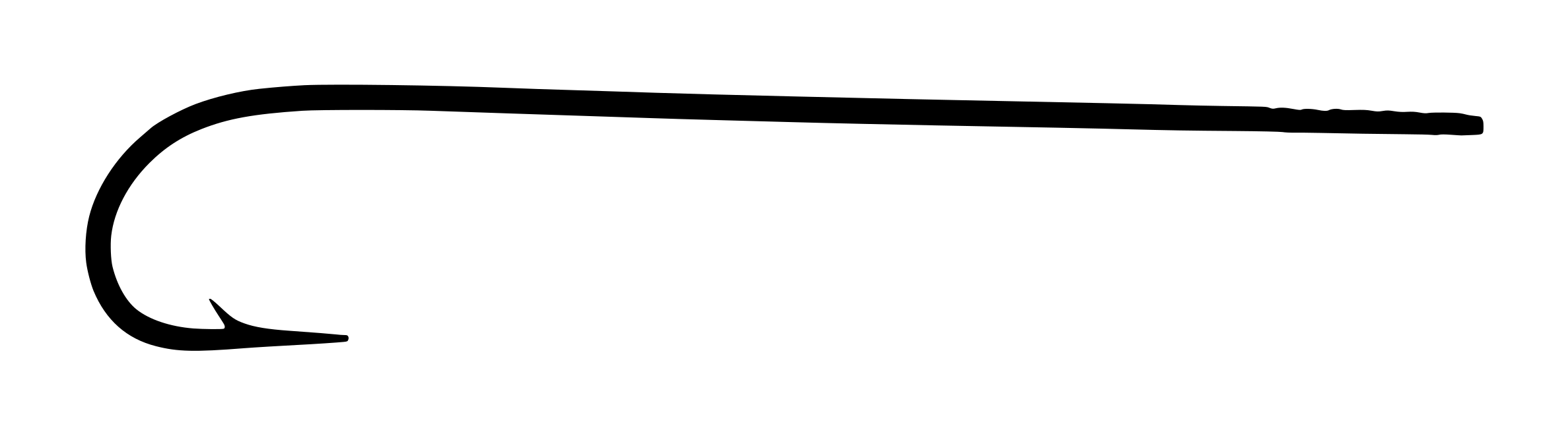
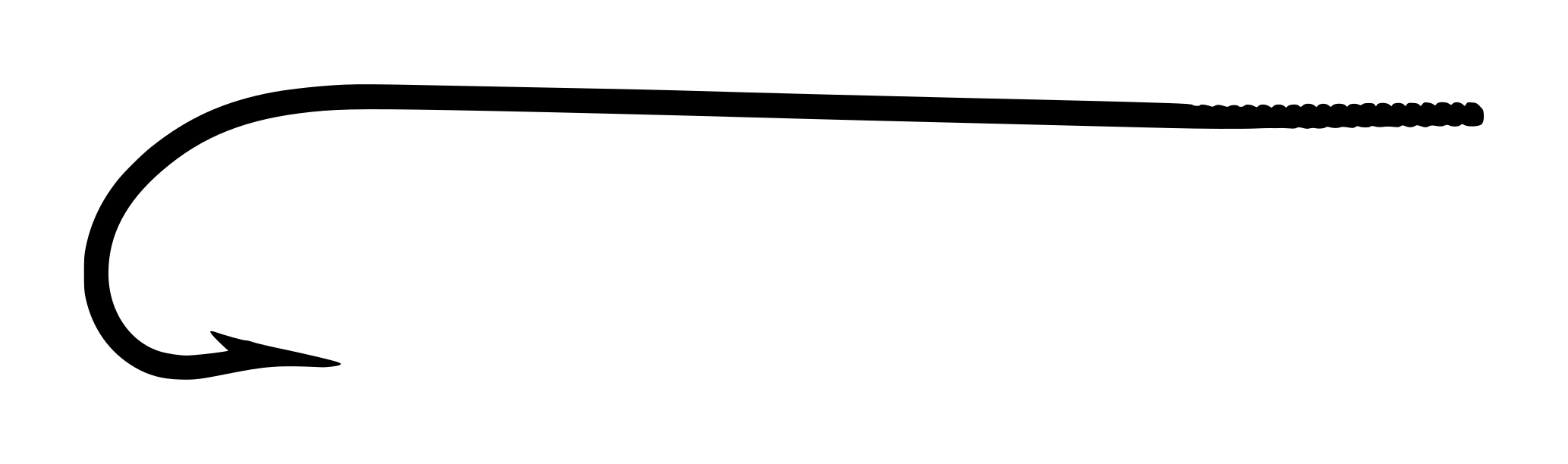
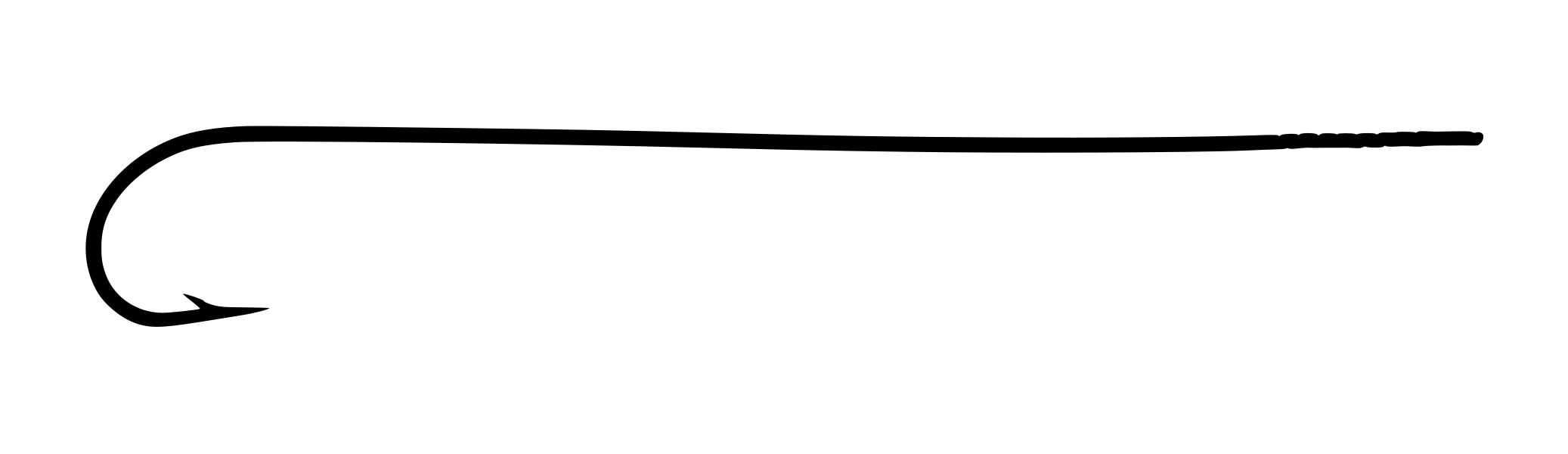
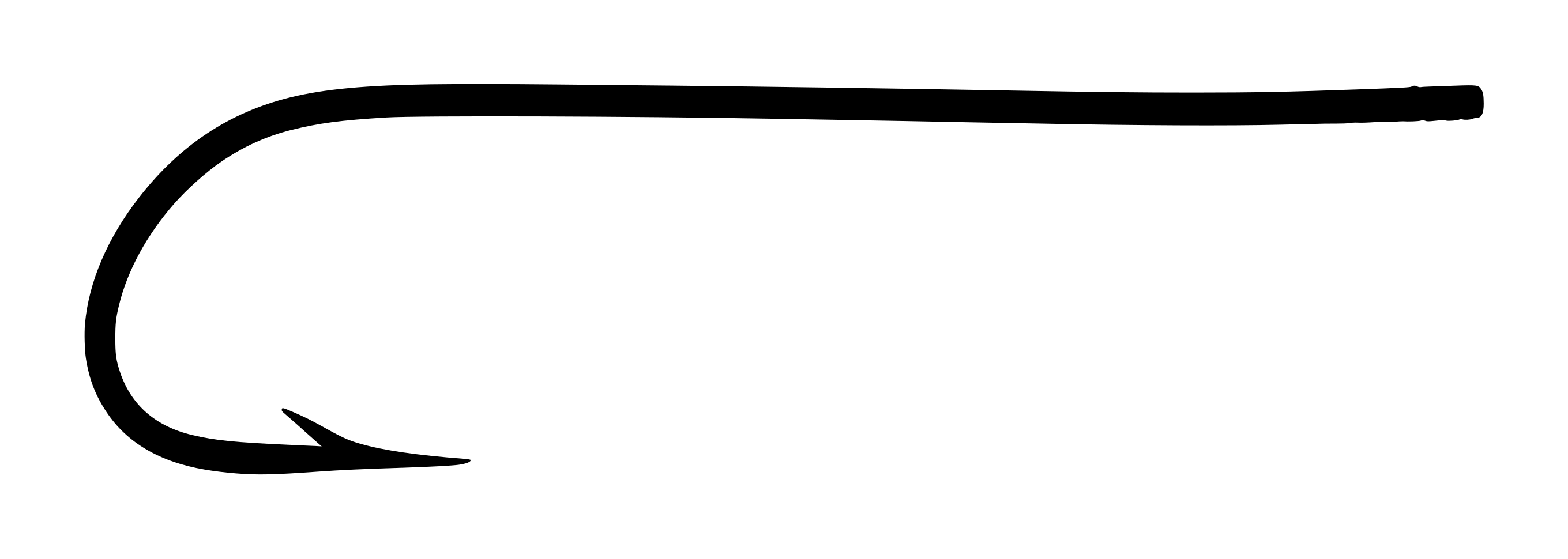
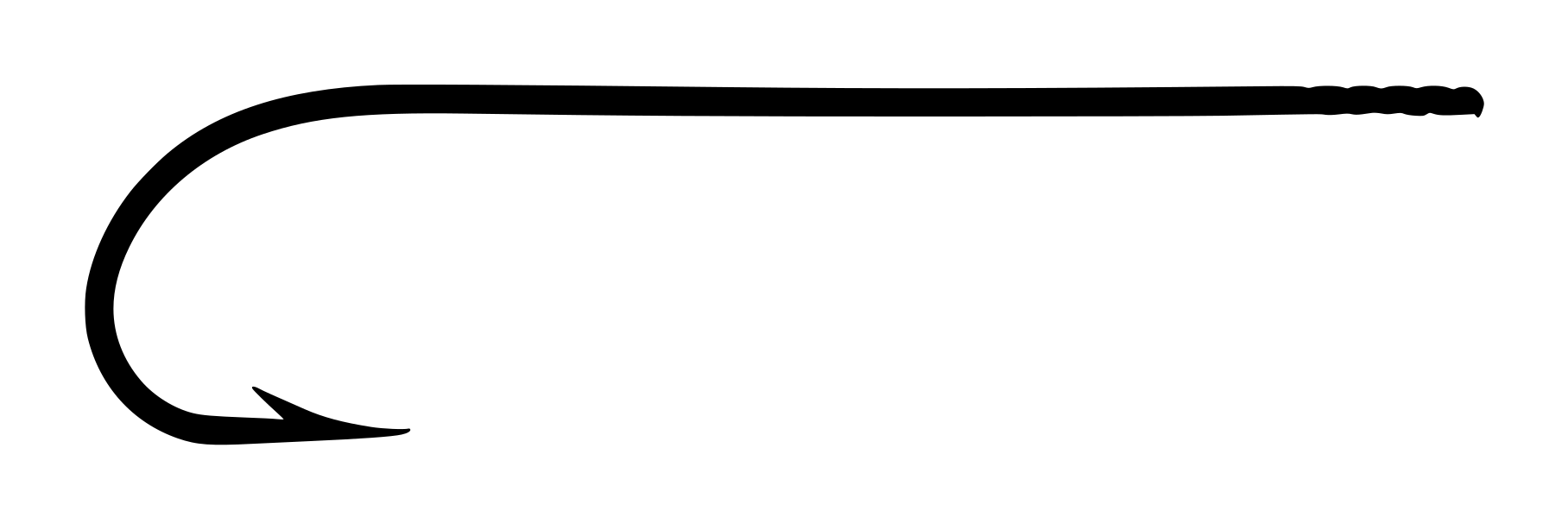
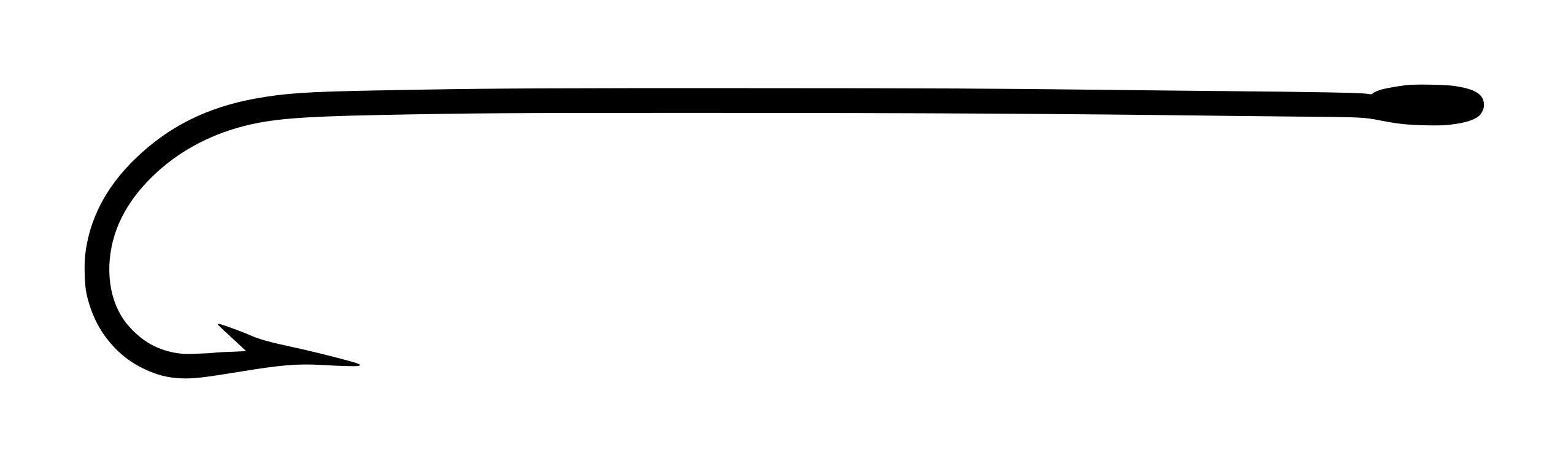
S. Allcock & Co. 692 M Carlisle Hook — Size No. 12, Bronzed Finish
This is a classic British Carlisle-pattern long-shank hook made by S. Allcock & Co., one of the world’s largest fishing tackle firms based in Redditch. The 692 M represents a mid-century standard fly hook design, featuring a deep rounded bend and tapered blind eye for gut attachment — a design lineage that traces directly to Victorian flytying traditions. The bronzed finish and spring steel construction reflect Allcock’s commitment to durable, serviceable hooks for both dry and wet fly patterns.
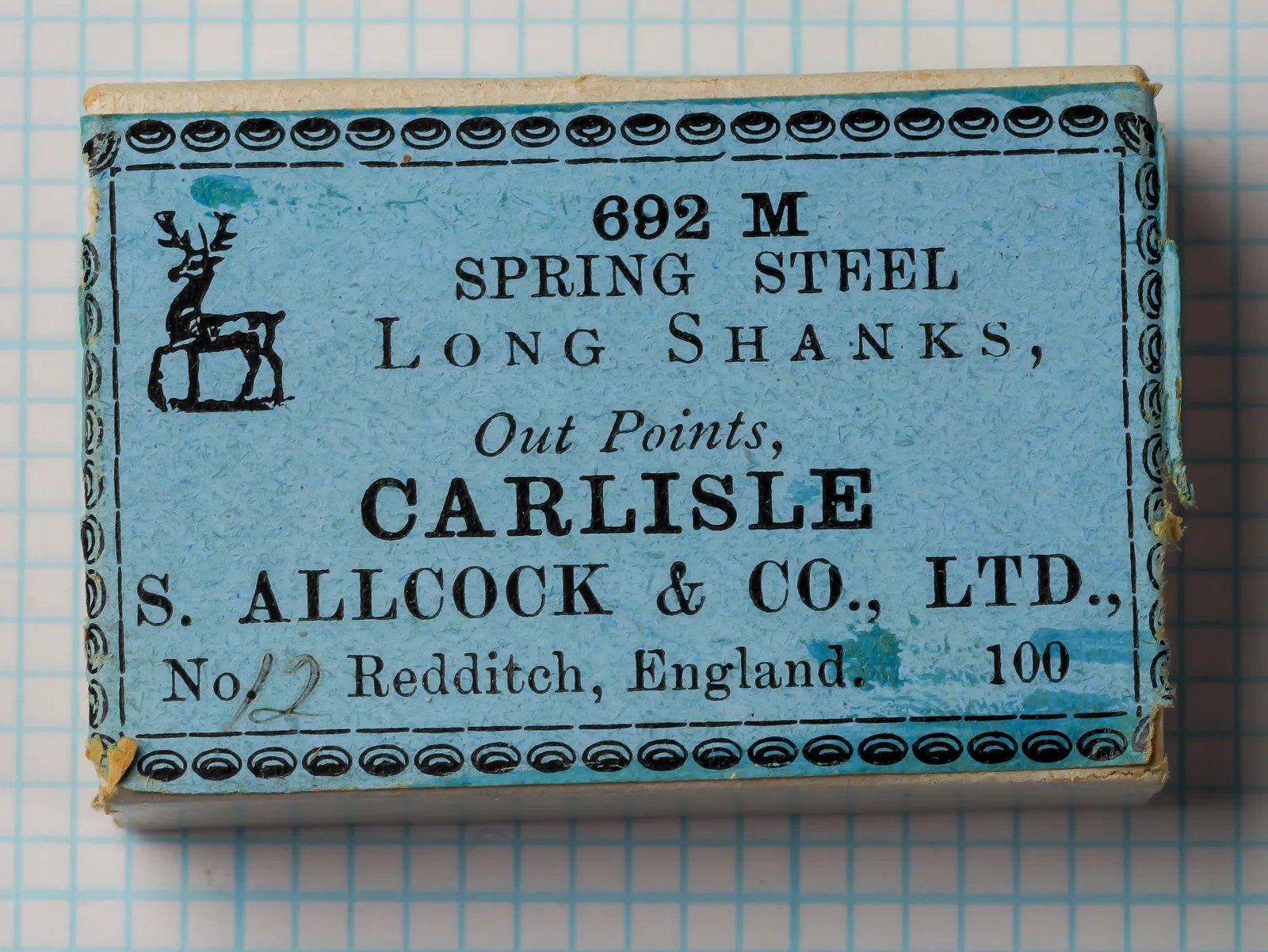
Era evidence is abundant: the cyan cardboard box, letterpress serif typography, and complete absence of a barcode place this in the c. 1935–1955 window. The hand-glued construction and aged paper stock suggest wartime or immediate post-war manufacture. This was a period when Allcock’s was still a major force in the Redditch industry, with over 1000 staff recorded in 1926.
Collecting significance: The 692 M Carlisle is uncommon in preserved original packaging, and the tapered blind eye makes it an excellent specimen for understanding pre-war British gut-eye hook technology. Original boxes are increasingly scarce, making this a desirable reference for hook historians and traditional fly-tying enthusiasts.
S-Allcock-692-M-Box-and-Label-Size-12
Photographic record
3 cataloged imagesSelect any record to load it above.
3 images shown
S-Allcock-692-M-Box-and-Label-Size-12S-Allcock-692-M-Box-and-Label-Size-12Open originalS-Allcock-692-M-Hooks-Size-12S-Allcock-692-M-Hooks-Size-12Open originalAllcock-692-M-Hook-Size-12Allcock-692-M-Hook-Size-12Open original
Technical profile
Blind Eye | Carlisle Bend | Long Shank | Hollow Point | Bronzed
Eye
Blind — Marked ShankMarked blind eye
Wire
Standard, Forged, Est. ~0.023"-0.025" (~0.58-0.64 mm) E
Shank
Extra-Extra Long (XXL) — Marked / Ridged
Bend
carlisle, Narrow gap, Offset / kirbedThe packaging explicitly identifies this as 'Carlisle' — a variant of the Sproat family characterized by a deep, rounded bottom and angular forging profile. The wire is set cleanly and symmetrically. V
Point
Hollow Point (concave inner face)
Finish
Bronzed — Confirmed (stated on packaging)Hooks appear bright and corrosion-free. Wire is straight and true. Points are sharp. Barbs intact. Packaging shows light foxing and toning consistent with age but label text remains clear. Two specimen hooks provided in good condition.
Spring Steel Construction: The packaging emphasizes ‘Spring Steel,’ indicating high-carbon wire with superior temper and resilience. This was Allcock’s marketing language for hooks intended to withstand hard use — the material returns to shape better than softer wire and resists permanent bending. Blind Eye: The gut-eyed construction (no metal loop) allowed traditional fly-tyers to whip the fly onto the hook directly, using a loop of fine gut doubled around the tapered shank end. This was standard practice through the 1950s and required skill to tie properly. Carlisle Bend: The rounded bottom with angular forging gives this pattern a distinctive character — less ‘cute’ than a true Sproat, but more defined than a simple round bend. The wire set is clean and symmetrical, indicating precision forging.
The 692 M Carlisle is part of Allcock’s broad catalogue of long-shank patterns developed for traditional British fly-fishing. ‘Carlisle’ was a regional variant within the Sproat family, preferred by certain regions and fly-tyers for its balance of hook gap and shank length. The 692 M designation indicates a standard production model with 100-hook count, typical of Allcock’s mid-market offerings that sat between the ‘Model Perfect’ (their flagship) and basic utility patterns. The long-shank configuration made it ideal for sedge patterns, mayfly imitations, and wet nymphs of the era. The 692 series appears in Allcock’s catalogs throughout the 1930s–1960s, with this bronzed spring-steel variant being among the most common finishes for practical fishing hooks.
Era and Packaging Dating
Multiple converging indicators place this in the mid-20th-century British tackle era: (1) Cyan/light-blue cardboard stock is characteristic of 1930s-1950s British packaging; (2) letterpress serif typeface and printing method are pre-1960s; (3) 'No.2' address format (not modern ZIP/postal code) indicates pre-1974 manufacture; (4) complete absence of barcode is strong pre-1974 indicator; (5) 'Spring Steel' material emphasis was common marketing language 1920s-1950s; (6) simple hand-glued card construction and aged paper stock are consistent with wartime and immediate post-war British manufacture; (7) no synthetic materials or modern safety markings visible.
The Boy Salesman's Legacy
Allcock's pursuit of excellence was legendary in Redditch. In 1876, to celebrate an expansion to the factory, Samuel Allcock held a festive dance in the very building itself, inviting all employees to celebrate the growth. By 1888, the firm had received the highest international awards at Paris, Berlin, Toronto, Sydney, Melbourne, Adelaide, and Calcutta — medals that decorated every tackle catalog cover. Yet Samuel Allcock himself was a curious character: despite being fully equipped for fishing and running the world's largest tackle manufacturer, he was not known to fish.
Design lineage and influence
The Carlisle pattern sits within a family of deep-rounded bends that evolved from earlier Victorian patterns. The Sproat, developed as an improvement on the Dublin hook, became the template for regional variants including the Carlisle. Allcock produced their own version of nearly every major pattern — a competitive necessity in an era when fly-tyers maintained strong brand loyalty. The 692 M Carlisle competed directly with similar patterns from Partridge of Redditch, Milward, and Scottish makers like the Tweed. After mid-century, as Mustad and later Japanese manufacturers entered the market with lower-priced alternatives, Allcock’s specialty patterns like the Carlisle gradually disappeared from active use, though they remain highly regarded by traditionalists who recognize their superior engineering.
Best matchRelated by Attribute
Computed automatically from catalog data — updated as new hooks are added.
Matches: Bend, Shank, Gap, Eye, Eye Orient. +4 moreDiffers: Wire: Standard vs Fine (1X Fine); Finish: Bronzed vs Blued; Forging: Forged vs Round +1 more
The 692 M Carlisle was designed as a workhorse long-shank hook for traditional British fly-fishing — both dry flies and wet patterns. The long shank accommodates larger flies and reduces fouling in heavy weeds; the superior point provides reliable penetration in the delicate, mouths of trout and grayling. This hook was equally at home on a limestone stream or Scottish loch, tying classic patterns like Sedge patterns, Mayfly imitations, wet nymphs, and small streamer flies.
Secondary Applications
Wet fly nymph patterns; small streamer and bucktail patterns; traditional spey-fly construction.
Classic Fly Patterns
Not typically documented with specific named patterns; the long shank made it ideal for sedge patterns, mayfly duns, nymphs, and traditional wet flies of the era.
Modern Equivalents
Hook
Match Quality
Notes
Partridge of Redditch Classic 1/0 CS10/3XL
Very Good
Modern Redditch hand-forged long-shank; tapered eye; bronzed; closest spiritual successor
Tiemco TMC 5212 or 5213
Good
Modern forged long-shank dry fly; similar gap and shank ratio; superior point geometry
Daiichi 2421 or 2451
Good
Modern forged long-shank; Japanese engineering; similar specifications; more widely available
Collector notes
Rated 4.5/10 — Uncommon. While S. Allcock & Co. produced enormous volumes of hooks, the 692 M Carlisle in original packaging is rarely encountered. The tapered blind eye and spring-steel construction are appealing to hook historians and traditional fly-tyers. Original boxes with full or near-full counts are genuinely scarce; loose hooks from this model circulate but command minimal premium.
Reference value
$12 – $28 USD estimate
Packaging condition
Good — moderate wear, legibleRecorded specimen
Packaging format
GW-AC-01Catalog code
What Makes It Collectible: Allcock’s hooks are prized for engineering quality, historical importance, and the appeal of original British Redditch craftsmanship. The 692 M’s tapered blind eye is a direct window into pre-war flytying traditions. Original packaging — especially a 100-hook box with intact label — is a legitimate rarity. Limiting Factors: Despite Allcock’s massive production, the 692 M is not rare enough to command prices in the $50+ range. Size 12 is a standard size and was produced in large quantities. The model is not a famous ‘named’ pattern (like the ‘Model Perfect’) and therefore lacks the cachet that drives specialist demand. Loose hooks carry minimal premium over unboxed equivalent models. Most Desirable Variants: Complete original boxes in good condition, particularly in sizes 10–14 where the shank length is most appreciated. Intermediate sizes (12, 14) are more commonly encountered than very large or very small sizes. The bronzed finish is standard; other finishes (blued, japanned) may command a slight premium if encountered. Condition Factors: Intact original label is critical — a box with damaged or missing label loses 30–50% of value. All or nearly all 100 hooks present is expected for top value. Packaging with original tissue is exceptionally scarce and adds 20–30% premium.
Packaging
Original manufacturer box in cyan/light blue cardboard. Letterpress printed label with stag trademark (S. Allcock & Co housemark). Text reads: 692 M / SPRING STEEL / LONG SHANKS, / Out Points, / CARLISLE / S. ALLCOCK & CO., LTD., / No.2 Redditch, England. / 100. Quantity stamp indicates 100 hooks per box. Card shows age-related toning and minor edge wear. No barcode present. Printed in serif typeface characteristic of 1930s-1950s British tackle packaging.
Market Value Notes
Low ($12): Good condition — opened box, approximately 80–95 hooks present, label intact but with toning, minor wear.
High ($28): Excellent/Near-Mint condition — sealed or effectively sealed box, all or nearly all 100 hooks, label crisp with minimal toning, original tissue intact if present.
Premium factors: Complete hook count, original tissue wrap, minimal label damage, clear provenance, absence of corrosion on hooks.
Platforms: eBay UK, specialist tackle dealers, vintage fishing forums, regional tackle fairs.
Confidence: E Estimated — Allcock hooks are sparsely documented in recent eBay sold data. Estimate based on comparable Redditch hooks (Milward, Partridge small patterns) and typical premium for original packaging. Boxes consistently underperform loose hook lots on eBay. Many sellers overprice; achieved prices are typically 30–40% below asking.
Where to Find
eBay UK has occasional Allcock boxes; search 'Allcock hooks original box' or 'Allcock 692'. Specialist vintage tackle dealers in the UK (East Anglia Vintage Fishing Tackle, Thomas Turner Fishing Antiques) occasionally list. Regional tackle fairs in Worcestershire/Warwickshire. Redditch Needle Museum may have contact with local collectors.
Preservation
Storage and Preservation
Store in a cool, dry environment away from high humidity. The bronzed finish develops a natural patina with age, which many collectors consider desirable — do not attempt to polish or strip it. Original packaging (the cardboard box) should be stored flat and protected from crushing. Avoid contact with acidic materials or other metals that could cause galvanic corrosion. The hooks themselves are highly durable; if removed from the box for use, keep them in a dry container or wax paper envelope to prevent rust. Photographs of the original label should be taken for reference before the package ages further. If the box is to be displayed, keep it away from direct sunlight, which will fade the printed label.
Marking Analysis
Package Markings
The specimen box shows a printed quantity marker ‘100’ in the lower right corner of the label, indicating the standard pack size. No handwritten prices, customs marks, or owner annotations are visible on this example. The label text is entirely printed in serif typeface characteristic of 1930s–1950s letterpress production. The stag trademark (Allcock’s housemark) is cleanly printed above the text.
Additional
Packaging Text Analysis
The label’s key claims: ‘SPRING STEEL’ — emphasizes material quality and competitive advantage vs. softer wire. This was Allcock’s marketing language for hooks intended for demanding use. ‘LONG SHANKS’ — explicitly identifies the 2X extended shank configuration. ‘Out Points’ — a technical term indicating the barb is set cleanly on the exterior of the bend (not an internal hook). ‘CARLISLE’ — identifies the specific bend pattern. The designation ‘No.2 Redditch’ refers to the factory address, not a size. The stag trademark appears above the text block and identifies Allcock’s ownership. The ‘100’ quantity stamp is standard for wholesale packaging of this era.
Size Note
Sizing Context: No. 12 in Historical Convention
Size No. 12 in mid-20th-century British convention is considerably larger than modern ISO hook sizes designated ’12’. The measured overall length of ~1.04″ places this in a range where modern equivalent would be closer to a No. 10 or 10X long. British hook numbering of the 1930s–1950s was based on a different scaling system than contemporary sizing. Collectors should be aware that an Allcock ‘No. 12’ from this era is not equivalent to a modern ‘size 12’ hook. The physical dimensions (confirmed by caliper) are the reliable standard for comparison.
Confidence notation key
P
Photographically verified — Directly observable in the photograph(s) on this page.
V
Verified by documentation — Confirmed by manufacturer catalog, spec sheet, or published reference.
I
Inferred — A logical deduction from observable or documented evidence, not directly stated.
E
Estimated — An approximation based on visual comparison, proportional analysis, or limited data.
S
Speculative — A reasoned hypothesis that cannot be confirmed from available evidence.
Unnotated claims are the compiler’s synthesis; see Sources. All photographs on garrenwood.com are taken on a measurement grid where each square equals 1/10 inch (0.1″ / 2.54 mm).